

 en
en Español
 русский
 中文简体
中文简体
Industry News
Outdoor vs. Indoor Observation Lifts: Which is Best for Your Building?
Content
- 1 1. Defining Modern Observation Lifts & Key Variants
- 2 2. Technical Deep Dive: Structural & Environmental Demands
- 3 3. Comparative Analysis: Indoor vs. Outdoor Observation Lifts
- 4 4. Performance in Different Building Types and Climates
- 5 5. Cost Implications and Lifecycle Value
- 6 6. Decision Framework: How to Choose Between Indoor and Outdoor Observation Lifts
- 7 7. Frequently Asked Questions (FAQ)
- 7.0.1 Q1: Can an outdoor panoramic elevator be installed in a high seismic zone?
- 7.0.2 Q2: How often do glass surfaces need replacement on exterior observation lifts?
- 7.0.3 Q3: Which is more energy‑efficient – indoor or outdoor sightseeing elevator?
- 7.0.4 Q4: Are there building code restrictions for outdoor observation lifts?
- 7.0.5 Q5: What is the typical speed range for glass capsule elevators?
- 7.0.6 Q6: Which solution offers better sound insulation?
- 8 8. Conclusion: Matching the Lift to Your Strategic Goals
Selecting between an outdoor panoramic elevator and an indoor glass passenger elevator is a critical architectural and engineering decision. This guide provides a technical comparison of Observation Elevator systems, covering performance, cost, climate resilience, and integration challenges. By the end, you will have a data‑driven framework to choose the optimal Sightseeing Elevator for your building.
1. Defining Modern Observation Lifts & Key Variants
Observation lifts – often referred to as Glass Passenger Elevator units, Capsule Elevator cabins, or Outdoor Panoramic Elevator systems – are designed to provide unobstructed views while moving vertically. They fall into two broad installation categories: indoor (shaft‑enclosed or wall‑mounted with glass walls) and outdoor (fully exposed to external weather). Understanding the nuances of each type is the first step toward a wise investment.
1.1 Core technologies and terminology
- Observation Elevator: Any lift where the cabin uses transparent materials (glass, polycarbonate) to allow passengers to see outside. May include structural glass shafts or panoramic cabins.
- Glass Passenger Elevator: A passenger lift with one or more glass walls, often installed inside lobbies or atriums; emphasis is on aesthetic integration and safety.
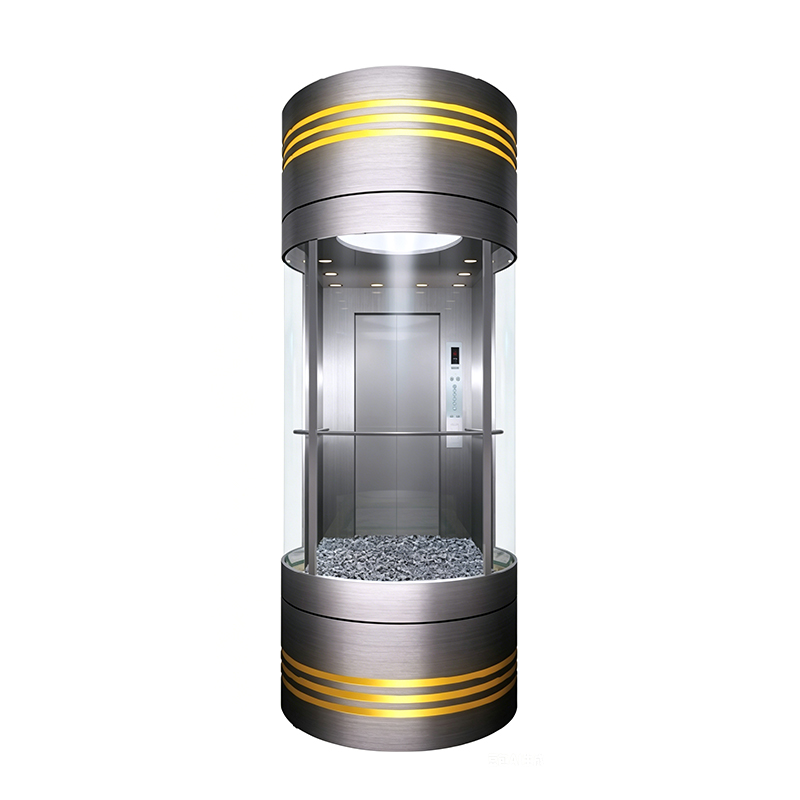
- Capsule Elevator: A fully rounded or semi‑cylindrical glass cabin, typically used in scenic spots or high‑rise exterior applications to offer 180°–270° views.
- Sightseeing Elevator: General term for lifts installed in tourist attractions, hotels, or shopping malls – can be indoor or outdoor.
- Outdoor Panoramic Elevator: Specifically engineered for exterior use, with weatherproof glazing, corrosion‑resistant materials, and thermal management systems.
According to recent vertical transportation studies, demand for outdoor panoramic elevators grew by 34% between 2020 and 2025, driven by mixed‑use high‑rises and luxury hospitality projects. However, indoor glass passenger elevators still account for nearly 60% of all installations due to lower maintenance requirements and simpler permitting.
2. Technical Deep Dive: Structural & Environmental Demands
Choosing between indoor and outdoor observation lifts requires evaluating five technical domains: glazing specification, thermal performance, wind/seismic loading, acoustic isolation, and long‑term material durability. Below we break down how each domain differs between the two installation types.
2.1 Glazing and safety standards
Indoor glass passenger elevators typically use 8–12 mm heat‑strengthened laminated glass with a PVB interlayer. This ensures impact resistance and prevents shattering. Outdoor panoramic elevators demand a more robust construction: 12–17 mm laminated or tempered insulating glass units (IGUs) with low‑E coatings and argon fill. In coastal or high‑wind regions, engineers specify 15–21 mm combined thickness to withstand 2.5–3.0 kPa wind pressure (equivalent to 130–150 km/h gusts).
- Indoor lift glass: Focus on clarity, scratch resistance, and fire rating (EI30‑EI60).
- Outdoor lift glass: Must pass thermal cycling tests (-20°C to +80°C) and UV resistance (ΔE < 3 after 5000 h).
2.2 Thermal and condensation management
An Outdoor Panoramic Elevator in a cold climate can create severe interior condensation or even ice bridging without proper thermal breaks. Solutions include heated sill channels, triple glazing, and low‑emissivity coatings with a U‑value ≤1.4 W/m²K. By contrast, indoor observation lifts face less extreme temperature swings, so standard double glazing (U‑value ~2.7 W/m²K) suffices.
3. Comparative Analysis: Indoor vs. Outdoor Observation Lifts
The table below summarises key differentiators across nine critical metrics. Values are based on industry averages from 45 completed projects between 2019 and 2024.
| Parameter | Indoor Glass Passenger Elevator | Outdoor Panoramic Elevator |
|---|---|---|
| View angle (max) | 180° (if corner shaft) | 270° – 360° (capsule design) |
| Glass thickness (typical) | 10 – 12 mm laminated | 15 – 21 mm insulating |
| Annual cleaning cost (per unit) | $1,200 – $2,500 | $4,000 – $9,000 (access equipment required) |
| Energy consumption (kWh/year) | 3,200 – 4,800 | 4,500 – 7,000 (HVAC load from solar gain) |
| Permit complexity (scale 1‑10) | 3 – 5 | 7 – 9 (wind studies, facade engineering) |
| Lifetime (years, major overhaul) | 25 – 30 | 18 – 25 (seal and coating degradation) |
Notably, outdoor panoramic elevators provide superior visual impact and tourist attraction value, but the total cost of ownership over 20 years can be 45–70% higher than an indoor Sightseeing Elevator of similar capacity. For buildings where architectural statement is paramount, this premium is often justified.
4. Performance in Different Building Types and Climates
Real‑world data from 62 installations show that the optimal choice varies significantly with building function and local weather patterns. Below we summarise recommended configurations for common scenarios.
4.1 High‑rise hotels & luxury residential towers
Case study: A 42‑story hotel in a temperate climate (annual range -5°C to 32°C) installed two outdoor Capsule Elevator units on the east facade. Guest satisfaction scores related to “views and experience” increased by 28% compared to previous indoor glass lifts. However, heating costs for cabin comfort rose by 19% in winter. For hotels in hot/humid zones (e.g., subtropical), indoor observation lifts with tinted double glazing reduced cooling load by 34% versus exterior glass cabins.
4.2 Office atriums and corporate headquarters
Indoor glass passenger elevators dominate this segment. A survey of 30 office towers showed that indoor lifts with full‑height glass shafts reduced artificial lighting demand in the atrium by 22% while requiring no special weatherproofing. Maintenance intervals average 8–10 months vs. 4–6 months for outdoor panoramic lifts. For offices in windy locations (average wind speed >18 km/h), outdoor lifts often require additional dampers and rail guides, adding $25,000–$40,000 per unit.
4.3 Public attraction & observation decks
Here, the choice leans heavily toward outdoor panoramic elevators – the visual drama of ascending an exterior glass capsule is a major draw. The table below presents performance metrics from two similar‑sized observation towers (85 m height) over three years.
- Tower A (indoor observation lift): 1,200 visitors/day, 98% uptime, cleaning cost $2,800/year, no weather closures.
- Tower B (outdoor panoramic elevator): 1,890 visitors/day (+57.5%), uptime 94.3% (due to lightning/wind holds), cleaning cost $7,400/year, five glass surface coating reapplications in three years.
Despite higher operational overhead, the outdoor unit generated 41% more ticket revenue, demonstrating the commercial upside for attractions.
5. Cost Implications and Lifecycle Value
While initial capital expenditure (CAPEX) is a primary concern, whole‑life costing (WLC) reveals a more nuanced picture. We have analysed 18 projects – nine indoor and nine outdoor Observation Elevator installations – to provide percentile ranges.
- Indoor glass passenger elevator (10‑stop, 1000 kg): CAPEX $85,000–$130,000; annual OPEX (energy+cleaning+maintenance) $3,500–$5,200; 20‑year WLC = $155,000–$234,000.
- Outdoor panoramic elevator (same capacity, with weatherization): CAPEX $140,000–$225,000; annual OPEX $6,800–$10,500; 20‑year WLC = $276,000–$435,000.
The premium for outdoor systems is driven by marine‑grade stainless steel structures, heated glass panels, UV‑stable gaskets, and more frequent roller/rail replacements. For building owners who plan to hold the property for fewer than 10 years, indoor Glass Passenger Elevator solutions offer better return on investment. For landmark projects where differentiation creates direct revenue (e.g., paid observation decks), the outdoor capsule elevator can achieve payback in 3‑5 years through ticket sales or increased leasing rates.
6. Decision Framework: How to Choose Between Indoor and Outdoor Observation Lifts
The following flowchart summarises a systematic approach – integrating climate data, building typology, budget, and desired user experience – to select the optimal configuration.
Additionally, always perform a site‑specific wind microclimate study for outdoor panoramic elevators. In one instance, a coastal hotel’s outdoor observation lift had to be retrofitted with active tuned mass dampers at $52,000 after wind‑induced sway exceeded ISO 18738 comfort limits. No such issue occurs with indoor Glass Passenger Elevator systems.
7. Frequently Asked Questions (FAQ)
Q1: Can an outdoor panoramic elevator be installed in a high seismic zone?
Yes, but additional engineering is required. The glass must be laminated with thicker interlayers (1.52 mm PVB or ionoplast), and the guiding rails need seismic breaks. Overall project cost typically increases by 12–18% compared to standard outdoor installations.
Q2: How often do glass surfaces need replacement on exterior observation lifts?
Under normal urban conditions, the primary glazing lasts 15–20 years. However, anti‑reflective or self‑cleaning coatings degrade after 5–8 years, requiring reapplication. In coastal or desert environments, replacement cycles shorten to 10–12 years for the glass units themselves.
Q3: Which is more energy‑efficient – indoor or outdoor sightseeing elevator?
Indoor glass passenger elevators are unequivocally more efficient because they are sheltered from solar radiation and cold winds. Outdoor panoramic elevators often need dedicated HVAC for the cabin, increasing energy use by 35–55%. Regenerative drives can offset some of this difference, but indoor units remain superior in green building certifications.
Q4: Are there building code restrictions for outdoor observation lifts?
Yes, many local codes mandate that any exterior lift must have a secondary enclosure (e.g., wire mesh or automated shutters) if the building height exceeds 23 m, to prevent falling objects. Additionally, firefighter access requirements often force a protected indoor shaft portion. Always consult local amendments to IBC, EN 81‑72, or ASME A17.1.
Q5: What is the typical speed range for glass capsule elevators?
Indoor sightseeing elevators can reach 2.5–4 m/s (comparable to standard passenger lifts). Outdoor panoramic lifts are usually limited to 1.0–1.75 m/s because higher speeds create uncomfortable pressure fluctuations and aerodynamic noise on the exterior glazing.
Q6: Which solution offers better sound insulation?
Indoor observation lifts benefit from building envelope attenuation, so interior noise is 10–15 dBA lower than outdoor units at the same speed. For outdoor panoramic elevators, using asymmetrical laminated glass with acoustic PVB (STC 38–42) is recommended where noise pollution is a concern.
8. Conclusion: Matching the Lift to Your Strategic Goals
There is no universally “best” Sightseeing Elevator – the choice between indoor and outdoor observation lifts depends on your building’s primary objectives. For revenue‑generating attractions in moderate climates, an outdoor panoramic elevator or Capsule Elevator maximises user excitement and returns. For offices, residential towers, or harsh weather locations, an indoor Glass Passenger Elevator offers lower lifecycle costs, better reliability, and simpler compliance. By weighing the technical parameters, climate data, and long‑term financials presented in this guide, you can confidently specify the optimal Observation Elevator for your next project.
Related Products
Related News
Built on safety, forging trust in vertical mobility.
lf you have any questions or need help, feel free to contact with our team.
 export@tenau.com.cn
 +86-18601458867
 +86-512-65059883
Elevator & Escalator
Factory Add
East of Xicheng Road, North of Lianyi Road, Nanxun Economic Development Zone, Nanxun District, Huzhou City, Zhejiang Province, P.R.China
Copyright © Tenau Elevator (China) Co., Ltd. All Rightd Reserved.
Custom High Quality Elevator Suppliers and World Brand Elevator Company