

 en
en Español
 русский
 中文简体
中文简体
Industry News
Which Home Elevator Is Right for You? Explore Your Options
Content
- 1 Why the Type of Home Elevator Matters More Than You Think
- 2 The Main Types of Home Elevators Compared
- 3 Hydraulic Home Elevators: Reliable Power for Heavier Demands
- 4 Machine-Room-Less (MRL) Traction Elevators: The Smart Space-Saver
- 5 Pneumatic Vacuum Elevators: Compact, Shaftless, and Visually Striking
- 6 How to Match an Elevator Type to Your Home
- 7 Customization and Interior Design Options
- 8 Safety Features to Look For
- 9 Installation Considerations: New Build vs. Retrofit
- 10 Frequently Asked Questions
- 10.0.1 Q1: How much does a home elevator cost to install?
- 10.0.2 Q2: How often does a home elevator need maintenance?
- 10.0.3 Q3: Can a home elevator be added to a two-story house?
- 10.0.4 Q4: Is a home elevator safe for children and elderly users?
- 10.0.5 Q5: Does a home elevator increase property value?
- 10.0.6 Q6: What is the typical lifespan of a home elevator?
Choosing the right home elevator comes down to four key factors: available space, budget, usage frequency, and aesthetic preference. For most homeowners, a hydraulic or machine-room-less (MRL) traction elevator offers the best balance of performance, safety, and value. If space is extremely limited, a pneumatic vacuum elevator is worth considering. Read on for a full breakdown of each type and how to match one to your specific situation.
Why the Type of Home Elevator Matters More Than You Think
Home elevators are not one-size-fits-all products. The wrong choice can result in higher long-term maintenance costs, inadequate load capacity, or a poor fit with your home's architecture. Understanding the mechanical differences between elevator types helps you make a decision you won't regret five years down the road.
Key variables to evaluate before selecting a type include:
- Number of floors served
- Maximum travel height
- Hoistway or shaft space available
- Weight capacity requirements (passengers + mobility aids)
- Noise sensitivity of occupants
- Total budget including installation
The Main Types of Home Elevators Compared
Below is a side-by-side comparison of the four most common residential elevator types to help you evaluate your options quickly.
| Type | Typical Travel Height | Load Capacity | Machine Room Needed | Noise Level | Best For |
| Hydraulic | Up to 14 m | 300–500 kg | Yes | Moderate | Multi-floor homes, heavy use |
| MRL Traction | Up to 30 m | 250–480 kg | No | Low | Space-saving, energy efficiency |
| Pneumatic Vacuum | Up to 10 m | 180–250 kg | No | Low–Moderate | Compact homes, design statement |
| Screw & Nut (Worm Drive) | Up to 10 m | 200–320 kg | No | Moderate–High | Low-traffic, budget installs |
Hydraulic Home Elevators: Reliable Power for Heavier Demands
Hydraulic elevators use a fluid-driven piston system to raise and lower the cab. They are known for smooth, stable rides and high load capacity, making them ideal for households where wheelchairs, scooters, or multiple passengers use the elevator regularly.
Advantages
- High weight capacity — commonly rated at 400–500 kg
- Smooth leveling at each floor
- Relatively straightforward maintenance access
- Well-established technology with decades of residential use
Limitations
- Requires a dedicated machine room, typically 1.5–3 m²
- Hydraulic fluid must be checked and replaced periodically
- Higher energy consumption compared to traction systems
Best suited for: Homes with 2–4 floors where maximum carrying capacity and ride comfort are the top priorities.
Machine-Room-Less (MRL) Traction Elevators: The Smart Space-Saver
MRL traction elevators use a gearless motor mounted inside the hoistway itself, eliminating the need for a separate machine room entirely. This design has become increasingly popular in residential projects because it saves valuable floor area without compromising performance.
Why MRL Stands Out
- No machine room required — the drive unit fits within the shaft itself
- Energy-efficient: regenerative drives can recover up to 30% of braking energy
- Quieter operation — typically under 55 dB during travel
- Suitable for taller residential buildings — travel heights up to 30 m
- Lower long-term energy bills compared to hydraulic systems
Best suited for: Modern homes and villa-style residences where architectural space is at a premium and quiet, efficient daily operation is a priority.
Pneumatic Vacuum Elevators: Compact, Shaftless, and Visually Striking
Pneumatic elevators use air pressure differentials to move the cab up and down within a self-supporting transparent cylinder. Because they require no shaft, pit, or machine room, they are the most installation-friendly option for existing homes.
Key Characteristics
- Self-supporting cylinder — minimal structural modifications needed
- Transparent design creates a dramatic visual focal point
- Typical footprint as small as 0.8 m in diameter
- Lower load capacity — generally capped at 250 kg
- Not ideal for frequent daily use or wheelchair accessibility in all models
Best suited for: Retrofit installations in existing homes with 2–3 floors and light-use requirements, especially where design impact matters.
How to Match an Elevator Type to Your Home
Rather than starting with elevator types, start with your home's constraints and priorities. The following decision framework helps narrow your choice:
- Space audit: Measure the available footprint for a shaft or cylinder. If less than 1 m² is available, pneumatic is often the only option.
- Travel height check: For homes exceeding 4 floors or 14 m, MRL traction is the appropriate technology.
- Accessibility needs: If a wheelchair or heavy mobility device must be transported, prioritize hydraulic or MRL elevators with a minimum cab size of 1.1 m × 1.4 m.
- Noise tolerance: Bedrooms adjacent to a hoistway require a quieter system — MRL or pneumatic.
- Energy & running costs: For daily multi-trip use, an MRL system with regenerative drive offers the lowest operational cost over a 10-year period.
Customization and Interior Design Options
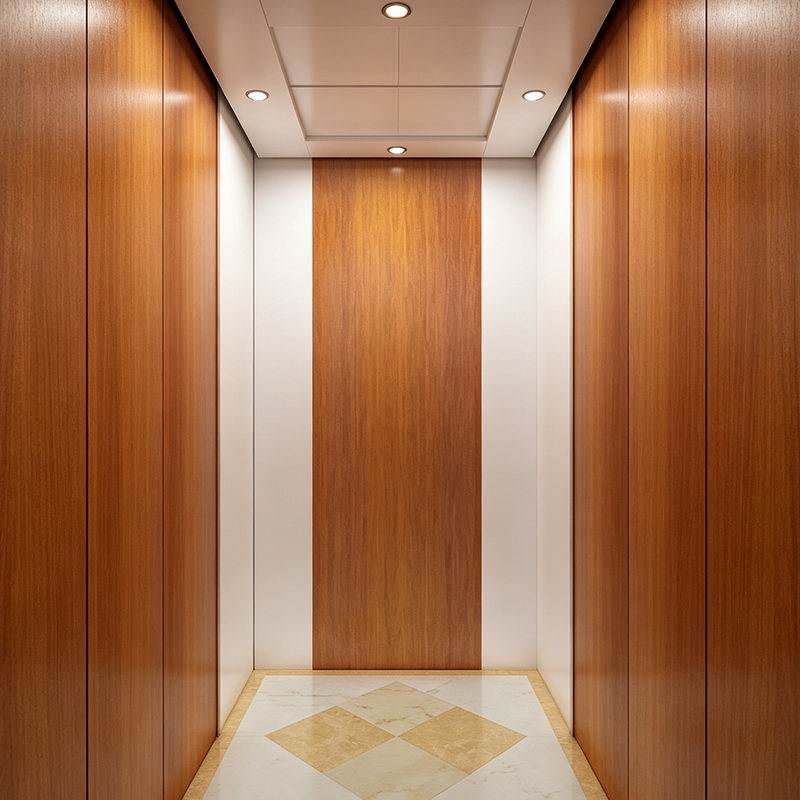
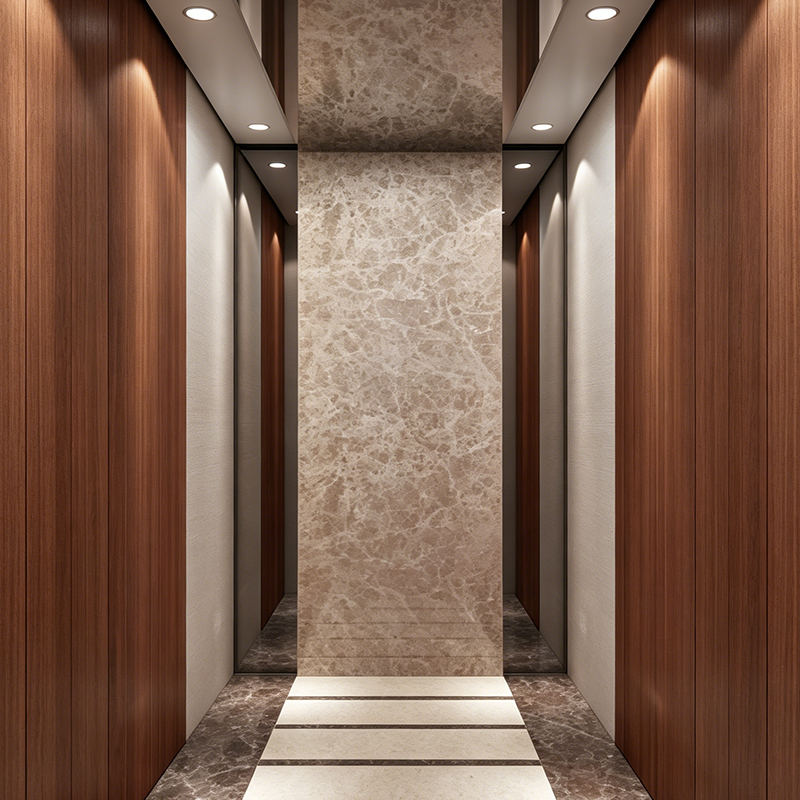
Modern home elevators are highly customizable. Regardless of the mechanical type you choose, the cab interior can typically be configured with:
- Stainless steel, tempered glass, wood veneer, or composite panel walls
- LED mood lighting with adjustable color temperature
- Handrail styles and positioning for accessibility compliance
- Landing door designs — swing, sliding, or telescopic
- Digital display panels and smart home integration (Wi-Fi/app control)
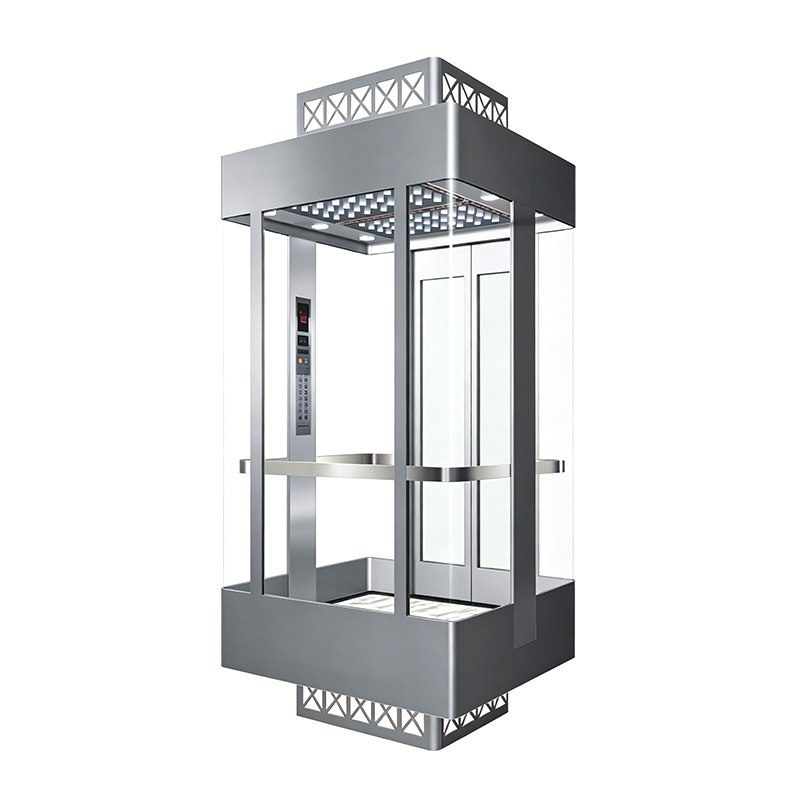
Many homeowners treat the elevator cab as an extension of their interior design language. A glass-walled cab on an MRL system, for example, can visually open up a stairwell and add significant perceived square footage to a home's common areas.
Safety Features to Look For
Residential elevator safety has advanced considerably. When evaluating any home elevator, confirm it includes the following standard safety features:
- Emergency lowering system — allows the cab to descend to the nearest floor during a power outage
- Door interlocks — prevent the elevator from moving unless all doors are fully closed
- Overload detection — audible or visual alert when weight limit is exceeded
- Emergency stop button and telephone/intercom in the cab
- Buffer and pit safety devices at the base of the shaft
- Certification to relevant standards (e.g., EN 81-41 in Europe, ASME A17.1 in North America)
Installation Considerations: New Build vs. Retrofit
Installation complexity — and cost — differs significantly depending on whether the elevator is being added to a new construction or an existing home.
New Construction
Planning an elevator shaft during the design phase reduces structural costs substantially. The shaft can be integrated seamlessly into the floor plan, and electrical infrastructure can be pre-installed. This is the most cost-effective approach, as structural modifications to existing load-bearing walls are avoided.
Retrofit Installation
Adding an elevator to an existing home requires assessing available vertical space, structural capacity, and electrical supply. Pneumatic vacuum elevators are the easiest retrofit option, requiring only a ceiling cutout at each floor. MRL and hydraulic systems require a proper shaft, which may mean repurposing a closet column or building an external addition.
A structural assessment by a licensed engineer is strongly recommended before committing to a retrofit installation plan.
Frequently Asked Questions
Q1: How much does a home elevator cost to install?
Total installed costs vary widely by type and configuration. Pneumatic elevators typically start at a lower price point for basic two-stop models, while hydraulic and MRL traction systems for multi-floor use can range significantly higher. Always request an itemized quote that includes shaft construction, electrical work, and commissioning.
Q2: How often does a home elevator need maintenance?
Twice a year is the standard recommendation for most residential elevator types. Hydraulic systems additionally require fluid level checks and periodic oil replacement. MRL traction elevators generally have fewer wear components and lower maintenance frequency.
Q3: Can a home elevator be added to a two-story house?
Yes. In fact, two-story homes represent the most common installation scenario. Pneumatic, MRL, and screw-drive elevators are all viable for a single-floor rise. The choice depends on available space and the intended users.
Q4: Is a home elevator safe for children and elderly users?
Yes, when properly installed and maintained. Modern home elevators include door interlocks, emergency stops, and overload sensors. For elderly users or those with mobility needs, select a model with a cab interior of at least 0.9 m × 1.2 m and a slow, smooth start-stop profile.
Q5: Does a home elevator increase property value?
Generally yes, particularly in markets with aging populations or premium property segments. A well-integrated home elevator signals quality construction and long-term accessibility planning, both of which appeal to a broad range of buyers.
Q6: What is the typical lifespan of a home elevator?
With regular servicing, 20–30 years is a realistic lifespan for hydraulic and MRL traction elevators. Drive components and control boards may require replacement after 10–15 years depending on usage intensity.
Related Products
Related News
Built on safety, forging trust in vertical mobility.
lf you have any questions or need help, feel free to contact with our team.
 export@tenau.com.cn
 +86-18601458867
 +86-512-65059883
Elevator & Escalator
Factory Add
East of Xicheng Road, North of Lianyi Road, Nanxun Economic Development Zone, Nanxun District, Huzhou City, Zhejiang Province, P.R.China
Copyright © Tenau Elevator (China) Co., Ltd. All Rightd Reserved.
Custom High Quality Elevator Suppliers and World Brand Elevator Company