

 en
en Español
 русский
 中文简体
中文简体
360 Degree Full-View Glass Observation Elevator for Shopping Malls and Hotels
Content
- 1 Product Positioning: A Panoramic Elevator for Experience-Driven Buildings
- 2 Core Design Concept: Transparency, Comfort, and Structural Elegance
- 3 Material and Interior Specification Overview
- 4 Safety as the Foundation of the Product
- 5 Travel Functions Designed for Busy Buildings
- 6 Passenger Comfort and Visual Experience
- 7 Advantages Compared with Conventional Observation Elevators
- 8 Advanced Manufacturing Strength and Quality Control
- 9 Intelligent Monitoring and Service Capability
- 10 Safety Functions in Detail
- 11 Travel Functions in Detail
- 12 Applications in Shopping Malls
- 13 Applications in Hotels
- 14 Applications in Commercial and Public Architecture
- 15 Environmental and Operational Considerations
- 16 Manufacturing Integration from Design to Service
- 17 Why the 360 Degree Full-View Concept Matters
- 18 Project Selection Considerations
- 19 Long-Term Value for Building Owners
- 20 Q&A Section
- 20.1 What is the main advantage of a 360 degree full-view glass observation elevator?
- 20.2 Where is this type of elevator most suitable?
- 20.3 What safety features are included in the product?
- 20.4 How does the elevator improve traffic efficiency in busy buildings?
- 20.5 What materials are used in the cabin?
- 20.6 How does intelligent remote monitoring support elevator operation?
- 20.7 Why is laminated glass important for an observation elevator?
- 20.8 How does the product compare with basic observation elevators?
- 20.9 What manufacturing strengths support product reliability?
- 20.10 Is the elevator only decorative, or can it handle practical passenger traffic?
- 21 Conclusion
- 22 References
- 23 Product: 360 Degree Full-View Glass Observation Elevator for Shopping Malls and Hotels
In contemporary commercial architecture, the elevator is no longer only a vertical transportation device. It has become part of the building experience, part of the interior identity, and often part of the first impression created for guests, shoppers, tenants, and visitors. A 360 degree full-view glass observation elevator is designed for this new role. It combines safe and efficient passenger movement with panoramic visual appeal, allowing users to experience the surrounding space while traveling between floors.
The 360 Degree Full-View Glass Observation Elevator for Shopping Malls and Hotels, model TO-G010, is developed for projects where visibility, comfort, safety, and architectural integration are equally important. Its capsule-style configuration, laminated glass observation wall, refined stainless steel interior, and intelligent control functions make it suitable for high-traffic public buildings such as shopping malls, hotels, commercial complexes, exhibition centers, entertainment venues, and landmark mixed-use properties.
For developers, architects, consultants, and facility managers, the value of such an elevator lies in more than its transparent appearance. A successful panoramic elevator must be reliable under frequent operation, stable in movement, safe during every door cycle, easy to maintain, and consistent with the building’s aesthetic language. This product addresses those requirements through advanced control logic, German-inspired engineering standards, intelligent remote monitoring, and a manufacturing system built around quality control and modern production efficiency.
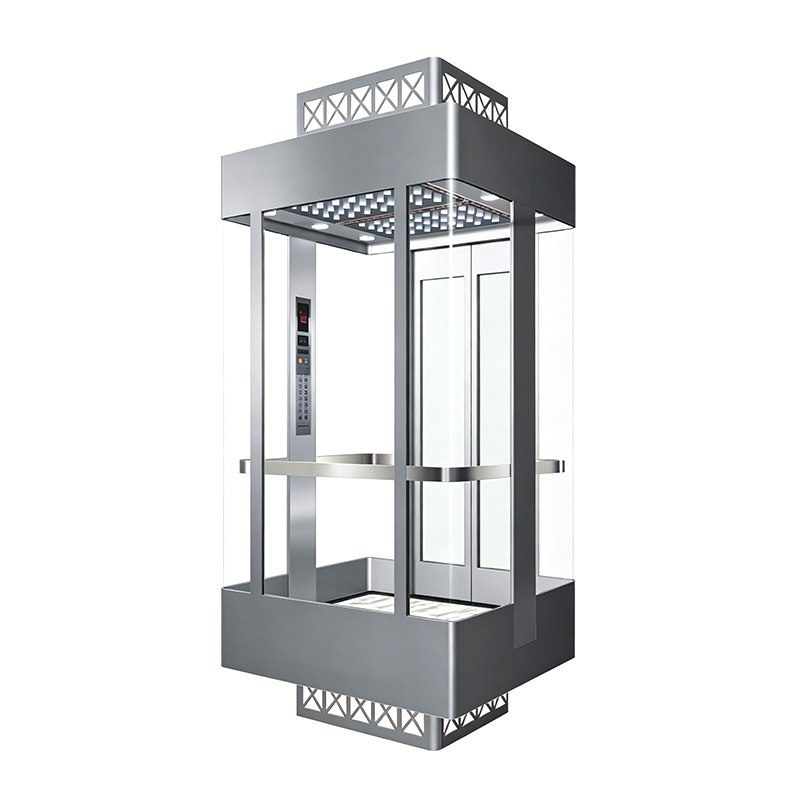
360 Degree Full-View Glass Observation Elevator for Shopping Malls and Hotels
Product Positioning: A Panoramic Elevator for Experience-Driven Buildings
Modern shopping malls and hotels compete not only through location and floor area but also through visitor experience. A mall wants customers to stay longer, move comfortably between levels, and enjoy a sense of openness. A hotel wants guests to feel premium service from the lobby onward. A panoramic elevator can help support both goals by turning a routine ride into a visual journey.
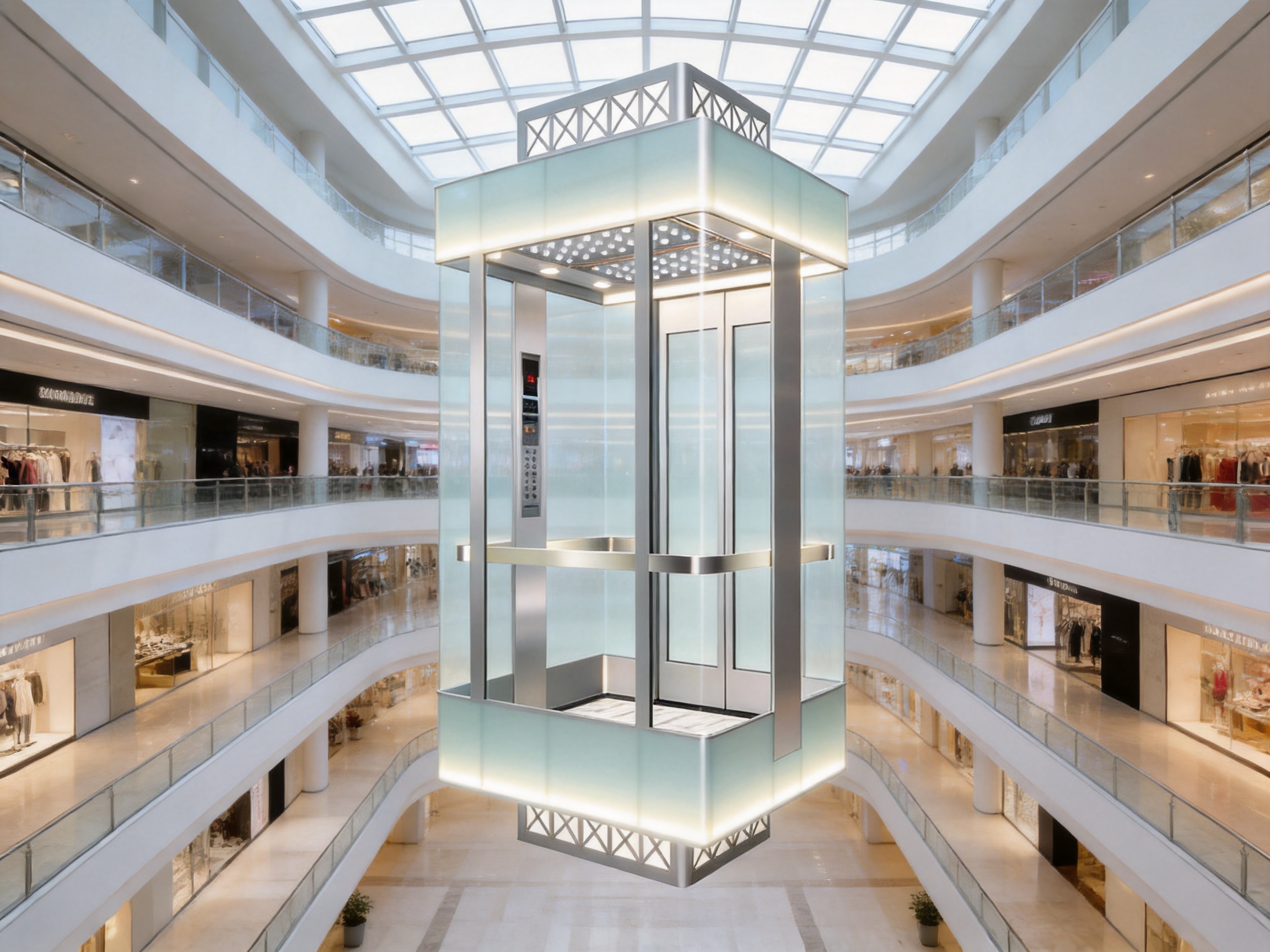
The 360 degree full-view capsule elevator is especially effective in atriums, lobby voids, sightseeing corridors, and open commercial spaces. Instead of hiding the elevator shaft behind opaque walls, the design makes vertical travel visible and attractive. Passengers can view the lobby, retail displays, architectural features, city scenery, or interior landscape while moving. This improves wayfinding, reduces the feeling of enclosure, and contributes to a more memorable building environment.
Compared with conventional passenger elevators, a full-view glass observation elevator provides stronger architectural value. Standard elevators focus primarily on capacity and movement. Observation elevators add visual communication and spatial interaction. In retail properties, they may become part of the shopping route. In hotels, they can reinforce a sense of hospitality and prestige. In entertainment or cultural venues, they may become a small attraction in themselves.
The TO-G010 model is designed to meet this combination of design and function. Its full-view capsule concept gives passengers broad visibility, while its safety and travel functions ensure that the elevator remains practical for everyday operation. The result is not merely a decorative elevator, but a technically complete transport solution for high-use environments.
Core Design Concept: Transparency, Comfort, and Structural Elegance
The main visual feature of this observation elevator is its glass observation wall. The product uses laminated glass with a 6+6 mm configuration, supporting both transparency and safety. Laminated glass is widely used in architectural applications because it can maintain integrity better than ordinary glass if damaged. This is important for public passenger equipment, where reliability and user confidence are essential.
The elevator car also includes hairline stainless steel wall finishes, a stainless steel flat handrail, a PVC floor, and a decorative ceiling made from a baking painted steel frame with a light-passing board. These elements balance visibility with durability. Stainless steel provides resistance to wear, easy cleaning, and a modern appearance. The handrail improves passenger stability and comfort. The ceiling design supports illumination and a refined cabin atmosphere.
The car cover uses baking painted steel, acrylic lighting, and decorative elements. This helps produce a clean, contemporary exterior that can be coordinated with the building’s interior style. In hotel lobbies and shopping mall atriums, where lighting, reflections, and material consistency are important, these finishing choices allow the elevator to appear polished without excessive visual heaviness.
A key advantage of the design is that it does not treat the cabin as an isolated mechanical box. Instead, it treats the cabin as an architectural object. The transparent surfaces allow the elevator to interact with surrounding space, while the stainless steel and painted steel components provide the strength, structure, and modern finish expected in premium public buildings.
Material and Interior Specification Overview
The following table summarizes the main cabin and interior configuration of the 360 degree full-view glass observation elevator.
Component |
Specification |
Project Value |
Car Cover |
Baking painted steel, acrylic lighting, decorative finish |
Creates a clean modern appearance with durable surface treatment and integrated lighting effect. |
Observation Wall |
Laminated glass, 6+6 mm |
Provides panoramic visibility while supporting passenger safety and architectural transparency. |
Decorative Ceiling |
Baking painted steel frame with light-passing board |
Improves cabin lighting comfort and creates a refined passenger environment. |
Car Wall |
Hairline stainless steel |
Offers durability, easy maintenance, and a high-quality commercial interior appearance. |
Handrail |
Stainless steel flat handrail |
Enhances passenger comfort, support, and perceived safety. |
Floor |
PVC |
Provides a practical, maintainable, and cost-effective flooring solution for public use. |
Safety as the Foundation of the Product
In any elevator, safety is the first requirement. In an observation elevator, safety is even more visible because passengers can see the movement, the surrounding shaft area, and the transition between floors. A well-designed panoramic elevator must therefore create confidence through stable motion, reliable doors, precise stopping, and multiple layers of protection.
This elevator incorporates advanced safety standards inspired by German engineering principles. The product emphasizes personal security through systematic protection functions, intelligent monitoring, and careful mechanical design. Rather than relying on a single safety feature, it combines several layers of control to manage different risk scenarios.
One essential safety function is accidental movement prevention. If unintended car movement occurs while the doors are open, the system is designed to arrest the elevator cab. This type of protection is particularly important in public buildings where passengers may be entering or leaving the car. It helps reduce the risk associated with uncontrolled movement and supports safer door-zone operation.
The elevator also includes a UCMP system, which triggers protection against unregulated shifts. UCMP, or unintended car movement protection, is a critical safety concept in modern elevator engineering. It helps detect and respond to movement that should not happen under normal control conditions. In a competitive market, this is an important differentiator compared with basic or older observation elevators that may not offer the same level of integrated protection.
Door safety is another major focus. Public elevators experience frequent door cycles, and door areas are the most common points of passenger interaction. This product includes a high-sensitivity infrared curtain for rapid obstacle detection. The light curtain monitors the entrance area during door operation, helping detect people or objects and reducing the chance of contact.
The product also includes a specialized device to help prevent door derailment under external impacts. This is valuable in shopping malls and hotels, where luggage carts, cleaning equipment, strollers, shopping bags, and high passenger traffic can create accidental contact with doors. A stronger door integrity system helps maintain reliable operation and reduces downtime.
Travel Functions Designed for Busy Buildings
Shopping malls and hotels experience traffic patterns that vary throughout the day. Morning staff arrivals, lunch traffic, check-in peaks, event traffic, and closing hours can create intense passenger demand. The observation elevator is equipped with travel functions intended to improve efficiency, reduce waiting, and maintain a smooth passenger flow.
Group control is one of the key travel features. When multiple elevators operate together, group control coordinates their responses and selects the most appropriate car for each call. This can reduce unnecessary travel, shorten waiting times, and improve the overall performance of the elevator bank. For a mall or hotel with multiple vertical transport routes, this function is highly valuable.
Automatic pass without stop is another practical function. When the car is full, it can skip calling landings instead of stopping where it cannot accept more passengers. This improves efficiency and prevents frustration caused by repeated door openings at floors where no one can enter. In busy shopping centers, this function helps maintain maximum transport performance during peak traffic.
Direct parking follows the distance principle for leveling without crawling. By reducing slow approach time, it helps save travel time and improves ride efficiency. Passengers may not notice the technical detail, but they experience the result: smoother arrival, more efficient leveling, and less unnecessary delay.
Peak service logic is especially relevant for commercial buildings. During on-duty and off-duty periods, elevators can be dispatched according to expected traffic direction and passenger concentration. In hotels, similar traffic surges can occur during breakfast hours, checkout time, conferences, banquets, or group arrivals. Dedicated dispatching logic helps the elevator system adapt to these changing patterns.
The open-in-advance function allows the doors to begin opening automatically as the elevator enters the door-open zone. This saves time during each trip. Express door closing allows the door to close immediately when the door-shut button is pressed, subject to safety conditions. These small time savings accumulate across thousands of daily operations, improving overall system performance.
Passenger Comfort and Visual Experience
A full-view glass observation elevator must feel secure, smooth, and pleasant. Passengers should not feel exposed in an uncomfortable way; instead, they should feel that the transparent cabin creates openness and enjoyment. The TO-G010 design supports this through balanced material selection, controlled lighting, stable handrail support, and reliable operating logic.
The laminated glass observation wall provides expansive visibility. In a shopping mall atrium, riders can see retail levels, decorative installations, escalators, lighting features, and crowd movement. In a hotel, riders may view the lobby, indoor garden, grand staircase, or exterior city view depending on shaft placement. This visibility reduces the closed-box sensation that some passengers experience in traditional elevators.
The stainless steel flat handrail contributes to user comfort. While many passengers may not consciously focus on the handrail, its presence provides physical reassurance, especially for elderly guests, children, and people who prefer additional stability during movement. In hotels, where passengers may carry luggage, and in malls, where passengers may carry shopping bags, this support is practical.
The decorative ceiling and acrylic lighting help create a comfortable cabin environment. Lighting is important in a glass elevator because reflections and transparency can change how passengers perceive space. A well-lit cabin feels cleaner, safer, and more premium. The light-passing board helps distribute illumination, reducing harshness and supporting a refined atmosphere.
Ride comfort is also influenced by control functions. Direct parking, group dispatch, and start protection help ensure that passengers experience controlled movement and reliable stopping. A visually impressive elevator that performs poorly will damage the building’s image. This product is designed to combine appearance with operational confidence.
Advantages Compared with Conventional Observation Elevators
Many observation elevators on the market emphasize visual design but may offer limited intelligence, limited door protection, or inconsistent manufacturing quality. The 360 degree full-view glass observation elevator distinguishes itself by combining panoramic architecture with modern safety, smart management, and refined production standards.
First, the product offers stronger all-around safety logic than basic glass elevators. Its accidental movement prevention, UCMP protection, infrared light curtain, anti-stall timer protection, start protection control, and door derailment prevention device create a multilayered safety system. This is a practical advantage over products that rely mainly on standard door sensors and conventional control protection.
Second, the elevator is designed for high-traffic efficiency. Functions such as group control, automatic pass without stop, direct parking, peak service logic, open in advance, and express door closing are especially valuable in commercial environments. Some observation elevators are installed primarily as decorative features and may not be optimized for heavy passenger flow. This product is intended to be both attractive and efficient.
Third, the intelligent remote monitoring system provides a management advantage. The Tenau Eye System supports constant control over elevator operation and safety data. Intelligent monitoring can help maintenance teams identify operating conditions, improve response speed, and support preventive service planning. Compared with elevators that depend only on periodic manual inspection, remote monitoring offers stronger operational visibility.
Fourth, the product benefits from a company background that integrates design, research and development, manufacturing, marketing, installation, and after-sales service. This full-chain capability helps ensure that product design, production quality, installation requirements, and maintenance standards are connected rather than fragmented. For international projects, this integration can reduce communication gaps and improve project execution.
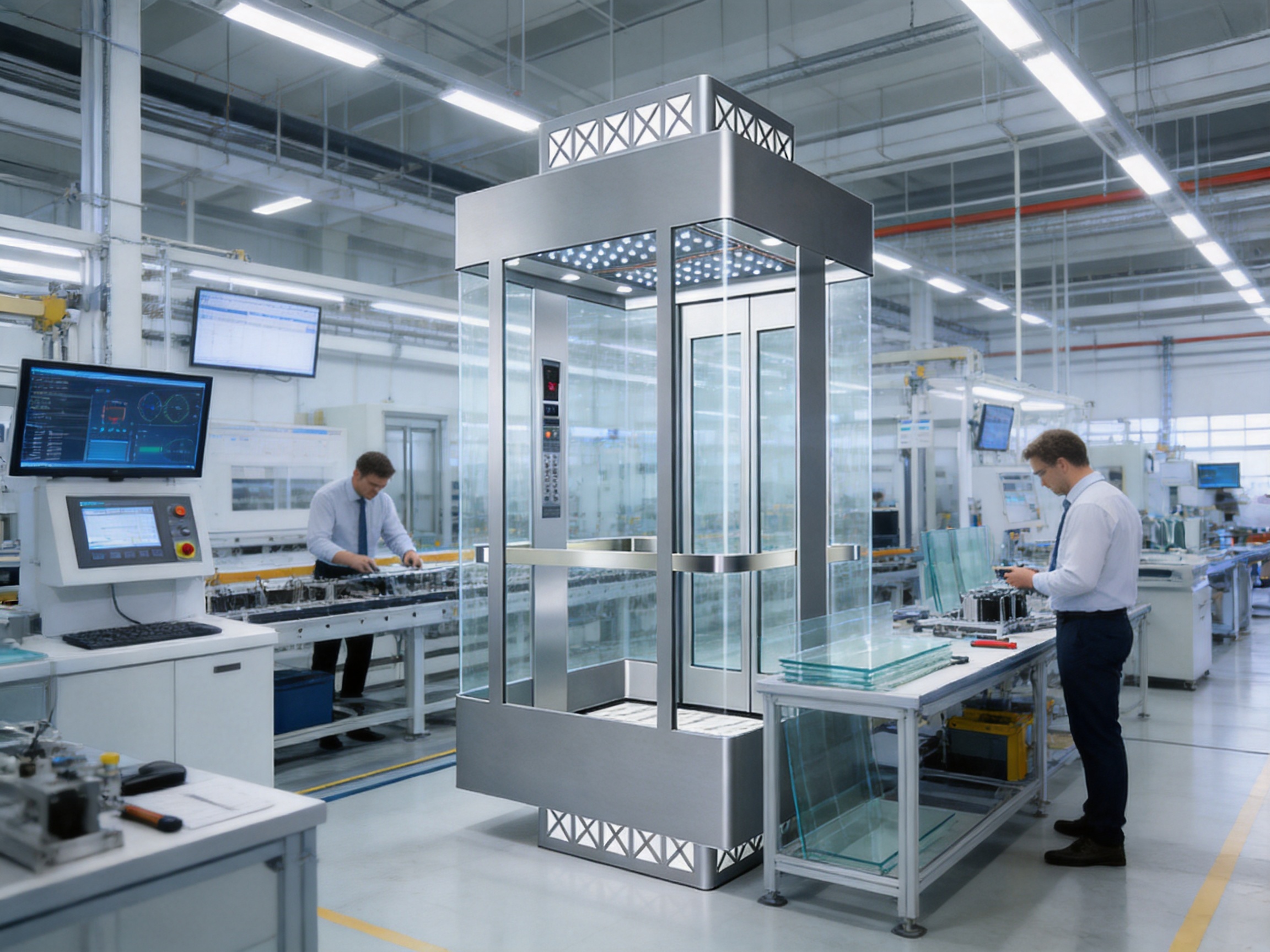
Fifth, the manufacturing base uses advanced production concepts including intelligent manufacturing, automated production lines, big data, IoT technology, and closed-loop quality control. This supports consistency across product batches and improves the reliability of key components and assembly processes. In elevator projects, manufacturing consistency is a crucial advantage because even small deviations can affect ride quality, installation accuracy, and long-term service performance.
Advanced Manufacturing Strength and Quality Control
The performance of an elevator begins long before installation. It begins in design, material selection, component processing, control system integration, factory inspection, and quality management. Tenau Elevator (China) Co., Ltd. is a comprehensive elevator manufacturer originating from Germany and integrating design, research and development, manufacturing, marketing, installation, and after-sales service. This background supports the development of products such as the TO-G010 observation elevator.
The company is located in Nanxun, Zhejiang Province, at the core of the Shanghai-Nanjing-Suzhou-Hangzhou economic circle. This location gives access to an industrial ecosystem, logistics channels, technical talent, and regional manufacturing resources. For elevator production, supply chain coordination is important because each finished product depends on mechanical, electrical, control, safety, decorative, and structural components working together.
The company complies with ISO9001, ISO14001, and OHSMS18001 standards. These management systems correspond to quality management, environmental management, and occupational health and safety management. For buyers, such compliance indicates that the manufacturer applies systematic processes rather than relying only on individual experience. It also supports consistency in export-oriented projects where documentation and process control are important.
German Industry 4.0 intelligent manufacturing is part of the company’s manufacturing strategy. This means production is supported by automation, data integration, and smart process management. In elevator manufacturing, intelligent production can help improve accuracy, reduce human error, track quality information, and create a more reliable production workflow.
Automated production lines improve consistency in processing and assembly. While elevators often require project-specific customization, many core manufacturing steps benefit from automation and repeatable standards. This is especially relevant for components requiring dimensional accuracy, surface quality, and structural reliability.
Big data and IoT technology also contribute to manufacturing and service capability. Data can be used to monitor production quality, analyze operation trends, support remote inspection, and improve maintenance planning. In a modern elevator ecosystem, the product is not only a mechanical machine but also an intelligent system connected to safety data, operating status, and service response.
The company applies a full closed-loop quality control system. Closed-loop quality control means that issues are not only detected but also traced, analyzed, corrected, and prevented from recurring. This is a major advantage compared with fragmented production systems where quality problems may be handled only after delivery. For glass observation elevators, where appearance and precision are highly visible, closed-loop quality control is especially important.
Intelligent Monitoring and Service Capability
Elevator ownership is a long-term responsibility. After installation, the value of the product depends on daily reliability, inspection quality, maintenance speed, spare parts support, and technical response. The TO-G010 product information highlights intelligent remote monitoring and service planning as important parts of the overall solution.
The Tenau Eye System provides intelligent remote monitoring, allowing constant control over elevator operation and safety data. This type of system can support automatic lift inspection and help service teams understand the equipment condition more quickly. In busy hotels and shopping malls, early detection of abnormalities is valuable because downtime affects visitor satisfaction, tenant operations, and facility reputation.
Exclusive client files are used to formulate one-to-one maintenance plans tailored to each client’s requirements. This is important because no two buildings operate in exactly the same way. A luxury hotel, a regional shopping center, a medical-commercial complex, and an entertainment venue may all require different maintenance schedules and service priorities. Tailored plans allow maintenance to match actual operating conditions.
Omnibearing service is supported through a worldwide marketing and service network. For export projects, service capability is often as important as product quality. Buyers want confidence that technical support, documentation, and after-sales service can be coordinated beyond the initial sale. A broad service network helps support this expectation.
Unified maintenance processes provide global standards for security and performance. Standardization helps ensure that inspections, adjustments, and maintenance tasks follow recognized procedures. This reduces the risk of inconsistent service quality across different locations and supports long-term equipment reliability.
Full-time service teams available around the clock provide first-time responses to service requests. In commercial buildings, elevator stoppage during peak hours can cause serious inconvenience. Fast response capability is therefore a competitive advantage, especially for properties that depend on passenger flow, guest satisfaction, and public safety.
Safety Functions in Detail
The safety system of the 360 degree full-view glass observation elevator includes several practical functions designed for real operating conditions. Each function addresses a specific risk or operational challenge.
Accidental movement prevention arrests the elevator cab if unintended movement occurs while the doors are open. This is a vital protection for passengers entering or exiting the elevator. The function improves confidence in door-zone safety and supports compliance with modern expectations for elevator protection.
Designated stop logic automatically travels to the next floor if the doors fail to open at the destination. This helps avoid passenger inconvenience and supports safer recovery from a door opening issue. Instead of leaving the system in an uncertain state, the logic provides a controlled response.
Start protection control stops operation if the car cannot leave the door zone within a designated time. This helps prevent abnormal operation and allows the system to respond when expected movement does not occur. Such protection is important for identifying problems related to drive, brake, traction, or control conditions.
Anti-stall timer protection halts operation immediately if traction wire rope slippage is detected. Rope slippage can affect movement accuracy and safety. Detecting and responding to this condition helps protect passengers and equipment.
Inspection operation enables inching speed for maintenance checks. Maintenance personnel need precise control during inspection and adjustment. Inching speed allows safer movement for technical work, supporting accurate service and reducing risk during maintenance.
The infrared safety probe uses a light curtain system to monitor door cycles. Compared with simple mechanical edges or limited beam sensors, a light curtain provides broader detection coverage. This is particularly useful in public buildings where passengers may enter at different speeds and with various objects.
Travel Functions in Detail
The travel functions of the elevator are designed to make daily use efficient and responsive. These functions are especially relevant in environments where demand changes quickly and passenger flow must be managed intelligently.
Group control coordinates multiple lifts to choose the most suitable response. In a multi-elevator arrangement, the system can reduce duplicated movement and assign calls more efficiently. This improves passenger waiting time and reduces unnecessary energy use caused by inefficient dispatching.
Automatic pass without stop helps maintain efficiency when the elevator is full. Instead of stopping at additional floors where passengers cannot board, the car continues to serve existing passengers. This improves throughput during crowded periods.
Direct parking improves leveling efficiency by following the distance principle and avoiding unnecessary crawling. This saves travel time and supports smoother operation. The benefit is particularly noticeable in buildings with frequent short trips between adjacent floors.
Peak service logic provides dedicated dispatching for on-duty and off-duty peak periods. In commercial buildings, traffic is not evenly distributed. Intelligent dispatching during peaks can improve capacity and reduce congestion in lobbies.
Open in advance helps reduce door cycle time by starting door opening as the lift enters the proper zone. Express door closing enables faster departure when the door-shut button is pressed and safety conditions are satisfied. Together, these functions support faster passenger exchange and improved elevator availability.
Applications in Shopping Malls
Shopping malls require elevators that can manage diverse passenger groups: families, elderly visitors, people with disabilities, staff, delivery personnel in certain areas, tourists, and customers carrying bags. A glass observation elevator adds visibility and convenience while improving the openness of the mall environment.
In an atrium installation, the elevator can serve as a vertical landmark. Visitors can easily identify it from multiple floors. This improves wayfinding and encourages movement between levels, which is important for retail circulation. When customers can see upper levels and travel comfortably, they are more likely to explore the entire mall.
The panoramic cabin also supports the commercial atmosphere. Retail displays, seasonal decorations, promotional events, and architectural lighting can be viewed from the elevator. This makes the journey part of the shopping experience. For mall operators, this can enhance the perceived value of public space.
High passenger traffic makes safety and efficiency essential. Group control, automatic pass without stop, infrared door protection, and peak service logic are well suited to shopping centers. These functions help reduce waiting, improve flow, and support safer operation during weekends, holidays, and promotional events.
Applications in Hotels
Hotels rely heavily on first impressions. From the entrance lobby to the guest room corridor, every detail communicates service quality. A 360 degree full-view glass observation elevator can become a premium feature in a hotel lobby or atrium, offering guests a memorable vertical journey.
For luxury and business hotels, the transparent elevator can enhance the sense of space. Guests may view the lobby lounge, interior garden, banquet level, or city skyline during the ride. This helps create an atmosphere of openness and sophistication.
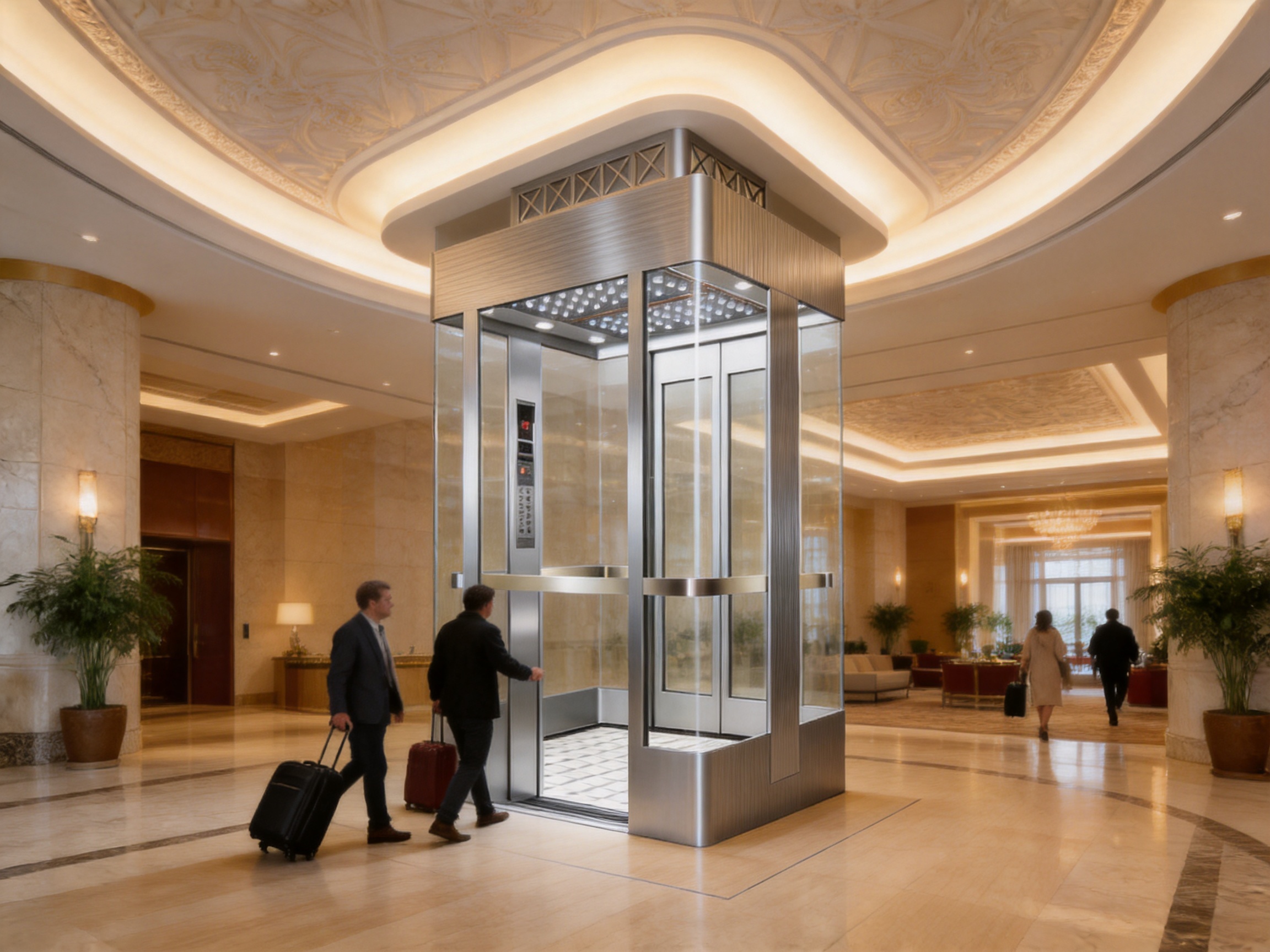
Hotels also require reliable movement for guests with luggage, staff operations, conference visitors, and event attendees. Peak traffic can occur during check-in, checkout, breakfast, weddings, exhibitions, and meetings. The elevator’s travel functions help manage these changing traffic patterns.
Safety and comfort are equally important. The handrail provides support, the lighting improves cabin atmosphere, and the laminated glass wall supports passenger confidence. Intelligent monitoring and dedicated maintenance planning help hotel operators protect guest satisfaction by reducing unexpected downtime.
Applications in Commercial and Public Architecture
Beyond shopping malls and hotels, this elevator can be considered for office atriums, cultural centers, exhibition halls, transportation hubs, tourist facilities, high-end residential clubs, and mixed-use complexes. Any building that wants vertical transportation to become visible and experiential can benefit from a panoramic elevator.
In office buildings, a glass observation elevator can support a modern corporate image. In exhibition centers, it can help visitors understand the building layout. In entertainment venues, it can add excitement to movement. In tourist facilities, it can function as part of the sightseeing experience.
The product’s balance of appearance and safety makes it adaptable. It is not limited to decorative use; it can support real passenger traffic. This is important for public architecture, where elevators must satisfy practical demands while also contributing to the design concept.
Environmental and Operational Considerations
Modern building projects increasingly consider environmental responsibility, energy efficiency, and long-term sustainability. Tenau Elevator (China) Co., Ltd. identifies safety and environmental protection as part of its mission, and its management system includes ISO14001 environmental management compliance.
Efficient dispatching functions can indirectly support energy-conscious operation. Group control reduces unnecessary movement. Automatic pass without stop prevents inefficient stops when the car is full. Direct parking reduces wasted time during leveling. While the exact energy performance depends on project configuration and operating conditions, intelligent travel logic can contribute to more efficient vertical transportation.
Durable materials also support sustainability by extending service life and reducing replacement frequency. Stainless steel wall surfaces and handrails are suitable for high-use public environments. Laminated glass provides a safety-oriented observation surface. Maintainable materials help facility managers keep the elevator attractive for many years.
Remote monitoring can support preventive maintenance, helping detect issues before they become serious. Preventive service can reduce major repairs, improve uptime, and help equipment operate within proper conditions. This is an important part of sustainable facility management.
Manufacturing Integration from Design to Service
A major strength behind the product is the manufacturer’s integrated capability. The company covers design, research and development, manufacturing, marketing, installation, and after-sales service. This full-process structure is particularly beneficial for observation elevators because they often require coordination among architects, contractors, elevator engineers, glass suppliers, control specialists, and interior designers.
During design, technical teams must consider shaft layout, glass visibility, cabin size, load requirements, speed, traffic demand, safety codes, and interior style. During manufacturing, the components must be produced accurately and assembled consistently. During installation, the elevator must fit the building structure and meet operational requirements. During after-sales service, maintenance teams must preserve safety, appearance, and ride quality.
When these stages are disconnected, project risk increases. Miscommunication can lead to delays, mismatched finishes, or performance issues. An integrated manufacturer can provide more unified technical support and improve project coordination.
The company’s experience in passenger elevators, freight elevators, escalators, moving walks, and related solutions also strengthens its engineering background. Observation elevators may appear specialized, but they share core technologies with passenger elevators, including drive systems, door systems, control logic, safety protection, and maintenance processes.
Why the 360 Degree Full-View Concept Matters
The term “360 degree full-view” refers not only to transparency but also to a design philosophy. It suggests openness, visibility, and connection with the surrounding environment. In architecture, visibility can change how people perceive movement and space.
Traditional enclosed elevators separate passengers from the building during travel. Passengers enter a closed cabin, move between floors, and exit into another space. A panoramic elevator keeps passengers connected to the building. The movement becomes understandable, visible, and often enjoyable.
This can reduce anxiety for some users because they can see the surroundings rather than feeling confined. It can also increase excitement in dramatic atrium spaces. For children, tourists, and first-time visitors, the elevator may become part of the memory of the building.
From a design standpoint, a full-view elevator can express modernity and transparency. It can make a lobby feel larger and more dynamic. It can add motion to an otherwise static space. When combined with proper lighting and interior finishes, it becomes both a transport machine and an architectural feature.
Project Selection Considerations
When selecting a 360 degree full-view glass observation elevator, project teams should evaluate several factors. The first is building function. A shopping mall, hotel, office atrium, and exhibition hall may each require different capacity, speed, cabin size, and traffic planning.
The second factor is installation location. The visual value of a panoramic elevator depends heavily on where it is placed. Atriums, exterior facades, lobby voids, and scenic shafts provide strong visibility. If the elevator is hidden in a narrow enclosed space, the benefit of the glass design may be reduced.
The third factor is traffic demand. If the elevator will serve heavy passenger flow, control functions such as group dispatching, automatic pass without stop, and peak service logic become especially important. If it is mainly a scenic or VIP elevator, comfort and architectural integration may be prioritized.
The fourth factor is maintenance access. Glass observation elevators must be kept clean and visually attractive. Project teams should plan for safe access to glass surfaces, cabin finishes, doors, lighting, and mechanical components. Intelligent monitoring and tailored maintenance files can support this long-term requirement.
The fifth factor is code compliance and local regulations. Elevator standards vary by country and region. A professional manufacturer and project consultant should coordinate technical specifications, safety devices, and inspection requirements according to local rules.
Long-Term Value for Building Owners
For building owners, the value of a panoramic elevator includes direct and indirect benefits. Direct benefits include passenger transportation, accessibility, efficient movement, and reliable service. Indirect benefits include improved building image, enhanced visitor experience, stronger space identity, and potential marketing value.
In shopping malls, a well-positioned observation elevator can increase the attractiveness of upper floors and support vertical circulation. In hotels, it can elevate the guest experience and help differentiate the property from competitors. In mixed-use developments, it can create a recognizable feature that connects retail, hospitality, office, and leisure areas.
Reliability is essential to protect this value. A beautiful elevator that frequently stops working becomes a liability. The product’s safety systems, intelligent monitoring, manufacturing quality, and service support are therefore central to its long-term appeal.
The combination of laminated glass, stainless steel, modern lighting, advanced control functions, and remote service capability creates a balanced solution. It supports both the emotional appeal of panoramic travel and the practical demands of commercial operation.
Q&A Section
What is the main advantage of a 360 degree full-view glass observation elevator?
The main advantage is that it combines vertical transportation with panoramic visual experience. Passengers can view the surrounding architecture while traveling, making the elevator part of the building’s design and visitor experience.
Where is this type of elevator most suitable?
It is especially suitable for shopping malls, hotels, commercial complexes, exhibition centers, entertainment venues, office atriums, tourist facilities, and public buildings where visibility and passenger experience are important.
What safety features are included in the product?
The elevator includes accidental movement prevention, UCMP protection, infrared light curtain detection, door derailment prevention, start protection control, anti-stall timer protection, designated stop logic, and inspection operation for maintenance.
How does the elevator improve traffic efficiency in busy buildings?
It uses group control, automatic pass without stop, direct parking, peak service logic, open-in-advance door operation, and express door closing. These functions help reduce waiting time, improve dispatching, and maintain passenger flow during busy periods.
What materials are used in the cabin?
The cabin includes a baking painted steel car cover, acrylic lighting, a laminated 6+6 mm glass observation wall, a baking painted steel decorative ceiling frame, a light-passing board, hairline stainless steel car walls, a stainless steel flat handrail, and PVC flooring.
How does intelligent remote monitoring support elevator operation?
Remote monitoring provides visibility into elevator operation and safety data. It can support automatic inspection, faster service response, preventive maintenance, and better long-term equipment management.
Why is laminated glass important for an observation elevator?
Laminated glass provides transparency while improving safety performance compared with ordinary glass. It is widely used in architectural applications where visibility and protection are both required.
How does the product compare with basic observation elevators?
Compared with basic observation elevators, this product offers a more complete combination of panoramic design, multilayer safety protection, intelligent traffic functions, remote monitoring, refined materials, and advanced manufacturing support.
What manufacturing strengths support product reliability?
The manufacturer applies intelligent manufacturing, automated production lines, big data, IoT technology, ISO-based management systems, and full closed-loop quality control. These processes help improve consistency, accuracy, and long-term reliability.
Is the elevator only decorative, or can it handle practical passenger traffic?
It is designed to be both visually attractive and operationally practical. Its travel functions and safety systems make it suitable for daily passenger service in busy commercial and hospitality buildings.
Conclusion
The 360 Degree Full-View Glass Observation Elevator for Shopping Malls and Hotels is a product designed for modern architecture that values both performance and experience. Its panoramic capsule appearance transforms elevator travel into a visual journey, while its safety systems, intelligent dispatching, durable materials, and remote monitoring support reliable daily operation.
For shopping malls, it can improve wayfinding, enhance atrium design, and encourage movement between floors. For hotels, it can create a premium guest impression and support comfortable passenger flow. For commercial and public architecture, it can become a visible symbol of openness, modernity, and technical quality.
The product’s advantages are strengthened by the manufacturer’s integrated capabilities in design, research and development, manufacturing, installation, and after-sales service. Advanced production methods, German-inspired engineering standards, intelligent manufacturing, automated lines, IoT technology, and closed-loop quality control all contribute to a stronger product foundation.
In a competitive elevator market, an observation elevator must do more than look impressive. It must protect passengers, operate efficiently, support maintenance teams, and maintain its appearance over years of use. This full-view glass observation elevator meets those expectations by combining architecture, engineering, safety, and service into one complete vertical transportation solution.
References
ISO 9001 Quality Management Systems: Principles and Vocabulary.
ISO 14001 Environmental Management Systems: Requirements with Guidance for Use.
ISO 45001 Occupational Health and Safety Management Systems: Requirements with Guidance for Use.
EN 81 Series Safety Rules for the Construction and Installation of Lifts.
ASME A17.1/CSA B44 Safety Code for Elevators and Escalators.
CIBSE Guide D: Transportation Systems in Buildings.
Elevator World Educational Materials on Elevator Safety, Maintenance, and Traffic Planning.
Architectural Glass and Glazing Design Handbooks for Laminated Safety Glass Applications.
Product: 360 Degree Full-View Glass Observation Elevator for Shopping Malls and Hotels

Related Products
Related News
Built on safety, forging trust in vertical mobility.
lf you have any questions or need help, feel free to contact with our team.
 export@tenau.com.cn
 +86-18601458867
 +86-512-65059883
Elevator & Escalator
Factory Add
East of Xicheng Road, North of Lianyi Road, Nanxun Economic Development Zone, Nanxun District, Huzhou City, Zhejiang Province, P.R.China
Copyright © Tenau Elevator (China) Co., Ltd. All Rightd Reserved.
Custom High Quality Elevator Suppliers and World Brand Elevator Company