

 en
en Español
 русский
 中文简体
中文简体
Industry News
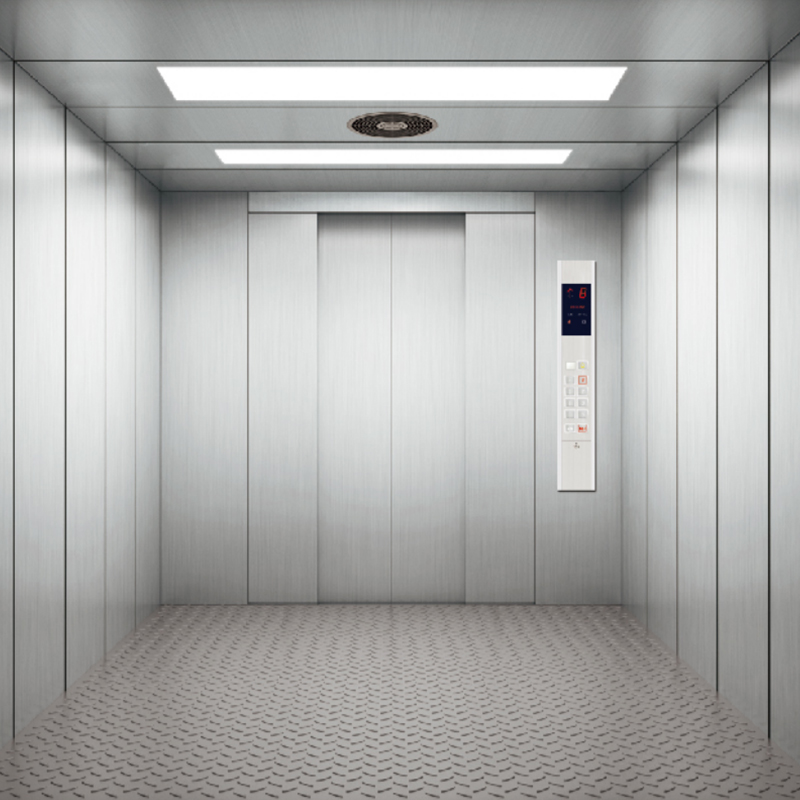 Commercial Hairline Stainless Steel Freight Elevator with Fluorescent LightingThis freight elevator offers a standard 2,000-3,000 kg capacity with a clean hairline stainless steel finish, suitable for commercial projects. Consider the surrounding space planning when evaluating dimensions.View Product →
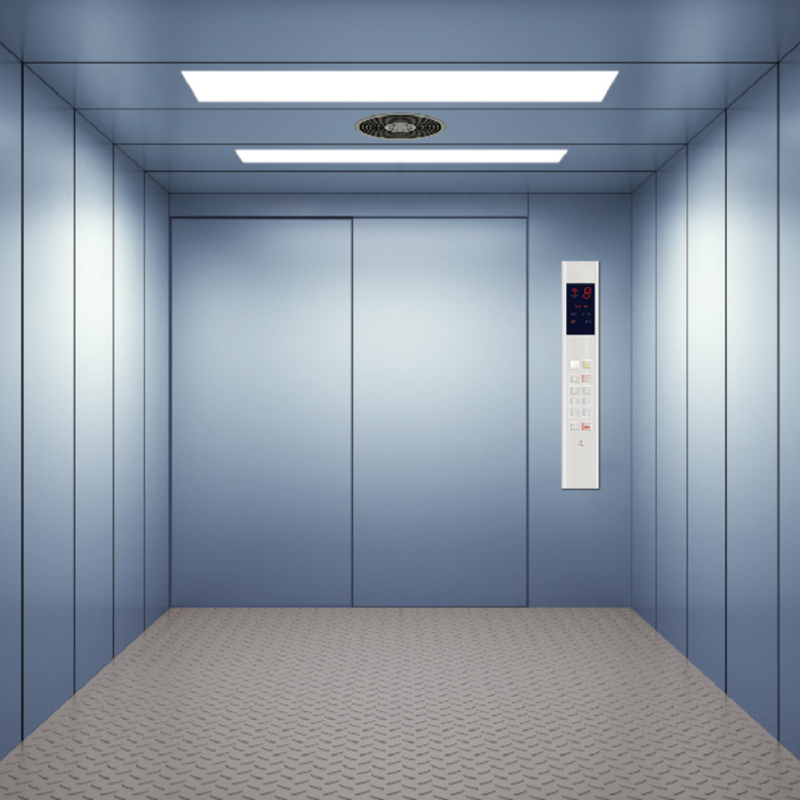 Heavy-Duty Painted Steel Freight Elevator for Warehouse UseDesigned for warehouse environments, this painted steel elevator resists fork impacts and is easier to clean than mirror stainless steel. Its robust construction suits high-frequency cargo handling.View Product →
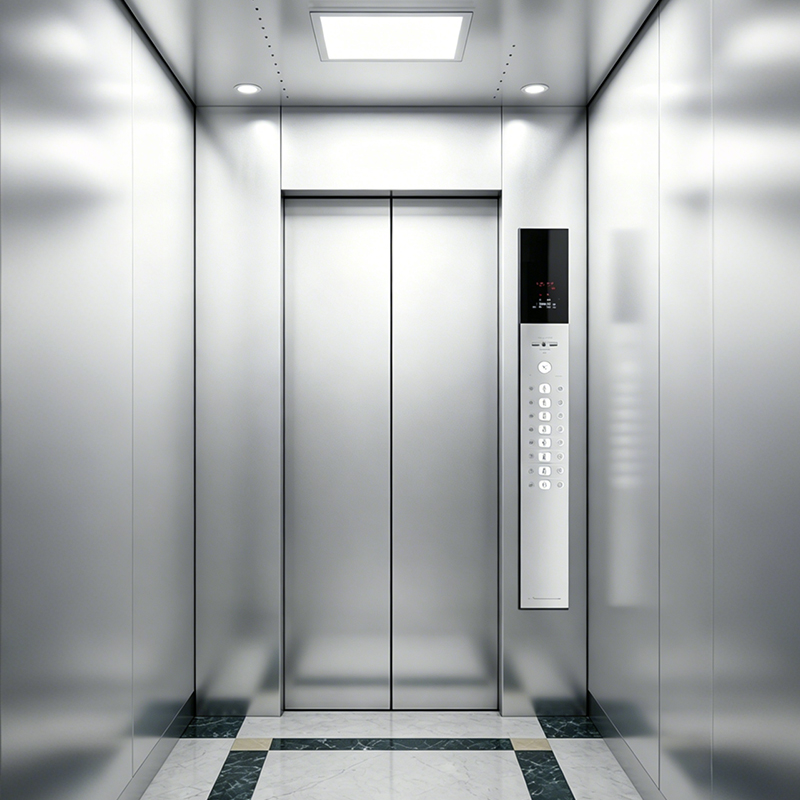 Machine Room-Less Freight Elevator for Tight Shaft SpacesThis machine room-less freight elevator frees up floor area for storage or circulation in tight shaft spaces. Careful planning is essential because hoistway construction changes are costly.View Product →
Cargo Elevator Dimensions: Standard Sizes, Complete Sizing Guide & Buying Tips
Content
- 1 Standard Cargo Elevator Cabin Dimensions
- 2 Dimensions Beyond the Cabin: Doors, Shaft, and Pit
- 3 Factors That Shrink or Expand Your Cargo Elevator
- 4 Matching Dimensions to Your Actual Cargo
- 5 Procurement Checker: 5 Dimension Mistakes to Avoid
- 6 Cargo Elevator Dimensions: FAQ
- 6.0.1 Q1: What is the smallest cargo elevator size?
- 6.0.2 Q2: Can a pallet jack enter a cargo elevator?
- 6.0.3 Q3: Is a machine roomless cargo elevator smaller in size?
- 6.0.4 Q4: What dimensions should I give the civil engineer for a 3,000 kg cargo elevator?
- 6.0.5 Q5: What is the standard door height for a cargo elevator?
A logistics manager in Shanghai is planning a new 12,000 m² warehouse. The forklift takes a 1,100 kg pallet, and the contractor proposes a 1,000 kg cargo elevator with a 900 mm door. It looks fine on paper, but the pallet is 1,200 mm wide, which means it cannot enter the car in one piece. This is the most common sizing error we see in cargo elevator projects: dimensions are selected from a catalog before the actual payload is measured.
Cargo elevator dimensions are primarily determined by three parameters: car interior width, car interior depth, and clear door width, with load capacity as the limiting factor. Standard freight elevators typically handle 1,000 kg to 5,000 kg, and a well-matched installation will support years of efficient goods flow. In the sections below, we cover standard sizes, secondary dimensions such as pit depth and overhead clearance, and the buying decisions that make dimension planning less risky.
Standard Cargo Elevator Cabin Dimensions
While passenger elevator dimensions are primarily driven by occupancy and accessibility codes, cargo elevator dimensions are driven by payload. The car must be large enough to accommodate the unit load and deep enough to let lifting equipment enter and exit without repositioning.
The following table shows typical cabin and door ranges for common capacity classes. These figures are industry examples, not binding standards; your project may require a customized solution.
| Load Capacity | Car Width (mm) | Car Depth (mm) | Door Width (mm) | Door Height (mm) |
|---|---|---|---|---|
| 1,000 kg | 1,000-1,200 | 1,400-1,600 | 900-1,000 | 2,100-2,200 |
| 2,000 kg | 1,200-1,500 | 1,800-2,200 | 1,100-1,200 | 2,100-2,200 |
| 3,000 kg | 1,500-2,000 | 2,200-2,600 | 1,200-1,500 | 2,200-2,400 |
| 5,000 kg | 2,000-2,400 | 2,800-3,500 | 1,500-2,000 | 2,200-2,600 |
Why dimension ranges matter more than a single number: Two elevators with a 3,000 kg rating can have car widths as different as 1,500 mm and 2,000 mm. Your unit load determines which one actually works.
For commercial projects that need a clean finish and a standard 2,000-3,000 kg footprint, the commercial hairline stainless steel freight elevator with fluorescent lighting is a sensible starting point.
Commercial Hairline Stainless Steel Freight Elevator with Fluorescent LightingThis freight elevator offers a standard 2,000-3,000 kg capacity with a clean hairline stainless steel finish, suitable for commercial projects. Consider the surrounding space planning when evaluating dimensions.View Product →Dimensions Beyond the Cabin: Doors, Shaft, and Pit
Most spec sheets focus on car dimensions, but a cargo elevator cannot function unless the space around it is properly planned. Three additional measurements are critical.
Door opening A cargo elevator with a 2,000 mm deep car is useless if the door opens only 900 mm. Standard freight elevator applications often use 1,200-1,500 mm door widths, allowing pallet jacks and small forklifts to enter. For full-width door configurations, some manufacturers offer doors that open across the entire cabin width.
Shaft and pit A typical 3,000 kg machine room freight elevator requires a shaft width of roughly 2,800-3,200 mm and a pit depth of 1,200-1,500 mm, depending on travel speed and buffer design. These values change when you choose a machine roomless configuration, which places the drive system inside the shaft and eliminates the machine room.
Overhead clearance The top of the shaft must accommodate the car, counterweight, and any overhead equipment. A common value is 3,800-4,500 mm above the highest landing.
Factors That Shrink or Expand Your Cargo Elevator
Dimension decisions are rarely made in isolation. The following factors have the strongest influence on the final car size.
- Load capacity and duty classification
- Type of goods: pallets, rolls, long profiles, or heavy machinery
- Forklift or pallet truck access
- Building column spacing and usable shaft area
- Local safety codes and minimum requirements
- Travel height and speed
Load capacity is the first filter. A 1,000 kg cargo lift is often enough for light warehouses; a 5,000 kg unit is needed for heavy industrial work. Between these extremes, the 2,000-3,000 kg range covers most logistics scenarios.
For warehouse operations, the cab finish matters more than many buyers realize. A heavy-duty painted steel car is easier to clean and more resistant to fork impacts than standard mirror stainless steel. Tenau's heavy-duty painted steel freight elevator for warehouse use is designed for such environments.
Heavy-Duty Painted Steel Freight Elevator for Warehouse UseDesigned for warehouse environments, this painted steel elevator resists fork impacts and is easier to clean than mirror stainless steel. Its robust construction suits high-frequency cargo handling.View Product →
If you are evaluating cargo elevator solutions for different industries, this guide to cargo elevator applications across industries can help you identify additional constraints before you finalize dimensions.
Matching Dimensions to Your Actual Cargo
Before you specify dimensions, measure the largest item you plan to move vertically. Consider its width, depth, height, and total weight, and add clearance margins.
- Standard pallet (1,000 x 1,200 mm): needs at least 1,100 mm door width and 1,400 mm car depth
- Long steel profiles: require special height and depth planning
- Forklift entering the car: add at least 500 mm extra length for the operator position
- Gas cylinders or coil stock: prefer a wide door opening and smooth interior walls
Use the following approach in your specification:
- Measure the largest unit load.
- Add 300-500 mm clearance on every side.
- Check the door width against the unit load width plus the lifting equipment width.
- Confirm the load weight against the rated capacity and expected daily lift count.
A practical example: a warehouse that stores standard 1,200 mm pallets at 2,000 kg each should plan for a 2,000 kg cargo elevator with at least 1,500 mm car width, 2,000 mm car depth, and 1,200 mm door width. This combination lets a pallet jack drive in and turn without touching the walls.
When shaft space is tight, a machine roomless configuration becomes attractive. Tenau's machine roomless freight elevator frees up floor area for storage or circulation.
Machine Room-Less Freight Elevator for Tight Shaft SpacesThis machine room-less freight elevator frees up floor area for storage or circulation in tight shaft spaces. Careful planning is essential because hoistway construction changes are costly.View Product →Procurement Checker: 5 Dimension Mistakes to Avoid
- Specifying only load capacity without checking the car dimensions.
- Assuming door width equals car width.
- Forgetting pit depth and overhead clearance in the building design.
- Choosing a finish based on appearance instead of impact resistance.
- Ignoring the duty cycle. A cargo lift used 200 times per day needs different dimensions and drive components than one used 20 times.
Measure the largest unit load first. The elevator dimensions should be chosen around the cargo, not the other way around.
These mistakes are expensive to fix because hoistway construction cannot be changed easily. If you are already planning a freight elevator project, it is worth reviewing how common failures arise in freight elevator systems. See the common problems in freight elevators before finalizing your dimension list.
Cargo Elevator Dimensions: FAQ
Q1: What is the smallest cargo elevator size?
The smallest common cargo elevator is around 1,000 kg with a car about 1,000 mm wide by 1,400 mm deep. Some compact models go down to 800 kg for light commercial use.
Q2: Can a pallet jack enter a cargo elevator?
Yes, if the door width is at least 1,000 mm and the car depth is 1,600 mm or more. For a full-size pallet with a pallet jack, 1,200 mm door width and 1,800 mm depth is comfortable.
Q3: Is a machine roomless cargo elevator smaller in size?
Machine roomless elevators do not have a separate machine room, which saves floor area. The car dimensions are similar, but the shaft and overhead requirements are different, so coordinate with the manufacturer before finalizing the building plan.
Q4: What dimensions should I give the civil engineer for a 3,000 kg cargo elevator?
A typical starting point is a shaft width of 2,800-3,200 mm, shaft depth of 2,200-2,600 mm, and pit depth of 1,200-1,500 mm. Confirm exact figures with the manufacturer.
Q5: What is the standard door height for a cargo elevator?
Most freight elevator doors are 2,100-2,400 mm high. The higher range is used when tall racks or machinery need to enter the car.
The right cargo elevator dimension depends on what you move, how often you move it, and the space you have available. Start with the largest unit load and the lifting equipment that enters the car, then work with a manufacturer to confirm shaft, pit, and overhead requirements. A well-sized cargo elevator should feel like part of the logistics flow, not a constraint you work around.
Related Products



Related News
Built on safety, forging trust in vertical mobility.
lf you have any questions or need help, feel free to contact with our team.
 export@tenau.com.cn
 +86-18601458867
 +86-512-65059883
Elevator & Escalator
Factory Add
East of Xicheng Road, North of Lianyi Road, Nanxun Economic Development Zone, Nanxun District, Huzhou City, Zhejiang Province, P.R.China
Copyright © Tenau Elevator (China) Co., Ltd. All Rightd Reserved.
Custom High Quality Elevator Suppliers and World Brand Elevator Company