

 en
en Español
 русский
 中文简体
中文简体
Industry News
What Optimization Strategies Govern Commercial Elevator Control Panels and Replacement Buttons?
Content
- 1 Engineering Standards and Regulatory Frameworks for Car Operating Panels
- 2 Component Breakdown of Modern Elevator Interface Systems
- 3 System Architecture of Vertical Transportation Interfaces
- 4 Mechanical Engineering and Material Selection Parameters
- 5 Modernization Protocols for Commercial Car Operating Panels
- 6 Functional Differentiation Across System Categories
- 7 Diagnostic Procedures and Failure Mode Mitigation
- 8 Frequently Asked Technical Questions
- 8.0.1 Q1: What electrical indicators differentiate a simple contact failure from a localized serial communication bus failure within an elevator control panel?
- 8.0.2 Q2: How do vandal-resistant elevator buttons mechanically handle severe impact forces without passing that energy to internal microswitches?
- 8.0.3 Q3: Why are dual horizontal LOP (Landing Operating Panel) configurations used on the ground floor of complex commercial buildings?
- 8.0.4 Q4: What parameters must be evaluated when replacing legacy chemical-etched braille elevator buttons with modern solid metal die-cast variants?
Engineering Standards and Regulatory Frameworks for Car Operating Panels
Modern commercial infrastructure demands rigorous adherence to international engineering standards when upgrading vertical transportation interfaces. The passenger elevator relies heavily on the design architecture of its Car Operating Panel (COP) to balance high throughput with universal accessibility. Regulatory frameworks govern specific mechanical, electrical, and tactile requirements for public-use interfaces, establishing strict parameters for button dimensioning, force registration, and feedback mechanisms.
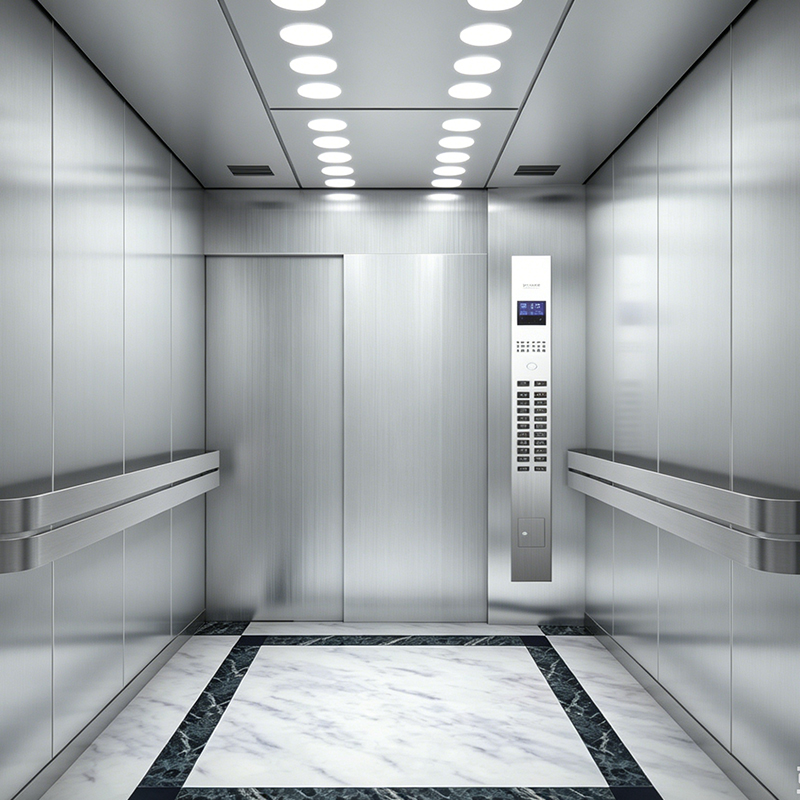
Accessibility codes mandate that critical interface components remain operational under diverse user conditions. For infrastructure like a hospital elevator, these requirements become even more restrictive, necessitating precise layout configuration to accommodate emergency operations and medical personnel.
15.25mm
Minimum Braille Character Offset Distance
2.2N
Maximum Activation Force Threshold
1200mm
Maximum Control Panel Height Placement
Control interfaces must maintain precise spacing metrics to prevent accidental concurrent registrations. The configuration of an elevator control panel requires systematic consideration of tactile indicators, visual contrasts, and audible signaling devices to ensure comprehensive environmental feedback.
Component Breakdown of Modern Elevator Interface Systems
An elevator button panel comprises multiple specialized sub-assemblies working in tandem to relay user requests to the central dispatching processor. Understanding each component category allows facility management teams to isolate mechanical wear from electrical failure modes during routine modernization cycles.
Primary Call Registration Interfaces
The standard elevator push button serves as the primary contact point between users and the lift control logic. These components utilize micro-travel mechanical switches or capacitive sensors engineered to withstand millions of physical cycles. When deploying upgrades across a portfolio, procurement teams frequently source specific variations such as schindler elevator buttons or thyssenkrupp elevator buttons to match physical cutout profiles, though universal mechanical alternatives are increasingly utilized to streamline inventory.
Tactile and Accessible Interface Design
Universal design principles mandate the integration of braille elevator buttons across all public and commercial properties. These buttons feature raised alphanumeric characters alongside standard contracted braille configurations, allowing visually impaired occupants to navigate multi-story complexes independently.
| Component Type | Mechanical Lifecycle | Impact Resistance Rating | Primary Application Environment |
|---|---|---|---|
| Standard Push Button | 5,000,000 Cycles | IK07 Rating | Standard Commercial Office Buildings |
| Vandal-Resistant Elevator Buttons | 10,000,000 Cycles | IK10 Rating | Transit Hubs and Public Housing Complexes |
| Braille Elevator Buttons | 3,500,000 Cycles | IK08 Rating | Healthcare Facilities and Public Institutions |
Secondary Access and Environmental Signaling
Beyond standard floor selections, the complete control matrix incorporates secondary components critical for building operations. Dedicated elevator key switches provide restricted access control for independent service, maintenance modes, fire department operations, and housekeeping bypass functions. Simultaneously, elevator Hall Lanterns located at structural hoistway openings provide directional advance notification, optimizing pedestrian distribution before a cab arrives at a designated landing.
System Architecture of Vertical Transportation Interfaces
The integration of car operating panels requires a clear delineation between cabin-mounted interfaces and landing-mounted interfaces. The diagram below illustrates the communication network linking the primary control elements to the centralized machine room processor.
Mechanical Engineering and Material Selection Parameters
Specifying materials for elevator buttons and faceplates requires analyzing traffic density, environmental humidity, and chemical exposure from routine sterilization. Stainless steel variants, primarily grade 304 or 316, serve as the baseline standard for commercial grade fixtures due to their resistance to mechanical shear and surface oxidation.
In high-traffic urban centers or unmonitored infrastructure, standard components are susceptible to intentional damage. High-durability variants feature mechanical designs that prevent foreign objects from wedging into the housing gap, preserving long-term functionality.
- Flush-Mount Fitment Profiles: Eliminate external leverage points, preventing tools or physical force from prying individual elevator buttons from the main assembly plate.
- Mechanical Travel Limitations: Overtravel stops protect internal microswitches by absorbing excessive physical force exerted by users during peak operating periods.
- Dual-Channel Contact Bridges: Incorporate secondary electrical pathways within each elevator push button housing to preserve functionality even if one contact fails due to debris entry.
- Chemical Resistance Seals: Utilize specialized internal gaskets that prevent liquid ingress from harsh cleaning solvents, protecting sensitive electronics.
Selecting legacy mechanical footprints during partial retrofits requires evaluating compatibility across legacy structural configurations. Technicians frequently replace components matching original profiles like dover elevator buttons or specialized historical dimensional layouts, ensuring stable alignment without modifying the entire metal faceplate structure.
Modernization Protocols for Commercial Car Operating Panels
A comprehensive modernization program involves upgrading both the internal communication logic and the external contact surfaces. Facility administrators must execute updates methodically to minimize building downtime and ensure new equipment interfaces cleanly with older mechanical infrastructure.
01
Kinematic and Electrical Diagnostic Phase
Perform complete structural and electrical isolation tests on the existing elevator COP (Car Operating Panel) to check continuity, voltage stability, and signal processing timing before removing components.
02
Dimensional Verification and Plate Alignment
Measure structural tolerances within the cab wall frame. Ensure replacement assemblies align perfectly with legacy mounting studs to avoid structural modifications and prevent localized vibration.
03
Integration of Signaling and Accessibility Electronics
Install braille elevator buttons alongside secondary notification fixtures, including localized audio units and directional elevator Hall Lanterns, to achieve full compliance with access regulations.
When deploying specialized systems within demanding medical environments, facility planners must integrate design practices that meet strict sanitization protocols. The illustration below highlights the functional requirements for a high-traffic healthcare layout.
Functional Differentiation Across System Categories
Elevator systems are engineered to meet distinct operational goals based on the traffic demands of the building. Comparing a standard high-capacity passenger elevator with a specialized medical transportation unit reveals distinct layout and wiring strategies.
A hospital elevator layout places a higher priority on emergency code overrides, non-contact controls, and horizontal control arrays accessible to stretcher handlers. In contrast, high-rise commercial configurations focus primarily on rapid floor entry serialization and high-visibility destination dispatching feedback.
| Operational Parameter | Commercial Transit Focus | Healthcare Infrastructure Focus |
|---|---|---|
| Primary Interface Configuration | Vertical Column Configuration | Dual Horizontal/Vertical Arrays |
| Override Control Priority | Sabbatical/Housekeeping Switching | Code Blue Priority Interruption Switch |
| Sub-Surface Illumination Type | High-Contrast LED Backlighting | Low-Glare Amber Diffusion LED Matrix |
| Ingress Protection Target | IP54 Standard Dust/Moisture Protection | IP65 Enhanced Chemical Liquid Ingress Seal |
Diagnostic Procedures and Failure Mode Mitigation
Regular field maintenance prevents intermittent call registration drops, which can degrade overall dispatching efficiency. Technicians use targeted electrical and mechanical testing protocols to identify deteriorating contact assemblies before total component failure occurs.
Contact resistance values exceeding 0.5 ohms inside an individual elevator push button indicate localized carbon buildup or oxidation on the silver contact points, requiring immediate module replacement.
When dealing with mixed-vendor facilities, technicians must carefully manage specific engineering nuances. Sourcing direct equivalents for specialized components like schindler elevator buttons, thyssenkrupp elevator buttons, or older dover elevator buttons ensures the replacement parts match the original signaling voltages and digital serial communication protocols used by the host controller.
Frequently Asked Technical Questions
Q1: What electrical indicators differentiate a simple contact failure from a localized serial communication bus failure within an elevator control panel?
A1: A single contact failure is limited to an individual floor selection module, where the mechanical switch fails to pull the local input voltage down to logic ground. In contrast, a serial communication bus failure disables an entire section of the elevator button panel, causing all floor registration LEDs to blink rhythmically or remain completely dark due to a loss of clock data line synchronization with the machine room controller.
A2: High-durability buttons use a patented overtravel protection architecture. The external metal cap sits inside a heavy, solid stainless steel bezel with a built-in mechanical shoulder stop. When struck with extreme force, the cap bottoms out against this outer ring, transferring the kinetic energy directly into the elevator COP faceplate and car frame rather than crushing the internal electronic microswitch component.
Q3: Why are dual horizontal LOP (Landing Operating Panel) configurations used on the ground floor of complex commercial buildings?
A3: Dual horizontal units are installed on high-traffic main floors to meet both heavy volume demands and strict accessibility requirements. Placing one panel at standard height and a secondary panel at a lower, horizontally oriented position ensures full compliance with wheelchair reach ranges. This distribution prevents crowding around a single station and provides redundant operational options during busy peak hours.
A4: Technicians must verify the rear mounting depth, structural cutout diameter, and electrical wire harness style. Solid die-cast buttons often have thicker profiles than legacy etched plates, requiring adequate space inside the COP housing box. Additionally, ensure the built-in LED illumination matches the current supply voltage (typically 24V DC) to prevent dimming or premature component failure.
Related Products
Related News
Built on safety, forging trust in vertical mobility.
lf you have any questions or need help, feel free to contact with our team.
 export@tenau.com.cn
 +86-18601458867
 +86-512-65059883
Elevator & Escalator
Factory Add
East of Xicheng Road, North of Lianyi Road, Nanxun Economic Development Zone, Nanxun District, Huzhou City, Zhejiang Province, P.R.China
Copyright © Tenau Elevator (China) Co., Ltd. All Rightd Reserved.
Custom High Quality Elevator Suppliers and World Brand Elevator Company