

 en
en Español
 русский
 中文简体
中文简体
T0-LSC260 Elevator Operation Panel: Intelligent Control, Durable Design, and Manufacturing Excellence
Content
- 1 1. The Role of an Elevator Operation Panel
- 2 2. Product Positioning of the T0-LSC260
- 3 3. Main Product Advantages
- 4 4. Comparison with Lower-Quality or Less Integrated Alternatives
- 5 5. Advanced Manufacturing Capabilities
- 6 6. Application Scenarios
- 7 7. Specification and Procurement Considerations
- 8 8. Installation and Commissioning
- 9 9. Maintenance and Lifecycle Performance
- 10 10. Why the Manufacturer Matters
- 11 11. Frequently Asked Questions
- 11.1 Q1: What is the T0-LSC260?
- 11.2 Q2: Is the T0-LSC260 suitable for every elevator?
- 11.3 Q3: What distinguishes this panel from a basic low-cost alternative?
- 11.4 Q4: Can the panel be customized?
- 11.5 Q5: Does the product support accessibility requirements?
- 11.6 Q6: How should the panel be maintained?
- 11.7 Q7: Can it be used in hospitals?
- 11.8 Q8: What information should be sent when requesting a quotation?
- 11.9 Q9: Does the manufacturer provide complete elevator solutions?
- 11.10 Q10: What should buyers verify before placing an order?
- 12 12. Conclusion
- 13 References
- 14 Product: T0-LSC260
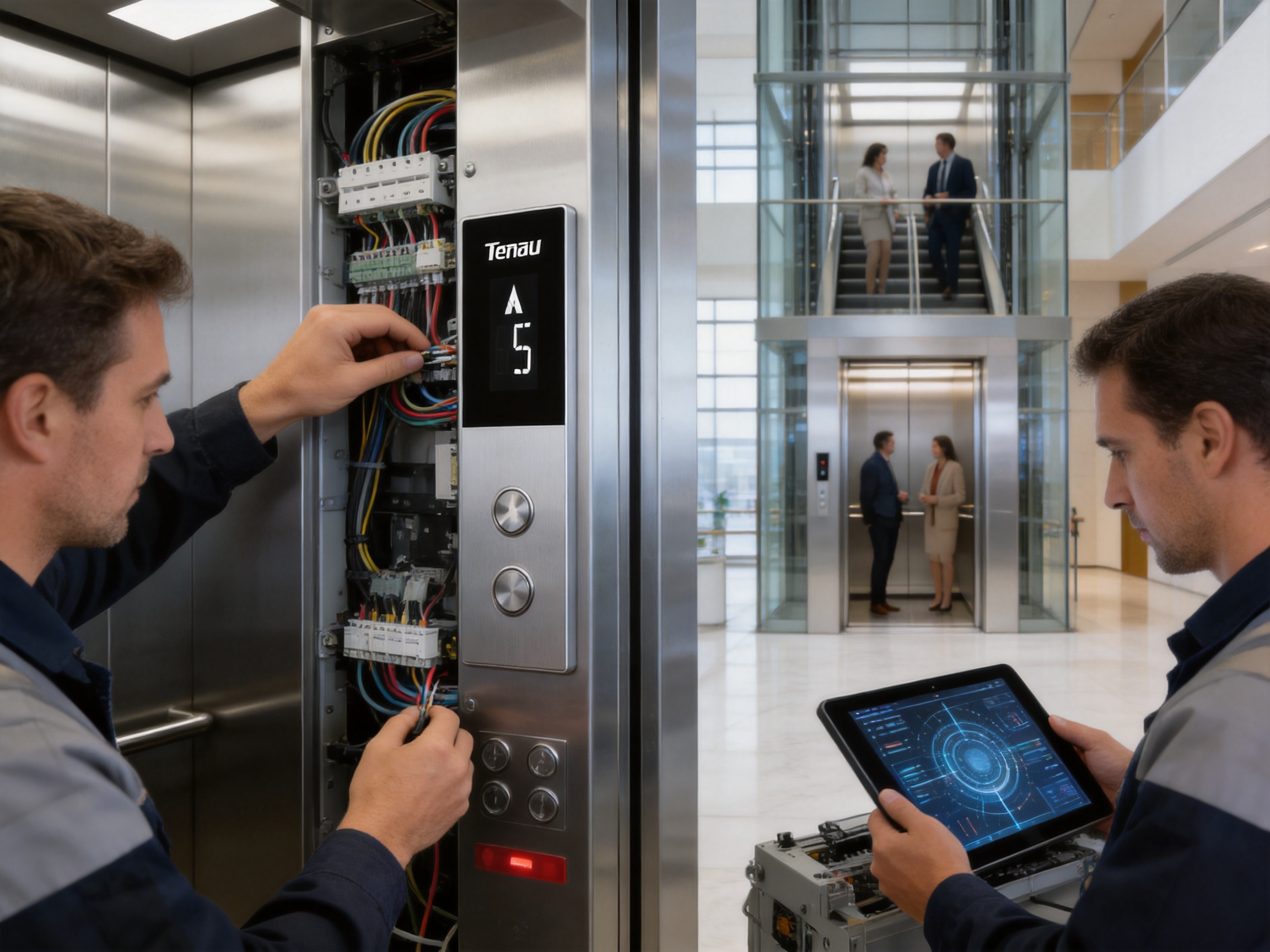
Elevator operation panels are among the most frequently used components in a vertical transportation system. Every passenger interacts with the panel when selecting a floor, opening or closing doors, activating an emergency function, or requesting assistance. Although an operation panel may appear to be a relatively compact part of an elevator interior, its design, material quality, control compatibility, accessibility, and manufacturing consistency can strongly influence the overall passenger experience and the long-term reliability of the elevator.
The T0-LSC260 elevator operation panel is designed for elevator projects that require a practical combination of dependable operation, contemporary appearance, user-friendly interaction, and compatibility with modern elevator control systems. It is suitable for passenger elevator applications and can be considered for a wide range of commercial, residential, institutional, and mixed-use buildings. As part of a complete elevator solution, the panel can contribute to a coordinated cabin interior while supporting clear, efficient, and safe passenger communication with the elevator system.
Behind the product is Tenau Elevator (China) Co., Ltd., a comprehensive elevator manufacturer with capabilities covering design, research and development, manufacturing, marketing, installation, and after-sales service. The company’s manufacturing approach combines international technologies, German Industry 4.0 concepts, automated production lines, data-supported management, Internet of Things technology, and closed-loop quality control. These capabilities are important because the quality of an elevator operation panel depends not only on its visible finish but also on design coordination, component control, assembly accuracy, inspection procedures, and service support.
This article examines the T0-LSC260 from a product, engineering, manufacturing, and purchasing perspective. It explains the role of an elevator operation panel, identifies the practical advantages that can distinguish a well-manufactured panel from lower-quality alternatives, and shows how an integrated elevator manufacturer can support more consistent project delivery.
1. The Role of an Elevator Operation Panel
An elevator operation panel is the primary user interface inside an elevator car. It provides passengers with a clear and accessible method of communicating travel requests to the elevator controller. Depending on the configuration, an operation panel may include floor selection buttons, door open and close controls, an alarm button, an emergency communication function, indicator lights, access-control elements, and other system-related interfaces.
In a modern elevator, the panel performs several functions at the same time. It must be intuitive enough for first-time users, durable enough for continuous daily operation, attractive enough to complement the cabin interior, and technically compatible with the elevator’s electrical and communication architecture. It must also support the safety and accessibility expectations applicable to the target market and building type.
For these reasons, the operation panel should not be viewed merely as a decorative stainless-steel plate with buttons. It is an engineered interface connecting the passenger, the elevator control system, and the wider building environment. Its performance can affect usability, maintenance efficiency, perceived elevator quality, and the consistency of the complete cabin design.
1.1 Passenger Interaction
Passenger interaction is the most visible function of the T0-LSC260. The panel should allow users to recognize the available controls quickly and operate them without unnecessary effort. Clear button arrangement, suitable visual contrast, legible markings, and a logical functional hierarchy can reduce confusion, particularly in busy buildings where passengers enter and leave the elevator quickly.
The panel may be configured according to the elevator project’s requirements, including the number of floors, button layout, indicator arrangement, and optional functions. Because building layouts differ, an adaptable design approach is valuable for residential towers, hotels, office buildings, hospitals, public facilities, and transportation-related developments.
1.2 Cabin Interior Coordination
The operation panel is also a major visual element of the elevator cabin. It is often positioned on a side wall or return panel where passengers naturally focus their attention. Its shape, surface finish, button style, lighting, and surrounding trim should therefore coordinate with the handrail, ceiling, flooring, wall panels, doors, and other cabin interior elements.
A well-integrated panel can support a clean and professional cabin appearance. It can also help elevator owners maintain a consistent design language across multiple buildings or projects. This is particularly useful for property developers, hotel groups, commercial operators, and public-sector organizations that want their elevator interiors to reflect a recognizable architectural standard.
1.3 Safety and Communication
Operation panels are closely associated with important safety functions. Emergency alarm controls, communication interfaces, door controls, and indicator systems must be designed and installed in a way that supports reliable access and clear understanding. Exact functions depend on the selected elevator system, local regulations, project specifications, and the final electrical configuration.
A professional manufacturer should coordinate the panel design with the elevator controller, wiring harnesses, cabin layout, and inspection requirements. This coordination reduces the risk of mismatched components and helps ensure that the installed panel performs as intended within the complete elevator system.
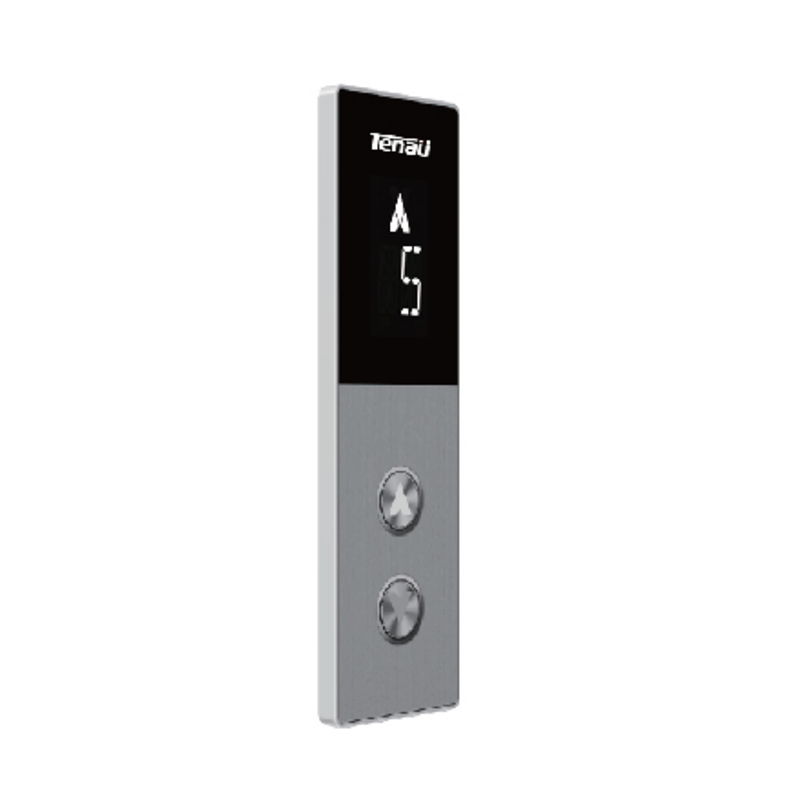
T0-LSC260
2. Product Positioning of the T0-LSC260
The T0-LSC260 is positioned as an elevator operation panel for projects seeking dependable functionality and a refined cabin interface. Its value is not limited to the visible faceplate. The product should be understood as part of a broader elevator engineering system in which mechanical design, electrical control, cabin aesthetics, safety functions, and manufacturing quality work together.
For buyers, this product can be relevant in several situations. It may be selected as part of a new passenger elevator package, used in a modernization project, or specified as one element of a coordinated cabin interior. It can also serve projects in which the buyer requires a manufacturer capable of providing more than an isolated component.
The product category includes elevator operation panels, while the company’s wider product portfolio covers passenger elevators, panoramic and observation elevators, hospital elevators, home and villa elevators, cargo elevators, car elevators, escalators, moving walks, elevator parts, cabin interiors, and high-speed elevators. This broad portfolio gives project teams the opportunity to coordinate different vertical transportation products through one manufacturing organization.
2.1 A Practical Interface for Different Building Types
Different buildings place different demands on an elevator operation panel. A residential elevator may prioritize simple operation, clean aesthetics, and resistance to frequent use by families and visitors. An office building may require a more formal appearance, clear floor selection, access-control integration, and a robust finish capable of handling intensive traffic.
Hotels often emphasize design coordination and guest experience. Hospitals require careful consideration of hygiene, accessibility, trolley movement, and high-frequency operation. Public buildings may require strong visual clarity and durable components because the passenger population is diverse and unfamiliar with the facility. The T0-LSC260 can be considered within these varied application contexts when the final configuration is adapted to the project’s technical and regulatory requirements.
2.2 Design Flexibility Without Sacrificing Standardization
Customization is useful, but uncontrolled customization can increase cost, lead time, and maintenance complexity. A capable elevator manufacturer should balance project-specific requirements with standardized engineering platforms. This approach allows the panel to be adapted in areas such as layout, function, finish, markings, and interface arrangement while maintaining repeatable production methods.
Standardized internal processes can improve consistency from one panel to the next. At the same time, a flexible product architecture can allow the buyer to select the most appropriate configuration for the elevator capacity, number of floors, building use, accessibility requirements, and interior concept.
3. Main Product Advantages
The strongest advantage of the T0-LSC260 is its position within an integrated elevator manufacturing system. Buyers are not only evaluating the physical panel; they are evaluating the reliability of the interface, the manufacturer’s engineering support, the consistency of production, and the ability to coordinate the product with the rest of the elevator.
3.1 Clear and User-Oriented Operation
An operation panel should make the correct action obvious. A logical arrangement of controls helps passengers locate floor buttons and special functions quickly. Clear indicators can provide confirmation that a command has been registered. A user-oriented panel can reduce hesitation and unnecessary repeated button presses, supporting smoother passenger flow.
In buildings with high traffic, small usability details can have a meaningful effect. Passengers may enter at the same time, select different floors, and operate the panel under limited space conditions. A well-planned interface helps minimize confusion and contributes to a more comfortable ride experience.
3.2 Durability for Repeated Daily Use
Elevator panels are touched repeatedly throughout their service life. Their surfaces may be exposed to fingerprints, cleaning agents, impact from bags or equipment, and accidental contact with hard objects. The product therefore requires suitable materials, stable assembly, reliable buttons or touch interfaces, and an appropriate finishing process.
Durability is not determined by one feature alone. It results from the relationship between material selection, surface treatment, structural support, component quality, assembly accuracy, and inspection. A professional production system can help ensure that these factors are managed together rather than treated as isolated details.
3.3 Coordinated Cabin Appearance
The T0-LSC260 can contribute to a consistent cabin design by providing a dedicated interface rather than an improvised collection of switches and plates. Its appearance can be coordinated with the selected cabin materials and architectural style. This is valuable in projects where the elevator is part of the building’s visual identity.
In a premium residential or hospitality project, a well-finished operation panel can reinforce the impression of quality. In a commercial or industrial setting, a neat and robust panel can communicate practicality and professional maintenance. In either case, the interface should support the architectural concept without compromising readability and function.
3.4 Integration with Complete Elevator Solutions
A panel supplied by a complete elevator manufacturer can be engineered in relation to the controller, traction or drive system, cabin structure, door system, monitoring functions, and installation requirements. This integrated approach can simplify technical communication and reduce the number of parties responsible for resolving interface issues.
When a panel is purchased separately from an unrelated supplier, the buyer may need to coordinate dimensions, electrical connections, signal definitions, mounting methods, and inspection documentation across multiple organizations. An integrated supplier can reduce these coordination demands by managing the panel as part of the elevator package.
3.5 Support for Modern Building Requirements
Modern elevator projects increasingly require intelligent monitoring, access control, remote diagnostics, energy awareness, and integration with building management systems. The operation panel is one of the visible points where these functions may be presented or activated. Its design should therefore allow appropriate coordination with the wider digital elevator ecosystem.
Tenau’s stated use of big data and Internet of Things technology provides a foundation for developing more connected elevator solutions. The exact functions available on a specific T0-LSC260 configuration should be confirmed against the project specification, but the manufacturer’s broader technical environment is relevant to buyers seeking future-oriented elevator equipment.
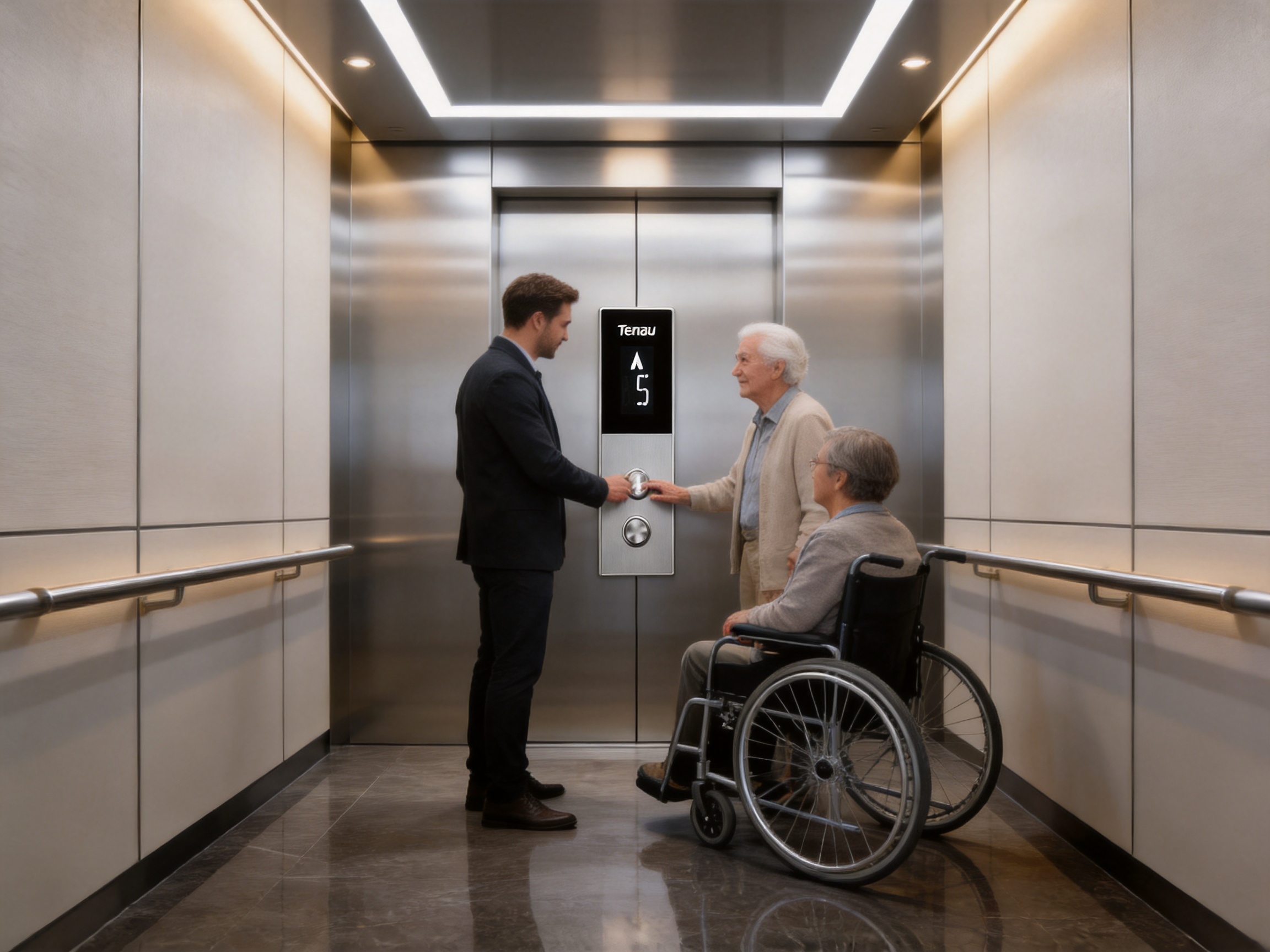
4. Comparison with Lower-Quality or Less Integrated Alternatives
Many elevator operation panels may look similar at first glance. However, the differences between products often become visible only after installation and repeated use. A lower-priced alternative may appear attractive during initial procurement, but the total project value depends on reliability, maintenance requirements, appearance retention, compatibility, documentation, and supplier support.
4.1 Engineering Coordination
One advantage of sourcing from an integrated elevator manufacturer is the ability to coordinate the panel with the complete system before production. This can include checking panel dimensions, mounting locations, cable routes, control signals, indicator requirements, emergency functions, and cabin interior clearances.
A component supplier with limited elevator expertise may manufacture a panel according to a drawing but provide less assistance with system integration. This can place additional responsibility on the elevator contractor or installation team. The T0-LSC260 benefits from being developed within a company whose primary business includes complete elevator design, manufacturing, installation, and service.
4.2 Production Consistency
Consistency is particularly important when a project includes many elevators or when the same design is repeated across several buildings. Panels should have consistent dimensions, finishes, button positions, markings, wiring, and inspection results. Automated production lines and standardized quality procedures can help reduce variation.
Manual production is not automatically inferior, but it can produce greater variation when processes are not carefully controlled. A manufacturing environment supported by Industry 4.0 practices, production data, and closed-loop quality management can provide a stronger basis for repeatability.
4.3 Quality Management
Tenau states that it operates according to ISO9001, ISO14001, and OHSMS18001 standards. These standards relate respectively to quality management, environmental management, and occupational health and safety management. Certification or compliance alone does not guarantee that every individual component will perform perfectly, but a structured management system can improve process discipline, documentation, corrective action, and accountability.
For buyers, the important question is how the manufacturer applies these systems to the specific product. Relevant evidence may include inspection records, incoming material controls, assembly procedures, functional testing, traceability, nonconformance management, and after-sales feedback. Such information can help distinguish a controlled manufacturing process from a basic assembly operation.
4.4 Long-Term Maintenance
Elevator equipment is expected to operate for many years. A panel that is easy to identify, access, test, and replace can reduce maintenance effort. Consistent component selection and documented wiring can also assist technicians when troubleshooting is required.
An integrated manufacturer may be better positioned to provide replacement components, technical guidance, and service coordination over the equipment life cycle. This can be especially important for projects outside the supplier’s home market, where clear documentation and responsive export support are essential.
4.5 Total Cost of Ownership
The purchase price of an operation panel is only one part of its financial impact. Other factors include installation time, corrective work, replacement frequency, downtime, cleaning requirements, spare parts, technical support, and compatibility with future modernization work.
A panel with dependable construction and stronger system integration may provide better value even if its initial price is not the lowest. Project owners should therefore compare the total expected cost of ownership rather than evaluating the component solely by unit price.
5. Advanced Manufacturing Capabilities
The performance of an elevator operation panel depends heavily on how it is manufactured. Tenau describes a production environment that combines a large-scale manufacturing base, automated lines, intelligent manufacturing, digital technologies, professional teams, and closed-loop quality control. These capabilities can support more predictable product quality and more efficient project execution.
5.1 Design and Research and Development
Product development begins before materials enter the factory. Engineers must understand the intended application, the electrical interface, the physical installation environment, passenger needs, and applicable standards. Research and development teams can then convert these requirements into panel structures, component arrangements, drawings, production instructions, and testing criteria.
A strong design process should consider not only appearance but also manufacturability and serviceability. Components should be positioned so that assembly is practical and maintenance access is reasonable. Wiring should be organized to reduce the risk of errors. Surfaces and joints should be designed with cleaning and long-term use in mind.
Tenau’s experience across low-speed, medium-speed, high-speed, and ultra-high-speed elevator products provides a broad technical context for its component development. Although an operation panel is not a traction machine or control cabinet, it must function as part of a complete elevator system whose performance depends on coordinated engineering.
5.2 Intelligent Manufacturing
German Industry 4.0 manufacturing concepts generally emphasize connected equipment, digital production information, automation, traceability, and continuous improvement. In an elevator operation panel factory, these principles can be applied to material handling, cutting, forming, surface treatment, assembly, testing, and production reporting.
Automation can improve repeatability in operations where consistent positioning, pressure, torque, or timing is important. Digital work instructions can help operators follow the correct sequence. Production data can support the identification of recurring defects or process deviations. When this information is connected to quality management, the factory can respond more quickly and systematically.
5.3 Automated Production Lines
Automated production lines are valuable when the manufacturer needs to deliver repeated product configurations at consistent quality. They can help control the relationship between design specifications and physical output. Automation may also reduce unnecessary handling, improve production efficiency, and provide more stable process conditions.
For customized elevator projects, automation should be combined with flexible production planning. The goal is not simply to produce identical panels in large quantities. It is to manufacture different approved configurations while maintaining the same standards for accuracy, finish, functional testing, and documentation.
5.4 Material and Component Control
Material control is an essential foundation of product quality. The manufacturer must ensure that incoming materials and purchased components meet the required specifications before they are used in production. This may involve supplier evaluation, incoming inspection, sample checks, identification procedures, and storage controls.
For an operation panel, relevant items may include faceplate materials, mounting structures, buttons, indicator elements, wiring, connectors, fasteners, labels, and protective finishes. A controlled process helps prevent the use of incorrect parts, inconsistent batches, or components that do not match the approved design.
5.5 Precision Assembly
Assembly accuracy affects both appearance and operation. Buttons should be aligned correctly, plates should sit securely, gaps should be controlled, and wiring should be routed in an organized manner. A panel that is electrically functional but poorly assembled can still create installation problems or reduce confidence in the finished elevator.
Standard operating procedures, trained personnel, appropriate tooling, and inspection points can help maintain assembly quality. In a professional factory, assembly should not rely solely on individual experience. It should be supported by clear instructions and measurable acceptance criteria.
5.6 Functional Testing
Functional testing helps verify that the finished panel performs correctly before it leaves the factory. Depending on the configuration, testing may cover button response, indicator operation, emergency functions, wiring continuity, connector placement, lighting, signal transmission, and communication with related elevator equipment.
Testing procedures should be based on the approved design and the final project requirements. A panel that passes a visual inspection may still contain an electrical or communication issue. Functional testing provides an additional layer of protection against installation delays and commissioning problems.
5.7 Closed-Loop Quality Control
Closed-loop quality control means that quality information is not simply recorded and forgotten. When a defect or customer complaint occurs, the manufacturer identifies the cause, determines corrective action, verifies the improvement, and feeds the result back into design or production procedures.
This approach is valuable for elevator components because problems may appear only after installation or extended use. Feedback from installation teams, service technicians, and customers can help improve future batches. Over time, the manufacturer can reduce recurring issues and strengthen product reliability.
5.8 Environmental and Workplace Management
Environmental management and occupational health and safety are also relevant to responsible manufacturing. Tenau states that its management systems include ISO14001 and OHSMS18001. Environmental controls may support more responsible resource use, waste management, and process monitoring. Workplace safety systems can help protect employees and promote orderly factory operations.
These practices do not replace product testing, but they contribute to a more stable and sustainable manufacturing environment. For international buyers, responsible production can also support corporate procurement policies and project sustainability objectives.
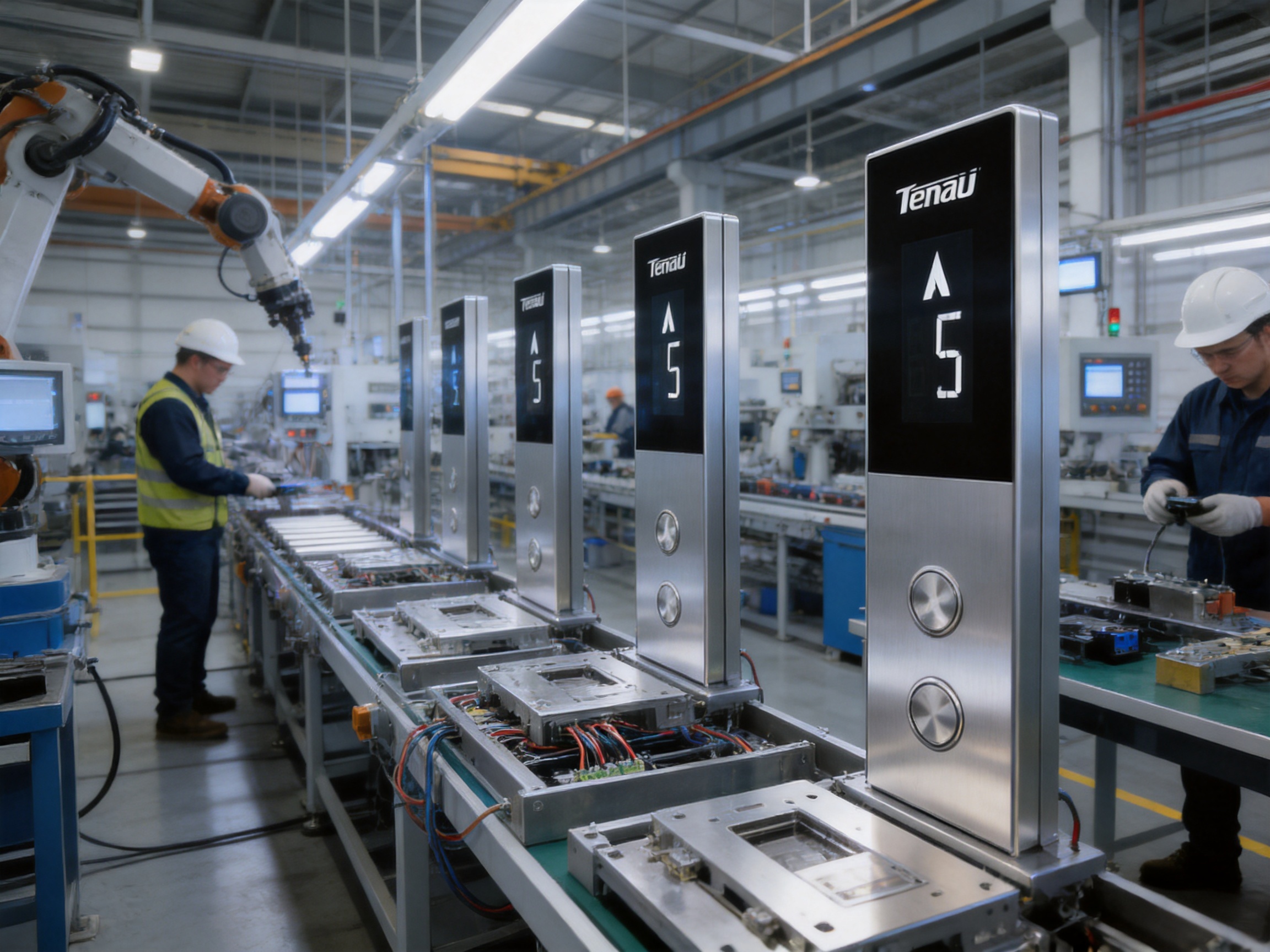
6. Application Scenarios
6.1 Residential Buildings
In apartment buildings, the operation panel must be simple, durable, and suitable for repeated use by residents of different ages. A clean design can complement modern residential interiors, while reliable controls can support everyday convenience. Access-control or destination-management functions may be added where required by the building’s security strategy.
6.2 Office and Commercial Buildings
Office and commercial elevators often experience concentrated traffic during morning arrival, lunch periods, and evening departure. The panel should support fast recognition and efficient operation. Its design may be selected to match a formal lobby and cabin environment, while its construction should tolerate frequent contact and regular cleaning.
6.3 Hotels and Hospitality Projects
Hotel elevators are part of the guest experience. Visitors may be unfamiliar with the building, so intuitive controls and clear visual organization are important. The panel should coordinate with the hotel’s interior design, lighting, materials, and brand standards without becoming difficult to use.
6.4 Hospitals and Healthcare Facilities
Hospital elevators may transport patients, visitors, medical staff, beds, trolleys, and equipment. High-frequency operation, accessibility, hygiene, and clear control identification are important considerations. The final panel configuration should be coordinated with the hospital elevator’s capacity, cabin layout, emergency functions, and local healthcare requirements.
6.5 Public and Institutional Buildings
Schools, government facilities, cultural centers, and transportation buildings often serve a broad public audience. A clear and robust operation panel can help support safe and efficient movement. The design should consider accessibility, vandal resistance, maintenance access, and the building’s operational schedule.
7. Specification and Procurement Considerations
Before purchasing the T0-LSC260, the buyer should confirm the complete technical configuration. Product selection should be based on the elevator project rather than on the panel name alone. The following points can help contractors, consultants, and building owners prepare a clear procurement brief.
| Evaluation Area | Questions for the Project Team | Why It Matters |
|---|---|---|
| Application | What type of building and elevator will use the panel? | Usage frequency, accessibility, hygiene, and durability needs vary by application. |
| Layout | How many floors, functions, and indicators are required? | The button and indicator arrangement must match the elevator system. |
| Dimensions | What are the available wall dimensions, mounting clearances, and cable routes? | Correct dimensional coordination prevents installation conflicts. |
| Materials and finish | Which surface, color, texture, and trim are required? | The panel must coordinate with the cabin interior and cleaning regime. |
| Electrical interface | Which controller, voltage, signal type, connectors, and wiring arrangement are used? | Compatibility is necessary for reliable commissioning and service. |
| Safety functions | Which alarm, emergency communication, door, and indicator functions apply? | Safety-related features must comply with the approved elevator design. |
| Accessibility | Are tactile markings, audible signals, visual contrast, or special mounting heights required? | The panel should support inclusive passenger use and local requirements. |
| Maintenance | How will technicians access, test, and replace components? | Serviceability can reduce downtime and long-term maintenance cost. |
| Documentation | Are drawings, wiring diagrams, manuals, inspection records, and spare-part lists available? | Complete documentation supports installation, approval, and future service. |
| Project support | Who will coordinate production, shipping, installation, and after-sales service? | Clear responsibility reduces communication gaps during delivery. |
7.1 Dimensions and Mounting
Exact dimensions should be confirmed with the manufacturer before production. The buyer should provide the cabin layout, panel location, wall construction, mounting details, and available service space. Even a small dimensional mismatch can create problems when the panel is installed alongside handrails, door frames, corner posts, or other cabin components.
7.2 Electrical Compatibility
The operation panel must match the elevator controller and the approved wiring design. Buyers should confirm voltage requirements, input and output signals, connector types, cable lengths, communication protocols where applicable, and the relationship between the panel and the elevator car operating station.
It is advisable to complete electrical interface reviews before manufacturing begins. Early review allows the engineering team to resolve questions while changes are still manageable. It also reduces the risk of receiving a visually correct panel that cannot be connected without modification.
7.3 Accessibility Requirements
Accessibility requirements differ between jurisdictions and building categories. Depending on the project, the panel may need tactile markings, raised symbols, contrasting colors, audible confirmation, suitable button force, appropriate mounting height, or other accessibility features.
The T0-LSC260 should be specified in accordance with the applicable local building, elevator, and accessibility regulations. The manufacturer and project consultant should jointly verify the final arrangement rather than assuming that one configuration is suitable for every market.
7.4 Cleaning and Hygiene
Panels in hospitals, hotels, public buildings, and high-traffic commercial facilities may be cleaned frequently. The selected materials and finishes should be appropriate for the cleaning products and procedures used by the building operator. Harsh chemicals or unsuitable tools can damage surfaces even when the original panel is well manufactured.
Maintenance instructions should identify appropriate cleaning methods and materials. Good cleaning practice can preserve the appearance of the panel and reduce the risk of premature surface deterioration.
7.5 Spare Parts and Service Planning
Before ordering, buyers should discuss the availability of replacement buttons, indicators, circuit elements, wiring components, faceplates, and other service parts. They should also confirm warranty conditions, recommended spare quantities, response procedures, and technical support arrangements.
Because Tenau provides installation and after-sales service as part of its comprehensive business scope, customers can discuss whether project-specific service plans, commissioning support, or spare-part packages are available for the T0-LSC260 and the complete elevator system.
8. Installation and Commissioning
Correct installation is essential to achieving the intended performance of an elevator operation panel. The installation team should work from approved drawings and verify the panel position before final fixing. The panel should be protected from construction dust, impact, moisture, and contamination during the remaining building works.
Before energizing the system, technicians should check mounting stability, cable routing, connector security, grounding where applicable, and the relationship between the panel and the controller. After energization, each button and indicator should be tested according to the commissioning procedure.
Commissioning should also include checks under normal elevator operation. The team can verify floor registration, door controls, alarm activation, communication functions, visual indicators, and any access-control or monitoring features included in the approved configuration.
Documentation should be updated if approved field changes are made. Final records may include wiring diagrams, test results, parameter information, component identification, maintenance instructions, and photographs of the completed installation. These records can be valuable during future service or modernization work.
9. Maintenance and Lifecycle Performance
Routine maintenance helps preserve the function and appearance of the T0-LSC260. Technicians should inspect the panel for loose components, damaged surfaces, inconsistent button response, dim or failed indicators, abnormal noise, and signs of moisture or impact. Any issue affecting a safety-related function should be addressed according to the elevator maintenance procedure.
Cleaning should be performed using methods appropriate for the selected finish. Operators should avoid abrasive materials and unapproved chemicals. Buttons and touch surfaces should not be flooded with liquid, and cleaning should be coordinated with the elevator’s electrical safety procedures.
Where the panel is connected to a monitoring or diagnostic system, recorded fault information may assist technicians in identifying recurring problems. Data-supported service can reduce diagnostic time and help the manufacturer or maintenance provider identify patterns that would not be obvious from isolated site visits.
During modernization, the existing cabin layout, controller, wiring, and regulations should be reviewed before replacing the panel. A new operation panel may require changes to electrical interfaces, mounting structures, or software configuration. Early technical assessment can help determine whether a direct replacement, partial retrofit, or complete cabin operating station upgrade is most appropriate.
10. Why the Manufacturer Matters
The manufacturer’s capability is a major factor in the success of an elevator component. Tenau Elevator (China) Co., Ltd. describes itself as originating from Germany and operating as a professional comprehensive elevator manufacturer. Its activities include design, research and development, production, marketing, installation, and after-sales service.
This integrated scope can provide several practical benefits. Engineering teams can coordinate the operation panel with the elevator system. Production teams can manufacture according to controlled procedures. Installation teams can provide direct feedback from the field. Service teams can contribute lifecycle information. Management systems can connect these activities through documented processes and quality feedback.
The company is located in Nanxun, Zhejiang Province, within the Shanghai-Nanjing-Suzhou-Hangzhou economic circle. Its location supports access to an established manufacturing and logistics environment. The company also states that it exports elevator products to many countries and regions, which is relevant to international buyers who need export coordination and overseas project support.
Tenau’s portfolio includes low-speed, medium-speed, high-speed, and ultra-high-speed elevator capabilities, as well as escalators and moving walks. This breadth suggests that the organization can serve projects with different transportation requirements rather than focusing on one narrow product category.
For buyers, the main benefit is not simply the size of the product portfolio. The more important issue is whether the manufacturer can provide consistent technical coordination from initial design through installation and service. The T0-LSC260 is strongest when selected as part of a clearly defined elevator solution supported by that wider capability.
11. Frequently Asked Questions
Q1: What is the T0-LSC260?
The T0-LSC260 is an elevator operation panel designed for use as a passenger interface within an elevator cabin. It can include controls and indicators required by the approved elevator configuration. Exact functions, dimensions, finishes, and electrical details should be confirmed with the manufacturer for each project.
Q2: Is the T0-LSC260 suitable for every elevator?
No single panel configuration is automatically suitable for every elevator. Compatibility depends on the elevator controller, cabin dimensions, number of floors, required functions, local regulations, accessibility provisions, and interior design. The product should be reviewed and configured for the specific elevator project.
Q3: What distinguishes this panel from a basic low-cost alternative?
Its potential advantages include integrated engineering support, coordinated elevator-system design, controlled manufacturing, automated production capabilities, structured quality management, and access to a manufacturer with installation and after-sales service capabilities. Buyers should evaluate these factors together with the visible design and purchase price.
Q4: Can the panel be customized?
Project-specific customization may be possible in areas such as button layout, floor count, markings, finish, indicator arrangement, and optional functions. The available customization should be confirmed during technical review because changes may affect engineering, production, testing, cost, and delivery time.
Q5: Does the product support accessibility requirements?
The final panel can be designed or configured according to applicable accessibility requirements, where supported by the project specification. These may include tactile features, visual contrast, audible feedback, suitable button arrangement, and mounting height. The buyer should confirm the required standard with the local consultant and manufacturer.
Q6: How should the panel be maintained?
Maintenance should include functional checks, inspection of buttons and indicators, examination of mounting and wiring, and cleaning with approved materials. Safety-related functions must be tested according to the elevator maintenance procedure. The operator should retain technical documents and contact the authorized service provider for repairs or replacement parts.
Q7: Can it be used in hospitals?
The panel may be considered for hospital elevator projects when its final configuration meets the requirements for hygiene, accessibility, trolley or bed traffic, emergency operation, and applicable healthcare regulations. Hospital use should be reviewed as part of the complete hospital elevator design rather than evaluated only by the panel’s appearance.
Q8: What information should be sent when requesting a quotation?
A useful quotation request should include the elevator type, number of stops, capacity, speed, cabin dimensions, panel location, required functions, controller information, finish preferences, accessibility requirements, delivery destination, installation scope, and requested documentation. Drawings or cabin layout files can make the technical review more efficient.
Q9: Does the manufacturer provide complete elevator solutions?
Tenau’s stated business scope includes design, research and development, manufacturing, marketing, installation, and after-sales service. Its product range includes passenger, freight, hospital, home and villa, car, panoramic, and high-speed elevators, as well as escalators, moving walks, parts, and cabin interiors.
Q10: What should buyers verify before placing an order?
Buyers should verify the approved drawing, dimensions, material and finish, button and indicator layout, electrical interface, safety functions, accessibility provisions, testing requirements, packaging, delivery schedule, warranty, spare parts, installation responsibilities, and after-sales support. Written confirmation is recommended for all project-specific requirements.
12. Conclusion
The T0-LSC260 elevator operation panel is more than a visible control surface. It is a critical passenger interface that connects cabin usability, elevator control, safety communication, interior design, and long-term maintenance. Its practical value depends on the quality of its materials and components, but also on the engineering and manufacturing system behind it.
Compared with less integrated alternatives, the product can offer advantages through coordinated system design, consistent production, structured quality management, customization support, and access to a complete elevator manufacturer. These strengths are particularly relevant for projects that require repeatable quality across multiple elevators or buildings.
Tenau’s stated manufacturing capabilities include German Industry 4.0 intelligent manufacturing, automated production lines, big data, Internet of Things technology, advanced research and development, and closed-loop quality control. Together with ISO9001, ISO14001, and OHSMS18001 management systems, these capabilities provide a structured foundation for producing and supporting elevator components.
For the best result, buyers should specify the T0-LSC260 as part of a complete technical solution. A detailed review of dimensions, functions, wiring, accessibility, interior coordination, testing, maintenance, and service responsibilities will help ensure that the panel performs effectively after installation. When product design and manufacturing discipline are combined with professional project coordination, an elevator operation panel can contribute significantly to safety, reliability, efficiency, and passenger confidence.
References
1. Tenau Elevator (China) Co., Ltd. Product information for the T0-LSC260 elevator operation panel.
2. Tenau Elevator (China) Co., Ltd. Corporate information regarding elevator design, research and development, manufacturing, installation, and after-sales service.
3. International Organization for Standardization. ISO 9001, Quality Management Systems: Requirements.
4. International Organization for Standardization. ISO 14001, Environmental Management Systems: Requirements with Guidance for Use.
5. Occupational health and safety management system guidance associated with OHSMS18001 requirements.
6. General principles of Industry 4.0 intelligent manufacturing, production automation, data management, and industrial connectivity.
7. General elevator engineering practices for passenger interfaces, accessibility, commissioning, maintenance, and lifecycle management.
Product: T0-LSC260

Related Products
Related News
Built on safety, forging trust in vertical mobility.
lf you have any questions or need help, feel free to contact with our team.
 export@tenau.com.cn
 +86-18601458867
 +86-512-65059883
Elevator & Escalator
Factory Add
East of Xicheng Road, North of Lianyi Road, Nanxun Economic Development Zone, Nanxun District, Huzhou City, Zhejiang Province, P.R.China
Copyright © Tenau Elevator (China) Co., Ltd. All Rightd Reserved.
Custom High Quality Elevator Suppliers and World Brand Elevator Company