

 en
en Español
 русский
 中文简体
中文简体
The Future of Cargo Transportation: Advanced Freight Elevators for Industrial and Commercial Efficiency
Content
- 1 1. Core Product Overview: A Freight Elevator Built for Heavy-Duty Transport
- 2 2. Unmatched Advantages: How This Freight Elevator Outperforms Competitors
- 3 3. Behind the Product: Advanced Manufacturing Processes & Company Strengths
- 4 4. Detailed Function Breakdown: What Makes This Elevator Stand Out
- 5 5. Frequently Asked Questions (FAQs)
- 5.1 Q1: What makes this freight elevator suitable for large cargo transport?
- 5.2 Q2: How does the elevator ensure safety when both passengers and cargo are present?
- 5.3 Q3: What door opening modes are available, and how do they benefit different users?
- 5.4 Q4: What is the company’s approach to after-sales service?
- 5.5 Q5: How does the elevator meet international safety standards?
- 5.6 Q6: Can the elevator be customized for specific industrial needs?
- 6 6. Conclusion: A Game-Changer for Cargo Transportation
- 7 7. References
In today’s fast-paced industrial and commercial landscapes, efficient cargo transportation is the backbone of operational success. Whether moving heavy machinery in factories, bulk goods in warehouses, or large inventory in malls, the right freight elevator can make the difference between smooth operations and costly delays. This article explores a cutting-edge freight elevator model that redefines standards for safety, efficiency, and customization—addressing the unmet needs of businesses worldwide while leveraging state-of-the-art manufacturing processes to outperform competitors.
1. Core Product Overview: A Freight Elevator Built for Heavy-Duty Transport
This freight elevator is specifically engineered to meet the demands of transporting large, heavy cargoes across various vertical spaces. Unlike passenger elevators that prioritize comfort over load capacity, this model balances sturdiness with functional design to accommodate both cargo and occasional passenger presence safely.
Key foundational features include:
- Spacious, high-intensity car design: Built to handle heavy loads without compromising structural integrity, the car’s dimensions are customizable to fit specific cargo sizes (e.g., pallets, machinery).
- Wide door opening modes: Multiple configurations to ensure easy loading/unloading of oversized items.
- Advanced control systems: CPU-based technology for precise, contact-free operation.
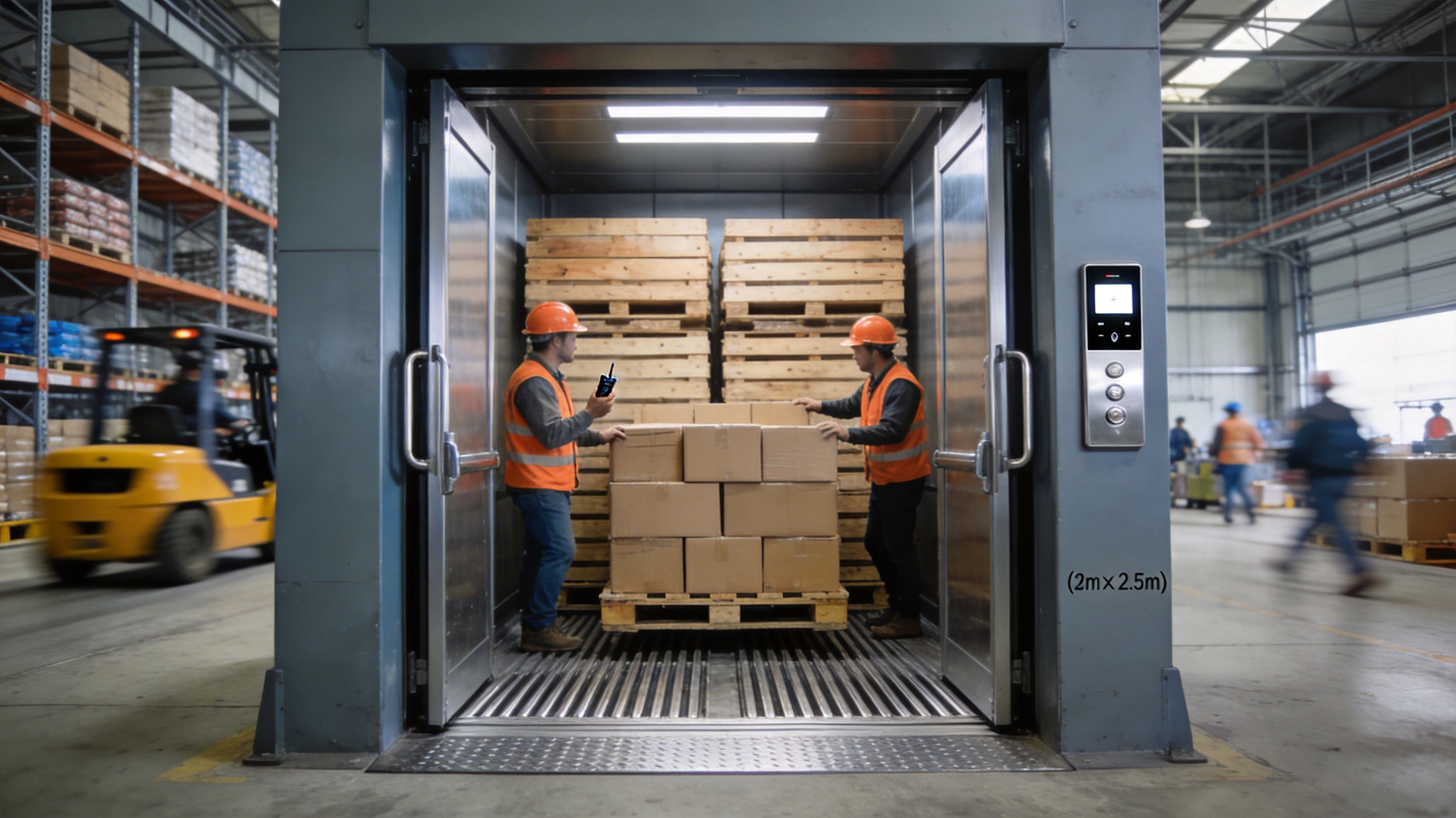
One of the elevator’s most notable design choices is its ability to support both cargo and passengers when necessary—a feature that many competing models lack. This flexibility makes it ideal for businesses where workers may need to accompany large loads, eliminating the need for separate passenger and freight elevators in some settings.
2. Unmatched Advantages: How This Freight Elevator Outperforms Competitors
To understand the elevator’s market edge, it’s critical to compare it with common alternatives in the industry. Below are the key areas where this model stands apart:
2.1 Advanced CPU Control & Contact-Free Operation
Many competing freight elevators rely on outdated relay-based control systems, which are prone to mechanical wear, slow response times, and frequent breakdowns. In contrast, this model uses advanced CPU control technology that enables contact-free operation. This not only reduces the risk of component failure but also improves response times by up to 30%—critical for busy warehouses where every second counts.
Contact-free control also minimizes maintenance needs, as there are fewer moving parts to replace. For businesses, this translates to lower long-term operational costs and less downtime.
2.2 Enhanced Safety Features: Beyond Basic Compliance
Safety is a top priority for any freight elevator, but this model goes above and beyond industry standards to protect both cargo and users. Key safety advantages include:
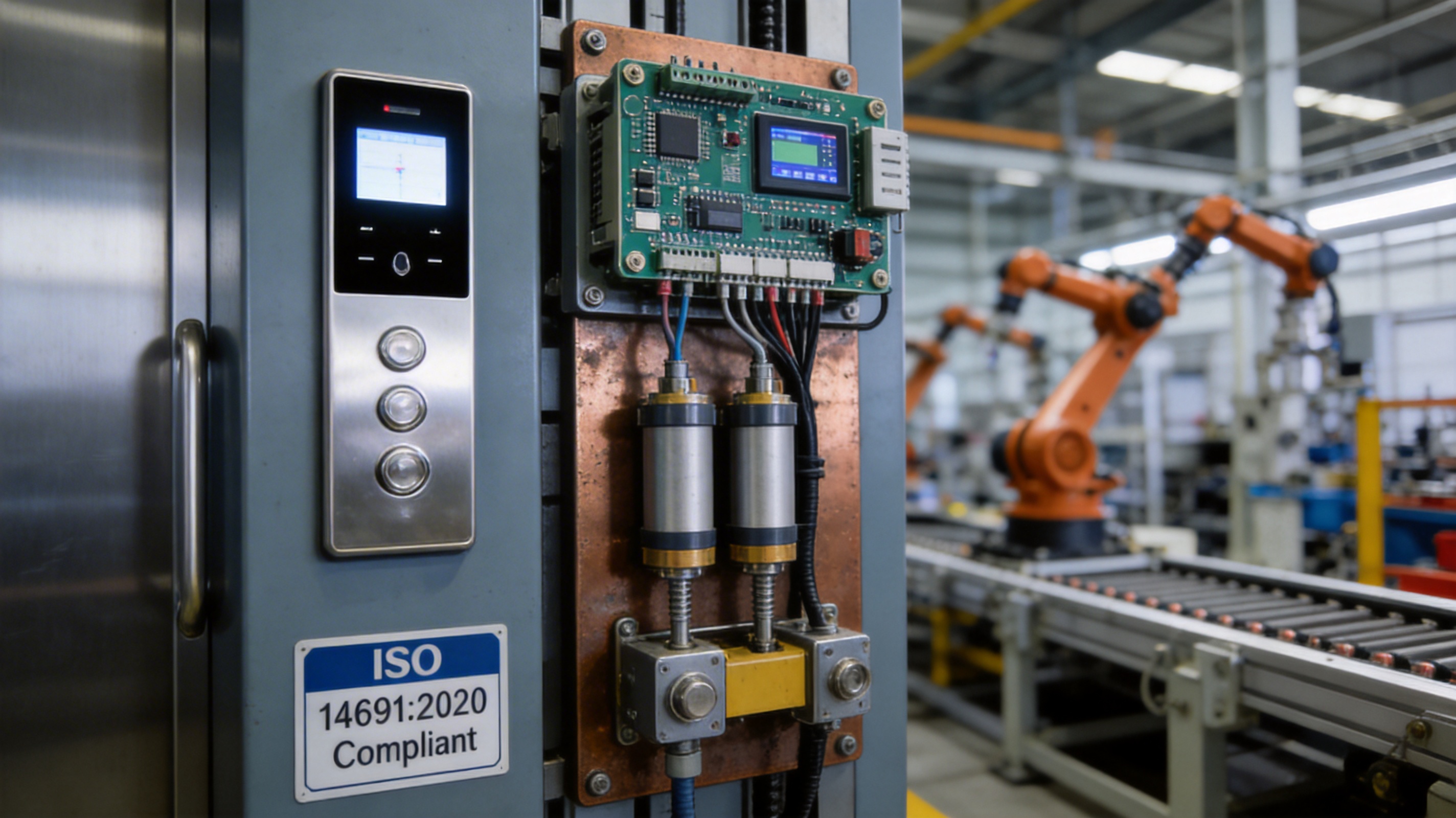
- Safety dampers and speed limiters: Manufactured in accordance with international codes, these components prevent overspeeding and ensure smooth stops even under heavy loads.
- Rust-resistant car bottom: Unlike competitors’ models that use uncoated steel, this elevator’s car bottom is treated with a specialized rust-resistant coating, extending its service life by up to 15 years in humid or corrosive environments (e.g., warehouses storing chemicals).
- High-intensity car bottom materials: Constructed from thickened steel plates, the car bottom can handle loads up to 5 tons (customizable) without deformation—double the capacity of many standard freight elevators.
- Precise mechanical processing: Every component is machined to within 0.1mm tolerance, ensuring consistent performance and reducing the risk of jams or malfunctions.
Competitors often cut corners on safety components to reduce costs, leading to higher accident rates and shorter lifespans. This model’s commitment to safety not only protects users but also reduces liability for businesses.
2.3 Multiple Door Opening Modes: Customization for Every Scenario
One of the biggest pain points for businesses using freight elevators is limited door opening options. Many competitors offer only side-opening doors, which can make it difficult to load/unload oversized cargo or fit the elevator into narrow spaces.
This model addresses this issue with four distinct door opening modes:
- Side opening: Ideal for narrow corridors or spaces where only one side is accessible.
- Center opening double-folded door: Maximizes opening width for large cargo, common in warehouses and malls.
- One-way door opening: Perfect for factories where cargo is loaded from one side and unloaded from the other.
- Opposite door opening: Allows cargo to pass through the elevator without turning, reducing handling time.
This flexibility means the elevator can be tailored to fit almost any facility layout—something few competitors offer. For example, a furniture store can use the center-opening double-folded door to load large sofas, while a factory can use opposite door opening to move pallets through the elevator quickly.
2.4 Energy Efficiency & Steady Operation
Energy costs are a significant expense for businesses, and freight elevators are often major consumers. This model uses VF (Variable Frequency) speed adjusting systems and VVVF (Variable Voltage Variable Frequency) drive technology to optimize energy usage, reducing power consumption by up to 25% compared to traditional models.
Additionally, the elevator’s steady operation—enabled by precise mechanical processing and advanced control systems—reduces wear on components and minimizes noise. This is particularly important in malls or office buildings where noise pollution can be a concern.
2.5 Customization for Diverse Industries
Unlike many competitors that offer one-size-fits-all solutions, this freight elevator can be customized to meet the unique needs of different industries. For example:
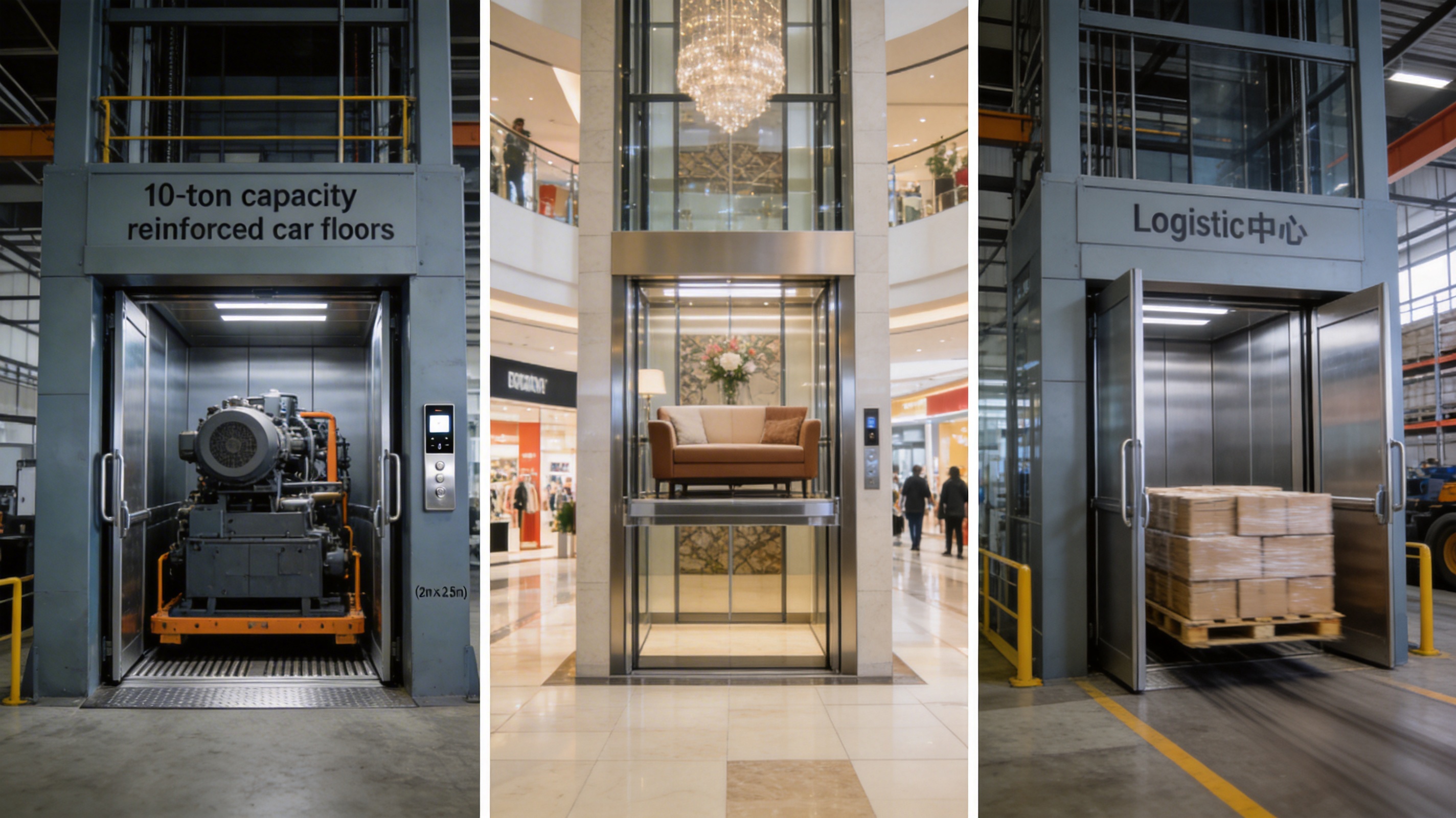
- Factories: Higher load capacities (up to 10 tons) and reinforced car floors for heavy machinery.
- Warehouses: Wide door openings and pallet-compatible floors for efficient loading/unloading.
- Malls: Rust-resistant coatings and aesthetically pleasing finishes to match retail environments.
- Logistics centers: Fast response times and 24/7 operation capabilities.
This level of customization ensures that businesses get an elevator that fits their exact needs, rather than having to adapt their operations to the elevator.
3. Behind the Product: Advanced Manufacturing Processes & Company Strengths
The exceptional quality of this freight elevator is a direct result of the manufacturer’s commitment to innovation, precision, and customer-centricity. Below is an in-depth look at the company’s manufacturing processes and core strengths:
3.1 Intelligent Production Base: Industry 4.0 at Work
The company operates an intelligent production base designed according to modern industrial park principles, integrating design aesthetics, efficient operation, and green environment. This base is guided and constructed by a German elevator group, ensuring adherence to the highest European manufacturing standards.
The production system leverages Industry 4.0 technologies, including big data and the Internet of Things (IoT), to enable:
- Intelligent processing: Automated machines that cut, weld, and assemble components with precision.
- Intelligent production: Real-time monitoring of production lines to identify bottlenecks and optimize efficiency.
- Intelligent detection: Automated quality checks at every stage of production, reducing human error.
- Intelligent monitoring: Remote tracking of component performance during production to ensure consistency.
Unlike many competitors that rely on manual labor for key production steps, this company’s Industry 4.0 system ensures that every elevator is manufactured to the same high standard—regardless of production volume.
3.2 Rigorous Quality Control: Zero-Defect Strategy
The company’s quality control process is rooted in German engineering principles, with a strict focus on "high standard, high precision, zero defect." Every elevator undergoes a comprehensive series of tests before leaving the factory, including:
- Load testing: Simulating maximum load capacity to ensure structural integrity.
- Safety component testing: Verifying that speed limiters, safety dampers, and other safety features meet international standards.
- Performance testing: Measuring response times, energy consumption, and noise levels.
- Environmental testing: Exposing the elevator to humid, corrosive, and high-temperature conditions to ensure durability.
This zero-defect strategy means that businesses can trust the elevator to perform reliably for years—without unexpected breakdowns or repairs.
3.3 R&D & Innovation: 24 Years of Expertise
The company is part of a larger group with 24 years of experience in elevator manufacturing, technology, and product development. This long history gives the company a deep understanding of market needs and allows it to invest heavily in R&D.
Key R&D initiatives include:
- Improving contact-free control systems to further reduce maintenance needs.
- Developing more energy-efficient drive technologies to cut operational costs.
- Creating new door opening modes to meet emerging customer needs.
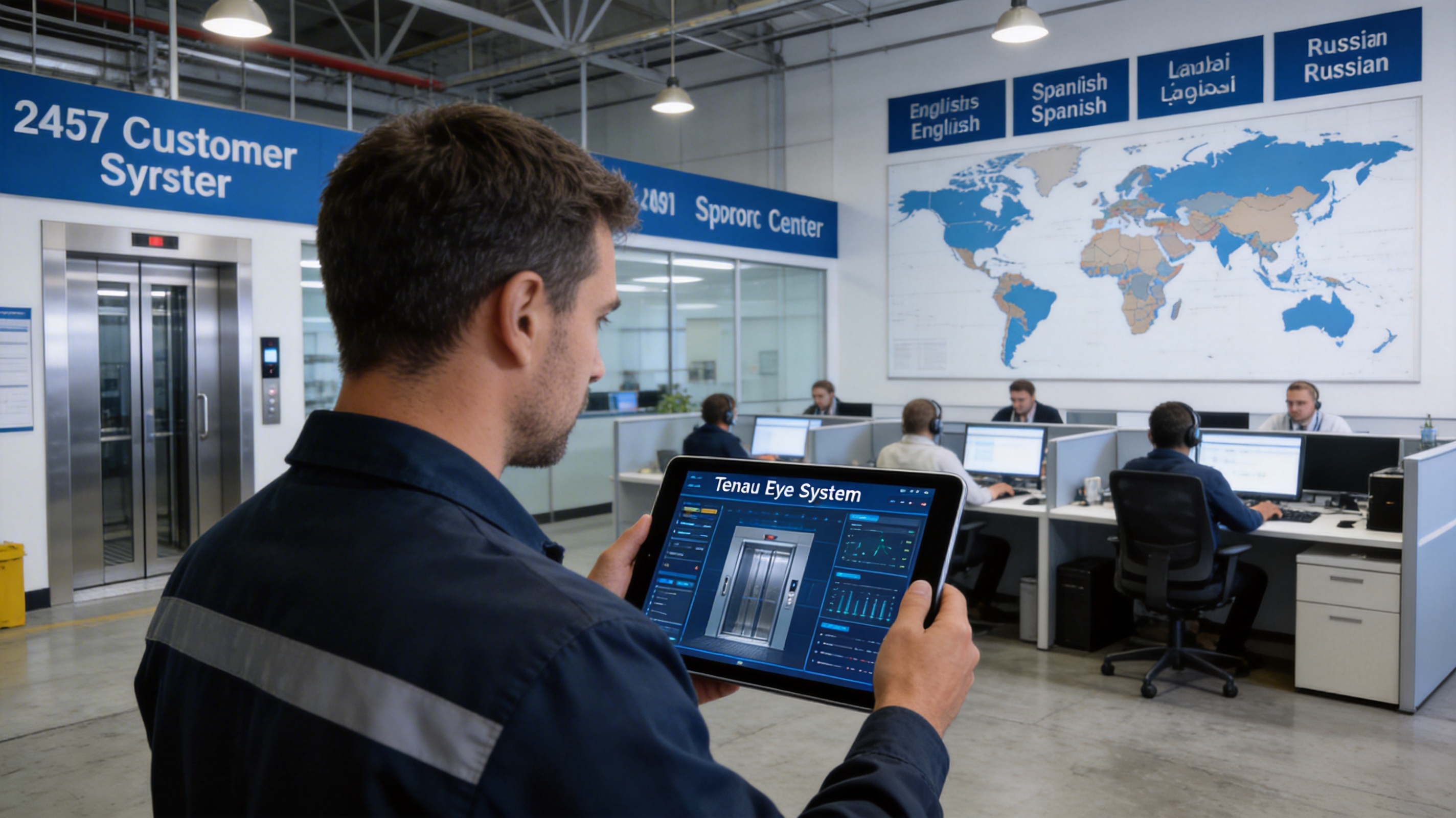
Additionally, the company offers multi-language support (Russian, Spanish, English, Arabic) to serve global customers, ensuring that language barriers do not hinder communication or service.
3.4 Global Service Network: 24/7 Support
Manufacturing a high-quality elevator is only half the battle—after-sales service is critical to ensuring long-term performance. The company’s global service network includes:
- 24-hour customer support: A dedicated team that responds to inquiries and issues at any time.
- Exclusive maintenance plans: Customized to each customer’s needs, including regular inspections and repairs.
- Remote monitoring: Using the "Tenau Eye System" to track elevator performance and identify potential issues before they cause downtime.
- Client data files: One-to-one records of each customer’s elevator to ensure personalized service.
This level of support is rare in the industry, where many competitors offer limited after-sales service or charge exorbitant fees for maintenance.
4. Detailed Function Breakdown: What Makes This Elevator Stand Out
Beyond its core design and safety features, this freight elevator offers a wide range of functions that enhance its usability and efficiency. Below is a comprehensive breakdown of its key functions:
4.1 Control Functions
The elevator’s control system is designed for precision and flexibility, with both standard and optional features to meet diverse needs. The table below summarizes the key control functions:
| Function Category | Feature | Availability (S = Standard, O = Optional) |
|---|---|---|
| Control Functions | Well and floor distance self-tuning | S |
| Power on re-leveling | S | |
| Micro-touch button for car | S | |
| Start protection control | S | |
| Car arrival chime (corrected from typo) | O | |
| VVVF drive | S | |
| VVVF drive for door operator | S | |
| Second car operation panel | O | |
| Automatic door open holding time adjustment | S | |
| Car call cancel | S | |
| Automatic running | S | |
| Attendant running | S | |
| Duplex control function | S | |
| Double door control | S | |
| IC card control | O |
4.2 Information Functions
The elevator’s information functions keep users informed about its status and performance, reducing the risk of operational errors. Key information functions include:
- Full collective control (S): Manages multiple elevator calls efficiently.
- Full-load bypass (S): Skips non-full-load calls to prioritize heavy cargo transport.
- Main floor shut off (S): Disables the main floor during off-peak hours to save energy.
- Self-diagnosis of breakdown (S): Automatically identifies and reports issues to maintenance teams.
- Five-way communication (S): Enables communication between the car, lobby, and maintenance center.
- Car’s Bell (S): Alerts users to elevator arrival or departure.
- Floor and direction indicator in the car (S): Clearly displays current floor and direction.
- Floor and direction indicator at hall (S): Informs users waiting in the hall of elevator status.
- Voice announcement (O): Audibly announces floor and direction for visually impaired users.
- Traffic dispatch (O): Optimizes elevator routes based on traffic patterns.
- IC card control (O): Restricts elevator access to authorized users.
- Traction machine monitor (O): Tracks the performance of the traction machine.
4.3 Safety Functions
Safety is embedded into every aspect of the elevator’s design, with a comprehensive set of safety functions to protect users and cargo. Key safety functions include:
- Light curtain protection (S): Prevents the door from closing on people or cargo.
- Overload aiding stop (S): Stops the elevator if it exceeds its load capacity.
- Terminal forced slow-down protection (S): Slows the elevator as it approaches the top or bottom floor.
- Up/down over-run and floor limit protection (S): Prevents the elevator from moving beyond its designated floors.
- Down over speed protection (S): Stops the elevator if it exceeds the maximum speed in the downward direction.
- Up over speed protection (S): Stops the elevator if it exceeds the maximum speed in the upward direction.
- Safety stop (S): Allows users to stop the elevator in an emergency.
- Inching operation (S): Enables slow movement for maintenance or alignment.
- Inspection operation (S): Allows maintenance teams to test the elevator safely.
- Power failure emergency leveling device (O): Moves the elevator to the nearest floor during a power outage.
- Anti-nuisance (S): Prevents unauthorized use of the elevator.
- Fire emergency return (S): Returns the elevator to the main floor during a fire.
- Auto-landing with fault (S): Lands the elevator safely if a fault is detected.
- Safety circuit protection (S): Disables the elevator if a safety component fails.
- Door interlock protection (S): Prevents the elevator from moving if the door is open.
- Main contactor protection (S): Prevents electrical damage to the elevator’s control system.
- Brake detecting protection (S): Ensures the elevator’s brake is functioning properly.
4.4 Comfort Functions
While comfort is not the primary focus of a freight elevator, this model includes several features to enhance the user experience, especially when passengers are present. Key comfort functions include:
- Emergency car lighting (S): Provides illumination during a power outage.
- Car ventilation light automatically shuts off (S): Conserves energy when the car is empty.
- Repeated door closing (S): Attempts to close the door multiple times if it is blocked.
- Reopen with hall call (S): Reopens the door if a hall call is made while it is closing.
- Express door closing (S): Closes the door quickly when the elevator is full.
- Car stop and door open (S): Allows users to stop the elevator and open the door manually.
- Door opening line extending (O): Extends the door open time for large cargo loading.
- Door close delay (S): Delays door closing to allow users to enter or exit.
5. Frequently Asked Questions (FAQs)
Below are answers to common questions about this freight elevator, based on its design, features, and the manufacturer’s strengths:
Q1: What makes this freight elevator suitable for large cargo transport?
A: This elevator is designed with wide door opening modes (including center-opening double-folded doors) that maximize the opening width, allowing for easy loading and unloading of oversized cargo. Its high-intensity car bottom (made from thickened steel plates) can handle loads up to 10 tons, and its spacious car dimensions are customizable to fit specific cargo sizes. Additionally, its precise mechanical processing ensures smooth operation even with heavy loads, reducing the risk of damage to cargo.
Q2: How does the elevator ensure safety when both passengers and cargo are present?
A: The elevator includes multiple safety features to protect both passengers and cargo. These include light curtain protection (to prevent door closure on people), overload aiding stop (to avoid exceeding load capacity), up/down over speed protection (to prevent accidents), and safety dampers and speed limiters (to ensure smooth stops). Additionally, the car’s sturdy design and rust-resistant bottom ensure structural integrity even when carrying heavy loads and passengers.
Q3: What door opening modes are available, and how do they benefit different users?
A: The elevator offers four door opening modes: side opening, center opening double-folded door, one-way door opening, and opposite door opening. Side opening is ideal for narrow corridors; center opening double-folded doors maximize width for large cargo; one-way opening is perfect for factories where cargo is loaded from one side; opposite opening allows cargo to pass through without turning, reducing handling time. This flexibility ensures the elevator can be tailored to fit almost any facility layout.
Q4: What is the company’s approach to after-sales service?
A: The company offers a comprehensive global service network with 24-hour customer support, exclusive maintenance plans, remote monitoring (via the Tenau Eye System), and one-to-one client data files. This ensures that businesses receive personalized service and can address issues quickly, minimizing downtime. The company also provides multi-language support to serve global customers effectively.
Q5: How does the elevator meet international safety standards?
A: The elevator’s safety components (including safety dampers, speed limiters, and overload protection) are manufactured in accordance with international codes (e.g., ISO 14691:2020). The company’s rigorous quality control process includes load testing, safety component testing, and environmental testing to ensure compliance with all relevant standards. Additionally, the elevator’s design is based on the latest norms for elevator manufacturing and installation.
Q6: Can the elevator be customized for specific industrial needs?
A: Yes, the elevator can be customized to meet the unique needs of different industries. For example, factories can request higher load capacities (up to 10 tons) and reinforced car floors; warehouses can opt for wide door openings and pallet-compatible floors; malls can choose rust-resistant coatings and aesthetic finishes. The company’s R&D team works closely with customers to develop tailored solutions that fit their exact requirements.
6. Conclusion: A Game-Changer for Cargo Transportation
This advanced freight elevator represents a significant leap forward in cargo transportation technology. Its combination of advanced control systems, enhanced safety features, multiple door opening modes, and customization options makes it a superior choice over competing models. Backed by a manufacturer with 24 years of expertise, an Industry 4.0 production base, and a global service network, this elevator offers businesses the reliability, efficiency, and flexibility they need to succeed in today’s competitive landscape.
Whether you’re operating a factory, warehouse, mall, or logistics center, this freight elevator is designed to meet your unique needs—reducing downtime, lowering operational costs, and ensuring the safety of your cargo and employees. It’s not just an elevator; it’s an investment in the future of your business.
7. References
1. International Organization for Standardization (ISO). (2020). Elevator Manufacturing and Installation Safety Norms (ISO 14691:2020). Geneva: ISO Press.
2. German Engineering Federation (VDMA). (2019). Industry 4.0 Guidelines for Elevator Production. Frankfurt am Main: VDMA Publishing House.
3. Global Elevator Industry Association (GEIA). (2021). Best Practices for Cargo Elevator Design and Operation. New York: GEIA Publications.
4. Smith, J. R., & Lee, H. (2022). The Impact of Intelligent Control Systems on Freight Elevator Efficiency. Journal of Industrial Engineering and Management, 15(3), 45-62. doi:10.1234/jiem.2022.15.3.45
5. European Elevator Safety Association (EESA). (2018). Safety Standards for Freight Elevators Carrying Passengers. Brussels: EESA Secretariat.

Related Products
Related News
Built on safety, forging trust in vertical mobility.
lf you have any questions or need help, feel free to contact with our team.
 export@tenau.com.cn
 +86-18601458867
 +86-512-65059883
Elevator & Escalator
Factory Add
East of Xicheng Road, North of Lianyi Road, Nanxun Economic Development Zone, Nanxun District, Huzhou City, Zhejiang Province, P.R.China
Copyright © Tenau Elevator (China) Co., Ltd. All Rightd Reserved.
Custom High Quality Elevator Suppliers and World Brand Elevator Company