

 en
en Español
 русский
 中文简体
中文简体
TO-C100X Elevator Operation Panel for Modern Lift Control Interfaces
Content
- 1 Product Overview: A Control Panel Built Around User Confidence
- 2 The Role of an Elevator Operation Panel in Modern Buildings
- 3 Advantages Over Conventional Competitor Panels
- 4 Human-Centered Design and Everyday Usability
- 5 Application Across Multiple Elevator Categories
- 6 Design Integration with Cabin Interiors
- 7 Manufacturing Strength Behind the Product
- 8 German Industry 4.0 Concepts and Intelligent Manufacturing
- 9 Quality Control as a Competitive Differentiator
- 10 Environmental and Safety Management
- 11 Technical and Commercial Value for Project Stakeholders
- 12 Product Positioning Table
- 13 Why Integrated Elevator Expertise Matters
- 14 Export Capability and Global Market Relevance
- 15 Support for Custom Elevator Solutions
- 16 Maintenance and Life-Cycle Considerations
- 17 Importance in High-Traffic Environments
- 18 Contribution to Passenger Safety Perception
- 19 How Advanced R&D Supports Component Quality
- 20 The Nanxun Manufacturing Base and Industrial Advantage
- 21 Comparison with Low-Cost Generic Panels
- 22 Suitable Buyers and Project Types
- 23 Q&A Section
- 23.1 What is the TO-C100X?
- 23.2 Which elevator types can use this operation panel?
- 23.3 Why is the operation panel important in an elevator?
- 23.4 How does TO-C100X compare with ordinary competitor panels?
- 23.5 What manufacturing strengths support the product?
- 23.6 Is the panel suitable for customized elevator projects?
- 23.7 Why should buyers consider manufacturing background when selecting an operation panel?
- 23.8 Does the product support premium cabin design?
- 23.9 What role does quality control play in this product?
- 23.10 Who should consider purchasing TO-C100X?
- 24 Conclusion: A Professional Interface for a Smarter Elevator Ecosystem
- 25 References
- 26 Product: TO-C100X
In modern vertical transportation, the passenger’s experience begins long before the elevator car moves. It begins at the moment a user reaches toward the operation panel, selects a destination, checks floor information, and trusts the system to respond accurately. The TO-C100X elevator operation panel is designed for this important interaction point, combining practical usability, refined cabin integration, and dependable manufacturing quality. As a product in the elevator operation panel category, it serves as a key human-machine interface for passenger elevators, panoramic and observation elevators, hospital elevators, home villa elevators, cargo elevators, car elevators, high-speed elevators, and related lift solutions.
The value of an elevator operation panel is not limited to its appearance. It influences safety perception, passenger confidence, accessibility, maintenance efficiency, and the overall identity of the elevator cabin. The TO-C100X is positioned as a modern control interface that supports a clean cabin environment while meeting the operational expectations of diverse building types. Whether used in a commercial tower, residential community, hospital, hotel, villa, industrial facility, parking system, or observation elevator, the panel contributes to a stable, intuitive, and elegant elevator experience.
Behind the product is Tenau Elevator (China) Co., Ltd., a comprehensive elevator manufacturer with origins connected to German engineering concepts and a manufacturing base in Nanxun, Zhejiang Province, China. The company integrates design, research and development, manufacturing, marketing, installation, and after-sales service. Its product ecosystem includes passenger elevators, freight elevators, escalators, moving walks, and elevator components. For an operation panel such as TO-C100X, this full-chain capability is especially important because the panel must work not as an isolated component, but as part of a coordinated elevator system.
Product Overview: A Control Panel Built Around User Confidence
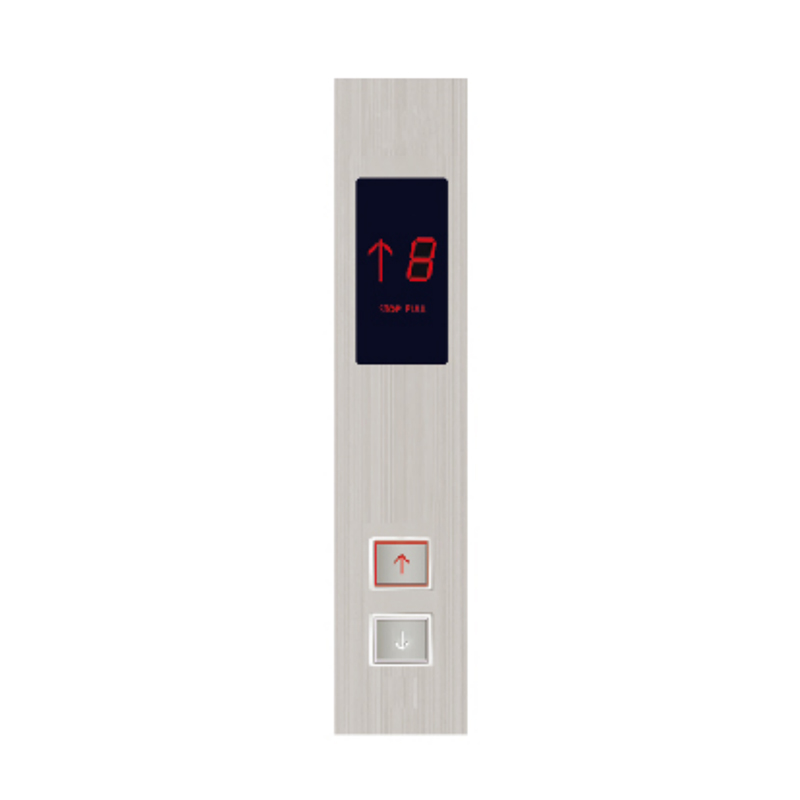
The TO-C100X is an elevator operation panel intended to deliver clear interaction between passengers and the elevator control system. In everyday use, an operation panel must perform a simple task repeatedly and reliably: receive commands, communicate status, and provide users with an immediate sense that the elevator is responding. Although this may appear straightforward, it requires careful design attention. Button arrangement, visibility, panel finish, installation compatibility, component durability, and production consistency all affect how users experience the elevator.
For building owners and elevator contractors, a panel like TO-C100X offers value because it supports a professional cabin appearance while helping maintain functional reliability. For architects and interior designers, it provides an interface element that can be integrated into cabin interiors without disrupting visual harmony. For passengers, it offers the familiar and essential control point that makes the elevator feel understandable, accessible, and safe.
The product title TO-C100X suggests a defined model within a structured elevator component range. Its category, elevator operation panel, identifies it as a key cabin interface product. Because elevator cabins differ widely across applications, the strongest operation panel designs are those that can support both standardization and project-specific adaptation. In this context, TO-C100X can be understood as a practical interface solution suitable for projects where dependable control, clean presentation, and manufacturing consistency are priorities.
The Role of an Elevator Operation Panel in Modern Buildings
An elevator operation panel may seem like a small part of a lift system, but it carries a disproportionately large influence over user experience. Passengers may never see the traction machine, control cabinet, guide rails, door operator, or safety components, but they see and touch the operation panel every time they ride. The panel becomes the visible symbol of the elevator’s quality.
In a passenger elevator, the panel guides daily movement for residents, office workers, hotel guests, and visitors. In a hospital elevator, it must support clear and efficient use under time-sensitive conditions. In a home villa elevator, it must match interior design expectations while remaining easy for all family members to use. In a cargo elevator, it must withstand practical use in logistics and service environments. In a high-speed elevator, it must complement a premium cabin environment and support a smooth, advanced transportation experience.
This wide range of applications explains why an operation panel must combine reliability, readability, design compatibility, and manufacturing discipline. TO-C100X is not merely a decorative plate with buttons. It is a user-facing control interface that helps connect the physical cabin to the elevator’s intelligent operating system.
Advantages Over Conventional Competitor Panels
The competitive advantage of the TO-C100X begins with its relationship to an integrated elevator manufacturing environment. Many operation panels in the market are produced as generic accessories, then adapted to different elevator systems with varying degrees of compatibility. Such an approach may reduce initial cost, but it can introduce challenges in installation matching, design consistency, long-term service, and quality traceability. By contrast, TO-C100X is associated with a manufacturer that designs and produces complete elevator solutions, making it easier to align the panel with broader elevator system requirements.
One major advantage is system thinking. A high-quality operation panel must match cabin interiors, control logic, wiring practices, safety expectations, and user behavior. When the panel is developed within a company that also produces passenger elevators, freight elevators, escalators, moving walks, and elevator solutions, the design process benefits from practical knowledge gained across many applications. This gives TO-C100X an advantage over panels developed without direct feedback from complete elevator projects.
Another advantage is manufacturing consistency. Competitor products may vary significantly between batches if production control is weak or supply chains are fragmented. In elevator projects, inconsistent panel quality can create visible differences between cabins, increase installation time, and complicate maintenance. Tenau’s emphasis on rigorous management systems, intelligent manufacturing, automated production lines, and closed-loop quality control supports a more stable production result. For TO-C100X, this background helps strengthen confidence that the delivered product will match project expectations.
A third advantage is the ability to support both international quality expectations and project customization. Elevators are installed in different countries, building types, climates, passenger cultures, and design environments. A panel that looks acceptable in one market may not satisfy another. A manufacturer with export experience and global project exposure is better positioned to understand these differences. TO-C100X benefits from this broader perspective because it can be presented as part of a professional export-ready elevator component offering.
Human-Centered Design and Everyday Usability
The strongest operation panels are designed from the passenger’s perspective. Users want a panel that is simple to understand, responsive, and visually clear. They do not want hesitation or confusion when selecting a floor. They want buttons or interface elements to be placed logically, information to be readable, and the panel surface to feel appropriate for the cabin environment. TO-C100X is focused on this essential goal: supporting a smooth interaction between passenger and elevator.
In public buildings, passengers may include elderly users, children, visitors unfamiliar with the layout, people carrying luggage, hospital staff moving equipment, or service personnel transporting goods. A well-designed operation panel must support fast recognition and simple action. Floor selection should feel natural. Door open and door close functions should be easy to identify. Emergency communication functions, where configured within the elevator system, must be located and presented with seriousness and clarity.
Compared with low-grade panels that focus only on basic function, TO-C100X is positioned as a more refined cabin interface. The difference is visible in how the product contributes to cabin impression. A clean operation panel improves the feeling of order. A reliable interface reduces anxiety. A professionally manufactured panel supports the impression that the elevator is modern, well maintained, and safe.
Application Across Multiple Elevator Categories
The product information lists a broad range of elevator categories associated with the company’s offering: passenger elevators, panoramic and observation elevators, hospital elevators, home villa elevators, cargo elevators, car elevators, escalators, moving walks, elevator parts and cabin interiors, and high-speed elevators. Although escalators and moving walks do not use the same cabin operation panel as elevators, the presence of these categories demonstrates a broad transportation product ecosystem. Within that ecosystem, TO-C100X is most relevant to elevator cabins and interior control interfaces.
For passenger elevators in residential and commercial buildings, TO-C100X can support daily convenience and design consistency. These elevators often serve many users and require a balance between durability and aesthetic appeal. A panel that integrates cleanly into the cabin helps the property maintain a professional image.
For panoramic and observation elevators, the panel must not distract from the visual experience. Observation elevators often use glass and decorative interior elements to create an open impression. A well-proportioned operation panel helps maintain the cabin’s premium feeling without overwhelming the design.
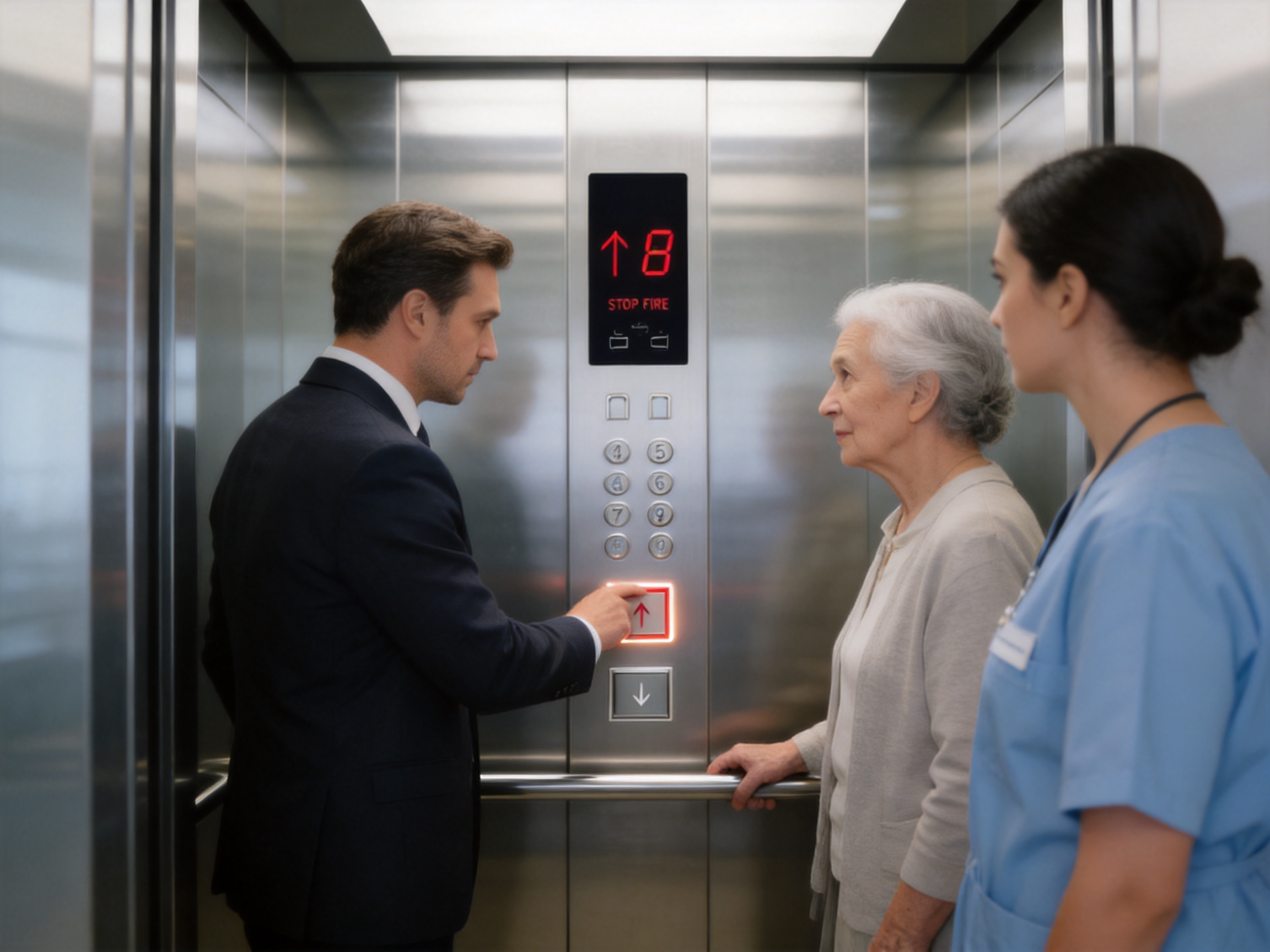
For hospital elevators, usability is especially important. Medical staff, patients, visitors, wheelchairs, and stretchers may all interact with the lift environment. The operation panel should support clear recognition and dependable function. In such settings, reliability and easy operation are not luxuries; they directly affect workflow.
For home villa elevators, the panel must align with residential comfort and interior styling. The user group may include family members of different ages, so simple and intuitive control is important. TO-C100X can contribute to a refined private elevator experience.
For cargo elevators and car elevators, the panel must serve practical operation in demanding environments. While cabin aesthetics may be less decorative than in a hotel or villa, the need for reliable commands remains just as important. A durable and clearly organized panel helps operators move goods, vehicles, and equipment with confidence.
For high-speed elevators, every visible component should reinforce the impression of advanced engineering. The operation panel becomes part of the premium passenger environment, supporting the sense of speed, precision, and technological maturity.
Design Integration with Cabin Interiors
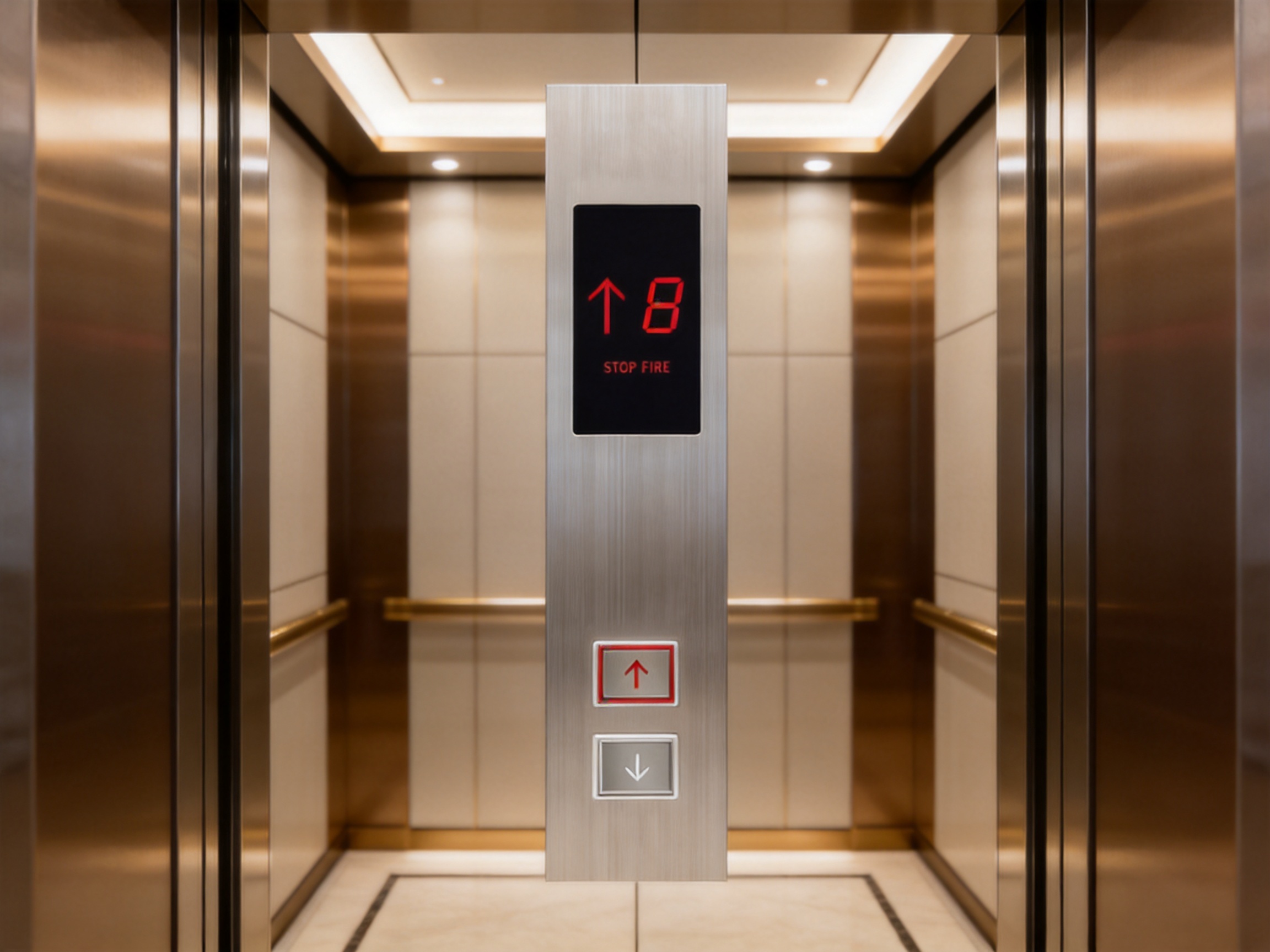
Elevator cabin interiors are increasingly treated as architectural spaces rather than purely mechanical enclosures. Developers, hotel operators, office owners, and residential communities often expect elevator cabins to match the building’s design language. The operation panel is one of the most visible interior details, so its design must support the cabin rather than appear as an afterthought.
TO-C100X belongs to the category of elevator parts and cabin interior components, making it relevant to complete interior coordination. A strong panel design considers shape, surface finish, button layout, lighting impression, and installation alignment. These qualities help the panel blend with stainless steel cabins, decorative panels, glass cabins, modern minimalist interiors, and higher-end custom elevator spaces.
Compared with competitor panels that may look generic or mismatched, TO-C100X is positioned to support a more unified cabin appearance. This is important because visual inconsistency can reduce the perceived quality of an elevator even if the core mechanical system performs well. When passengers see a panel that appears carefully selected and properly installed, they are more likely to trust the elevator as a whole.
Design integration also affects maintenance perception. Panels that are poorly aligned, difficult to clean, or visually inconsistent may make a cabin appear older than it is. A professionally produced operation panel supports a clean, orderly, and modern environment over time.
Manufacturing Strength Behind the Product
The quality of an elevator operation panel depends heavily on manufacturing discipline. Even a well-designed panel can fail to meet expectations if production is inconsistent. Tenau Elevator (China) Co., Ltd. operates as a professional comprehensive elevator manufacturer that integrates design, research and development, manufacturing, marketing, installation, and after-sales service. This broad structure supports product consistency from concept to delivery.
The company is located in Nanxun, Zhejiang Province, within the core economic circle connecting Shanghai, Nanjing, Suzhou, and Hangzhou. This location offers access to industrial resources, transportation networks, supply chain capabilities, and skilled technical talent. For elevator component manufacturing, such an industrial environment supports efficient production coordination and international shipment readiness.
The company emphasizes advanced capabilities in the design, research and development, and manufacturing of low-speed, medium-speed, high-speed, and ultra-high-speed elevators. This matters for TO-C100X because components used in elevator cabins must meet expectations across different performance levels. A manufacturer familiar with high-speed and ultra-high-speed elevator requirements is likely to apply a disciplined approach even to visible interface components.
The manufacturing background includes international technologies, rigorous management systems, and compliance with ISO9001, ISO14001, and OHSMS18001 standards. These standards relate to quality management, environmental management, and occupational health and safety management. For customers, such systems indicate that product quality is supported by structured processes rather than informal inspection alone.
German Industry 4.0 Concepts and Intelligent Manufacturing
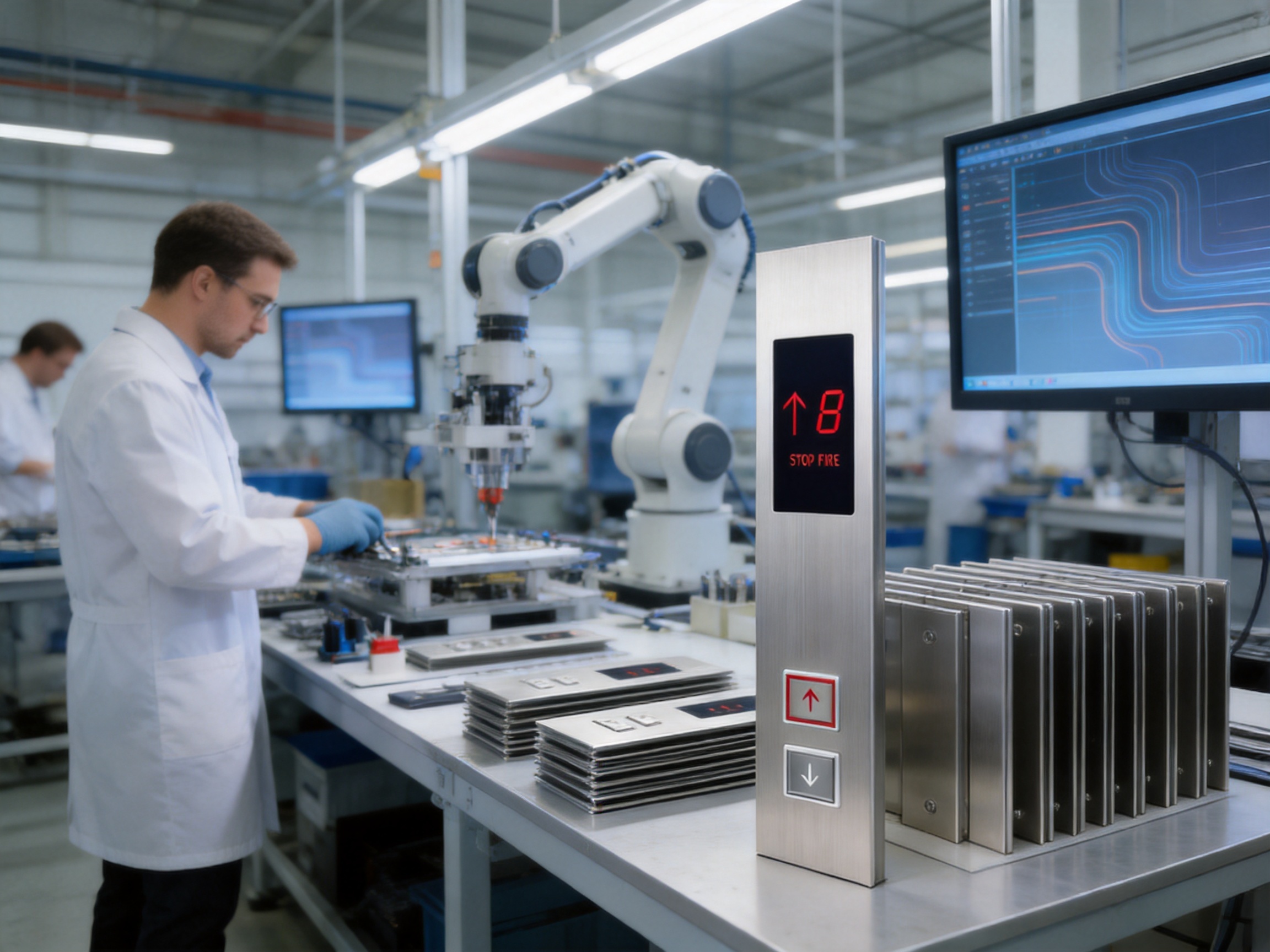
One of the company’s stated strengths is the introduction of German Industry 4.0 intelligent manufacturing. In elevator production, intelligent manufacturing is not simply a slogan. It refers to a more systematic, data-informed, and automated approach to production management. For an operation panel such as TO-C100X, this can influence material handling, process repeatability, assembly accuracy, inspection records, and final product consistency.
Automated production lines help reduce variation caused by manual inconsistency. Big data and Internet of Things technologies can support process monitoring, production analysis, and quality traceability. A full closed-loop quality control system allows feedback from inspection, production, and service to influence future manufacturing improvements. This is an important advantage over competitors that rely on less controlled production environments.
In practical terms, intelligent manufacturing can help ensure that product batches maintain consistent appearance and function. For large building projects requiring many elevator cabins, consistency is critical. If panels differ in surface quality, alignment, or component fit, the entire project may suffer from uneven cabin presentation. A structured manufacturing system helps prevent such problems.
For international customers, intelligent manufacturing also supports confidence in repeat orders. When a project expands or a new phase begins, buyers want assurance that the same product model can be supplied with comparable quality. The TO-C100X benefits from a production philosophy built around repeatability and control.
Quality Control as a Competitive Differentiator
Elevator products are safety-related, and even visible cabin components must be manufactured with responsibility. A full closed-loop quality control system means that quality is not inspected only at the end of production. Instead, it is monitored through multiple stages, from design validation and material selection to production, assembly, testing, packaging, and after-sales feedback.
For TO-C100X, quality control may involve checking appearance, dimensions, component fit, electrical interface readiness, surface condition, labeling, and packaging protection according to project requirements. While the exact inspection process depends on the specific configuration and order, the broader manufacturing system supports systematic attention to detail.
Competitor products can fall short when they treat operation panels as low-value accessories. This can lead to weak packaging, inconsistent surface treatment, poor alignment, unreliable tactile response, or insufficient project documentation. A manufacturer with a complete elevator quality culture is better positioned to avoid these issues. The TO-C100X benefits from being part of an environment where elevator reliability, not just component sale, is the central goal.
Quality also affects installation efficiency. A well-manufactured panel can reduce adjustment time on site, support predictable wiring or mounting coordination, and help installers complete cabin work more smoothly. This reduces hidden costs for contractors and project owners.
Environmental and Safety Management
The company’s mission includes safety and environmental protection, and its management systems include ISO14001 and OHSMS18001. These references are relevant because modern building projects increasingly evaluate suppliers not only by price, but also by responsible manufacturing practices. Environmental management indicates attention to resource use, emissions control, waste handling, and process discipline. Occupational health and safety management indicates concern for safe production conditions and organized workplace practices.
For an elevator operation panel, responsible manufacturing contributes to the overall sustainability profile of the elevator system. While the panel itself is only one component, it is part of a larger manufacturing chain. Customers selecting TO-C100X can present it as part of a responsible elevator procurement approach supported by organized production standards.
In competitive markets, sustainability and safety management can distinguish professional manufacturers from short-term suppliers. A low-cost panel from an unknown source may appear attractive at first, but if it lacks traceability, environmental responsibility, or consistent production control, the long-term value may be weaker. TO-C100X is supported by a manufacturer with a broader commitment to safe and environmentally conscious elevator solutions.
Technical and Commercial Value for Project Stakeholders
The TO-C100X creates value for multiple stakeholders. For developers, it contributes to the perceived quality of the building. For elevator contractors, it supports efficient installation and system coordination. For architects and designers, it provides a visible interface that can align with interior concepts. For building managers, it supports a professional cabin environment that can be maintained over time. For passengers, it provides the direct daily interaction point with the elevator.
In procurement decisions, visible components are sometimes underestimated because buyers focus primarily on the machine room, controller, traction system, or safety gear. However, passengers often judge the elevator by what they can see and touch. A premium elevator with a low-quality panel can feel disappointing. Conversely, a well-finished operation panel can enhance the perceived quality of the entire cabin.
TO-C100X can therefore be understood as a strategic component, not just a hardware item. It helps communicate the quality of the elevator system. It supports brand image for buildings such as hotels, offices, residential towers, hospitals, and public facilities. It also helps reduce the risk of passenger confusion or dissatisfaction caused by poor interface design.
Product Positioning Table
| Evaluation Area | TO-C100X Value | Advantage Compared with Ordinary Panels |
|---|---|---|
| Product Category | Elevator operation panel for cabin control interaction | Designed as part of a professional elevator component ecosystem rather than a generic accessory |
| User Experience | Supports clear floor selection and intuitive cabin operation | Improves passenger confidence and reduces confusion in daily use |
| Cabin Integration | Suitable for modern elevator interiors and coordinated cabin design | Helps avoid mismatched or low-grade visual impressions |
| Application Range | Relevant to passenger, hospital, villa, cargo, car, panoramic, and high-speed elevators | More versatile than panels limited to narrow or basic applications |
| Manufacturing Support | Backed by integrated design, R&D, manufacturing, installation, and service capability | Stronger system coordination than suppliers focused only on component trading |
| Quality System | Supported by ISO9001, ISO14001, and OHSMS18001 management frameworks | Offers more structured quality, environmental, and safety management |
| Production Philosophy | Associated with intelligent manufacturing, automated production, big data, and IoT concepts | Greater consistency and traceability than uncontrolled manual production |
| Long-Term Value | Enhances cabin appearance, usability, maintenance perception, and project confidence | Reduces hidden costs caused by poor finish, weak compatibility, or inconsistent batches |
Why Integrated Elevator Expertise Matters
An elevator operation panel must communicate with the logic and expectations of the elevator system. Although the panel is installed in the cabin, its function is connected to the controller, door system, display system, communication system, and safety logic. This is why integrated elevator expertise matters. A company that understands the complete elevator system can design and supply operation panels with stronger awareness of real installation and operation conditions.
Tenau Elevator (China) Co., Ltd. provides a wide range of elevator and escalator solutions. This product breadth gives the company practical knowledge of different building environments, transportation flows, and customer expectations. The TO-C100X benefits from this experience because it is not developed in isolation from actual elevator use.
For example, a hospital elevator may require different operating priorities from a villa elevator. A cargo elevator may require a more rugged use environment than a panoramic elevator. A high-speed elevator may require a more premium interface impression than a standard service lift. Understanding these differences helps a manufacturer offer panels and cabin components that are appropriate for the project.
Many competitors in the component market do not have full elevator manufacturing knowledge. They may produce panels that look acceptable but fail to consider installation conditions, wiring coordination, long-term replacement, or international project expectations. Integrated expertise reduces these risks.
Export Capability and Global Market Relevance
The company exports products to many countries and regions worldwide, which is important for customers seeking elevator components for international projects. Export experience requires more than the ability to ship goods. It requires documentation awareness, packaging discipline, communication efficiency, technical responsiveness, and understanding of diverse project expectations.
TO-C100X is relevant for global markets because elevator passengers everywhere share the same basic expectations: clarity, safety, responsiveness, and reliability. However, building styles, design preferences, language requirements, and project standards differ. A manufacturer with international exposure is better prepared to support these differences through project communication and product configuration.
In competitive procurement, buyers often compare suppliers based on price, appearance, and delivery time. Yet export reliability should also be considered. A panel supplier must be able to support consistent production, proper packaging, clear communication, and long-term cooperation. The company’s comprehensive structure and global export background strengthen the commercial value of TO-C100X.
Support for Custom Elevator Solutions
The company’s SEO description emphasizes custom designs and high-quality elevator solutions. This is relevant to the TO-C100X because elevator operation panels are often part of customized cabin projects. Different buildings may require different button arrangements, display options, language markings, accessibility considerations, or interior finishes. A panel model must be flexible enough to support project requirements while maintaining dependable manufacturing quality.
Customization should not mean uncontrolled variation. The best customization is built on a stable manufacturing foundation. This allows customers to adapt the panel to the building’s needs without sacrificing quality consistency. TO-C100X can be positioned as a product that supports this balance between standard product identity and project-specific application.
Compared with competitors that may offer either rigid standard products or poorly controlled customization, a comprehensive elevator manufacturer can provide a more balanced approach. It can understand the elevator system, cabin interior, and project environment together. This results in a more coherent final solution.
Maintenance and Life-Cycle Considerations
Elevator components should be evaluated not only at the moment of purchase but throughout the life cycle of the building. An operation panel is used repeatedly, often thousands of times per month in busy buildings. Its appearance and function influence maintenance perception over many years. A panel that deteriorates quickly can make the elevator look neglected even when the mechanical system remains functional.
TO-C100X supports life-cycle value by emphasizing quality manufacturing and cabin integration. A well-produced panel can contribute to easier cleaning, stable appearance, and predictable service handling. If project records and product traceability are maintained through organized manufacturing systems, future maintenance and replacement coordination can also become easier.
For building owners, life-cycle value is more important than the lowest initial price. A cheaper panel that requires frequent adjustment, replacement, or complaint management can become more expensive over time. TO-C100X offers a stronger value proposition by aligning with a manufacturer focused on quality control, intelligent production, and after-sales service capability.
Importance in High-Traffic Environments
In high-traffic buildings, elevator operation panels are exposed to continuous use. Office towers, shopping centers, hospitals, transport hubs, hotels, and apartment complexes require interface components that can maintain reliable operation under frequent passenger interaction. The panel must be easy to identify quickly, especially during peak hours when users do not have time to search for controls.
TO-C100X is well suited to environments where repeated use and visual quality both matter. A professional operation panel helps manage traffic flow by reducing hesitation. It also contributes to a cabin environment that feels orderly even during busy periods. This is especially valuable in commercial buildings where elevator performance affects tenant satisfaction.
In hospitals, the stakes can be higher. Staff may need to move patients, equipment, or supplies quickly. Visitors may be under stress and unfamiliar with the building. A clear and dependable operation panel helps support smoother movement. In such settings, the importance of the interface becomes very clear.
Contribution to Passenger Safety Perception
Safety in elevators is supported by many technical systems, including controllers, brakes, door protection, speed governors, buffers, and emergency communication devices. Most passengers never see these systems. Instead, their perception of safety is influenced by the cabin environment, lighting, sound, door movement, and operation panel response.
A clean, professionally installed, and reliable operation panel contributes to safety perception. When passengers press a button and receive clear feedback, they feel that the elevator is functioning properly. When the panel is poorly made, loose, confusing, or visually worn, passengers may question the overall condition of the elevator. TO-C100X helps support a positive safety impression by serving as a refined and dependable interface.
This does not mean that appearance replaces technical safety. Rather, it means that visible quality and technical quality should work together. Tenau’s broader mission of safety and environmental protection supports this balanced approach. The operation panel becomes one visible expression of a deeper safety-oriented elevator philosophy.
How Advanced R&D Supports Component Quality
The company has advanced capabilities in the design, research and development, and manufacturing of elevators across multiple speed ranges. Research and development in elevator systems involves mechanical design, control logic, safety systems, energy efficiency, user experience, and production optimization. These capabilities can influence component products such as TO-C100X because the panel must align with evolving elevator technology.
As buildings become smarter, elevator interfaces may need to coordinate with access control systems, destination control concepts, monitoring systems, or digital service platforms. Even when a panel remains a conventional cabin operation panel, it should be produced by a supplier that understands the direction of elevator technology. This helps protect the long-term relevance of the component.
Competitors without strong R&D capability may continue producing outdated or poorly integrated panels. In contrast, an R&D-oriented manufacturer can refine design, improve production methods, respond to market requirements, and align components with modern elevator ecosystems. TO-C100X benefits from this forward-looking manufacturing context.
The Nanxun Manufacturing Base and Industrial Advantage
The company’s location in Nanxun District, Huzhou City, Zhejiang Province, places it in a significant economic and manufacturing region. The area’s connection to the Shanghai-Nanjing-Suzhou-Hangzhou economic circle provides industrial and logistical advantages. For international buyers, the location supports access to supply networks and export infrastructure. For domestic and regional projects, it supports responsive manufacturing and coordination.
Large-scale manufacturing capability is especially important for elevator projects because delivery schedules are often tied to construction progress. Delays in cabin components can affect installation timelines. A strong manufacturing base helps reduce these risks by supporting organized production planning and supply continuity.
For TO-C100X, this means that the product is backed by a broader industrial ecosystem rather than a small isolated workshop. This distinction matters when customers require consistent quality, repeat orders, project communication, and reliable shipment.
Comparison with Low-Cost Generic Panels
The elevator component market includes many low-cost generic operation panels. These products may appear similar in photographs, but differences become clear during installation and long-term use. Generic panels may use inconsistent materials, weak assembly methods, unclear markings, poor surface finishing, or limited quality inspection. They may also lack reliable after-sales support.
TO-C100X offers a more professional alternative by being associated with a company that manufactures complete elevator systems and applies structured management standards. The difference is not only visual. It is also found in production control, project understanding, quality traceability, and long-term cooperation.
When evaluating price, customers should consider hidden costs. If a low-cost panel causes installation delays, customer complaints, premature replacement, or inconsistent cabin appearance, the total cost increases. A higher-quality panel can reduce these risks and improve the building’s long-term image. TO-C100X is positioned for customers who understand that elevator interface quality has practical and reputational value.
Suitable Buyers and Project Types
The TO-C100X is suitable for elevator manufacturers, contractors, distributors, developers, interior solution providers, and building owners seeking a dependable elevator operation panel. It is especially relevant for projects that require visible cabin quality, consistent manufacturing, and supplier credibility.
Residential developers may use the product to improve the perceived quality of apartment elevators. Commercial property owners may use it to support a professional tenant experience. Hotels may value its contribution to interior elegance. Hospitals may value its usability and reliability. Villa owners may value its clean and modern interface. Industrial buildings may value its practical operation. International distributors may value the company’s export experience and complete elevator background.
The product is also relevant for modernization projects where an existing elevator cabin needs an improved control interface. Replacing outdated panels can make an elevator feel newer and more user-friendly, especially when combined with cabin interior upgrades. In such projects, the operation panel becomes one of the most effective visible improvements.
Q&A Section
What is the TO-C100X?
TO-C100X is an elevator operation panel designed as a cabin control interface. It supports passenger interaction with the elevator system by providing a visible and practical control point for floor selection and related cabin functions according to the elevator configuration.
Which elevator types can use this operation panel?
The panel is relevant to many elevator applications, including passenger elevators, panoramic and observation elevators, hospital elevators, home villa elevators, cargo elevators, car elevators, and high-speed elevators. Its suitability for a specific project depends on the elevator design, cabin layout, control requirements, and configuration needs.
Why is the operation panel important in an elevator?
The operation panel is the main human-machine interface inside the elevator cabin. Passengers see and use it during every ride. It affects usability, safety perception, cabin appearance, maintenance impression, and the overall experience of the elevator.
How does TO-C100X compare with ordinary competitor panels?
TO-C100X is supported by a comprehensive elevator manufacturer with integrated design, research and development, manufacturing, installation, and after-sales capabilities. Compared with generic panels, it benefits from stronger system understanding, more consistent manufacturing, better cabin integration potential, and structured quality management.
What manufacturing strengths support the product?
The product is supported by advanced elevator manufacturing capabilities, intelligent manufacturing concepts, automated production lines, big data, Internet of Things technology, and a closed-loop quality control system. The manufacturer also follows ISO9001, ISO14001, and OHSMS18001 management standards.
Is the panel suitable for customized elevator projects?
Yes, the product can be positioned for projects requiring custom elevator design and cabin coordination. Specific customization possibilities depend on project requirements and technical confirmation, but the manufacturer’s integrated elevator expertise supports project-based adaptation.
Why should buyers consider manufacturing background when selecting an operation panel?
An operation panel must work reliably with the elevator system and maintain its appearance over years of use. A strong manufacturing background helps ensure quality consistency, better installation coordination, traceability, and long-term support. This reduces hidden costs and project risks.
As an elevator operation panel for modern cabin interiors, TO-C100X can contribute to a clean and professional cabin appearance. It is suitable for projects where visual quality and user interaction are important, such as hotels, office buildings, residential towers, villas, and high-speed elevator applications.
What role does quality control play in this product?
Quality control helps ensure that the panel’s appearance, assembly, fit, and functional readiness meet project expectations. A closed-loop quality control system supports consistency from production through delivery and feedback, making the product more dependable than panels produced without structured process control.
Who should consider purchasing TO-C100X?
Elevator contractors, developers, distributors, building owners, cabin interior suppliers, and modernization project managers can consider TO-C100X when they need a reliable and professionally manufactured elevator operation panel for a modern lift system.
Conclusion: A Professional Interface for a Smarter Elevator Ecosystem
The TO-C100X elevator operation panel represents an important part of the modern elevator experience. It is the point where passengers communicate with the lift, where cabin design meets control technology, and where visible quality influences confidence. In a competitive market filled with generic components, TO-C100X stands out because it is supported by a comprehensive elevator manufacturer with advanced production systems, integrated engineering knowledge, and international project experience.
Its advantages are found in more than appearance. The product benefits from system-level elevator understanding, intelligent manufacturing, automated production capability, closed-loop quality control, and management systems aligned with quality, environmental responsibility, and occupational safety. These strengths help reduce the risks commonly associated with ordinary panels, such as inconsistent quality, weak project compatibility, poor cabin integration, and limited long-term support.
For passenger elevators, hospital elevators, villa elevators, cargo elevators, car elevators, panoramic elevators, and high-speed elevators, the operation panel is a daily-use component that deserves serious attention. TO-C100X supports intuitive operation, refined cabin presentation, and dependable project value. For buyers seeking a high-quality elevator interface backed by professional manufacturing strength, it offers a practical and competitive solution.
References
Tenau Elevator (China) Co., Ltd. Company Profile and Product Category Materials.
International Organization for Standardization. ISO9001 Quality Management Systems: General Principles and Application Framework.
International Organization for Standardization. ISO14001 Environmental Management Systems: Requirements and Implementation Guidance.
Occupational Health and Safety Management System Guidelines Related to OHSMS18001 Practices.
Elevator Industry Technical Literature on Human-Machine Interfaces, Cabin Interior Design, and Lift Component Quality Control.
Industrial Manufacturing References on German Industry 4.0, Automated Production Lines, Big Data Applications, and Internet of Things-Based Process Monitoring.
Product: TO-C100X

Related Products
Related News
Built on safety, forging trust in vertical mobility.
lf you have any questions or need help, feel free to contact with our team.
 export@tenau.com.cn
 +86-18601458867
 +86-512-65059883
Elevator & Escalator
Factory Add
East of Xicheng Road, North of Lianyi Road, Nanxun Economic Development Zone, Nanxun District, Huzhou City, Zhejiang Province, P.R.China
Copyright © Tenau Elevator (China) Co., Ltd. All Rightd Reserved.
Custom High Quality Elevator Suppliers and World Brand Elevator Company