

 en
en Español
 русский
 中文简体
中文简体
TO-VF02 Elevator Handrail: Durable, Comfortable, and Engineered for Modern Vertical Transportation
Content
- 1 1. The Role of an Elevator Handrail in Passenger Safety and Comfort
- 2 2. Product Overview of the TO-VF02
- 3 3. Advantages Compared with Ordinary Elevator Handrails
- 4 4. Design and Ergonomic Considerations
- 5 5. Manufacturing Strengths Behind the Product
- 6 6. Quality, Environmental, and Safety Management
- 7 7. Application Areas
- 8 8. Installation and Maintenance Considerations
- 9 9. Procurement Guidance for Project Buyers
- 10 10. Why a Complete Elevator Manufacturer Is a Strong Source
- 11 11. Sustainability and Long-Term Value
- 12 12. Project Quality Assurance
- 13 13. Q&A: Common Questions About the TO-VF02 Elevator Handrail
- 13.1 Q1: What is the TO-VF02?
- 13.2 Q2: Is the TO-VF02 suitable for public buildings?
- 13.3 Q3: Can it be used in a hospital elevator?
- 13.4 Q4: Can the handrail be coordinated with a custom cabin interior?
- 13.5 Q5: What makes a professionally manufactured handrail different from a generic product?
- 13.6 Q6: How should the handrail be installed?
- 13.7 Q7: How should the TO-VF02 be cleaned?
- 13.8 Q8: Is the handrail appropriate for a home elevator?
- 13.9 Q9: Can it be used in a cargo or car elevator?
- 13.10 Q10: What manufacturing strengths support the product?
- 13.11 Q11: Which management standards does the company report complying with?
- 13.12 Q12: What information should be requested before ordering?
- 13.13 Q13: How can the handrail support accessibility?
- 13.14 Q14: Is the product available for international projects?
- 13.15 Q15: Why should the handrail be ordered as part of an integrated elevator solution?
- 14 14. Recommended Selection Process
- 15 15. Conclusion
- 16 References
- 17 Product: TO-VF02
Elevator handrails are among the most frequently touched components in a lift cabin, yet they are often overlooked when the overall elevator system is designed. A handrail must do more than complete the visual appearance of an interior. It must provide stable support, enhance passenger confidence, withstand repeated contact, tolerate intensive cleaning, and remain visually consistent with the cabin environment throughout a long service life. The TO-VF02 elevator handrail is designed around these practical requirements, offering a dependable solution for passenger elevators, panoramic and observation elevators, hospital elevators, home villa elevators, cargo elevators, car elevators, and other vertical transportation applications.
As an elevator interior component, the TO-VF02 can contribute to both safety and comfort. Passengers may use a handrail while entering or leaving the cabin, standing during travel, balancing during acceleration and deceleration, or supporting themselves in a moving vehicle elevator. In hospitals and public buildings, a handrail may also be used by elderly passengers, people with limited mobility, patients, caregivers, and children. Its design therefore needs to combine ergonomic usability with robust construction and an appearance suitable for different architectural styles.
The product is supplied by Tenau Elevator (China) Co., Ltd., a comprehensive elevator manufacturer with capabilities covering design, research and development, manufacturing, marketing, installation, and after-sales service. The company’s product portfolio includes elevators, escalators, moving walks, and related elevator components and cabin interiors. Its manufacturing strategy combines international technologies, Industry 4.0 intelligent production, automated lines, data-based management, Internet of Things applications, and closed-loop quality control.
This article examines the role of the TO-VF02 handrail, its advantages in comparison with ordinary or poorly integrated alternatives, the manufacturing strengths behind the product, and the considerations that buyers should evaluate when selecting elevator interior components.
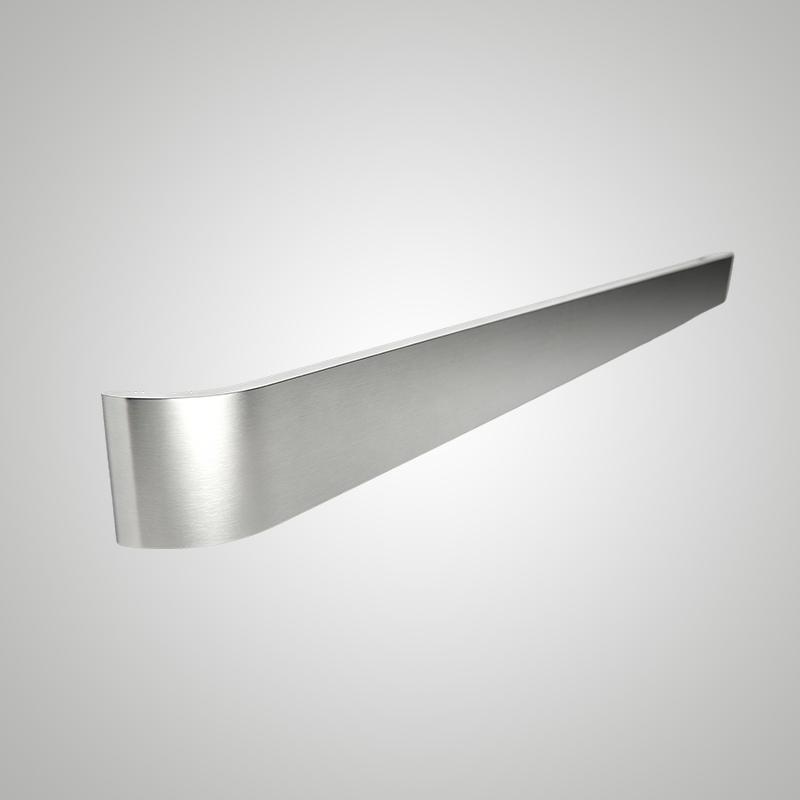
TO-VF02
1. The Role of an Elevator Handrail in Passenger Safety and Comfort
An elevator cabin is a compact moving environment. Even when the elevator operates smoothly, passengers can experience slight changes in motion as the car starts, accelerates, decelerates, and stops. In a busy building, passengers may also enter the cabin while carrying bags, pushing a trolley, assisting another person, or standing in a crowded group. A properly designed handrail provides a convenient point of support in these situations.
The handrail is particularly important for passengers who may not have perfect balance. Older adults, people recovering from injury, pregnant passengers, and users with temporary or permanent mobility limitations often benefit from a secure horizontal support. In hospital elevators, the handrail may support patients and staff during the movement of beds, wheelchairs, or medical equipment. In residential elevators, it can improve confidence for children and older family members. In public elevators, it provides an additional level of usability for a wide range of passengers.
Comfort is also important. A handrail that is too angular, too narrow, too slippery, or poorly positioned may be difficult to grip. A product intended for frequent public use should feel natural in the hand and should not create unnecessary pressure points. Its edges, connections, and surface should be considered as part of the passenger experience rather than treated as secondary details.
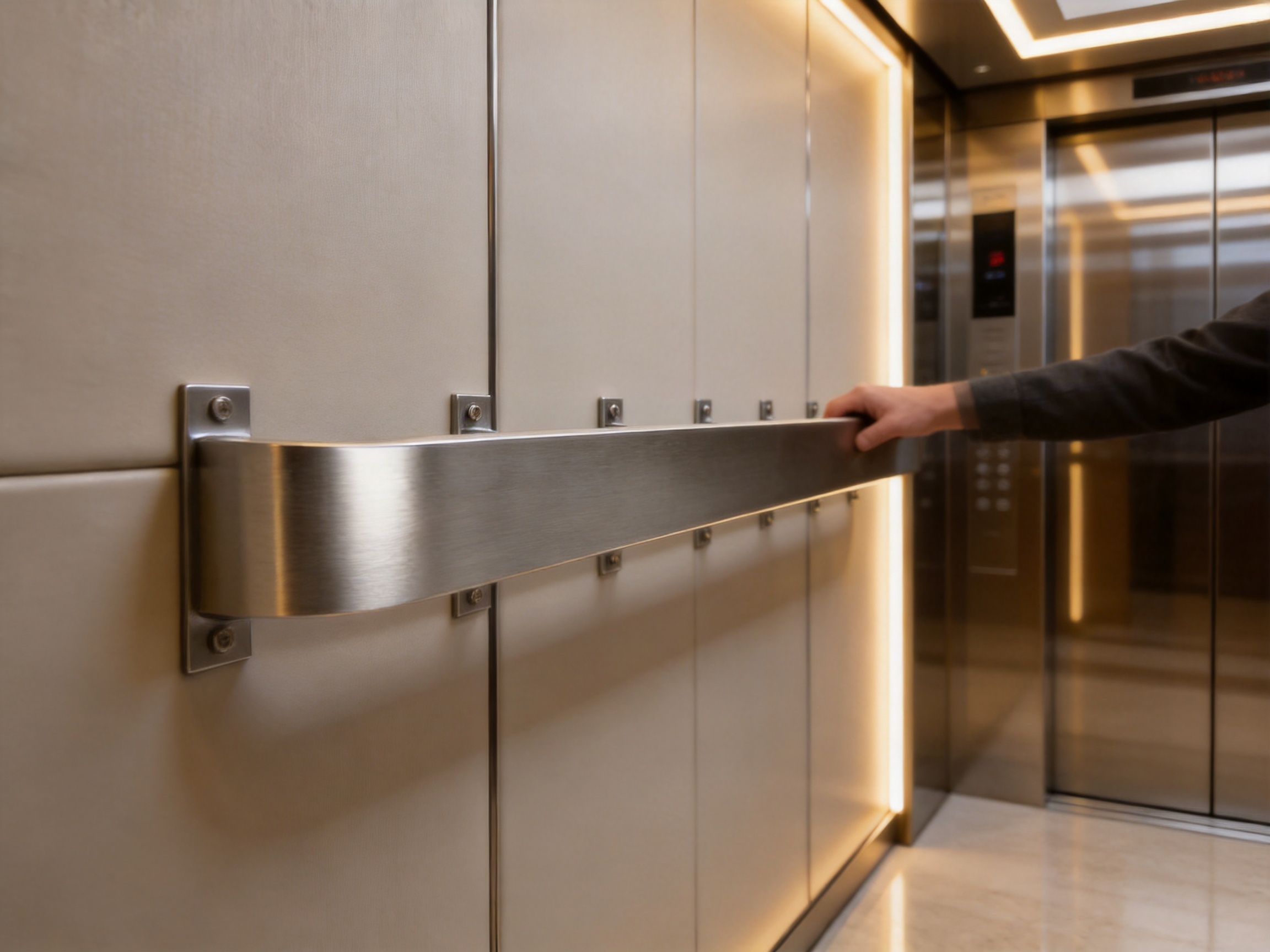
Visual integration is another essential function. The elevator cabin is often one of the most visible interior spaces in a commercial building. Passengers notice the walls, control panel, ceiling, lighting, flooring, mirror, protective elements, and handrail as a single environment. A handrail with an unsuitable finish or imprecise installation can weaken the appearance of an otherwise high-quality cabin. The TO-VF02 is therefore positioned as both a functional elevator part and an interior design element.
2. Product Overview of the TO-VF02
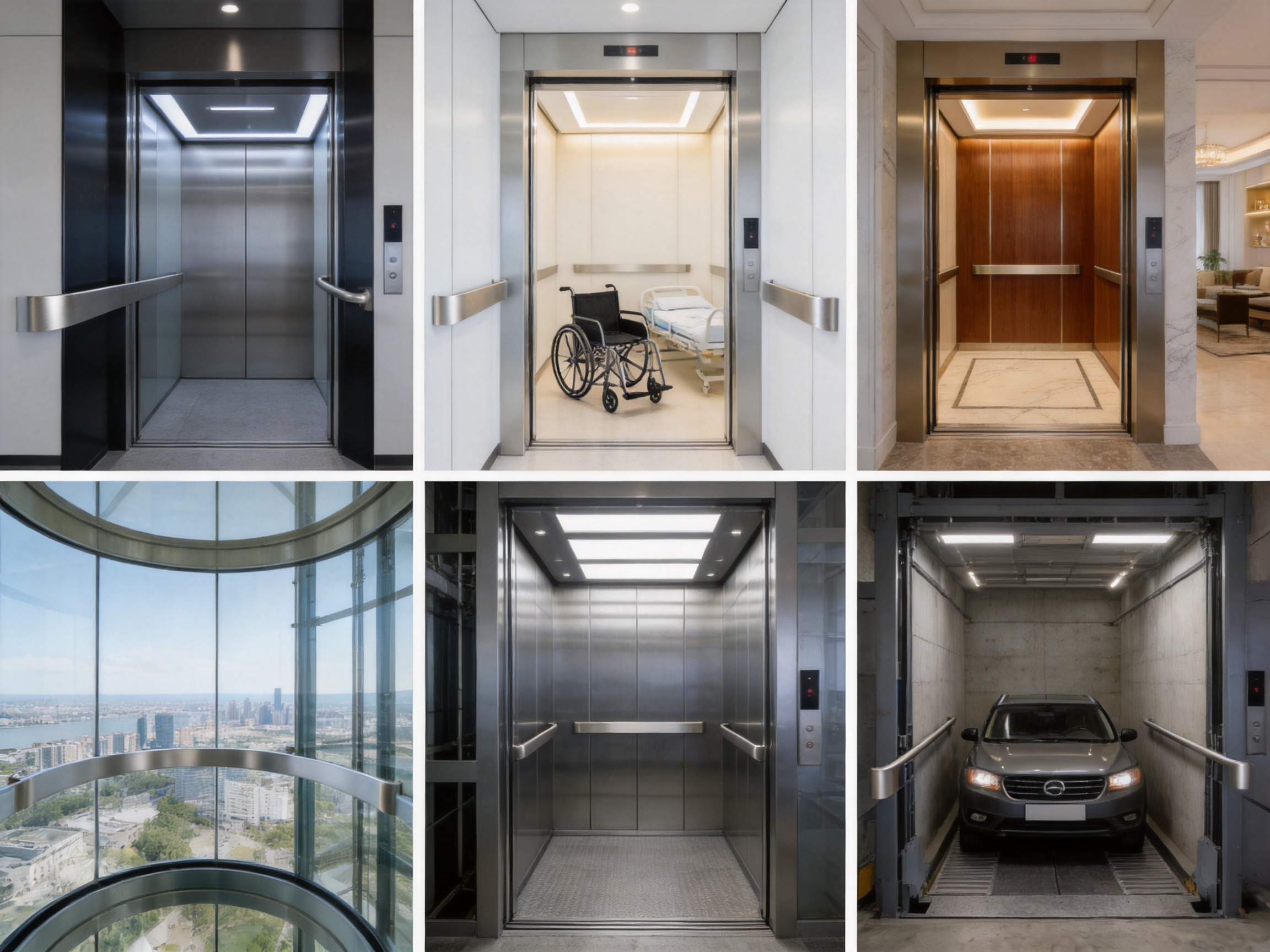
The TO-VF02 is categorized as an elevator handrail. It is intended for use in elevator cabins where passenger support, interior coordination, and long-term durability are important. The product can be considered for different elevator categories, including passenger elevators, panoramic and observation elevators, hospital elevators, home villa elevators, cargo elevators, car elevators, and other specialized vertical transportation systems.
Because elevator projects differ in cabin size, wall structure, traffic level, interior finish, and local safety requirements, handrail selection should be coordinated with the complete cabin design. The TO-VF02 can be evaluated according to the required mounting arrangement, cabin dimensions, surrounding panels, color scheme, cleaning program, and expected operating conditions. Project-specific confirmation should be completed before production so that the product is matched with the intended elevator configuration.
The product’s value is not limited to the physical rail. A reliable handrail solution includes the visible rail, its supporting elements, connection points, mounting interface, surface treatment, dimensional coordination, and quality inspection. These details determine how the handrail performs after installation. A component may appear acceptable in a product photograph but still create difficulties if its brackets interfere with wall panels, its fasteners are difficult to service, or its finish does not match adjacent cabin components.
For this reason, the TO-VF02 should be selected as part of an integrated cabin interior package. The manufacturer’s experience in complete elevator design and production supports coordination between the handrail and other systems. This integrated approach can reduce design conflicts, simplify project communication, and improve consistency between the ordered product and the finished elevator.
2.1 Functional characteristics
The primary function of the TO-VF02 is to offer passengers a stable and accessible grip. A suitable handrail should remain firm during normal elevator operation and should resist movement caused by repeated passenger contact. It should also be positioned so that it can be used naturally without obstructing the cabin entrance, control panel, emergency equipment, ventilation, or other essential features.
The product is also intended to support a clean and orderly cabin appearance. A well-integrated handrail can provide a visual horizontal line that balances large wall surfaces. In a panoramic elevator, it can complement transparent or decorative panels without overwhelming the view. In a hospital elevator, it can contribute to a calm, hygienic, and professional environment. In a residential elevator, it can be coordinated with a more decorative interior concept.
2.2 Application flexibility
Different elevator applications create different demands. A passenger elevator in an office building may experience frequent use throughout the day. A hospital elevator may require intensive cleaning and regular contact with beds, wheelchairs, and equipment. A home elevator may have lower traffic but higher expectations for appearance and quiet operation. A car elevator may need a particularly durable interior because users enter with vehicles, tools, luggage, or bulky objects.
The TO-VF02 can be considered across these environments because its role is adaptable. The final selection should take into account the cabin’s traffic intensity, cleaning products, operating temperature, humidity, exposure to impact, and required appearance. This application-based approach is more reliable than choosing a handrail only by appearance or initial price.
3. Advantages Compared with Ordinary Elevator Handrails
Elevator handrails from different sources may appear similar at first glance, but their long-term performance can vary considerably. The most important differences are often found in manufacturing control, dimensional accuracy, mounting reliability, surface quality, and coordination with the complete elevator system. The TO-VF02 offers several potential advantages through its association with a professional elevator manufacturer and a broader production system.
3.1 Better integration with the elevator cabin
One advantage of sourcing an elevator handrail from a company that also designs and manufactures complete elevators is the ability to coordinate the component with the cabin structure. The handrail can be considered alongside wall panels, corner details, ceiling elements, lighting, flooring, control stations, and protective fittings. This is different from purchasing a generic rail from an unrelated hardware supplier and attempting to adapt it after the cabin design has been finalized.
Integrated coordination may help reduce common problems such as incorrect mounting positions, visible gaps, interference with wall joints, unsuitable bracket spacing, or inconsistent finishes. It also makes it easier for the project team to discuss the handrail with one technical contact rather than managing several disconnected suppliers.
3.2 Consistent appearance
The visual quality of an elevator cabin depends heavily on consistency. A handrail should not look like an unrelated addition. Its surface, color, geometry, and supporting details should work with the selected cabin interior. In high-end residential or commercial projects, even small variations in color or finishing can affect the perceived quality of the entire elevator.
Manufacturing within an organized elevator production environment supports better coordination of finishes and components. It allows the handrail to be reviewed as part of the overall interior concept. This is especially useful for projects requiring multiple elevators, where consistency between cabins is essential.
3.3 Support for intensive use
A handrail is touched repeatedly. In a busy building, this contact occurs thousands of times over the life of the elevator. Ordinary products may show premature surface wear, looseness, discoloration, or damage if their materials and mounting systems are not selected for the application. A professionally produced elevator handrail is expected to be evaluated not only for its appearance when new but also for its ability to remain serviceable under repeated use.
The TO-VF02 benefits from a production philosophy that emphasizes quality control, systematic manufacturing, and application-oriented elevator engineering. While the precise material and finish should be confirmed for each project, the product can be specified with attention to durability, cleaning, contact frequency, and cabin conditions.
3.4 More reliable quality management
Quality management is particularly important for elevator components because they form part of a moving transportation system. Inconsistent dimensions or poor finishing can create installation delays, visible defects, or future maintenance problems. Tenau’s stated compliance with ISO9001, ISO14001, and OHSMS18001 reflects an organized approach to quality management, environmental management, and occupational health and safety.
These management systems do not replace project-specific inspection, but they provide a framework for controlled processes. A structured system can support documented procedures, traceability, corrective action, process monitoring, and continuous improvement. This is a meaningful advantage over suppliers that rely only on informal inspection or visual checks at the end of production.
3.5 Easier project communication
Elevator projects often involve architects, developers, general contractors, elevator installers, interior designers, consultants, and local authorities. A component supplier that understands the wider elevator system can communicate more effectively with these parties. Questions concerning dimensions, mounting, cabin coordination, delivery, installation, and after-sales service can be addressed within a broader technical context.
For international projects, communication and documentation are especially important. A professional manufacturer can support discussions about technical parameters, drawings, manufacturing schedules, installation arrangements, and service requirements. This helps reduce uncertainty when the handrail is incorporated into a larger elevator order.
4. Design and Ergonomic Considerations
An elevator handrail should be designed around the user. The most attractive product is not necessarily the most comfortable or practical. Ergonomic evaluation includes the rail’s grasping area, position, height, clearance from the wall, end treatment, support strength, and relationship to the cabin layout.
4.1 Grip and passenger confidence
The handrail should offer a grip that feels stable without requiring excessive force. A passenger should be able to place a hand on it quickly and maintain contact during elevator movement. The surface should be easy to clean while still providing a comfortable tactile experience. A handrail that is excessively smooth may feel insecure, while one with an overly rough texture may be uncomfortable and difficult to sanitize.
The appropriate grip characteristics depend on the product configuration and material. Buyers should request technical information about the available surface options and evaluate them against the project’s passenger profile. For healthcare and public-use environments, the cleaning and hygiene program should be considered at the same time as tactile comfort.
4.2 Positioning within the cabin
Handrail location must be coordinated with accessibility, passenger circulation, and equipment placement. It should not obstruct the elevator operating panel, door opening, emergency communication device, alarm button, or other controls. It should also provide adequate clearance for hands and arms, especially in a crowded cabin.
In an accessible elevator, the handrail arrangement should be reviewed with the applicable local regulations and accessibility standards. The final height, length, projection, and placement may be affected by regional requirements, cabin dimensions, wheelchair maneuvering space, and the position of control equipment. The TO-VF02 should therefore be installed according to approved project drawings rather than treated as a universal one-position component.
4.3 End details and connections
End details require careful attention because they are frequently touched and are visually prominent. Poorly finished ends may create sharp edges, snagging points, or an unfinished appearance. Secure connections are also important because passengers may apply sudden or uneven loads when entering, stopping, or leaving the cabin.
The supporting structure should distribute applied forces into the cabin wall or reinforcement rather than relying on a weak decorative panel. Installation teams should confirm the strength of the mounting substrate, the suitability of the fasteners, and the recommended tightening method. These details are part of responsible elevator installation practice.
4.4 Coordination with interior style
Elevator cabins can be modern, minimalist, classic, industrial, luxurious, or highly functional. A handrail can either reinforce or disrupt the chosen concept. Its shape and finish should coordinate with stainless steel panels, glass, wood-effect surfaces, stone-effect materials, decorative laminates, mirrors, and other interior elements.
In a panoramic elevator, the handrail should preserve the visual openness of the cabin. In a hospital elevator, it should support an uncluttered and reassuring environment. In a villa elevator, the component may be selected to complement residential furniture and architectural finishes. The TO-VF02 can therefore be evaluated not simply as a standard fitting but as part of a customized interior strategy.
5. Manufacturing Strengths Behind the Product
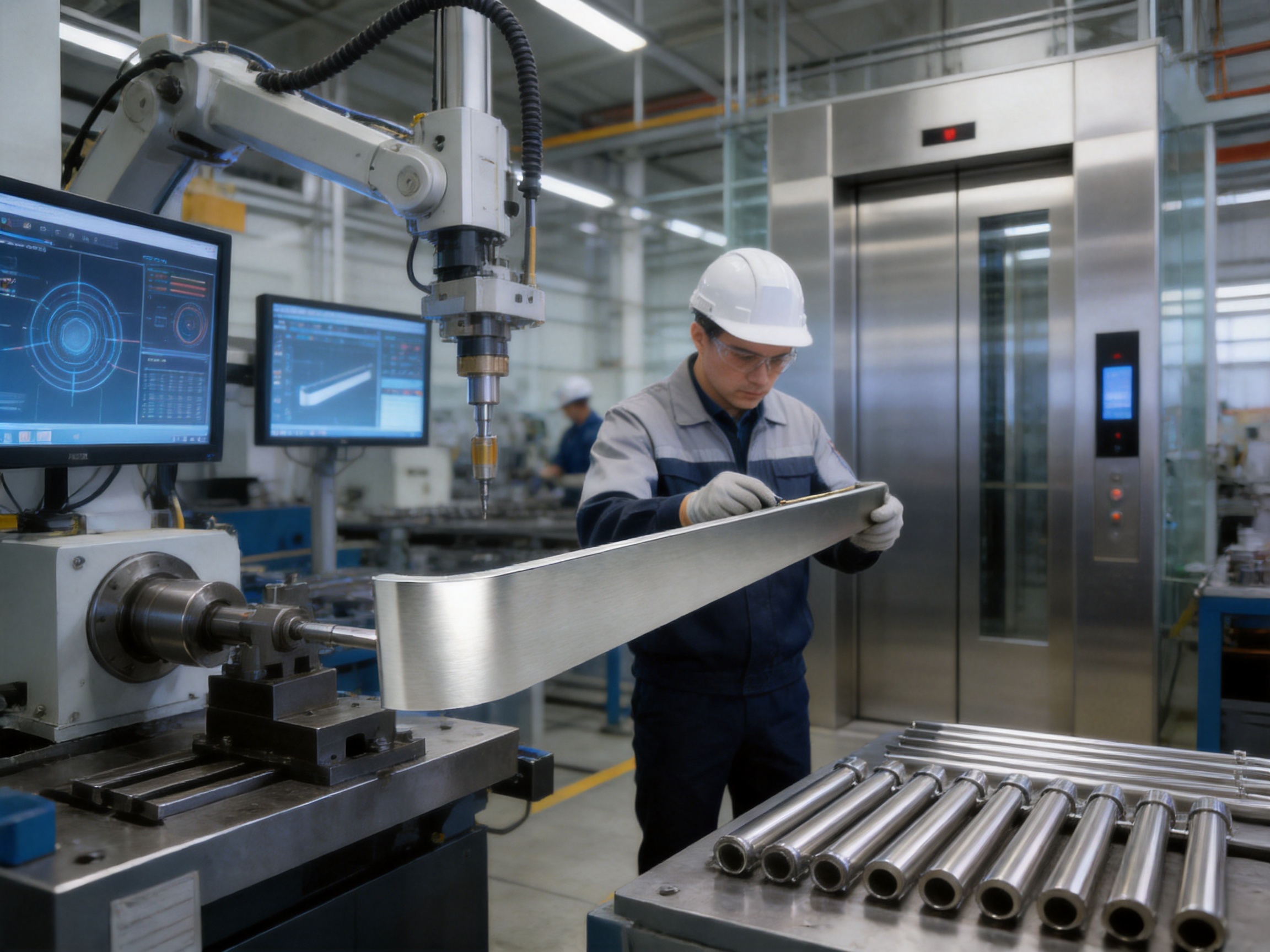
The quality of an elevator handrail depends on the quality of the production system behind it. A professional manufacturer must control design, material selection, fabrication, finishing, assembly, inspection, packaging, and delivery. Tenau Elevator (China) Co., Ltd. describes itself as a comprehensive elevator manufacturer integrating design, research and development, manufacturing, marketing, installation, and after-sales service. This broad capability provides a foundation for producing coordinated elevator parts and cabin interiors.
5.1 Design and research capability
Design and research are important because elevator components must satisfy practical, aesthetic, and system-level requirements at the same time. A handrail may need to fit a specific cabin wall, accommodate a particular finish, meet a project’s appearance expectations, and remain accessible for maintenance. Research and development activities help a manufacturer improve these relationships instead of treating the product as an isolated hardware item.
Tenau reports capabilities in the design, research and development, and manufacturing of low-speed, medium-speed, high-speed, and ultra-high-speed elevators. Experience across different elevator performance classes can support a broad understanding of cabin movement, passenger flow, structural coordination, and operating conditions. This system knowledge is useful when selecting and adapting interior components such as the TO-VF02.
5.2 Industry 4.0 intelligent manufacturing
Modern elevator manufacturing increasingly uses digital planning, automated equipment, connected production data, and process monitoring. Tenau identifies German Industry 4.0 intelligent manufacturing as part of its production approach. In practical terms, this type of manufacturing can improve the connection between engineering information and factory operations.
Digital production systems may help reduce manual transcription errors, improve production scheduling, standardize repeatable operations, and provide clearer process records. Automated equipment can support consistent cutting, forming, machining, or finishing where applicable. Data-based monitoring can also help identify deviations earlier, before they become repeated quality problems.
For a handrail such as the TO-VF02, these advantages may appear in dimensional consistency, repeatability between batches, alignment of mounting features, and more stable surface quality. The exact manufacturing process depends on the selected configuration and materials, but the general benefit is a more controlled route from design concept to finished component.
5.3 Automated production lines
Automation is valuable when a manufacturer must deliver consistent products at scale. Handrails may be produced for individual residential elevators, large commercial developments, hospitals, transport buildings, hotels, and mixed-use projects. Each application can involve different quantities and specifications, but all require dependable quality.
Automated or semi-automated lines can help establish repeatable production parameters. They may also improve worker safety and reduce variability in repetitive operations. When combined with skilled technical staff, automation provides a balance between efficiency and flexibility. This is important for elevator components because projects often require both standardized quality and customized dimensions or finishes.
5.4 Big data and Internet of Things applications
Tenau also identifies big data and Internet of Things technology as elements of its intelligent elevator ecosystem. These technologies can support production management, equipment monitoring, quality analysis, and service coordination. Although a handrail itself is a passive component, the manufacturing and service information associated with it can benefit from connected systems.
Data-based analysis may help identify recurring issues, compare production batches, monitor delivery performance, and improve future designs. In a complete elevator project, connected information can also support maintenance planning and service records. The advantage is not that technology replaces engineering judgment, but that it gives engineers and managers better information for making decisions.
5.5 Closed-loop quality control
A closed-loop quality system does more than detect a defect. It records the issue, identifies its likely cause, determines corrective action, verifies the result, and feeds the learning back into the process. This approach is valuable for components that must be repeated across many projects.
For the TO-VF02, quality control may include design review, material verification, dimensional inspection, surface inspection, assembly checks, packaging review, and final confirmation against the approved order. The precise inspection plan should be agreed with the buyer, especially for projects with special finish, high traffic, healthcare requirements, or strict documentation needs.
Closed-loop management also supports continuous improvement. If an installation team reports that a particular mounting detail is difficult to access, the manufacturer can evaluate the feedback and improve the design or installation instructions. If a finish performs differently under a specific cleaning routine, the information can be used to refine product recommendations.
6. Quality, Environmental, and Safety Management
Elevator manufacturing has responsibilities that extend beyond the appearance of the finished product. The production environment must protect workers, manage materials responsibly, and maintain consistent product quality. Tenau states that its management systems comply with ISO9001, ISO14001, and OHSMS18001 standards.
6.1 ISO9001 quality management
ISO9001 is associated with quality management systems and process-based control. For buyers, the significance lies in the existence of an organized framework for customer requirements, documented processes, inspection, corrective action, and continual improvement. A certified or managed quality system can provide greater confidence than a production process that has no formal structure.
In the context of the TO-VF02, quality management supports the expectation that the delivered handrail will correspond with approved drawings and specifications. It also encourages consistent communication between sales, engineering, production, inspection, logistics, installation, and after-sales teams.
6.2 ISO14001 environmental management
Environmental management is increasingly important in construction and building equipment procurement. ISO14001 focuses on systematic identification and management of environmental aspects. In manufacturing, this may involve resource consumption, waste control, emissions management, material handling, and process improvement.
For elevator projects, environmentally responsible manufacturing can complement broader building sustainability goals. Buyers may wish to request information about material composition, surface treatment, packaging, maintenance requirements, and end-of-life considerations. A durable handrail can also contribute to sustainability by reducing the frequency of replacement and minimizing the waste associated with premature component failure.
6.3 OHSMS18001 occupational health and safety management
OHSMS18001 is associated with occupational health and safety management. Safe production processes help protect the people who design, fabricate, assemble, inspect, package, and install elevator components. A strong safety culture can also improve process discipline and operational reliability.
For international buyers, management-system credentials are one part of supplier evaluation. They should be considered together with technical documentation, product inspection, factory capability, references, installation support, and compliance with the regulations applicable in the destination market.
7. Application Areas
7.1 Passenger elevators
Passenger elevators are the most common application for a handrail. They serve offices, apartments, hotels, retail centers, schools, public buildings, and transportation facilities. Passenger traffic can vary from moderate to extremely intensive, so the chosen handrail should be evaluated for repeated contact, cleaning, appearance retention, and resistance to everyday impact.
The TO-VF02 can contribute to a more comfortable passenger experience by providing a stable support point and a coordinated interior detail. In a multi-elevator installation, consistent use of the product across cabins can help maintain a unified design language.
7.2 Panoramic and observation elevators
Panoramic and observation elevators are often designed as architectural features. Their transparent or visually open cabins place greater emphasis on interior appearance. A handrail must provide support without unnecessarily obstructing views or making the cabin appear crowded.
The TO-VF02 may be considered for these projects when its dimensions, finish, and mounting arrangement are coordinated with the glass, metal, lighting, and structural elements of the cabin. The final design should balance passenger support with the visual purpose of the observation elevator.
7.3 Hospital elevators
Hospital elevators have demanding operational requirements. They may carry beds, wheelchairs, medical carts, staff, patients, and visitors. The cabin may be cleaned frequently and may need to tolerate contact with equipment. A handrail in this environment should be selected with special attention to cleanability, durability, smooth transitions, accessibility, and resistance to daily wear.
Hospital projects also require careful coordination with infection-control procedures and local healthcare standards. The selected finish and cleaning agents should be confirmed with the supplier and facility team. The handrail should not create unnecessary dirt traps or difficult-to-clean recesses, and its mounting should be robust enough for intensive use.
7.4 Home villa elevators
Home villa elevators typically serve fewer passengers than commercial elevators, but their interior design expectations can be high. Homeowners may want the elevator cabin to match woodwork, stone, glass, metal, lighting, or other residential finishes. Noise, touch comfort, visual proportion, and detail quality can be especially important.
The TO-VF02 can be evaluated as part of a custom residential cabin. Its selection should consider the available cabin size, the user profile, the style of the residence, and the desired level of personalization. A professional elevator manufacturer can help coordinate the handrail with the rest of the cabin rather than treating it as an afterthought.
7.5 Cargo elevators
Cargo elevators transport goods, tools, materials, and equipment. Their interiors are often exposed to heavier contact and a greater risk of impact. A handrail in a cargo elevator may be required to provide passenger support while also tolerating a more demanding environment.
When specifying the TO-VF02 for cargo service, buyers should confirm the appropriate material, mounting strength, protection strategy, and maintenance requirements. The rail should not interfere with loading operations or reduce the usable cabin area. Protective wall panels and other interior components should be coordinated with its position.
7.6 Car elevators
Car elevators are used in parking facilities, residential developments, commercial buildings, and specialized transport systems. Their cabins can experience contact from vehicle doors, luggage, tools, and passengers moving around parked vehicles. A handrail may improve usability for drivers and passengers, but its location must be planned carefully to avoid interference with vehicle clearance.
For car elevator applications, the handrail should be considered together with cabin dimensions, vehicle guidance, protective surfaces, lighting, sensors, and loading procedures. A professional manufacturer can evaluate the component as part of the complete car elevator environment.
7.7 Escalator and moving-walk environments
The TO-VF02 is categorized as an elevator handrail, while escalators and moving walks use different handrail systems with continuous moving belts. However, the broader product portfolio of a comprehensive vertical transportation manufacturer can be valuable to projects requiring multiple equipment types. A developer may be able to coordinate elevator cabin interiors, escalators, and moving walks through one experienced supplier while maintaining consistent service and project management.
8. Installation and Maintenance Considerations
Even a well-manufactured handrail requires correct installation. The mounting method should follow the approved technical drawings and the manufacturer’s instructions. Before installation, the team should verify the cabin wall dimensions, reinforcement, panel finish, mounting locations, fasteners, and required tools.
8.1 Pre-installation checks
Before opening or installing the product, the delivery should be checked for packaging damage, missing components, incorrect quantities, and visible defects. The handrail should be compared with the order documents and approved specifications. If the surface has a protective film, it should remain in place until the surrounding construction work is sufficiently complete.
The installer should also check whether the cabin wall is level and whether the mounting points align with the prepared structure. Attempting to compensate for major dimensional errors by forcing the handrail into position can damage both the component and the cabin interior.
8.2 Installation quality
Installation should ensure that the handrail is level, securely fixed, properly aligned, and free from sharp edges or unstable movement. Fasteners should be tightened according to the recommended method. Excessive force may damage finishes or distort components, while insufficient tightening can lead to looseness during service.
The completed installation should be inspected from both functional and visual perspectives. The installer should confirm that the handrail does not obstruct controls, doors, emergency equipment, lighting, or passenger movement. It should also be checked for vibration, rattling, unwanted movement, and visible gaps.
8.3 Cleaning and routine care
Cleaning procedures should be suitable for the selected material and finish. Harsh chemicals, abrasive pads, or unsuitable solvents can damage surfaces even when the underlying component is durable. Facility managers should follow the manufacturer’s cleaning recommendations and test unfamiliar products in an inconspicuous area before widespread use.
Routine maintenance should include checking the tightness of mounting points, inspecting the surface for damage, and confirming that the handrail remains stable. In hospitals, transport facilities, and high-traffic buildings, inspection intervals may need to be shorter because the component is used more frequently.
8.4 Replacement and serviceability
Like all interior components, a handrail may eventually require repair or replacement due to accidental impact, renovation, vandalism, or long-term wear. A product supplied through an established elevator manufacturer may be easier to identify and reorder because its design information is connected with the broader elevator project.
Buyers should retain product information, drawings, finish details, installation records, and maintenance notes. This documentation can reduce the risk of receiving an incompatible replacement several years after the original installation.
9. Procurement Guidance for Project Buyers
Choosing an elevator handrail should involve more than comparing unit prices. The total value of the product depends on durability, installation time, appearance, cleaning needs, technical support, availability, and long-term service. A lower initial price may not be economical if the component is difficult to install, requires frequent replacement, or does not match the cabin interior.
9.1 Confirm the application
Begin by identifying the elevator type and operating environment. Passenger, hospital, residential, cargo, and car elevators may require different priorities. Provide the supplier with information about traffic, cleaning, expected impact, user groups, cabin dimensions, and interior materials.
9.2 Request technical documentation
Important documents may include product drawings, dimensions, mounting details, material information, finish options, inspection requirements, packaging instructions, cleaning recommendations, and installation guidance. For international projects, documentation may also need to support local approval, accessibility review, and building inspection.
9.3 Review customization requirements
Discuss whether the TO-VF02 must be adapted to a particular cabin width, wall panel, finish, or design concept. Customization should be approved before production, and any changes should be reflected in drawings or other controlled documents. Verbal assumptions can lead to errors when several parties are involved.
9.4 Evaluate the supplier’s manufacturing capability
Supplier evaluation should consider factory scale, production equipment, engineering resources, quality systems, inspection capability, delivery experience, installation support, and after-sales service. Tenau reports a large-scale manufacturing base, professional technical teams, intellectual property achievements, international technology introduction, and exports to many countries and regions.
These capabilities are relevant because an elevator handrail is part of a long-term building asset. Buyers should seek a supplier that can support the product not only at the quotation stage but also during manufacturing, installation, commissioning, maintenance, and future service.
9.5 Consider the complete cost
The complete cost includes the product, packaging, transportation, installation labor, potential modifications, cleaning, maintenance, replacement, and project delay risk. A precisely manufactured and well-documented handrail may reduce installation adjustments and improve project efficiency. It may also help maintain the cabin’s appearance for a longer period.
| Evaluation area | Questions for the buyer | Why it matters |
|---|---|---|
| Application | What type of elevator will use the handrail? | Traffic, impact, cleaning, and accessibility needs vary by application. |
| Dimensions | Does the product fit the cabin wall and approved layout? | Correct dimensions reduce installation conflicts and rework. |
| Material and finish | Is the surface suitable for the intended environment and cleaning routine? | Material compatibility supports durability and appearance retention. |
| Mounting | Are reinforcement, brackets, fasteners, and access requirements clear? | Secure installation depends on proper structural coordination. |
| Quality control | What inspections and records are available? | Documented inspection improves confidence in repeatability and conformity. |
| Project support | Can the supplier assist with drawings, installation, and service? | Integrated support reduces communication gaps and delays. |
| Future replacement | Can the product be identified and reordered later? | Traceability supports long-term maintenance and renovation. |
10. Why a Complete Elevator Manufacturer Is a Strong Source
An elevator handrail is a relatively small component, but its performance is connected to the elevator cabin and the building environment. Purchasing from a complete elevator manufacturer can provide advantages in technical coordination and accountability. The same organization may understand the cabin structure, control equipment, interior panels, safety requirements, installation process, and service lifecycle.
Tenau Elevator (China) Co., Ltd. describes its business as a comprehensive elevator operation covering design, research and development, manufacturing, marketing, installation, and after-sales service. This vertical capability can help customers move from concept to completed installation with fewer handovers between unrelated suppliers.
The company’s location in Nanxun, Zhejiang Province, places its manufacturing base within the Shanghai-Nanjing-Suzhou-Hangzhou economic region. This region is recognized for advanced manufacturing, engineering resources, logistics connections, and industrial supply chains. A manufacturing location with access to a developed industrial environment can support sourcing, production, technical staffing, and export operations.
Tenau also states that it exports to many countries and regions around the world. International experience can be valuable for buyers who require careful packaging, export documentation, multilingual communication, coordinated delivery, and awareness of different project expectations. International supply, however, should always be supported by project-specific confirmation of local codes, installation requirements, and acceptance procedures.
11. Sustainability and Long-Term Value
Sustainability in elevator interiors is closely connected with service life, resource efficiency, maintenance, and replacement frequency. A durable handrail that remains functional and visually acceptable for many years can reduce the need for premature replacement. Efficient manufacturing and responsible environmental management can further improve the product’s overall value.
Tenau’s stated environmental management framework and use of intelligent manufacturing technologies support a more systematic approach to resource management. Buyers should still request project-specific information when environmental declarations, recycled content, material certificates, or green-building documentation are required.
Long-term value also depends on repairability and service access. A handrail should be installed in a way that allows inspection and replacement without unnecessary damage to surrounding panels. Clear identification of the model, finish, and installation method can make future service more efficient.
For building owners, the most sustainable product is often one that meets the intended use, is correctly installed, is regularly maintained, and remains supported by the manufacturer. The TO-VF02 can be part of this strategy when selected and managed as a long-term elevator component rather than as a disposable decorative accessory.
12. Project Quality Assurance
Quality assurance should begin before production. The buyer, elevator contractor, interior designer, and manufacturer should agree on the application, dimensions, finish, mounting arrangement, quantity, delivery schedule, and documentation requirements. Approved drawings should be issued before manufacturing starts.
During production, inspection can focus on material conformity, dimensions, finish, assembly, and packaging. For larger projects, the buyer may request sample approval or a first-article inspection. This can be particularly useful when multiple cabins must achieve the same appearance.
At delivery, the receiving team should inspect packaging and record any damage. At installation, the team should verify alignment, stability, clearance, and visual quality. After commissioning, the handrail should be checked during normal elevator operation to ensure that it does not generate noise, vibration, or movement.
This staged approach is consistent with a closed-loop quality philosophy. It prevents problems from being discovered only after the elevator is handed over and helps establish a clear record of responsibility at each stage.
13. Q&A: Common Questions About the TO-VF02 Elevator Handrail
Q1: What is the TO-VF02?
The TO-VF02 is an elevator handrail designed for installation inside elevator cabins. It can be considered for passenger elevators, panoramic and observation elevators, hospital elevators, home villa elevators, cargo elevators, car elevators, and other elevator applications where passenger support and interior coordination are required.
Q2: Is the TO-VF02 suitable for public buildings?
It can be considered for public-building projects, subject to confirmation of the required dimensions, finish, mounting arrangement, accessibility provisions, and local regulations. Public applications should also be evaluated for traffic intensity, cleaning frequency, vandal resistance, and maintenance access.
Q3: Can it be used in a hospital elevator?
The product may be suitable for hospital elevator interiors when its selected material and finish are compatible with the facility’s cleaning and hygiene procedures. The project team should confirm cleanability, resistance to the approved cleaning agents, mounting stability, accessibility, and coordination with beds and medical equipment.
Q4: Can the handrail be coordinated with a custom cabin interior?
Handrail coordination should be discussed with the manufacturer during the design stage. The cabin size, wall panels, control panel, lighting, mirrors, flooring, and decorative finishes should be reviewed together. Any customized dimensions or finishes should be confirmed in approved technical documents before production.
Q5: What makes a professionally manufactured handrail different from a generic product?
A professionally manufactured elevator handrail is designed and produced with attention to elevator-specific requirements, including cabin layout, mounting structure, passenger use, finish coordination, inspection, installation, and service. A generic product may not provide the same level of dimensional coordination, documentation, or technical support.
Q6: How should the handrail be installed?
Installation should follow the approved drawings and manufacturer’s instructions. The mounting substrate, reinforcement, brackets, fasteners, alignment, clearance, and tightening method should be checked. The finished handrail should be stable, level, free from sharp edges, and clear of controls and emergency equipment.
Q7: How should the TO-VF02 be cleaned?
Cleaning should follow recommendations for the selected material and finish. Non-abrasive methods and compatible cleaning agents are generally preferred, but the exact procedure must be confirmed with the supplier. Facility staff should avoid unapproved chemicals or abrasive tools that could damage the surface.
Q8: Is the handrail appropriate for a home elevator?
It can be evaluated for home and villa elevators. Residential projects often place strong emphasis on appearance, tactile comfort, cabin proportion, and coordination with architectural finishes. The final selection should be based on the homeowner’s design requirements and the available cabin configuration.
Q9: Can it be used in a cargo or car elevator?
It may be considered for cargo and car elevators, but the project should account for heavier contact, vehicle clearance, loading procedures, protective wall panels, and possible impact. The required material, mounting strength, and placement should be confirmed with the elevator manufacturer.
Q10: What manufacturing strengths support the product?
The supplying company reports integrated design, research and development, manufacturing, installation, and after-sales capabilities. It also identifies German Industry 4.0 intelligent manufacturing, automated production lines, big data, Internet of Things technology, and closed-loop quality control as part of its manufacturing approach.
Q11: Which management standards does the company report complying with?
The company states that it complies with ISO9001, ISO14001, and OHSMS18001 management standards. These relate respectively to quality management, environmental management, and occupational health and safety management.
Q12: What information should be requested before ordering?
Buyers should request product drawings, dimensions, material and finish information, mounting details, cleaning recommendations, inspection requirements, packaging information, delivery details, and any available compliance documentation. Application-specific requirements should be confirmed before the order is finalized.
Q13: How can the handrail support accessibility?
A handrail can provide a stable support point for passengers with limited balance or mobility. Its exact height, position, length, clearance, and relationship to controls must comply with applicable accessibility regulations and the approved elevator design. Accessibility should be evaluated at the complete cabin level.
Q14: Is the product available for international projects?
The supplier reports exporting elevator products to many countries and regions worldwide. International buyers should confirm destination-country requirements, shipping terms, packaging, documentation, installation arrangements, local codes, and after-sales support for each project.
Q15: Why should the handrail be ordered as part of an integrated elevator solution?
Integrated ordering can improve coordination between the handrail and cabin structure, interior finishes, controls, installation procedures, and future service. It may reduce communication gaps and help ensure that the finished component matches the overall elevator design.
14. Recommended Selection Process
A practical selection process can be divided into five stages. First, define the application and passenger requirements. Second, provide the manufacturer with cabin drawings and interior specifications. Third, review product dimensions, materials, finish, mounting, and maintenance requirements. Fourth, approve samples or drawings where necessary. Fifth, inspect delivery and installation against the approved documents.
This process is appropriate for both small residential projects and large commercial developments. In a villa elevator, the emphasis may be on customization and visual harmony. In a hospital, the focus may be on cleaning, accessibility, and repeated use. In a commercial tower, production consistency, delivery coordination, and service support may be the main concerns.
The most important principle is to treat the handrail as part of the elevator system. A successful result requires cooperation between the manufacturer and the project team. Clear information at the beginning can prevent expensive corrections later.
15. Conclusion
The TO-VF02 elevator handrail is a functional and visual component designed for modern elevator cabins. Its role extends beyond providing a place to hold. It can improve passenger confidence, support accessibility, contribute to cabin comfort, and reinforce the interior design of passenger, panoramic, hospital, residential, cargo, and car elevators.
Its principal advantages over ordinary or poorly integrated alternatives are associated with system-level coordination, professional manufacturing, quality management, application flexibility, and access to complete elevator engineering support. The product should be selected with attention to dimensions, material, finish, mounting, cleaning, traffic, impact, and local requirements.
The manufacturing strengths reported by Tenau Elevator (China) Co., Ltd. provide an important foundation for product reliability. The company integrates design, research and development, manufacturing, installation, and after-sales service. Its use of Industry 4.0 intelligent manufacturing, automated production, big data, Internet of Things technology, and closed-loop quality control demonstrates a modern production strategy. Its stated ISO9001, ISO14001, and OHSMS18001 compliance further indicates a structured approach to quality, environmental responsibility, and occupational safety.
For buyers, the best result comes from combining a suitable product with correct engineering coordination and installation. When the TO-VF02 is specified as part of a complete elevator interior and supported by clear documentation, inspection, maintenance, and after-sales service, it can provide lasting value in a wide range of vertical transportation projects.
References
1. Manufacturer-provided product information for the TO-VF02 elevator handrail.
2. Manufacturer-provided company profile and elevator product portfolio information.
3. ISO 9001, Quality Management Systems—Requirements.
4. ISO 14001, Environmental Management Systems—Requirements with Guidance for Use.
5. Occupational health and safety management system principles associated with OHSMS18001.
6. General principles of elevator cabin design, accessibility, passenger safety, and interior component maintenance.
7. General Industry 4.0 manufacturing, automation, industrial data management, and closed-loop quality-control practices.
Product: TO-VF02

Related Products
Related News
Built on safety, forging trust in vertical mobility.
lf you have any questions or need help, feel free to contact with our team.
 export@tenau.com.cn
 +86-18601458867
 +86-512-65059883
Elevator & Escalator
Factory Add
East of Xicheng Road, North of Lianyi Road, Nanxun Economic Development Zone, Nanxun District, Huzhou City, Zhejiang Province, P.R.China
Copyright © Tenau Elevator (China) Co., Ltd. All Rightd Reserved.
Custom High Quality Elevator Suppliers and World Brand Elevator Company