

 en
en Español
 русский
 中文简体
中文简体
Ultra-High-Speed Elevators for Supertall Buildings and Advanced Urban Mobility
Content
- 1 Designed for the Vertical Requirements of Supertall Buildings
- 2 Core Performance Advantages
- 3 Ride Comfort in Extreme High-Altitude Conditions
- 4 Intelligent Group Control for Higher Traffic Efficiency
- 5 Precision Frequency Conversion Drive Technology
- 6 Redundant Safety Protection for Reliable Operation
- 7 Comparison with Conventional Elevator Solutions
- 8 Advanced Manufacturing and Engineering Capabilities
- 9 Research, Development and Product Customization
- 10 Energy Efficiency and Responsible Building Development
- 11 Installation, Commissioning and Service Considerations
- 12 Passenger-Centered Interior Experience
- 13 Applications in Modern High-Rise Architecture
- 14 Why Manufacturing Strength Matters to Buyers
- 15 Project Selection and Planning Guide
- 16 Quality, Safety and Long-Term Value
- 17 Questions and Answers
- 17.1 What is an ultra-high-speed elevator?
- 17.2 Which buildings are most suitable for this elevator?
- 17.3 How does aerodynamic cabin design improve performance?
- 17.4 What is the role of permanent magnet synchronous traction technology?
- 17.5 How does intelligent group control reduce waiting time?
- 17.6 Why is precision frequency conversion important?
- 17.7 What safety systems are included?
- 17.8 Can the elevator be customized for a specific building?
- 17.9 How does the manufacturer support product quality?
- 17.10 What should buyers consider before placing an order?
- 18 Conclusion
- 19 References
- 20 Product: Ultra-High Speed Elevator Product Introduction
As cities grow vertically, elevator performance becomes increasingly important to the success of modern architecture. In supertall commercial buildings, landmark complexes, premium residential towers and high-end urban developments, vertical transportation must do much more than move passengers between floors. It must support efficient building operation, maintain a high level of passenger comfort, protect users under demanding conditions and contribute to the overall identity of the property.
The ultra-high-speed elevator is engineered for precisely these requirements. It combines advanced permanent magnet synchronous traction technology, optimized aerodynamic cabin design, intelligent group control, precision frequency conversion and multiple redundant safety systems. Together, these technologies create a vertical transportation solution capable of delivering fast travel, smooth acceleration, reduced noise, reliable operation and a premium passenger experience.
Unlike conventional elevators designed primarily for low- and medium-rise buildings, an ultra-high-speed elevator must perform reliably over long travel distances and under changing conditions at high altitude. Air pressure, aerodynamic resistance, vibration, thermal conditions, traffic peaks and emergency response requirements all become more significant as speed and building height increase. The design must therefore be treated as an integrated engineering system rather than as a collection of individual components.
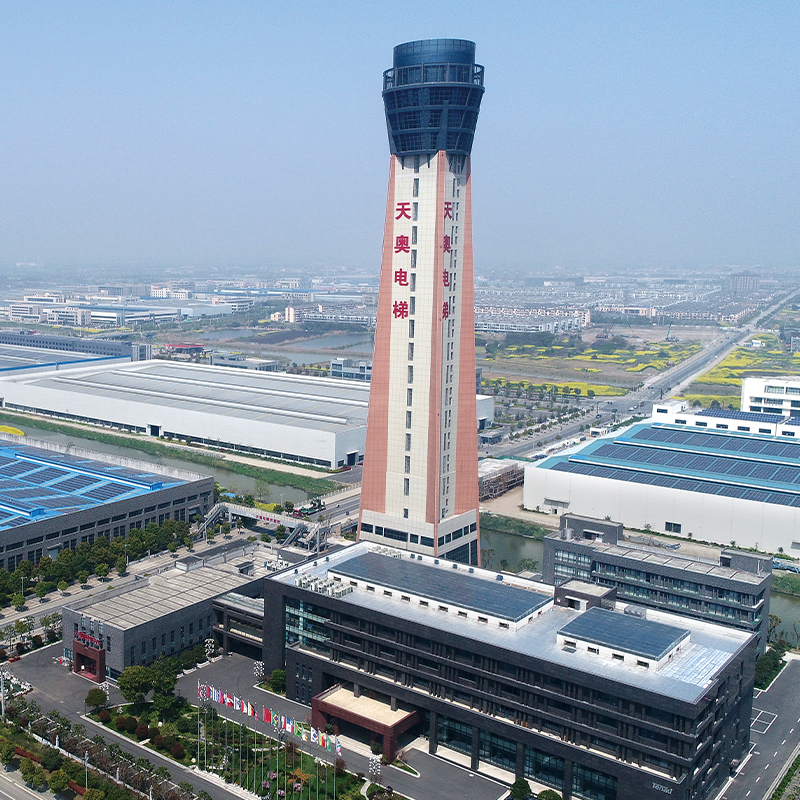
Tenau Elevator (China) Co., Ltd. develops and manufactures elevator systems for a wide range of applications, including passenger elevators, hospital elevators, home villa elevators, cargo elevators, car elevators, escalators, moving walks and high-speed elevator solutions. Its ultra-high-speed elevator product is intended for demanding architectural projects where speed, safety, comfort, intelligent control and long-term reliability must work together.
Ultra-High Speed Elevator Product Introduction
Designed for the Vertical Requirements of Supertall Buildings
Supertall buildings create a unique transportation challenge. A building may contain thousands of occupants, multiple usage zones, offices, hotels, observation spaces, retail areas and public facilities. Every additional floor increases the distance that passengers need to travel, while every delay at the lobby or transfer floor can affect productivity and the perceived quality of the entire building.
An ultra-high-speed elevator helps address this challenge by reducing the time required for long-distance vertical travel. Its value is not limited to a higher rated speed. The complete system must also accelerate and decelerate in a controlled way, open and close doors efficiently, respond intelligently to passenger demand and maintain consistent operation throughout the day.
High-rise buildings often experience highly variable traffic patterns. Morning arrivals may create concentrated upward traffic, while lunch periods, shift changes, conferences and evening departures can produce different movement demands. An elevator system that performs well only during light traffic is not sufficient for a landmark building. Intelligent group control and precise drive technology are therefore essential to achieving dependable traffic performance.
The ultra-high-speed elevator is particularly suitable for:
• Supertall office buildings requiring rapid movement between lobby zones and high-level office floors.
• Landmark commercial complexes where transportation efficiency and premium design contribute to the building’s public image.
• High-end urban towers that require a quiet, comfortable and refined passenger experience.
• Mixed-use developments with complex traffic patterns and multiple passenger destinations.
• Observation towers and elevated public facilities where long travel distances must be managed safely and comfortably.
• Major architectural projects requiring coordinated elevator technology, intelligent control and sophisticated interior design.
Core Performance Advantages
High-Speed Travel with Controlled Movement
The most visible advantage of an ultra-high-speed elevator is its ability to shorten travel time. However, speed alone does not define a high-quality elevator. Passengers judge the journey by the entire movement profile, including starting acceleration, continuous travel, stopping accuracy, door operation and transition between floors.
The system is designed to provide stable ultra-high-speed operation rather than simply pursuing a high numerical speed. Precision frequency conversion allows the drive system to regulate motor performance accurately during acceleration, full-speed travel and deceleration. This helps create a controlled movement curve that supports passenger comfort and reduces unnecessary mechanical stress.
For long-lift applications, the ability to maintain consistent performance is especially important. A system must remain responsive at the beginning of the journey, stable during high-speed travel and precise when approaching the destination floor. Effective coordination between the traction machine, drive, controller, position detection system and braking equipment supports this complete movement process.
Permanent Magnet Synchronous Traction Technology
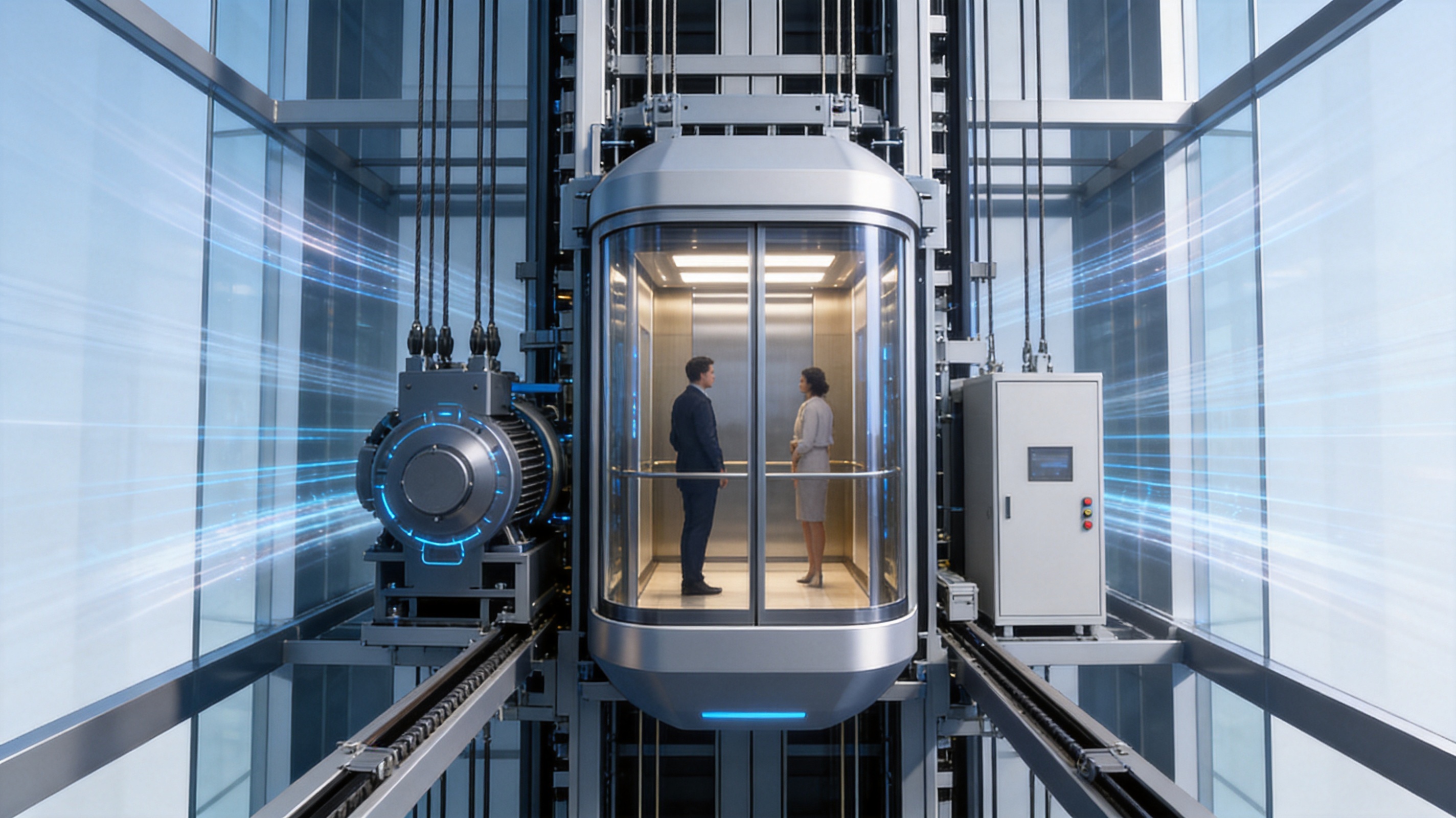
The elevator uses advanced permanent magnet synchronous traction technology. This type of traction system is widely valued for its efficient motor operation, compact structure and precise controllability. It supports the demanding requirements of high-speed vertical transportation while contributing to energy efficiency and a more refined ride.
Permanent magnet synchronous traction technology can help reduce energy losses associated with traditional motor structures. The motor can deliver strong and accurately controlled torque while maintaining a compact arrangement. This is beneficial in high-rise buildings where machinery space, equipment integration and long-term operating cost are important considerations.
For a high-speed elevator, traction technology must also work in harmony with the drive and control system. Motor output, rope movement, braking response and cabin position must be coordinated continuously. A technically advanced traction machine cannot provide a satisfactory result without accurate control and reliable system integration. The product is therefore developed as a complete transportation system rather than as an isolated motor solution.
Aerodynamic Cabin Design
At ultra-high speeds, air resistance becomes a major factor in elevator performance. A conventional cabin shape may generate turbulence, pressure variation and additional noise as it moves through the hoistway. These effects can become more noticeable in very tall buildings and may reduce the quality of the passenger experience.
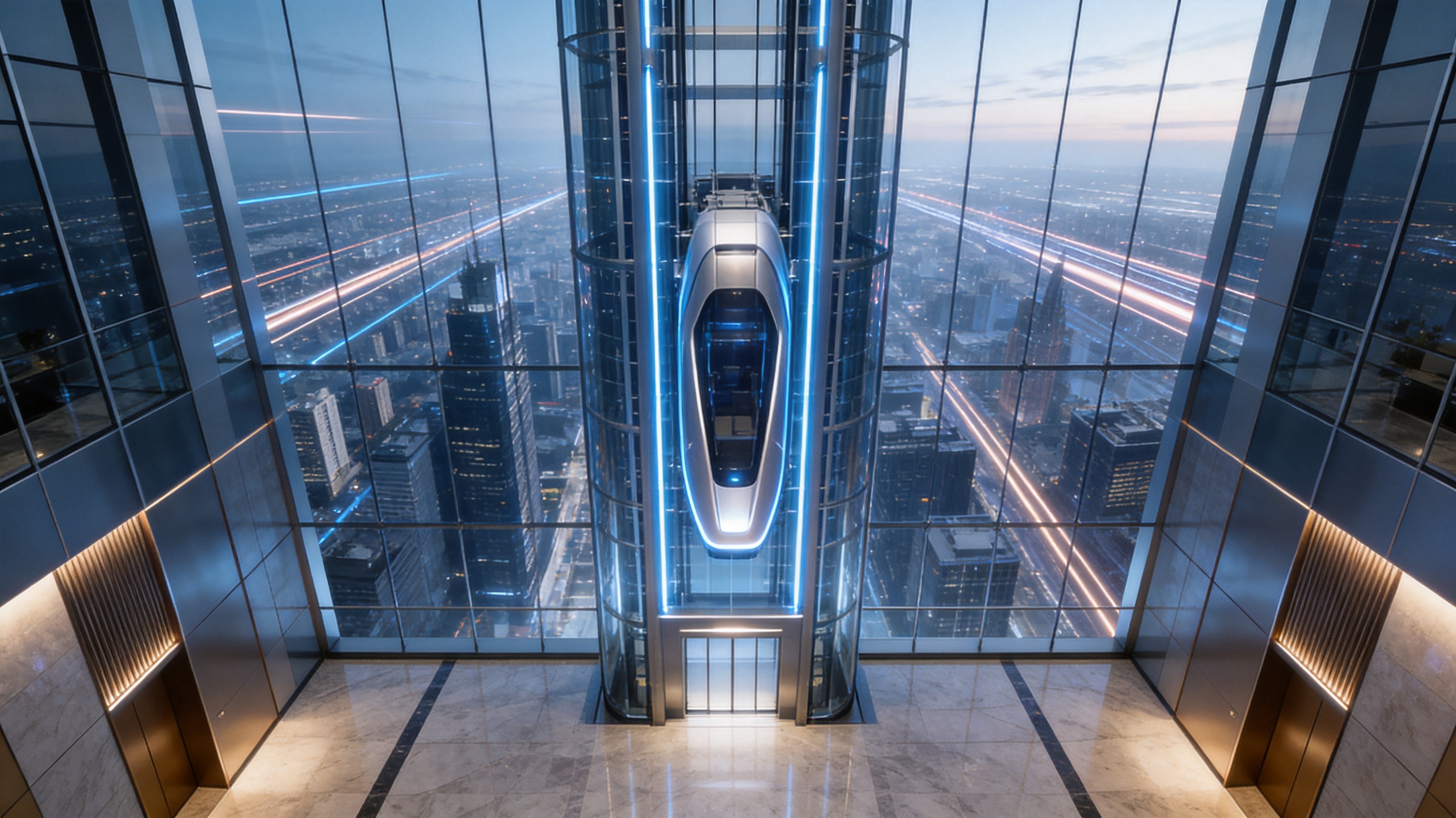
The ultra-high-speed elevator uses an optimized aerodynamic cabin design to reduce air resistance during travel. The cabin form, exterior surfaces and airflow-related details are considered as part of the overall high-speed engineering process. By improving the way air moves around the cabin, the system can help reduce turbulence, operational noise and vibration.
Aerodynamic optimization also supports more stable movement. When resistance and pressure fluctuations are better controlled, the drive system does not need to respond to sudden and unnecessary changes in load conditions. This creates a more predictable operating environment for the traction and control systems.
For passengers, the result is a quieter and gentler ride. The importance of this advantage increases with travel distance. In a short elevator journey, a small vibration or pressure variation may be barely noticed. In a long high-speed journey, however, every aspect of the ride contributes to comfort. The combination of aerodynamic design and accurate control helps create a premium experience throughout the trip.
Ride Comfort in Extreme High-Altitude Conditions
High-speed elevators must operate in conditions that are more demanding than those encountered by standard building elevators. Long hoistways, high travel speeds, pressure changes and extended operating cycles place additional requirements on the cabin, guide system, traction equipment, control system and safety devices.
The ultra-high-speed elevator is designed to provide a steady, quiet and gentle ride even under high-altitude and long-lift working conditions. This objective is supported by several coordinated features:
• Aerodynamic cabin shaping to control air resistance and pressure-related effects.
• Precision frequency conversion to regulate acceleration, speed and deceleration.
• Accurate position and speed monitoring for controlled stopping and movement.
• Mechanical and electrical coordination to limit vibration during operation.
• Intelligent system management to maintain stable service during changing traffic demand.
Passenger comfort is closely related to acceleration and deceleration control. Sudden changes can create discomfort, while poorly regulated movement may produce vibration or a sense of instability. A carefully engineered motion profile allows the elevator to reach high speed without compromising the quality of the ride.
Noise control is also important. Mechanical noise may originate from the traction system, guide components, door equipment or cabin structure. Aerodynamic noise becomes increasingly significant as speed rises. Through integrated design, the ultra-high-speed elevator seeks to control these sources and create a calmer cabin environment suitable for business buildings, premium developments and public landmarks.
Intelligent Group Control for Higher Traffic Efficiency
In a large building, elevator performance depends not only on the speed of individual cars but also on how the entire elevator group is managed. When several elevators operate together, intelligent dispatching can determine which car should answer a call, how passengers should be distributed and how the system should respond to changing traffic patterns.
The product adopts an intelligent group control system designed to improve scheduling efficiency and reduce unnecessary waiting. The control system evaluates elevator status, passenger calls, travel direction and destination requirements in order to coordinate the group more effectively. This enables the system to respond dynamically instead of treating every call as an isolated request.
Efficient group control can provide several practical benefits:
• Shorter average waiting time during normal operation.
• Better distribution of passengers among available elevator cars.
• Reduced unnecessary stops and empty-car travel.
• Improved handling of peak traffic periods.
• Higher overall transportation efficiency for high-rise buildings.
• More consistent service quality when traffic demand changes rapidly.
In a supertall building, traffic organization may also involve zoning. Different elevator groups may serve different sections of the building, while certain cars may be assigned to express or transfer functions. Intelligent control provides the flexibility needed to coordinate these transportation strategies and helps building operators achieve more effective use of available equipment.
Traffic efficiency has a direct effect on user perception. Long waits, crowded cabins and repeated stops can make even a technically fast elevator feel inefficient. By coordinating the elevator group intelligently, the system aims to deliver a faster and more predictable experience from the passenger’s perspective.
Precision Frequency Conversion Drive Technology
Precision frequency conversion is an important part of high-speed elevator operation. The drive system controls the electrical power delivered to the traction motor, allowing the motor to respond accurately to the required movement profile. This supports smooth acceleration, stable high-speed travel and controlled deceleration.
In conventional applications, basic motor control may be sufficient for relatively short travel distances and moderate speeds. Ultra-high-speed operation requires a more refined approach because even small variations in motor response can influence ride comfort, stopping accuracy, vibration and equipment stress.
The frequency conversion drive works together with sensors, controllers and safety monitoring devices. It can adjust motor operation according to cabin position, travel direction, speed requirements and system status. This continuous coordination allows the elevator to achieve accurate movement while maintaining operational stability.
Accurate drive control also contributes to energy management. The motor receives power according to actual operating requirements rather than operating continuously at an unnecessarily high output. During different stages of travel, the control system can manage acceleration and deceleration in a way that balances performance, comfort and energy use.
For building owners, this combination of performance and efficiency is valuable. A high-speed elevator may operate many times each day for many years. Even modest improvements in energy utilization and mechanical efficiency can become significant over the life of the equipment.
Redundant Safety Protection for Reliable Operation
Safety is the most important requirement in elevator engineering. High-speed systems require especially careful safety planning because the kinetic energy associated with moving equipment increases with speed. The elevator must therefore include reliable monitoring, protective control functions and emergency response mechanisms.
The ultra-high-speed elevator incorporates multiple redundant safety protection mechanisms. These include high-precision speed monitoring, emergency braking and overspeed protection. The purpose of redundancy is to ensure that the system does not rely on a single protection path. If an abnormal condition is detected, coordinated protective functions can respond to help bring the elevator to a safe condition.
High-Precision Speed Monitoring
Speed monitoring is essential for confirming that the elevator is operating within its intended movement profile. The system continuously checks actual movement against expected values. If a deviation is identified, the controller can initiate appropriate protective actions according to the operating condition.
Accurate monitoring supports both normal performance and emergency response. Under normal conditions, it helps maintain a smooth speed curve. Under abnormal conditions, it provides information that can be used by the safety system to limit or stop movement.
Emergency Braking
Emergency braking provides an additional layer of protection when the elevator must be stopped quickly. The braking system must be designed to operate reliably and coordinate with the drive and control systems. Effective emergency braking is not simply a matter of applying force; it must also take account of passenger safety, equipment integrity and the condition of the elevator during the event.
The product’s emergency braking architecture forms part of a broader safety strategy that includes monitoring, control logic and mechanical protection. These systems are developed to work together rather than operate independently.
Overspeed Protection
Overspeed protection is designed to identify movement that exceeds the permitted operating range. This is a fundamental protection requirement for high-speed elevators. A properly coordinated overspeed protection system can trigger protective actions before an abnormal speed condition becomes more serious.
Multiple safety mechanisms provide confidence for building owners, operators, passengers and project consultants. The system is designed to comply with international elevator safety standards, while specific project compliance remains subject to the applicable codes, approvals and installation requirements in the destination market.
Comparison with Conventional Elevator Solutions
Ultra-high-speed elevators are not intended to replace every elevator in every building. Low-speed and medium-speed elevators remain appropriate for many residential, commercial, industrial and institutional applications. The value of the ultra-high-speed solution becomes most apparent when a building has long travel distances, intense traffic demand, premium comfort expectations or a strong requirement for rapid vertical movement.
Compared with conventional solutions, the ultra-high-speed elevator provides a more integrated response to the challenges of tall-building transportation. Its advantages can be summarized in the following areas:
| Performance Area | Ultra-High-Speed Elevator Approach | Value for Building Projects |
|---|---|---|
| Travel efficiency | High-speed operation supported by precision motion control | Shorter travel time between distant floors and improved passenger flow |
| Ride quality | Aerodynamic cabin design, controlled acceleration and vibration reduction | Quieter, smoother and more comfortable journeys |
| Traffic management | Intelligent group control and coordinated dispatching | Reduced waiting time and better use of the elevator group |
| Motor technology | Permanent magnet synchronous traction system | Efficient, compact and accurately controllable traction performance |
| Safety architecture | Speed monitoring, emergency braking and overspeed protection | Multiple layers of protection for demanding operating conditions |
| Building suitability | Designed for long-lift and high-altitude applications | Adaptation to supertall towers, landmarks and high-end urban projects |
| Passenger experience | Integration of performance, comfort and refined interior design | Premium vertical mobility consistent with high-quality architecture |
The most important competitive advantage is the integration of these features. A product that offers speed without comfort may not meet the needs of premium developments. A comfortable elevator without efficient dispatching may not handle high traffic effectively. An intelligent control system without a strong safety architecture cannot provide sufficient confidence. The ultra-high-speed elevator is positioned as a complete solution that balances all of these requirements.
Advanced Manufacturing and Engineering Capabilities
The performance of a high-speed elevator depends heavily on manufacturing quality. Precision equipment, consistent materials, controlled assembly and thorough testing are essential. Even a small deviation in a critical component can affect noise, vibration, efficiency or long-term reliability.
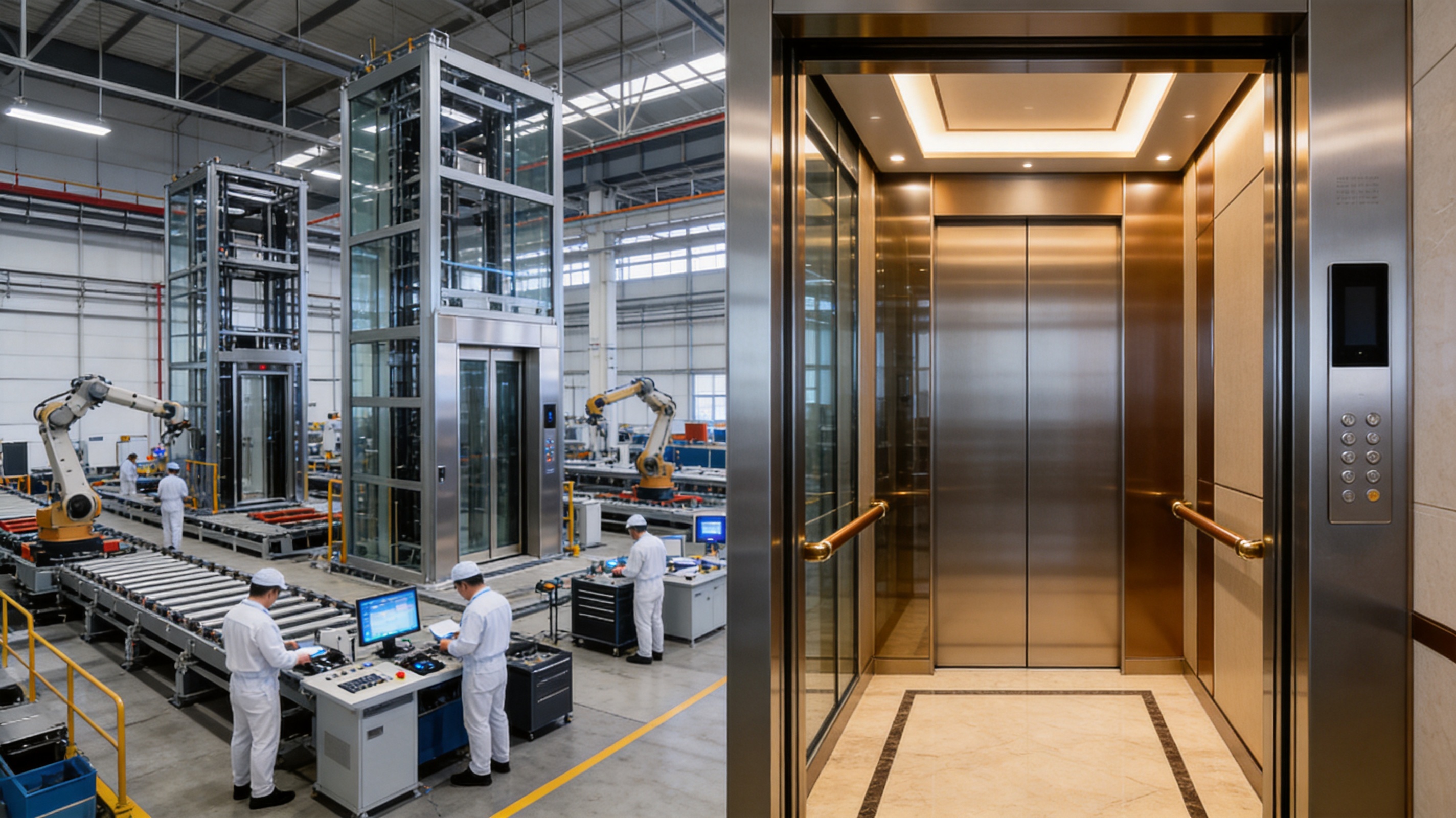
Tenau Elevator operates a large-scale manufacturing base and maintains capabilities covering elevator design, research and development, manufacturing, marketing, installation and after-sales service. This integrated structure allows technical requirements to be considered throughout the product life cycle.
The company applies German Industry 4.0 intelligent manufacturing concepts to its production activities. Industry 4.0 manufacturing connects equipment, production information, quality data and process management in order to improve consistency and traceability. For elevator production, this approach can support more accurate fabrication, better process monitoring and stronger coordination between engineering and manufacturing teams.
Automated production lines help reduce variation in repetitive processes and improve production efficiency. Automation is particularly beneficial where consistent dimensions, repeatable assembly operations and controlled processing are required. It also allows skilled employees to focus more closely on inspection, process optimization, technical supervision and complex assembly tasks.
The use of big data and Internet of Things technology provides additional opportunities for manufacturing management. Production equipment and quality systems can generate information about operating conditions, process results and equipment status. When this information is organized and analyzed effectively, it can support preventive maintenance, process improvement and more responsive production planning.
Full Closed-Loop Quality Control
A full closed-loop quality control system is an important strength in elevator manufacturing. Quality management should not begin only at the final inspection stage. It should start with design requirements, continue through supplier and material control, cover each manufacturing process and remain active during installation, commissioning and after-sales service.
Closed-loop quality management allows information from one stage to influence improvements at another stage. For example, installation feedback may reveal a need for design clarification, while production inspection data may identify an opportunity to improve a manufacturing process. This approach helps create a continuous cycle of verification and improvement.
For high-speed elevators, closed-loop management is especially valuable because product performance depends on the interaction of many systems. The traction machine, control cabinet, drive, cabin, doors, guide components, safety devices and communication systems must function together. Quality cannot be evaluated only by checking individual parts; the complete system must also be verified.
International Management Standards
The company complies with ISO9001, ISO14001 and OHSMS18001 standards. These standards represent structured approaches to quality management, environmental management and occupational health and safety management.
ISO9001 supports systematic quality processes and continual improvement. ISO14001 provides a framework for managing environmental responsibilities and reducing environmental impact. OHSMS18001 relates to occupational health and safety management, helping organizations establish safer working practices and clearer risk controls.
Compliance with these management standards demonstrates the importance of process discipline. For international customers, a structured management system can make cooperation more transparent and support more consistent project execution across different markets.
Research, Development and Product Customization
High-rise projects rarely have identical requirements. Building height, floor layout, traffic patterns, architectural style, local regulations, environmental conditions and installation schedules can all vary. A successful elevator supplier must therefore be capable of adapting the product to the project rather than providing only a fixed standard configuration.
Tenau maintains professional design and research and development capabilities for low-speed, medium-speed, high-speed and ultra-high-speed elevators. This broad technical range enables the company to understand how different elevator categories relate to one another within a complete building transportation plan.
Research and development for an ultra-high-speed elevator may involve many disciplines, including mechanical engineering, electrical engineering, control technology, structural design, aerodynamics, materials, safety systems and interior design. The product must meet performance targets while also fitting within the building’s architectural and engineering constraints.
Customization may address cabin dimensions, door arrangements, finishes, control functions, traffic zoning, communication interfaces and project-specific safety requirements. The final configuration should be determined through cooperation among the elevator manufacturer, architects, consultants, contractors and building owners.
The product’s sophisticated industrial aesthetics allow it to complement modern architectural environments. At the same time, humanized interior design focuses on passenger needs such as visual comfort, intuitive controls, durable finishes, appropriate lighting and a feeling of spaciousness. In a landmark building, the elevator cabin is part of the visitor experience and should reflect the quality of the surrounding architecture.
Energy Efficiency and Responsible Building Development
Modern building projects increasingly consider energy use, environmental impact and total life-cycle value. Elevator systems contribute to a building’s operational energy consumption, especially in towers with high passenger traffic. Energy efficiency must therefore be addressed alongside speed and capacity.
The ultra-high-speed elevator combines permanent magnet synchronous traction technology with precision frequency conversion to support more efficient operation. The control system can regulate motor output in line with travel requirements, while intelligent group control can reduce unnecessary dispatching and empty-car movement.
Energy efficiency does not mean reducing performance. The objective is to provide the required transportation service with better control of energy consumption. Efficient traction, optimized movement profiles and intelligent dispatching can work together to support this balance.
Environmental responsibility also extends to manufacturing. ISO14001-based environmental management encourages organizations to identify environmental impacts, improve resource use and manage relevant production activities systematically. This complements the company’s broader mission of combining safety with environmental protection.
For developers and building owners, energy-efficient elevator operation can support sustainability targets, operating-cost planning and long-term asset value. The exact energy performance of a project depends on factors such as building height, traffic demand, elevator configuration, load, operating schedule and local conditions. Nevertheless, selecting efficient technology at the design stage is an important part of responsible building development.
Installation, Commissioning and Service Considerations
Elevator quality is determined not only in the factory. Installation and commissioning are equally important because the final system must operate correctly within the actual building. High-speed elevators require careful coordination of hoistway conditions, guide systems, electrical supply, control systems, safety equipment, communication systems and architectural finishes.
Tenau integrates installation and after-sales service into its comprehensive elevator business model. This enables project support to extend beyond manufacturing and delivery. Proper installation ensures that the equipment is assembled according to technical requirements, while commissioning verifies that the elevator performs correctly under operating conditions.
Commissioning for an ultra-high-speed elevator may include checks of acceleration and deceleration, stopping accuracy, door operation, group control response, safety circuits, emergency braking, overspeed protection, communication functions and ride comfort. Testing should be conducted according to the relevant standards and project requirements.
After-sales service is important for maintaining long-term reliability. Regular inspection, preventive maintenance, timely troubleshooting and technical support can help protect the elevator’s performance throughout its operating life. In a high-rise building, elevator availability directly affects tenants, visitors, staff and building management. A responsive service structure is therefore a key part of the total product value.
Passenger-Centered Interior Experience
High performance should be matched by an interior environment that makes passengers feel comfortable and confident. An elevator cabin is a relatively compact space, but it is used repeatedly by large numbers of people. Its design influences the first impression of a building and the quality of everyday travel.
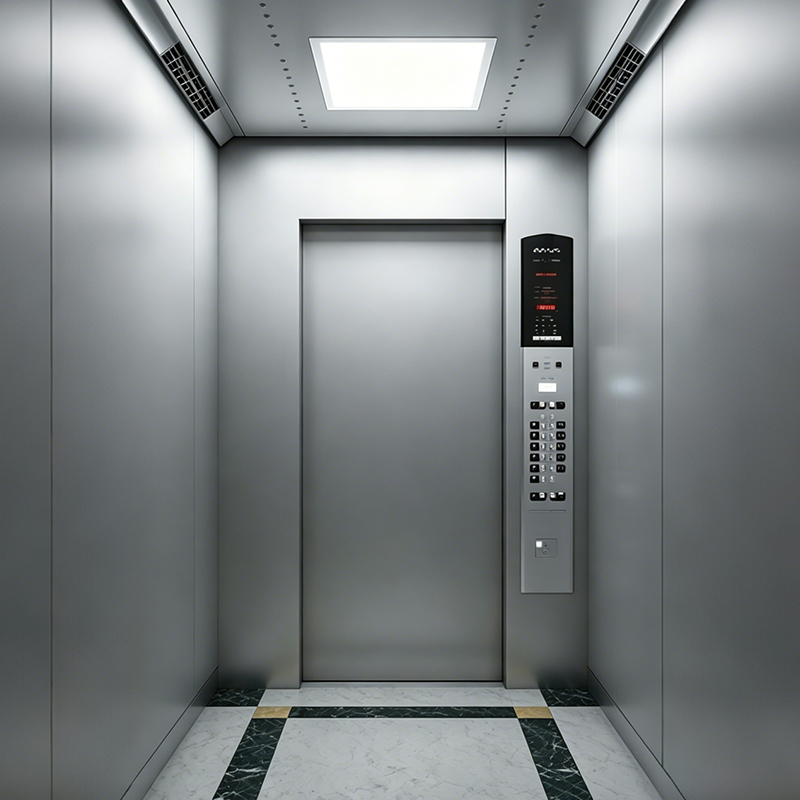
The ultra-high-speed elevator combines industrial aesthetics with humanized interior design. Industrial aesthetics can express precision, strength and technical sophistication, while humanized design considers the practical and emotional needs of passengers.
Important interior considerations may include:
• Clear and intuitive control panels.
• Comfortable lighting that supports visibility without creating glare.
• Durable interior materials suitable for intensive use.
• Coordinated finishes that reflect the building’s architectural identity.
• A clean and uncluttered cabin layout.
• Interior proportions that help passengers feel comfortable during rapid travel.
• Design details that communicate quality and reliability.
In premium commercial and landmark buildings, these details have commercial value. Tenants and visitors may associate the elevator experience with the professionalism, quality and prestige of the entire property. A well-designed elevator cabin therefore contributes to the building’s identity as well as its transportation function.
Applications in Modern High-Rise Architecture
Commercial Office Towers
Office towers depend on reliable transportation during concentrated morning and evening peaks. Long waiting times can affect employee productivity and visitor satisfaction. Ultra-high-speed elevators can help reduce long-distance travel time while intelligent group control improves the handling of changing office traffic.
For premium office developments, quiet operation and refined interiors are also important. Business passengers may use the elevator many times each day, making ride quality and cabin atmosphere significant elements of the working environment.
Landmark Complexes
Landmark complexes often combine offices, retail, hospitality, entertainment and observation facilities. Each area may generate a different traffic pattern. An intelligent elevator system can support coordinated movement among different zones, while high-speed performance helps connect distant levels efficiently.
The elevator may also become part of the visitor experience. A quiet, stable cabin with sophisticated interior design can reinforce the architectural character of the landmark and contribute to a premium public image.
High-End Urban Towers
Luxury residential and mixed-use towers require both convenience and discretion. Residents and guests expect rapid service, smooth movement, quiet operation and attractive finishes. The ultra-high-speed elevator is suitable for developments where vertical mobility is expected to match the quality of the building’s structure, materials and services.
Observation and Elevated Public Facilities
Observation facilities and elevated public spaces often involve long vertical journeys and significant visitor volumes. The elevator must provide efficient transportation while maintaining passenger comfort and safety. High-speed operation, aerodynamic design and intelligent control can support the demands of these high-visibility applications.
Why Manufacturing Strength Matters to Buyers
Purchasing an elevator is a long-term investment. The decision affects construction schedules, building operation, maintenance planning, energy consumption, passenger satisfaction and property reputation. Buyers therefore need to evaluate more than a catalog specification or initial price.
A manufacturer with integrated design, research, production, installation and service capabilities can provide a more coordinated project experience. Technical decisions can be communicated more directly, and feedback can be managed across departments. This may reduce misunderstandings between product design, factory production and on-site installation.
A large-scale manufacturing base can also support project capacity and production organization. Automated lines and intelligent manufacturing systems help improve process consistency, while professional engineering teams manage the technical requirements of different elevator categories.
Intellectual property rights, technical experience and a broad product portfolio further strengthen a manufacturer’s ability to serve international customers. A company that understands passenger, cargo, escalator, moving walk and high-speed applications can offer more comprehensive solutions for complex developments.
Tenau exports products to many countries and regions worldwide. International project experience can help a supplier understand the importance of documentation, communication, compliance, packaging, installation coordination and after-sales support. Each project must still be evaluated according to local regulations and site conditions, but global experience provides a valuable foundation for cooperation.
Project Selection and Planning Guide
Before selecting an ultra-high-speed elevator, project stakeholders should conduct a detailed transportation analysis. Important questions include the number of floors, total travel height, expected passenger population, peak traffic periods, building use, elevator zoning, required waiting time, cabin size, local code requirements and available machinery space.
The building’s structural and architectural design should be coordinated with the elevator system from an early stage. Hoistway dimensions, pit depth, overhead space, landing arrangements, machine-room requirements, electrical capacity and ventilation conditions may influence the final configuration.
Traffic simulation and group control planning can help determine the number and arrangement of elevators. A higher individual speed does not automatically guarantee better performance if the group is poorly configured or if passengers must make inefficient transfers. The most effective solution balances speed, quantity, zoning, control logic, cabin capacity and building usage.
Environmental conditions should also be evaluated. Temperature, humidity, wind effects, building sway, pressure variation and local construction conditions may influence high-speed operation. The manufacturer and project engineering team should identify these factors and develop suitable technical measures.
Finally, the project should establish a long-term maintenance strategy. High-speed equipment requires professional inspection and service. Access to spare parts, trained technicians, technical documentation and responsive support should be considered before the purchase decision is finalized.
Quality, Safety and Long-Term Value
The long-term value of an elevator is determined by its total performance over many years. A product that operates smoothly, uses energy efficiently, handles traffic effectively and receives proper maintenance can deliver greater value than a lower-cost system that creates frequent delays or comfort complaints.
Safety is central to this value. A robust safety architecture protects passengers and supports the confidence of building owners and facility managers. Redundant monitoring, emergency braking and overspeed protection are particularly important in high-speed applications, where system response must be accurate and dependable.
Reliability is also linked to manufacturing discipline. Consistent production, closed-loop quality control, international management standards and careful commissioning all contribute to dependable operation. These elements may not always be visible to passengers, but they are essential to the elevator’s success.
Comfort contributes to long-term user acceptance. Passengers are more likely to view a building positively when the elevator provides a quiet, stable and gentle journey. In premium developments, the quality of vertical transportation can influence tenant satisfaction, visitor impressions and the perceived value of the property.
Efficiency supports operating value. Permanent magnet synchronous traction, precision frequency conversion and intelligent group control can help balance high performance with responsible energy use. When these technologies are combined with appropriate maintenance, the elevator becomes a valuable part of the building’s long-term sustainability strategy.
Questions and Answers
What is an ultra-high-speed elevator?
An ultra-high-speed elevator is a vertical transportation system designed for buildings with very long travel distances and demanding traffic requirements. It combines high-speed travel with specialized traction, drive, aerodynamic, control and safety technologies to maintain comfort and reliability during rapid movement.
Which buildings are most suitable for this elevator?
The system is intended for supertall commercial buildings, landmark complexes, high-end urban towers, observation facilities and other high-rise projects where rapid vertical transportation is essential. The final suitability depends on building height, traffic demand, local regulations and project engineering conditions.
How does aerodynamic cabin design improve performance?
Aerodynamic cabin design helps reduce air resistance and turbulence during high-speed travel. This can contribute to lower operational noise, reduced vibration and a more stable ride, particularly in long-lift and high-altitude applications.
What is the role of permanent magnet synchronous traction technology?
Permanent magnet synchronous traction technology provides efficient and accurately controllable motor performance. It supports the high-speed elevator’s requirements for stable traction, precise movement, compact equipment integration and energy-conscious operation.
How does intelligent group control reduce waiting time?
Intelligent group control coordinates multiple elevator cars according to passenger calls, travel direction, elevator status and traffic demand. By assigning cars more efficiently and reducing unnecessary stops or empty movement, the system can improve service efficiency and help shorten passenger waiting time.
Why is precision frequency conversion important?
Precision frequency conversion regulates the electrical power delivered to the traction motor. It helps control acceleration, high-speed travel and deceleration accurately, supporting ride comfort, stopping precision, operational stability and energy management.
What safety systems are included?
The product includes multiple redundant safety protection mechanisms, including high-precision speed monitoring, emergency braking and overspeed protection. These systems are designed to work together and support compliance with international elevator safety standards.
Can the elevator be customized for a specific building?
High-rise elevator projects typically require engineering coordination according to building layout, traffic patterns, architectural design, local regulations and installation conditions. Customization and final configuration should be confirmed through technical consultation with the manufacturer and the project’s engineering team.
How does the manufacturer support product quality?
The manufacturer integrates design, research and development, manufacturing, installation and after-sales service. It applies German Industry 4.0 intelligent manufacturing concepts, automated production lines, big data, Internet of Things technology and a full closed-loop quality control system. Its management systems comply with ISO9001, ISO14001 and OHSMS18001 standards.
What should buyers consider before placing an order?
Buyers should evaluate building height, travel distance, passenger population, peak traffic, elevator zoning, cabin capacity, safety requirements, local codes, energy objectives, installation conditions, maintenance resources and long-term service support. A complete transportation analysis is recommended before final equipment selection.
Conclusion
The ultra-high-speed elevator represents an advanced approach to vertical transportation for the next generation of high-rise architecture. Its value lies not only in rapid travel but also in the integration of permanent magnet synchronous traction, precision frequency conversion, aerodynamic cabin design, intelligent group control, redundant safety protection and humanized interiors.
For supertall buildings and landmark developments, these capabilities can improve travel efficiency, reduce waiting time, enhance comfort and support a premium architectural experience. The system is designed to remain stable and reliable under long-lift, high-altitude and high-demand operating conditions.
Manufacturing strength is equally important. Tenau Elevator combines professional design and research capabilities with large-scale production, German Industry 4.0 intelligent manufacturing, automated production lines, data and IoT technologies, full closed-loop quality control and internationally recognized management systems. Its integrated business model covers manufacturing, installation and after-sales service, helping customers manage the complete product life cycle.
By balancing speed, safety, comfort, efficiency, intelligent control and refined design, the ultra-high-speed elevator provides a comprehensive vertical mobility solution for modern high-rise buildings worldwide. It is an appropriate choice for projects where dependable transportation performance and a high-quality passenger experience are equally important.
References
1. International Organization for Standardization. Quality Management Systems: Requirements, ISO 9001.
2. International Organization for Standardization. Environmental Management Systems: Requirements with Guidance for Use, ISO 14001.
3. Occupational Health and Safety Management Systems. Requirements and Guidance for Use, OHSMS18001.
4. International Organization for Standardization. Energy Performance of Lifts, Escalators and Moving Walks.
5. European Committee for Standardization. Safety Rules for the Construction and Installation of Lifts.
6. International Organization for Standardization. Safety Rules for the Construction and Installation of Lifts and Related Vertical Transportation Equipment.
7. Elevator and Escalator Safety Foundation. Principles of Elevator Safety and Passenger Awareness.
8. Industry 4.0 Manufacturing Frameworks. Intelligent Production, Industrial Data Integration and Connected Factory Management.
9. Building Transportation Planning Practice. Elevator Traffic Analysis, Group Control and High-Rise Building Mobility.
10. High-Speed Elevator Engineering Practice. Aerodynamic Design, Ride Comfort, Drive Control and Safety Monitoring.
Product: Ultra-High Speed Elevator Product Introduction

Related Products
Related News
Built on safety, forging trust in vertical mobility.
lf you have any questions or need help, feel free to contact with our team.
 export@tenau.com.cn
 +86-18601458867
 +86-512-65059883
Elevator & Escalator
Factory Add
East of Xicheng Road, North of Lianyi Road, Nanxun Economic Development Zone, Nanxun District, Huzhou City, Zhejiang Province, P.R.China
Copyright © Tenau Elevator (China) Co., Ltd. All Rightd Reserved.
Custom High Quality Elevator Suppliers and World Brand Elevator Company