


 en
en Español
 русский
 中文简体
中文简体







What are the minimum car dimensions and load capacity requirements for hospital bed elevators?
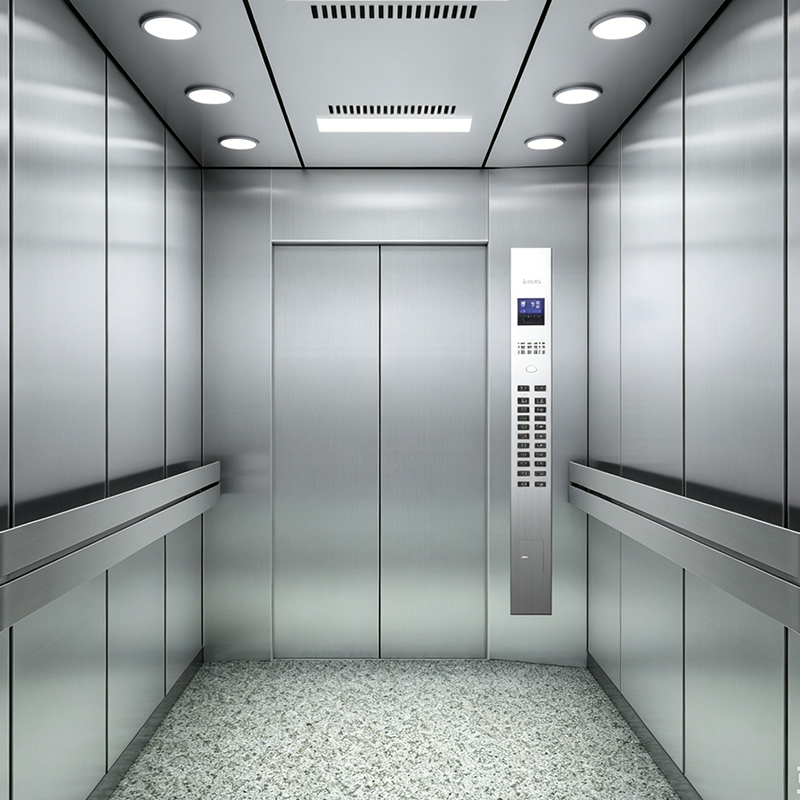
Hospital bed elevators require significantly larger dimensions and higher load capacities than standard passenger elevators to safely accommodate hospital beds, medical equipment, and accompanying staff.
Minimum Car Dimensions
Based on regulatory standards and industry practice, the minimum requirements for hospital bed elevators are:
Regulatory Minimums (Oregon / UK NHS standards)
- Car inside dimensions: at least 1520mm wide × 2290mm deep
- Door clear opening: at least 1120mm
Industry Recommended Minimums (for general patient transport)
- Car interior: 1400mm × 2400mm (width × depth)
- Door width: 1100mm minimum
ICU / Surgical Floor Requirements
- Car interior: 1600mm × 2700mm or larger
- Door width: 1200mm to accommodate ICU beds with additional monitoring equipment
Load Capacity Requirements
Load capacity varies based on the type of hospital bed and intended use:
Standard Patient Transport (bed + patient + 1-2 attendants)
- Capacity: 1000kg – 1275kg (13–17 persons)
ICU / Critical Care Transport (bed + patient + equipment + 3-4 medical staff)
- Capacity: 1600kg – 2000kg (21–26 persons)
Bariatric Patient Transport
- Capacity: 2000kg – 2500kg (26–33 persons)
Typical Configurations for Hospital Bed Elevators
- 1000kg / 13 persons: car 1400×2400mm, shaft 2200×3100mm, door 1100mm
- 1275kg / 17 persons: car 1500×2400mm, shaft 2300×3100mm, door 1100mm
- 1600kg / 21 persons: car 1600×2700mm, shaft 2400×3450mm, door 1200mm
- 2000kg / 26 persons: car 1700×2800mm, shaft 2500×3550mm, door 1200mm
Key Design Features for Hospital Bed Elevators
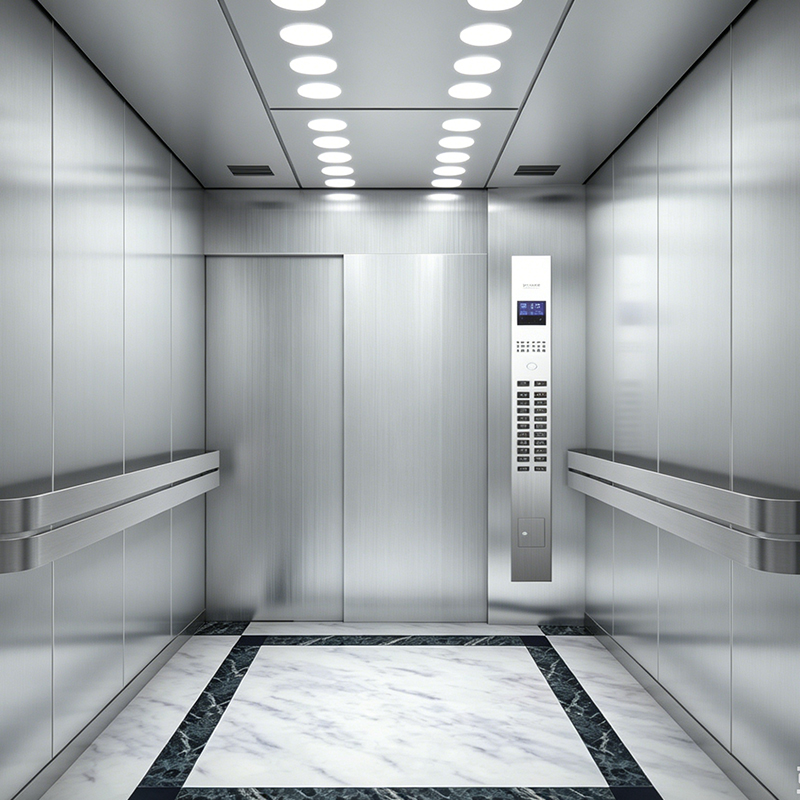
- Deep car depth: Minimum 2400mm to accommodate standard hospital beds (typically 2100–2300mm in length)
- Wide door openings: Minimum 1100mm for stretcher and bed access
- Low sill height: Smooth, level floor entry for easy rolling of beds and stretchers
- Emergency backup power: Ensures continuous operation during power outages
- Enhanced ventilation: Proper air circulation for patient comfort and infection control
- Handrails and supports: Interior grab bars for patient and staff safety
Tenau Elevator (China) Co., Ltd. integrates German engineering precision with healthcare-specific design requirements. The Hospital Elevator series is engineered with optimized dimensions and safety systems to ensure efficient, comfortable, and reliable patient transport in medical facilities.
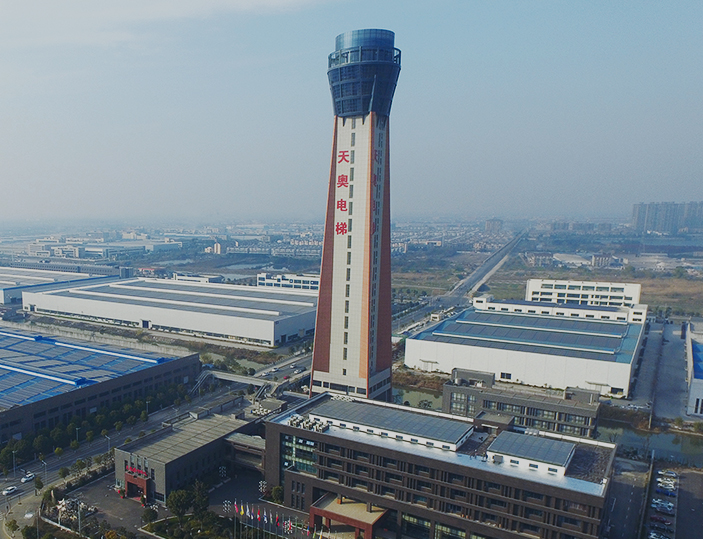
Company Overview: Tenau Elevator (China) Co., Ltd.
Tenau Elevator (China) Co., Ltd. originates from Germany and is a professional comprehensive elevator manufacturer. Integrating design, R&D, manufacturing, marketing, installation, and after-sales service, the company takes safety and environmental protection as its mission, and is committed to providing customers at home and abroad with a more intelligent elevator ecosystem.
Located in Nanxun, a time-honored cultural ancient town at the core of the Shanghai-Nanjing-Suzhou-Hangzhou economic circle, Tenau covers three major product series with more than ten varieties, including passenger elevators, freight elevators, escalators, and moving walks. It has reached an advanced level in the diversified design, R&D, and manufacturing capabilities of low-speed, medium-speed, high-speed, and ultra-high-speed elevators.
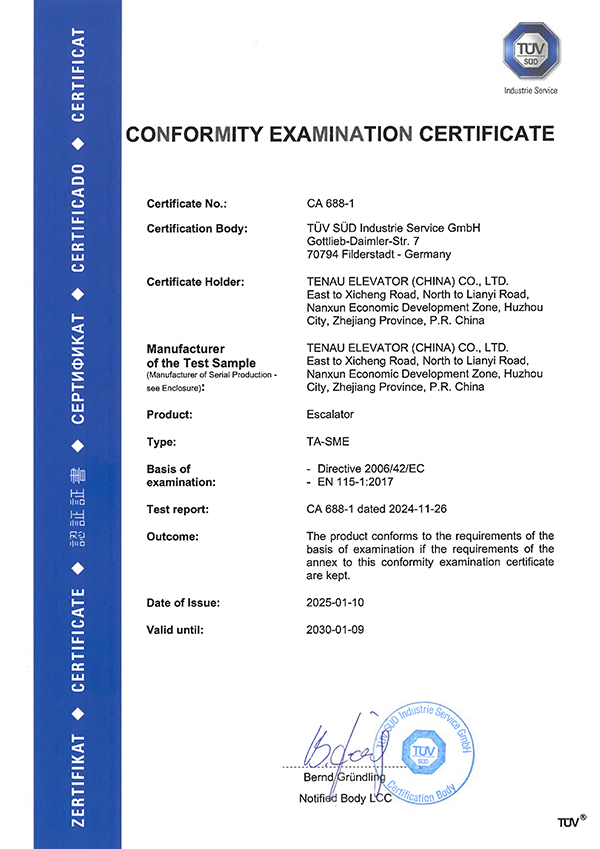
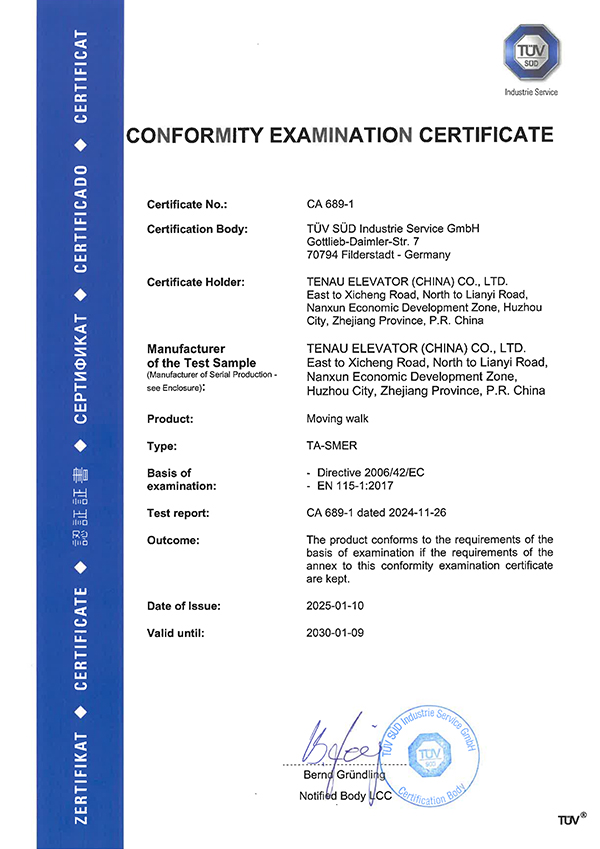
Introducing internationally advanced technologies and rigorous management systems, Tenau Elevator (China) Co., Ltd. strictly complies with the ISO9001 Quality Management System, ISO14001 Environmental Management System, and OHSMS18001 Occupational Health and Safety Management System. Adhering to people-oriented talent incentive mechanisms, the company has built a strong professional team, providing solid support for its rapid development.
3 FAQs
1. What are the minimum car size and load capacity requirements for hospital bed elevators?
Hospital bed elevators require a minimum car interior of 1400mm × 2400mm (width × depth) for standard patient transport, with 1600mm × 2700mm recommended for ICU and surgical floor applications. Door clear openings must be at least 1100mm. Load capacity ranges from 1000kg for standard transport to 2000kg or more for ICU and bariatric applications. Tenau Elevator (China) Co., Ltd. offers hospital elevators in multiple configurations to meet these requirements, with German-engineered safety systems and customized dimension options. For complete product specifications, visit: Hospital Elevator.
2. How do hospital bed elevators differ from standard passenger elevators?
Hospital bed elevators feature larger car dimensions (especially depth) to accommodate beds and medical equipment, wider door openings for easy access, reinforced floors for heavier loads, emergency backup power for continuous operation, enhanced ventilation systems, and interior handrails for safety. Tenau Elevator (China) Co., Ltd. integrates all these healthcare-specific features while maintaining compliance with ISO9001, ISO14001, and OHSMS18001 standards.
3. What safety features does Tenau incorporate into its hospital elevators?
Tenau Elevator (China) Co., Ltd. integrates German engineering craftsmanship with comprehensive safety features including:
- Emergency backup power system for continuous operation
- Unintended Car Movement Protection (UCMP)
- VVVF variable frequency drive for smooth, quiet operation
- Full-height infrared light curtains for door protection
- Bi-directional over-speed protection
- Emergency alarm and intercom systems
- Tenau Eye IoT system for real-time remote monitoring
The company provides 24/7 after-sales service support and full-lifecycle care, ensuring reliable performance for critical healthcare applications worldwide.
 export@tenau.com.cn
 +86-18601458867
 +86-512-65059883