

 en
en Español
 русский
 中文简体
中文简体
Advanced Machine Room Less Car Elevators for Safe Vertical Vehicle Transportation
Content
- 1 Urban Parking Challenges and the Need for Vertical Vehicle Transportation
- 2 Product Positioning: A Machine Room Less Car Elevator Built for Modern Buildings
- 3 Core Advantages Over Conventional Vehicle Transport Solutions
- 4 Structural Strength and Large Load Capacity
- 5 Convenient Door Design for Vehicle Movement
- 6 Smooth Movement, Precise Leveling, and Low Noise
- 7 Safety Systems Designed for Drivers, Vehicles, and Buildings
- 8 Intelligent Control and Functional Performance
- 9 Manufacturing Strength Behind the Product
- 10 Advanced Production Processes and Quality Control
- 11 Customization for Different Applications
- 12 Energy-Saving and Environmentally Friendly Operation
- 13 Service System and Long-Term Value
- 14 Why This Car Elevator Is a Competitive Choice
- 15 Installation and Planning Considerations
- 16 Detailed Functional Overview
- 17 Material Durability and Lifecycle Performance
- 18 Quality Philosophy and Customer-Oriented Engineering
- 19 Q&A Section
- 19.1 What is a machine room less car elevator?
- 19.2 What types of buildings can use this car elevator?
- 19.3 Why is the through-door design useful?
- 19.4 How does the elevator improve parking space efficiency?
- 19.5 What is the rated load capacity?
- 19.6 How does the elevator ensure safe operation?
- 19.7 Why is precise leveling important for a car elevator?
- 19.8 What makes the product different from a simple freight lift?
- 19.9 Can the control system be customized?
- 19.10 What manufacturing strengths support product quality?
- 19.11 Is regular maintenance required?
- 19.12 How does remote monitoring help?
- 20 Conclusion
- 21 References
- 22 Product: Car Elevator
In modern cities, the number of vehicles continues to rise while available parking space becomes increasingly limited. Residential complexes, commercial buildings, hotels, showrooms, service centers, public facilities, and urban parking systems all require smarter ways to move vehicles between floors. A machine room less car elevator answers this demand by providing safe, efficient, and space-saving vertical transportation for automobiles without requiring a traditional machine room. Designed for heavy loads, frequent operation, and precise leveling, this type of elevator helps building owners create practical parking solutions in places where horizontal expansion is difficult or impossible.
The Car Elevator supplied by Tenau Elevator (China) Co., Ltd. is developed for vehicle transportation in modern urban environments. It is based on mature elevator engineering, reinforced structural design, intelligent control, and manufacturing experience accumulated through many years of elevator and escalator production. The product is particularly suitable for applications where reliable vehicle movement, large load capacity, safe operation, and efficient use of construction space are essential. Its machine room less configuration offers additional design flexibility, allowing developers to save valuable building area while maintaining dependable lifting performance.
Unlike ordinary freight lifting equipment, a professional car elevator must meet several demanding requirements at the same time. It must carry heavy concentrated loads, accommodate different vehicle sizes, offer convenient entry and exit, protect drivers and vehicles, operate smoothly, and remain stable under repeated use. The Car Elevator is designed around these real-world needs. From the car platform and frame structure to the door opening arrangement, leveling technology, drive system, braking capability, safety devices, and control modules, each element is created to support the vertical transportation of automobiles with confidence and efficiency.

Urban Parking Challenges and the Need for Vertical Vehicle Transportation
Urban land has become one of the most valuable resources in modern construction. As cities grow denser, developers must provide sufficient parking while controlling land consumption, construction cost, and building volume. Traditional ramp-based parking facilities require long access paths, large turning areas, and significant floor space. In many projects, especially compact commercial buildings, boutique hotels, private residences, vehicle showrooms, and underground parking systems, ramps are either inconvenient or impossible to install.
A car elevator provides a more compact solution. By moving vehicles vertically, it reduces the need for large ramp structures and allows parking levels to be arranged more efficiently. This can be especially valuable in high-density urban projects, where saving construction area directly improves economic returns. The provided product information indicates that the car elevator can help save construction area by up to 80 percent in suitable designs. This space advantage is one of the strongest reasons for choosing a machine room less car elevator over conventional parking layouts.
The growth of vehicle ownership also increases the demand for organized parking management. A car elevator makes it possible to separate vehicle circulation from pedestrian areas, reduce internal traffic conflict, and improve the overall order of a building. In luxury residences, it can offer private and secure vehicle access. In commercial applications, it can support professional parking operations. In automobile dealerships and maintenance facilities, it can help move vehicles between display, storage, and service floors without interrupting customer areas.
Because vehicles differ in size, weight, wheelbase, and clearance, the elevator must be engineered with flexibility. The Car Elevator is developed with consideration for the performance and dimensions of various cars. Its large car area and heavy-duty structure allow it to handle normal vehicle loads of more than three tons, making it suitable for a wide range of passenger vehicles. This capacity gives architects and owners more freedom in planning parking systems for modern use.
Product Positioning: A Machine Room Less Car Elevator Built for Modern Buildings
The product belongs to the machine room less elevator category, meaning it is designed to reduce or eliminate the need for a separate machine room. This is particularly important for car elevator applications because vehicle lifts already require robust hoistway planning, large door openings, and structural strength. By reducing machine room requirements, the elevator can make better use of available building volume and simplify architectural coordination.
A machine room less arrangement can support a cleaner building layout. Equipment is integrated more compactly, which may reduce rooftop or upper-floor space occupation. For developers, this can mean improved design flexibility, better building appearance, and potentially lower civil construction complexity. For projects with strict height limitations or limited mechanical space, a machine room less car elevator can be a practical advantage.
The elevator is not simply a heavy platform moving up and down. It is a complete transportation system that combines mechanical, electrical, control, safety, and user-interface technologies. It uses advanced control modules, variable voltage variable frequency drive technology, intelligent running logic, door operator control, safety protection devices, overload control, emergency functions, and communication capabilities. These features are important because a vehicle elevator must protect not only passengers and operators but also expensive vehicles and surrounding building structures.
The product is designed to deliver steady movement, low vibration, low noise, precise stopping, and reliable braking. These qualities are essential for driver confidence. When a vehicle enters an elevator, the driver expects the platform to feel stable, the doors to operate predictably, the elevator to stop accurately, and safety devices to work automatically. The Car Elevator addresses these expectations with a reinforced frame, high-intensity materials, large braking torque, special traction and drive arrangements, and precise leveling technology.
Core Advantages Over Conventional Vehicle Transport Solutions
Compared with traditional ramp parking, a machine room less car elevator offers clear space-saving benefits. Ramps consume large areas because they require slope length, turning radius, safety clearance, and circulation lanes. In contrast, a car elevator uses vertical travel to connect parking floors directly. This can help owners create more parking spaces within the same land area or allow them to use saved space for commercial, residential, or service functions.
Compared with simple hydraulic platforms or basic freight lifts, a professionally engineered car elevator offers higher levels of safety, control, and comfort. Vehicle transportation requires stable starts, smooth deceleration, accurate leveling, and reliable door protection. The Car Elevator uses mature elevator technology rather than relying only on industrial lifting concepts. This difference is important because elevator technology is developed around passenger safety, daily reliability, and regulated operation.
Compared with conventional machine room elevator systems, the machine room less design improves building adaptability. It is useful where a separate equipment room is undesirable or where architectural space is limited. In urban projects, every square meter has value. A machine room less elevator can support more efficient project planning and help reduce unnecessary structural occupation.
Compared with competitors that focus mainly on load capacity, this product emphasizes a more balanced performance package. It combines large load capacity, convenient through-door design, reinforced bottom structure, safety alerts, intelligent control, precise leveling, and global service standards. A high rated load is important, but it is not enough by itself. A vehicle elevator also needs safe access, reliable control, and long-term maintenance support. This integrated advantage strengthens its competitiveness.
Another advantage is the manufacturer’s production background. Tenau Elevator (China) Co., Ltd. is supported by established elevator and escalator production experience, professional production lines, automatic panel production equipment, intelligent production systems, and rigorous quality inspection. This manufacturing foundation helps ensure that product performance is not only designed on paper but also realized consistently during production.
Structural Strength and Large Load Capacity
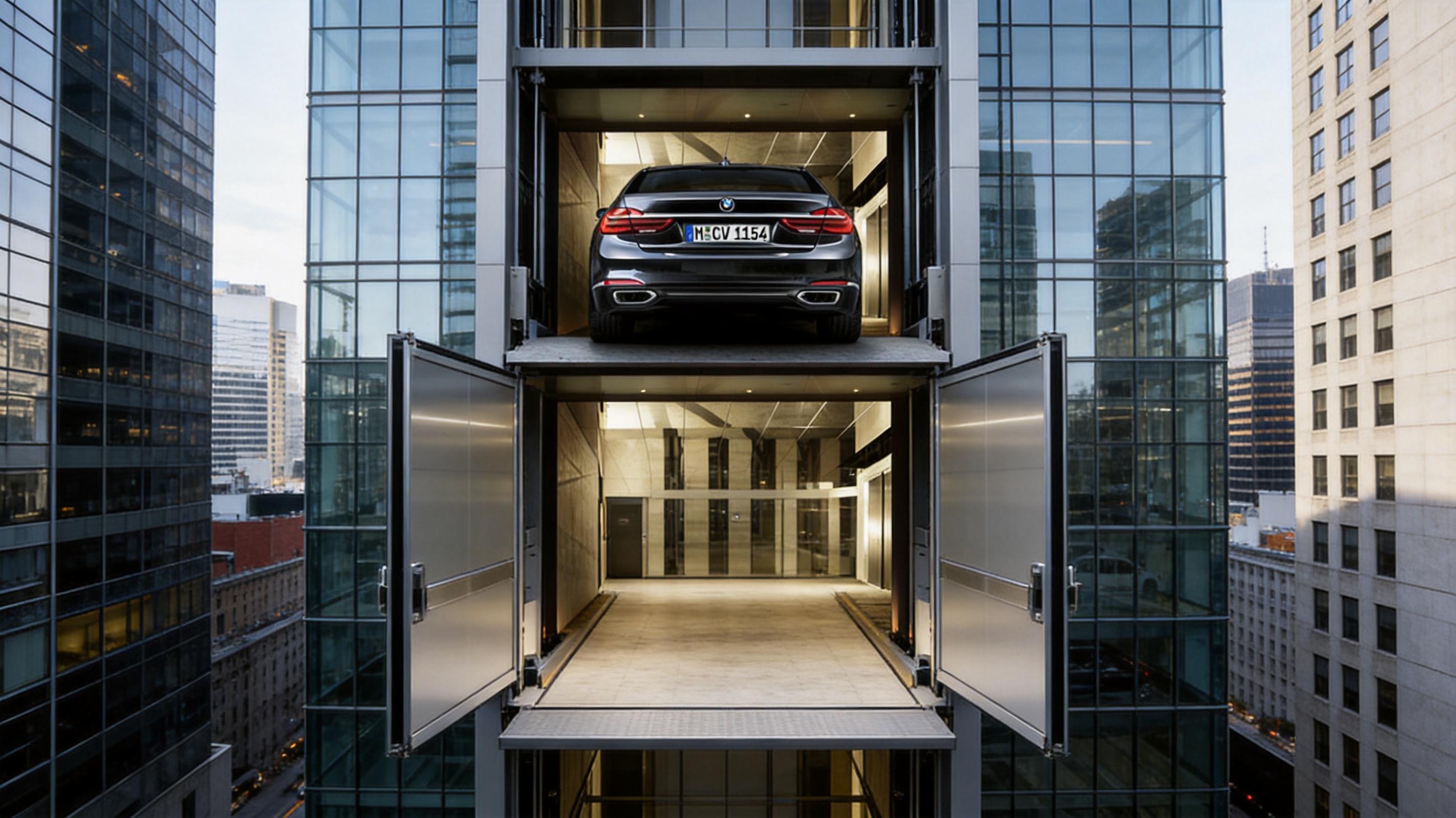
The most visible requirement for a car elevator is strength. Automobiles are heavy, and their load is transmitted through tires to limited contact areas. The elevator car platform, frame, guide system, and supporting components must be engineered to manage these concentrated loads safely. The Car Elevator uses high-intensity materials and a reinforced bottom structure to support large vehicle loads and extend service life.
The product information highlights a rated load of 3 tons and a large car area capable of handling various cars. This load range is appropriate for many passenger vehicles, including sedans, SUVs, and similar private vehicles, depending on project specifications. The large platform area improves usability by making entry, positioning, and exit easier for drivers. A car elevator that is too narrow or too short can cause operational stress and increase the risk of vehicle contact with walls or doors. A spacious car design improves confidence and reduces handling difficulty.
The bottom of the car is specially designed for rust resistance. This is important because vehicle elevators may be exposed to water, mud, road salt, oil residue, and changing environmental conditions. Improved corrosion resistance helps prolong service life and protect the structural integrity of the elevator platform. In parking environments, durability is a practical financial advantage because it can reduce long-term repair frequency and downtime.
The car frame and car body are designed according to mechanical principles. Thickened steel boards increase load sustainability, while precise mechanical processing helps ensure stable cargo and vehicle transportation. The system must remain rigid during loading and lifting, because excessive deflection can affect leveling, door alignment, and passenger comfort. A strong frame improves operational stability and contributes to safe long-term use.
Convenient Door Design for Vehicle Movement
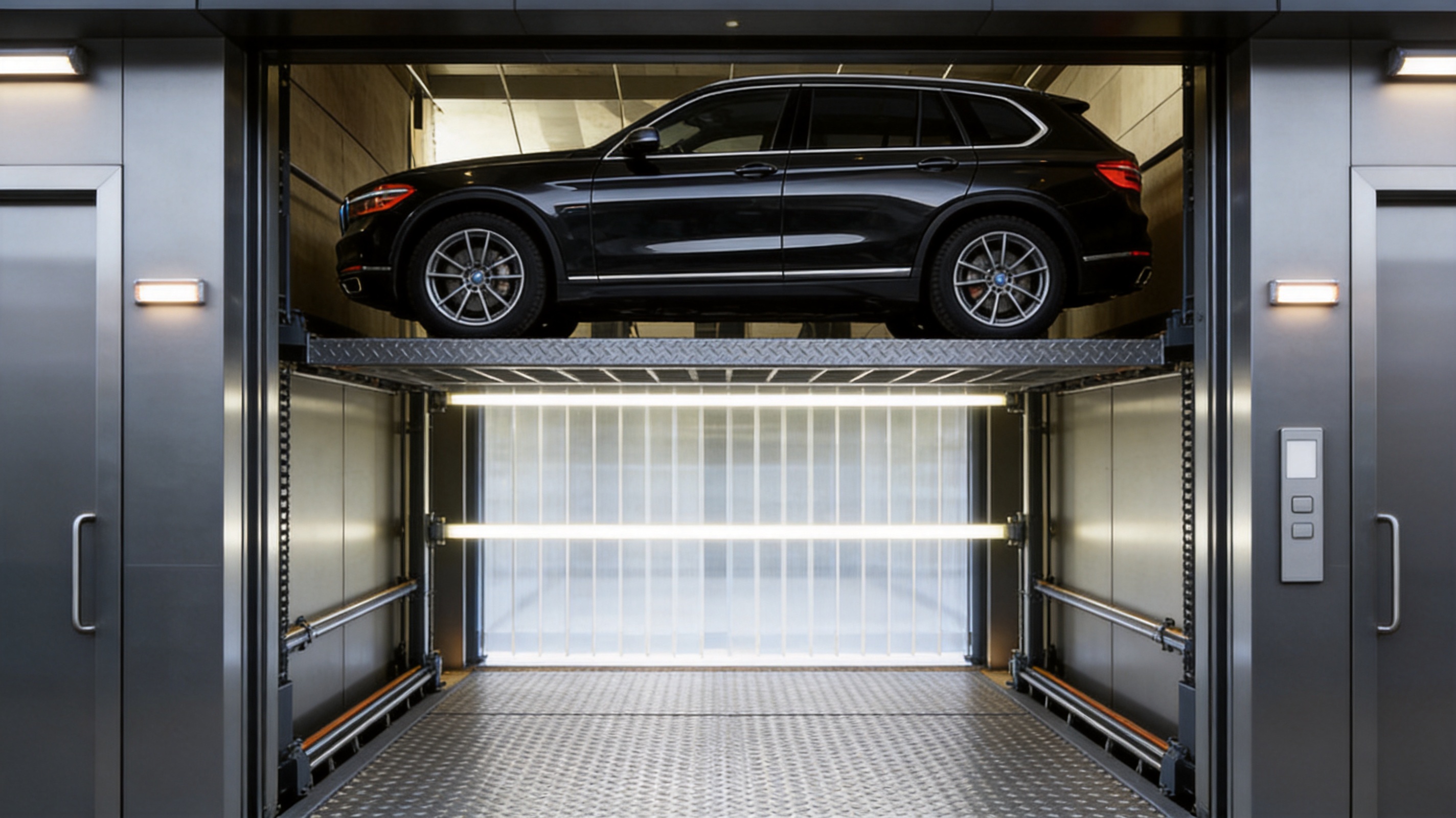
Vehicle access is one of the most important usability factors in a car elevator. Unlike passengers or small cargo, cars cannot easily turn around inside a compact elevator car. Therefore, door arrangement can greatly influence operational convenience. The Car Elevator offers through front and rear door opening, allowing vehicles to move in and out more easily.
A front-and-back door configuration can reduce the need for reversing, turning, or complex maneuvering. In many parking designs, the driver can enter from one side and exit from the opposite side at the destination floor. This improves traffic flow, reduces operation time, and lowers the risk of scratches or collisions. It is especially useful in commercial parking systems, vehicle showrooms, and service centers where multiple vehicles may need to be moved efficiently.
Wide door opening is specifically designed for vehicle and cargo transportation. Door width affects driver confidence and vehicle compatibility. A wider entrance reduces the risk of mirror or body contact and makes the elevator easier to use for larger vehicles. The door operator is supported by VVVF control, which helps provide smoother door movement and more stable operation compared with simple opening and closing mechanisms.
Door safety functions are also essential. The product includes light curtain protection, door interlock protection, repeated door closing, reopening with hall call, door close delay, and related functions. These features help prevent unsafe door operation and improve user experience. For vehicle elevators, door reliability is especially important because drivers may be inside vehicles during operation and need predictable door behavior.
Smooth Movement, Precise Leveling, and Low Noise
A car elevator must feel stable during operation. Sudden movement, rough stopping, vibration, or inaccurate leveling can make drivers uncomfortable and may increase mechanical stress. The Car Elevator adopts advanced drive and control technology to support smooth movement, energy-saving operation, and intelligent performance.
The VVVF drive system helps regulate motor speed, acceleration, and deceleration. Instead of abrupt starts and stops, the elevator can operate with controlled speed curves. This improves ride comfort, reduces mechanical impact, and supports better energy efficiency. In vehicle transportation, smoother movement also helps prevent vehicle shifting and improves perceived safety.
Precise leveling is another key advantage. When a vehicle enters or exits an elevator, the platform must align accurately with the floor. Even a small height difference can affect vehicle movement, especially for low-clearance cars. The product includes specific leveling technology designed to ensure precise floor leveling under large loads, allowing cargo or vehicles to move as if on flat floors. This capability improves safety, protects tires and suspension systems, and reduces driver hesitation.
Low vibration and low noise are supported by a special driving system with strong driving force. In residential buildings, hotels, and commercial properties, noise control is a major concern. A quiet car elevator creates a better environment for occupants and reduces disturbance during frequent operation. Smooth and quiet operation also reflects higher manufacturing precision and better installation quality.
Safety Systems Designed for Drivers, Vehicles, and Buildings
Safety is the foundation of any elevator product, and it is even more critical when the elevator carries vehicles. The Car Elevator includes multiple safety functions and mechanical protection devices. Safety components such as safety clamps and speed limiters are manufactured according to international codes. These devices help control abnormal movement and protect the elevator system during emergency conditions.
The elevator includes overload protection. If the load exceeds the allowable limit, the system can prevent unsafe operation. This is important because vehicle weights vary widely, and some vehicles may carry additional goods or equipment. Overload protection helps protect the traction system, platform, guide components, and building structure.
Terminal forced slow-down protection, upper and lower overrun protection, final limit protection, down overspeed protection, up overspeed protection, safety stop, inspection operation, inching operation, safety circuit protection, main contactor protection, and brake detecting protection are included in the safety function range. These layered protections reduce risk by monitoring different parts of the operation process.
A reliable braking system is particularly important for heavy-load applications. The brake has a large rated braking torque, helping ensure excellent braking performance. Braking must remain dependable under full load, repeated cycles, and emergency conditions. A robust brake contributes directly to user confidence and regulatory compliance.
The product also includes a safety device mounted on the bottom of the elevator car to alert drivers in real time and support safe operation. Real-time driver awareness is valuable because drivers may remain inside vehicles during elevator movement. Clear alerts and automatic protections help reduce human error and improve operational safety.
Intelligent Control and Functional Performance
The elevator uses advanced control modules to improve steadiness and precision. Intelligent control is essential because a car elevator must coordinate heavy-load movement, door status, calls, safety circuits, leveling, overload monitoring, and user commands. A modern control system allows the elevator to run more reliably and respond accurately to different operating conditions.
The product includes full collective control, car call cancellation, automatic running, attendant running, duplex control, double door control, and optional IC card control. These functions allow the elevator to adapt to different building management strategies. For private residences, simple controlled access may be preferred. For commercial parking, attendant control or access management may be necessary. For restricted facilities, IC card control can improve security.
Information functions include self-diagnosis of breakdowns, five-way communication, car bell, floor and direction indicators in the car, floor and direction indicators at the hall, voice announcement, traffic dispatch, and traction machine monitoring depending on configuration. These functions improve operation transparency and maintenance efficiency. Self-diagnosis can help technicians identify issues faster, reducing downtime and service cost.
Comfort functions such as emergency car lighting, automatic ventilation and lighting shutoff, repeated door closing, reopening with hall call, express door closing, car stop and door open, door opening line extension, and door close delay help create a more user-friendly experience. Although a car elevator is a heavy-duty system, comfort still matters. Drivers need clear signals, sufficient lighting, and stable environmental conditions while using the elevator.
| Performance Area | Product Capability | Benefit for Building Owners and Users |
|---|---|---|
| Space efficiency | Machine room less configuration and vertical vehicle transport | Reduces construction area and supports compact parking design |
| Load capacity | Rated load around 3 tons with reinforced car structure | Handles many common vehicle types with stable performance |
| Access convenience | Front and rear through-door design with wide opening | Allows easier vehicle entry and exit, reducing maneuvering difficulty |
| Ride stability | VVVF drive, strong traction, low vibration, and low noise | Improves driver confidence and protects vehicles during movement |
| Leveling accuracy | Specific leveling technology for large-load conditions | Enables smooth vehicle movement between floor and elevator platform |
| Safety protection | Overload, overspeed, limit, interlock, brake, and safety circuit protections | Supports safe operation under demanding daily use |
| Control intelligence | Automatic running, attendant running, duplex control, IC card options | Adapts to private, commercial, and managed parking environments |
| Maintenance support | Self-diagnosis, monitoring options, and service network support | Improves fault response and long-term reliability |
Manufacturing Strength Behind the Product
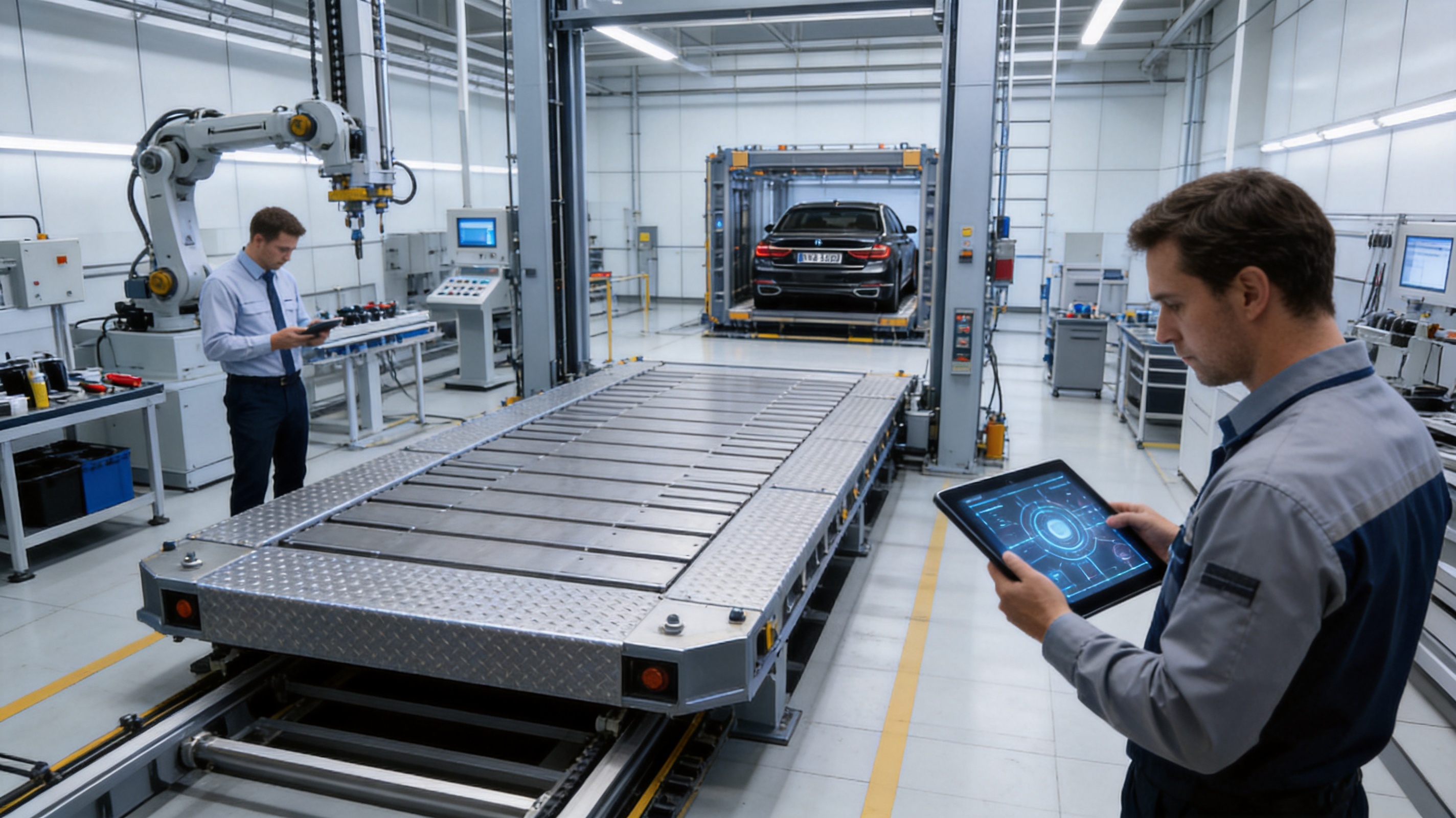
A high-performance car elevator depends not only on design but also on manufacturing capability. Tenau Elevator (China) Co., Ltd. is located in Huzhou City, Zhejiang Province, close to Shanghai. The company is an elevator and escalator manufacturing enterprise with professional production lines, automatic panel production equipment, and a workforce experienced in elevator production. Its product background covers elevators, escalators, cargo elevators, home lifts, and related vertical transportation solutions.
The company operates within a production system shaped by advanced manufacturing concepts. Its intelligent production base integrates design aesthetics, efficient operation, and green environmental planning. This manufacturing environment supports more efficient work, consistent quality, and modern industrial organization. The company has invested in automatic production equipment and intelligent systems that allow processing, production, detection, and monitoring to be carried out with greater precision.
Advanced manufacturing processes are important for elevator products because small deviations can influence long-term performance. Guide rail alignment, car frame accuracy, panel quality, door system precision, control cabinet assembly, and safety component installation all require disciplined production. Automated production equipment helps reduce variability and improve repeatability. Intelligent inspection can identify quality risks earlier and support stronger process control.
The company follows a quality objective of high standard, high precision, and zero defect. This philosophy is especially relevant for car elevators because the product must carry expensive vehicles and operate safely in built environments. Quality cannot be added only at the final inspection stage; it must be built into design, material selection, processing, assembly, testing, and service. A rigorous production detection system helps guarantee that each step meets required standards.
Tenau Elevator (China) Co., Ltd. also benefits from accumulated industry experience through its group background. The organization has experience in elevator and escalator production, product development, and overseas market service. It provides multilingual communication including English, Russian, Spanish, and Arabic, helping international customers receive clearer technical support. Cooperation with clients from many countries gives the company practical understanding of different building codes, climate conditions, user preferences, and project requirements.
Advanced Production Processes and Quality Control
The production of a car elevator begins with project requirement analysis. Vehicle size, rated load, travel height, door opening arrangement, shaft dimensions, control mode, safety functions, and building conditions must be evaluated. A professional manufacturer can provide customized solutions rather than forcing every project into one standard model. This ability is valuable because car elevator projects often differ significantly from one building to another.
Material selection is a key process. High-intensity materials are used for the bottom of the car and structural components. These materials must support large load capacity, resist deformation, and maintain durability over time. For vehicle elevator platforms, corrosion resistance is also considered because the operating environment may involve moisture and vehicle-related contaminants. Better material selection extends product life and reduces lifecycle cost.
Panel processing and structural fabrication benefit from automatic production equipment. Automated cutting, bending, and processing can improve dimensional accuracy. Accurate components are easier to assemble, produce better alignment, and reduce installation adjustment. In an elevator, accuracy is not merely aesthetic; it affects door movement, car balance, vibration, noise, and maintenance performance.
Mechanical processing precision is emphasized in the product information. Precise mechanical processing guarantees better transporting capability. For a heavy-load elevator, the relationship between the car frame, guide shoes, traction system, door frame, and platform must be carefully controlled. Poor processing can lead to abnormal noise, uneven wear, inaccurate leveling, or increased maintenance requirements. Precision manufacturing helps prevent these problems.
Electrical and control assembly is another important stage. The CPU control system, VVVF drive, door operator drive, communication devices, safety circuits, and monitoring functions must be assembled and tested according to strict procedures. Control reliability affects every operation cycle. The ability to conduct self-diagnosis and support monitoring depends on proper integration of sensors, controllers, wiring, and software logic.
Testing and inspection complete the manufacturing process. Safety components, braking performance, door operation, overload response, leveling accuracy, emergency lighting, communication, control functions, and protective circuits must be checked before delivery. A rigorous inspection system reduces the risk of field failures and supports smoother installation and commissioning.
Customization for Different Applications
One of the strengths of a professional car elevator manufacturer is the ability to match the product to different applications. In private villas or luxury residences, the elevator may be used to move personal vehicles between a garage level and residential parking area. In this case, quiet operation, compact design, attractive finish, and secure access may be priorities. The machine room less configuration is particularly suitable because residential projects often have limited technical space.
In commercial parking facilities, the elevator may operate more frequently and serve multiple users. Here, traffic flow, door opening speed, access control, attendant operation, and maintenance response become important. The availability of automatic running, attendant running, duplex control, traffic dispatch, and IC card control options makes the elevator adaptable to managed parking environments.
In automobile showrooms, car elevators support display flexibility. Vehicles can be moved between exhibition floors, delivery areas, and storage levels. Smooth operation is especially important because vehicles may be luxury models or new display units. Precise leveling and wide door openings help staff move vehicles safely without damage.
In hotels and commercial buildings, car elevators can provide premium parking service where space is limited. Guests may benefit from more organized vehicle handling, while property owners can create parking capacity without sacrificing valuable ground-floor frontage. The elevator can also help separate public circulation from service circulation.
In vehicle maintenance facilities, the elevator can move cars between repair bays, storage floors, or inspection areas. Heavy-duty performance, reliable door operation, and durable platform structure are critical in this type of use. The reinforced design and safety functions of the Car Elevator support these operational demands.
Energy-Saving and Environmentally Friendly Operation
Energy efficiency is increasingly important in building equipment. Elevator systems operate over many years, and even small improvements in efficiency can reduce operating cost. The Car Elevator uses advanced drive technology to conduct operation in an energy-saving, intelligent, and safe way. VVVF drive systems help optimize motor performance by controlling speed and torque according to operational demand.
Smooth acceleration and deceleration not only improve comfort but also reduce mechanical shock. Reduced shock can lower component wear, which contributes to longer service life and less frequent replacement. Energy-saving operation and durability together support a more sustainable lifecycle.
The machine room less design can also contribute to environmental efficiency by reducing the amount of building space dedicated to mechanical equipment. When construction area is saved, material usage may also be reduced in the broader building design. In urban planning, compact vertical parking can help make better use of existing land and reduce pressure for horizontal expansion.
Automatic lighting and ventilation shutoff functions further improve energy management. When the elevator is not in use, unnecessary power consumption can be reduced. These details may seem small, but in a complete building system, intelligent control of auxiliary equipment contributes to better operational efficiency.
Service System and Long-Term Value
An elevator is a long-term investment. Its value depends not only on purchase price but also on safety, reliability, maintenance, spare parts, technical support, and lifecycle performance. Tenau Elevator (China) Co., Ltd. emphasizes global unified service standards and maintenance processes, with comprehensive inspection standards. This service concept helps customers maintain elevator security and performance throughout the product life period.
Regular maintenance is necessary for every elevator, just as vehicles require regular inspection and service. For car elevators, maintenance is particularly important because of heavy loads and safety responsibilities. A planned maintenance program can include inspection of brakes, doors, guide systems, control cabinets, safety circuits, traction components, leveling accuracy, communication devices, and emergency functions.
The company provides customer data files and can formulate exclusive maintenance plans. A one-to-one service approach helps match maintenance to actual operating conditions. For example, a car elevator in a high-frequency commercial parking facility may require a different maintenance schedule from one in a private residence. Customized maintenance improves efficiency and reduces unnecessary service gaps.
Intelligent monitoring is also emphasized through remote monitoring concepts. Remote monitoring can help observe elevator operation, identify abnormal signals, and support faster response. When safety information is under control, building owners and service teams can make better maintenance decisions. Combined with a 24-hour service team, this approach strengthens customer confidence.
Why This Car Elevator Is a Competitive Choice
The Car Elevator stands out because it combines heavy-duty performance with refined elevator technology. Many competing solutions focus on basic lifting ability, but vehicle transportation requires more than lifting. It requires safety, comfort, access convenience, structural strength, control intelligence, and long-term support. This product addresses these needs as an integrated system.
Its large load capacity and reinforced platform make it practical for modern vehicles. Its through-door design improves traffic flow and reduces driver difficulty. Its VVVF drive and precise leveling support smooth, controlled operation. Its safety functions provide multiple layers of protection. Its machine room less arrangement helps save construction area and gives architects more flexibility. Its manufacturing background provides confidence in production quality.
Another competitive advantage is customization. The company’s philosophy is to provide the market and customers with customized solutions, whether for a single product or complete equipment set. This matters because no two car elevator projects are exactly the same. Shaft dimensions, parking layout, travel height, access direction, control requirements, architectural finishes, and local regulations all influence the final solution. A supplier that can communicate professionally and propose practical options is more valuable than one that only sells standard equipment.
The company’s overseas service experience also improves competitiveness. International projects require timely communication, technical documentation, production coordination, and after-sales support. With clients in many countries and multilingual service capability, the manufacturer can better understand global customer expectations and provide more effective responses.
Installation and Planning Considerations
Successful car elevator performance begins during project planning. Architects, structural engineers, elevator specialists, and owners should coordinate early. Important considerations include hoistway size, pit depth, overhead requirements, vehicle dimensions, load rating, door location, approach clearance, electrical power, ventilation, drainage, fire requirements, and emergency access. Early coordination helps avoid costly redesign and ensures that the elevator fits naturally into the building.
The vehicle path before and after the elevator should be planned carefully. Drivers need enough space to align with the elevator entrance. If the elevator uses front and rear doors, the exit path should also be clear and safe. Floor surfaces should support vehicle movement, and lighting should be sufficient. Proper signage and signals can improve user experience.
The building structure must support elevator loads. A car elevator carries heavier loads than a passenger elevator, so structural coordination is essential. The shaft, pit, guide rail supports, and surrounding slabs must be designed according to engineering requirements. Working with an experienced elevator manufacturer helps ensure that load data and installation requirements are clearly provided.
Safety management should also be considered. Depending on the application, the elevator may be operated by drivers, attendants, or automated access systems. Clear operating instructions, access control, emergency communication, and maintenance procedures help ensure safe use. For commercial systems, staff training may be necessary.
Detailed Functional Overview
The control functions of the elevator support both automatic and managed operation. Features such as power-on re-leveling, micro-touch buttons, start protection control, car call cancellation, attendant running, duplex control, and double door control improve flexibility. Power-on re-leveling can help restore accurate floor alignment after power conditions change. Start protection prevents unsafe movement when conditions are not correct.
Information functions improve communication between the elevator and users. Floor and direction indicators in the car and hall allow users to understand elevator status. Voice announcement can provide additional guidance. Five-way communication supports emergency contact, which is important in any elevator and especially important when users may be inside vehicles.
Safety functions are arranged in multiple layers. Light curtain protection monitors the doorway. Door interlock protection ensures the elevator does not operate with unsafe door status. Overload protection prevents operation beyond rated capacity. Overspeed and overrun protections guard against abnormal travel. Brake detection and contactor protection help monitor critical control and stopping components.
Comfort functions improve everyday usability. Emergency lighting helps users remain calm during power problems. Automatic ventilation and lighting shutoff save energy. Door close delay can provide extra time for vehicle positioning. Reopening with hall call improves convenience when users approach the elevator. Express door closing can improve operational efficiency in managed environments.
Material Durability and Lifecycle Performance
Durability is a major factor in lifecycle value. A car elevator works in a more demanding environment than many passenger elevators because it handles heavy vehicles, tire friction, possible moisture, and repeated loading. The rust-resistant bottom structure helps protect against environmental damage. High-intensity materials help maintain strength under repeated stress.
Brake durability is also essential. Large rated braking torque ensures that the system can stop safely under rated loads. Over time, brake inspection and adjustment remain important maintenance tasks. A well-designed braking system, combined with professional service, supports long equipment life.
Door systems also affect lifecycle performance. Vehicle elevator doors may be larger and heavier than ordinary passenger elevator doors. VVVF control for the door operator supports smoother movement and can reduce mechanical impact. Reduced impact helps extend door component life and improves user experience.
Control system reliability can reduce downtime. Self-diagnosis of faults helps maintenance teams locate problems more quickly. Monitoring options can provide additional operational insight. In commercial parking facilities, downtime can directly affect revenue and customer satisfaction, so reliable control and service support are major advantages.
Quality Philosophy and Customer-Oriented Engineering
The manufacturer’s quality philosophy emphasizes honesty, practicality, perseverance, teamwork, and high standards. In elevator manufacturing, these values translate into careful engineering, strict production control, and responsive service. Customers need more than equipment delivery; they need a partner that understands technical problems and provides reasonable solutions.
The company states that it responds patiently and meticulously to customer problems and feedback. For inquiries, it aims to provide professional and reasonable pricing. For new product requirements, it communicates with customers, listens to views, and gives useful suggestions. This approach is important in customized elevator projects, where communication quality can determine project success.
Car elevator projects often involve unique constraints. A building may have limited shaft space, special door direction requirements, unusual vehicle sizes, or strict aesthetic expectations. A customer-oriented engineering team can help balance these requirements with safety and feasibility. This is a meaningful advantage over suppliers that provide only fixed designs.
Q&A Section
What is a machine room less car elevator?
A machine room less car elevator is a vehicle elevator designed to move automobiles vertically without requiring a traditional separate machine room. Its equipment arrangement saves building space and provides greater flexibility for modern parking, residential, commercial, and service projects.
What types of buildings can use this car elevator?
It can be used in residential garages, villas, apartment buildings, hotels, commercial parking facilities, automobile showrooms, service centers, office buildings, and other projects where vehicles need to move between floors safely and efficiently.
Why is the through-door design useful?
The through-door design allows vehicles to enter from one side and exit from the other side. This reduces the need for reversing or turning inside the elevator, improves traffic flow, and makes operation easier for drivers.
How does the elevator improve parking space efficiency?
By moving vehicles vertically, the elevator can reduce or eliminate long ramp structures. This saves construction area and allows parking spaces to be arranged more compactly, which is especially valuable in dense urban buildings.
What is the rated load capacity?
The product information highlights a rated load of around 3 tons, with a large elevator car area designed to handle various common vehicles. Exact specifications can be customized according to project requirements.
How does the elevator ensure safe operation?
It uses multiple safety protections, including overload protection, speed limiters, safety clamps, door interlocks, light curtain protection, terminal slow-down protection, overspeed protection, brake detection, safety circuit protection, emergency lighting, and communication functions.
Why is precise leveling important for a car elevator?
Precise leveling ensures that the elevator platform aligns accurately with the floor. This allows vehicles to enter and exit smoothly, protects tires and vehicle undersides, and improves driver confidence.
What makes the product different from a simple freight lift?
A professional car elevator is designed specifically for vehicle transportation. It combines large load capacity with smooth VVVF drive control, wide door openings, precise leveling, driver safety features, advanced controls, and elevator-grade safety systems.
Can the control system be customized?
Yes. Depending on the project, functions such as automatic running, attendant operation, duplex control, double door control, IC card access, traffic dispatch, voice announcement, and monitoring options can be configured.
What manufacturing strengths support product quality?
Tenau Elevator (China) Co., Ltd. has professional elevator production lines, automatic panel production equipment, intelligent production systems, strict quality control, mechanical processing capability, and experience serving international customers.
Is regular maintenance required?
Yes. Like all elevator systems, a car elevator requires regular maintenance to ensure safety and performance. Maintenance should include inspection of brakes, doors, controls, safety circuits, guide systems, leveling, and emergency functions.
How does remote monitoring help?
Remote monitoring can track elevator operation and safety information, helping service teams detect abnormal conditions, respond faster, and manage maintenance more efficiently.
Conclusion
The machine room less Car Elevator is a practical and advanced solution for modern vehicle transportation. It responds to the growing need for space-saving parking, safer vehicle movement, and efficient building design. With a large load capacity, reinforced structure, convenient through-door access, precise leveling, smooth VVVF drive, low-noise operation, and multiple safety protections, it offers a strong alternative to ramp-based parking and basic lifting equipment.
Its value is strengthened by the manufacturing capability of Tenau Elevator (China) Co., Ltd. The company’s professional production lines, intelligent manufacturing systems, strict quality philosophy, automatic processing equipment, international service experience, and customized engineering approach support reliable product performance. For developers, architects, parking operators, vehicle showrooms, hotels, and private owners, this car elevator provides a combination of efficiency, safety, durability, and design flexibility.
As cities continue to grow and parking space becomes more difficult to secure, vertical vehicle transportation will become increasingly important. A well-engineered machine room less car elevator can transform limited building space into efficient parking capacity while protecting vehicles and improving user convenience. For projects that demand heavy-duty performance, modern control, and dependable manufacturing support, this product represents a competitive and future-ready choice.
References
Barney, G. C. Elevator Traffic Handbook: Theory and Practice. Spon Press.
Strakosch, G. R., and Caporale, R. S. The Vertical Transportation Handbook. John Wiley and Sons.
CIBSE Guide D: Transportation Systems in Buildings. Chartered Institution of Building Services Engineers.
ISO 8100 Series. Lifts for the Transport of Persons and Goods. International Organization for Standardization.
EN 81 Series. Safety Rules for the Construction and Installation of Lifts. European Committee for Standardization.
Elevator and Escalator Engineering Practice Manuals. Industry Technical Publications.
Product: Car Elevator

Related Products

Related News
Built on safety, forging trust in vertical mobility.
lf you have any questions or need help, feel free to contact with our team.
 export@tenau.com.cn
 +86-18601458867
 +86-512-65059883
Elevator & Escalator
Factory Add
East of Xicheng Road, North of Lianyi Road, Nanxun Economic Development Zone, Nanxun District, Huzhou City, Zhejiang Province, P.R.China
Copyright © Tenau Elevator (China) Co., Ltd. All Rightd Reserved.
Custom High Quality Elevator Suppliers and World Brand Elevator Company