

 en
en Español
 русский
 中文简体
中文简体
Custom Elevator Decoration for Distinctive, Durable, and Intelligent Vertical Spaces
Content
- 1 The Role of Custom Elevator Decoration in Modern Buildings
- 2 Product Scope and Design Possibilities
- 3 Advantages Over Conventional Elevator Interior Options
- 4 Design for Passenger Elevators
- 5 Design for Panoramic and Observation Elevators
- 6 Design for Hospital Elevators
- 7 Design for Home Villa Elevators
- 8 Design for Cargo and Car Elevators
- 9 Design for High-Speed Elevator Environments
- 10 Manufacturing Strength Behind the Product
- 11 Quality Control from Design to Delivery
- 12 Material and Finish Options
- 13 How Custom Decoration Improves Building Value
- 14 Safety and Compliance Considerations
- 15 Environmental and Maintenance Benefits
- 16 Intelligent Manufacturing and Customization Efficiency
- 17 Applications Across Building Types
- 18 Why Manufacturer Experience Matters
- 19 Selection Guidance for Project Owners
- 20 Q&A: Common Questions About Custom Elevator Decoration
- 20.1 What is Custom Decoration for elevators?
- 20.2 How is it different from standard elevator decoration?
- 20.3 Can custom decoration be used in existing elevators?
- 20.4 What materials are commonly used?
- 20.5 Is custom elevator decoration safe?
- 20.6 Why is manufacturing capability important?
- 20.7 Which elevator types can use this product?
- 20.8 How does custom decoration improve building value?
- 20.9 Is it suitable for high-traffic public buildings?
- 20.10 How should a project owner begin the customization process?
- 21 Conclusion
- 22 References
- 23 Product: Custom Decoration
Elevator decoration is no longer a secondary detail added after the engineering work is complete. In modern buildings, the elevator cabin is a high-frequency public space, a brand interface, a hospitality touchpoint, a residential design element, and a functional environment that must withstand continuous use. Custom Decoration for elevator interiors answers this demand by combining aesthetic freedom, structural compatibility, durable materials, refined manufacturing, and safety-conscious design into one integrated solution.
The product focuses on customized elevator decoration for passenger elevators, panoramic and observation elevators, hospital elevators, home villa elevators, cargo elevators, car elevators, escalator-related areas, moving walks, elevator parts, cabin interiors, and high-speed elevator environments. It is designed for projects where a standard cabin appearance is not enough, including commercial towers, hotels, hospitals, residential communities, villas, shopping centers, transportation hubs, office buildings, mixed-use developments, and premium public facilities.
What makes a high-quality custom elevator decoration solution valuable is not only how it looks on the day of installation. It must maintain its appearance after thousands of daily rides, resist scratches and corrosion, support easy cleaning, comply with safety requirements, coordinate with the elevator system, and match the surrounding architectural language. A refined custom decoration package therefore depends on both design creativity and manufacturing discipline.
Tenau Elevator (China) Co., Ltd. supports this product category with comprehensive capabilities in design, research and development, manufacturing, marketing, installation, and after-sales service. Originating from Germany and located in Nanxun, Zhejiang Province, the company serves global customers with elevator and escalator solutions supported by intelligent manufacturing, automated production lines, strict quality control, and international management standards. These strengths allow Custom Decoration to be developed not as a decorative accessory alone, but as a professional elevator interior system with practical performance and long-term reliability.
The Role of Custom Elevator Decoration in Modern Buildings
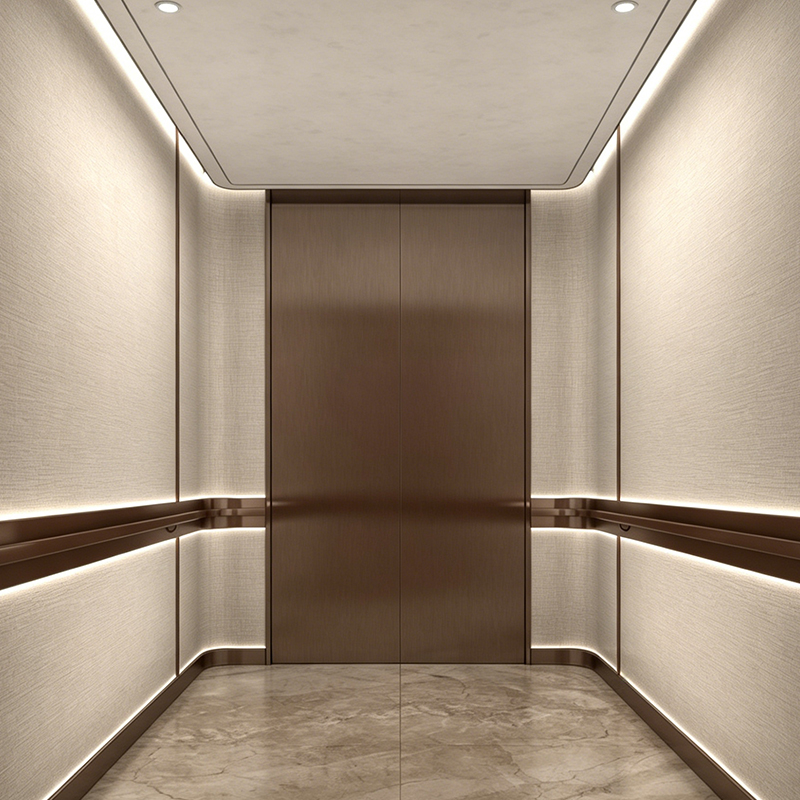
An elevator is often one of the most frequently used spaces in a building. Residents, visitors, patients, shoppers, guests, employees, and service personnel all experience the elevator interior directly. The cabin becomes a compact architectural environment that communicates the building’s identity within seconds. If the decoration is poorly designed, the building may feel outdated, inconsistent, or low-quality. If the decoration is refined and durable, the elevator can strengthen the overall impression of the property.
Custom elevator decoration helps architects, developers, property owners, and facility managers connect vertical transportation with interior design. For a luxury hotel, the cabin may need warm lighting, refined metal panels, and premium stone-like flooring. For a hospital, it may require clean surfaces, impact-resistant walls, smooth handrails, and easy disinfection. For a villa, the owner may prefer wood grain, mirror stainless steel, artistic ceilings, and quiet elegance. For a commercial building, the decoration may emphasize modernity, durability, and brand consistency.
Unlike off-the-shelf interiors, Custom Decoration can be coordinated with building materials, color palettes, traffic patterns, maintenance expectations, and user experience. It allows the cabin wall, ceiling, floor, handrail, lighting, door finish, operating panel surroundings, and other visible components to form a coherent design. The result is an elevator that feels intentional rather than generic.
This product is especially relevant in markets where buildings compete not only through location and floor area, but also through user experience. A beautifully designed elevator interior can improve perceived property value, support leasing and sales presentations, enhance hotel guest satisfaction, and create a more comfortable daily environment for building occupants.
Product Scope and Design Possibilities
Custom Decoration covers a broad range of elevator interior elements. The exact package can be selected according to project type, elevator model, load capacity, traffic level, local standards, and design preference. The purpose is to provide flexibility without compromising safety, maintainability, or manufacturing precision.
Typical customized components may include cabin wall panels, ceiling assemblies, lighting systems, ventilation grilles, handrails, skirting boards, flooring materials, mirror panels, decorative stainless steel sheets, etched or patterned panels, laminated panels, glass elements, door decoration, entrance finishes, and coordinated operating panel surroundings. Each element can be selected to create a cabin environment ranging from simple and practical to luxurious and visually dramatic.
Material selection is one of the most important parts of custom elevator decoration. Stainless steel remains a widely used choice because of its durability, fire resistance, corrosion resistance, and easy maintenance. Hairline stainless steel provides a clean and professional appearance. Mirror stainless steel adds brightness and spatial openness. Etched stainless steel can create patterns and visual depth. Titanium-colored, champagne-colored, black, bronze, or other colored stainless steel finishes can support premium design styles.
Other materials may be introduced according to requirements, including glass, laminated panels, artificial stone, PVC flooring, aluminum components, wood-grain finishes, composite materials, and anti-slip floor systems. In high-traffic public areas, materials must be selected for abrasion resistance and cleaning convenience. In hospital elevators, hygiene and impact resistance are priorities. In home villa elevators, the emphasis may be comfort, personalization, and harmony with interior decoration. In panoramic elevators, transparency, reflections, and lighting must be carefully balanced to avoid visual clutter.
Lighting is another essential part of the product. Elevator lighting affects both aesthetics and comfort. Soft, uniform lighting can make the cabin feel larger and more welcoming. Spotlights can add a premium atmosphere, while LED panels can provide energy-efficient illumination. Decorative ceiling designs can integrate lighting with patterns, metal frames, or translucent panels. Because lighting also influences passenger perception of cleanliness and safety, it should be selected with practical as well as aesthetic goals in mind.
Advantages Over Conventional Elevator Interior Options
Many competing elevator decoration options are limited to standard catalog finishes. While standard cabins may be suitable for basic installations, they often lack the flexibility required by premium or specialized projects. Custom Decoration provides a more project-oriented approach. It allows the user to specify the design direction, functional priorities, and material configuration, helping the elevator become a natural part of the building rather than an unrelated machine room-like space.
One advantage is design integration. In many buildings, elevators are installed by one party while the interior design is managed by another. If coordination is poor, the final result may include mismatched colors, inconsistent materials, inconvenient maintenance details, or cabin finishes that do not align with lobby decoration. Custom Decoration reduces this risk by offering elevator-specific interior solutions that consider both visual design and operational requirements.
A second advantage is durability. Elevators experience frequent contact from passengers, luggage, cleaning equipment, hospital beds, cargo trolleys, and service tools. Ordinary decorative panels may look attractive initially but degrade quickly under real traffic. A professional elevator decoration solution uses materials and structures suitable for vibration, movement, cleaning, impact, and repeated use. This helps reduce maintenance cost and preserve the cabin’s appearance over time.
A third advantage is manufacturing accuracy. Elevator decoration must fit within precise cabin dimensions and must not interfere with safety devices, door operation, ventilation, lighting, communication equipment, emergency systems, or maintenance access. Poorly manufactured decoration can cause gaps, rattling, deformation, or installation delays. With advanced production processes and full quality control, Custom Decoration can achieve better consistency and easier installation compared with less controlled custom workshops.
A fourth advantage is application diversity. The product can support passenger elevators, home elevators, hospital elevators, panoramic elevators, cargo elevators, car elevators, and high-speed elevator cabins. Each application has different priorities. A hospital elevator needs infection-control-friendly surfaces and protective features. A villa elevator needs personal style and comfort. A cargo elevator needs robust and practical finishes. A panoramic elevator needs transparent and visually balanced decoration. A single standard decoration approach cannot serve all these needs effectively.
A fifth advantage is long-term serviceability. A customized cabin should not become difficult to maintain. Components must be designed with realistic replacement, cleaning, and inspection needs in mind. When decoration is developed by an elevator manufacturer with installation and after-sales experience, it is more likely to account for real field conditions, reducing the burden on property management teams.
Design for Passenger Elevators
Passenger elevators serve the widest range of users and building types. In office towers, residential buildings, hotels, shopping malls, and public buildings, the passenger elevator is both a transportation system and an interior space. Custom Decoration for passenger elevators can be designed to reflect the tone of the property. A business building may prefer clean stainless steel, neutral colors, and efficient LED lighting. A residential building may prefer warm tones, durable wall protection, and comfortable handrails. A hotel may require richer finishes that support a sense of arrival and hospitality.
Passenger comfort depends on more than color. The cabin should feel spacious, stable, well-lit, and easy to use. Mirror surfaces can visually enlarge the space, but excessive reflection may create glare. Dark decorative panels can create luxury, but they require appropriate lighting. Patterned metal can add distinction, but it should not be too visually aggressive in a small cabin. The value of customization is the ability to balance these factors for the specific project.
Durability is also essential in passenger elevator decoration. Wall panels should resist scratching from bags and daily contact. Floors should handle high foot traffic and cleaning. Handrails should be firmly installed and comfortable to grip. Skirting should protect lower wall areas. Ceiling materials should remain stable and allow lighting maintenance. When these elements are carefully coordinated, the elevator remains attractive and functional for a longer service period.
Design for Panoramic and Observation Elevators
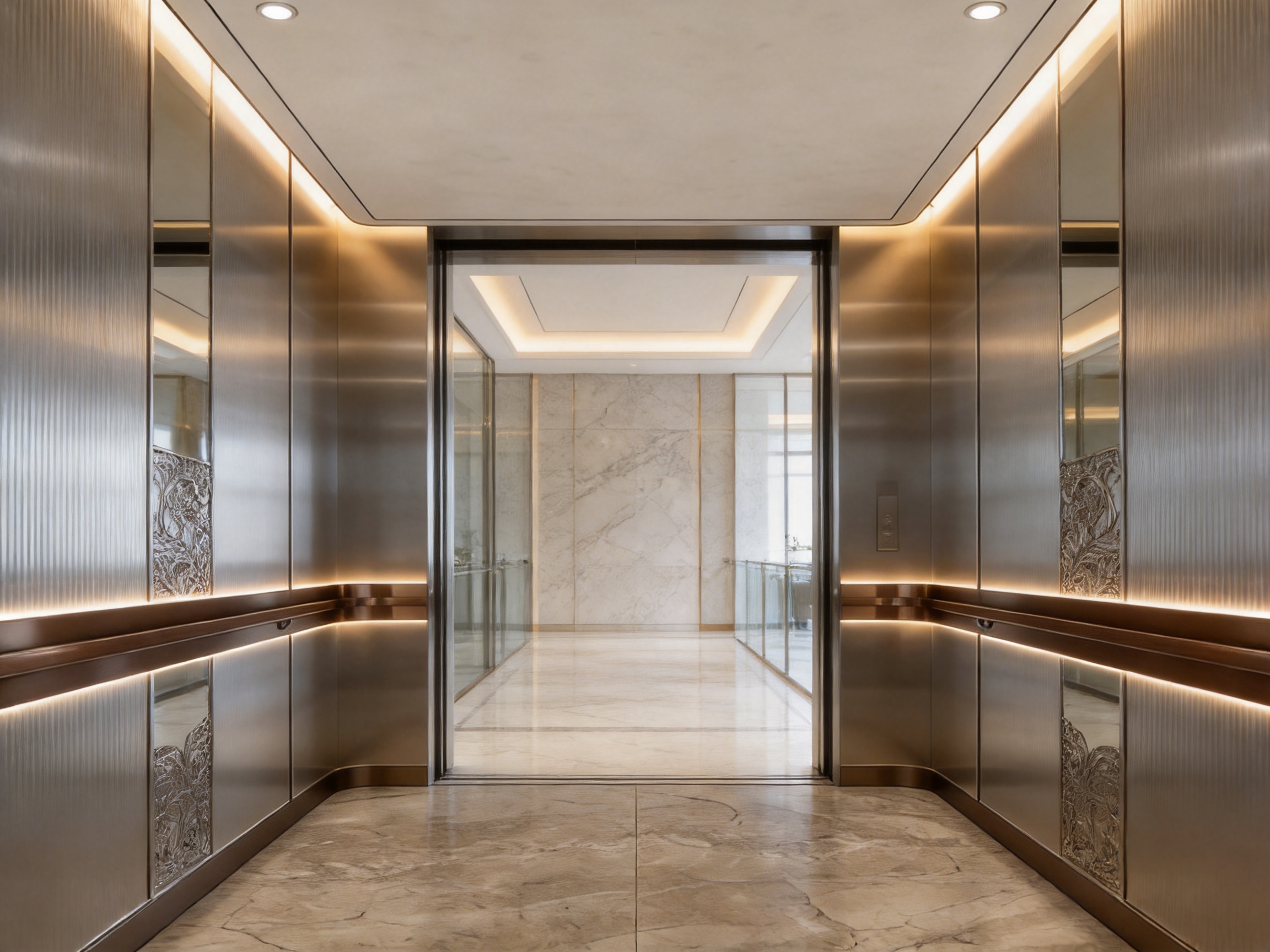
Panoramic and observation elevators create a unique design challenge because passengers see both the cabin interior and the surrounding environment. In hotels, malls, tourist facilities, office atriums, and transportation buildings, these elevators are often visual features. Their decoration must enhance the view rather than compete with it.
Custom Decoration for panoramic elevators may use stainless steel frames, glass-compatible finishes, refined ceiling designs, and subtle lighting. The goal is to create a clean and elegant cabin that feels open. Since glass surfaces already create a strong visual identity, the remaining decorative elements should be precise and well-proportioned. Handrails, floor edges, ceiling borders, and operating panel areas should be designed to look intentional from both inside and outside the cabin.
Compared with generic panoramic elevator interiors, a custom approach can better control reflection, color temperature, and material harmony. This is important because bright environments and glass surfaces can magnify design mistakes. Manufacturing precision is especially valuable here; uneven joints, visible defects, or mismatched finishes can be easily noticed in observation applications.
Design for Hospital Elevators
Hospital elevators require decoration that supports hygiene, safety, and heavy-duty usage. These elevators may transport patients, medical staff, beds, wheelchairs, equipment, visitors, and emergency teams. The interior must be easy to clean, resistant to impact, comfortable for vulnerable users, and reliable under continuous operation.
Custom Decoration for hospital elevators may include stainless steel wall panels, anti-bacterial or easy-clean surfaces where applicable, protective rails, impact-resistant lower panels, non-slip flooring, bright and even lighting, and wide handrails. The visual style should be calm, clean, and reassuring. Decoration should avoid sharp protrusions, fragile materials, or complicated textures that can trap dirt.
A major advantage over ordinary decoration is functional adaptation. Standard decorative cabins may not account for the movement of hospital beds or equipment trolleys. A hospital-focused custom design can reinforce vulnerable areas and provide practical clearances. The result is a cabin that looks professional while reducing maintenance problems caused by collisions and frequent cleaning.
Good hospital elevator decoration also supports user psychology. Patients and family members may be under stress. A clean, bright, well-maintained elevator can contribute to a sense of order and care. While decoration cannot replace medical service quality, it is part of the overall healthcare environment and can influence how users perceive the facility.
Design for Home Villa Elevators
Home villa elevators place greater emphasis on personalization. The elevator becomes part of a private living environment, and its decoration should match the owner’s interior style. A villa elevator may be designed with warm wood-grain panels, elegant stainless steel trims, artistic ceilings, soft lighting, decorative mirrors, stone-like flooring, or minimalist modern finishes.
Unlike public elevators, villa elevators often carry fewer passengers and operate in a more intimate setting. Comfort, quietness, visual warmth, and personalized detail become especially important. Custom Decoration allows the cabin to coordinate with staircases, corridors, entrance halls, wall finishes, lighting fixtures, and furniture styles.
At the same time, safety and durability remain essential. Home users may include children, elderly family members, or people with limited mobility. Handrails, lighting, flooring, and panel surfaces should be selected to support safe and comfortable use. A beautiful villa elevator should still be easy to clean and maintain. Custom Decoration provides the flexibility to combine premium appearance with practical everyday performance.
Design for Cargo and Car Elevators
Cargo elevators and car elevators require decoration that prioritizes strength and practicality. These elevators often carry heavy loads, equipment, goods, vehicles, or industrial materials. The cabin finish must resist impact, abrasion, and deformation. A decorative approach for these elevators should not reduce functionality; it should improve protection, usability, and professional appearance.
Custom Decoration for cargo elevators may include reinforced wall panels, anti-collision protection, durable flooring, stainless steel or patterned steel finishes, and simple lighting. For car elevators, the cabin may need special floor treatment, wheel guidance considerations, protective wall finishes, and materials that tolerate vehicle-related dirt, moisture, or mechanical contact.
Compared with basic industrial interiors, a custom solution can improve the appearance of service areas while maintaining rugged performance. This is valuable in commercial complexes, automotive showrooms, logistics facilities, high-end residences with underground parking, and buildings where cargo or vehicle movement is visible to users. A well-designed cargo or car elevator can look organized and professional instead of purely utilitarian.
Design for High-Speed Elevator Environments
High-speed elevators require special attention because passengers are more sensitive to cabin stability, noise, vibration, and visual comfort. Although decoration is not the sole factor in ride quality, interior materials and assemblies must be compatible with the operating characteristics of the elevator. Poorly secured decorative components can create noise, rattling, or maintenance issues.
Custom Decoration for high-speed elevators benefits from accurate manufacturing, stable materials, secure installation methods, and careful weight consideration. Decorative components should not overload the cabin or interfere with balance and performance. Ceiling systems, panels, mirrors, handrails, and floors should be engineered for reliable service under frequent movement.
A refined high-speed elevator cabin often uses clean lines, premium metal finishes, balanced lighting, and a calm visual atmosphere. In high-rise office towers, hotels, and mixed-use complexes, the elevator interior becomes part of a high-end mobility experience. Passengers may spend only a short time inside, but the impression can be strong. Custom Decoration helps create a cabin that feels advanced, stable, and consistent with the building’s status.
Manufacturing Strength Behind the Product
The success of custom elevator decoration depends heavily on manufacturing capability. Decorative panels and interior components must be produced with accurate dimensions, consistent surface quality, reliable assembly, and compatibility with elevator safety systems. Tenau Elevator (China) Co., Ltd. supports the product through a comprehensive manufacturing base and advanced production methods aligned with modern industrial standards.
The company integrates design, research and development, manufacturing, installation, and after-sales service. This integrated structure is important because elevator decoration is not isolated from the elevator system. The decoration must match cabin structure, door systems, control elements, ventilation, lighting, load requirements, and maintenance access. When design and production teams understand elevator engineering, the decoration is more likely to fit correctly and perform reliably.
Located in Nanxun, Zhejiang Province, at the core of the Shanghai-Nanjing-Suzhou-Hangzhou economic circle, the company benefits from a strong industrial region, supply chain access, logistics convenience, and manufacturing talent. This location supports efficient production and export service for customers in many countries and regions.
The company introduces international technologies and rigorous management systems, complying with ISO9001, ISO14001, and OHSMS18001 standards. These management systems support quality, environmental responsibility, and occupational health and safety. For customers, such systems indicate that production is not based only on individual craftsmanship, but also on controlled procedures, documented quality management, and continuous improvement.
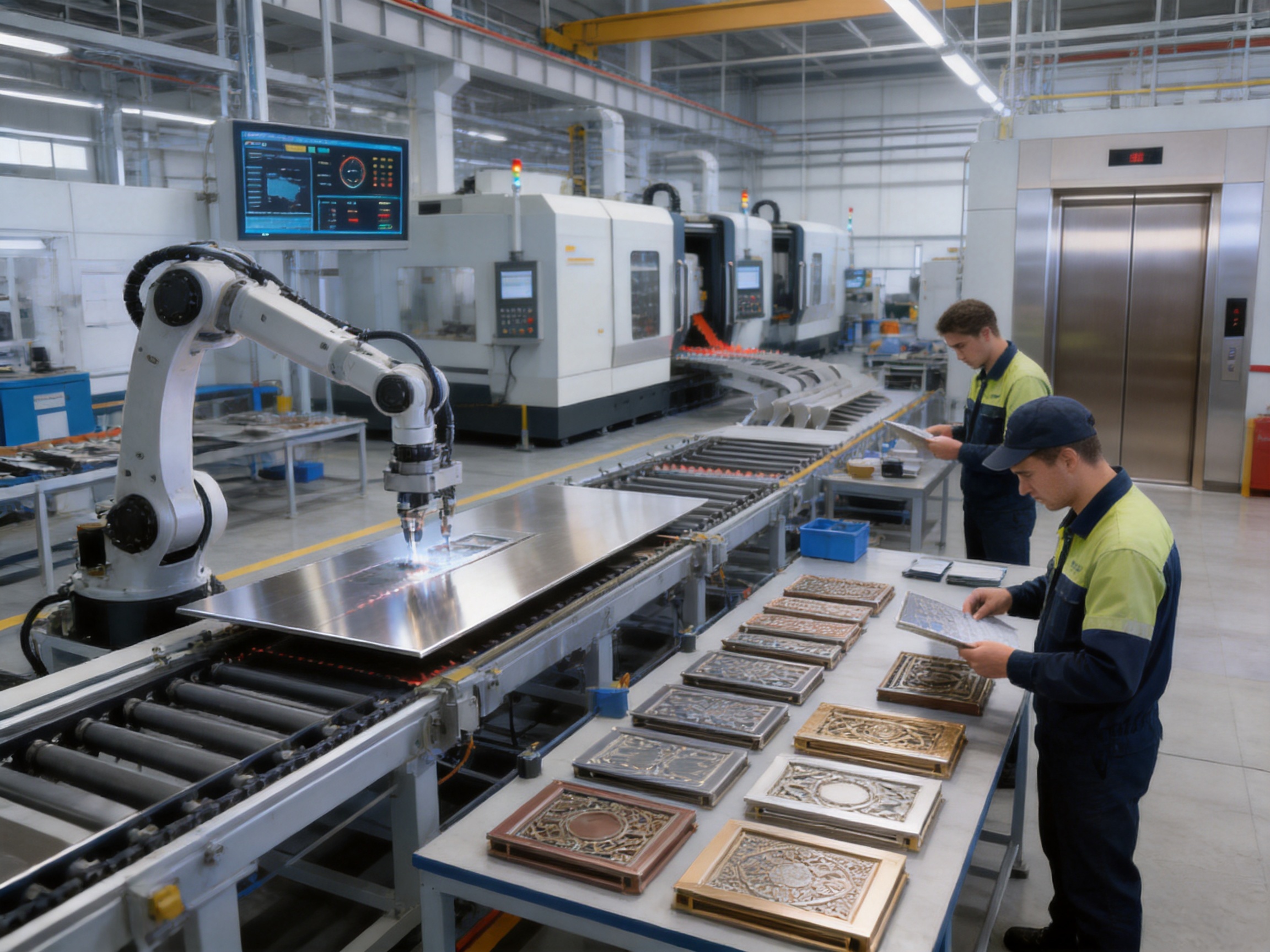
German Industry 4.0 intelligent manufacturing is another important strength. In elevator decoration, intelligent manufacturing can support data-driven production planning, process monitoring, improved consistency, and efficient customization. Automated production lines help reduce human error and maintain repeatability. Big data and IoT technology contribute to quality tracking and production transparency. A full closed-loop quality control system helps identify, correct, and prevent defects throughout the process.
This advanced manufacturing foundation gives Custom Decoration an advantage over competitors that rely mainly on manual fabrication or fragmented outsourcing. While craftsmanship remains important, modern elevator projects require repeatable accuracy, reliable delivery, and documented control. Intelligent manufacturing helps combine customization with industrial consistency.
Quality Control from Design to Delivery
Quality control for custom elevator decoration begins before production. It starts with understanding the project requirements, elevator type, cabin dimensions, user profile, building style, material preferences, and local requirements. Design proposals must consider aesthetics, installation feasibility, weight, safety, maintenance, and durability. A visually attractive concept is not enough if it creates field installation problems or long-term service difficulties.
After design confirmation, material selection and processing become central. Stainless steel sheets, decorative panels, flooring materials, lighting components, and accessories must be checked for surface quality, color consistency, thickness, strength, and compatibility. Inconsistent material batches can lead to visible differences after installation. Careful inspection helps avoid these issues.
During manufacturing, precision cutting, bending, surface treatment, assembly, and fitting are important. Elevator cabins are compact environments, so even small deviations can be visible. Panel gaps, uneven corners, poorly aligned ceilings, or loose handrails can reduce the perceived quality of the entire elevator. Controlled production processes help maintain dimensional accuracy and surface integrity.
Before delivery, components should be inspected for appearance, fit, packaging, and completeness. Proper packaging is especially important for decorative materials because scratches or dents during transportation can cause delays and additional cost. A professional manufacturer considers export packaging and shipping conditions to protect the product until installation.
Installation quality is also part of the final result. Decoration components must be mounted securely and aligned correctly. Lighting and ventilation must function properly. Emergency access and maintenance requirements must remain available. After-sales service capability further supports long-term performance, allowing customers to receive technical support, replacement guidance, and maintenance assistance when needed.
Material and Finish Options
Custom Decoration can be adapted through a wide selection of material and finish combinations. The correct selection depends on the building type, budget, design target, maintenance expectations, and elevator traffic level. The following table summarizes common options and their practical value.
| Decoration Element | Possible Options | Main Benefits | Suitable Applications |
|---|---|---|---|
| Cabin wall panels | Hairline stainless steel, mirror stainless steel, etched stainless steel, colored stainless steel, laminated panels | Durability, design flexibility, easy cleaning, premium appearance | Passenger elevators, hotels, offices, residential buildings, hospitals |
| Ceiling | LED panel ceiling, decorative stainless steel ceiling, acrylic light panel, spotlight ceiling | Improved brightness, atmosphere, energy efficiency, visual identity | Hotels, villas, commercial buildings, high-speed elevators |
| Flooring | PVC floor, artificial stone, anti-slip surface, patterned metal floor | Wear resistance, safety, easy maintenance, style coordination | Residential, hospital, cargo, car, and public elevators |
| Handrails | Round stainless steel, flat stainless steel, wood-grain finish, custom profiles | Passenger support, safety, comfort, wall protection | Hospitals, residential buildings, villas, public facilities |
| Mirror and glass | Full-height mirror, partial mirror, decorative glass, observation glass coordination | Spatial openness, premium appearance, improved passenger comfort | Passenger, villa, panoramic, and hotel elevators |
| Door and entrance finish | Stainless steel, colored metal, etched patterns, matching lobby entrance decoration | Consistent first impression, improved architectural integration | Hotels, office towers, apartments, commercial centers |
The table shows that custom decoration is not a single material choice. It is a combination of surfaces, structures, lighting, and user-oriented details. A successful project selects each component according to both appearance and performance. For example, a mirror panel may be useful in a small passenger elevator but less suitable in a cargo elevator. Artificial stone flooring may create a premium atmosphere in a hotel, while anti-slip durable flooring may be better for a hospital or service elevator.
How Custom Decoration Improves Building Value
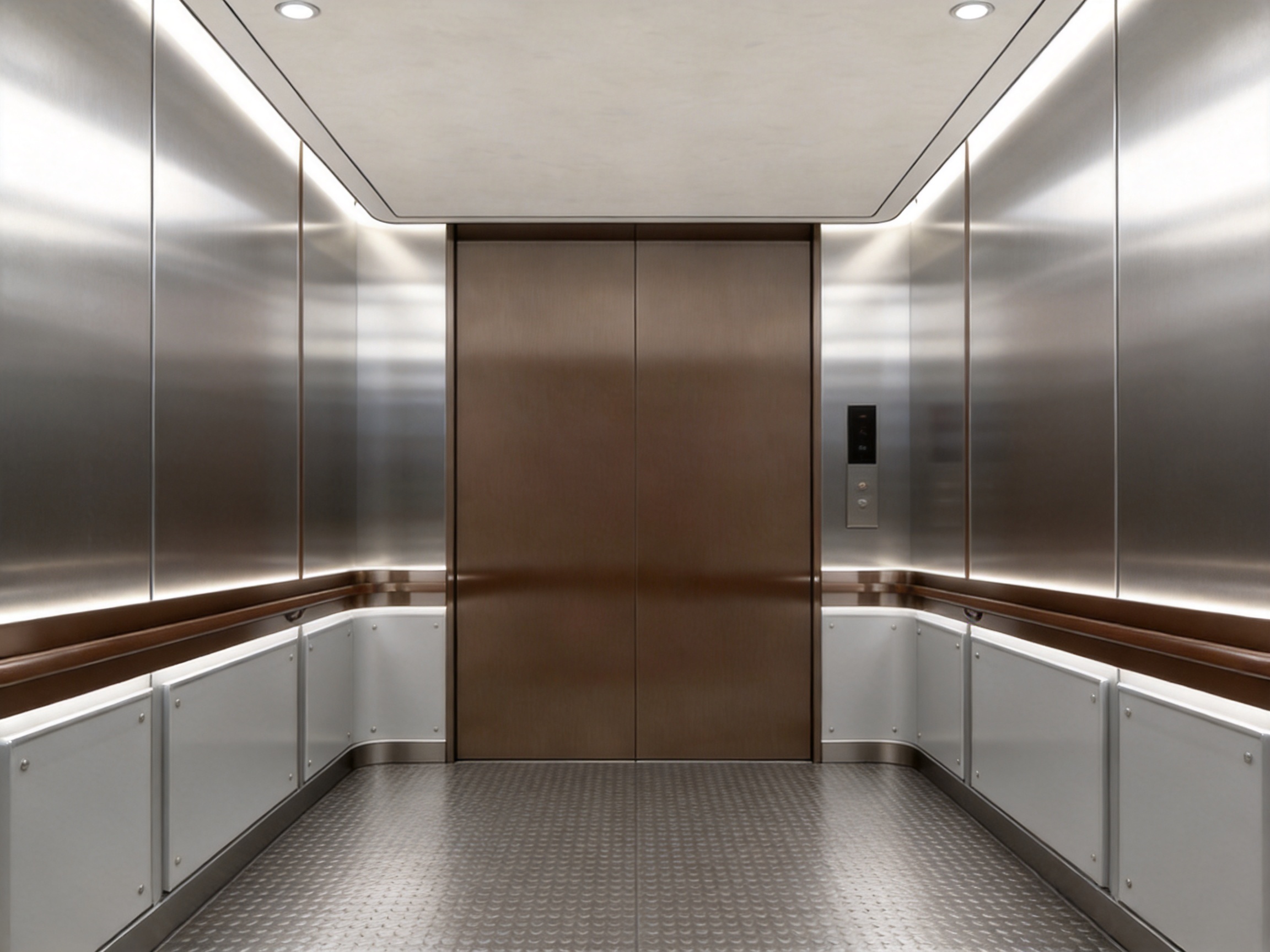
Property value is influenced by many factors, including location, structure, facilities, management, and design quality. Elevator decoration contributes to value by improving daily experience and supporting a building’s identity. Because elevators are used repeatedly, their condition strongly affects user perception. A worn, outdated, or poorly lit elevator can make even a well-designed building feel neglected. A clean, elegant, and durable elevator can reinforce confidence in the property.
For commercial properties, customized elevator interiors can support leasing competitiveness. Tenants often evaluate common areas before making decisions. Elevators that match lobby design and show attention to detail can improve the impression of building management quality. For hotels, elevator decoration contributes to guest experience from arrival to room access. For residential developments, attractive and durable elevators can support sales presentation and long-term resident satisfaction.
In hospitals and public buildings, the value is not only visual. Proper decoration can improve cleanliness, accessibility, and movement efficiency. Protective panels and practical handrails reduce damage and support safer use. In cargo and car elevators, durable custom decoration can reduce repair frequency and improve operational professionalism.
Custom Decoration also helps with renovation projects. Many existing elevators remain mechanically serviceable but look outdated. Interior modernization can refresh the building at a lower cost than full replacement, depending on elevator condition and project requirements. By upgrading panels, ceilings, lighting, floors, and handrails, the elevator can gain a new appearance and improved usability. Professional evaluation is important to ensure that decoration upgrades remain compatible with the existing elevator system.
Safety and Compliance Considerations
Elevator decoration must always respect safety. Decorative materials and components should not interfere with elevator operation, emergency communication, ventilation, lighting, door movement, load rating, fire safety, or maintenance access. A cabin interior is part of a regulated transportation environment, not merely an interior design space.
Weight control is especially important. Adding heavy materials to the cabin can affect elevator balance and performance. Professional custom decoration should consider material weight and system compatibility. Fire behavior and smoke considerations may also be relevant depending on local codes and building type. Flooring must support safe footing. Handrails should be securely mounted. Lighting must provide adequate visibility. Mirrors and glass should be selected and installed appropriately.
For hospital elevators, accessibility and hygiene should be considered. For home villa elevators, elderly users and children may require comfortable handrail placement and non-slip flooring. For public elevators, vandal resistance and cleaning procedures may influence material choices. For high-speed elevators, vibration resistance and secure assembly are important.
The advantage of working with an experienced elevator manufacturer is that decoration decisions can be reviewed in relation to elevator engineering. This reduces the risk of unsafe modifications or incompatible installations. It also helps building owners avoid problems that may arise when decoration is handled by general interior contractors without elevator-specific knowledge.
Environmental and Maintenance Benefits
Environmental responsibility is increasingly important in building products. Custom Decoration can support sustainable goals by using durable materials, efficient lighting, and controlled manufacturing processes. A longer-lasting cabin interior reduces the need for frequent replacement, which can lower material waste over time. LED lighting can reduce energy consumption compared with older lighting solutions. Easy-clean surfaces can support efficient maintenance and reduce excessive chemical use when appropriate cleaning procedures are followed.
The company’s compliance with ISO14001 reflects environmental management awareness. In manufacturing, environmental control may include resource efficiency, waste management, process improvement, and responsible production practices. For global customers, this adds confidence that the product is supported by a structured approach rather than informal production.
Maintenance is another area where custom decoration can outperform competitors. A cabin that looks luxurious but is difficult to clean may become a burden. Professional decoration should anticipate fingerprints, dust, scratches, moisture, cleaning schedules, and replacement needs. Stainless steel, proper panel joints, accessible lighting, and durable flooring can make daily maintenance easier.
For property managers, easier maintenance means lower operating pressure and better long-term appearance. For users, it means a cleaner and more comfortable elevator experience. For owners, it helps protect the investment made in the decoration package.
Intelligent Manufacturing and Customization Efficiency
Customization often creates a challenge: the more unique the design, the harder it can be to maintain production efficiency and quality. Advanced manufacturing helps solve this challenge. By using intelligent manufacturing concepts, automated production lines, big data, IoT technology, and closed-loop quality control, customization can be managed with greater accuracy and predictability.
Digital design and production coordination can help translate customer requirements into manufacturable components. Automated equipment can improve cutting and forming consistency. Process data can help monitor quality and identify deviations. IoT-supported systems can improve visibility across production stages. Closed-loop quality management helps ensure that inspection results lead to corrective action rather than remaining isolated records.
For customers, this means a better balance between personalized design and reliable delivery. Competitors with weaker production systems may be able to produce custom interiors, but they may struggle with consistency, repeat orders, export packaging, or multi-project coordination. A manufacturer with advanced systems can better support large developments, international projects, and customers who require both design flexibility and industrial reliability.
This manufacturing strength is especially useful for projects involving multiple elevators. A hotel, hospital, office tower, or residential complex may need consistent decoration across many cabins, while still allowing differences among passenger, service, VIP, or freight elevators. Intelligent manufacturing supports standardization where needed and customization where desired.
Applications Across Building Types
Custom Decoration is suitable for a wide range of project environments. In hotels, it can create a luxurious transition between lobby, guest floors, restaurants, spas, and conference areas. Materials may include decorative stainless steel, warm lighting, mirrors, and premium flooring. The design should reflect the hotel’s brand atmosphere without making maintenance too difficult.
In office buildings, the product can create a professional and modern environment. Clean metal finishes, efficient lighting, and durable floors are common choices. For high-end office towers, the elevator interior can communicate stability, technology, and prestige. In multi-tenant buildings, neutral but refined decoration may appeal to a broad range of occupants.
In residential buildings, Custom Decoration can help create a comfortable and durable daily-use environment. Residents may use the elevator many times a day, so the design should feel pleasant but not overly fragile. Wall protection, easy cleaning, and stable lighting are important. In premium apartments, more luxurious finishes may be selected to support the building’s market position.
In hospitals, the decoration should be practical, hygienic, and calming. Protective rails, impact-resistant panels, and bright lighting help support medical operations. In shopping centers, decoration may be more visually expressive, but it must handle high traffic and frequent cleaning. In transportation hubs, robustness and clarity are key. In villas, personalization and harmony with home interiors are central.
For cargo and car elevator applications, the product emphasizes strength, protection, and long-term durability. For panoramic elevators, it emphasizes visual balance, precision, and architectural integration. For high-speed elevators, it emphasizes secure assembly, refined aesthetics, and compatibility with advanced elevator performance.
Why Manufacturer Experience Matters
Elevator decoration may appear simple from the outside, but it involves many technical details. A manufacturer that understands elevator systems can design interiors that respect cabin structure, load limitations, safety rules, ventilation needs, lighting access, operating panel location, emergency communication, and maintenance procedures. This experience reduces the risk of decoration becoming a source of operational problems.
Tenau Elevator (China) Co., Ltd. has capabilities covering low-speed, medium-speed, high-speed, and ultra-high-speed elevator solutions. This broad technical background supports decoration design for different performance levels and use cases. The company’s product range includes passenger elevators, freight elevators, escalators, moving walks, and related elevator solutions. This allows decoration knowledge to be connected with wider vertical transportation expertise.
The company’s professional team, intellectual property foundation, and export experience also add value. International projects require communication, documentation, packaging, logistics coordination, and awareness of different customer expectations. A manufacturer that exports to many countries and regions is better prepared to support varied design preferences and project requirements.
After-sales service is another important factor. Decorative interiors may need replacement parts, maintenance guidance, or technical support years after installation. Working with a comprehensive elevator manufacturer can provide more reliable support than purchasing from a short-term decoration supplier with limited service capacity.
Selection Guidance for Project Owners
When selecting custom elevator decoration, project owners should begin with the building’s purpose and user profile. A luxury hotel and a hospital should not use the same design logic. A villa and a cargo elevator have different performance needs. Understanding users, traffic levels, cleaning practices, and desired visual identity helps define the correct solution.
Second, owners should consider material durability. Attractive finishes should be evaluated for scratch resistance, cleaning convenience, corrosion resistance, and expected service life. Very delicate materials may not be appropriate for high-traffic public elevators. Stronger finishes may be better for long-term value.
Third, the design should be coordinated with the surrounding architecture. Elevator doors, lobbies, corridors, and cabin interiors should form a consistent visual experience. Custom Decoration can match or complement existing materials, creating a more unified property image.
Fourth, owners should consider maintenance. A beautiful cabin that requires excessive care may become costly. Fingerprint visibility, floor cleaning, panel replacement, lighting access, and surface repair should all be discussed before final selection.
Fifth, owners should work with a supplier that understands both design and elevator engineering. This is especially important for modernization projects, high-speed elevators, hospital elevators, and heavy-duty elevators. Proper technical review helps avoid unsafe or impractical decoration choices.
Q&A: Common Questions About Custom Elevator Decoration
What is Custom Decoration for elevators?
Custom Decoration is a tailored elevator interior solution that includes cabin walls, ceilings, lighting, floors, handrails, mirrors, door finishes, and related decorative components. It is designed to match the building’s style while maintaining elevator safety, durability, and maintenance requirements.
How is it different from standard elevator decoration?
Standard decoration usually offers limited catalog choices. Custom Decoration provides greater flexibility in materials, colors, patterns, lighting, and functional details. It can be adapted for hotels, hospitals, villas, office towers, cargo elevators, panoramic elevators, and other specialized applications.
Can custom decoration be used in existing elevators?
Yes, in many cases elevator interiors can be modernized with new panels, ceilings, lighting, floors, and handrails. However, the existing elevator condition, cabin dimensions, weight limits, and safety requirements must be evaluated before renovation.
What materials are commonly used?
Common materials include hairline stainless steel, mirror stainless steel, etched stainless steel, colored stainless steel, glass, laminated panels, artificial stone, PVC flooring, anti-slip flooring, and decorative lighting components. The final selection depends on application, budget, maintenance needs, and design goals.
Is custom elevator decoration safe?
It is safe when designed and installed by professionals who understand elevator systems. Decoration must not interfere with door operation, ventilation, lighting, emergency devices, load capacity, or maintenance access. Material weight and fire-related requirements should also be considered.
Why is manufacturing capability important?
Elevator decoration requires precise dimensions, stable materials, consistent surface quality, and secure installation. Advanced manufacturing, automated production, IoT-supported monitoring, and closed-loop quality control help improve accuracy, consistency, and long-term reliability.
Which elevator types can use this product?
The product can be used for passenger elevators, panoramic and observation elevators, hospital elevators, home villa elevators, cargo elevators, car elevators, high-speed elevators, and related cabin interior applications.
How does custom decoration improve building value?
It improves user experience, strengthens visual identity, supports property positioning, and helps maintain a clean and professional appearance. In hotels, offices, residences, hospitals, and commercial buildings, elevator interiors influence how users perceive the entire property.
Is it suitable for high-traffic public buildings?
Yes, if durable materials and practical design details are selected. Stainless steel panels, anti-slip floors, protective rails, and easy-clean surfaces are suitable for high-traffic environments such as malls, hospitals, office towers, and transportation facilities.
How should a project owner begin the customization process?
The owner should define the building type, design style, user needs, traffic level, budget, maintenance expectations, and elevator specifications. A professional manufacturer can then recommend suitable materials, finishes, and technical solutions.
Conclusion
Custom Elevator Decoration is a valuable solution for buildings that require more than a standard cabin interior. It transforms the elevator into a coordinated architectural space while protecting essential requirements such as safety, durability, easy maintenance, and system compatibility. Through customized panels, ceilings, lighting, flooring, handrails, mirrors, and entrance finishes, the product can serve passenger elevators, panoramic elevators, hospital elevators, home villa elevators, cargo elevators, car elevators, and high-speed elevator environments.
Its advantages over conventional options include stronger design flexibility, better material adaptation, improved durability, precise manufacturing, broader application suitability, and enhanced long-term serviceability. These benefits are especially important in projects where the elevator is a visible and frequently used part of the building experience.
Supported by the advanced manufacturing strength of Tenau Elevator (China) Co., Ltd., the product benefits from integrated design and production capability, German Industry 4.0 intelligent manufacturing, automated production lines, big data, IoT technology, and a full closed-loop quality control system. Compliance with ISO9001, ISO14001, and OHSMS18001 standards further supports quality, environmental management, and occupational safety. The company’s broad elevator expertise, manufacturing base, professional team, and global export experience provide a solid foundation for reliable custom decoration solutions.
For developers, architects, contractors, property owners, and facility managers, Custom Decoration offers a way to improve both appearance and performance. Whether the goal is luxury, cleanliness, durability, modernization, personalization, or brand consistency, a professionally designed elevator interior can elevate the entire building experience.
References
International Organization for Standardization. ISO 9001 Quality Management Systems: Requirements.
International Organization for Standardization. ISO 14001 Environmental Management Systems: Requirements with Guidance for Use.
Occupational Health and Safety Management Systems. OHSMS 18001 Standard Guidance and Implementation Principles.
Strakosch, G. R., and Caporale, R. S. The Vertical Transportation Handbook. Elevator World Publications.
Barney, G. C. Elevator Traffic Handbook: Theory and Practice. Spon Press.
National Elevator Industry educational materials on elevator safety, modernization, and maintenance practices.
Building interior design references concerning material durability, lighting comfort, accessibility, and public-space maintenance.
Product: Custom Decoration
Related Products
Related News
Built on safety, forging trust in vertical mobility.
lf you have any questions or need help, feel free to contact with our team.
 export@tenau.com.cn
 +86-18601458867
 +86-512-65059883
Elevator & Escalator
Factory Add
East of Xicheng Road, North of Lianyi Road, Nanxun Economic Development Zone, Nanxun District, Huzhou City, Zhejiang Province, P.R.China
Copyright © Tenau Elevator (China) Co., Ltd. All Rightd Reserved.
Custom High Quality Elevator Suppliers and World Brand Elevator Company