

 en
en Español
 русский
 中文简体
中文简体
Custom Elevator Decoration for Modern Passenger, Villa, Hospital, Cargo, and High-Rise Mobility Spaces
Content
- 1 The Role of Custom Decoration in Elevator Experience
- 2 Product Concept: Tailored Cabin Interiors for Multiple Applications
- 3 Advantages Compared with Conventional Competitor Solutions
- 4 Materials and Finish Options
- 5 Design Strategies for Different Elevator Types
- 6 Manufacturing Strength and Process Advantages
- 7 Quality Control from Design to Delivery
- 8 Functional Benefits Beyond Appearance
- 9 Comparison Table: Custom Decoration Versus Standard Cabin Interiors
- 10 Design and Engineering Considerations for Buyers
- 11 How Advanced Manufacturing Supports Customization
- 12 Environmental and Safety Mission
- 13 Applications in Modern Building Projects
- 14 Why Integrated Elevator Expertise Matters
- 15 Selection Recommendations
- 16 Q&A Section
- 16.1 What is Custom Elevator Decoration?
- 16.2 Which elevator types can use this product?
- 16.3 How is it different from a standard elevator cabin?
- 16.4 Why is an integrated elevator manufacturer important for decoration?
- 16.5 Is custom decoration only for luxury buildings?
- 16.6 What materials are commonly used?
- 16.7 Can the design match a building lobby or interior style?
- 16.8 How does the product improve hospital elevator performance?
- 16.9 What should be considered for cargo elevator decoration?
- 16.10 Does customization affect elevator safety?
- 16.11 How does advanced manufacturing improve the final product?
- 16.12 Can the cabin interior be upgraded later?
- 17 Conclusion
- 18 References
- 19 Product: Custom Decoration
Custom elevator decoration is no longer a secondary detail added after the technical elevator system has been selected. In modern buildings, the elevator cabin is a visible extension of the architecture, the interior design concept, the brand identity of a property, and the daily experience of passengers. Whether installed in a high-end commercial tower, a boutique hotel, a hospital, a private villa, a shopping center, a residential development, a panoramic observation elevator, or a cargo transportation environment, a well-designed elevator interior improves perceived quality, comfort, safety, durability, and long-term asset value.
The product discussed in this article is Custom Decoration for elevators, a solution designed to provide tailored cabin interiors, finishes, visual styles, functional accessories, and user-focused details for multiple elevator categories. It can be applied to passenger elevators, panoramic and observation elevators, hospital elevators, home villa elevators, cargo elevators, car elevators, escalator-related surrounding spaces, moving walk environments, elevator parts, cabin interiors, and high-speed elevator projects. Instead of offering a single standardized appearance, custom decoration allows project owners, architects, contractors, and facility managers to create elevator interiors that match their building purpose and usage intensity.
Tenau Elevator (China) Co., Ltd. provides this product within a comprehensive elevator manufacturing and service ecosystem. The company originates from Germany and integrates design, research and development, manufacturing, marketing, installation, and after-sales service. Its manufacturing base is located in Nanxun District, Huzhou City, Zhejiang Province, at the core of the Shanghai-Nanjing-Suzhou-Hangzhou economic circle. This location supports efficient access to industrial resources, skilled labor, logistics channels, and international trade capabilities. The company is committed to safety, environmental protection, intelligent mobility, and reliable quality, making custom elevator decoration not merely an aesthetic option but part of a complete vertical transportation solution.
For buyers comparing elevator decoration suppliers, the key question is not simply which cabin looks attractive in a brochure. The real decision involves materials, precision manufacturing, structural compatibility, installation convenience, lifecycle durability, cleaning requirements, passenger safety, fire resistance, anti-corrosion performance, noise control, ergonomic design, lighting efficiency, and after-sales support. Custom Decoration is designed to address these concerns through integrated engineering and manufacturing processes rather than superficial styling alone.
The Role of Custom Decoration in Elevator Experience
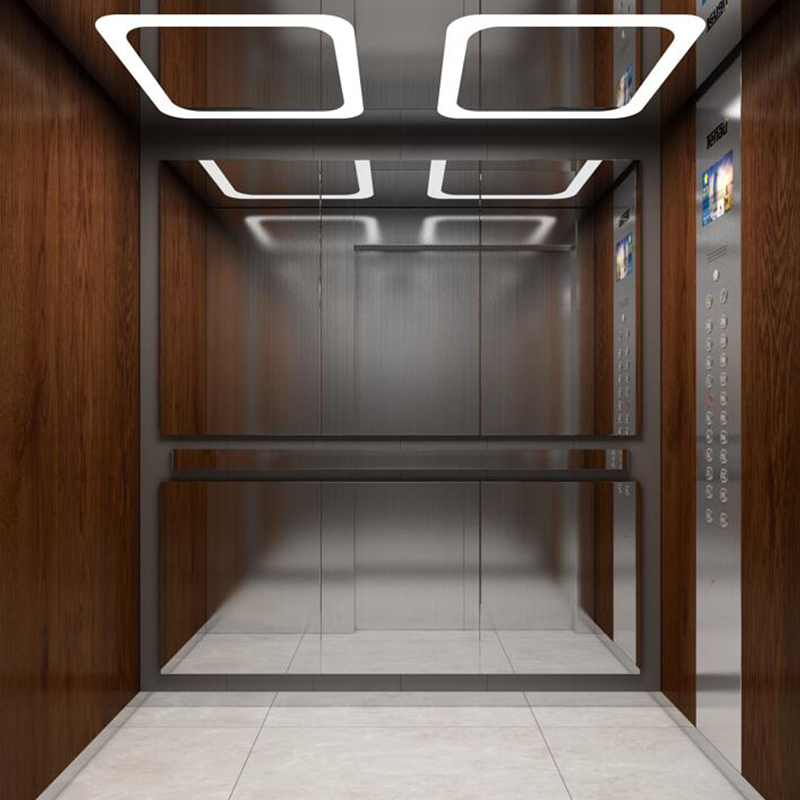
Elevators are among the most frequently used spaces in many buildings. Passengers may spend only a short time inside, but that brief experience shapes their impression of the entire property. A polished stainless-steel wall, a warm-toned villa cabin, a bright and hygienic hospital elevator, or a panoramic observation cabin with carefully coordinated trim can communicate quality immediately. Poorly matched materials, weak lighting, noisy panels, visible gaps, or easily scratched surfaces can have the opposite effect.
Custom elevator decoration transforms the cabin from a purely functional transport box into an integrated interior environment. It considers the relationship between walls, ceiling, floor, handrails, mirrors, lighting, ventilation, operating panels, skirting, door surfaces, and accessibility details. When these elements are coordinated, passengers feel that the elevator belongs naturally to the building rather than appearing as an unrelated industrial component.
In commercial buildings, custom decoration can reinforce a premium corporate atmosphere. In hotels, it can support guest comfort and luxury positioning. In hospitals, decoration must emphasize hygiene, easy cleaning, durability, and calm visual design. In villas, the elevator should harmonize with private interior design, often requiring warmer materials, customized colors, and refined lighting. In cargo and car elevators, decoration focuses more on impact resistance, protection, and practical surfaces, but it still benefits from thoughtful design because clean and durable interiors improve maintenance efficiency and user confidence.
Panoramic and observation elevators require even more careful decoration because the cabin is part of the visual attraction. Transparent surfaces, slim frames, reflection control, ceiling brightness, and stainless-steel profiles must be balanced to create openness without sacrificing structural reliability. High-speed elevators demand decoration that remains secure and quiet under more demanding operating conditions, where vibration, air pressure changes, and passenger comfort all matter.
Product Concept: Tailored Cabin Interiors for Multiple Applications
Custom Decoration is built around flexibility. It is suitable for projects where standard elevator interiors cannot fully satisfy architectural, functional, or brand requirements. The solution may include stainless-steel finishes, etched panels, mirror panels, hairline stainless steel, titanium-colored surfaces, wood-grain materials, laminated panels, stone-like flooring, non-slip flooring, ceiling systems, LED lighting, handrails, decorative mirrors, protective bumpers, and customized cabin layouts.
The product is especially valuable because elevator decoration cannot be designed in isolation from elevator performance. Each material adds weight, affects installation tolerances, changes acoustic behavior, and influences maintenance. A strong supplier must understand both decoration and elevator engineering. Tenau Elevator combines elevator manufacturing knowledge with cabin interior design capability, allowing decorative choices to remain compatible with safety standards, load conditions, and operational performance.
For passenger elevators, decoration can focus on elegance, light reflection, spaciousness, and brand image. For hospital elevators, the design can prioritize wide usable space, anti-collision protection, antimicrobial-friendly surfaces, smooth corners, bright lighting, and stretcher compatibility. For home villa elevators, it can deliver personalized aesthetics, quiet luxury, and coordination with residential interiors. For cargo elevators, it can include reinforced wall panels, durable flooring, and practical protective accessories. For car elevators, interior surfaces need to resist tire marks, moisture, impact, and heavy-duty use. For high-speed elevators, all decorative components must remain stable, precise, and secure.
This multi-application capability gives Custom Decoration an advantage over suppliers that offer only catalog-based designs. Many competitors provide fixed cabin styles and limited panel options. In contrast, a custom approach supports architectural diversity and regional market preferences. Projects in different countries may require different finishes, color expectations, climate resistance, cleaning practices, and standards. A custom decoration system allows the elevator interior to be adapted without compromising the core technical platform.
Advantages Compared with Conventional Competitor Solutions
The most obvious advantage of custom elevator decoration is design freedom, but its deeper value lies in integration. Competitor products often fall into two extremes. Some offer attractive decoration but lack deep elevator manufacturing expertise. Others manufacture elevator systems well but treat decoration as a limited standard accessory. A stronger solution combines both capabilities.
Custom Decoration offers project-specific material selection. Rather than forcing a building owner to choose from a narrow range of finishes, the product can be configured according to traffic volume, visual design, cleaning frequency, and operating environment. A luxury hotel elevator may use warm, reflective, and decorative materials, while a hospital elevator may use cleaner, brighter, and more impact-resistant finishes. A cargo elevator may require reinforced panels and heavy-duty floor protection, while a panoramic elevator may need refined metal profiles and visually light surfaces.
Another advantage is manufacturing consistency. Decorative elevator panels must align precisely. Gaps, uneven surfaces, weak joints, and inconsistent finishes reduce perceived quality and may cause long-term maintenance issues. Tenau Elevator applies advanced manufacturing capabilities and strict management systems to support reliable production. The company complies with ISO9001 quality management, ISO14001 environmental management, and OHSMS18001 occupational health and safety management standards. These systems support process discipline from design and material procurement to production, inspection, packaging, and delivery.
Compared with low-cost decoration suppliers, Custom Decoration emphasizes lifecycle value. A cheaper panel may look acceptable at installation but become scratched, loose, discolored, noisy, or difficult to clean after months of use. High-quality decoration considers long-term durability. In high-traffic buildings, the cabin may be used thousands of times per day. Surface hardness, corrosion resistance, edge protection, and replaceability become essential. A cabin interior that maintains its appearance for years can reduce maintenance costs and protect the building’s image.
Custom Decoration also supports better project coordination. Because Tenau Elevator is a comprehensive manufacturer integrating design, research and development, production, installation, and after-sales service, cabin decoration can be coordinated with the elevator’s technical specifications from the beginning. This helps avoid late-stage conflicts such as overweight decoration, incompatible ceiling depth, restricted ventilation, unsuitable lighting power, or interference with operating panels and safety devices.
In international projects, supply reliability is another important advantage. Tenau exports products to many countries and regions worldwide, which indicates experience with different project conditions, documentation expectations, packaging requirements, and logistics processes. For developers and contractors, a supplier capable of supporting global delivery and technical communication reduces risk.
Materials and Finish Options
Material selection is one of the most important decisions in elevator decoration. The correct choice depends on building type, passenger flow, climate, cleaning chemicals, design style, and budget. Custom Decoration can incorporate a wide range of materials while maintaining compatibility with elevator cabin engineering.
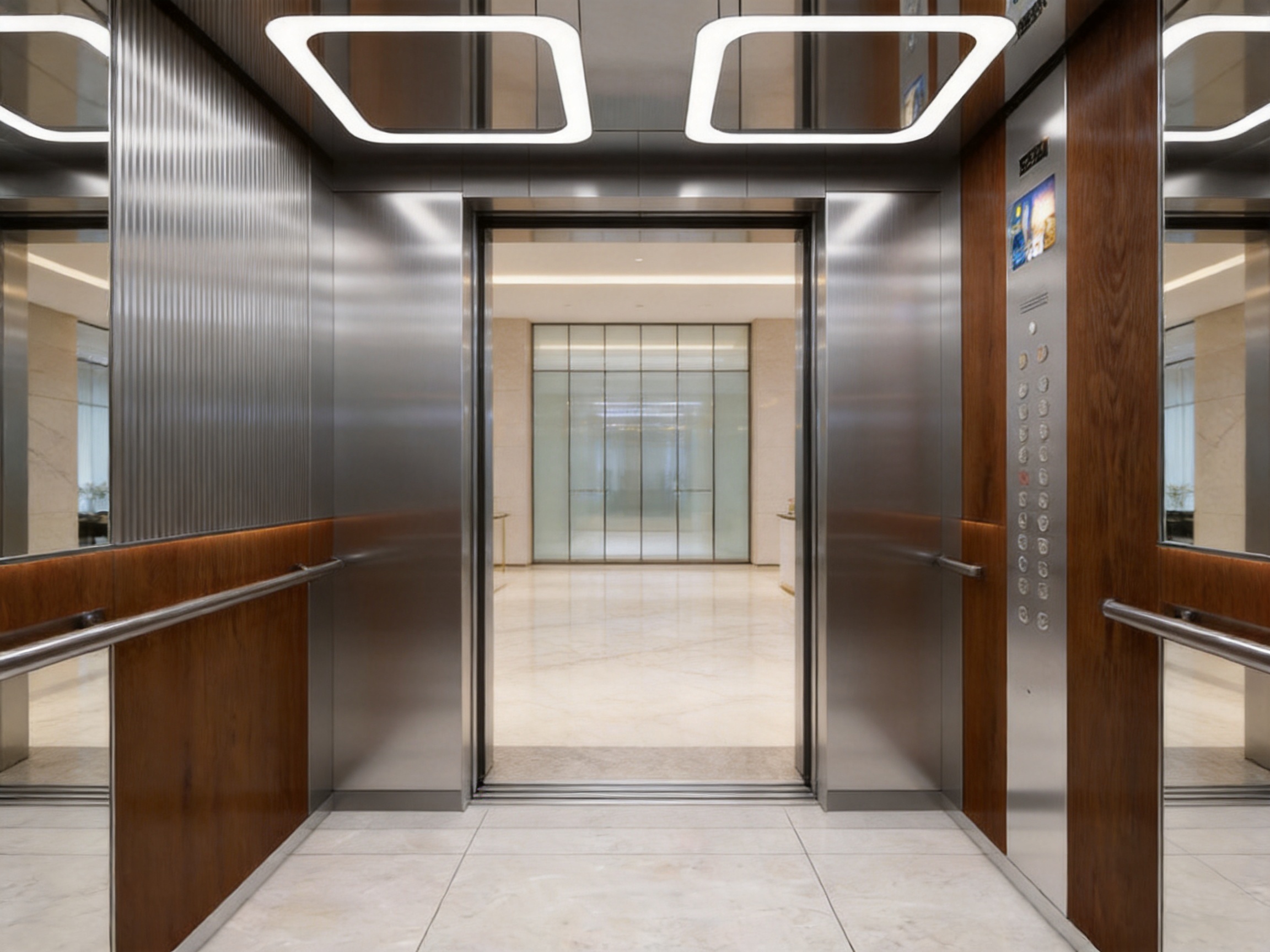
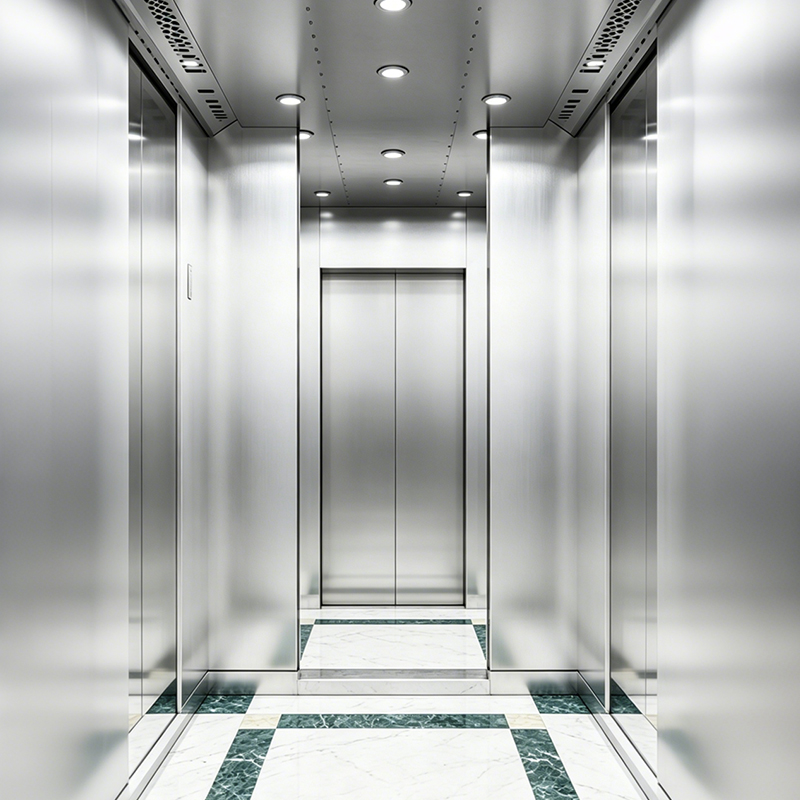
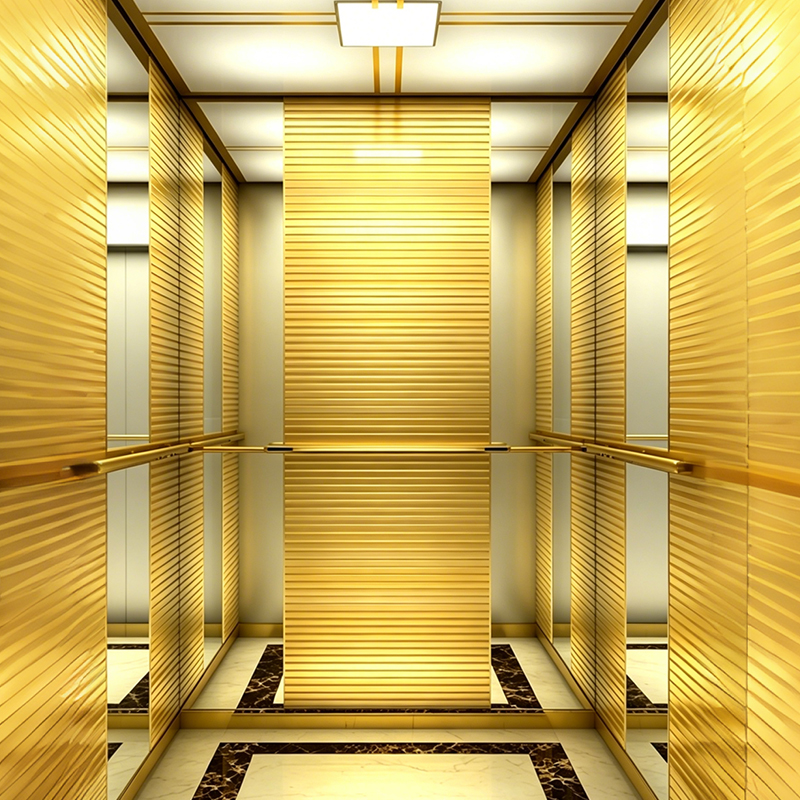
Stainless steel remains one of the most popular materials for elevator interiors because it is durable, hygienic, modern, and relatively easy to maintain. Hairline stainless steel provides a refined linear texture suitable for commercial and residential buildings. Mirror stainless steel increases brightness and creates a feeling of spaciousness, making it useful in smaller cabins. Etched stainless steel can add patterns, logos, or decorative features while retaining metallic durability. Colored stainless steel, such as champagne, bronze, black titanium, or gold tones, can create a more luxurious appearance.
Wood-grain finishes are often preferred in villa elevators, hotel elevators, and premium residential buildings. They introduce warmth and softness, balancing the mechanical nature of the elevator. When properly selected, engineered wood-look panels can provide visual warmth while offering better stability and maintenance characteristics than natural wood in elevator environments.
Stone-like flooring or decorative floor panels can improve the cabin’s sense of quality. However, flooring must be selected carefully because it affects weight, slip resistance, cleaning, and durability. In public buildings, non-slip and wear-resistant flooring is important. In hospitals, seamless or easy-clean floor materials may be preferred. In cargo elevators, patterned steel or reinforced flooring can provide better resistance to heavy loads and impact.
Ceiling systems are equally important. The elevator ceiling affects lighting, ventilation, passenger comfort, and maintenance access. Custom Decoration can support different ceiling styles, including stainless-steel ceilings, acrylic light panels, LED downlight arrangements, indirect lighting, decorative grids, and simplified serviceable panels. Lighting design should avoid glare while ensuring passengers feel safe and comfortable. LED lighting improves energy efficiency and reduces maintenance frequency compared with traditional lighting systems.
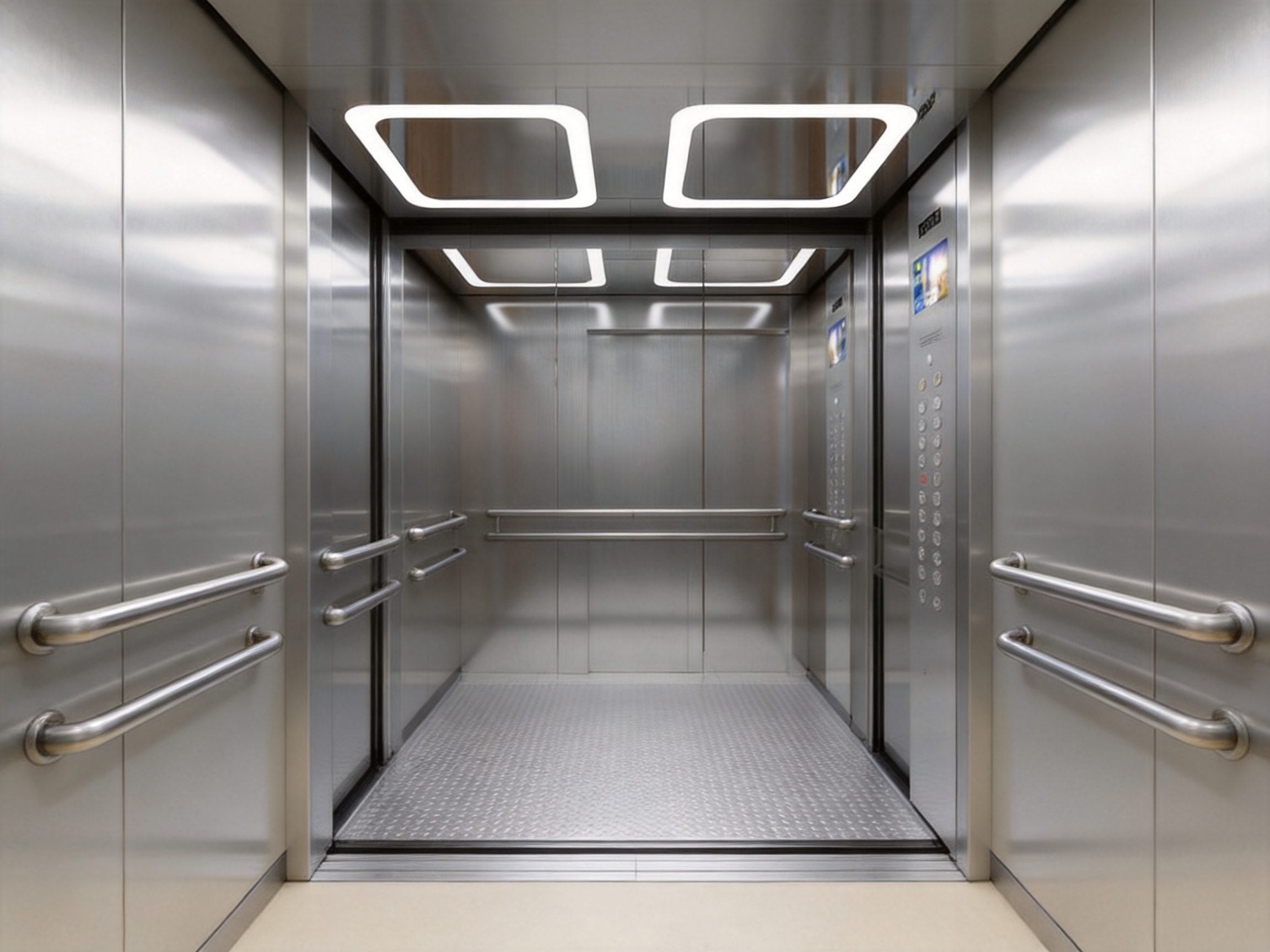
Handrails, mirrors, skirting, and protective strips complete the interior. Handrails improve passenger stability and accessibility, especially in hospitals, senior living facilities, and public buildings. Mirrors can increase perceived space and assist wheelchair users when reversing out of the cabin. Skirting protects lower wall areas from luggage, carts, shoes, and cleaning equipment. Protective bumpers are useful in hospital and cargo elevators where beds, stretchers, trolleys, and goods may contact the walls.
Design Strategies for Different Elevator Types
Passenger Elevators
Passenger elevators require a balance between appearance, durability, and comfort. In office towers, apartments, shopping centers, and public buildings, passengers expect a clean, bright, and secure environment. Custom Decoration can use stainless-steel panels, integrated lighting, mirrors, and refined floors to create a polished appearance. For high-traffic spaces, scratch-resistant surfaces and easy-to-clean finishes are essential.
A competitive passenger elevator interior should not only look modern at handover; it should continue to look professional after years of daily use. Custom panel design, durable edges, and suitable lighting help maintain this effect. Compared with basic competitor cabins, a tailored interior can better match lobby finishes, corridor colors, and the building’s overall identity.
Panoramic and Observation Elevators
Panoramic elevators are designed to be seen from both inside and outside. The cabin structure, decorative trims, lighting, and visible mechanical details must appear elegant from multiple angles. Custom Decoration can coordinate metal finishes with glass surfaces and building facades. The goal is to preserve transparency and openness while providing passengers with a refined interior space.
Observation elevators in hotels, scenic areas, shopping malls, and commercial atriums benefit from decoration that frames the view rather than distracting from it. Slim profiles, clean ceiling lines, and carefully selected reflective surfaces can enhance the viewing experience. Compared with generic panoramic cabins, customized decoration can create a stronger architectural statement.
Hospital Elevators
Hospital elevators face demanding requirements. They must support patients, medical staff, stretchers, wheelchairs, medical carts, cleaning equipment, and high traffic. The interior should feel calm, clean, and safe. Custom Decoration can include anti-collision rails, durable wall panels, bright lighting, antibacterial-friendly surfaces, and easy-clean floors.
In a healthcare environment, decorative luxury is less important than hygiene, reliability, and comfort. However, visual design still matters. Soft colors, controlled lighting, and clean surfaces can reduce stress for patients and visitors. Compared with ordinary cabins, a hospital-focused custom interior can improve workflow and reduce damage caused by frequent equipment movement.
Home Villa Elevators
Villa elevators are highly personal. Homeowners often expect the elevator to match interior décor, furniture style, flooring, lighting, and architectural details. Custom Decoration supports personalized combinations of wood-grain surfaces, metal trims, warm lighting, mirrors, and elegant ceilings. The cabin can be designed to feel like a natural part of the home rather than a commercial machine.
For private residences, comfort and quietness are important. Decorative components should be securely installed to avoid vibration or rattling. Lighting should be gentle, and materials should be pleasant to touch and view at close range. Compared with standard villa elevator interiors, customized decoration provides a more premium and individualized living experience.
Cargo and Car Elevators
Cargo elevators and car elevators require practical decoration. The cabin must withstand heavy use, impact, moisture, dirt, wheels, tools, and goods movement. Custom Decoration can include reinforced wall panels, patterned steel floors, corner guards, durable thresholds, and protective rails. The design may be simple, but it must be strong.
Competitor solutions that treat cargo elevator interiors as basic metal boxes may overlook maintenance and usability. A properly decorated cargo cabin improves visibility, protects structural surfaces, and reduces repair costs. For car elevators, flooring and wall protection are critical to resist tire friction, water, and vehicle movement.
High-Speed Elevators
High-speed elevators require decoration with excellent stability and precision. At higher speeds, passenger comfort can be affected by vibration, noise, air pressure, and perceived enclosure quality. Decorative panels, ceilings, and lighting systems must be securely integrated. Loose or poorly fitted components can create noise or safety concerns.
Custom Decoration for high-speed elevators should use lightweight yet durable materials, accurate assembly, and stable fixing methods. The visual design should also communicate confidence, especially in high-rise office towers, hotels, and mixed-use developments. Compared with standard interiors, a customized high-speed cabin can better match the premium expectations of landmark buildings.
Manufacturing Strength and Process Advantages
The quality of custom elevator decoration depends heavily on manufacturing capability. A beautiful design concept must be transformed into precise, safe, and durable components. Tenau Elevator has advanced capabilities in the design, research and development, and manufacturing of low-speed, medium-speed, high-speed, and ultra-high-speed elevators. This broad technical foundation supports decoration solutions that remain compatible with different elevator systems and performance levels.
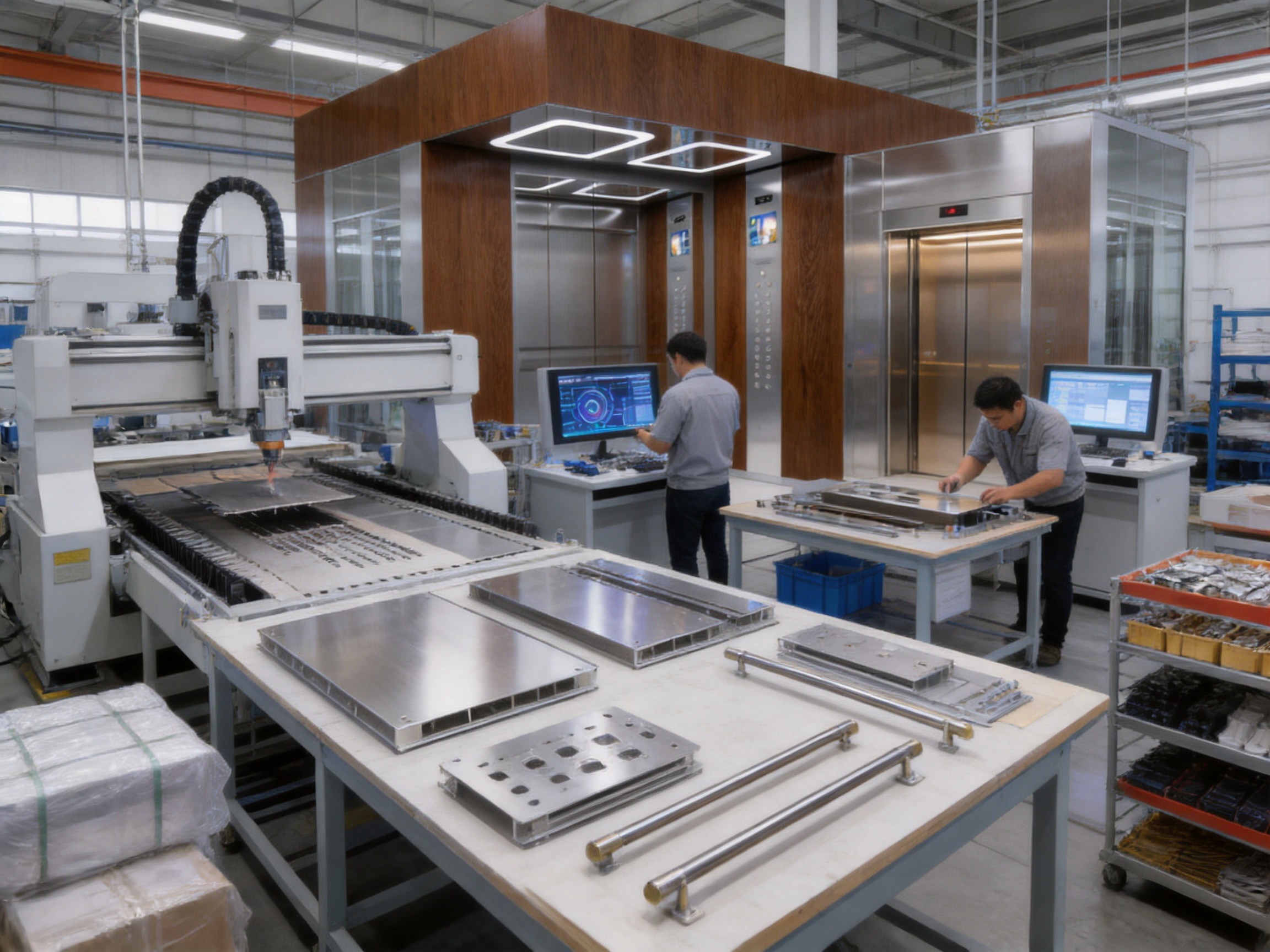
The company introduces international technologies and rigorous management systems. Its intelligent manufacturing approach reflects German Industry 4.0 principles, including automated production lines, data-supported process control, Internet of Things technology, and a full closed-loop quality control system. These capabilities help ensure that decorative components are produced with consistency and traceability.
In custom decoration projects, accurate measurement and engineering review are crucial. The cabin size, door opening, ceiling height, operating panel position, ventilation layout, lighting arrangement, and structural interfaces must be confirmed before production. Digital design and manufacturing processes help reduce errors. Automated equipment can improve cutting, bending, punching, and surface consistency. Quality inspection ensures that parts meet dimensional and appearance requirements before packaging.
Closed-loop quality control is especially important. It means that design, procurement, manufacturing, inspection, feedback, and improvement are connected rather than isolated. If a production issue appears, the system can trace its source and prevent recurrence. For international buyers, this provides greater confidence than relying on manual inspection alone.
Environmental responsibility is another important strength. ISO14001 management supports attention to resource use, waste control, and environmental performance. Elevator decoration involves metals, surface treatments, packaging, lighting components, and other materials. Responsible manufacturing helps meet the expectations of developers pursuing greener buildings and sustainable procurement.
Occupational health and safety management also matters. OHSMS18001 compliance reflects attention to worker safety and production discipline. A safe and well-managed factory is more likely to produce stable quality because processes are controlled, staff are trained, and risks are managed systematically.
Quality Control from Design to Delivery
Custom Decoration requires a disciplined workflow. The process typically begins with project requirements. The buyer may provide architectural drawings, cabin dimensions, preferred materials, traffic expectations, building type, usage environment, and design references. Engineers and designers then evaluate feasibility, including weight limits, installation space, ventilation, lighting power, maintenance access, and compliance considerations.
After design confirmation, materials are selected and processed. Stainless steel sheets, decorative panels, flooring, ceiling elements, handrails, mirrors, and lighting components must meet the required specifications. Surface finish consistency is checked because color differences or texture variation can be obvious inside a small cabin. Edges and corners are processed carefully to improve safety and appearance.
During manufacturing, dimensional precision is essential. Elevator cabins have limited tolerance for misalignment. Wall panels must fit correctly, ceilings must align, and accessories must be positioned accurately. Automated production equipment supports repeatability, while skilled technicians handle detailed assembly and inspection.
Before delivery, components are checked for scratches, deformation, color consistency, installation holes, accessories, labeling, and packaging protection. Good packaging is important for export projects because decorative surfaces can be damaged during transportation. Protective films, reinforced packaging, and organized labeling reduce installation risk at the project site.
After installation, the interior should be inspected again. Panel alignment, lighting function, handrail stability, mirror placement, floor fit, and door area details should all be verified. A comprehensive manufacturer with installation and after-sales capability can support this process more effectively than a decoration-only supplier.
Functional Benefits Beyond Appearance
Although the word decoration suggests visual design, the product provides many functional benefits. First, it improves durability. Wall protection, scratch-resistant surfaces, reinforced floors, and suitable skirting help the cabin resist daily wear. This is particularly important for public buildings, hospitals, and cargo applications.
Second, it improves hygiene. Smooth stainless-steel surfaces, easy-clean floors, and well-designed corners reduce dirt accumulation. In hospitals and commercial buildings, cleaning efficiency directly affects user confidence. A cabin that is easy to clean can remain visually appealing with less effort.
Third, it improves safety and accessibility. Handrails, mirrors, bright lighting, anti-slip flooring, and clear operating panel integration support safer use for elderly passengers, children, wheelchair users, and patients. Decoration should never interfere with emergency lighting, communication equipment, ventilation, sensors, or door operation.
Fourth, it improves passenger comfort. Lighting tone, reflection level, wall color, and acoustic stability affect how passengers feel inside the elevator. A cabin with balanced lighting and solid panels feels more secure. Poorly designed interiors can feel cramped, harsh, or noisy.
Fifth, it strengthens property value. Elevators are visible assets. A high-quality cabin interior can improve the perceived quality of the entire building. For hotels, offices, shopping centers, and premium residences, this can influence tenant satisfaction, guest impressions, and market positioning.
Comparison Table: Custom Decoration Versus Standard Cabin Interiors
| Evaluation Factor | Custom Decoration | Typical Standard Interior | Practical Benefit |
|---|---|---|---|
| Design Flexibility | Tailored materials, colors, ceiling styles, handrails, mirrors, and flooring | Limited catalog options | Better match with architecture and brand identity |
| Application Range | Suitable for passenger, panoramic, hospital, villa, cargo, car, and high-speed elevators | Often optimized for only basic passenger use | Supports diverse project requirements |
| Durability | Material selection based on traffic, impact, cleaning, and environment | General-purpose finishes | Longer-lasting appearance and reduced maintenance |
| Engineering Integration | Coordinated with elevator structure, load, ventilation, lighting, and safety systems | May be treated as a separate decorative package | Lower risk of installation conflict |
| Manufacturing Control | Supported by advanced manufacturing, automated production, and closed-loop quality control | Quality depends heavily on manual processes | More consistent precision and finish quality |
| User Experience | Designed for comfort, lighting, accessibility, hygiene, and visual impact | Basic functional appearance | Improved passenger satisfaction |
| Lifecycle Value | Focus on long-term performance and maintainability | Lower initial customization but possible higher wear costs | Better total value over time |
Design and Engineering Considerations for Buyers
When selecting custom elevator decoration, buyers should begin by defining the building type and passenger profile. A hotel elevator serving guests with luggage requires different materials from a hospital elevator carrying stretchers. A villa elevator should feel comfortable and personal, while a shopping mall elevator must withstand high traffic and frequent cleaning. Clear usage expectations lead to better material decisions.
Traffic volume is another key factor. High-traffic elevators need durable wall surfaces, protected corners, and floors that resist wear. In low-traffic private settings, more delicate decorative finishes may be acceptable. However, even luxury materials must remain safe and secure inside the cabin.
Maintenance should be considered early. Some reflective or dark surfaces may show fingerprints more easily. Certain textured finishes may hide scratches better. Flooring should be chosen based on cleaning methods and slip resistance. Lighting components should be accessible for maintenance without dismantling large sections of the ceiling.
Weight control is critical. Decorative materials add mass to the cabin, which can affect elevator performance, energy consumption, and compliance with design parameters. A professional manufacturer evaluates these effects and recommends suitable materials. Heavy stone panels, thick decorative boards, or excessive metal additions should be used only after engineering verification.
Fire safety and environmental performance should also be considered. Materials used inside elevators may need to meet local fire resistance, smoke, toxicity, and safety expectations. International projects should clarify applicable standards at the beginning. A manufacturer experienced in export markets can help buyers prepare suitable documentation and technical solutions.
Accessibility is increasingly important worldwide. Handrail height, mirror position, operating panel visibility, lighting brightness, and cabin layout can affect wheelchair users, elderly passengers, and visually impaired users. Custom Decoration can incorporate these needs into the design instead of adding them as afterthoughts.
How Advanced Manufacturing Supports Customization
Customization can become difficult if a factory lacks process control. Every custom project may involve unique dimensions, finishes, or accessories. Without disciplined manufacturing, customization may lead to delays, inconsistent quality, and installation errors. Advanced production systems solve this challenge by turning custom requirements into controlled workflows.
Tenau Elevator’s intelligent manufacturing capabilities support this process. Automated production lines improve repeatability in metal processing and component manufacturing. Data-supported management helps track orders, specifications, and quality checkpoints. Internet of Things technology can connect production information, equipment status, and quality feedback. These features help custom projects remain organized even when requirements vary.
German Industry 4.0 concepts emphasize intelligent, connected, and efficient production. In elevator decoration, this means that digital design data can guide manufacturing more accurately, reducing manual interpretation errors. It also supports faster response when project changes occur. For developers working under tight construction schedules, reliable production planning is a major advantage.
Advanced manufacturing also supports scalability. A single villa project may require one highly personalized cabin, while a residential tower may require dozens or hundreds of coordinated interiors. Custom Decoration can be adapted to both scenarios. The factory must be able to produce consistent finishes across multiple units, ensuring that all elevators in the same project look aligned.
For large projects, batch consistency is essential. If stainless-steel tones, lighting color temperature, or panel patterns vary from one cabin to another, the project may appear uncoordinated. Strong procurement, production, and inspection processes help prevent this issue.
Environmental and Safety Mission
Tenau Elevator identifies safety and environmental protection as central missions. This is significant for elevator decoration because the cabin interior is directly touched, seen, and used by passengers every day. Safety includes not only mechanical elevator operation but also interior details such as secure panels, rounded or protected edges, stable handrails, reliable lighting, anti-slip flooring, and materials that do not create unnecessary hazards.
Environmental protection can be reflected in efficient LED lighting, responsible material selection, controlled manufacturing waste, and durable products that do not require frequent replacement. A longer-lasting cabin interior is more sustainable than one that must be repeatedly repaired or replaced. High-quality surface treatment and robust design reduce resource consumption over the elevator lifecycle.
The company’s ISO14001 environmental management system supports structured environmental practices. For buyers seeking green building certification or responsible procurement, working with a manufacturer that follows recognized management systems can be beneficial. Although cabin decoration is only one part of a building, every material choice contributes to the larger sustainability picture.
Applications in Modern Building Projects
In office towers, Custom Decoration can align elevator interiors with lobby marble, metal wall cladding, corporate colors, or minimalist architectural themes. High-speed office elevators often require a premium yet durable look because they serve executives, employees, visitors, and clients. A refined cabin communicates professionalism and reliability.
In hotels, elevators are part of the guest journey from entrance to room. Decoration should match the hotel’s design concept, whether modern luxury, classic elegance, boutique warmth, or resort relaxation. Lighting should flatter the interior and make guests feel comfortable. Durable finishes are still necessary because luggage and cleaning carts can damage weak surfaces.
In hospitals, the elevator is part of medical logistics. It must support patient dignity, staff efficiency, and infection-control practices. Custom Decoration can use practical materials, protective rails, and clear lighting. A calm interior color scheme can help reduce patient anxiety.
In residential buildings, elevator decoration affects daily living quality. Residents notice scratches, poor lighting, and worn floors quickly. A customized cabin can elevate the perceived grade of the property and improve satisfaction. For premium apartments, elevator interiors may be designed to match corridors, entrance halls, and private club spaces.
In villas, the elevator is often a lifestyle feature. The cabin can reflect the homeowner’s personal taste, with warm materials, decorative ceilings, and quiet elegance. Custom Decoration allows each private elevator to feel unique.
In shopping centers and public venues, durability and visual appeal must work together. Elevators carry families, strollers, luggage, goods, and maintenance equipment. Materials must resist impact while maintaining a clean public image. Panoramic elevators in atriums can become visual landmarks when decoration is coordinated with surrounding architecture.
In industrial and logistics facilities, cargo elevator decoration is primarily protective. Strong floors, wall guards, and simple cleanable surfaces reduce maintenance problems. Even in utilitarian spaces, a well-finished elevator improves safety perception and operational order.
Why Integrated Elevator Expertise Matters
Elevator decoration suppliers without full elevator expertise may focus only on panels and finishes. This can create risks. For example, a decorative ceiling might restrict ventilation or maintenance access. A heavy floor finish might affect load calculations. A mirror installation might interfere with handrail placement. Lighting systems may not match electrical requirements. Wall panels may create noise if not correctly fixed.
An integrated elevator manufacturer understands these interactions. Tenau Elevator’s capabilities cover elevator design, research and development, manufacturing, installation, and after-sales service. This integrated model helps ensure that decoration choices support the elevator as a complete system. It also simplifies communication for buyers because technical and decorative issues can be coordinated through one professional framework.
After-sales service is another benefit. Cabin interiors may need replacement parts, surface repairs, lighting maintenance, or upgrades over time. A manufacturer with long-term service capability can support maintenance more effectively than a one-time decoration contractor. For international buyers, this can reduce lifecycle uncertainty.
Selection Recommendations
Buyers considering Custom Decoration should prepare several key pieces of information before consultation. These include elevator type, cabin dimensions, rated load, expected passenger traffic, building use, preferred design style, maintenance requirements, local standards, and budget range. Photos or drawings of the lobby and surrounding interior can help the design team create a better match.
It is also helpful to prioritize requirements. Some projects value luxury appearance above all else. Others require maximum durability, hygiene, or cost control. Clear priorities allow the manufacturer to recommend suitable materials. For example, a mirror finish may look bright and spacious but require frequent fingerprint cleaning. A hairline finish may hide marks better. A protective rail may be essential in a hospital but unnecessary in a private villa.
Buyers should also ask about installation methods, replacement convenience, and spare parts. A well-designed custom interior should allow practical maintenance. If a wall panel is damaged, it should be possible to replace it without excessive downtime. Lighting access should be simple. Protective elements should be firmly fixed but serviceable.
For large projects, sample approval is recommended. Material samples, color samples, lighting tests, or mock-up panels can reduce misunderstanding. Once approved, the manufacturer can produce consistent interiors across the project.
Q&A Section
What is Custom Elevator Decoration?
Custom Elevator Decoration is a tailored cabin interior solution that includes materials, wall panels, ceilings, lighting, floors, handrails, mirrors, protective parts, and decorative finishes designed to match specific building requirements and elevator applications.
Which elevator types can use this product?
It can be used for passenger elevators, panoramic and observation elevators, hospital elevators, home villa elevators, cargo elevators, car elevators, and high-speed elevators. It can also support elevator parts and cabin interior projects connected with escalator and moving walk environments.
How is it different from a standard elevator cabin?
A standard cabin usually offers limited finishes and fixed layouts. Custom Decoration allows project-specific design, stronger material matching, better integration with building interiors, and improved durability for different usage conditions.
Why is an integrated elevator manufacturer important for decoration?
Decoration affects cabin weight, ventilation, lighting, safety, installation, and maintenance. An integrated elevator manufacturer can coordinate the interior design with the complete elevator system, reducing technical risks and improving long-term reliability.
Is custom decoration only for luxury buildings?
No. While it is valuable for luxury hotels, villas, and premium offices, it is also useful for hospitals, cargo elevators, car elevators, public buildings, and residential projects where durability, hygiene, and user experience are important.
What materials are commonly used?
Common materials include hairline stainless steel, mirror stainless steel, etched stainless steel, colored stainless steel, wood-grain panels, laminated panels, stone-like flooring, non-slip flooring, LED ceiling systems, mirrors, handrails, and protective rails.
Can the design match a building lobby or interior style?
Yes. The purpose of custom decoration is to coordinate the elevator cabin with the surrounding architecture, including lobby materials, color schemes, lighting style, and overall design concept.
How does the product improve hospital elevator performance?
For hospital elevators, custom decoration can provide easy-clean surfaces, bright lighting, anti-collision rails, stretcher-friendly layouts, durable wall protection, and a calm visual atmosphere for patients and staff.
What should be considered for cargo elevator decoration?
Cargo elevators require reinforced floors, impact-resistant wall panels, corner guards, protective rails, and practical finishes that can withstand heavy goods, carts, tools, and frequent use.
Does customization affect elevator safety?
Customization must be engineered correctly. When handled by a professional manufacturer, decorative elements are designed to work with cabin load, safety devices, ventilation, lighting, and maintenance access. Poorly planned decoration can create problems, which is why technical integration is essential.
How does advanced manufacturing improve the final product?
Advanced manufacturing improves cutting precision, bending accuracy, surface consistency, assembly quality, traceability, and batch uniformity. Automated production lines and closed-loop quality control reduce errors and improve reliability.
Can the cabin interior be upgraded later?
In many cases, elevator interiors can be refurbished or upgraded. However, the new decoration must be checked for compatibility with the elevator’s technical specifications, weight limits, and safety requirements.
Conclusion
Custom Decoration for elevators is a strategic product for modern buildings because it combines appearance, function, durability, safety, and user experience. Elevators are daily contact points between people and architecture. A well-designed cabin interior can make a building feel more premium, more comfortable, more hygienic, and more reliable.
The product’s value is especially strong because it applies to many elevator categories, including passenger elevators, panoramic and observation elevators, hospital elevators, villa elevators, cargo elevators, car elevators, and high-speed elevators. Each application has different priorities, and custom decoration allows the cabin to be designed accordingly. This flexibility is a major advantage over standard competitor interiors.
Tenau Elevator (China) Co., Ltd. strengthens the product through comprehensive elevator expertise, advanced manufacturing, German Industry 4.0 intelligent production concepts, automated production lines, big data, Internet of Things technology, and a full closed-loop quality control system. Its compliance with ISO9001, ISO14001, and OHSMS18001 standards supports quality, environmental responsibility, and occupational safety. These strengths help ensure that custom decoration is not just visually attractive but also reliable, maintainable, and compatible with the elevator system.
For developers, architects, contractors, and property owners, choosing custom elevator decoration means investing in long-term building value. The right cabin interior can reduce maintenance problems, improve passenger satisfaction, reinforce brand identity, and support safety and hygiene. In competitive real estate, hospitality, healthcare, residential, and commercial markets, these advantages can be significant.
As buildings become smarter, more personalized, and more experience-driven, elevator interiors will continue to evolve. Custom Decoration provides the flexibility and engineering foundation needed for that future, allowing every elevator cabin to become a refined, durable, and purposeful part of the built environment.
References
International Organization for Standardization. ISO9001 Quality Management Systems: Principles and Requirements.
International Organization for Standardization. ISO14001 Environmental Management Systems: Requirements and Guidance.
Occupational Health and Safety Management Systems. OHSMS18001 Guidelines and Implementation Principles.
Barney, G. C. Elevator Traffic Handbook: Theory and Practice.
Strakosch, G. R., and Caporale, R. S. The Vertical Transportation Handbook.
CIBSE Guide D. Transportation Systems in Buildings.
European Committee for Standardization. Safety Rules for the Construction and Installation of Lifts.
National Elevator Industry educational materials on elevator design, maintenance, and passenger safety.
Product: Custom Decoration

Related Products
Related News
Built on safety, forging trust in vertical mobility.
lf you have any questions or need help, feel free to contact with our team.
 export@tenau.com.cn
 +86-18601458867
 +86-512-65059883
Elevator & Escalator
Factory Add
East of Xicheng Road, North of Lianyi Road, Nanxun Economic Development Zone, Nanxun District, Huzhou City, Zhejiang Province, P.R.China
Copyright © Tenau Elevator (China) Co., Ltd. All Rightd Reserved.
Custom High Quality Elevator Suppliers and World Brand Elevator Company