

 en
 Español
 русский
 中文简体

Industry News
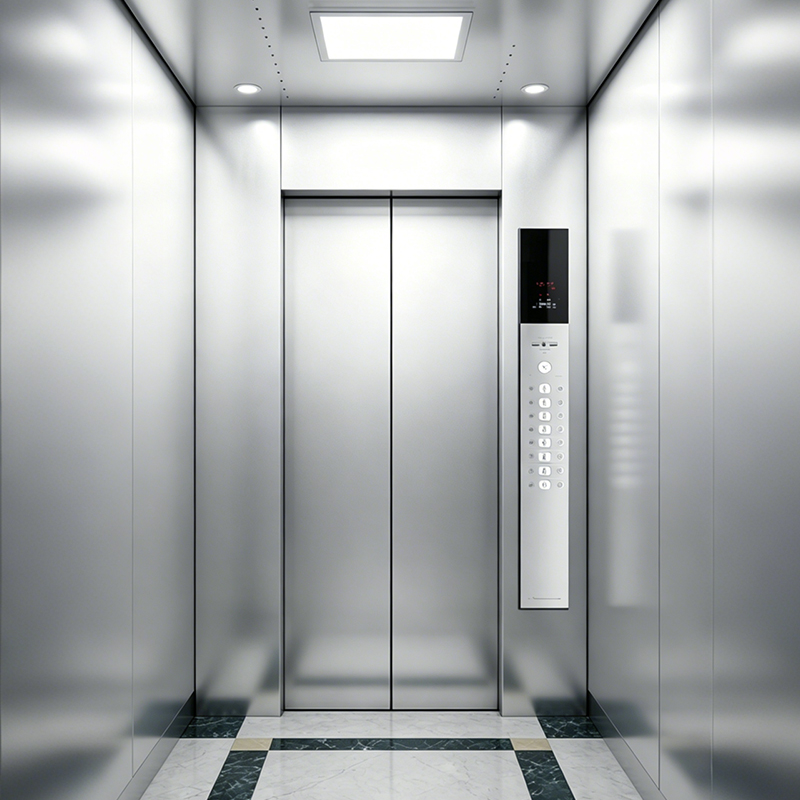 Custom Machine Room-Less Passenger Elevator with VFD and Gearless TractionThis machine-room-less passenger elevator uses VFD and gearless traction, eliminating hydraulic pumps and oil tanks. It reduces machine-room ventilation load and frees usable floor area, making it relevant for renovation and new-build projects where efficiency and space matter.View Product →
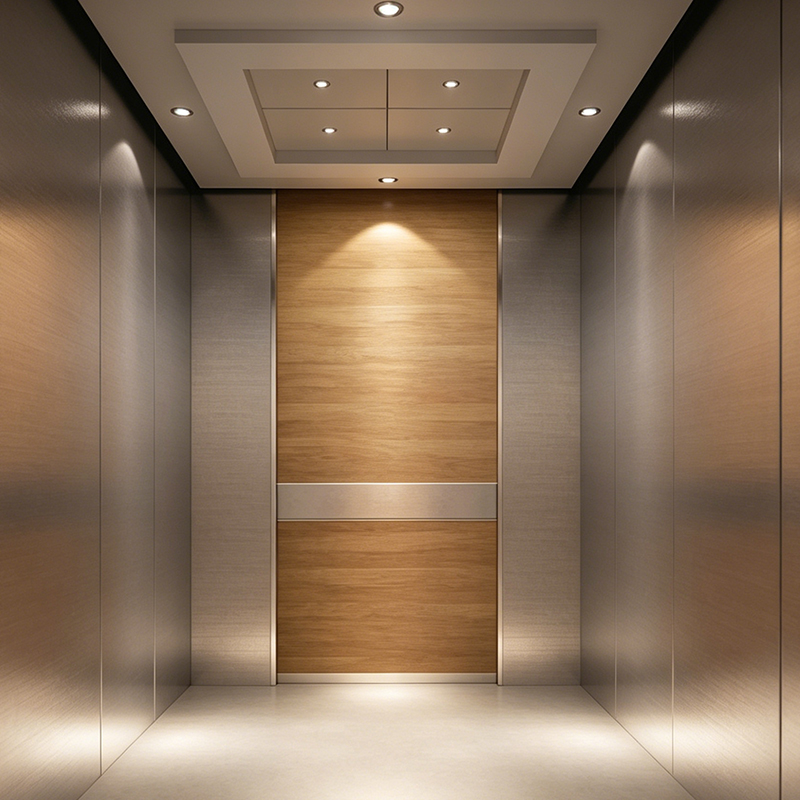 LED Lighting Commercial Passenger Lift with PVC Flooring and Safety FeaturesFeaturing standard LED lighting and PVC flooring, this commercial passenger lift also includes UCMP protection, IoT monitoring, and an infrared light curtain. It is presented in the context of energy-efficient cab lighting and reliable dispatching for multi-car groups.View Product →
Elevator Energy Consumption Factors: A Practical Guide for Building Owners
Content
- 1 Why Drive System Choice Is the First Energy Decision
- 2 Travel Profile and Duty Cycle Matter More Than Rated Speed
- 3 Car Mass, Load Factor, and Counterweight Balance
- 4 Cabin Systems and Standby Power: Small Loads Add Up
- 5 Control Logic, Dispatch, and Maintenance Quality
- 6 What to Specify During Procurement
- 7 Frequently Asked Questions
Suppose you are responsible for a 12-story office building. The elevator group consumes a meaningful slice of the electricity bill, but the breakdown is not obvious. Lights, fans, control panels, door motors, and the drive itself all run on the same meter. Before you replace a car interior or swap a motor, it helps to separate the factors that actually drive consumption.
Here is the conclusion up front: the five most important elevator energy consumption factors are the drive system, the duty cycle and travel profile, car and counterweight mass, cabin standby loads, and control and maintenance quality. Everything else, including rated speed or brand, matters far less at the utility meter.
Buying insight: An elevator is one of the few building systems where operating cost depends heavily on the components chosen before the contract is signed.
Why Drive System Choice Is the First Energy Decision
An elevator does not use energy at one fixed rate. It pulls power during acceleration, while travelling, while opening doors, and while sitting in standby. The largest share is usually the traction cycle: the motor accelerates an empty or loaded car, moves it upward or controls it downward, brakes, and repeats the cycle hundreds of times per day.
Hydraulic versus traction technology
Hydraulic elevators use a pump to push hydraulic fluid under the car. Every upward movement includes pump losses and fluid friction, and the oil can heat the machine room even when the elevator is idle. Hydraulic installations are still common for low-rise and freight applications, but they rate poorly against good traction drives on energy.
Modern gearless traction with a variable-frequency drive
Traction elevators use ropes or belts, a counterweight, and usually a gearless permanent-magnet synchronous motor. A variable-frequency drive, or VFD, controls acceleration and deceleration smoothly. This combination avoids gearbox losses and can operate with a much smaller machine room, or no machine room at all.
Regeneration matters when the elevator brakes often. When a counterweighted car descends empty, or ascends full, the drive can act as a generator and return power to the building network. In a lift doing many cycles per day, this can have a measurable effect on annual energy cost.
On renovation and new-build projects, the practical expression of this is a machine-roomless passenger elevator with VFD, gearless traction, and low-loss drive electronics. It removes the hydraulic pump and oil tank, reduces machine-room ventilation load, and leaves more usable floor area.
Custom Machine Room-Less Passenger Elevator with VFD and Gearless TractionThis machine-room-less passenger elevator uses VFD and gearless traction, eliminating hydraulic pumps and oil tanks. It reduces machine-room ventilation load and frees usable floor area, making it relevant for renovation and new-build projects where efficiency and space matter.View Product →Travel Profile and Duty Cycle Matter More Than Rated Speed
Rated speed is not the clearest signal of efficiency. A 2.5 m/s elevator running six express floors can be more energy efficient per passenger than a 1.0 m/s elevator making ten local stops, because the real cost is acceleration and deceleration. Every start draws power, and every brake removes kinetic energy that must go somewhere.
- Number of starts and stops: Each start increases peak motor demand; each stop requires braking energy. Frequent-stop buildings are where drive efficiency matters most.
- Direction of imbalance: A loaded car moving up may need high power, while an empty car moving down may regenerate energy. Duty cycles that are strongly unbalanced change the value of regeneration.
- Door cycle intensity: Door operators run thousands of times per year. Every open-and-close cycle uses electricity and also adds time to the journey.
- Off-peak operation: A lift running without passengers still uses standby power, lighting, and control-system energy throughout the night.
Car Mass, Load Factor, and Counterweight Balance
The counterweight is normally set to balance the empty car plus about 40 to 50 percent of rated load. With a 50 percent balance factor, the motor needs to work against only the imbalance. If the car is used mostly half-loaded in both directions, the drive sees less load than expected. If the car is consistently full in one direction, the balance setting is worth re-evaluating.
Car mass also matters directly. Every extra kilogram of flooring, stainless steel panel, glass, and decorative trim must be accelerated on every trip and decelerated at every stop. Heavy cab finishes increase energy demand and reduce useful load capacity. This is where cabin specifications and energy goals meet: lighter materials help the drive, while oversized decorative additions make the motor work harder.
Cabin Systems and Standby Power: Small Loads Add Up
Cabin systems are easy to underestimate because they are not related to rated speed. A group of six elevators with lighting and fans drawing about 200 watts per car can consume more than 1.2 kilowatts whenever the lifts are active. At night, standby power continues to feed displays, safety circuits, and control electronics.
- Lighting: Older lamp technology wastes energy as heat. LED fixtures use a fraction of the power and last much longer.
- Ventilation fans: Continuous fans in occupied cars improve comfort but add load. A standby controller can switch them off when the car is empty.
- Displays and indicators: Bright hall screens and cab displays that stay on around the clock create avoidable consumption.
- Standby mode: A lift that enters sleep mode after a few minutes of inactivity can cut cabin lighting, fan, and display energy sharply.
ISO 25745-2 provides standard reference cycles that allow buyers to compare running and standby energy between elevator models. It is a more useful specification than motor power alone because it reflects how the elevator behaves in a real building.
Look for an elevator in which LED lighting is standard, not a paid extra. LED fixtures use a fraction of the power of older lamps and generate less heat inside the cab, which also helps the cooling system in warm climates.
LED Lighting Commercial Passenger Lift with PVC Flooring and Safety FeaturesFeaturing standard LED lighting and PVC flooring, this commercial passenger lift also includes UCMP protection, IoT monitoring, and an infrared light curtain. It is presented in the context of energy-efficient cab lighting and reliable dispatching for multi-car groups.View Product →Control Logic, Dispatch, and Maintenance Quality
Good dispatching reduces unnecessary trips. In a two-car or three-car group, assigning calls to the nearest car avoids empty runs and duplicate stops. More advanced destination control groups passengers going to similar floors, which lowers the number of starts and door cycles.
Maintenance quality is another energy factor. A dragging brake, dry guide rails, misaligned door contacts, or a worn belt forces the drive to work harder. The efficiency label on the control cabinet means little if the mechanical system is out of adjustment.
For existing installations, you can often improve performance without replacing the complete elevator. This guide to energy-saving upgrades for machine-room passenger elevators lists practical first steps and helps you compare the effect of drive, control, and component changes.
Read the energy-saving upgrade route for machine-room passenger elevators.
What to Specify During Procurement
Energy efficiency should be a written requirement, not a hope. A precise specification prevents the supplier from offering a low-priced model that becomes expensive to run.
- Ask for ISO 25745-2 energy data. Request the expected energy class for your building cycle, not just the motor rated power.
- Specify a VFD and gearless traction for mid-rise and high-rise projects. For low-rise lifts, compare the lifecycle cost carefully before accepting hydraulic.
- Size the car to the traffic study. An oversized elevator means a heavier car, bigger counterweight, larger drive, and higher consumption on every trip.
- Choose lightweight cab materials. Ask for the weight difference between decorative options and consider its effect on long-term energy use.
- Make standby mode a standard setting. Define how quickly lights and fans turn off when the car is empty, and verify it during commissioning.
- Consider regeneration for busy or high-rise installations. Frequent braking cycles recover more energy than occasional low-rise use.
Because energy performance depends on engineering and installation quality, buying from an experienced elevator manufacturer with in-house design and commissioning capacity reduces the risk of a elegantly labeled but inefficient system.
Frequently Asked Questions
Q1: What is the largest elevator energy consumption factor?
The largest factor is usually the drive system combined with how often the elevator starts, stops, and opens its doors. A gearless traction drive with a VFD, a counterweight matched to real traffic, and good group control will save more than any single lighting upgrade.
Q2: Does a regenerative drive save energy in every building?
Not always. Regeneration returns energy only when the system is in an overhauling condition, such as an empty car moving down or a heavy car moving up. In buildings with infrequent or light use, the recovered energy may not justify the extra hardware. Evaluate it using expected cycles per day rather than assuming it always pays off.
Q3: How much can standby mode reduce energy?
A well-configured standby mode can reduce cabin lighting, fan, and display power by more than 80 percent during idle hours. The exact saving depends on how quickly the car enters sleep mode and how many cars are in the group. As a procurement rule, specify an inactivity timer of two to five minutes and verify it before acceptance.
Related Products
Related News
Built on safety, forging trust in vertical mobility.
lf you have any questions or need help, feel free to contact with our team.
 export@tenau.com.cn
 +86-18601458867
 +86-512-65059883
Elevator & Escalator
Factory Add
East of Xicheng Road, North of Lianyi Road, Nanxun Economic Development Zone, Nanxun District, Huzhou City, Zhejiang Province, P.R.China
Copyright © Tenau Elevator (China) Co., Ltd. All Rightd Reserved.
Custom High Quality Elevator Suppliers and World Brand Elevator Company