

 en
en Español
 русский
 中文简体
中文简体
Industry News
How to Select the Right Elevator Parts, Cabin Interiors, and Passenger Elevator System for Your Building
Content
- 1 Why Elevator System Selection Starts With Technical Data, Not Guesswork
- 2 Understanding Lift Mechanism Types Before You Specify Anything Else
- 3 What an Elevator Technical Data Sheet Should Actually Contain
- 4 Elevator Parts and Cabin Interiors: Where Ride Quality Actually Comes From
- 5 Machine Room Passenger Elevator: When a Dedicated Machine Room Still Makes Sense
- 6 Residential Elevator Specifications: Matching the Mechanism to the Home
- 7 Building a Maintenance Contract That Actually Prevents Downtime
- 8 Routine Elevator Maintenance: What Gets Checked and How Often
- 9 Side by Side: Choosing Between the Three Common Mechanisms
- 10 Frequently Asked Questions
- 10.0.1 Q1: What is the main difference between a roped and holeless hydraulic elevator?
- 10.0.2 Q2: How often should a residential elevator receive maintenance?
- 10.0.3 Q3: Does a machine room passenger elevator cost more to install than an MRL system?
- 10.0.4 Q4: What should be included in every elevator maintenance contract?
- 10.0.5 Q5: Can cabin interiors be upgraded without replacing the elevator mechanism?
Why Elevator System Selection Starts With Technical Data, Not Guesswork
Choosing a vertical transportation system is rarely a single decision. It is a chain of smaller technical choices that together determine ride comfort, service life, and long-term operating cost. Building owners and facility managers often begin by looking at cabin finishes or door styles, but the mechanism behind the cabin, the drive type, the pit depth, and the maintenance schedule are what actually decide whether the elevator performs well for the next twenty years.
This guide walks through the practical side of that decision: how elevator parts and cabin interiors are specified, how a machine room passenger elevator differs from machine-room-less designs, what a technical data sheet should contain, and how a maintenance contract protects the investment once installation is complete.
Mechanism Types Cabin Components Maintenance Planning Technical Data
Understanding Lift Mechanism Types Before You Specify Anything Else
Every elevator project starts with a mechanism decision, because it dictates shaft depth, machine room requirements, energy draw, and ride quality. Three configurations dominate low and mid-rise buildings: roped hydraulic, holeless hydraulic, and machine-room-less (MRL) traction systems.
Roped Hydraulic Elevator
A roped hydraulic elevator uses a hydraulic piston connected through a system of ropes and sheaves, which reduces the piston length needed compared with a direct-plunger hydraulic design. This makes it suitable for buildings with limited pit depth, typically serving five to seven floors with moderate speed requirements.
Holeless Hydraulic Elevator
A holeless hydraulic elevator places twin telescoping cylinders alongside the cabin rather than drilling a deep hole into the ground for a single plunger. This avoids ground excavation and soil testing, which shortens installation time in retrofit projects where a below-grade well is impractical.
Machine-Room-Less (MRL) Technology
MRL systems integrate a compact gearless machine into the hoistway itself, eliminating the dedicated machine room entirely. This frees up rooftop or basement space and reduces the building footprint dedicated to vertical transportation, while typically offering smoother acceleration curves than hydraulic alternatives.
Mechanism Selection Flow
What an Elevator Technical Data Sheet Should Actually Contain
A technical data sheet is the reference document that installers, inspectors, and maintenance technicians use throughout the life of the equipment. Missing fields cause delays during commissioning and complications during warranty claims, so a complete sheet should specify rated load, rated speed, travel height, door type, control system, and machine location.
| Parameter | Roped Hydraulic | Holeless Hydraulic | MRL Traction |
|---|---|---|---|
| Typical Rated Load | 630 to 1150 kg | 450 to 1000 kg | 630 to 1600 kg |
| Typical Speed | 0.4 to 1.0 m/s | 0.3 to 0.6 m/s | 1.0 to 2.5 m/s |
| Max Practical Floors | 7 | 6 | 20 plus |
| Machine Room Required | Yes, compact | Yes, compact | No |
Typical Maximum Travel Height by Mechanism
Elevator Parts and Cabin Interiors: Where Ride Quality Actually Comes From
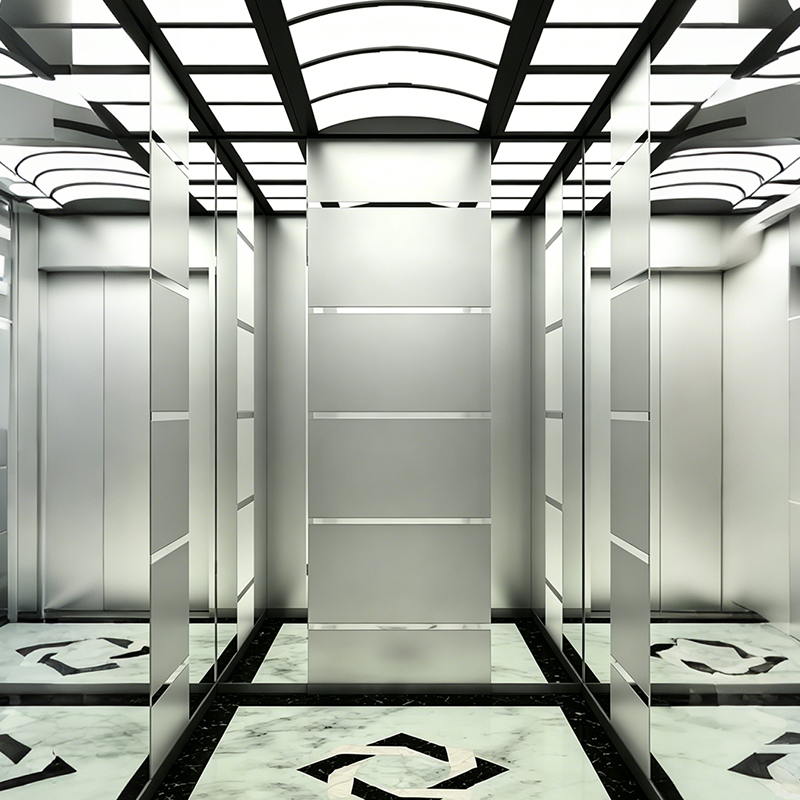
Passengers judge an elevator almost entirely by the cabin, yet cabin quality depends on components most riders never see. Guide rails, buffers, door operators, and suspension components determine whether a ride feels smooth or produces vibration and noise. Cabin interiors then build on that mechanical foundation with wall panels, flooring, ceiling lighting, and handrail systems that need to withstand years of daily contact.
When specifying cabin interior components, three factors matter most for long-term performance: panel material resistance to scratching, door operator duty cycle rating, and the serviceability of guide shoe assemblies. A cabin that looks premium on installation day but uses low-cycle door components will show wear within the first eighteen months of heavy use.
150000+ Typical Door Cycle Rating
8 to 10 yrs Average Interior Refresh Interval
3 mm Common Panel Thickness
Cabin interiors are frequently replaced two or three times over the mechanical lifespan of an elevator, which means panel systems should be selected for ease of replacement, not only initial appearance.
Machine Room Passenger Elevator: When a Dedicated Machine Room Still Makes Sense
Despite the growth of MRL systems, a machine room passenger elevator remains the preferred choice for high-traffic commercial buildings and taller structures where geared or gearless machines benefit from dedicated ventilation, easier access for major overhauls, and simplified rope replacement procedures.
A separate machine room also isolates operating noise and heat from occupied floors, which matters in buildings with penthouse units or rooftop amenity spaces directly above the hoistway. Maintenance technicians generally report faster diagnostic times in machine-room configurations because controller access, brake inspection, and rope tension checks do not require working inside a confined hoistway space.
| Building Type | Recommended Configuration | Typical Speed Range |
|---|---|---|
| Office Tower | Machine Room, Gearless | 2.0 to 6.0 m/s |
| Mid-Rise Residential | MRL or Machine Room | 1.0 to 2.0 m/s |
| Retrofit Low-Rise | Holeless Hydraulic | 0.3 to 0.6 m/s |
Residential Elevator Specifications: Matching the Mechanism to the Home
Residential projects rarely need the speed or capacity of commercial systems, but they carry their own constraints: limited shaft footprint, strict noise tolerance for adjacent bedrooms, and lower duty cycles that change which mechanism offers the best value. A holeless hydraulic unit often suits a retrofit with no existing pit, while an MRL unit suits new construction where a compact hoistway is planned from the start.
Comparing Mechanism Types Across Key Criteria
Building a Maintenance Contract That Actually Prevents Downtime
An elevator maintenance contract should specify visit frequency, response time for callouts, parts coverage, and reporting format. Contracts that only guarantee a monthly visit without defining response time for breakdowns leave buildings exposed during the hours that matter most, such as move-in weekends or peak commuting periods.
Full maintenance contracts, which include parts and labor coverage, generally reduce unplanned downtime compared with time-and-materials arrangements, because the maintenance provider has direct financial incentive to catch wear before failure rather than after.
Unplanned Downtime Under Different Contract Types
A well-structured maintenance contract is easiest to evaluate by comparing guaranteed response time, not just visit frequency, because response time is what determines how long occupants wait during an actual breakdown.
Routine Elevator Maintenance: What Gets Checked and How Often
Routine maintenance tasks fall into daily operational checks, monthly mechanical inspections, and annual full-system reviews. Technicians typically spend the largest share of a scheduled visit on door system testing and safety device verification, since these components see the highest cycle count of any part on the elevator.
Typical Time Allocation During a Scheduled Visit
- Test door reversal sensors and closing force on every scheduled visit
- Inspect governor and safety brake engagement on a quarterly basis
- Check rope tension and lubrication monthly to prevent uneven wear
- Verify emergency communication systems and lighting on every visit
- Review controller error logs to catch developing faults early
Side by Side: Choosing Between the Three Common Mechanisms
| Factor | Roped Hydraulic | Holeless Hydraulic | MRL Traction |
|---|---|---|---|
| Best For | Low-rise, moderate pit | Retrofits with no pit | New builds, taller sites |
| Energy Use | Moderate | Moderate | Lower |
| Ride Smoothness | Good | Good | Excellent |
| Space Efficiency | Moderate | Higher | Highest |
There is no universal winner among these three configurations. The right choice depends on floor count, available pit and headroom, expected traffic volume, and whether the project is new construction or a retrofit into an existing shaft.
Frequently Asked Questions
Q1: What is the main difference between a roped and holeless hydraulic elevator?
A roped hydraulic elevator uses a rope and sheave system to multiply piston travel from a below-ground cylinder, while a holeless hydraulic elevator uses twin cylinders mounted alongside the cabin so no underground drilling is required.
Q2: How often should a residential elevator receive maintenance?
Most residential systems are serviced on a quarterly to semi-annual schedule, though usage-heavy homes or multi-family buildings often move to monthly visits to match higher door cycle counts.
Q3: Does a machine room passenger elevator cost more to install than an MRL system?
Initial installation costs are often comparable, but a machine room configuration adds space allocation costs for the room itself, while an MRL system saves that footprint at the expense of slightly more constrained access during major machine work.
Q4: What should be included in every elevator maintenance contract?
At minimum, a contract should define visit frequency, guaranteed breakdown response time, parts and labor coverage scope, and a reporting format that documents each inspection for compliance records.
Q5: Can cabin interiors be upgraded without replacing the elevator mechanism?
Yes, cabin panels, flooring, lighting, and fixtures can typically be replaced independently of the drive system, which is why many buildings refresh interiors on a shorter cycle than the mechanical components.
Related Products

Related News
Built on safety, forging trust in vertical mobility.
lf you have any questions or need help, feel free to contact with our team.
 export@tenau.com.cn
 +86-18601458867
 +86-512-65059883
Elevator & Escalator
Factory Add
East of Xicheng Road, North of Lianyi Road, Nanxun Economic Development Zone, Nanxun District, Huzhou City, Zhejiang Province, P.R.China
Copyright © Tenau Elevator (China) Co., Ltd. All Rightd Reserved.
Custom High Quality Elevator Suppliers and World Brand Elevator Company