

 en
en Español
 русский
 中文简体
中文简体
Industry News
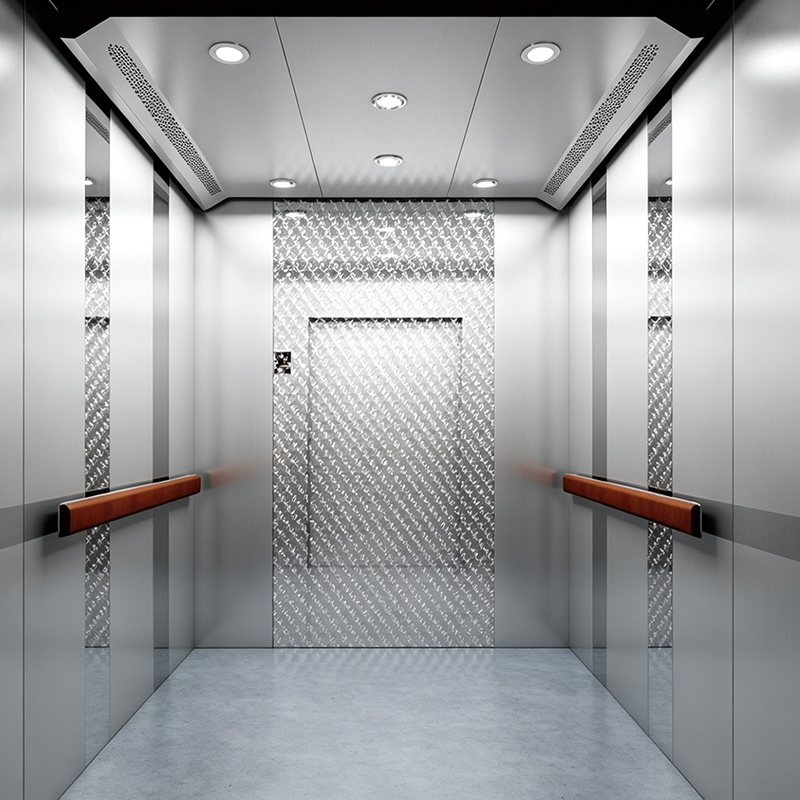 Compact Passenger Lift with Hairline Stainless Steel Finish for Multi-Story BuildingsThis small commercial elevator offers a refined hairline stainless steel interior, combining compact size with the look and feel of a full-sized passenger lift. Ideal for retrofits where space is limited but aesthetics matter.View Product →
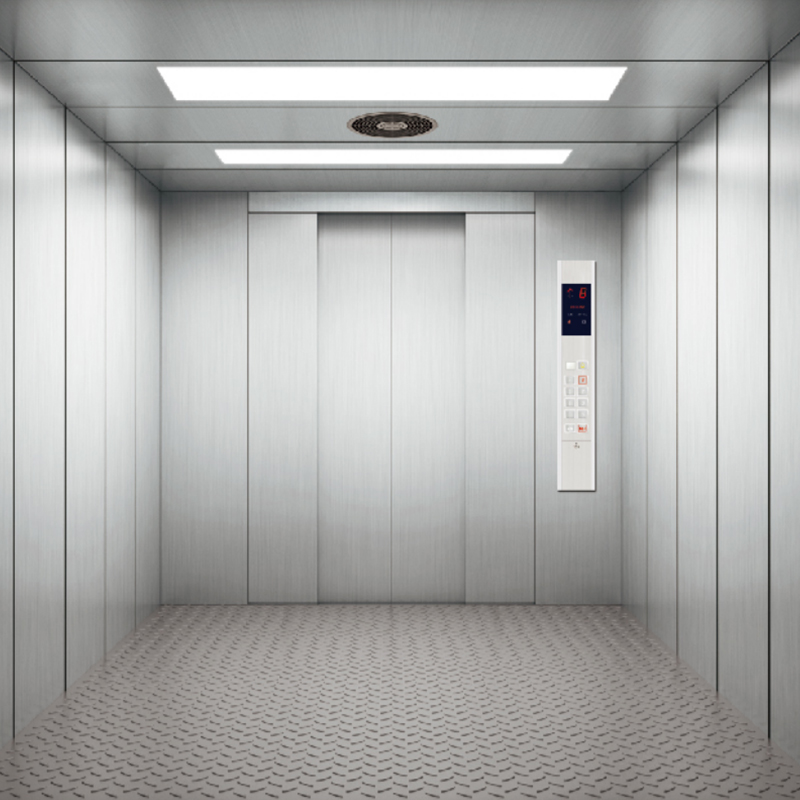
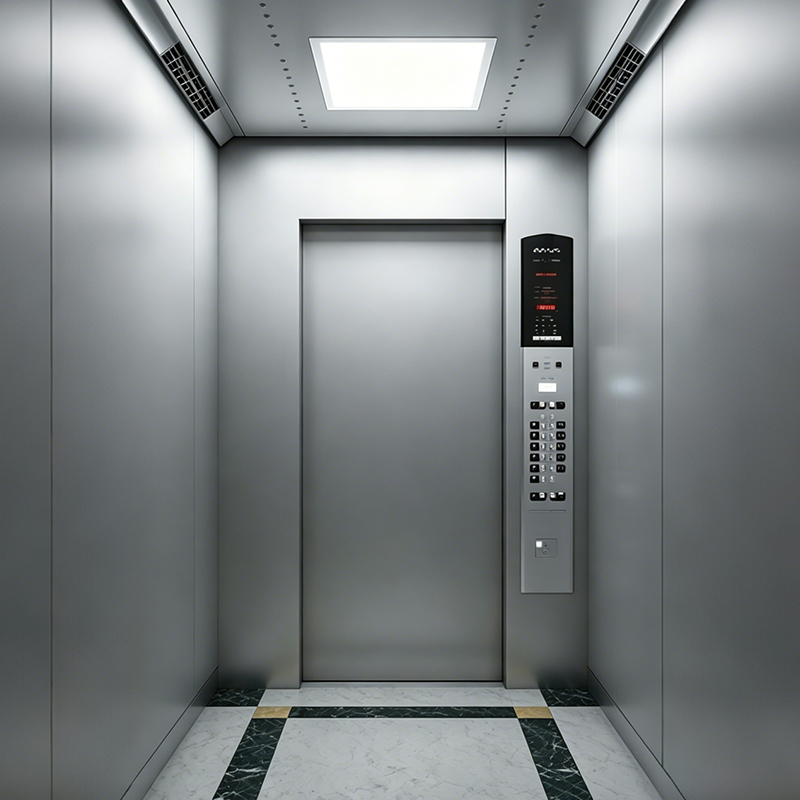 Painted Steel Passenger Lift Suited for Office Building InteriorsThis painted steel elevator provides a clean, neutral finish that complements most corporate spaces. It is a practical choice for office buildings where low maintenance and easy cleaning are priorities.View Product →
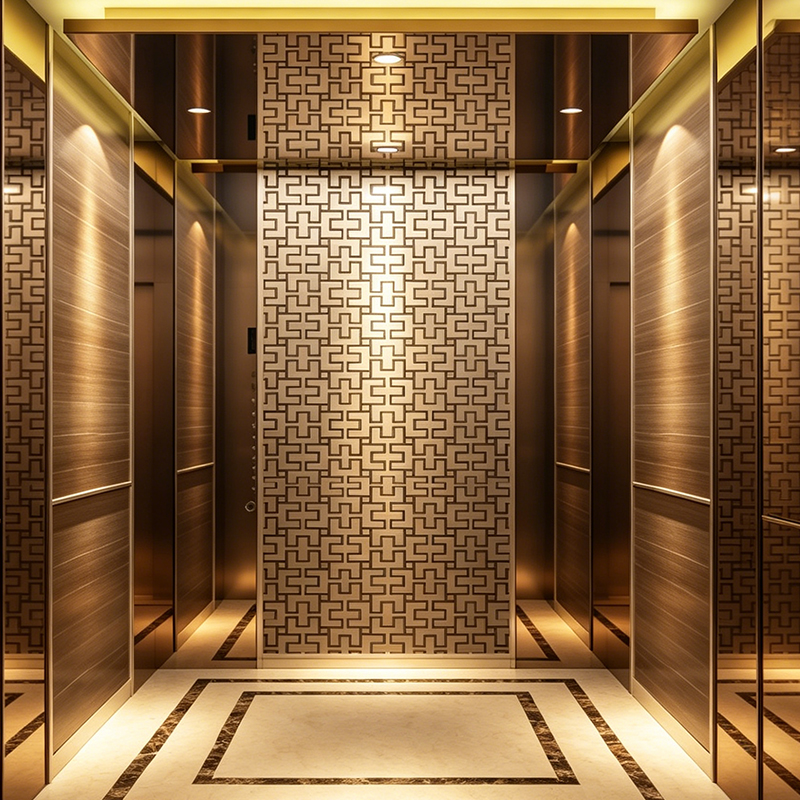
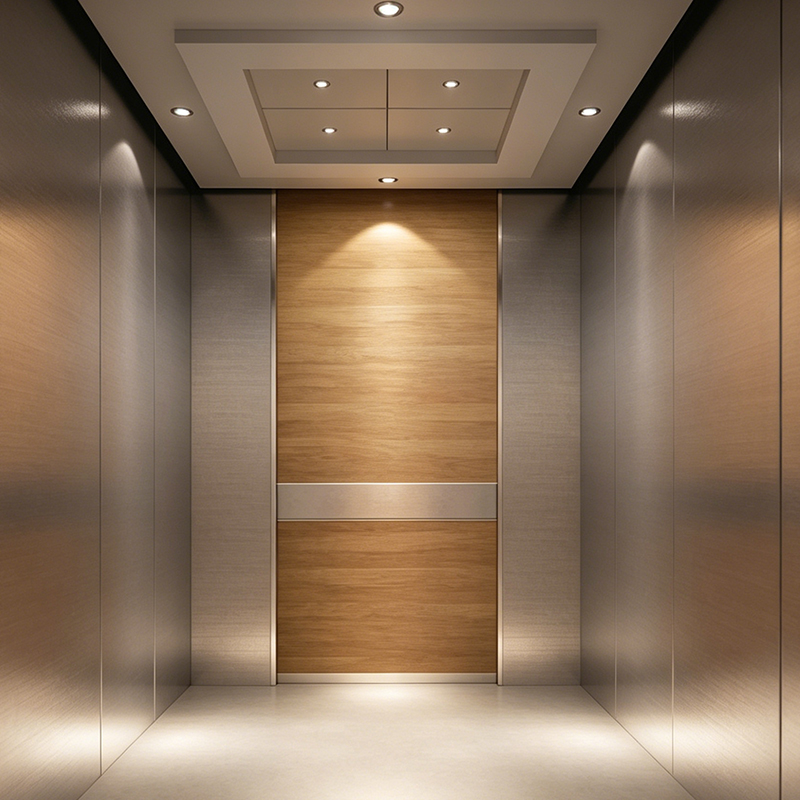
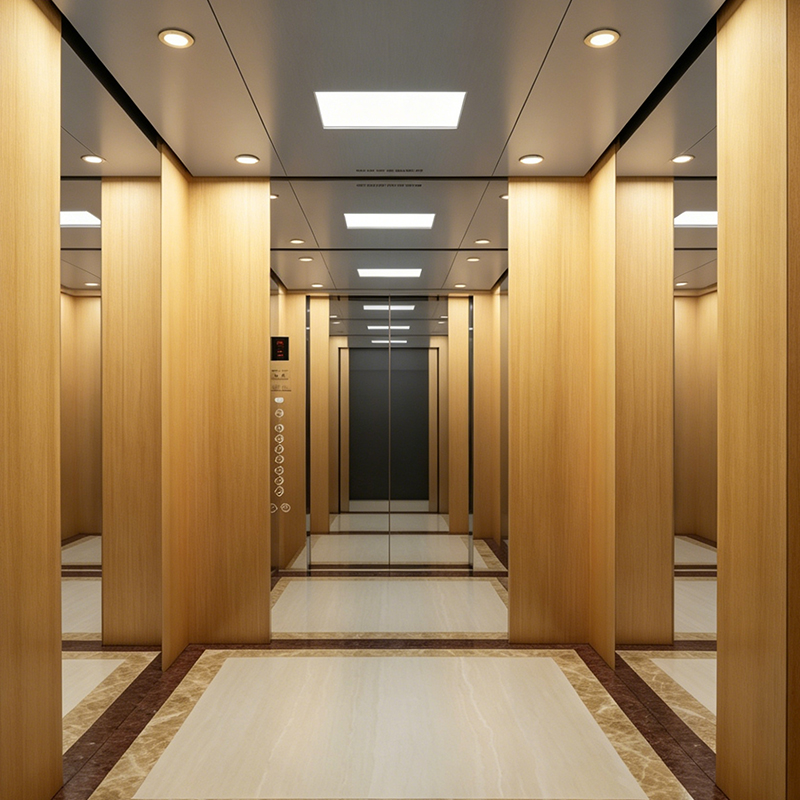 Wood Veneer Commercial Passenger Lift for Hotels and Business CentersThis elevator features a wood veneer finish that adds warmth to smaller hotels or business centers without the expense of marble or stone. It delivers a passenger lift experience with a welcoming aesthetic.View Product →
Small Commercial Elevators & Lifts: Types, Sizing, Costs, and Buying Guide
Content
- 1 What Counts as a Small Commercial Elevator or Lift?
- 2 Sizing and Shaft Requirements for Small Commercial Lifts
- 3 Where Small Commercial Elevators Deliver the Most Value
- 4 What to Ask Before Buying a Small Commercial Elevator
- 5 Small Commercial Elevators and Lifts: FAQ
- 5.0.1 Q1: What is the smallest elevator for commercial use?
- 5.0.2 Q2: Do small commercial elevators require a machine room?
- 5.0.3 Q3: What is the typical cost of a small commercial lift?
- 5.0.4 Q4: How long does a small commercial elevator take to install?
- 5.0.5 Q5: Can a small commercial elevator be installed in an existing building?
Two-story clinics, boutique hotels, and small offices face the same problem: upper floors are hard to reach for customers, staff, and deliveries. A full passenger elevator usually takes a 3.5 by 4 meter shaft and needs a machine room on the roof, which is rarely possible in an existing building. A small commercial elevator or lift solves this by moving a few people at a time in a footprint as narrow as 1000 by 1000 mm, without a separate machine room, and at a cost that suits a small business budget.
If you are planning a compact lift for an office, clinic, shop, hotel, or low-rise residential building, the core task is not finding an elevator. It is matching the right system to your shaft, your traffic pattern, and your local code. The sections below summarize the types, dimensions, and buying criteria that actually matter.
As a manufacturer, Tenau Elevator supplies machine-room and machine-roomless passenger elevators that can be scaled to small commercial projects, with the goal of avoiding over-specification while keeping the lift safe and accessible for years.
What Counts as a Small Commercial Elevator or Lift?
Practical label "Small commercial" is not a formal elevator classification. It is a practical label used in the industry to describe vertical lifts in low-rise, low-traffic buildings. In this segment, the rated load usually falls between 250 kg and 1,000 kg (3 to 13 persons), travel stays under 15 meters, and shaft width is often 1100 mm to 1500 mm.
You find these systems in offices, retail shops, restaurants, medical clinics, schools, care homes, and small hotels. The common thread is a need for accessibility and goods movement without giving up a large part of the floor plate.
Common Types in the Small Commercial Space
- Machine-roomless traction elevators are the most flexible option for new construction and retrofit, because the drive is inside the shaft and no separate machine room is required.
- Hydraulic elevators provide a smooth ride and handle heavier loads, but typically require a machine room and oil cooler, which adds space and maintenance.
- Limited Use / Limited Application (LU/LA) elevators are built to a lower speed and smaller platform, making them a cost-effective answer when the primary goal is accessibility.
- Vertical platform lifts (VPLs) move one wheelchair user between neighboring landings and are among the simplest, most affordable commercial lift options.
| Type | Rated Load | Car Width x Depth | Best For |
|---|---|---|---|
| MRL traction | 320 - 630 kg | 1100 x 1100 mm to 1500 x 1500 mm | Low-rise offices, clinics, schools |
| Hydraulic | 400 - 1000 kg | 1200 x 1300 mm and larger | Warehouses, heavy goods movement |
| LU/LA | 250 - 400 kg | 1000 x 1000 mm approx. | Accessibility retrofit, low traffic |
| Vertical platform lift | 250 - 400 kg | 900 x 1200 mm approx. | Public entrances, theatres, small offices |
For a retrofit in an existing building, a small commercial passenger lift for multi-story buildings with a hairline stainless steel interior gives you a compact cabin that feels like a real elevator rather than assistive equipment.
Compact Passenger Lift with Hairline Stainless Steel Finish for Multi-Story BuildingsThis small commercial elevator offers a refined hairline stainless steel interior, combining compact size with the look and feel of a full-sized passenger lift. Ideal for retrofits where space is limited but aesthetics matter.View Product →Sizing and Shaft Requirements for Small Commercial Lifts
Shaft dimensions are where most small commercial projects go wrong. A beautiful cabin size does not matter if the pit, overhead, or clearance is wrong. Use the figures below as starting guidelines and confirm them with the manufacturer before pouring concrete.
- Internal car size: 800 x 900 mm to 1100 x 1400 mm for small passenger elevators. A 1000 x 1000 mm car fits a wheelchair and one attendant comfortably.
- Door width: 700 to 900 mm. For barrier-free access, 900 mm is the safest choice.
- Pit depth: 900 to 1200 mm for traction systems. Shallow-pit versions exist for retrofit projects.
- Overhead clearance: 3200 to 3800 mm for a standard machine-roomless traction lift.
- Machine room: not required for most modern MRL models, saving 8 to 12 square meters of building area.
In retrofit work, the actual shaft is often 20 to 50 mm smaller than the drawings. Allow a 30 to 50 mm tolerance on the clear width and depth, because guide rails, brackets, and door frames need alignment space. If the shaft is too tight, the installer may need a custom car size, which raises cost and lead time.
The building side matters as well. The hoistway should be fire-rated according to local code, smoke venting may be required, and the load-bearing walls must carry the guide rails and the counterweight. When you add these structural items, the civil works can cost as much as the elevator itself, especially in an existing building.
Where Small Commercial Elevators Deliver the Most Value
A compact commercial lift is not just an accessibility add-on. It changes how the building operates.
- Accessibility: Wheelchair users, elderly customers, and parents with strollers can reach every floor without assistance.
- Safety: Staff no longer carry heavy boxes or equipment up stairs, reducing slips, trips, and falls.
- Efficiency: Deliveries between floors take seconds instead of minutes, which matters in a restaurant, salon, or medical practice.
- Property value: Upper-floor retail and office units become rentable and easier to sell when they are accessible.
The real ROI: In a small commercial building, the lift does not simply move people. It makes the second floor usable for customers, turning unused space into revenue.
For a clean, low-maintenance cabin in an office building, a painted steel passenger lift for office buildings offers a neutral, easy-to-clean finish that suits most corporate interiors.
Painted Steel Passenger Lift Suited for Office Building InteriorsThis painted steel elevator provides a clean, neutral finish that complements most corporate spaces. It is a practical choice for office buildings where low maintenance and easy cleaning are priorities.View Product →What to Ask Before Buying a Small Commercial Elevator
Before you request a proposal, gather these facts and decisions. It will reduce backtracking and prevent an under-specified or over-priced system.
- Rated load and passenger count: For a small clinic, 400 kg (about 5 persons) is often enough. For a hotel with luggage carts, plan for 630 kg or more.
- Travel height: Number of floors and floor-to-floor height directly set the required travel distance.
- Machine room preference: MRL saves space. Hydraulic can carry more load but needs a room.
- Speed: 0.4 to 0.63 m/s is the normal range for small commercial lifts; higher speed is rarely needed under four stories.
- Door type: Center-opening automatic doors save space; side-opening doors can work in tight shafts.
- Cabin finish: Stainless steel is durable, painted steel is economical, wood veneer gives a warmer look.
- Local codes: Fire-rated shaft, emergency phone, and accessibility clearance requirements vary by jurisdiction.
- Maintenance contract: Ask about response time, monthly visits, and spare part availability.
Budget benchmark: Equipment and installation for a small commercial elevator often lands between $25,000 and $60,000, plus annual maintenance of 5 to 12% of the equipment cost. Lead time is typically 6 to 12 weeks for standard models and 12 to 20 weeks for custom cabin finishes.
In a smaller hotel or business center, a wood veneer commercial passenger lift adds warmth without the expense of marble or exotic stone.
Wood Veneer Commercial Passenger Lift for Hotels and Business CentersThis elevator features a wood veneer finish that adds warmth to smaller hotels or business centers without the expense of marble or stone. It delivers a passenger lift experience with a welcoming aesthetic.View Product →
Maintenance terms are a frequent source of dispute. Ask the supplier whether the contract includes all parts and labor, whether emergency call-outs are available 24/7, and whether the response time is stated in writing. A small commercial elevator that sits idle for two weeks because a part is unavailable costs more than the annual savings from a cheap service plan.
Also review the key considerations in a machine-roomless elevator before finalizing your decision.
Small Commercial Elevators and Lifts: FAQ
Q1: What is the smallest elevator for commercial use?
For passenger service, the smallest practical commercial elevator is typically a 400 kg capacity traction lift with a car around 1000 x 1000 mm. For accessibility-only use, a LU/LA elevator or a vertical platform lift can be even smaller.
Q2: Do small commercial elevators require a machine room?
Not always. Many modern traction machines are machine-roomless, meaning the drive sits inside the hoistway. This reduces the required floor area and makes retrofit installation simpler.
Q3: What is the typical cost of a small commercial lift?
Most small commercial elevator projects land between $25,000 and $60,000 installed, depending on travel height, cabin finish, and site conditions. Maintenance is budgeted separately, usually as a percentage of equipment cost.
Q4: How long does a small commercial elevator take to install?
A standard model usually takes 2 to 4 weeks for mechanical and electrical installation, plus 2 to 6 weeks of civil preparation in the shaft and 1 to 2 weeks for local inspection and handover.
Q5: Can a small commercial elevator be installed in an existing building?
Yes. MRL traction and shallow-pit hydraulic elevators are often suitable for retrofit. However, you need to verify the hoistway dimensions, available pit depth, and structural load capacity first.
Related Products


Related News
Built on safety, forging trust in vertical mobility.
lf you have any questions or need help, feel free to contact with our team.
 export@tenau.com.cn
 +86-18601458867
 +86-512-65059883
Elevator & Escalator
Factory Add
East of Xicheng Road, North of Lianyi Road, Nanxun Economic Development Zone, Nanxun District, Huzhou City, Zhejiang Province, P.R.China
Copyright © Tenau Elevator (China) Co., Ltd. All Rightd Reserved.
Custom High Quality Elevator Suppliers and World Brand Elevator Company