

 en
en Español
 русский
 中文简体
中文简体
Machine Room Less Car Elevator for Efficient Urban Parking and Vehicle Transportation
Content
- 1 Urban Parking Pressure and the Need for Vertical Vehicle Transportation
- 2 Product Overview: A Machine Room Less Car Elevator Built for Automobiles
- 3 Core Competitive Advantages Over Conventional Parking Solutions
- 4 Advantages Over Ordinary Cargo Lifts and Non-Specialized Lifting Platforms
- 5 Advanced Control Technology for Stable and Intelligent Operation
- 6 Safety Engineering Designed for Heavy Vehicle Loads
- 7 Mechanical Strength and Cabin Design
- 8 Energy Efficiency and Environmentally Friendly Operation
- 9 Typical Applications
- 10 Manufacturing Strength Behind the Product
- 11 Industry 4.0 Production and Intelligent Quality Control
- 12 Customization and Project-Oriented Engineering
- 13 Function Configuration for Practical Operation
- 14 Service and Maintenance Support
- 15 Why Buyers Should Consider This Product
- 16 Buying Considerations for Project Owners and Contractors
- 17 Q&A Section
- 17.1 What is a machine room less car elevator?
- 17.2 Why is it useful for urban parking?
- 17.3 What load capacity can the product support?
- 17.4 How does the through-door design help users?
- 17.5 How does VVVF drive technology improve performance?
- 17.6 Is the elevator safer than a simple lifting platform?
- 17.7 Can the elevator be customized?
- 17.8 What maintenance is required?
- 17.9 What makes the manufacturer competitive?
- 17.10 Where can this car elevator be used?
- 18 Conclusion
- 19 References
- 20 Product: Car Elevator
As cities become denser and vehicle ownership continues to rise, parking has become one of the most pressing issues for commercial buildings, residential developments, hotels, service centers, showrooms, public facilities, and mixed-use complexes. A machine room less car elevator offers a practical and space-saving answer to this challenge by moving vehicles vertically between floors without requiring a traditional machine room. This product combines elevator engineering, structural strength, intelligent control, vehicle-friendly cabin design, and safety-focused operation to create a modern transportation solution for cars.
The car elevator discussed in this article is designed for the machine room less elevator category. Its core purpose is to provide hindrance-free vertical vehicle transportation while saving construction area and improving parking convenience. Instead of relying on long ramps, extensive basement excavation, or complicated traffic circulation areas, a car elevator allows vehicles to move directly between levels. This makes it particularly valuable in urban projects where land is expensive, building footprints are limited, and efficient space utilization is essential.
Developed by Tenau Elevator (China) Co., Ltd., the product reflects mature elevator technology adapted to the size, weight, handling requirements, and operational habits of automobiles. The company has experience in elevator and escalator manufacturing, industrialized production, automatic processing, intelligent inspection, and international service support. These capabilities allow the car elevator to be more than a simple lifting platform; it becomes an integrated vertical mobility system for vehicles, designed for safety, convenience, durability, and long service life.

Urban Parking Pressure and the Need for Vertical Vehicle Transportation
Modern cities face a structural conflict: more cars are being used, while available construction land is becoming increasingly limited. Traditional parking solutions often require large ramps, wide turning spaces, long drive lanes, and multi-level access routes. These features consume valuable building area and can reduce the economic efficiency of a project. For developers, architects, property managers, and owners, every square meter matters. A car elevator can directly address this problem by reducing the need for ramp-based circulation and allowing vehicles to be transported vertically in a compact shaft.
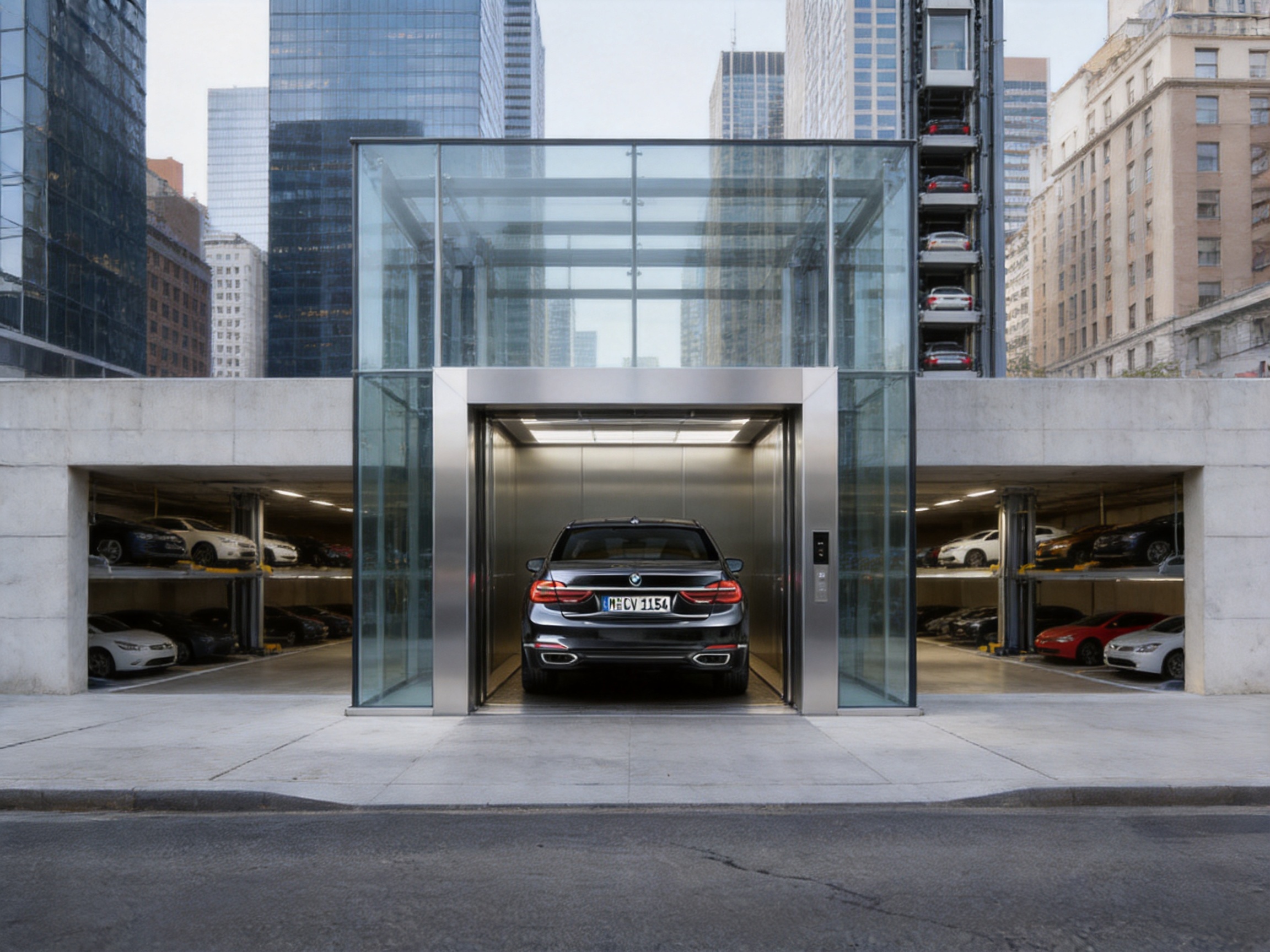
In commercial developments, a car elevator can support underground garages, rooftop parking, vehicle display areas, service workshops, and private parking floors. In residential buildings, it can help create compact parking systems for apartment complexes or luxury homes. In hotels and shopping centers, it can improve vehicle circulation and support valet parking operations. In automotive showrooms, it can move vehicles between exhibition floors while maintaining a clean and professional environment.
The value of a machine room less design is especially clear in these applications. Since there is no requirement for a separate machine room above the shaft, the building layout becomes more flexible. The design can help reduce structural complexity and free up space for other uses. For projects where roof height, architectural appearance, or mechanical room allocation is restricted, this can be a major competitive advantage.
The car elevator also helps improve vehicle movement safety. Ramps require drivers to turn, brake, accelerate, and maneuver within confined areas. A vertical elevator allows a driver to enter the car, park in the designated position, and be transported directly. With appropriate door design, leveling accuracy, safety protection, and control logic, the vehicle transportation process becomes easier and more predictable.
Product Overview: A Machine Room Less Car Elevator Built for Automobiles
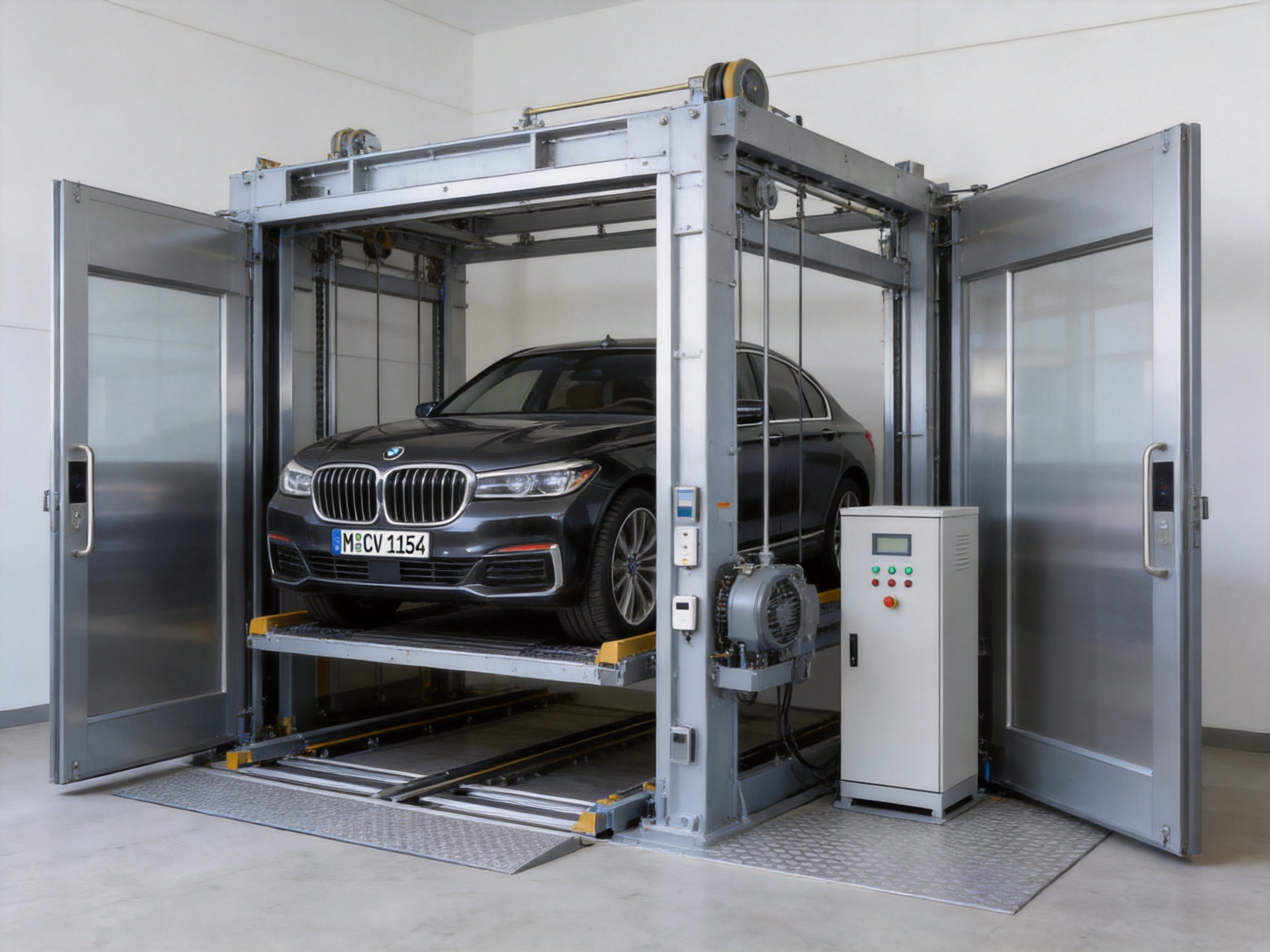
The machine room less car elevator is engineered specifically for vehicle transportation. Its design considers the performance, dimensions, load characteristics, and operating needs of various cars. Unlike standard passenger elevators, a car elevator must accommodate the concentrated weight of vehicles, withstand frequent loading and unloading, provide sufficient cabin area, and deliver smooth starts and stops to protect both the car and the driver.
One of the key product features is its large load capacity. The elevator is designed with a normal load capacity of more than 3 tons, making it suitable for many common passenger vehicles. The large cabin area helps vehicles enter and exit more easily, while the strong structure supports stable operation under heavy load conditions. This makes the elevator suitable for parking buildings, car storage facilities, private garages, repair centers, and other vehicle-related environments.
The elevator can also help save construction area. The material indicates that the design can save construction area significantly, with a stated figure of up to 80% in appropriate project conditions. While the exact saving depends on the building layout and parking strategy, the core benefit is clear: by replacing or reducing ramp systems, the project can use space more efficiently.
Convenient door opening design is another important feature. Through front and rear doors allow vehicles to move in and out more easily. This arrangement can reduce the need for reversing, turning, or repeated maneuvering inside the elevator. In many projects, a drive-through configuration improves operational efficiency and makes the system more user-friendly.
Safety devices are mounted and arranged to support real-time operational safety. The elevator is designed to alert drivers and protect the system during operation. In car elevator applications, safety is not only about preventing mechanical accidents; it also involves helping drivers position vehicles correctly, ensuring doors operate safely, preventing overload conditions, and maintaining accurate leveling between the elevator floor and the building floor.
Core Competitive Advantages Over Conventional Parking Solutions
Compared with traditional ramp parking, the machine room less car elevator offers several clear advantages. First, it reduces the amount of space needed for vehicle circulation. A ramp-based garage usually requires a long inclined path, turning radius, transition slopes, and access lanes. These spaces are necessary for driving, but they do not directly create parking value. A car elevator converts vertical movement into a compact lifting process, allowing more of the building area to be used for parking, commercial functions, storage, or service operations.
Second, the product provides design flexibility. Buildings with narrow footprints, irregular land shapes, height restrictions, or complex renovation requirements can benefit from a vertical vehicle elevator. In some projects, adding a ramp may be structurally difficult or commercially inefficient. A machine room less car elevator can be integrated into a shaft, allowing architects to develop more compact and efficient layouts.
Third, the elevator improves user convenience. Drivers can enter the elevator, remain aligned within the cabin, and be transported vertically. With through doors, the vehicle can exit forward, which is especially helpful in spaces where reversing is inconvenient. Smooth acceleration, steady travel, and precise leveling contribute to a more comfortable experience for both driver and vehicle.
Fourth, the product supports better traffic management. In valet parking, service centers, and controlled-access parking systems, a car elevator can become part of an organized vehicle flow plan. Instead of allowing multiple drivers to circulate through ramps and lanes, the building can centralize vertical movement. This may improve safety, reduce congestion, and simplify management.
Fifth, the machine room less concept reduces the need for a separate machine room. This can lower architectural constraints and allow mechanical components to be integrated more efficiently. For building owners, this means more available space and fewer limitations in upper-level design.
Advantages Over Ordinary Cargo Lifts and Non-Specialized Lifting Platforms
Some buyers may consider using ordinary cargo lifts or simple vehicle platforms for car transportation. However, a dedicated car elevator offers advantages that are directly related to automobile handling. Vehicles are not uniform rectangular cargo. They have wheels, suspension systems, varying widths, different ground clearances, and drivers who must operate them safely inside the cabin. A car elevator must therefore provide a cabin layout, door opening, control system, safety protection, and leveling accuracy suitable for automobiles.
The product uses elevator manufacturing standards, mature control technology, VVVF drive systems, and robust mechanical design. These features help ensure steady operation, accurate floor positioning, and safer loading conditions. A simple lifting platform may not provide the same riding stability, control sophistication, or safety configuration required for frequent vehicle transportation in a commercial or residential building.
Large load capacity is also essential. A passenger elevator cannot safely transport cars, while a general cargo lift may not be optimized for vehicle entry and exit. The car elevator’s large cabin area and strengthened structure allow it to handle automobiles in a practical manner. Its front and rear door design further improves usability by enabling easier movement through the elevator.
Another distinction is service support. A professional elevator manufacturer can provide engineering consultation, installation coordination, maintenance planning, spare parts support, and technical after-sales service. For a product that becomes part of a building’s daily operation, this professional support is a major factor in long-term reliability.
Advanced Control Technology for Stable and Intelligent Operation
The machine room less car elevator uses advanced control technology to improve operational stability and safety. CPU or PC-based control modules support accurate command processing, system monitoring, and functional coordination. In elevator applications, the control system must manage motor operation, door movement, safety circuits, floor positioning, speed regulation, leveling, and fault response. For a car elevator, this intelligence becomes even more important because of the heavy load and the need for careful vehicle handling.
VVVF drive technology is a major advantage. Variable voltage variable frequency control allows the elevator motor to start, accelerate, decelerate, and stop more smoothly. This reduces vibration and improves riding comfort. For vehicle transportation, smooth operation helps prevent sudden movement that could affect the driver’s confidence or the vehicle’s stability. It also contributes to energy efficiency by matching motor output more closely with operational demand.
The door operator can also use VVVF drive technology, supporting smoother opening and closing. Since vehicle elevator doors are often larger and heavier than passenger elevator doors, reliable door control is essential. Smooth door movement reduces mechanical impact, lowers noise, and improves service life.
Self-tuning functions, automatic running modes, car call cancellation, attendant operation, double door control, IC card control options, and duplex control functions can be configured according to project requirements. These control functions allow the elevator to be adapted for private use, commercial management, access control, or multi-elevator coordination.
The system can include information functions such as full collective control, full-load bypass, main floor shut-off, self-diagnosis of breakdowns, five-way communication, car bell, floor and direction indicators in the car, hall indicators, voice announcements, traffic dispatch options, and machine monitoring options. These features support safer management, easier troubleshooting, and better user communication.
Safety Engineering Designed for Heavy Vehicle Loads
Safety is the foundation of any elevator product, and it is especially important for a car elevator. The product incorporates safety components such as safety gears or safety clamps, speed limiters, door interlocks, brake protection, terminal limit protection, overload protection, emergency lighting, and safety circuit monitoring. These features are designed to work together to protect passengers, vehicles, equipment, and the building.
Speed limiter and safety device arrangements help prevent uncontrolled movement. If abnormal speed conditions occur, the safety system is designed to respond. Door interlock protection ensures that the elevator does not operate unless doors are properly closed and locked. Overload protection helps prevent operation when the load exceeds the designed capacity. Terminal forced slow-down protection and final limit protection help manage movement near the top and bottom of the shaft.
The elevator also supports safe stop functions, inspection operation, inching operation, fire emergency return, automatic landing with fault, and power failure emergency leveling options. These functions can be essential in complex building environments where safety procedures and emergency plans must be carefully coordinated.
The brake system is designed with strong rated braking torque. This contributes to reliable stopping performance, especially under heavy load. In a car elevator, braking must be stable and dependable because the load can be much heavier than in ordinary passenger use. The brake design works with the drive and control system to support smooth and safe operation.
The bottom of the car is strengthened for rust resistance and durability. Since vehicles may carry water, mud, salt, or debris into the cabin, corrosion resistance is important for long-term service. A stronger and more durable car bottom helps extend the product’s life and maintain structural safety.
Mechanical Strength and Cabin Design
The elevator’s mechanical structure is designed for high intensity and durability. Heavy vehicle transportation requires a strong car frame, reinforced cabin floor, carefully processed mechanical components, and a reliable traction or drive arrangement. The product uses high-intensity materials and thickened steel board in key structural areas to improve load sustainability. This helps the elevator carry vehicles safely and maintain alignment during operation.
Precise mechanical processing is also important. Elevator performance depends on the accurate cooperation of rails, frames, doors, drive components, brakes, and safety devices. In a car elevator, small inaccuracies can become more serious because of the heavier loads and larger cabin size. Manufacturing precision therefore contributes to smoother travel, lower vibration, improved leveling, and longer service life.
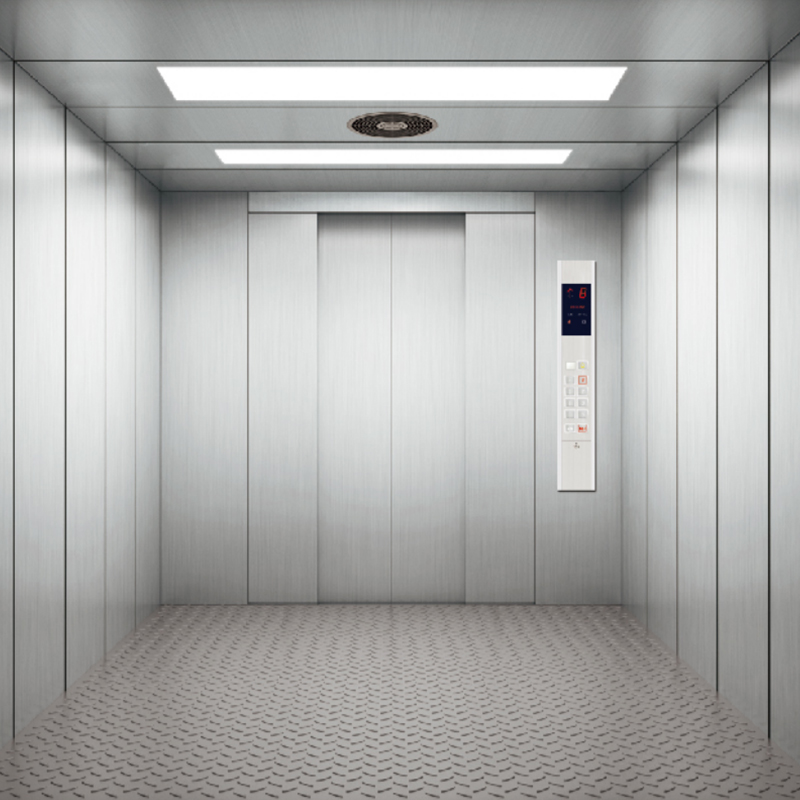
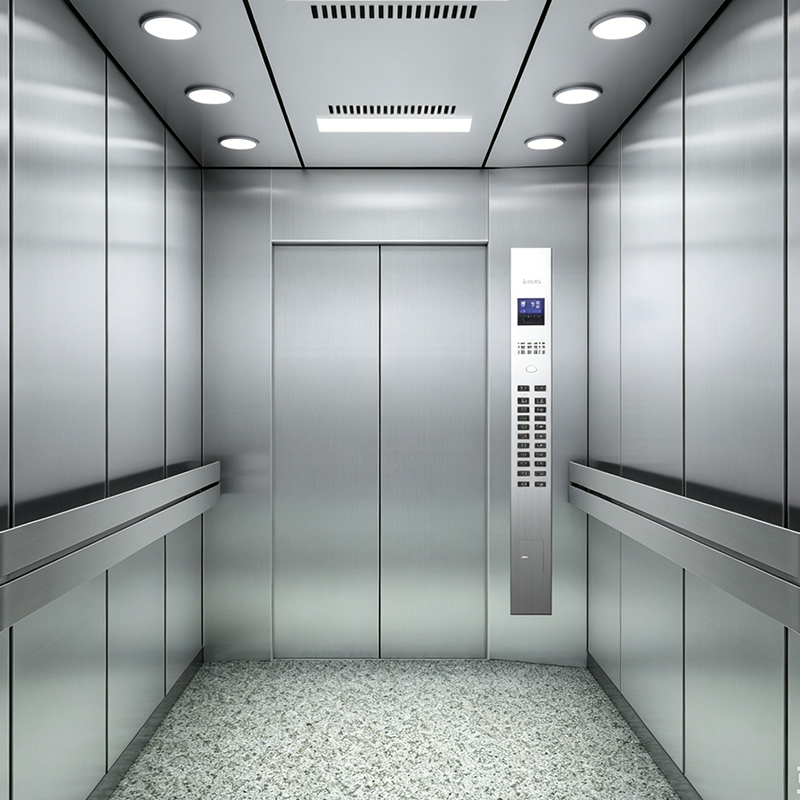
The cabin area is designed to accommodate vehicles comfortably. A car elevator should provide enough width and length for entering, parking, and exiting. It should also allow the driver to maintain safe visibility and positioning. Where project conditions permit, front and rear doors can create a drive-through experience. This is a major practical advantage because it reduces reversing and improves traffic flow.
Specific leveling technology ensures accurate floor leveling even under large loads. This is important for vehicle access because even small differences between the elevator floor and landing floor can affect tire movement, driver comfort, and safety. Precise leveling helps vehicles enter and exit as if moving across a flat surface.
Wide door openings are specifically designed for vehicle transportation. A narrow opening can make drivers hesitant and increase the risk of contact between the vehicle and the building. A wider opening improves confidence, reduces maneuvering difficulty, and supports faster operation.
Energy Efficiency and Environmentally Friendly Operation
The product adopts updated elevator technology to support energy-saving, intelligent, and safe operation. VVVF drive technology contributes to energy efficiency by controlling motor speed more accurately. Smooth acceleration and deceleration reduce unnecessary power impact and mechanical stress. In projects with frequent use, these efficiency gains can contribute to lower operating costs over time.
A machine room less configuration may also reduce building material and space requirements. By eliminating or minimizing the need for a separate machine room, the project can use space more effectively. When combined with reduced ramp construction, the total building design may become more efficient in both space and material utilization.
Low-vibration and low-noise operation improves the building environment. This is particularly valuable in residential buildings, hotels, offices, and mixed-use developments where user comfort matters. Heavy mechanical equipment can create noise if not properly designed. The elevator’s dedicated drive system, mechanical processing, braking performance, and control logic all contribute to quieter and smoother movement.
Environmental responsibility in elevator manufacturing is not limited to energy consumption during use. It also includes intelligent production, material management, process control, quality inspection, and durable design. A longer-lasting elevator with fewer failures and lower maintenance demands can reduce resource waste over the product life cycle.
Typical Applications
The machine room less car elevator can be used in many project types. In urban residential developments, it can connect ground-level access with underground parking, basement garages, or private parking floors. In luxury villas or high-end residences, it can provide a refined solution for private vehicle storage. In commercial buildings, it can support tenant parking, executive parking, and controlled vehicle access.
Hotels can use car elevators for valet parking systems, allowing staff to move vehicles efficiently between reception areas and parking levels. Shopping centers and malls can integrate car elevators into compact parking layouts where ramps would consume too much space. Office buildings can use them to optimize underground or structured parking capacity.
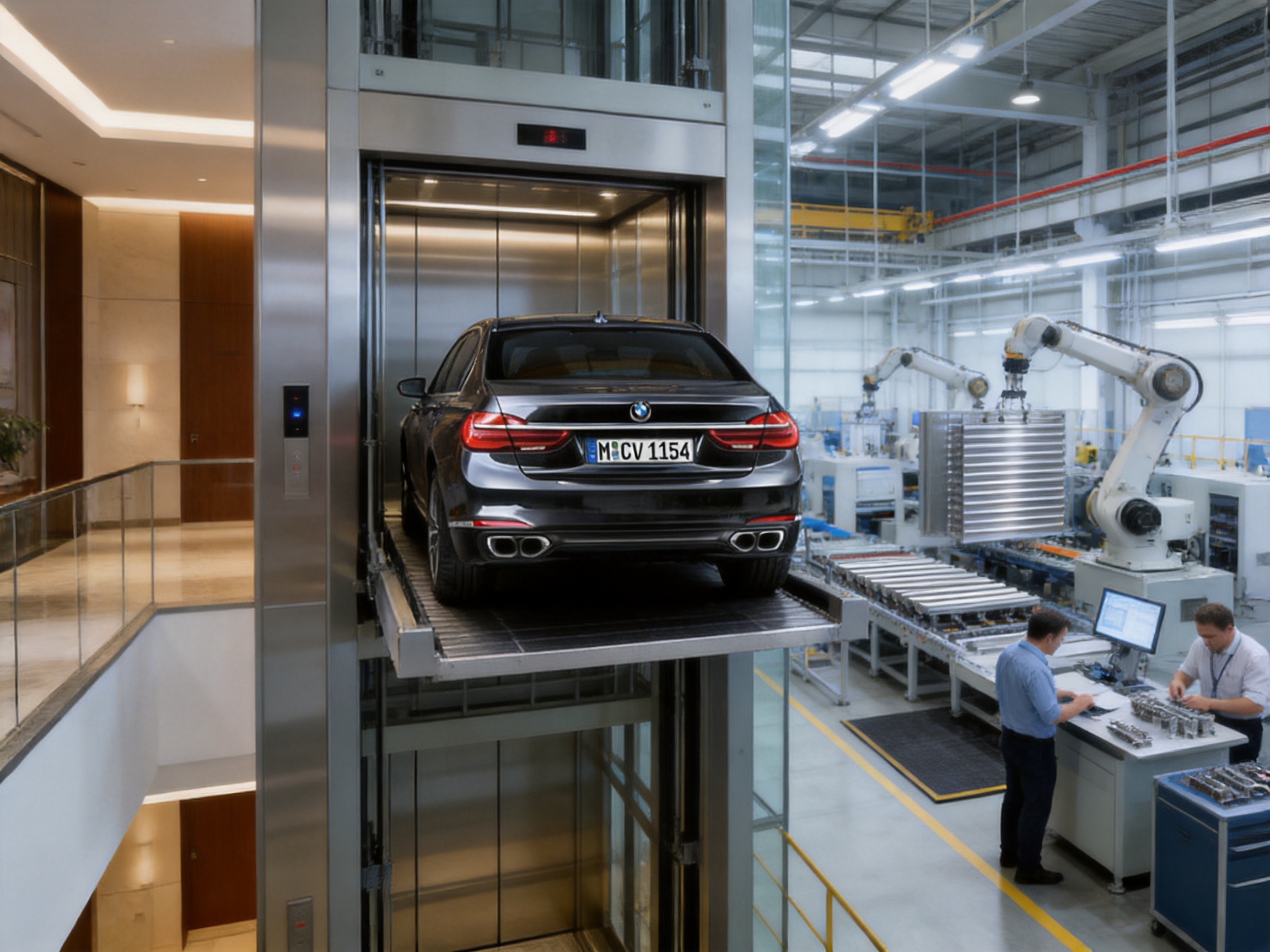
Automotive showrooms can use car elevators to move vehicles between display floors. This creates an attractive layout and allows premium cars to be exhibited on upper levels without complicated ramp access. Service centers and repair workshops can use car elevators to transport vehicles between reception areas, repair floors, storage areas, and inspection zones.
Parking towers and automated parking systems can also benefit from car elevators. While fully automated systems use additional mechanical transfer devices, a car elevator remains a core vertical transportation component in many parking strategies. It can support both driver-operated and staff-operated workflows.
| Application Scenario | Key Requirement | Product Advantage |
|---|---|---|
| Residential parking | Space saving and convenient daily use | Machine room less design, smooth operation, and accurate leveling |
| Commercial buildings | Efficient vehicle flow and reliable safety | Heavy load capacity, intelligent control, and safety protection |
| Hotels | Valet parking efficiency and user comfort | Drive-through door options and stable transportation |
| Automotive showrooms | Clean presentation and floor-to-floor vehicle movement | Large cabin area, wide door opening, and smooth travel |
| Service centers | Frequent vehicle movement and durability | Reinforced structure, strong braking, and precise mechanical processing |
| Urban renovation projects | Limited building area and layout restrictions | Reduced ramp dependence and flexible machine room less configuration |
Manufacturing Strength Behind the Product
A high-quality car elevator depends not only on design but also on manufacturing strength. Tenau Elevator (China) Co., Ltd. operates as a professional elevator and escalator manufacturing enterprise with experience in overseas markets and customized solutions. The company is located in Huzhou City, Zhejiang Province, close to Shanghai, which supports logistics, export communication, and access to industrial resources.
The company has developed professional elevator and escalator production lines, automatic panel production equipment, and an intelligent manufacturing base. These capabilities are important because elevator production requires precision, repeatability, and strict quality control. Structural panels, car frames, doors, control cabinets, and mechanical parts must be manufactured consistently to ensure stable product performance.
The production system reflects modern industrial thinking. Intelligent processing, intelligent production, intelligent detection, and intelligent monitoring are supported by advanced equipment, data systems, and industrial management practices. This approach helps reduce human error, improve production consistency, and create traceable quality records.
The company’s manufacturing philosophy emphasizes high standards, high precision, and zero defect objectives. In elevator manufacturing, these principles are not marketing slogans; they directly affect safety and reliability. A small error in mechanical alignment, welding quality, door system assembly, or electrical configuration can influence product performance. Strict process control is therefore essential.
By combining automatic production equipment with experienced engineering and quality teams, the manufacturer can deliver products that meet project requirements in different countries and regions. The ability to provide multiple languages service, including English, Russian, Spanish, and Arabic, also supports international buyers who require technical communication, quotation support, documentation, and after-sales coordination.
Industry 4.0 Production and Intelligent Quality Control
The company has invested in an intelligent production base that combines design aesthetics, efficient operation, and a green working environment. Its Industry 4.0-oriented production system is designed to create opportunities for modern intelligent factory management. Advanced automatic production equipment, big data, and Internet of Things concepts are used to improve processing, production, detection, and monitoring.
Intelligent processing helps ensure that parts are manufactured to specified dimensions and tolerances. For a car elevator, this matters because structural components must support heavy vehicles while maintaining accurate alignment. Intelligent production helps coordinate workflows, improve efficiency, and reduce production variability. Intelligent detection supports inspection during and after manufacturing, helping identify issues before products are delivered. Intelligent monitoring provides visibility into production processes and quality status.
Quality control covers the full production process. The manufacturer applies strict detection procedures to confirm product quality. This can include material inspection, component processing checks, welding quality review, surface treatment inspection, electrical testing, door system testing, control system verification, and final assembly inspection. Such a full-process approach is essential for elevator products, where safety and reliability depend on every component working correctly.
The company also follows a practical and honest working style, emphasizing teamwork and continuous improvement. In international projects, cooperation between manufacturer, installer, consultant, architect, contractor, and owner is important. The company’s experience with customers from many countries helps it understand varied project requirements and provide more practical solutions.
Advanced manufacturing strength gives the car elevator an advantage over products made through less controlled processes. When an elevator is built with precise equipment, strict inspection, and standardized procedures, the result is better consistency, fewer installation problems, improved reliability, and longer service life.
Customization and Project-Oriented Engineering
Every building is different. Shaft size, floor height, parking flow, vehicle type, usage frequency, local regulations, architectural requirements, and user expectations can vary significantly. A car elevator must therefore be engineered according to actual project conditions. The manufacturer’s commitment to customized solutions is valuable because it allows the product to be adapted to different applications.
Customization may involve cabin dimensions, rated load, door configuration, control mode, interior finish, entrance arrangement, safety options, communication system, access control, and installation conditions. For example, a private residence may prioritize quiet operation and refined appearance, while a service center may prioritize durability and frequent operation. A hotel may need efficient valet use, while a showroom may focus on presentation and smooth vehicle movement.
The machine room less design itself is part of this flexibility. By reducing the need for a separate machine room, the elevator can fit into projects where space is limited. Architects can integrate the equipment with more freedom, and owners can preserve more usable floor area.
Project-oriented engineering also means that the manufacturer can communicate with customers about practical design details. For new product demands or unique project requirements, professional discussion can help identify suitable specifications. This consultative approach reduces the risk of selecting an elevator that is too small, too weak, too slow, or unsuitable for the expected traffic pattern.
Function Configuration for Practical Operation
The elevator can include a wide range of control, information, safety, and comfort functions. Control functions may include shaft and floor distance self-tuning, power-on re-leveling, micro-touch buttons for the car, start protection control, arrival chime, VVVF drive, VVVF door operator, second car operation panel, automatic adjustment of door open holding time, car call cancel, automatic running, attendant running, duplex control, double door control, and IC card control options.
Information functions may include full collective control, full-load bypass, main floor shut-off, self-diagnosis of breakdowns, five-way communication, car bell, floor and direction indicators in the cabin, floor and direction indicators at hall stations, voice announcement, traffic dispatch, IC card control, and traction machine monitoring options. These functions make the elevator easier to manage and safer to operate.
Safety functions may include light curtain protection, overload holding stop, terminal forced slow-down protection, up and down overrun protection, final limit protection, down overspeed protection, up overspeed protection, safety stop, inching operation, inspection operation, power failure emergency leveling option, anti-nuisance function, fire emergency return, automatic landing with fault, safety circuit protection, door interlock protection, main contactor protection, and brake detection protection.
Comfort functions may include emergency car lighting, automatic shut-off of ventilation and lighting, repeated door closing, reopening with hall call, express door closing, car stop and door open, door opening line extension option, and door close delay. For a car elevator, these functions are not merely decorative; they help create a controlled, safe, and user-friendly transportation experience.
Service and Maintenance Support
Like all transportation equipment, a car elevator requires regular maintenance to ensure safety and performance. The manufacturer provides service concepts based on unified standards, exclusive planning, intelligent monitoring, and full-time response. This approach is especially important for buildings where vehicle movement is part of daily operation. Elevator downtime can disrupt parking, delay service work, and affect user satisfaction.
A unified service standard and maintenance process means that inspections can be performed comprehensively and consistently. Maintenance teams can check mechanical components, door systems, brakes, control cabinets, safety circuits, leveling accuracy, lubrication, guide rails, communication systems, and emergency functions. Regular maintenance helps detect wear before it becomes a serious problem.
Exclusive service planning means that customer data and elevator operating conditions can be considered when preparing maintenance schedules. A car elevator in a busy hotel may require different maintenance attention from one in a private residence. By considering usage patterns, the maintenance plan becomes more practical.
Intelligent monitoring can support remote awareness of elevator operation. When equipment status and safety information are monitored, maintenance teams can respond more effectively. This can reduce troubleshooting time and improve preventive maintenance. Full-time service response provides additional confidence for customers who depend on the elevator for daily vehicle transportation.
Why Buyers Should Consider This Product
Buyers evaluating a machine room less car elevator should consider not only purchase price but also space savings, construction impact, long-term maintenance, safety, user experience, and manufacturer capability. A lower-priced product may become expensive if it lacks reliable components, proper safety functions, accurate leveling, or professional service support. A car elevator is a long-term building asset, and its quality affects daily operation for many years.
This product offers a strong combination of advantages: machine room less design, large load capacity, vehicle-friendly cabin layout, convenient through-door configuration, VVVF drive, intelligent control, safety protection, reinforced structure, accurate leveling, energy-saving operation, and professional manufacturing support. These features make it suitable for projects that require reliable vertical vehicle transportation with efficient space utilization.
The manufacturer’s experience in elevator production, intelligent factory investment, automatic equipment, strict quality control, and international service further strengthens the product’s value. For overseas customers, communication capability and export experience are important because technical products require clear documentation, correct specifications, installation guidance, and after-sales coordination.
In competitive terms, the product stands out from ordinary cargo lifts, simple vehicle platforms, and conventional ramp solutions. It is more specialized than a general lift, more space-efficient than ramp systems, and more professionally supported than many basic lifting devices. For urban projects where space, safety, and efficiency are critical, these advantages can directly influence project success.
Buying Considerations for Project Owners and Contractors
Before selecting a car elevator, project owners should evaluate the expected vehicle types. Vehicle length, width, height, wheelbase, turning approach, and weight all affect cabin size and rated load. Although a 3-ton class capacity is suitable for many vehicles, special applications may require further engineering confirmation.
The building layout should also be reviewed carefully. Shaft dimensions, pit depth, overhead clearance, entrance direction, door opening size, power supply, structural support, drainage, ventilation, and fire safety requirements must be coordinated. Since a machine room less elevator reduces the need for a separate machine room, it provides flexibility, but it still requires proper structural and electrical planning.
Traffic flow is another key factor. Will drivers operate the elevator themselves, or will trained attendants control it? Is the elevator used for private parking, public parking, valet service, showroom display, or workshop operation? The answer affects control configuration, signage, access control, communication systems, and safety procedures.
Maintenance access should be considered from the design stage. Even machine room less elevators require safe access for inspection and service. Proper planning helps maintenance teams work efficiently and safely. It also reduces future inconvenience for building operators.
Finally, buyers should choose a manufacturer that can provide project support, customization, quality assurance, and after-sales service. A car elevator must be integrated into the building, not purchased as an isolated product. The more experienced the manufacturer, the more likely the project will achieve safe and stable long-term performance.
Q&A Section
What is a machine room less car elevator?
A machine room less car elevator is a vertical transportation system designed to move vehicles between building levels without requiring a traditional separate machine room. It uses compact elevator technology, intelligent control, reinforced structure, and vehicle-suitable cabin design to transport cars safely and efficiently.
Why is it useful for urban parking?
It helps reduce dependence on large ramps and long drive lanes. This can save construction area, improve building layout efficiency, and make parking possible in locations where space is limited. It is especially useful in dense cities, compact commercial buildings, hotels, residential projects, and renovation projects.
What load capacity can the product support?
The product is designed with a large cabin area and a normal load capacity of more than 3 tons, making it suitable for many common cars. Exact specifications should be confirmed according to the project and the vehicle types expected to use the elevator.
How does the through-door design help users?
Front and rear door openings allow vehicles to enter from one side and exit from the other. This reduces reversing and complicated maneuvering, improving convenience and safety for drivers.
How does VVVF drive technology improve performance?
VVVF drive technology controls motor speed smoothly during starting, acceleration, deceleration, and stopping. It helps reduce vibration, improve comfort, support energy efficiency, and provide stable operation under heavy loads.
Is the elevator safer than a simple lifting platform?
A dedicated car elevator includes elevator-grade safety systems such as door interlocks, overload protection, speed protection, safety circuits, emergency functions, brake detection, and precise leveling. These features make it more suitable for regular building use than a basic lifting platform.
Can the elevator be customized?
Yes. Cabin size, rated load, door arrangement, control mode, access control, safety options, communication features, and appearance can be adapted according to project requirements. Professional engineering confirmation is recommended before purchase.
What maintenance is required?
Regular maintenance should include inspection of brakes, doors, guide rails, control systems, safety circuits, leveling accuracy, communication devices, lubrication, and mechanical components. Preventive maintenance helps ensure safe and reliable long-term operation.
What makes the manufacturer competitive?
The manufacturer has professional elevator and escalator production experience, automatic panel production equipment, intelligent manufacturing systems, strict quality inspection, international service capability, and customized solution support. These strengths help improve product consistency and project reliability.
Where can this car elevator be used?
It can be used in residential garages, commercial parking buildings, hotels, automotive showrooms, service centers, underground garages, private villas, compact urban projects, and vehicle storage facilities.
Conclusion
The machine room less car elevator is a practical and advanced solution for modern vehicle transportation. It addresses the growing need for space-efficient parking in urban environments while providing safe, stable, and convenient vertical movement for cars. With large load capacity, reinforced cabin structure, precise leveling, through-door convenience, VVVF drive, intelligent control, and comprehensive safety functions, the product offers strong advantages over traditional ramps, ordinary cargo lifts, and simple lifting platforms.
Its value is further strengthened by the manufacturing capability behind it. Tenau Elevator (China) Co., Ltd. combines professional elevator production lines, automatic processing equipment, intelligent manufacturing concepts, strict quality control, customized engineering, and international service support. For buyers seeking a reliable car elevator for commercial, residential, hospitality, showroom, or service applications, this product provides a balanced combination of technology, safety, durability, and space efficiency.
As urban construction continues to demand smarter use of space, machine room less car elevators will become increasingly important. They help buildings move vehicles vertically with less wasted area, better management, and more flexible design possibilities. For project owners who need a dependable, future-oriented parking and vehicle transportation solution, this car elevator represents a strong and practical choice.
References
1. Elevator Manufacturing and Installation Safety Standards, general technical guidance for lift design, safety systems, and installation practices.
2. Vertical Transportation Engineering Handbook, principles of elevator control, traction systems, braking, leveling, and safety protection.
3. Urban Parking Planning and Mechanical Parking Systems, studies on parking efficiency, ramp reduction, and vehicle circulation in dense city developments.
4. Variable Frequency Drive Applications in Elevator Systems, technical discussion of VVVF control, energy efficiency, and ride comfort.
5. Intelligent Manufacturing and Industry 4.0 in Mechanical Equipment Production, reference material on automatic processing, quality monitoring, and data-based production management.
Product: Car Elevator

Related Products
Related News
Built on safety, forging trust in vertical mobility.
lf you have any questions or need help, feel free to contact with our team.
 export@tenau.com.cn
 +86-18601458867
 +86-512-65059883
Elevator & Escalator
Factory Add
East of Xicheng Road, North of Lianyi Road, Nanxun Economic Development Zone, Nanxun District, Huzhou City, Zhejiang Province, P.R.China
Copyright © Tenau Elevator (China) Co., Ltd. All Rightd Reserved.
Custom High Quality Elevator Suppliers and World Brand Elevator Company