

 en
en Español
 русский
 中文简体
中文简体
Machine Room Less Freight Elevator for High-Capacity Vertical Cargo Transportation
Content
- 1 Why Machine Room Less Freight Elevators Matter in Modern Buildings
- 2 Core Product Positioning: Vertical Cargo Transportation with Optimized Space
- 3 Advantages Over Conventional and Competing Cargo Elevator Solutions
- 4 Engineering Structure and Drive Technology
- 5 Load Capacity, Leveling, and Cargo Handling Efficiency
- 6 Safety System Designed for Heavy-Duty Use
- 7 Comfort and Operational Convenience for Daily Users
- 8 Product Feature Table
- 9 Manufacturing Strength and Industrial Capability
- 10 Advanced Manufacturing Processes Behind Product Reliability
- 11 Service System and Life-Cycle Value
- 12 Applications in Industrial, Commercial, and Public Environments
- 13 How the Elevator Supports Sustainable Building Goals
- 14 Customization and Overseas Market Support
- 15 Key Considerations When Selecting a Machine Room Less Freight Elevator
- 16 Why This Product Is a Strong Choice for Freight Transportation
- 17 Q&A Section
- 17.1 Q1: What is the main advantage of a machine room less freight elevator?
- 17.2 Q2: Is this type of elevator suitable for heavy cargo?
- 17.3 Q3: How does the gearless hoisting system improve performance?
- 17.4 Q4: Why is accurate leveling important for a freight elevator?
- 17.5 Q5: What safety features are included?
- 17.6 Q6: How does VVVF technology benefit cargo transportation?
- 17.7 Q7: Can the elevator be used in warehouses and factories?
- 17.8 Q8: What makes the manufacturer competitive?
- 17.9 Q9: Is after-sales service important for freight elevators?
- 17.10 Q10: How should buyers choose the right configuration?
- 18 References
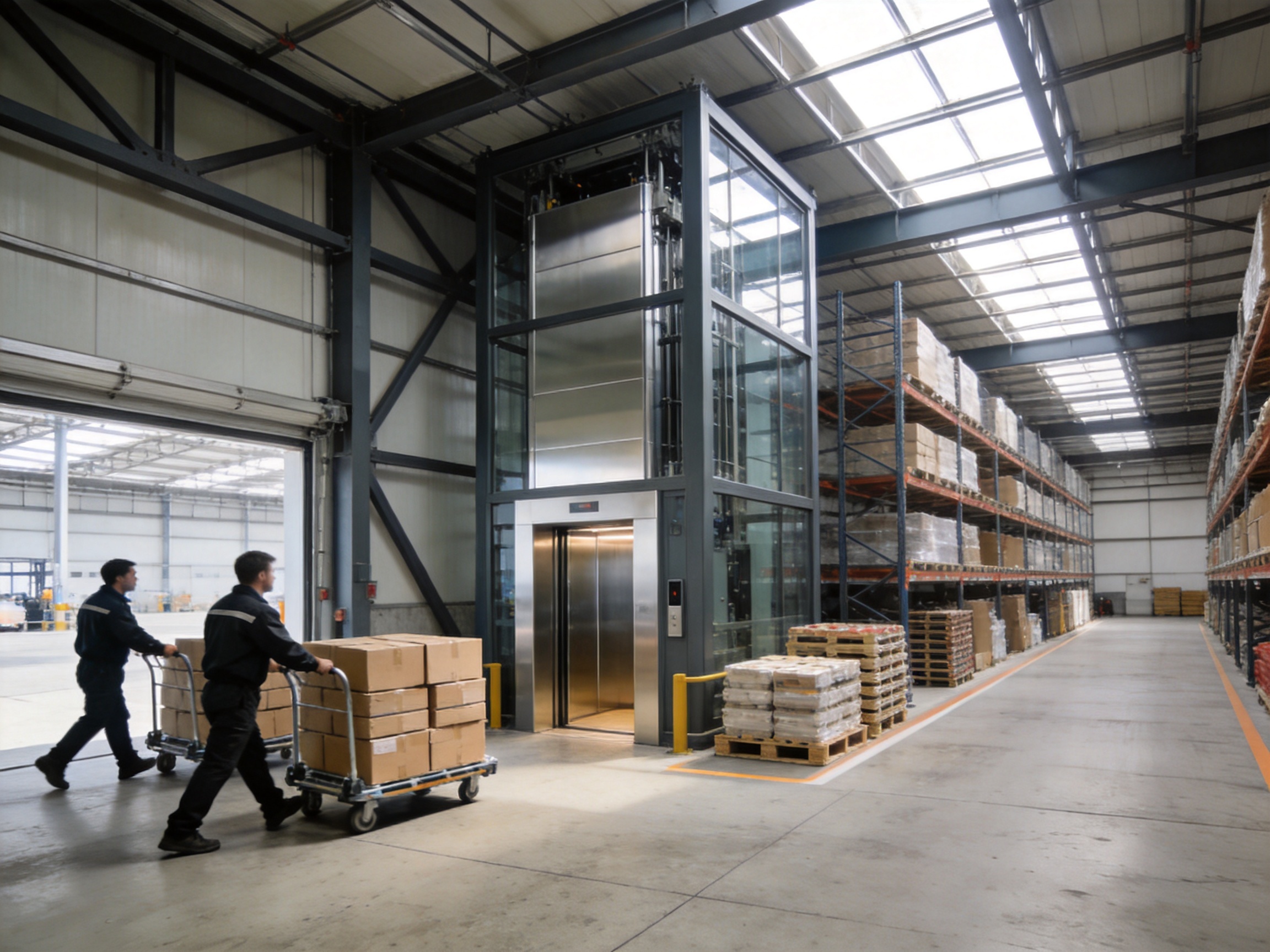
Modern buildings need cargo movement that is safe, space-efficient, durable, and economical throughout the complete life cycle of the facility. A machine room less freight elevator answers this demand by combining high-load vertical transportation with a compact architectural footprint. Instead of requiring a separate machine room above the hoistway or in a dedicated technical area, the main traction and control arrangement is integrated into a more optimized elevator structure. This makes the system especially valuable for factories, warehouses, logistics centers, shopping complexes, public buildings, industrial parks, and mixed-use developments where every square meter of construction area has financial and operational value.
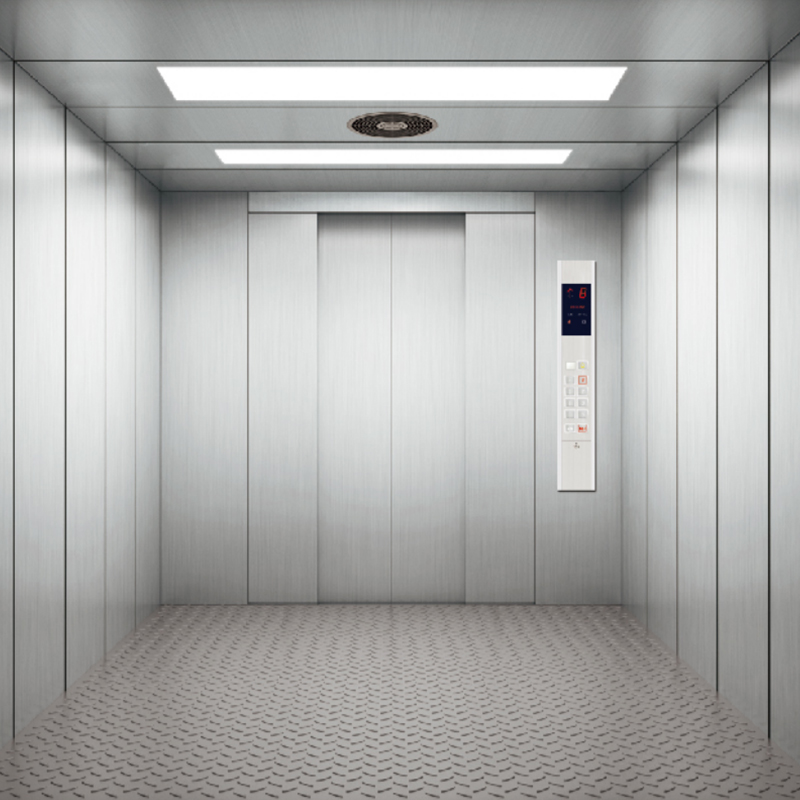
The freight elevator described in this article is designed for vertical cargo transportation and is categorized as a machine room less elevator. It is intended to provide robust performance for heavy goods while supporting smooth movement, accurate leveling, intelligent control, and safe operation. Its compact structure adopts a gearless synchronous hoisting system and a slim control cabinet, helping reduce construction requirements while improving the overall quality and usability of the elevator installation. For projects that need reliable goods movement but also need to control civil construction cost, this machine room less freight elevator provides a practical and forward-looking solution.
Why Machine Room Less Freight Elevators Matter in Modern Buildings
Traditional freight elevators often require a dedicated machine room. This can create additional design work, structural reinforcement, building height requirements, and construction cost. In dense commercial or industrial projects, the added room may reduce rentable area, complicate the roof structure, or make building approval more difficult. A machine room less freight elevator reduces these challenges by eliminating the need for a conventional machine room and using a compact drive and control arrangement inside the elevator system environment. The result is a cleaner architectural layout, better use of floor area, and a more flexible solution for new buildings and modernization projects.
For cargo transportation, space savings are only one part of the value. Freight elevators must also tolerate frequent use, heavy loading, impact from carts or pallets, and demanding operating schedules. A high-quality machine room less freight elevator is engineered to meet these conditions through a strengthened car structure, high-intensity materials, durable bottom plates, precise mechanical processing, and reliable safety components. These features help the elevator maintain stability and service life even when it is used for moving industrial materials, commercial goods, tools, packaged products, and other heavy cargo.
Compared with many conventional traction or hydraulic freight elevator solutions, a machine room less traction design can offer stronger energy-saving potential, more stable operation, reduced vibration, and improved installation flexibility. The gearless hoisting arrangement avoids many of the losses and vibration sources associated with older geared systems. Variable voltage variable frequency control, often called VVVF control, allows the elevator to accelerate, run, decelerate, and level smoothly. This not only improves the handling experience for operators but also helps protect goods from sudden movement and shock.
Core Product Positioning: Vertical Cargo Transportation with Optimized Space
The product is positioned as a vertical cargo transportation solution for customers who need a reliable freight elevator without the traditional machine room burden. Its machine room less design creates a more compact overall structure, helping reduce construction cost and save space. In many projects, the ability to eliminate or reduce the dedicated machine room can simplify the building plan and free space for production, storage, retail, or utility functions. This advantage is particularly important in urban industrial facilities, distribution warehouses, commercial buildings, and renovation sites where available space is limited.
The elevator uses a compact structure that integrates a gearless synchronous hoisting system and a slim control cabinet. This combination supports a modern installation concept: the elevator is no longer treated as a large mechanical burden on the building, but as an integrated transportation system designed to fit efficiently into the architectural envelope. The machine room less structure reduces civil engineering complexity while maintaining the high load capacity required for freight use. For building owners, this means the project can achieve functional cargo movement with fewer space compromises.
Another important positioning point is the balance between strength and operational comfort. Freight elevators are sometimes judged only by load capacity, but real-world users also need smooth door operation, accurate floor leveling, stable starting, reliable braking, and simple control. This machine room less freight elevator is designed with VVVF technology, spot-to-spot curved speed adjustment, and dedicated leveling performance for large loads. Cargo handling becomes easier because the elevator can stop precisely at floor level, allowing carts, trolleys, and palletized goods to move in and out more smoothly.
Advantages Over Conventional and Competing Cargo Elevator Solutions
One of the most direct advantages of this machine room less freight elevator is construction efficiency. A conventional freight elevator may require extra building height, a machine room slab, dedicated ventilation, access provisions, and additional structural coordination. By using a machine room less layout, the elevator can help reduce these requirements. The result may include lower construction cost, shorter coordination time, and better use of building volume. For developers and industrial owners, the ability to save construction area while maintaining cargo capacity can have a measurable financial impact.
Another advantage is energy performance. The elevator is driven by a gearless hoisting system, which can reduce energy loss compared with some older geared drive arrangements. Gearless traction technology is valued for its high transmission efficiency, reduced mechanical wear, and smoother operation. When combined with VVVF drive control, the elevator can regulate motor output according to movement requirements rather than operating in a less efficient fixed-speed manner. This contributes to energy saving and helps reduce long-term operating cost, especially in facilities where freight movement occurs many times each day.
Durability is also a competitive strength. Freight elevators face more physical stress than passenger elevators because cargo can be unevenly distributed, pushed into the car, or handled with metal carts and loading equipment. The product uses high-intensity materials for the car bottom and structural components, improving load sustainability and safety. Rust resistance at the bottom of the car is improved to help prolong service life. Thickened steel boards and a mechanically optimized car frame support heavy-duty operation. These design choices make the elevator suitable for users who need long-term value rather than only low initial price.
Safety performance is another major differentiator. Safety components such as safety gears, speed limiters, door interlocks, terminal forced slowdown protection, overspeed protection, overload stopping, safety circuit protection, and brake detection protection are essential to freight operation. A cargo elevator is frequently used in working environments where staff, goods, and equipment interact closely. Strong safety architecture reduces operational risk and helps the owner maintain safe logistics flow. This elevator’s listed safety functions show a systematic approach covering movement control, door protection, emergency return, inspection operation, and fault response.
The elevator also improves working convenience through wide door opening options, accurate leveling, repeated door closing, door close delay, car stop and door open functions, and control features such as full collective control, full-load bypass, attendant running, duplex control, and optional IC card control. These features allow the elevator to be adapted to different usage patterns. In a warehouse, the priority may be efficient cargo dispatch. In a retail building, controlled access may be necessary. In a factory, inspection and maintenance functions may be more important. A flexible control package makes the elevator more competitive across different industries.
Engineering Structure and Drive Technology
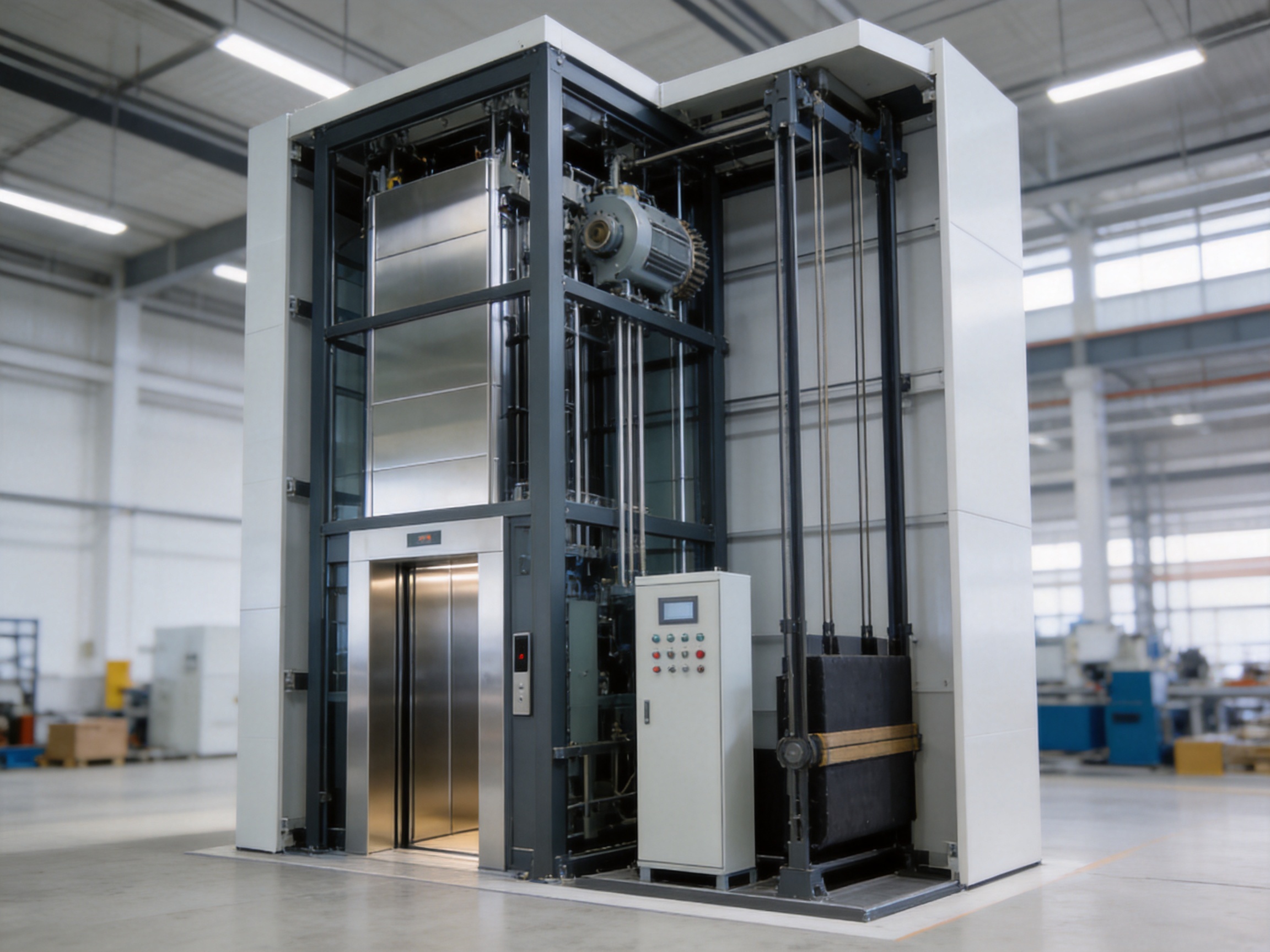
The heart of the elevator is its gearless synchronous hoisting system. A gearless hoister can directly convert motor torque into traction movement with fewer mechanical transmission stages. This helps reduce vibration, minimize energy loss, and extend component life. For freight applications, stable drive force is essential because the elevator may carry heavy loads close to the rated capacity. The dedicated hoisting arrangement provides strong driving force while helping the elevator operate with low vibration and low noise. The result is a freight elevator that feels stable even under demanding loading conditions.
The braking system is designed to deliver large rated braking torque. Excellent braking performance is critical in freight elevators because the moving mass is significant, especially at high load capacity. A dependable brake helps ensure controlled stopping and improves safety in daily use. Brake detection protection further supports reliability by monitoring brake-related conditions and reducing the possibility of unsafe operation. In a heavy-duty elevator, the brake is not merely a stopping device; it is a core safety component that must perform consistently over many operating cycles.
VVVF control is another essential engineering feature. Instead of abrupt starts and stops, VVVF control adjusts frequency and voltage to regulate motor speed in a refined way. Spot-to-spot curved speed control allows the elevator to start smoothly, accelerate efficiently, decelerate gently, and level accurately. This is valuable for cargo because goods may shift if the car moves suddenly. Smooth movement also reduces mechanical stress on the elevator system and contributes to passenger comfort when attendants accompany goods. Even though the elevator is designed for freight, comfort still matters because operators often ride with cargo during loading and unloading tasks.
The car frame and car structure are designed according to mechanical principles and reinforced with durable steel components. Cargo elevators often experience concentrated loads from wheels, pallets, and industrial containers. A carefully engineered car floor and frame help distribute these forces and reduce deformation. Thickened steel boards increase load sustainability, while precise mechanical processing helps maintain alignment and movement quality. The elevator is therefore prepared for real freight environments, not only ideal test conditions.
Load Capacity, Leveling, and Cargo Handling Efficiency
For a freight elevator, rated load capacity is one of the first concerns for buyers. The product information indicates an increased rated load range, rising from 1600 kg to 3000 kg in applicable configurations. This capacity range can meet various cargo handling requirements in small and medium industrial facilities, warehouses, commercial service areas, and production environments. A stronger load capacity gives users more flexibility because the elevator can handle heavier shipments, larger carts, and consolidated cargo movement.
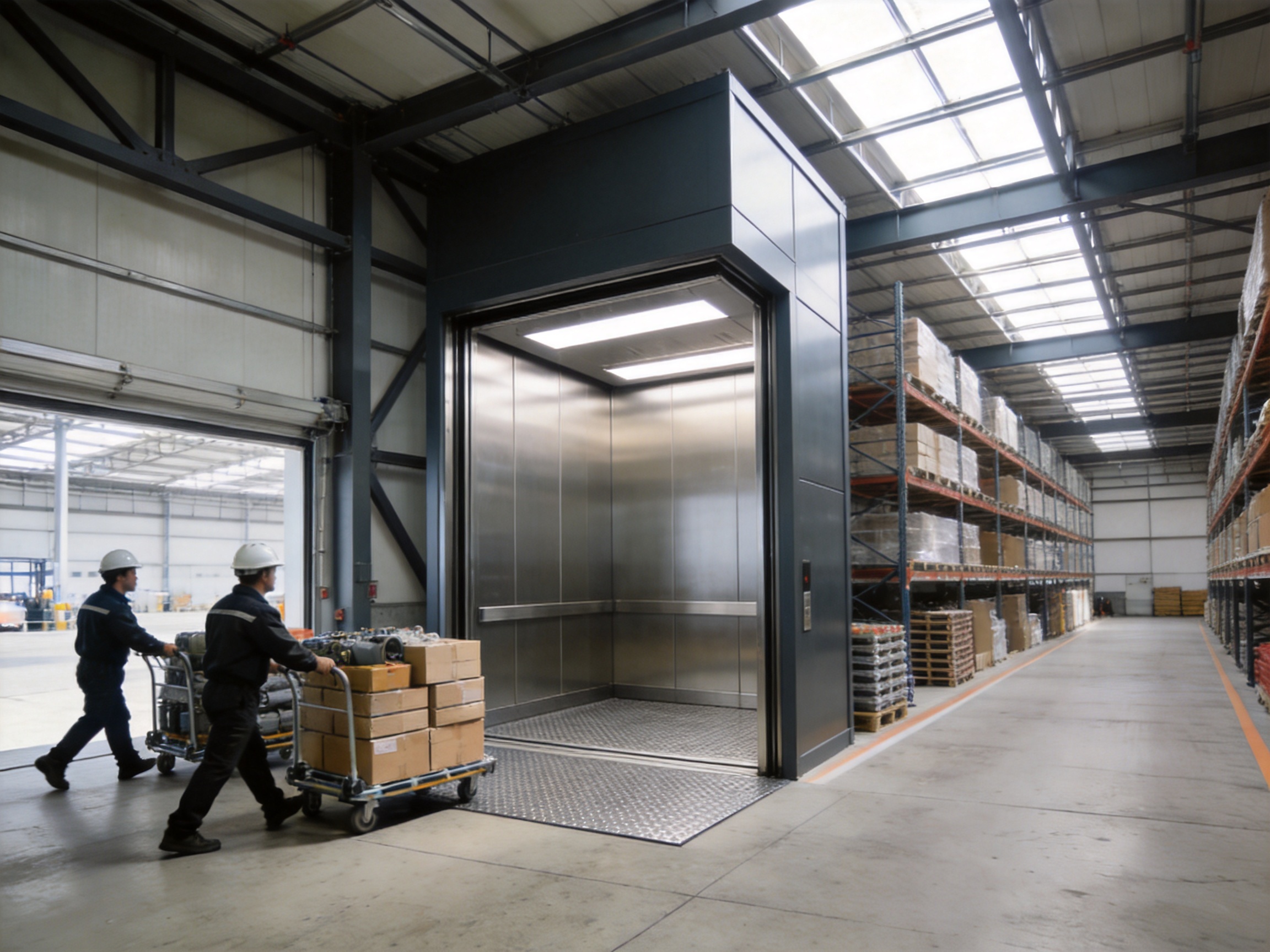
However, capacity is meaningful only when combined with stable leveling and wide access. Specific leveling technology ensures precise floor leveling under large loads, making cargo handling feel as if it occurs on flat floors. This is extremely important because even a small height difference between the car floor and landing floor can make moving wheeled cargo difficult or unsafe. Accurate leveling reduces the risk of carts getting stuck, pallets scraping the sill, goods tipping, or workers needing additional effort. In logistics operations, these small improvements can accumulate into major time savings.
Wide door opening is another practical advantage. Freight movement often requires large packages, palletized goods, furniture, machines, tools, or stacked containers to pass through the elevator entrance. A wide door opening specifically designed for cargo transportation improves efficiency and reduces the chance of damage to doors, goods, or building finishes. Door operator VVVF drive also contributes to smooth door movement, helping reduce shock and improve user experience.
The elevator’s strong load sustainability is supported not only by the drive and car frame but also by the overall structural arrangement. The non-machine-room design is compact, sturdy, and durable. A durable structure reduces the risk of performance decline over time. In competitive comparison, an elevator with stronger load structure and better leveling can deliver lower operating frustration than a cheaper system that struggles with heavy use, inaccurate stops, or frequent door issues.
Safety System Designed for Heavy-Duty Use
Safety in freight elevators must account for heavy loads, frequent door cycling, mixed staff usage, and possible rough working conditions. This elevator includes multiple safety functions that address different operational risks. Light curtain protection helps detect obstructions in the door area, reducing the likelihood of door contact with people or goods. Overload stop protection prevents the elevator from running when cargo exceeds safe limits. Terminal forced slowdown protection provides additional control near the top and bottom travel limits.
Overspeed protection is another critical layer. Down overspeed protection and up overspeed protection help manage abnormal movement conditions. Safety stop, inspection operation, inching operation, and safety circuit protection provide controlled maintenance and emergency handling functions. Door interlock protection ensures that the elevator does not operate with landing or car doors improperly secured. Main contactor protection and brake detecting protection add further monitoring to important electrical and mechanical systems.
Fire emergency return is important in buildings where the elevator must respond to fire control requirements. Auto-landing with fault can help the system move to a safer status when certain failures occur. Emergency car lighting supports visibility when power conditions are abnormal. Power failure emergency leveling can be configured to help reduce the risk of trapped users or goods during power interruptions. Together, these safety functions show a layered design philosophy: no single protection measure is expected to handle every risk; instead, multiple systems work together to improve operational security.
In many competing freight elevators, buyers may find a basic safety package but limited intelligent monitoring or control flexibility. This product’s available functions, including self-diagnosis of breakdown, five-way communication, indicators in the car and hall, voice announcement options, traction machine monitoring, and optional IC card control, create a more complete safety and information environment. Building owners can better understand operating status, respond to faults, and manage access when required.
Comfort and Operational Convenience for Daily Users
Although the elevator is built for cargo, daily users still benefit from a comfortable operating experience. Smooth acceleration and deceleration reduce the physical feeling of movement. Low vibration and low noise improve the working environment. Accurate leveling reduces the effort needed to move goods. Reopen with hall call, repeated door closing, express door closing, door close delay, and car stop and door open functions help adapt the door cycle to real loading patterns. These may appear to be small details, but they strongly influence everyday productivity.
Car ventilation and lighting control can automatically shut off to reduce unnecessary energy consumption. Emergency car lighting improves usability during abnormal conditions. Micro-touch buttons in the car create a modern and responsive control experience. A second car operation panel can be useful in larger cars or applications where goods may block access to one panel. Attendant running can support controlled freight movement when an operator is responsible for elevator use. Duplex control can improve traffic handling where two elevators serve the same building zone.
Full collective control and full-load bypass help improve dispatch efficiency. Full collective control allows the elevator to manage multiple calls logically, while full-load bypass prevents unnecessary stops when the car is already loaded. Main floor shut off may be useful during specific building operation modes. Car call cancel can correct mistaken input. Automatic adjustment of door open holding time can improve traffic efficiency because a cargo elevator may need longer door open time during loading but should not remain open unnecessarily when not needed.
Product Feature Table
| Feature Area | Key Design | User Benefit |
|---|---|---|
| Machine Room Less Structure | Compact arrangement with slim control cabinet and integrated drive concept | Reduces construction area, lowers civil cost, and improves building space utilization |
| Drive System | Gearless synchronous hoisting system with strong driving force | Improves efficiency, reduces vibration, supports smoother heavy-load movement |
| Speed Control | VVVF drive and curved speed adjustment | Provides smooth starting, stable running, gentle braking, and comfortable operation |
| Load Performance | High-intensity structure and reinforced car bottom | Supports demanding cargo movement and improves service life |
| Leveling | Specific leveling technology for heavy loads | Allows easier loading and unloading, especially for carts and palletized goods |
| Safety Protection | Light curtain, overload stop, overspeed protection, door interlock, brake detection | Reduces operational risk and supports safer daily freight transportation |
| Information Functions | Self-diagnosis, indicators, communication, optional monitoring functions | Helps maintenance teams identify faults and improve response efficiency |
| Service Support | Global service standards, exclusive maintenance planning, remote monitoring options | Supports long-term reliability and predictable maintenance management |
Manufacturing Strength and Industrial Capability
A freight elevator’s performance depends not only on design but also on manufacturing quality. Tenau Elevator (China) Co., Ltd. is located in Huzhou City, Zhejiang Province, in the Nanxun Economic Development Zone. The company focuses on elevator and escalator manufacturing and serves overseas markets with customized solutions. Its production capability is supported by professional elevator and escalator production lines, automatic panel production equipment, and a workforce with experience in elevator production, technology, and product development.
The company’s manufacturing background includes the consolidation of production resources with DIAO Group Ltd., forming two production bases that share a production platform. DIAO manufactures escalators and passenger elevators, while Tenau is responsible for cargo elevators and home lifts. This division of production responsibilities helps concentrate technical and manufacturing expertise. For the freight elevator buyer, this means the product is supported by a company that understands the particular requirements of cargo transportation rather than treating freight elevators as a minor extension of passenger elevator production.
The company emphasizes a strategic objective of high standard, high precision, and zero defect. This quality philosophy is important because elevator production involves many components that must work together precisely: guide rails, car frames, doors, controllers, brakes, traction systems, safety gears, speed limiters, wiring, panels, and control software. A small defect in one part can affect overall reliability. By applying strict pursuit of quality control and a rigorous detection system throughout the production process, the manufacturer can improve consistency and reduce the likelihood of field problems.
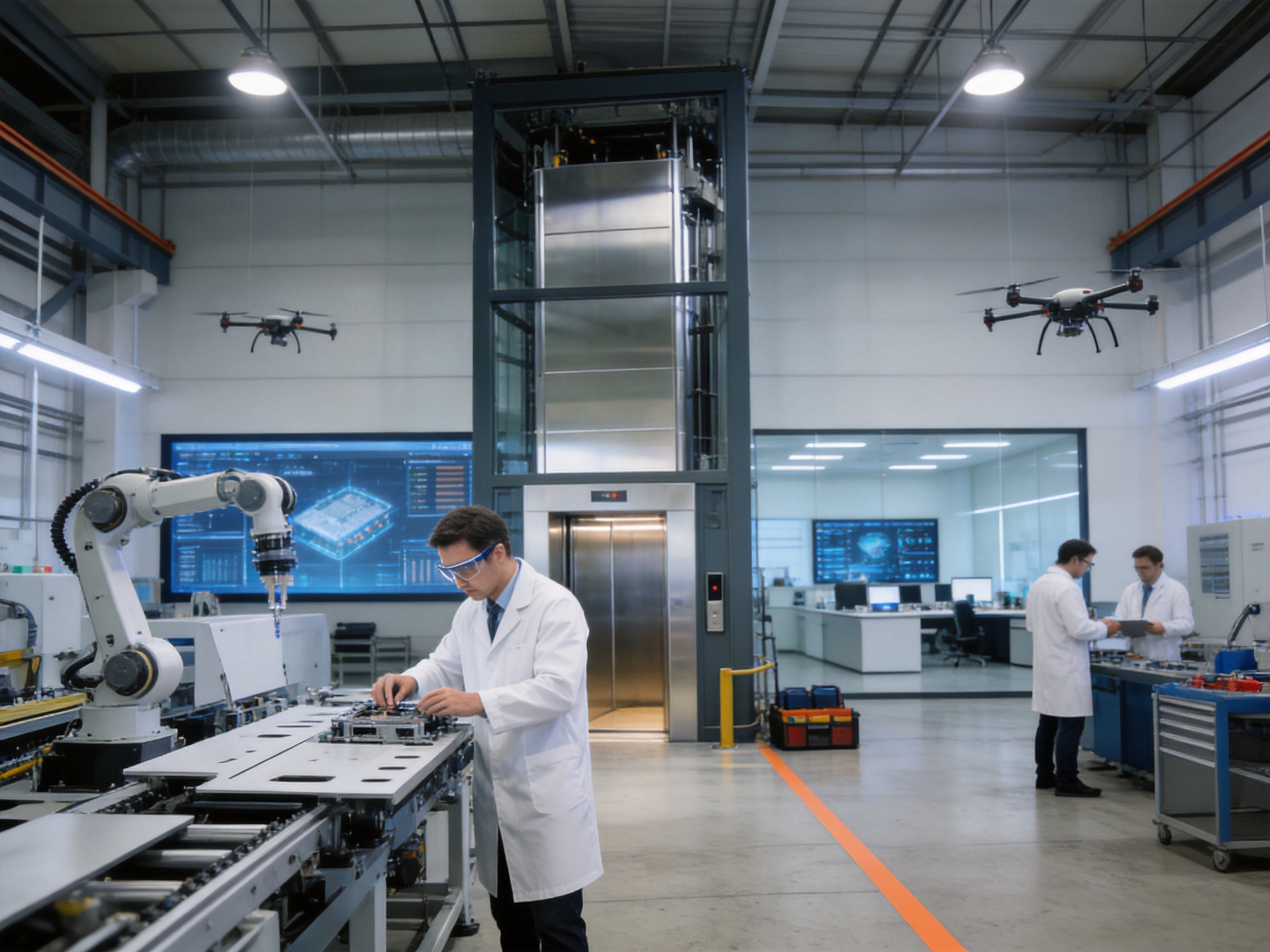
The production base follows a modern industrial park concept integrating design aesthetics, efficient operation, and green environment. An intelligent production system is used to support efficient and controlled manufacturing. Several automatic production machines, combined with big data and Internet of Things concepts, help realize intelligent processing, intelligent production, intelligent detection, and intelligent monitoring of industrial procedures. This manufacturing approach supports product precision and traceability, both of which are valuable for elevators that must meet safety and performance expectations over many years.
Advanced Manufacturing Processes Behind Product Reliability
Advanced manufacturing is especially important for a machine room less freight elevator because compact structure demands accurate production. When the drive, control, car, guide, and safety systems are integrated into a space-saving arrangement, tolerances matter. Automatic panel processing can improve the consistency of car panels and structural elements. Precise mechanical processing supports smooth assembly and alignment. Intelligent detection helps identify dimensional or quality issues before products leave the factory. These processes reduce installation problems and help the elevator perform as designed.
In a freight elevator, the car bottom and frame are subject to repeated stress. Manufacturing quality in cutting, forming, welding, surface treatment, and assembly influences long-term strength. The product information highlights improved rust resistance at the bottom of the car, which is valuable in environments where moisture, dust, cleaning chemicals, or outdoor-adjacent loading areas may exist. Rust resistance helps protect the structure from degradation and extends usable life. The use of high-intensity material and reinforced steel board further supports durability.
The control cabinet is described as slim, which means the electrical control system must be designed and assembled efficiently. A compact cabinet can reduce space requirements, but it must still allow safe wiring, heat management, maintenance access, and reliable operation. Intelligent production and detection processes help ensure that electrical assemblies meet standards and are consistent from unit to unit. For customers, this can translate into more stable commissioning, easier maintenance, and better long-term reliability.
Quality control also affects safety components. Safety gears, speed limiters, brakes, and door systems must be manufactured and installed according to relevant elevator manufacturing and installation norms. The product materials state that safety components are manufactured in accordance with international codes. This is important for overseas buyers who need confidence that the equipment can satisfy project expectations and local regulatory review. The company’s experience serving clients from nearly 60 countries further supports its ability to communicate with international customers and adapt to diverse requirements.
Service System and Life-Cycle Value
An elevator is not a one-time purchase; it is a long-term transportation asset. The total value depends on design quality, manufacturing consistency, installation support, spare parts, maintenance planning, and response speed. The company promotes a global unified service standard and maintenance process, with comprehensive inspection standards. This helps customers maintain safety and performance over the entire product life period. For a freight elevator that may be essential to daily business operation, maintenance support is not optional; it is central to uptime.
Exclusive maintenance planning is another important service concept. Client data files can be maintained one to one, allowing the service team to formulate maintenance plans according to actual product configuration and usage conditions. A freight elevator in a warehouse operating continuously may require different maintenance attention from a freight elevator in a small commercial building used only several times per day. Customized maintenance planning helps prevent both under-maintenance and unnecessary service interruption.
Remote monitoring through an intelligent system can provide operational visibility. Monitoring elevator operation supports faster detection of abnormal conditions and better safety management. In a competitive market, remote monitoring is increasingly important because owners want data-based maintenance rather than waiting for failures to become obvious. Safety information under control means facility managers can better understand status and coordinate service.
Full-time support is also emphasized. A 24-hour service team that can respond to customer demands helps reduce downtime risk. For industrial and logistics users, freight elevator downtime can interrupt production, delay shipments, and increase labor cost. Therefore, service responsiveness is a key advantage over suppliers that may offer lower initial pricing but limited after-sales support. The combination of manufacturing strength and service network gives the product stronger life-cycle value.
Applications in Industrial, Commercial, and Public Environments
Machine room less freight elevators are suitable for a wide range of buildings. In factories, they move raw materials, semi-finished goods, components, packaging materials, tools, and finished products between floors. Their high load capacity and durable structure help support production flow. Smooth movement reduces the risk of damaging sensitive materials or equipment. Accurate leveling improves the use of carts and trolleys, reducing manual effort and increasing safety.
In warehouses and logistics centers, freight elevators connect storage levels, loading areas, mezzanines, and dispatch zones. Space efficiency is particularly valuable because warehouse owners want to maximize storage and operational space. Eliminating the traditional machine room can free building volume and simplify layout. Wide door opening supports palletized cargo and larger packages. Full-load bypass and efficient dispatch functions help maintain movement speed during busy periods.
In shopping centers and commercial complexes, freight elevators serve back-of-house logistics. They move retail stock, restaurant supplies, maintenance equipment, waste containers, and event materials. Machine room less design helps architects integrate the elevator into service corridors without sacrificing commercial space. Quiet and smooth operation is also valuable in public buildings because freight movement may occur near occupied areas. Access control functions such as IC card control can help restrict elevator use to authorized personnel.
In hotels, offices, hospitals, schools, and public facilities, freight elevators can support housekeeping, maintenance, supply movement, archives, furniture, and equipment transportation. These buildings need safe and dependable operation, but they may not have enough space for a traditional freight elevator machine room. A compact machine room less design offers a more adaptable solution. The elevator can also be customized according to traffic needs, door arrangement, and control requirements.
How the Elevator Supports Sustainable Building Goals
Sustainability in elevator systems includes energy consumption, space efficiency, material durability, maintenance reduction, and long-term usability. The machine room less freight elevator contributes to sustainability by saving construction area and reducing the need for extra building structures. Less dedicated machine room space can mean reduced material use and more efficient building planning. In projects where roof height or technical space is limited, this can also reduce design complications.
Energy saving is supported by the gearless hoisting system and VVVF control. Gearless traction technology can reduce transmission loss, while VVVF control avoids unnecessary power peaks associated with harsh starts and stops. The product information references energy-saving benefits and energy consumption reduction, indicating that the system is designed with efficient operation in mind. Over years of service, reduced energy consumption can lower operating cost and environmental impact.
Durability is another sustainability factor. A product that lasts longer and requires fewer major repairs reduces material waste and replacement cost. Reinforced structures, rust resistance, precise mechanical processing, and high-quality safety components all support longevity. When combined with intelligent maintenance and remote monitoring, the elevator can remain in better condition throughout its service life. This aligns with the broader trend toward life-cycle thinking in building equipment procurement.
Customization and Overseas Market Support
Different countries, buildings, and industries require different elevator solutions. The company’s philosophy emphasizes customized solutions, whether for a single product or complete sets of equipment. This is important for freight elevators because cargo type, loading method, building structure, door direction, rated load, travel height, control logic, and aesthetic requirements can vary widely. A standard product may not fit every project. Professional communication helps ensure that the final configuration matches the actual usage scenario.
The company provides multilingual service, including English, Russian, Spanish, and Arabic. For overseas buyers, clear communication reduces project risk. Elevator procurement involves technical drawings, specifications, installation coordination, safety standards, shipping, commissioning, and after-sales service. Misunderstanding any of these details can cause delays or extra cost. A manufacturer experienced in international cooperation can respond to inquiries with more professional and reasonable solutions.
The company states that it replies patiently and meticulously to customer problems and feedback, provides professional suggestions for new products, and finishes orders with speed and quality. This customer-oriented approach is important in the elevator industry because each project can include site-specific constraints. A buyer may need help selecting the correct load capacity, door type, control function, and installation plan. Technical support during the early stage can prevent expensive corrections later.
Key Considerations When Selecting a Machine Room Less Freight Elevator
Buyers should begin by defining the actual cargo to be transported. Weight, size, loading method, frequency, and operating schedule all matter. A 1600 kg load may be adequate for lighter commercial goods, while industrial users may require capacity up to 3000 kg or more depending on configuration. The car size and door opening must match the largest expected goods. If pallet trucks or carts are used, the entrance width and leveling precision become critical.
Building conditions should also be reviewed. Machine room less design reduces machine room requirements, but the hoistway, pit, overhead, landing arrangement, and power supply must still be coordinated. Early technical consultation helps architects and engineers reserve appropriate space. For renovation projects, compact structure may provide a major advantage because existing buildings often cannot easily add machine rooms or large structural changes.
Safety and control functions should be selected based on building usage. Industrial buildings may prioritize inspection operation, overload protection, fault diagnosis, and rugged door performance. Commercial buildings may require access control, voice announcement, indicators, and traffic dispatch. Facilities with critical logistics needs may value remote monitoring and emergency leveling. The best freight elevator configuration is not simply the one with the most functions; it is the one whose functions match the building’s operating needs.
After-sales service should be considered before purchase. A freight elevator is often mission-critical. If it stops, goods movement may stop with it. Buyers should assess the manufacturer’s service standards, maintenance planning, response capability, spare parts support, and communication quality. A lower-cost elevator without reliable service may become more expensive over time if downtime, repairs, and operational disruptions are frequent.
Why This Product Is a Strong Choice for Freight Transportation
This machine room less freight elevator stands out because it combines compact building integration, heavy-duty structure, energy-conscious drive technology, smooth VVVF control, safety protection, and service support. It is not designed merely to lift goods from one floor to another; it is designed to improve the complete cargo handling process. The elevator supports easier loading, safer operation, better space utilization, and lower long-term operating burden.
Compared with older machine-room freight elevators, it offers better architectural flexibility. Compared with less robust cargo elevators, it offers stronger structural design and more complete safety functions. Compared with low-cost suppliers that may focus only on basic lifting, it provides a more developed system including intelligent control, information functions, maintenance support, and advanced manufacturing quality. These advantages are especially important for customers who value reliability, life-cycle cost, and professional international support.
The manufacturing strength behind the product further improves confidence. Intelligent production, automatic equipment, big data and Internet of Things concepts, strict quality control, and rigorous detection systems all contribute to consistent product quality. The company’s experience in cargo elevator production and overseas market support gives buyers access to both manufacturing capability and project communication support. In a market where reliability and safety are essential, these strengths provide meaningful differentiation.
Q&A Section
Q1: What is the main advantage of a machine room less freight elevator?
The main advantage is space efficiency. A machine room less freight elevator eliminates the need for a traditional separate machine room, helping reduce construction area, lower civil engineering cost, and simplify building design. At the same time, it can still provide the strength and capacity required for cargo transportation.
Q2: Is this type of elevator suitable for heavy cargo?
Yes. The elevator is designed for freight transportation and can be configured with strong load capacity, including load ranges that can meet demanding cargo handling needs. Its reinforced car frame, high-intensity materials, thickened steel board, and durable car bottom support heavy-duty use.
Q3: How does the gearless hoisting system improve performance?
The gearless synchronous hoisting system reduces energy loss and mechanical vibration compared with many older geared systems. It provides strong driving force, stable movement, lower noise, and improved service life for important components. This is especially useful for freight elevators that operate under heavy loads.
Q4: Why is accurate leveling important for a freight elevator?
Accurate leveling ensures that the car floor aligns closely with the landing floor. This makes it easier and safer to move carts, trolleys, pallets, and heavy goods in and out of the elevator. It reduces impact, prevents goods from catching on floor edges, and improves loading efficiency.
Q5: What safety features are included?
The elevator can include light curtain protection, overload stop, terminal forced slowdown protection, up and down overspeed protection, safety stop, inspection operation, inching operation, door interlock protection, main contactor protection, brake detection protection, emergency lighting, fire emergency return, and fault auto-landing functions. These features create a layered safety system for freight operation.
Q6: How does VVVF technology benefit cargo transportation?
VVVF technology controls motor speed smoothly by adjusting voltage and frequency. This allows gentle starting, stable running, and controlled stopping. For cargo transportation, it reduces shaking, protects goods, improves comfort for operators, and reduces mechanical stress on the elevator system.
Q7: Can the elevator be used in warehouses and factories?
Yes. Warehouses and factories are among the most suitable environments for this product. It can move materials, tools, packaged goods, components, and finished products between floors. Its compact structure, wide door opening, high load capacity, and durable design are valuable in industrial and logistics operations.
Q8: What makes the manufacturer competitive?
The manufacturer has professional elevator and escalator production lines, automatic production equipment, intelligent manufacturing concepts, strict quality control, and international market experience. Its production system supports intelligent processing, intelligent production, intelligent detection, and intelligent monitoring, helping improve product consistency and reliability.
Q9: Is after-sales service important for freight elevators?
Yes. Freight elevators often support essential building operations. If the elevator stops, goods movement may be interrupted. A strong service system with unified maintenance standards, exclusive maintenance planning, remote monitoring options, and 24-hour response capability helps protect long-term uptime and safety.
Q10: How should buyers choose the right configuration?
Buyers should evaluate cargo weight, cargo size, daily usage frequency, door opening requirements, building structure, travel height, control needs, access management, and service expectations. Technical consultation with the manufacturer can help determine the proper rated load, car size, door arrangement, and safety and control functions.
References
Elevator Manufacturing and Installation Safety Norms, latest applicable industry guidance for traction elevator design and installation.
Guide to Vertical Transportation Systems in Industrial and Commercial Buildings, professional engineering reference on elevator selection and building integration.
Freight Elevator Design Principles, technical reference on load capacity, car structure, door systems, and leveling performance.
Variable Voltage Variable Frequency Drive Applications in Elevator Systems, engineering reference on motor control, ride quality, and energy efficiency.
Gearless Traction Elevator Technology and Maintenance Practice, technical reference on gearless hoisting systems, braking, and service life.
Industrial Equipment Life-Cycle Maintenance Management, reference material on preventive maintenance, remote monitoring, and long-term asset reliability.

Related Products
Related News
Built on safety, forging trust in vertical mobility.
lf you have any questions or need help, feel free to contact with our team.
 export@tenau.com.cn
 +86-18601458867
 +86-512-65059883
Elevator & Escalator
Factory Add
East of Xicheng Road, North of Lianyi Road, Nanxun Economic Development Zone, Nanxun District, Huzhou City, Zhejiang Province, P.R.China
Copyright © Tenau Elevator (China) Co., Ltd. All Rightd Reserved.
Custom High Quality Elevator Suppliers and World Brand Elevator Company