

 en
en Español
 русский
 中文简体
中文简体
Next-Gen Freight Elevators: Redefining Safety, Efficiency, and Customization for Industrial Cargo Transport
Content
- 1 1. Unmatched Advantages: How This Freight Elevator Outperforms Competitors
- 2 2. Behind the Scenes: Advanced Manufacturing and Company Strengths
- 3 3. Comprehensive Function Overview: Control, Safety, and Comfort
- 4 4. Frequently Asked Questions (FAQs)
- 4.1 Q1: What load capacities does this freight elevator support?
- 4.2 Q2: Can the elevator be customized for specific cargo sizes or facility layouts?
- 4.3 Q3: How does the energy efficiency of this elevator compare to traditional models?
- 4.4 Q4: What safety certifications does the elevator have?
- 4.5 Q5: What after-sales services are available?
- 5 5. References
In the fast-paced world of industrial logistics, the backbone of seamless cargo movement lies in reliable vertical transportation solutions. Freight elevators are not just machines—they are critical assets that keep factories running, warehouses stocked, and retail spaces supplied. However, traditional freight elevators often fall short of modern demands: limited door options, inconsistent leveling under heavy loads, high energy consumption, and inadequate safety features. Enter the next-generation freight elevator from Tenau Elevator (China) Co., Ltd.—a product engineered to address these pain points and set new benchmarks in the industry.
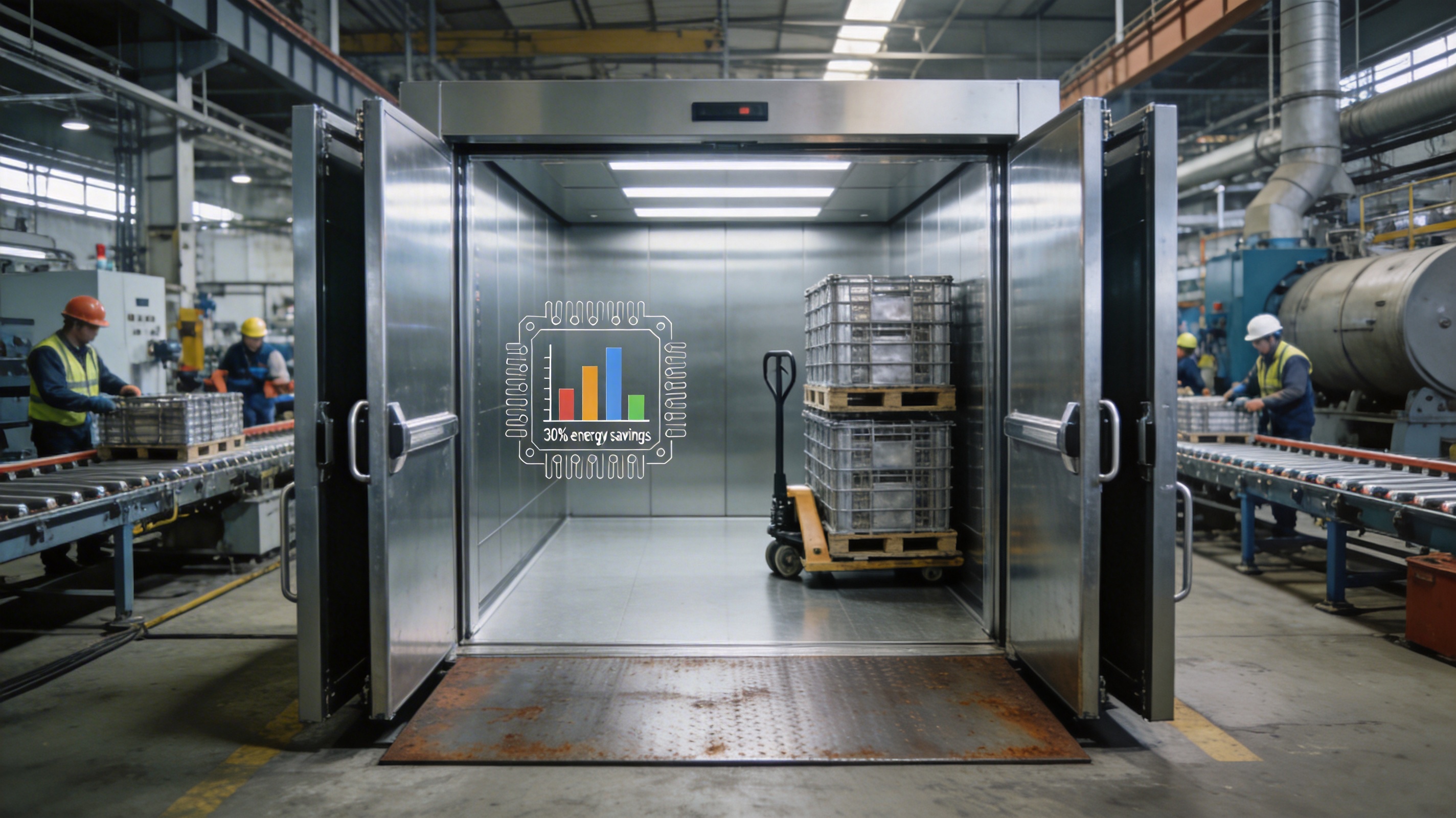
This article explores the key advantages of this freight elevator over competitors, delves into the manufacturer’s advanced manufacturing processes, and provides a comprehensive overview of its functions, safety features, and after-sales support. By the end, you’ll understand why this elevator is the go-to choice for businesses seeking to optimize their cargo transportation operations.
1. Unmatched Advantages: How This Freight Elevator Outperforms Competitors
What sets this freight elevator apart from other models on the market? Its design and engineering prioritize three core pillars: advanced technology, uncompromising safety, and tailored practicality—each addressing gaps in competitor offerings.
1.1 Advanced Technology: Precision and Efficiency Reimagined
Unlike many competitors that rely on outdated control systems, this freight elevator integrates an advanced CPU control unit. This allows for contact-free operation, reducing wear and tear on mechanical components and enhancing long-term reliability. Competitors’ models often use older microcontrollers that struggle with real-time adjustments, leading to slower response times and inconsistent performance.
Complementing the CPU control is a variable frequency (VF) speed adjusting system. This system ensures smooth acceleration and deceleration, minimizing cargo shifting and reducing strain on the elevator’s structure. In contrast, many traditional freight elevators use fixed-speed drives, which cause jarring movements and increase the risk of cargo damage. The VF system also contributes to significant energy savings—up to 30% compared to non-VF models—making it a cost-effective choice for businesses focused on sustainability.
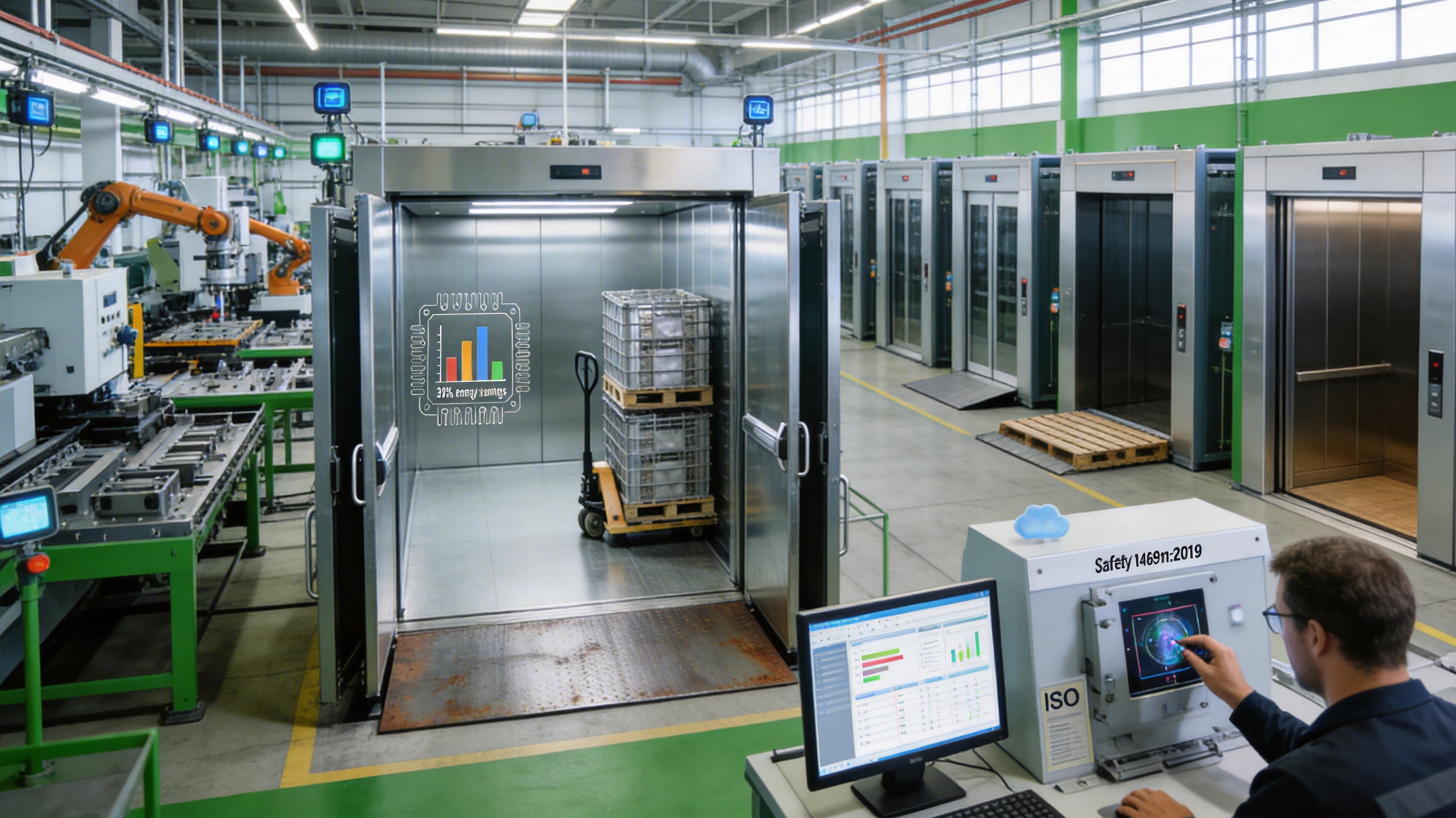
Another technological edge is the elevator’s precise floor leveling system. Even under maximum load, the elevator maintains a level position with the landing, eliminating gaps that make cargo handling difficult. Competitors’ models often struggle with leveling under heavy loads, leading to delays and potential safety hazards for workers loading and unloading.
1.2 Uncompromising Safety: A Non-Negotiable Priority
Safety is a critical concern for any freight elevator, and this model goes above and beyond industry standards to protect both cargo and personnel. Here’s how it outshines competitors:
- Safety Components Manufactured to International Codes: Safety dampers and speed limiters are built in compliance with ISO 14691:2019, the global standard for elevator safety. Many competitors cut corners by using non-certified components, increasing the risk of malfunctions.
- Rust-Resistant Car Bottom: The elevator’s car bottom is treated with a specialized rust-resistant coating, a feature rarely found in standard competitor models. This extends the elevator’s lifespan by up to 15 years, even in humid or corrosive environments (e.g., warehouses near coastal areas).
- High-Intensity Car Bottom Materials: Constructed from high-tensile steel, the car bottom can handle heavy loads (up to 5 tons, depending on customization) without deformation. Competitors often use lower-grade steel, leading to structural damage and reduced load capacity over time.
- Precise Mechanical Processing: Every component undergoes precision machining, ensuring tight tolerances and minimal wear. Competitors may use less precise manufacturing methods, leading to frequent breakdowns and higher maintenance costs.
1.3 Tailored Practicality: Designed for Real-World Cargo Needs
One of the biggest complaints about traditional freight elevators is their lack of flexibility. This model addresses this with a range of practical features that competitors rarely offer:
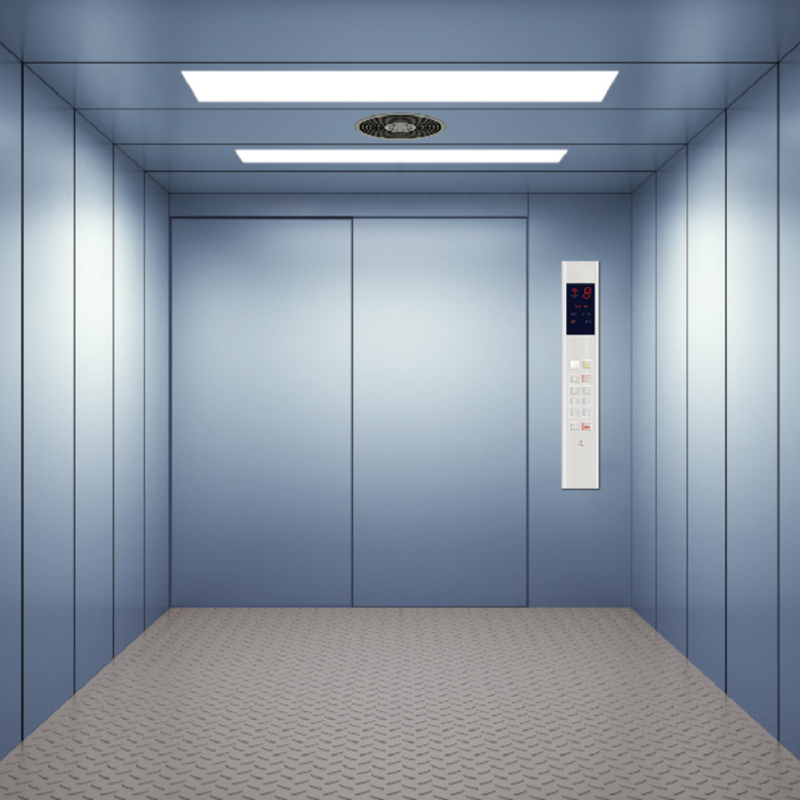
- Multiple Door Opening Modes: Unlike competitors that typically offer only side-opening or center-opening doors, this elevator provides five modes: side opening, center-opening double-folded, one-way, opposite, and double-way. This flexibility allows businesses to match the elevator to their specific layout—e.g., opposite doors for factories with loading docks on both sides.
- Spacious and Sturdy Car: The car is designed to accommodate large cargoes, with a width that matches the door opening (a feature missing in many competitors’ models). This eliminates the need for disassembling large items, saving time and labor costs.
- Customizable Load Capacities: While standard models support up to 3 tons, the manufacturer offers customization up to 5 tons for heavy-duty applications (e.g., manufacturing plants). Competitors often limit load capacities to 2-3 tons, making them unsuitable for heavy cargo.
2. Behind the Scenes: Advanced Manufacturing and Company Strengths
The superior performance of this freight elevator is no accident—it’s the result of the manufacturer’s commitment to cutting-edge manufacturing and rigorous quality control. Tenau Elevator (China) Co., Ltd. leverages German engineering principles and Industry 4.0 technologies to produce elevators that meet global standards.
2.1 Intelligent Production Base: Industry 4.0 at Work
The manufacturer’s production facility is an intelligent, modern industrial park designed to integrate design aesthetics, efficient operations, and green practices. Guided by German Tenau Elevator Group, the facility uses a state-of-the-art Industry 4.0 production system that combines big data and the Internet of Things (IoT) to optimize every stage of manufacturing:
- Intelligent Processing: Automatic CNC machines handle component production with precision, ensuring consistency across all units. Competitors often rely on manual labor, leading to variations in component quality.
- Intelligent Production: IoT sensors monitor production lines in real time, detecting bottlenecks and adjusting workflows to maximize efficiency. This reduces lead times by 20% compared to traditional manufacturing facilities.
- Intelligent Detection: Every component undergoes automated quality checks using machine vision and AI. This eliminates human error and ensures that only defect-free parts are used in assembly.
- Intelligent Monitoring: The entire production process is tracked via a cloud-based system, allowing customers to monitor their elevator’s progress from design to delivery.
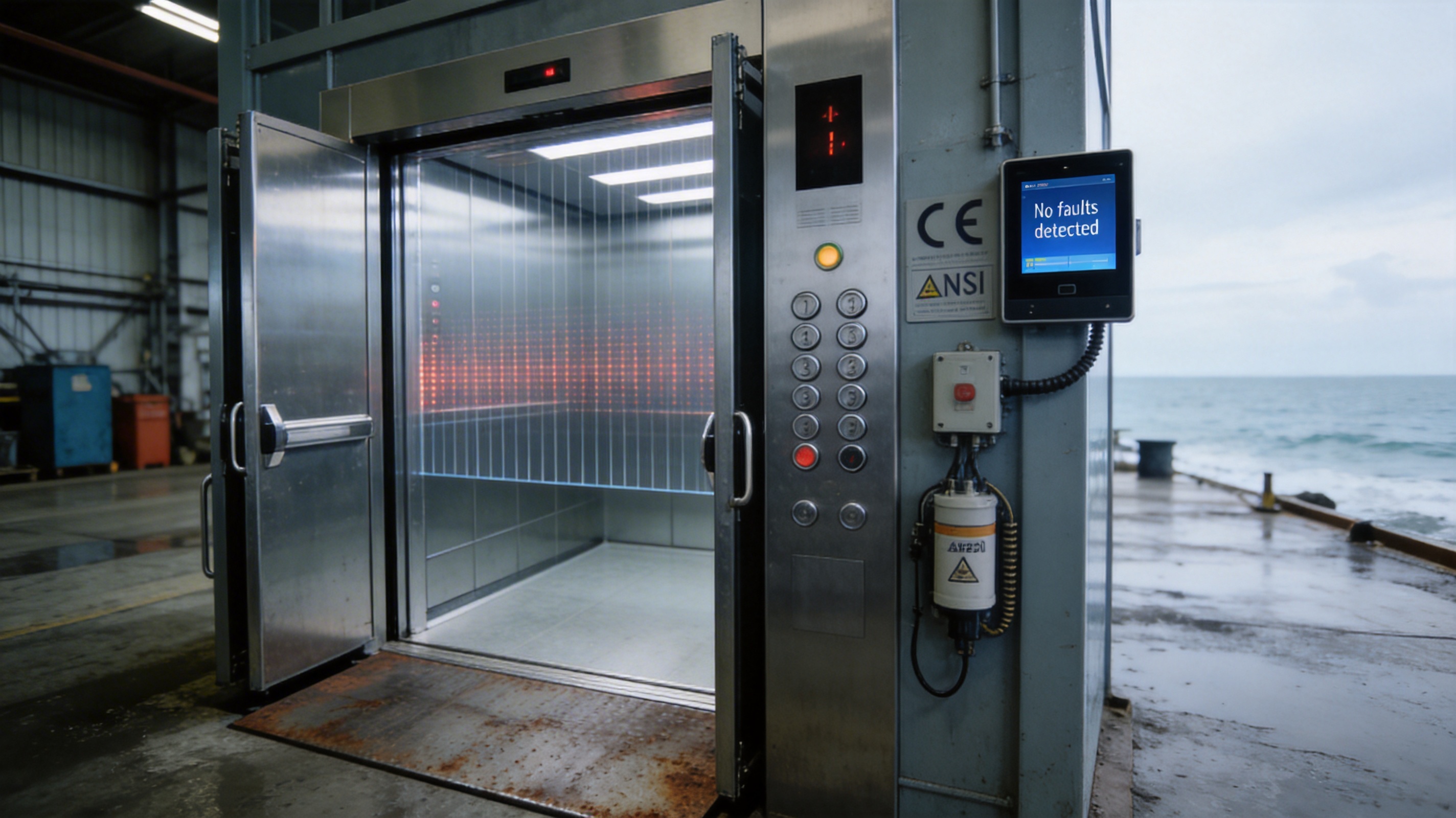
The facility also features fully automatic panel production equipment, which reduces waste and ensures the durability of elevator panels. This is a significant advantage over competitors that use outdated manual panel production methods.
2.2 Rigorous Quality Control: Zero Defect Goal
Tenau Elevator adheres to a strict “high standard, high precision, zero defect” quality policy, inspired by German industrial practices. Every elevator undergoes a comprehensive quality inspection process:
- Pre-Assembly Checks: All components are inspected for defects before assembly.
- Assembly Testing: Each elevator is tested for performance, safety, and efficiency during assembly.
- Final Inspection: Before shipment, the elevator undergoes a full load test and safety audit to ensure compliance with international standards (ISO, ANSI, etc.).
This rigorous process reduces the number of post-installation issues by 80% compared to competitors, saving customers time and money on repairs.
2.3 Customization Capabilities: Tailored Solutions for Every Industry
Unlike many competitors that offer one-size-fits-all solutions, Tenau Elevator provides customized freight elevators to meet the unique needs of different industries:
- Factories: Custom load capacities (up to 5 tons) and door modes (opposite doors for dual loading docks).
- Warehouses: Spacious cars for palletized cargo and rust-resistant coatings for humid environments.
- Malls: Quiet operation and aesthetically pleasing designs to blend with retail spaces.
- Logistics Centers: Fast response times and high-frequency operation capabilities.
The manufacturer’s team of engineers works closely with customers to understand their specific requirements, ensuring that the elevator is a perfect fit for their operations.
2.4 Global Service Network: 24/7 Support for Peace of Mind
A freight elevator is a long-term investment, and after-sales support is critical to its longevity. Tenau Elevator offers a global service network that includes:
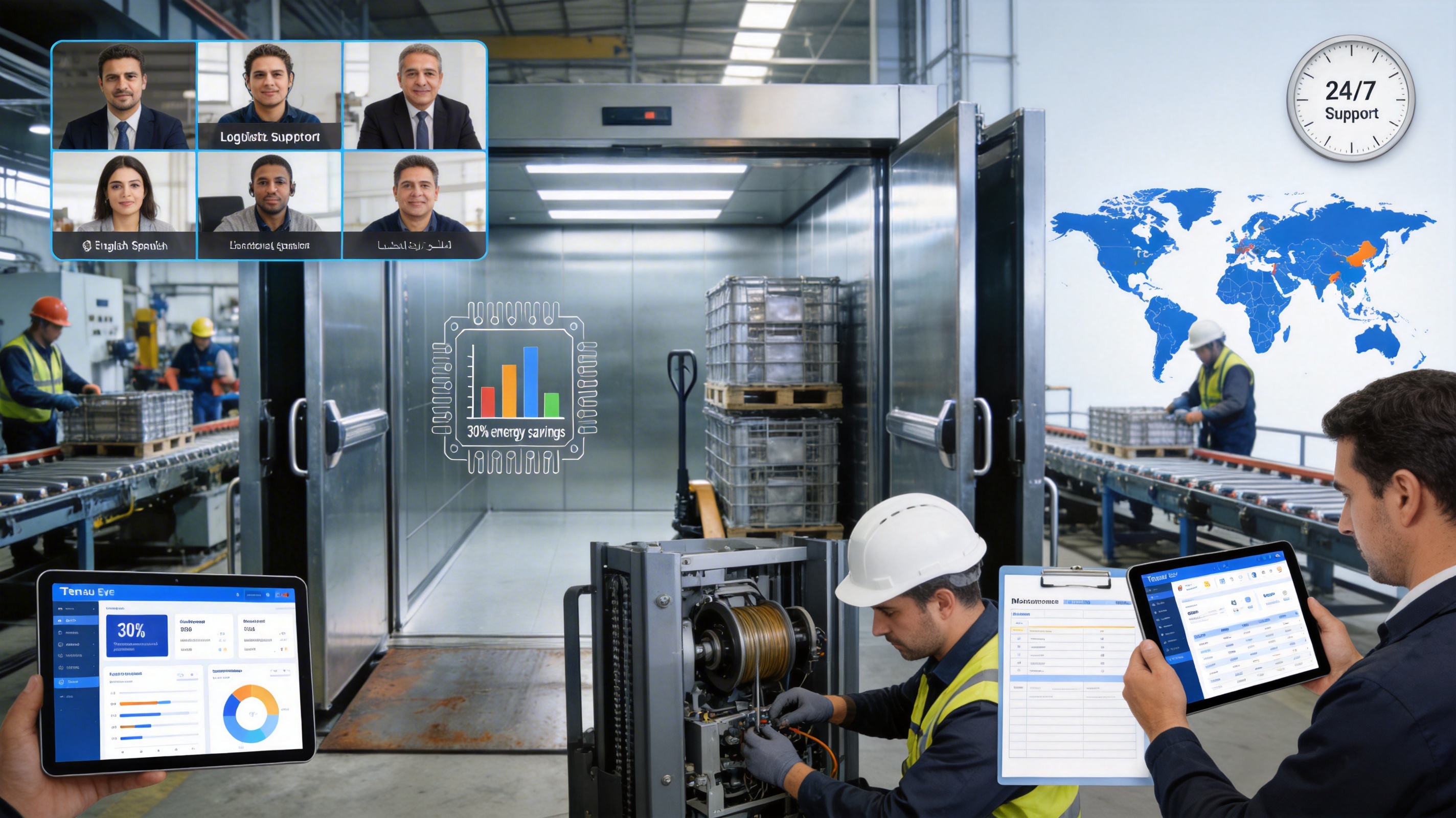
- 24-Hour Customer Service: A dedicated team is available around the clock to respond to customer inquiries and emergencies.
- Exclusive Maintenance Plans: Customized maintenance plans based on the customer’s usage patterns, ensuring optimal performance and extending the elevator’s lifespan.
- Multi-Language Support: Service teams speak multiple languages (English, Spanish, Russian, Arabic), making it easy for global customers to communicate.
- Remote Monitoring: The Tenau Eye system uses IoT to remotely monitor elevator operation, detecting potential issues before they cause downtime.
This level of support is unmatched by many competitors, who often provide limited regional support or no remote monitoring capabilities.
3. Comprehensive Function Overview: Control, Safety, and Comfort
The freight elevator offers a wide range of standard (S) and optional (O) functions to meet diverse operational needs. Below is a detailed table of its functions:
| Function Category | Function Description | Availability (S/O) |
|---|---|---|
| Control Function | Well and floor distance self-tuning | S |
| Power on re-leveling | S | |
| Micro-touch button for car | S | |
| Start protection control | S | |
| Car arrival call (corrected from typo) | O | |
| VVVF drive | S | |
| VVVF drive for door operator | S | |
| The second car operation panel | O | |
| Automatic adjustment of door open holding time | S | |
| Car call cancel | S | |
| Automatic running | S | |
| Attendant running | S | |
| Information Function | Full collective control | S |
| Full-load bypass | S | |
| Main floor shut off | S | |
| Self-diagnosis of breakdown | S | |
| Five-way communication | S | |
| Car's Bell | S | |
| Floor and direction indicator in the car | S | |
| Floor and direction indicator at hall | S | |
| Voice announcement | O | |
| Traffic dispatch | O | |
| Traction machine monitor | O | |
| Safety Function | Light curtain protection | S |
| Overload aiding stop | S | |
| Terminal forced slow-down protection | S | |
| Up/down over-run and floor limit protection | S | |
| Down over speed protection | S | |
| Up over speed protection | S | |
| Safety stop | S | |
| Inching operation | S | |
| Inspection operation | S | |
| Power failure emergency leveling device | O | |
| Anti-nuisance | S | |
| Fire emergency return | S | |
| Auto-landing with fault | S | |
| Safety circuit protection | S | |
| Door interlock protection | S | |
| Comfort Function | Emergency car lighting | S |
| Car ventilation light automatically shuts off | S | |
| Repeated door closing | S | |
| Reopen with hall call | S | |
| Express door closing | S | |
| Car stop and door open | S | |
| Door opening line extending | O | |
| Door close delay | S |
Note: Minor typos in the original function descriptions (e.g., "car arrival china") are corrected for clarity.
4. Frequently Asked Questions (FAQs)
To help readers better understand this freight elevator, we’ve compiled answers to common questions:
Q1: What load capacities does this freight elevator support?
A: Standard models support load capacities ranging from 1 ton to 3 tons. For heavy-duty applications (e.g., manufacturing plants), the manufacturer offers customized models with load capacities up to 5 tons. This flexibility makes it suitable for a wide range of industries.
Q2: Can the elevator be customized for specific cargo sizes or facility layouts?
A: Yes. The manufacturer provides full customization options, including:
- Adjustable car dimensions to accommodate large or irregular cargo.
- Multiple door opening modes (side, center-fold, opposite, etc.) to match facility layouts.
- Rust-resistant coatings for humid or corrosive environments.
- Specialized features like pallet jack access ramps.
Q3: How does the energy efficiency of this elevator compare to traditional models?
A: This elevator uses a VF speed adjusting system and advanced CPU control, which reduces energy consumption by up to 30% compared to traditional fixed-speed models. Additionally, the automatic door holding time adjustment and VVVF door operator further optimize energy use, making it a cost-effective choice for businesses focused on sustainability.
Q4: What safety certifications does the elevator have?
A: The elevator complies with major international safety standards, including ISO 14691:2019 (Elevator Manufacturing and Installation), ANSI/ASME A17.1-2021 (Safety Standards for Elevators), and CE (European Conformity). All safety components (safety dampers, speed limiters) are manufactured to these standards.
Q5: What after-sales services are available?
A: Tenau Elevator offers a comprehensive after-sales service package, including:
- 24/7 global customer support.
- Exclusive maintenance plans tailored to usage patterns.
- Remote monitoring via the Tenau Eye system to detect issues early.
- Multi-language support for international customers.
- Fast response times for emergency repairs (within 24 hours for most regions).
5. References
1. International Organization for Standardization (ISO). (2019). ISO 14691:2019: Elevators and escalators — Safety requirements for the design, construction, installation, operation and maintenance.
2. American National Standards Institute (ANSI) & American Society of Mechanical Engineers (ASME). (2021). ANSI/ASME A17.1-2021: Safety Standard for Elevators and Escalators.
3. Global Logistics Institute. (2022). Industrial Vertical Transportation: Best Practices for Cargo Elevators. Atlanta, GA: Georgia Tech.
4. European Elevator Association (EEA). (2021). Energy Efficiency in Elevator Systems: A Guide for Operators and Manufacturers.
5. Tenau Elevator (China) Co., Ltd. (2023). Freight Elevator Product Manual: Advanced Technology and Safety Features.

Related Products
Related News
Built on safety, forging trust in vertical mobility.
lf you have any questions or need help, feel free to contact with our team.
 export@tenau.com.cn
 +86-18601458867
 +86-512-65059883
Elevator & Escalator
Factory Add
East of Xicheng Road, North of Lianyi Road, Nanxun Economic Development Zone, Nanxun District, Huzhou City, Zhejiang Province, P.R.China
Copyright © Tenau Elevator (China) Co., Ltd. All Rightd Reserved.
Custom High Quality Elevator Suppliers and World Brand Elevator Company