

 en
en Español
 русский
 中文简体
中文简体
Precision Elevator Landing Doors for Safer, Smoother Building Mobility
Content
- 1 Understanding the Role of Elevator Landing Doors
- 2 Product Overview: TO-VM01 Elevator Landing Doors
- 3 Key Advantages Over Conventional Competitor Solutions
- 4 Technical Value in Daily Operation
- 5 Design Considerations for Different Building Types
- 6 Manufacturing Strength Behind the Product
- 7 Standards and Management Systems
- 8 Performance Comparison Table
- 9 Installation and Project Delivery Benefits
- 10 Maintenance and Life-Cycle Value
- 11 Aesthetic Integration with Elevator Cabin Interiors
- 12 Safety and Environmental Responsibility
- 13 Global Export Capability and Project Adaptability
- 14 Why the TO-VM01 Is a Strategic Specification Choice
- 15 Quality From Design to After-Sales Service
- 16 Procurement Considerations for Buyers
- 17 Recommended Use Cases
- 18 Frequently Asked Questions
- 18.1 What is the TO-VM01?
- 18.2 Why is an elevator landing door important?
- 18.3 How does the TO-VM01 compare with lower-cost competitor products?
- 18.4 What types of projects can use this landing door?
- 18.5 What manufacturing strengths support the product?
- 18.6 Does the product support better installation efficiency?
- 18.7 Is the TO-VM01 suitable for premium buildings?
- 18.8 Why should buyers consider the manufacturer, not only the product?
- 19 Conclusion
- 20 References
- 21 Product: TO-VM01
In modern vertical transportation, the elevator landing door is one of the most important interfaces between the passenger, the building, and the elevator system. It is the first component users see when they approach an elevator and one of the most critical safety barriers in the entire installation. The TO-VM01 elevator landing door is designed for projects that require a reliable, visually refined, and technically dependable entrance solution for passenger elevators, panoramic elevators, hospital elevators, villa elevators, cargo elevators, car elevators, high-speed elevators, and other vertical mobility systems.
More than a simple door panel, the TO-VM01 functions as a coordinated safety assembly. It helps protect people from the hoistway, supports smooth passenger flow, contributes to the visual identity of the building, and works with the elevator control system to maintain dependable operation. For architects, contractors, developers, facility managers, and elevator professionals, choosing the right landing door can influence long-term safety, maintenance efficiency, building aesthetics, and user satisfaction.
Developed by Tenau Elevator (China) Co., Ltd., the TO-VM01 benefits from the company’s comprehensive manufacturing capabilities, international engineering perspective, advanced production systems, and strict quality management. The company integrates design, research and development, manufacturing, marketing, installation support, and after-sales service, enabling the product to be engineered not only for attractive appearance but also for practical performance in demanding operating environments.
Understanding the Role of Elevator Landing Doors
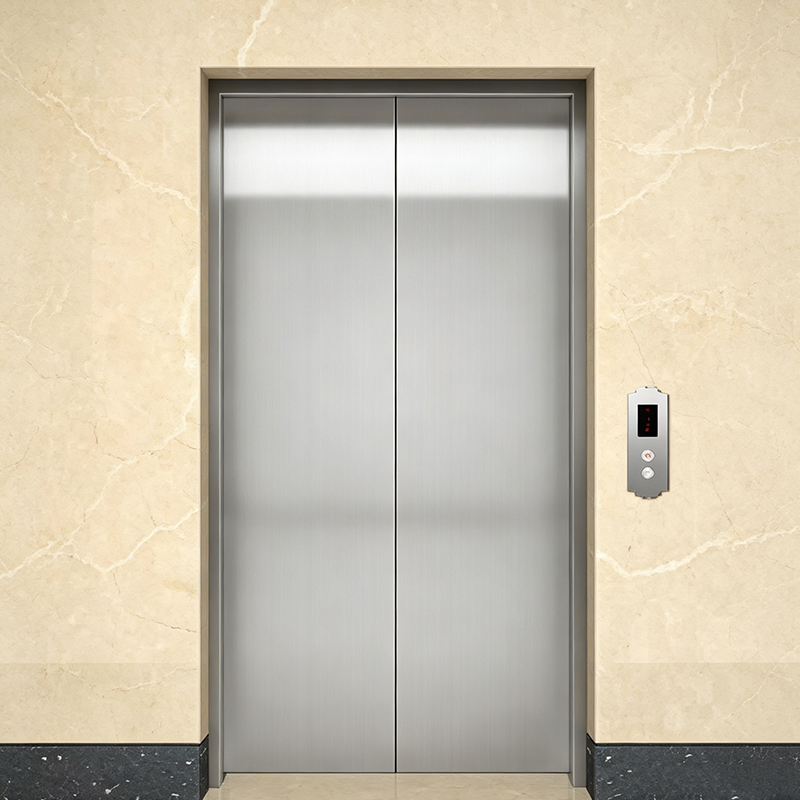
An elevator landing door is installed at each floor opening of an elevator shaft. It opens and closes together with the elevator car door only when the car is properly positioned at the landing. This simple-looking function is essential to safe elevator use. A dependable landing door prevents accidental access to the hoistway, supports fire and smoke separation requirements where applicable, reduces noise transmission, and helps maintain controlled movement of people and goods.
Unlike decorative architectural doors, elevator landing doors must meet strict mechanical and operational expectations. They should open smoothly, close securely, resist repeated cycling, remain aligned under frequent use, and work consistently with locks, rollers, tracks, headers, sills, and door operators. In a busy commercial building or transport hub, landing doors may cycle thousands of times per day. In a hospital, they must support urgent patient movement without hesitation. In a villa, they should be quiet, elegant, and comfortable. In a cargo or car elevator, they must be robust enough to serve heavier traffic and larger openings.
The TO-VM01 has been created with this broad range of applications in mind. It is positioned as a versatile elevator landing door solution for projects that need a balance of safety, strength, smooth operation, finish quality, and manufacturing consistency. Its value lies not merely in one single feature but in the coordinated performance of the complete door assembly.
Product Overview: TO-VM01 Elevator Landing Doors
The TO-VM01 is categorized as an elevator landing door and is suitable for integration into different elevator categories, including passenger elevators, panoramic and observation elevators, hospital elevators, home villa elevators, cargo elevators, car elevators, escalator-adjacent environments, moving walk facilities, elevator modernization projects, cabin interior upgrades, and high-speed elevator systems. While the specific design configuration may vary according to project requirements, the product’s core purpose remains the same: to provide a secure, attractive, and durable landing entrance for elevator installations.
The product is designed to complement complete elevator solutions and building entrance environments. It can support a clean modern look while maintaining the functional requirements expected from a professional elevator door system. For projects where building owners want a refined passenger experience, the landing door can become an important design element. For projects where reliability and operating cost are the primary priorities, the mechanical stability and manufacturing quality of the product become especially significant.
The TO-VM01 is particularly valuable for project teams that require uniform quality across multiple floors or multiple elevator shafts. In large buildings, visual consistency and dimensional accuracy are critical. A door system that varies from floor to floor can create installation delays, operational issues, and appearance problems. A well-manufactured landing door helps standardize installation results and reduces the risk of long-term service complaints.
Key Advantages Over Conventional Competitor Solutions
In the elevator component market, many landing doors may look similar at first glance. However, differences in material control, processing accuracy, structural design, finishing quality, door movement, safety integration, and manufacturing discipline can become very clear during installation and years of operation. The TO-VM01 is intended to stand out by combining dependable engineering with refined production methods and broad application flexibility.
Enhanced Safety-Focused Design
Safety is the primary reason elevator landing doors exist. The TO-VM01 is developed around the principle that the landing entrance must serve as a dependable protective barrier. A properly engineered landing door should remain closed and locked when the elevator car is not present, open only when the elevator is correctly aligned, and close with stable movement. The door should resist deformation and maintain alignment under repeated use.
Compared with lower-grade alternatives that may focus mostly on appearance, the TO-VM01 emphasizes safety as a system value. Door panels, locking arrangements, supporting parts, guide elements, and interface dimensions must all function together. This integrated approach helps reduce the chance of misalignment, incomplete closing, excessive vibration, or premature wear.
Smoother Operation and Better Passenger Experience
Elevator users judge quality quickly. A landing door that rattles, scrapes, jerks, or closes unevenly can make even a new elevator feel unreliable. The TO-VM01 is intended to support a smoother entrance experience through accurate manufacturing, stable structural design, and compatible integration with elevator door systems. Smooth door motion contributes to passenger confidence and reduces perceived noise in hotels, offices, residences, hospitals, and public buildings.
Competitor products manufactured with looser tolerances may require repeated adjustment during installation or early maintenance. In contrast, a more precisely produced landing door can help installers achieve stable operation more efficiently. This not only improves the end-user experience but also supports better project delivery schedules.
Refined Visual Quality for Modern Buildings
The landing door is a visible architectural feature. It shapes the first impression of the elevator lobby and often appears in every floor corridor. The TO-VM01 is designed for visual integration with modern interiors, whether the project requires a clean commercial look, a polished residential feel, or a durable industrial appearance. Surface consistency, panel flatness, edge finishing, and alignment all influence the final effect.
In many competitor products, visual defects may become apparent after installation, especially when lobby lighting reflects across door panels. Waves, uneven surfaces, inconsistent gaps, and irregular finishes can reduce the perceived value of the entire elevator. By focusing on controlled production and quality inspection, the TO-VM01 supports a more refined finished appearance.
Versatility Across Elevator Categories
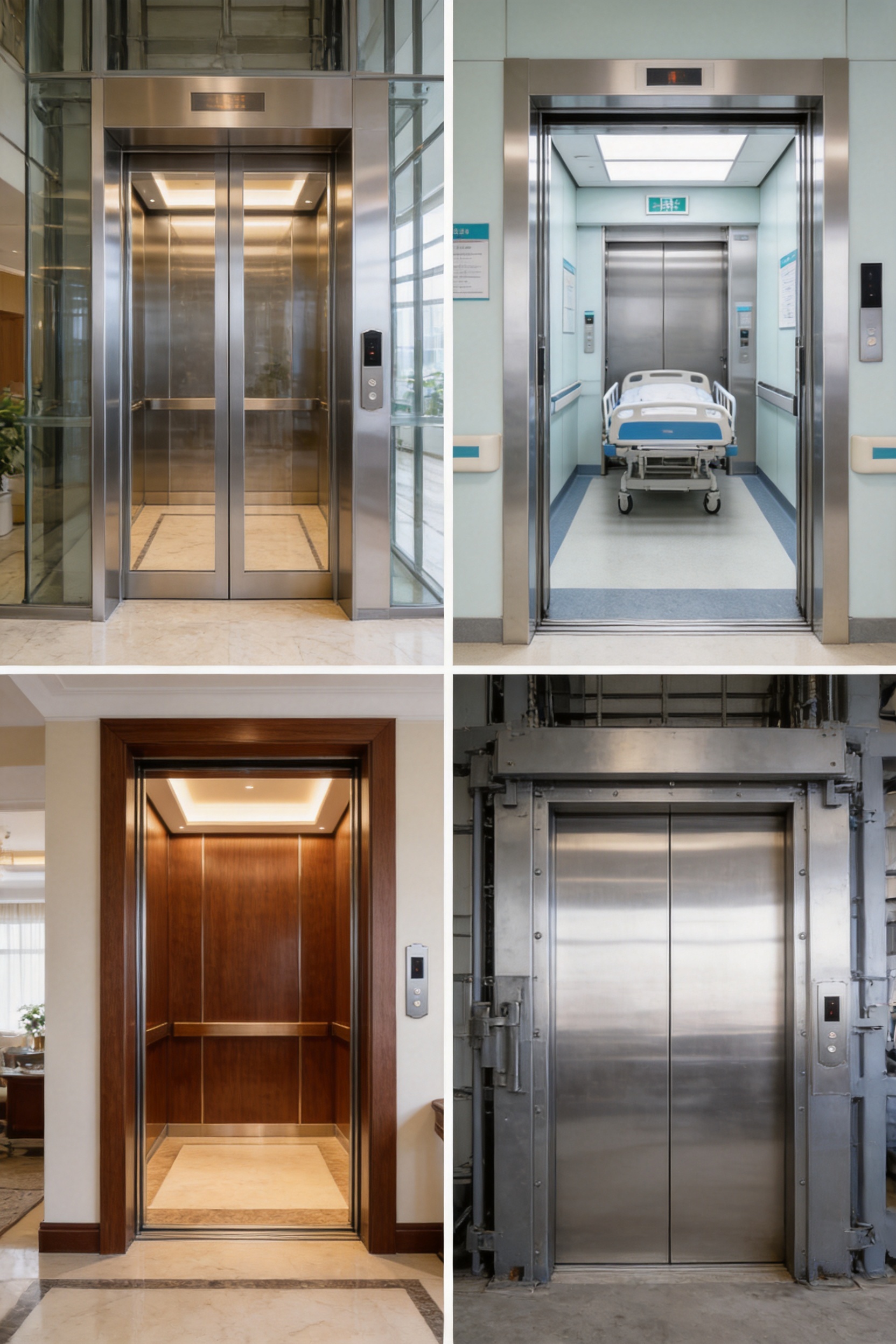
One of the strengths of the TO-VM01 is its compatibility with a wide range of elevator applications. Passenger elevators require comfort and reliability. Hospital elevators require accessibility, stability, and clean operation. Villa elevators require quietness and elegant design. Cargo elevators demand durability. Car elevators require large-opening coordination and strength. High-speed elevator systems require precise component integration and stable dynamic performance. The TO-VM01 is positioned as a flexible product that can be adapted to these varied needs.
This versatility gives project owners and contractors a practical advantage. Rather than sourcing unrelated door components from multiple suppliers for different elevator types, a project can benefit from a more unified manufacturing and quality approach. Standardized engineering support can reduce communication complexity and improve long-term maintenance planning.
Manufacturing Consistency for Large Projects
Large-scale building projects require repeatable quality. A landing door must fit correctly, look consistent, and perform reliably across many floors. The TO-VM01 benefits from the manufacturer’s production capabilities, including intelligent manufacturing concepts, automated production lines, data-supported quality processes, and closed-loop control. This helps ensure that each door assembly is produced according to defined standards.
Competitors that rely heavily on manual processes without strong process control may struggle to maintain consistency. Small dimensional deviations can create bigger problems during installation. The TO-VM01’s manufacturing background helps reduce these risks by emphasizing process discipline from design to final inspection.
Technical Value in Daily Operation
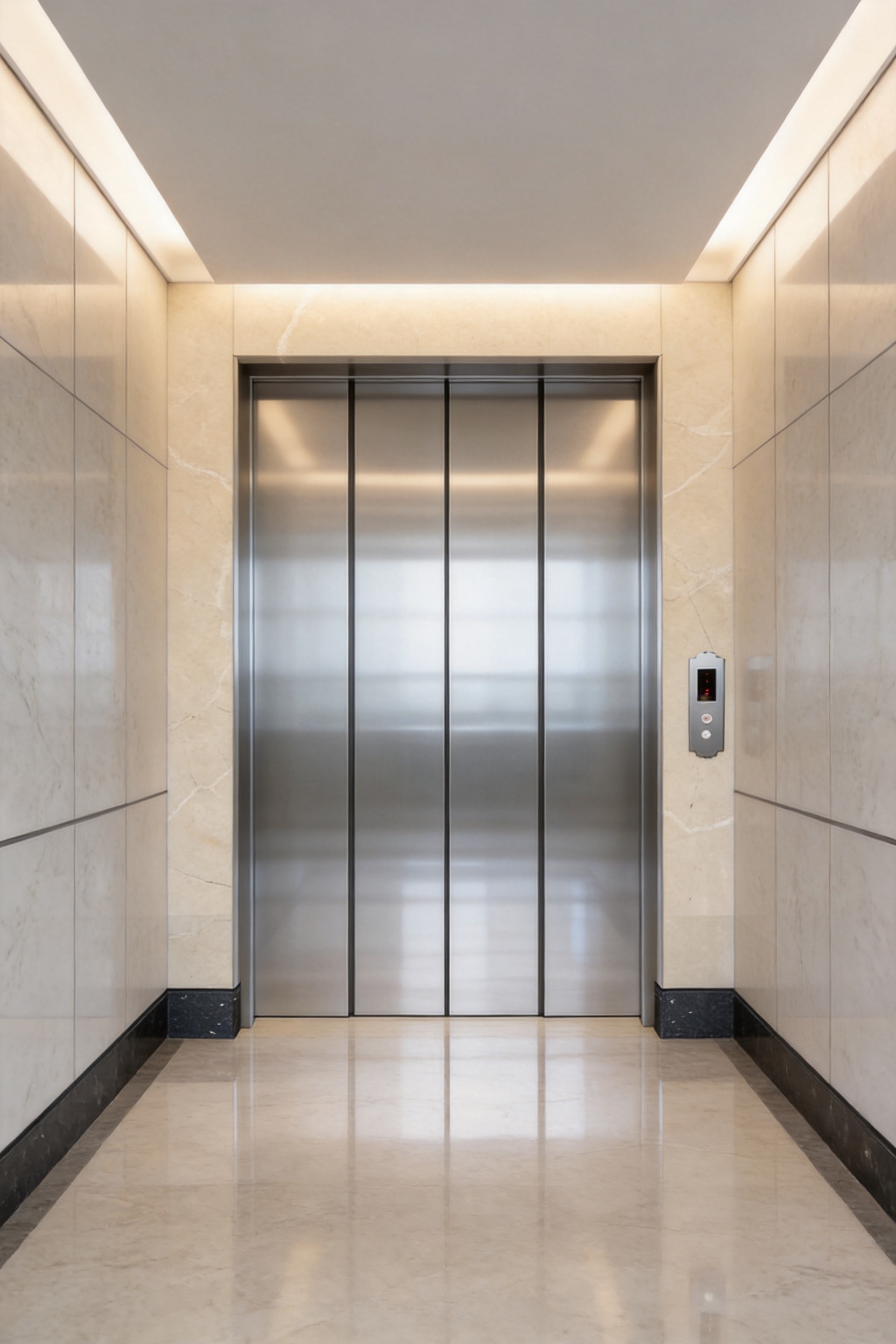
A landing door must perform consistently through countless cycles. Daily operation places stress on panels, hangers, tracks, rollers, sills, locks, and alignment systems. Even minor weaknesses can lead to noise, delay, callbacks, or component replacement. The TO-VM01 is designed to deliver value in the practical realities of elevator service, not only in showroom presentation.
For commercial buildings, dependable door operation helps prevent traffic disruption. For residential towers, quiet and stable operation improves occupant comfort. For hospitals, reliable movement supports urgent transport of patients, staff, and equipment. For cargo and car elevator applications, the door must accommodate tougher use conditions. For high-speed systems, precision and stability are essential to overall ride quality and safety perception.
Door performance also affects elevator efficiency. A door that opens and closes promptly, smoothly, and accurately helps reduce waiting time and supports better elevator dispatching. Conversely, door faults are among the most common causes of elevator service interruptions. Selecting a higher-quality landing door can therefore contribute directly to operational uptime.
Design Considerations for Different Building Types
Passenger Elevator Environments
In office buildings, shopping centers, hotels, residential towers, and mixed-use developments, passenger elevators must balance safety, speed, appearance, and comfort. The TO-VM01 supports these environments by providing a dependable entrance solution that can match contemporary lobby design while maintaining operational integrity. A clean and stable landing door improves the perceived quality of the entire elevator system.
Panoramic and Observation Elevator Projects
Panoramic and observation elevators often emphasize visual experience. While the car and shaft may feature glass or open views, the landing entrance still needs secure and attractive coordination with surrounding architecture. The TO-VM01 can serve as a refined landing interface that complements premium design concepts without compromising practical safety.
Hospital Elevator Applications
Hospital elevators require especially reliable doors because they may be used for beds, stretchers, medical carts, patients, visitors, and staff. The landing door must open smoothly, remain stable, and support predictable traffic movement. The TO-VM01 is well suited to such requirements because it emphasizes reliability, manufacturing precision, and adaptability. In medical environments, reduced door noise and smooth movement can also contribute to a calmer atmosphere.
Home Villa Elevators
In private residences and villas, the elevator is often part of the interior lifestyle experience. Owners care about safety, quiet operation, and elegant appearance. The TO-VM01 offers a professional landing door solution that can be integrated into residential design concepts. For home users, stable door movement and reliable safety locking are especially important because the elevator may be used by children, elderly family members, and visitors unfamiliar with elevator equipment.
Cargo and Car Elevators
Cargo elevators and car elevators introduce larger loads, heavier usage conditions, and more demanding opening requirements. The landing door should resist impact, maintain alignment, and support efficient movement of goods or vehicles. While project specifications may require different door sizes and reinforcement approaches, the TO-VM01’s manufacturing quality and system-oriented design principles provide a strong foundation for demanding applications.
High-Speed Elevator Systems
High-speed elevators require precision across every component. Although the landing door is stationary at each floor, its alignment, locking, and interaction with the car door are essential to safe and comfortable operation. A precise landing door supports consistent stopping, opening, and closing processes. The TO-VM01 is supported by a manufacturer experienced in low-speed, medium-speed, high-speed, and ultra-high-speed elevator solutions, which gives it an engineering context broader than basic component production.
Manufacturing Strength Behind the Product
The strength of the TO-VM01 is closely connected to the capabilities of Tenau Elevator (China) Co., Ltd. The company originates from Germany and operates as a comprehensive elevator manufacturer integrating design, research and development, manufacturing, marketing, installation, and after-sales service. This broad capability is important because elevator landing doors are not isolated products. They must work in harmony with elevator cars, door operators, control systems, safety systems, and building interfaces.
The company is located in Nanxun, Zhejiang Province, within the core economic circle connecting Shanghai, Nanjing, Suzhou, and Hangzhou. This location provides access to advanced industrial resources, transportation networks, technical talent, and supply chain advantages. Such a manufacturing environment supports efficient production, timely project response, and global export capability.
The company provides passenger elevators, freight elevators, escalators, moving walks, and related elevator solutions. It has advanced capabilities in the design, research, development, and manufacturing of low-speed, medium-speed, high-speed, and ultra-high-speed elevators. This comprehensive experience benefits the TO-VM01 because the landing door can be engineered with an understanding of complete elevator system behavior rather than only component appearance.
German Industry 4.0 Intelligent Manufacturing
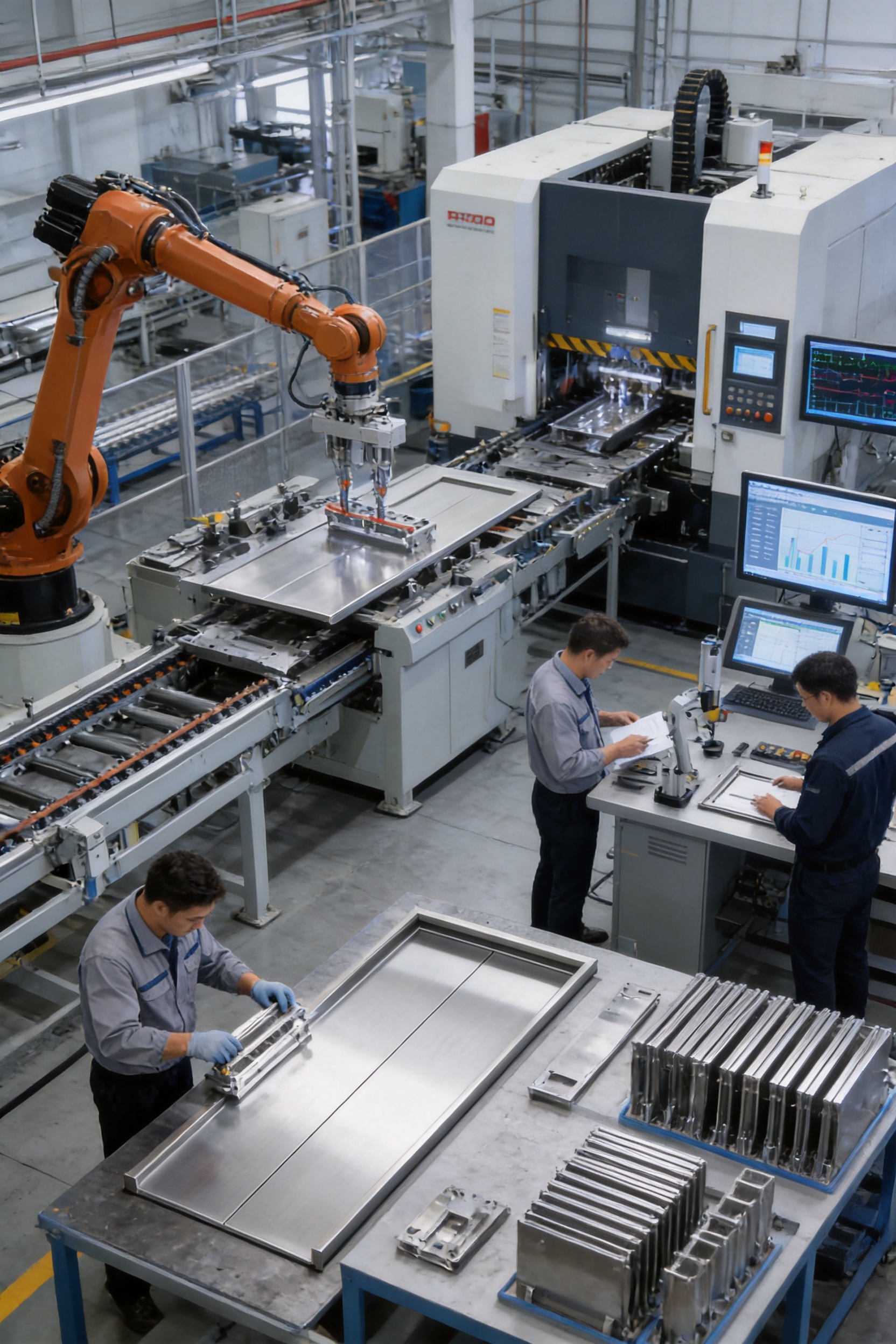
The company applies German Industry 4.0 intelligent manufacturing concepts, which emphasize automation, data integration, process traceability, and continuous improvement. For a landing door product, this approach is particularly valuable because dimensional consistency and process repeatability are essential. Intelligent manufacturing can help reduce variation, improve production monitoring, and support more reliable quality outcomes.
In traditional production environments, quality may depend heavily on individual operator experience. Skilled workers remain important, but intelligent manufacturing systems add process control that can reduce human error. Automated equipment, digital management, and standardized inspection help ensure that every batch of landing doors meets defined expectations.
Automated Production Lines
Automated production lines support stable fabrication, cutting, forming, punching, and assembly processes. For elevator landing doors, precision in panel forming and component matching is essential. Automated processes can help maintain accurate dimensions, consistent surface treatment, and repeatable structural quality. This directly affects installation efficiency and long-term door movement.
Compared with competitor products manufactured through less controlled manual methods, a door produced with automated support is more likely to maintain consistent gaps, alignment, and fit. This becomes especially important when a project requires many landing doors across a large building or multiple sites.
Big Data and IoT-Enabled Quality Thinking
The company uses big data and Internet of Things technology as part of its intelligent manufacturing and quality control approach. In practical terms, this supports better tracking, analysis, and feedback across production and service processes. Data-driven quality management helps identify trends, correct issues, and improve product reliability over time.
For elevator landing doors, data-supported production can help manage material batches, processing parameters, inspection records, and delivery traceability. This creates accountability and supports continuous improvement. It also gives project stakeholders more confidence that the product has been produced within a disciplined management framework.
Closed-Loop Quality Control
A full closed-loop quality control system means quality is monitored throughout the process rather than checked only at the end. From design review and material selection to component processing, assembly, inspection, packaging, and service feedback, each stage contributes to the final product. If a problem is detected, information can be fed back into production and engineering for correction.
This approach is especially important for elevator safety components and entrance systems. A defect discovered after installation can be costly and disruptive. By emphasizing prevention and process control, the TO-VM01 gains an advantage over products from manufacturers that rely mainly on final visual inspection.
Standards and Management Systems
Tenau Elevator (China) Co., Ltd. follows rigorous management systems and complies with ISO9001, ISO14001, and OHSMS18001 standards. These certifications and management frameworks reflect attention to quality management, environmental management, and occupational health and safety. For customers, such systems provide confidence that the company operates according to recognized organizational disciplines.
ISO9001 supports consistent quality management. ISO14001 reflects environmental responsibility and controlled environmental practices. OHSMS18001 supports occupational health and safety management. Together, these systems align with the company’s mission of safety and environmental protection. They also reinforce the reliability of products such as the TO-VM01 by embedding process discipline into the organization.
In the elevator industry, where products are safety-related and long-life-cycle assets, management systems matter. A landing door may remain in service for many years. Customers need confidence that the manufacturer has the systems, documentation, training, and inspection discipline required to support durable performance.
Performance Comparison Table
| Evaluation Area | TO-VM01 Elevator Landing Door | Typical Lower-Cost Competitor Door | Customer Benefit |
|---|---|---|---|
| Safety focus | Developed as part of a complete elevator safety interface with attention to locking, alignment, and stable operation | May focus mainly on basic appearance and minimum function | Greater confidence in daily use and reduced operational risk |
| Manufacturing consistency | Supported by intelligent manufacturing, automated production, and closed-loop quality control | Often dependent on manual production with greater batch variation | Easier installation and more uniform project results |
| Visual finish | Designed for refined appearance, consistent panel quality, and modern building integration | Possible uneven surfaces, inconsistent gaps, or lower finish stability | Improved lobby appearance and stronger property value perception |
| Application range | Suitable for passenger, hospital, villa, cargo, car, panoramic, and high-speed elevator environments | May be limited to simpler applications | More flexible specification across multiple project types |
| Quality management | Backed by ISO-based management systems and systematic inspection | May lack equivalent process discipline or traceability | More dependable long-term performance and accountability |
| Service integration | Produced by a comprehensive elevator manufacturer with design, manufacturing, installation, and after-sales service capabilities | May be supplied by component-only producers with limited system knowledge | Better coordination with complete elevator solutions |
Installation and Project Delivery Benefits
For contractors and installation teams, a high-quality landing door can significantly reduce site difficulty. Installation problems often arise when components are inconsistent, dimensions are inaccurate, or door panels require excessive adjustment. The TO-VM01 is designed to support more efficient installation through standardized production and manufacturing accuracy.
Good installation begins before the product reaches the job site. Accurate manufacturing, proper packaging, clear component organization, and reliable quality inspection all reduce uncertainty. When the door assembly arrives with consistent dimensions and dependable finish quality, installers can focus on correct positioning and system coordination rather than correcting production defects.
Project delivery is also affected by after-sales and technical support capability. Because the manufacturer is a comprehensive elevator company rather than a narrow component producer, it has broader understanding of elevator systems. This can help resolve coordination issues between landing doors, car doors, operators, controllers, and building openings. Such support is valuable for both new installations and modernization projects.
Maintenance and Life-Cycle Value
The true cost of an elevator landing door is not limited to its purchase price. Maintenance frequency, service interruptions, passenger complaints, replacement parts, and downtime all contribute to life-cycle cost. A lower-priced door may appear attractive at procurement stage but become expensive if it requires frequent adjustment or early replacement. The TO-VM01 is positioned as a value-oriented product because it emphasizes durable performance, stable operation, and manufacturing quality.
Routine maintenance of elevator landing doors generally includes checking door movement, inspecting locks, cleaning tracks and sills, verifying alignment, observing closing force and timing, and listening for abnormal noise. A well-made landing door can make these tasks more predictable. Components that remain aligned and operate smoothly help maintenance teams work efficiently.
In buildings with heavy traffic, door reliability has a direct impact on tenant satisfaction. Elevator downtime can cause congestion, complaints, and operational losses. In hospitals, downtime can affect patient movement. In hotels, it can affect guest experience. In commercial buildings, it can reduce productivity. By reducing the likelihood of door-related faults, a quality landing door contributes to better building operation.
Aesthetic Integration with Elevator Cabin Interiors
Elevator design is increasingly treated as part of architectural identity. Cabin interiors, landing entrances, wall finishes, lighting, flooring, and signage should work together. The TO-VM01 supports this design-oriented approach by providing a landing entrance that can complement elevator cabin interiors and lobby concepts. Even when the door design is simple, consistent craftsmanship helps create a polished impression.
For premium properties, the elevator lobby is often a transition zone between public and private space. A refined landing door reinforces the sense of quality. For public facilities, a clean and well-aligned entrance communicates order and safety. For industrial or logistics buildings, a durable and practical appearance supports functional professionalism.
Competitor products may sacrifice surface quality to reduce cost. However, poor visual details can remain noticeable for the life of the building. The TO-VM01’s emphasis on controlled production helps protect the architectural investment by supporting stable appearance and better fit.
Safety and Environmental Responsibility
The company’s mission emphasizes safety and environmental protection. This mission is meaningful for a product such as the TO-VM01 because elevator landing doors directly affect passenger safety while also being part of long-term building infrastructure. Safety is reflected in engineering discipline, process control, inspection, and dependable door function. Environmental responsibility is reflected in management systems, efficient manufacturing, and sustainable quality thinking.
A durable product is also an environmentally responsible product. When landing doors last longer, require fewer replacements, and operate with fewer failures, material waste and service interventions can be reduced. Manufacturing consistency also helps reduce scrap and rework. Through ISO14001 environmental management and intelligent production concepts, the company supports a more responsible approach to industrial manufacturing.
For international customers, environmental and safety management are increasingly important in supplier selection. Developers, contractors, and public project owners often seek manufacturers that can demonstrate responsible systems. The TO-VM01 benefits from being produced within such a framework.
Global Export Capability and Project Adaptability
Tenau Elevator (China) Co., Ltd. exports products to many countries and regions worldwide. This global experience is important because elevator projects vary by climate, building type, usage pattern, regulatory environment, and customer expectation. A product intended for international use must be adaptable, reliably manufactured, and supported by professional communication.
The TO-VM01 is suited for export-oriented projects because it is part of a broader elevator product ecosystem. The company’s experience with passenger elevators, freight elevators, escalators, moving walks, and elevator solutions gives it an understanding of diverse project requirements. Whether used in residential developments, commercial buildings, healthcare facilities, hotels, industrial sites, or mixed-use complexes, the product can be considered within a complete mobility plan.
Global customers also value manufacturer stability. A company with a large-scale manufacturing base, professional team, intellectual property resources, and international technology integration can support long-term cooperation. This is particularly valuable for distributors, contractors, and building owners who need consistent supply and dependable technical support.
Why the TO-VM01 Is a Strategic Specification Choice
Specifying an elevator landing door is not only a technical decision; it is a strategic project decision. The selected product affects safety, appearance, installation progress, maintenance planning, passenger experience, and building reputation. The TO-VM01 offers a strong combination of these values. It provides a practical entrance solution backed by comprehensive elevator manufacturing expertise.
For consultants, the product offers a dependable option from a manufacturer with complete system knowledge. For architects, it offers visual compatibility with modern building interiors. For contractors, it supports installation consistency. For developers, it contributes to perceived property quality. For facility managers, it supports long-term operational reliability. For end users, it provides a safer and smoother daily experience.
Compared with competitors that may compete mainly on low initial price, the TO-VM01 emphasizes total value. Its advantages are found in manufacturing consistency, safety-focused design, application flexibility, refined appearance, and strong company support. These qualities become more important over time as the elevator moves from installation to daily operation.
Quality From Design to After-Sales Service
A major advantage of the company behind the TO-VM01 is its integrated business structure. Because it participates in design, research and development, manufacturing, marketing, installation, and after-sales service, feedback can flow across the entire organization. If installation teams identify a practical improvement, it can inform design. If service data reveals a maintenance trend, it can inform production and quality control. If customers request new features or finishes, research and development can respond within a complete manufacturing environment.
This integration is different from fragmented supply chains where a component maker may have limited contact with installation or service teams. In a fragmented model, product improvements can be slow because feedback is separated from engineering decision-making. The TO-VM01 benefits from a more connected approach, helping it evolve according to real project requirements.
After-sales capability is also important because elevator systems require long-term support. A landing door may need adjustment, replacement parts, or technical consultation during its service life. A manufacturer with comprehensive support can help customers maintain equipment performance and reduce uncertainty.
Procurement Considerations for Buyers
When evaluating the TO-VM01 for a project, buyers should consider the type of elevator, traffic volume, building function, aesthetic requirements, safety expectations, maintenance plan, and long-term cost. The best landing door choice is the one that matches both technical needs and operational priorities. For high-traffic buildings, durability and smooth operation should be weighted heavily. For premium residences and hotels, visual refinement and quiet movement may be key. For hospitals, reliability and accessibility are especially important. For cargo and car elevators, structural strength and practical durability are essential.
Buyers should also evaluate the manufacturer’s capability rather than only the product description. A door may look acceptable in a catalog, but the manufacturing system behind it determines whether quality will remain stable across every unit. The TO-VM01 is supported by a company with advanced production, quality systems, international management standards, and extensive elevator manufacturing experience. This gives buyers confidence beyond the physical product itself.
Another procurement factor is supplier communication and project response. Elevator projects often involve coordination among architects, builders, elevator contractors, consultants, and owners. A manufacturer with professional teams and export experience can support clearer communication and smoother project execution. The company’s international market activity strengthens its ability to serve diverse customer requirements.
Recommended Use Cases
The TO-VM01 is especially suitable for new elevator installations in commercial buildings, residential developments, public facilities, healthcare buildings, hospitality projects, industrial buildings, and mixed-use complexes. It is also suitable for modernization projects where old landing doors need to be replaced with safer, cleaner, and more reliable entrance systems.
In modernization work, the landing door can significantly improve the user’s perception of the entire elevator even when other components remain hidden. A new, well-aligned, smooth-operating landing door can make the elevator feel more modern and secure. For aging buildings, this can be an effective way to improve both safety and appearance.
The product is also valuable for developers building multiple properties who want consistent elevator entrance quality across their portfolio. A standardized landing door solution can simplify procurement, maintenance training, and spare parts planning. Over time, this standardization may reduce operational complexity.
Frequently Asked Questions
What is the TO-VM01?
The TO-VM01 is an elevator landing door product designed for safe, smooth, and visually refined elevator entrances. It is intended for use in a wide range of elevator applications, including passenger elevators, hospital elevators, villa elevators, cargo elevators, car elevators, panoramic elevators, and high-speed elevator systems.
Why is an elevator landing door important?
An elevator landing door protects the floor opening to the hoistway, coordinates with the elevator car door, supports passenger safety, contributes to fire and smoke separation where applicable, and affects the overall appearance and operation of the elevator. A high-quality landing door helps improve safety, reliability, comfort, and building value.
How does the TO-VM01 compare with lower-cost competitor products?
The TO-VM01 emphasizes safety-focused design, manufacturing consistency, smooth operation, refined appearance, application versatility, and systematic quality control. Lower-cost competitor products may reduce initial purchase cost but can involve higher risks of poor alignment, inconsistent finish, noise, frequent adjustment, and shorter service life.
What types of projects can use this landing door?
The product can be used in commercial buildings, residential towers, hospitals, villas, hotels, public facilities, industrial buildings, cargo elevator installations, car elevator systems, panoramic elevator projects, and high-speed elevator applications. Its adaptability makes it suitable for both new installations and modernization projects.
What manufacturing strengths support the product?
The product is supported by advanced manufacturing capabilities, including German Industry 4.0 intelligent manufacturing concepts, automated production lines, big data and IoT-supported processes, and closed-loop quality control. The manufacturer also follows ISO9001, ISO14001, and OHSMS18001 management systems.
Does the product support better installation efficiency?
Yes. Accurate manufacturing and consistent component quality can help reduce installation adjustments and improve project efficiency. A landing door produced with controlled tolerances is easier to align and integrate with the elevator system, reducing potential delays and service issues.
Yes. The product is suitable for premium buildings because it supports refined visual appearance, stable operation, and integration with modern elevator cabin interiors and lobby designs. It can help improve the overall impression of the elevator environment.
Why should buyers consider the manufacturer, not only the product?
Elevator landing doors are safety-related components that require long-term reliability. A manufacturer with strong design, research, production, quality control, installation support, and after-sales capabilities can provide greater confidence than a supplier focused only on low-cost component sales.
Conclusion
The TO-VM01 elevator landing door is a strong choice for projects that require dependable safety performance, smooth operation, refined appearance, and manufacturing consistency. As an essential elevator entrance component, it supports the daily interaction between users and the elevator system while protecting the hoistway and contributing to the building’s architectural quality.
Its advantages over conventional competitor products are rooted in a system-oriented design philosophy and the manufacturing strength of Tenau Elevator (China) Co., Ltd. The company’s advanced production capabilities, German Industry 4.0 intelligent manufacturing approach, automated production lines, data-supported quality management, closed-loop quality control, international management systems, and complete elevator industry experience all contribute to the product’s value.
For building owners, developers, contractors, consultants, and elevator professionals, the TO-VM01 offers more than a door. It offers a safer and more reliable elevator entrance solution supported by a comprehensive manufacturer with global vision and technical capability. In a market where many products may appear similar at first glance, the true difference lies in precision, consistency, safety, service, and long-term performance. The TO-VM01 is designed to deliver those differences where they matter most: in everyday building mobility.
References
International Organization for Standardization. ISO9001 Quality Management Systems: Requirements.
International Organization for Standardization. ISO14001 Environmental Management Systems: Requirements with Guidance for Use.
Occupational Health and Safety Management Systems. OHSMS18001 Specification and Implementation Guidance.
European Committee for Standardization. EN 81 Series: Safety Rules for the Construction and Installation of Lifts.
National Elevator Industry, Inc. Elevator Industry Field Employees’ Safety Handbook.
Strakosch, George R., and Robert S. Caporale. The Vertical Transportation Handbook.
Barney, Gina. Elevator Traffic Handbook: Theory and Practice.
Elevator World. Educational Materials on Elevator Doors, Safety Components, and Maintenance Practices.
Product: TO-VM01

Related Products
Related News
Built on safety, forging trust in vertical mobility.
lf you have any questions or need help, feel free to contact with our team.
 export@tenau.com.cn
 +86-18601458867
 +86-512-65059883
Elevator & Escalator
Factory Add
East of Xicheng Road, North of Lianyi Road, Nanxun Economic Development Zone, Nanxun District, Huzhou City, Zhejiang Province, P.R.China
Copyright © Tenau Elevator (China) Co., Ltd. All Rightd Reserved.
Custom High Quality Elevator Suppliers and World Brand Elevator Company