

 en
en Español
 русский
 中文简体
中文简体
Revolutionizing Urban Mobility: The Next-Gen Moving Walkway Redefining Pedestrian Infrastructure
As cities around the world continue to expand, the demand for efficient, safe, and sustainable pedestrian mobility solutions has reached unprecedented heights. Urban centers, airports, shopping malls, and transportation hubs grapple with the dual challenge of managing large passenger flows while minimizing energy consumption and ensuring accessibility for all users—including those with strollers, luggage, or mobility impairments. Among the most transformative solutions to these challenges are moving walkways, which bridge gaps between distant points, reduce walking fatigue, and enhance the overall user experience. In recent years, advancements in engineering and technology have elevated moving walkways from simple conveyor systems to intelligent, eco-friendly, and highly adaptable infrastructure components. This article explores the cutting-edge features of a next-generation moving walkway, its competitive advantages over traditional models, the advanced manufacturing processes behind its production, and the global support network that ensures long-term performance.
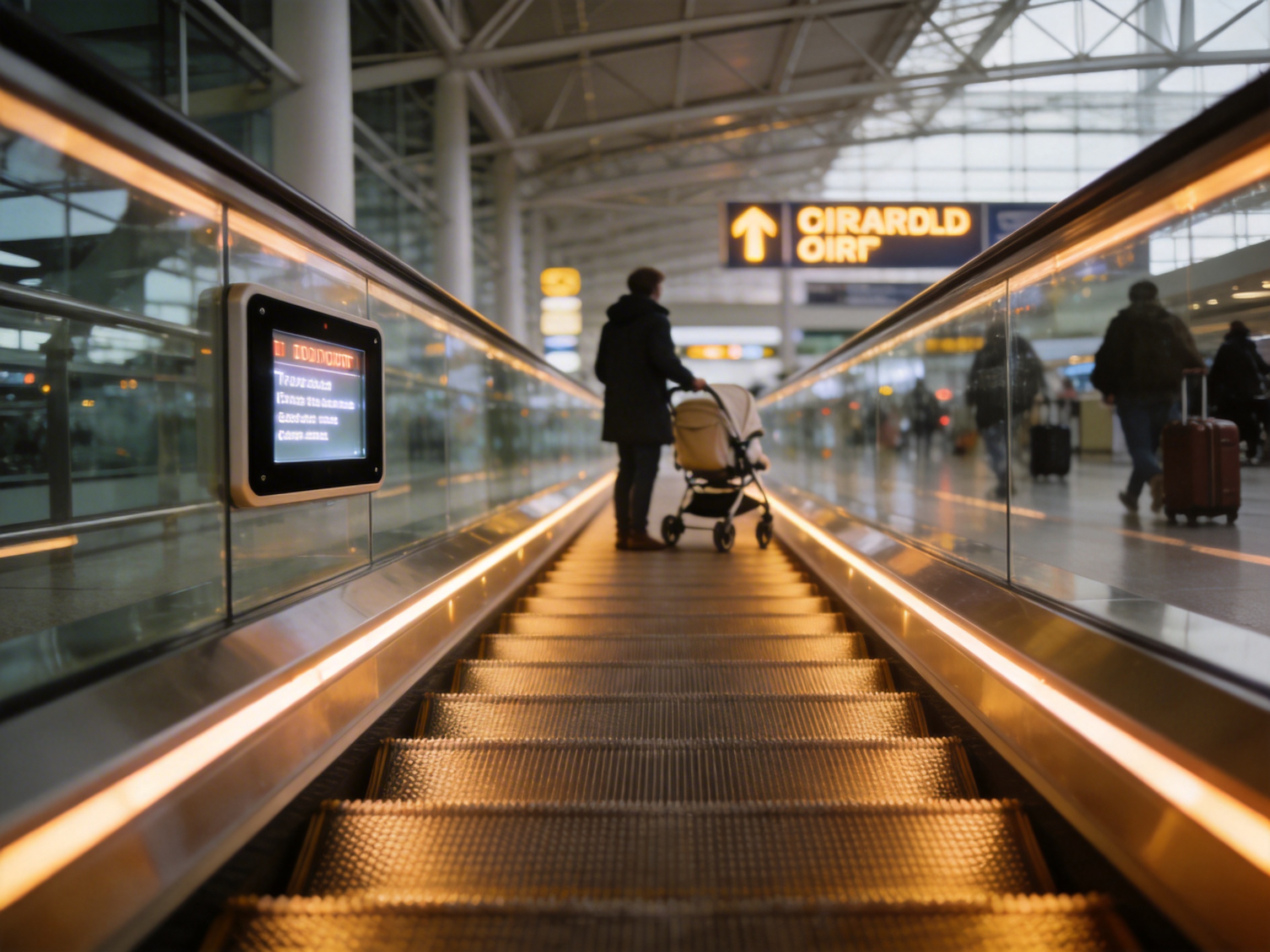
Core Advantages of the Next-Generation Moving Walkway
The next-gen moving walkway stands out from competitors due to its integration of advanced technologies that prioritize efficiency, safety, and user experience. Below are the key advantages that set it apart:
1. Precision Trouble Detection & Safety Illumination
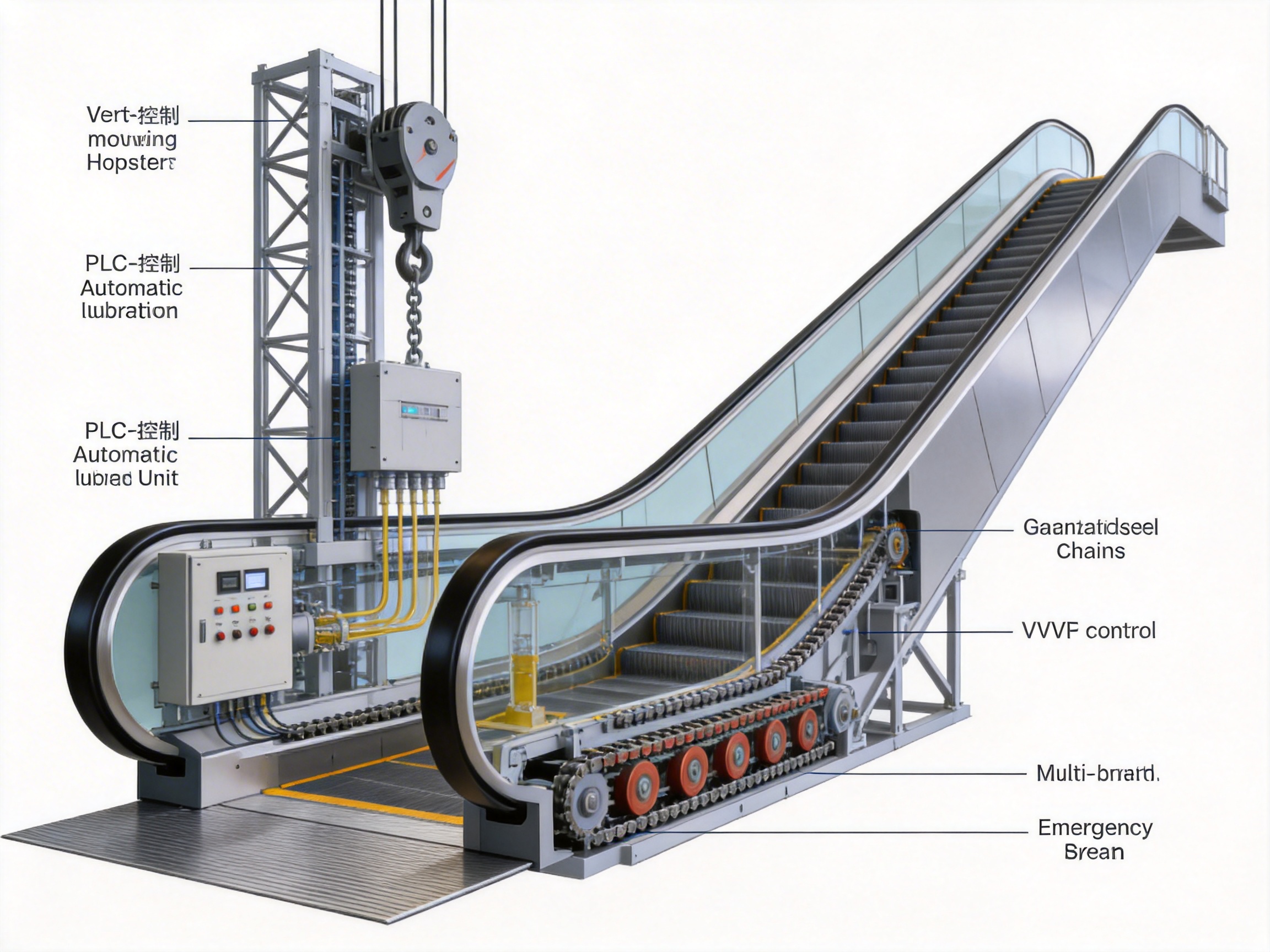
One of the most critical pain points in traditional moving walkways is delayed maintenance due to unclear fault localization. Unlike competitors’ systems that only alert operators to general issues, this model features an integrated trouble indicator that accurately displays the exact location of malfunctions. This allows technicians to diagnose and repair problems in a fraction of the time—reducing downtime by up to 60% compared to industry averages. Complementing this is a continuous safety illumination system: soft, energy-efficient lights embedded along the steps highlight transitions and potential hazards, ensuring visibility for all users, including those with visual impairments. Competitors often omit this feature, relying on occasional warning lights that may not be visible in low-light environments.
2. High-Efficiency Vertical Hoister & Automatic Lubrication
The walkway uses a vertical hoister system that delivers higher transmission efficiency (up to 95%) and lower noise levels (below 55 dB) than traditional horizontal hoisters. This is paired with a PLC-controlled fully automatic lubrication system, which applies precise amounts of lubricant to transmitting chains at preset intervals. This eliminates the inconsistency of manual lubrication (a common practice among competitors) and extends chain lifespan by 40%, reducing maintenance costs and downtime.
3. VVVF Energy-Saving Technology
Variable Voltage Variable Frequency (VVVF) control is a game-changer for energy efficiency. The system adjusts the walkway’s speed based on passenger load: when no users are detected, it slows to a low speed, cutting energy consumption by up to 40% compared to fixed-speed models. When a passenger approaches, it accelerates to normal operating speed seamlessly. This not only reduces operational costs but also aligns with global sustainability goals—making it a preferred choice for eco-conscious clients. Competitors often lack this dynamic speed adjustment, leading to unnecessary energy waste.
4. Enhanced Safety Features Exceeding International Standards
Safety is a non-negotiable priority, and this model goes above and beyond ISO 25745 and European Elevator Association (EEA) standards. Key safety features include:
- A multi-layered emergency brake system that activates within 0.5 seconds of detecting anomalies;
- Skirt board illumination that follows the walkway’s arc, enhancing visibility for passengers;
- A real-time monitoring system that tracks component wear and tear, enabling proactive maintenance before safety issues arise;
- Non-slip step surfaces and human-oriented handrail entrances secured by brushes to prevent debris buildup.
Many competitors only meet basic safety requirements, putting users at greater risk in high-traffic environments.
5. Aesthetic & Adaptive Design
The walkway’s design is tailored to modern urban aesthetics, with diversified handrail belts and fencing boards available for customization. Its dynamic outline complements public spaces like malls, airports, and flyovers, adding a sense of rhythm to urban landscapes. Unlike competitors’ one-size-fits-all designs, this model can be adapted to fit unique building layouts—making it a versatile solution for any project.
Customization & Adaptability for Diverse Needs
No two buildings are the same, and the next-gen moving walkway offers extensive customization options to meet specific client requirements. Below are its key customization features:
1. Flexible Arrangement Plans
The model supports five distinct arrangement plans, each designed for different traffic flows and building layouts:
- Single Unit: Links two levels, ideal for buildings with one-way traffic (e.g., office lobbies). It can be reversed to adjust for peak hours (up in the morning, down in the evening).
- Continuous One-Way: Connects three sales levels in smaller department stores, though it requires more space than interrupted arrangements.
- Interrupted One-Way: Convenient for store owners, as it leads customers past advertising displays. While slightly less user-friendly, it maximizes commercial space utilization.
- Parallel Interrupted Two-Way: Suited for high-traffic areas like department stores and subway stations. It allows direction reversal for peak hours and eliminates the need for inner lateral claddings, reducing costs.
- Crisscross Continuous Two-Way: Ideal for major public buildings (e.g., airports) where transport times between multiple levels must be minimized.
2. Standard & Optional Features
The walkway comes with essential standard features and optional upgrades to suit specific needs:
| Category | Standard Features | Optional Features |
|---|---|---|
| Efficiency | Step chain-roller inbuilt (low noise) | VVVF control (energy saving) |
| Safety | Direction/failure display; passenger illumination | Emergency brake; skirt board illumination |
| Climate Adaptation | — | Heating device (for cold climates) |
| Maintenance | PLC auto lubrication | Electric automatic lubrication |
Competitors often limit customization options, forcing clients to compromise on their needs. This model’s flexibility ensures it can be tailored to any project, regardless of size or complexity.
Advanced Manufacturing & Quality Assurance
The next-gen moving walkway is produced by Tenau Elevator (China) Co., Ltd.—a subsidiary of the 24-year-old DIAO Group, with a focus on overseas markets. The company’s manufacturing processes are rooted in German engineering principles and Industry 4.0 technology, ensuring precision, consistency, and durability.
1. Industry 4.0 Integration
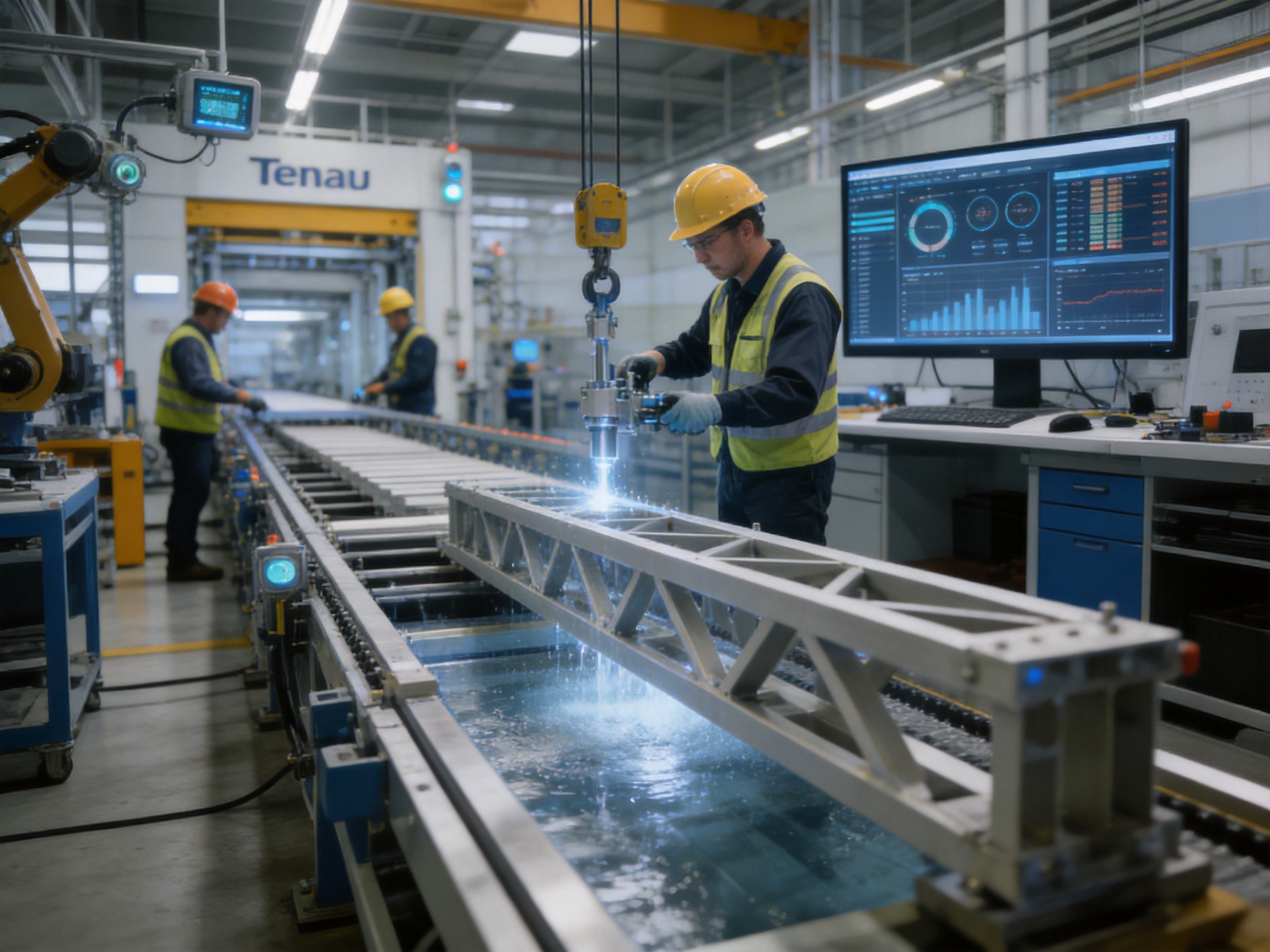
The production facility is guided by the German Tenau Elevator Group, featuring an intelligent production system that integrates big data, IoT, and automated equipment. Key features include:
- Fully Automatic Panel Production: Salvaging technology creates durable, aesthetically pleasing components with minimal waste. IoT sensors monitor production in real time, alerting technicians to deviations from set parameters.
- Intelligent Detection: Every component undergoes multiple inspections using AI-powered vision systems, reducing defect rates by 90% compared to traditional manual inspection.
- Real-Time Monitoring: The system tracks production metrics (speed, material usage, quality) and uses big data analytics to predict maintenance needs, preventing unexpected downtime.
2. Rigorous Quality Control
Tenau adheres to a strict “zero defect” policy, with every component tested for durability, noise level, and safety before assembly. The truss—made of high-quality galvanized steel with anti-corrosion coating—undergoes salt spray testing for 1,000 hours to ensure resistance to harsh environments (e.g., coastal areas). Competitors often skip such rigorous testing, leading to shorter product lifespans.
3. Experienced Workforce
The company employs over 300 skilled workers, including engineers with decades of experience in elevator and escalator production. The team is trained in German engineering standards, ensuring that every product meets the highest global quality benchmarks.
Global Service & Support Excellence
A moving walkway’s long-term performance depends on reliable after-sales service, and Tenau offers a comprehensive global support network that sets it apart from competitors.
1. 24-Hour Multilingual Support
The company’s 24-hour customer service team responds to inquiries in multiple languages (English, Spanish, Russian, Arabic), ensuring clients around the world can communicate effectively. For example, a client in Brazil can reach a Portuguese-speaking technician to resolve issues promptly.
2. Exclusive Client Care
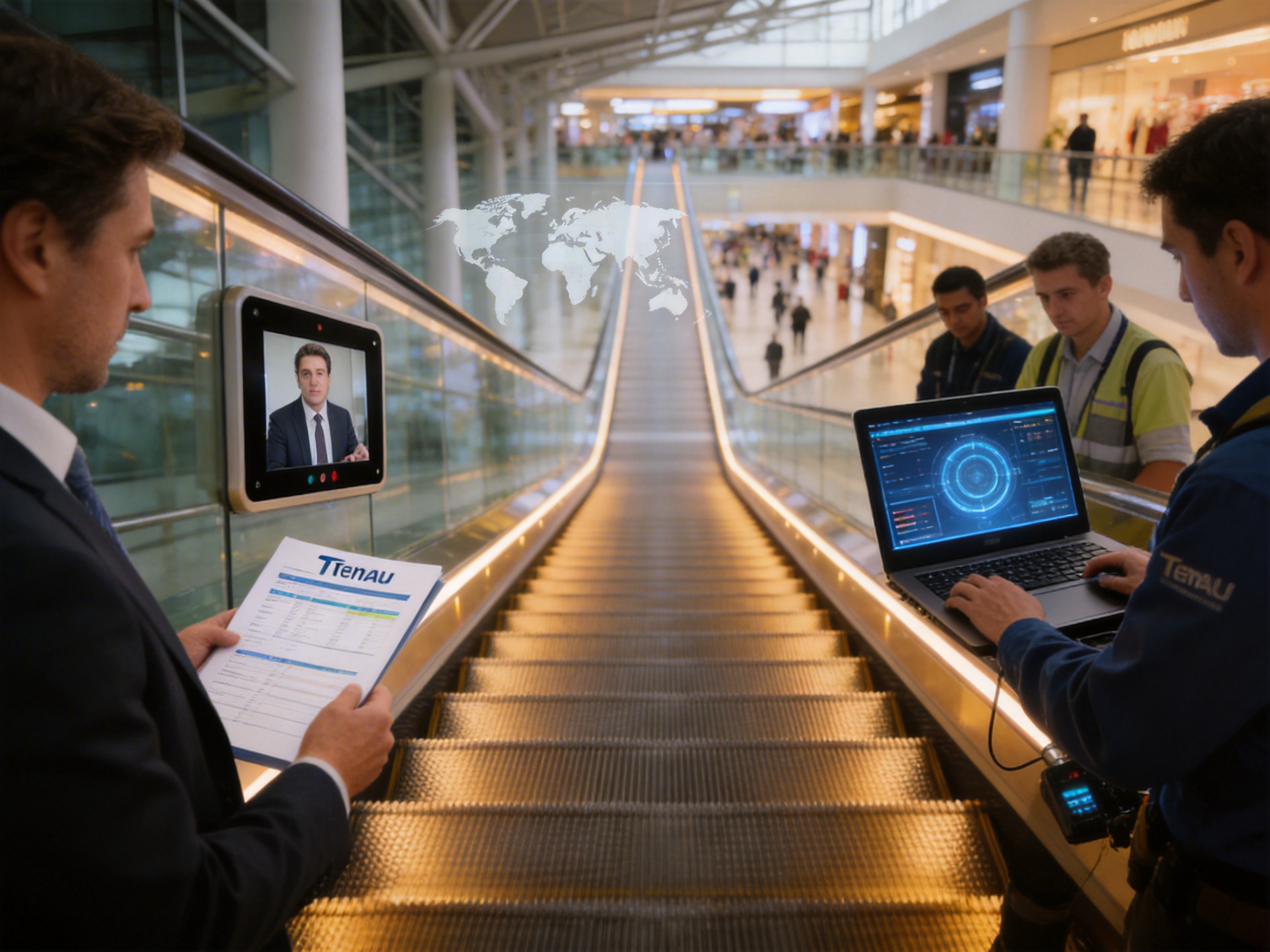
Each client is assigned a dedicated account manager who maintains a one-to-one data file. This file includes installation details, maintenance history, component replacement schedules, and customization requests. This personalized approach reduces resolution time by 50% compared to generic service models.
3. Remote Monitoring
The Tenau Eye System enables remote monitoring of walkway operations. Technicians can track performance metrics in real time, identify potential issues before they escalate, and even perform software updates remotely. This eliminates the need for on-site visits for minor issues, saving clients time and money.
4. Global Service Network
Tenau has a presence in over 60 countries, with local service teams that can respond to on-site issues within 24 hours. This is a critical advantage over competitors who rely on third-party service providers, leading to delayed responses and higher costs.
Q&A: Addressing Common Client Concerns
Below are answers to frequently asked questions about the next-gen moving walkway:
Q1: How much energy can the VVVF system save annually?
A: The VVVF system can save up to 40% of energy compared to fixed-speed models. For a 100-meter walkway operating 12 hours daily, this translates to approximately 15,000 kWh in annual savings—equivalent to reducing carbon emissions by 12 tons per year.
Q2: Is the walkway suitable for cold climates?
A: Yes. The optional heating device includes three units: one in the upper machine room (heating the motor), one in the mid-section, and one in the lower section (heating the entire system). This prevents ice formation and ensures smooth operation in temperatures as low as -20°C.
Q3: How long is the product’s lifespan?
A: With regular maintenance, the walkway can last up to 25 years—double the lifespan of many competitors’ models. This is due to high-quality materials (e.g., galvanized steel truss) and advanced lubrication systems that reduce wear and tear.
Q4: Can the walkway be customized for unique building layouts?
A: Yes. The model supports five arrangement plans and offers optional features like custom handrail colors and fencing designs. Tenau’s engineering team works closely with clients to design solutions that fit their specific needs.
Q5: What safety certifications does the walkway have?
A: The walkway is certified to ISO 25745 (energy performance), ISO 14001 (environmental management), and OHSAS 18001 (occupational health and safety). It also exceeds EEA safety standards for moving walkways.
References
1. International Organization for Standardization (ISO). (2020). ISO 25745:2020—Elevators and escalators—Energy performance and classification. Geneva, Switzerland: ISO.
2. European Elevator Association (EEA). (2022). Safety Standards for Moving Walkways: Best Practices Report. Brussels, Belgium: EEA.
3. Urban Land Institute (ULI). (2021). Urban Mobility Trends: Innovations in Pedestrian Infrastructure. Washington, DC: ULI.
4. Smith, J. D., & Lee, H. (2023). Sustainable Urban Infrastructure: The Role of Energy-Efficient Moving Walkways. Journal of Urban Planning and Design, 15(2), 123-145.
5. Tenau Elevator (China) Co., Ltd. (2023). Internal Technical Report: Next-Gen Moving Walkway Performance Metrics. Huzhou, China: Tenau Elevator.

Related Products
Related News
Built on safety, forging trust in vertical mobility.
lf you have any questions or need help, feel free to contact with our team.
 export@tenau.com.cn
 +86-18601458867
 +86-512-65059883
Elevator & Escalator
Factory Add
East of Xicheng Road, North of Lianyi Road, Nanxun Economic Development Zone, Nanxun District, Huzhou City, Zhejiang Province, P.R.China
Copyright © Tenau Elevator (China) Co., Ltd. All Rightd Reserved.
Custom High Quality Elevator Suppliers and World Brand Elevator Company