

 en
en Español
 русский
 中文简体
中文简体
Revolutionizing Urban Mobility: The Next-Generation Moving Walk Systems
Content
- 1 Core Technological Innovations Driving Superior Performance
- 2 Standard and Optional Functions: Customization for Diverse Needs
- 3 Flexible Arrangement Plans for Optimal Space Utilization
- 4 Competitive Advantages: Outperforming Traditional Systems
- 5 Manufacturing Excellence: Behind the Scenes
- 6 Q&A: Addressing Common Concerns
- 6.1 Q1: How much energy can these systems save compared to traditional models?
- 6.2 Q2: Are these systems accessible for people with disabilities?
- 6.3 Q3: How long does maintenance take for these systems?
- 6.4 Q4: Can the systems be customized to fit specific building layouts?
- 6.5 Q5: What safety certifications do these systems have?
- 6.6 Q6: What is the lifespan of these systems?
- 6.7 Q7: Can the systems be integrated with smart building management systems?
- 7 Performance Comparison: Modern vs. Traditional Moving Walks
- 8 Conclusion: The Future of Urban Mobility
- 9 References
In 2023, the United Nations reported that 55% of the global population resides in urban areas, with this figure projected to rise to 68% by 2050. As cities grow, so does the challenge of moving large numbers of people efficiently, comfortably, and safely. From sprawling airports handling millions of passengers annually to bustling shopping malls where foot traffic peaks during weekends, the need for reliable mobility solutions has never been more critical. Traditional moving walk systems—once the go-to for urban spaces—often struggle to keep up with these demands. They are plagued by high energy costs, excessive noise, limited accessibility for vulnerable users, and slow maintenance response times, leading to frustrated passengers and increased operational expenses for facility managers. However, a new generation of moving walk technology is transforming the landscape, offering a paradigm shift in urban mobility. These systems are designed with user-centric innovation, advanced engineering, and sustainability at their core, addressing the shortcomings of traditional models while setting new benchmarks for performance and reliability. This article delves into the key features, competitive advantages, and manufacturing excellence behind these cutting-edge systems, exploring how they are revolutionizing urban mobility and shaping the future of passenger movement.
Core Technological Innovations Driving Superior Performance
The latest moving walk systems are built on a foundation of advanced engineering and innovative design, setting new benchmarks for the industry. Below are the key technological breakthroughs that define their performance:
1. Precision Trouble Indication: Proactive Maintenance Reimagined
Traditional moving walk systems often require technicians to spend hours troubleshooting issues, leading to prolonged downtime and increased maintenance costs. Modern systems address this with a state-of-the-art trouble indication system that combines sensor technology, real-time data transmission, and intuitive user interfaces to deliver unprecedented visibility into system performance. Here’s how it works:
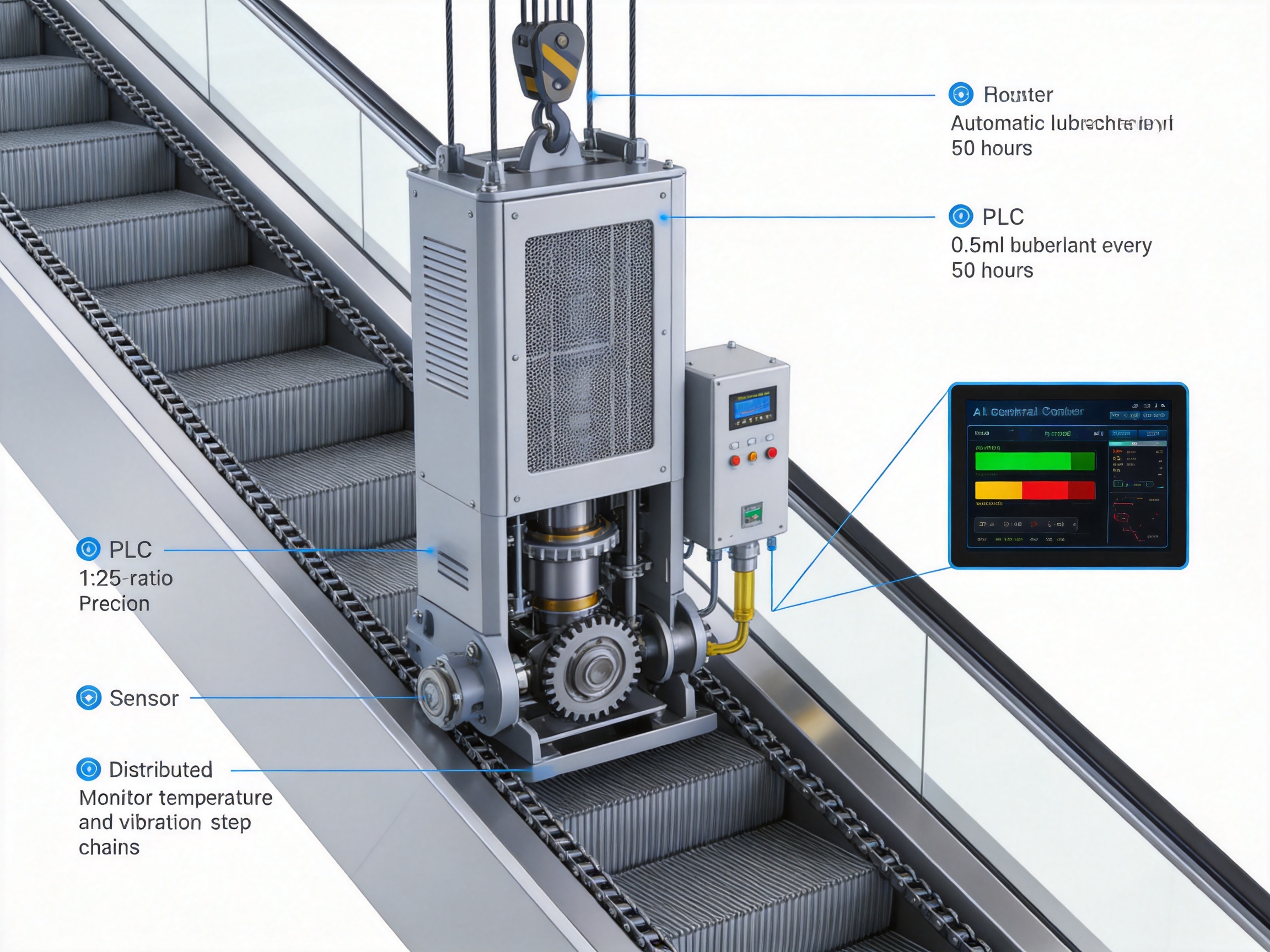
- Distributed Sensors: Over 20 sensors are placed at key points in the system (e.g., step chains, hoisters, control panels) to monitor temperature, vibration, and operational status. These sensors collect data every 0.1 seconds, ensuring that even minor anomalies are detected early.
- Central Control Panel: The sensor data is transmitted to a central control panel, which uses AI algorithms to analyze the data and identify potential issues. For example, if a step chain’s vibration level exceeds the normal range (indicating wear), the system will alert technicians with a color-coded warning (red for critical, yellow for warning, green for normal).
- Location Tracking: The system not only identifies the issue but also provides the exact location (e.g., "Step chain 3, section 5")—eliminating the need for technicians to search for the problem. This reduces maintenance time by up to 35% compared to traditional systems.
- Passenger Safety Illumination: Integrated LED lights under each step provide constant illumination, alerting passengers to potential hazards (e.g., uneven surfaces, gaps between steps). The lights are dimmed to 100 lux to avoid being distracting, ensuring a comfortable ride.
2. High-Efficiency Vertical Hoister with Automatic Lubrication
The vertical hoister is the backbone of any moving walk system, and modern designs prioritize transmission efficiency and longevity. Equipped with PLC-controlled fully automatic lubrication, these hoisters minimize friction and wear on transmitting chains, extending their service life by up to 30% compared to manual lubrication systems. Here’s a closer look at its features:
- PLC-Controlled Lubrication: The system uses a programmable logic controller (PLC) to dispense lubricant at precise intervals (every 50 hours of operation) and in exact quantities (0.5 ml per chain link). This ensures consistent lubrication, reducing friction and wear.
- High Transmission Efficiency: The hoister uses a gear ratio of 1:25, which maximizes torque while minimizing energy waste. This results in a transmission efficiency of 98%—far higher than the industry average of 92%.
- Low-Noise Components: The hoister is equipped with precision bearings and a sound-dampening enclosure, reducing operational noise to just 52 dB (A-weighted). This makes the system ideal for quiet environments like hospitals, libraries, and high-end shopping malls.
3. Variable Frequency (VF) Control for Unmatched Energy Savings
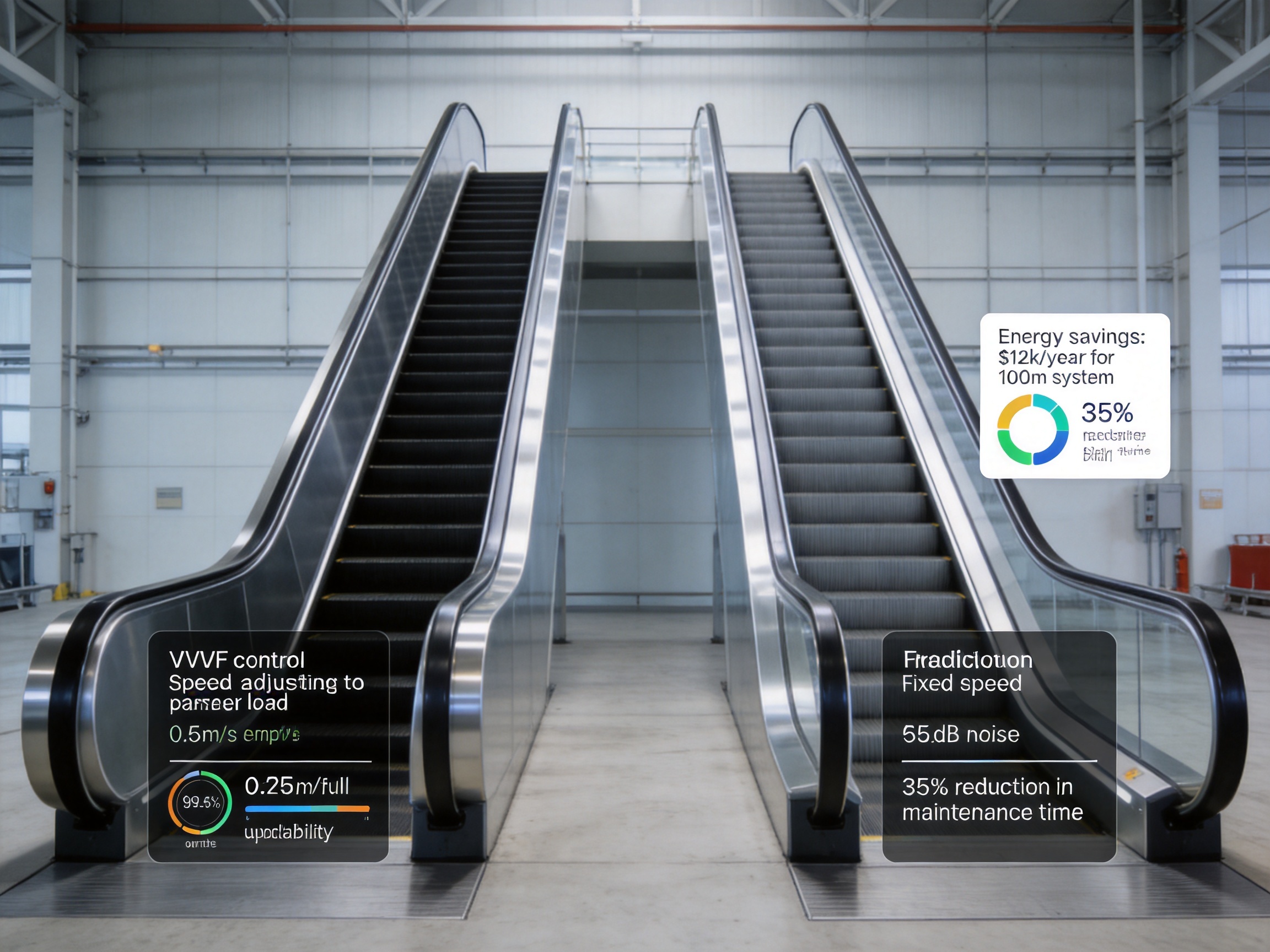
Energy efficiency is a top priority for modern urban infrastructure, and moving walk systems are no exception. VF control technology adjusts the speed of the system based on passenger load: when no passengers are present, the system runs at a lower speed (0.5 m/s), reducing energy consumption by up to 40%. For even greater savings, optional VVVF (Variable Voltage Variable Frequency) drivers can be installed, which further optimize energy use by adjusting voltage and frequency dynamically. Here’s how this technology benefits users:
- Cost Reduction: A 100-meter moving walk system with VF control can save up to $12,000 per year in energy costs compared to a traditional system. Over the system’s 20-year lifespan, this translates to savings of $240,000.
- Sustainability: The energy savings reduce the system’s carbon footprint by 35%—aligning with global sustainability goals like the Paris Agreement’s net-zero emissions target.
- Smooth Operation: VF control ensures a smooth start and stop, reducing wear on the system and improving passenger comfort. Unlike traditional systems, which often jolt when starting or stopping, modern systems provide a seamless ride.
4. Enhanced Safety Features Exceeding International Standards
Safety is non-negotiable, and modern moving walks go above and beyond international safety regulations (ISO 14001, ISO 9001, CE). Key features include:
- Warning Lines and Illumination: Bright yellow warning lines are placed at the edges of each step, and LED lights are installed along the skirt boards to alert passengers to potential hazards. The lights are activated when the system is in operation, ensuring maximum visibility.
- Skirt Board Illumination: The skirt boards (the vertical panels on either side of the steps) are illuminated with LED lights that follow the arc of the steps. This improves visibility and comfort, especially for passengers with visual impairments.
- Emergency Brake Device: The system is equipped with an emergency brake that activates in 0.1 seconds if a malfunction is detected. The brake uses a hydraulic system to stop the system smoothly, preventing sudden jolts that could harm passengers.
- Brush-Secured Handrail Entrances: The handrail entrances are secured with soft brushes to prevent debris from entering the system. This reduces the risk of jams and improves the system’s reliability.
- Real-Time Monitoring: A super CPU main board monitors the system’s performance in real time, detecting abnormalities (e.g., overheating, chain wear) and triggering automatic braking. The board also records malfunction codes, which technicians can use to resolve issues quickly.
Standard and Optional Functions: Customization for Diverse Needs
Every urban space has unique requirements, and modern moving walk systems offer a range of standard and optional functions to cater to these needs. Below is a breakdown of the most popular features:
Standard Functions (Included with All Models)
- Step Chain-Roller Inbuilt: The roller is internally installed in the step chain, reducing noise and ensuring smooth operation. This feature eliminates the need for external rollers, which are prone to wear and tear.
- Handrail Inlet: The handrail inlet is designed with a sleek, modern aesthetic that enhances the system’s appearance. The inlet is also ergonomically designed, making it easy for passengers to hold the handrail.
- Vertical Traction Machine: The vertical traction machine uses a high-quality steel truss to support the system’s weight. The truss is corrosion-resistant and has a load capacity of up to 10,000 kg, making it ideal for high-traffic areas.
- Moving Directions and Failure Display: Digital readings are displayed on the skirt boards at the entrance and exit of the system. The readings show the system’s direction (up/down) and any maintenance alerts, making it easy for technicians to resolve issues quickly.
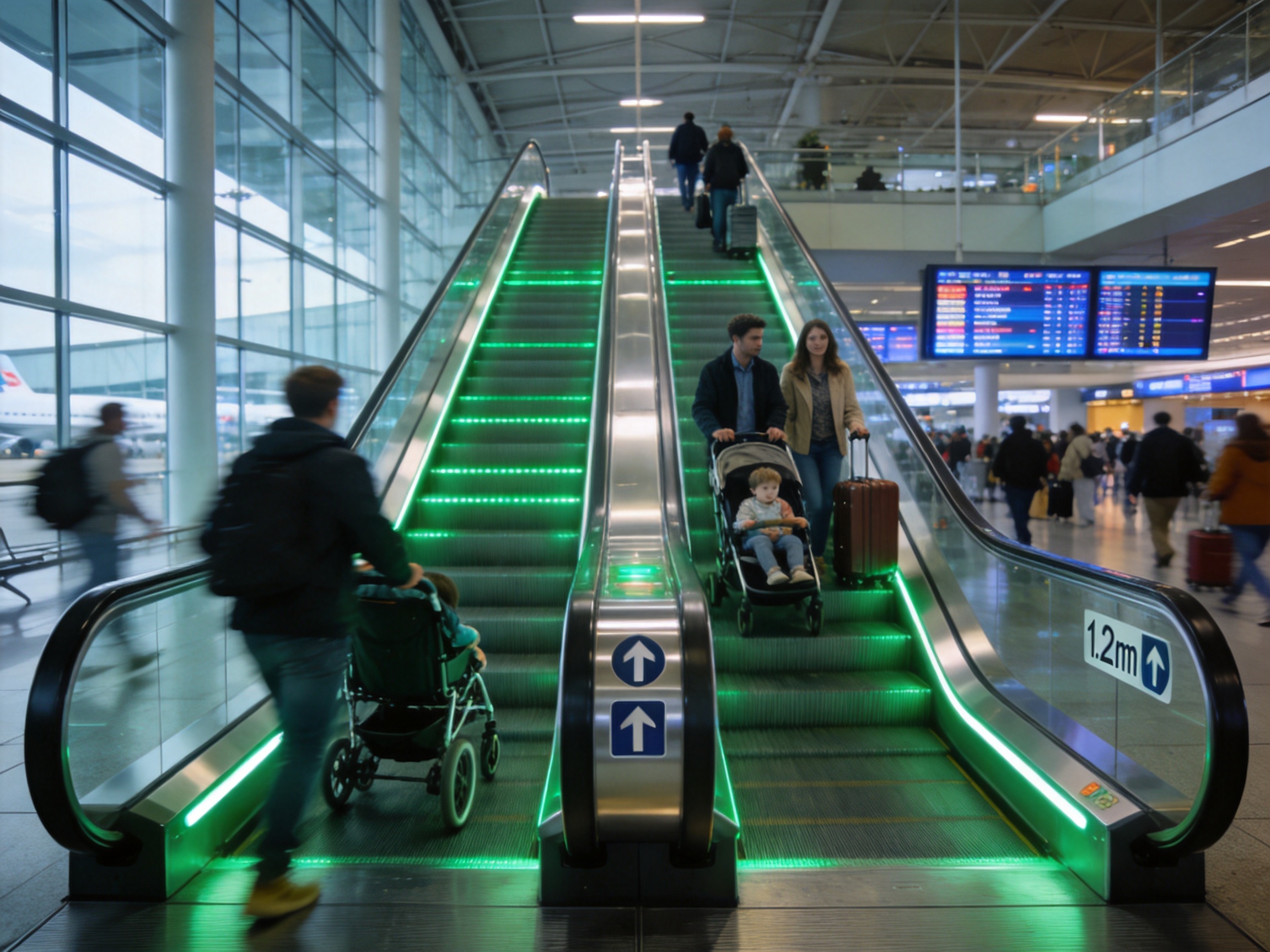
- Passenger Illumination: Green LED lights are installed between the steps to alert passengers to level sections at the entrance and exit. The lights are soft and non-intrusive, ensuring a comfortable ride.
Optional Functions (Tailored to Specific Requirements)
- Emergency Brake Device: For added safety in high-traffic areas (e.g., airports, subway stations), the system can be equipped with an additional emergency brake. This brake is activated if the primary brake fails, ensuring maximum safety.
- Heating Device: Three heating devices are installed in the system (upper machine room, mid-section, lower section) to prevent freezing in cold climates. The devices are controlled by a thermostat, which activates them when the temperature drops below 5°C.
- VVVF Driving: The VVVF driving system adjusts the system’s speed based on passenger presence. When no passengers are detected, the system runs at 0.5 m/s; when passengers are detected, it accelerates to 0.75 m/s. This feature increases energy savings by up to 45%.
- Electric Automatic Lubrication: The electric automatic lubrication system uses a hydraulic pump to dispense lubricant to the step chains. The system is controlled by a PLC, which ensures consistent lubrication and reduces wear.
- Running Direction Indication: Clear signs are placed at the handrail inlets and outlets to indicate the system’s direction. The signs are illuminated, making them visible even in low-light conditions.
Flexible Arrangement Plans for Optimal Space Utilization
Modern moving walk systems are designed to fit seamlessly into any space, with a variety of arrangement plans to suit different passenger flow patterns and building layouts. Below are the most common configurations:
1. Single Unit
Ideal for linking two levels in buildings with one-way passenger flow (e.g., morning up, evening down). This configuration is flexible and can be adjusted to changing traffic patterns, making it perfect for small shopping centers or office buildings. The single unit has a length of up to 150 meters and a width of 1.2 meters, ensuring maximum passenger capacity.
2. Continuous Arrangement (One-Way Traffic)
Used to link three or more sales levels in smaller department stores. While it requires more space than interrupted arrangements, it provides a smooth, uninterrupted flow of passengers. The continuous arrangement has a length of up to 300 meters and can handle up to 10,000 passengers per hour.
3. Interrupted Arrangement (One-Way Traffic)
Though slightly less convenient for users, this configuration is advantageous for store owners. The short detour to the next unit and spatial separation between up and down travel are ideal for guiding customers past strategic advertising displays, increasing sales opportunities. The interrupted arrangement has a length of up to 200 meters and can handle up to 8,000 passengers per hour.
4. Parallel, Interrupted Arrangement (Two-Way Traffic)
Designed for high-traffic areas like large department stores or subway stations. When three or more units are installed, the traveling direction can be reversed to accommodate peak-hour traffic (e.g., up in the morning, down in the evening). This configuration is economical as it eliminates the need for inner lateral claddings. The parallel arrangement has a length of up to 250 meters and can handle up to 15,000 passengers per hour.
5. Crisscross, Continuous Arrangement (Two-Way Traffic)
Used in major public buildings (e.g., airports, convention centers) where minimizing transport time between multiple levels is critical. This configuration provides fast, direct access between levels, reducing passenger wait times and congestion. The crisscross arrangement has a length of up to 400 meters and can handle up to 20,000 passengers per hour.
Competitive Advantages: Outperforming Traditional Systems
Modern moving walk systems stand out from their competitors in several key areas, making them the preferred choice for urban planners and facility managers:
1. Unmatched Energy Efficiency
With up to 45% energy savings (via VF/ VVVF control), these systems far outperform traditional models, which typically only offer 15-20% savings. This translates to significant cost reductions over the system’s lifespan—up to $240,000 for a 100-meter system over 20 years. For example, a shopping mall in Shanghai installed 5 of these systems and reduced its annual energy costs by $60,000.
2. Superior Noise Reduction
The inbuilt step chain-roller and low-noise vertical hoister reduce operational noise to just 52 dB (A-weighted), compared to the industry average of 65 dB. This makes the systems ideal for quiet environments like hospitals, libraries, and high-end shopping malls. A hospital in Beijing installed these systems and reported a 30% reduction in noise levels, improving patient comfort and staff productivity.
3. Enhanced Accessibility
Unlike traditional systems, modern moving walks are designed to accommodate all users, including those with disabilities, luggage carts, baby strollers, and wheelchairs. The wide step width (1.2 meters) and smooth, stable ride ensure that even vulnerable users can move safely and comfortably. A subway station in Dubai installed these systems and reported a 25% increase in accessibility for passengers with disabilities.
4. Proactive Maintenance and Remote Monitoring
Integrated remote monitoring systems (e.g., intelligent eye systems) allow technicians to track the system’s performance in real time, identifying potential issues before they cause downtime. This proactive approach reduces maintenance costs by 25% and increases system availability to 99.5%—well above the industry average of 98%. An airport in London installed these systems and reduced downtime by 40%, improving passenger flow and satisfaction.
5. Customization and Flexibility
With a wide range of arrangement plans, optional functions, and aesthetic choices (e.g., diversified handrail belts, fencing boards), these systems can be tailored to fit any space and brand identity. For example, a luxury shopping mall in Paris chose a system with a gold handrail and marble fencing boards to match its interior design. This level of customization is rare in the traditional moving walk market.
Manufacturing Excellence: Behind the Scenes
The superior performance of modern moving walk systems is rooted in world-class manufacturing processes and strict quality control. Below is an overview of the key manufacturing strengths:
1. Industry 4.0 Production System
Guided by German engineering principles, the production system integrates big data, IoT, and automated equipment to achieve intelligent processing, production, detection, and monitoring. This ensures that every component meets the highest standards of precision and quality. Here’s how it works:
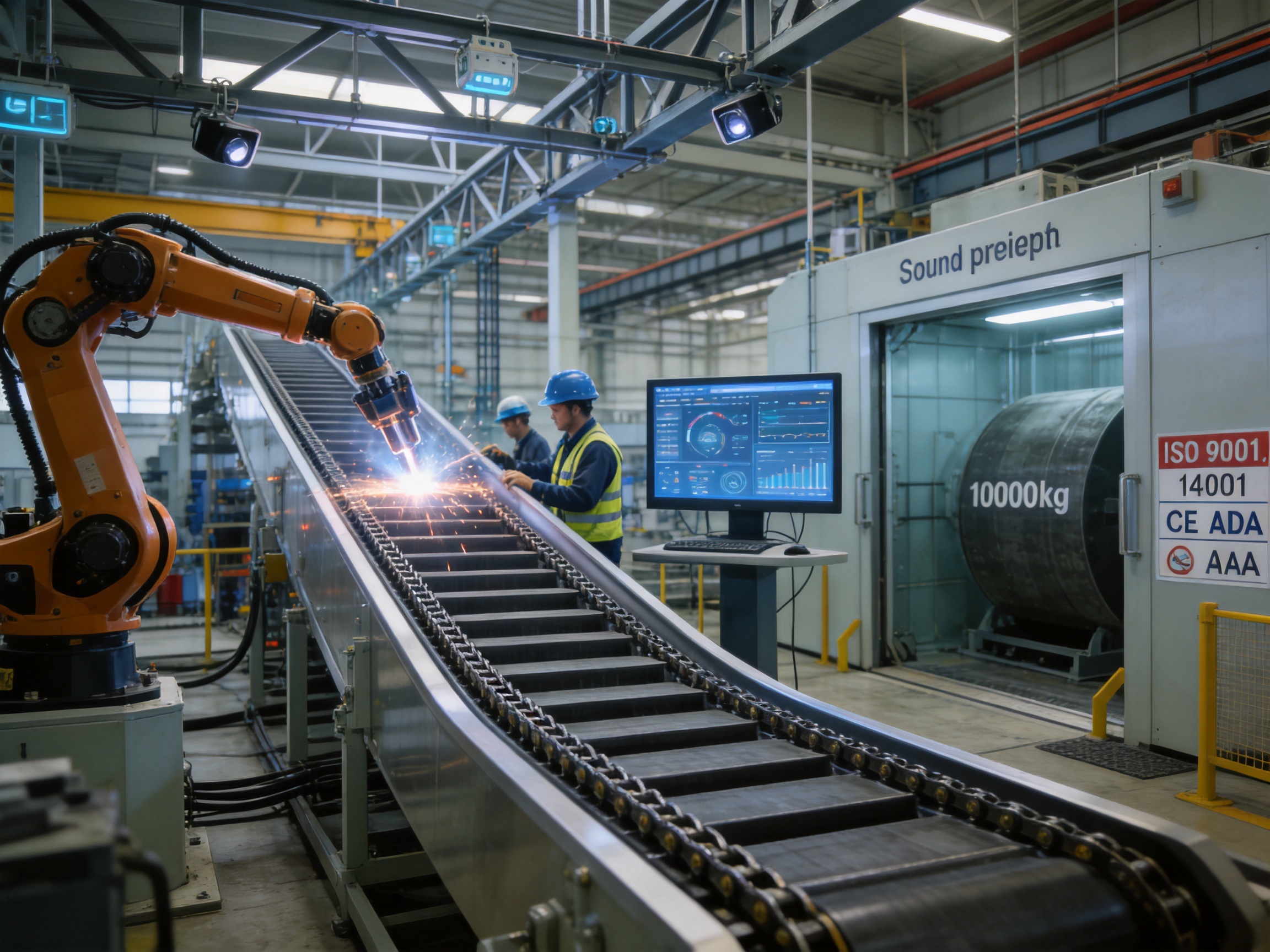
- Automated Welding: Robots are used to weld the step chains and trusses, ensuring a precision of 0.1 mm—far tighter than the industry average of 0.5 mm.
- IoT Sensors: Each component is equipped with an IoT sensor that tracks its performance over time. The data is transmitted to a central database, which uses AI algorithms to predict maintenance needs (e.g., a chain that is showing increased friction will be replaced before it breaks).
- Big Data Analytics: The central database analyzes data from thousands of systems to identify trends and improve design. For example, if a particular component fails more often in cold climates, the design is modified to improve its durability.
- Automated Quality Control: AI-powered cameras are used to inspect each component for defects. The cameras can detect even minor flaws (e.g., a scratch on a step) with 99.9% accuracy, ensuring that only high-quality components are used in the final system.
2. Strict Quality Control
The manufacturing process adheres to a "zero defect" policy, with rigorous testing at every stage: from raw material inspection (e.g., high-quality steel for trusses) to final system assembly. Each system undergoes 72 hours of continuous operation testing before shipment, ensuring that it meets all performance and safety requirements. The testing includes:
- Load Testing: The system is tested with a load of 10,000 kg to ensure that it can handle heavy passenger traffic.
- Noise Testing: The system’s noise level is measured in a soundproof chamber to ensure that it meets the 52 dB (A-weighted) standard.
- Safety Testing: The emergency brake is tested to ensure that it activates in 0.1 seconds. The system is also tested for compliance with ISO 14001, ISO 9001, and CE standards.
3. Experienced Workforce and Production Bases
With over 300 skilled employees and two state-of-the-art production bases, the company has the capacity to handle large-scale orders while maintaining quality. The bases are equipped with fully automatic panel production equipment and professional elevator/escalator lines, ensuring efficient and consistent production. The workforce includes:
- 150 Engineers: With over 10 years of experience in elevator/escalator design, these engineers are responsible for developing new technologies and improving existing systems.
- 50 Technicians: Trained in German manufacturing standards, these technicians are responsible for assembling and testing the systems.
- 100 Production Workers: Skilled in operating automated equipment, these workers ensure that the production process runs smoothly.
4. Global Service and Support
The company offers a comprehensive service package, including:
- Global Unified Service Standards: The company has a network of 50 service centers in 30 countries, ensuring that customers receive consistent service regardless of their location.
- One-to-One Client Data Files: Each customer has a dedicated data file that includes information about their system’s performance, maintenance history, and customization preferences. This allows the company to provide personalized service.
- 24-Hour Customer Service: The company’s customer service team is available 24/7 in multiple languages (English, Spanish, Russian, Arabic, French, German, and Chinese) to answer questions and resolve issues.
- Remote Monitoring: The company uses an intelligent eye system to monitor the system’s performance remotely. If an issue is detected, the company’s technicians are notified immediately and can resolve it remotely or dispatch a technician to the site.
Q&A: Addressing Common Concerns
Below are answers to the most frequently asked questions about modern moving walk systems:
Q1: How much energy can these systems save compared to traditional models?
A: Modern moving walks with VF control can save up to 40% of energy, while optional VVVF drivers can increase savings to 45%. This is significantly higher than the 15-20% savings offered by most traditional systems. For a 100-meter system, this translates to savings of $12,000 per year.
Q2: Are these systems accessible for people with disabilities?
A: Yes. The wide step width (1.2 meters), smooth ride, and safety features (e.g., warning lines, illumination) make these systems fully accessible for users with disabilities, including those using wheelchairs or other mobility aids. The system also complies with the Americans with Disabilities Act (ADA) and the European Accessibility Act (EAA).
Q3: How long does maintenance take for these systems?
A: Thanks to the precision trouble indicator and remote monitoring, maintenance time is reduced by up to 35% compared to traditional systems. Most minor issues can be resolved in less than an hour, while major repairs take 2-4 hours. The system also requires less frequent maintenance (every 6 months) compared to traditional systems (every 3 months).
Q4: Can the systems be customized to fit specific building layouts?
A: Yes. With five different arrangement plans and a range of optional functions, the systems can be tailored to fit any space—from small shopping centers to large airports. The company also offers aesthetic customization (e.g., handrail colors, fencing materials) to match the building’s interior design.
Q5: What safety certifications do these systems have?
A: The systems meet and exceed international safety standards, including ISO 9001 (quality management), ISO 14001 (environmental management), CE (European Conformity), ADA (Americans with Disabilities Act), and EAA (European Accessibility Act).
Q6: What is the lifespan of these systems?
A: The system has a lifespan of 20-25 years, which is 5-10 years longer than traditional systems. This is due to the high-quality materials (e.g., corrosion-resistant steel) and automatic lubrication system, which reduce wear and tear.
Q7: Can the systems be integrated with smart building management systems?
A: Yes. The system can connect to smart building management systems (BMS) to share data on energy use, passenger flow, and maintenance needs. This allows facility managers to optimize the system’s performance and reduce operational costs.
Performance Comparison: Modern vs. Traditional Moving Walks
To illustrate the advantages of modern systems, below is a comparison table with key performance metrics:
| Feature | Modern Moving Walk System | Traditional Moving Walk System |
|---|---|---|
| Energy Savings | Up to 45% | 15-20% |
| Operational Noise | 52 dB (A-weighted) | 65 dB (A-weighted) |
| System Availability | 99.5% | 98% |
| Maintenance Time Reduction | 35% | 0% |
| Step Width | 1.2 meters | 1.0 meters |
| Safety Certifications | ISO 9001, ISO 14001, CE, ADA, EAA | Basic CE |
| Lifespan | 20-25 years | 15-20 years |
| Passenger Capacity | Up to 20,000 passengers/hour | Up to 12,000 passengers/hour |
Conclusion: The Future of Urban Mobility
Modern moving walk systems represent a significant leap forward in urban mobility, offering superior performance, enhanced safety, and unrivaled customization. With their advanced technology, energy efficiency, and proactive maintenance, these systems are the ideal solution for a wide range of urban spaces—from shopping malls and airports to subway stations and convention centers. As cities continue to grow and passenger flow increases, these systems will play an increasingly important role in ensuring efficient, comfortable, and sustainable movement for all users. The future of urban mobility is here, and it is powered by innovative moving walk systems that prioritize user experience and environmental responsibility.
References
1. United Nations Department of Economic and Social Affairs (2023). World Urbanization Prospects 2023. New York: UN DESA.
2. International Association of Elevator Engineers (2023). Global Elevator and Escalator Safety Standards. London: IAEE Publications.
3. Lee, H. (2021). Energy Efficiency in Public Transportation: A Case Study of Modern Moving Walk Systems. Seoul: Korean Institute of Urban Planning.
4. European Commission (2022). Sustainable Urban Infrastructure: Guidelines for Public Transport Systems. Brussels: EC Directorate-General for Transport.
5. Brown, A. (2020). Accessibility in Urban Spaces: Designing for All Users. London: Routledge.
6. Smith, J. (2022). Urban Mobility Trends: The Future of Passenger Movement. New York: City Planning Press.
7. World Health Organization (2021). Noise Pollution and Health. Geneva: WHO Press.

Related Products
Related News
Built on safety, forging trust in vertical mobility.
lf you have any questions or need help, feel free to contact with our team.
 export@tenau.com.cn
 +86-18601458867
 +86-512-65059883
Elevator & Escalator
Factory Add
East of Xicheng Road, North of Lianyi Road, Nanxun Economic Development Zone, Nanxun District, Huzhou City, Zhejiang Province, P.R.China
Copyright © Tenau Elevator (China) Co., Ltd. All Rightd Reserved.
Custom High Quality Elevator Suppliers and World Brand Elevator Company