

 en
en Español
 русский
 中文简体
中文简体
TO-F003 Elevator Handrail: Durable, Safe, and Precision-Made for Modern Lift Interiors
Content
- 1 1. Product Overview
- 2 2. Why Elevator Handrails Matter
- 3 3. Design Advantages of the TO-F003
- 4 4. Advantages Over Generic or Poorly Integrated Alternatives
- 5 5. Advanced Manufacturing Capabilities
- 6 6. Material, Finish, and Maintenance Considerations
- 7 7. Applications Across Different Elevator Types
- 8 8. Application in Escalator and Moving Walk Projects
- 9 9. Manufacturing and Supply Chain Strengths
- 10 10. Quality, Safety, and Environmental Responsibility
- 11 11. Installation Planning
- 12 12. Procurement Guidance for International Buyers
- 13 13. Value for Developers and Contractors
- 14 14. Modernization and Replacement Potential
- 15 15. Why Manufacturer Experience Matters
- 16 16. Product Selection Compared with Low-Cost Purchasing
- 17 17. Recommended Use and Technical Verification
- 18 18. Frequently Asked Questions
- 18.1 Q1: What is the TO-F003?
- 18.2 Q2: Which elevators can use this handrail?
- 18.3 Q3: Can the product be customized?
- 18.4 Q4: Is the TO-F003 suitable for hospital elevators?
- 18.5 Q5: Can it be used in a home or villa elevator?
- 18.6 Q6: What materials and finishes are available?
- 18.7 Q7: How should the handrail be maintained?
- 18.8 Q8: Does the product include installation hardware?
- 18.9 Q9: Can the handrail be used for an escalator?
- 18.10 Q10: What information should be provided for a quotation?
- 18.11 Q11: What manufacturing advantages support the product?
- 18.12 Q12: Why purchase from an elevator manufacturer instead of a general hardware supplier?
- 19 19. Conclusion
- 20 References
- 21 Product: TO-F003
Elevator handrails are small but highly important components in passenger lifts, panoramic elevators, hospital elevators, home villa elevators, and other vertical transportation systems. They support passenger comfort, improve the usability of the cabin, contribute to interior design, and provide an additional point of contact for people who need extra stability while the elevator is moving. The TO-F003 elevator handrail is designed as a practical and refined solution for projects that require dependable function, coordinated appearance, and consistent manufacturing quality.
Although a handrail may not carry the same mechanical load as the elevator suspension system or door equipment, it is a product that passengers interact with directly. Its surface, shape, mounting stability, cleanliness, and visual integration all influence the perceived quality of the elevator. In hospitals, residential buildings, hotels, shopping centers, office towers, and public transportation facilities, a well-designed handrail can make the cabin feel safer, more comfortable, and more complete.
The TO-F003 model is part of a professional elevator component range manufactured by Tenau Elevator (China) Co., Ltd. The company combines elevator design, research and development, manufacturing, marketing, installation, and after-sales service. This integrated capability enables the handrail to be considered not as an isolated accessory but as one element of a complete elevator interior and transportation solution.
For buyers, contractors, architects, elevator distributors, and modernization specialists, this approach offers several practical advantages. It supports coordinated procurement, clearer technical communication, more reliable quality control, and better compatibility with different elevator applications. The result is a handrail solution suitable for both new installations and refurbishment projects.
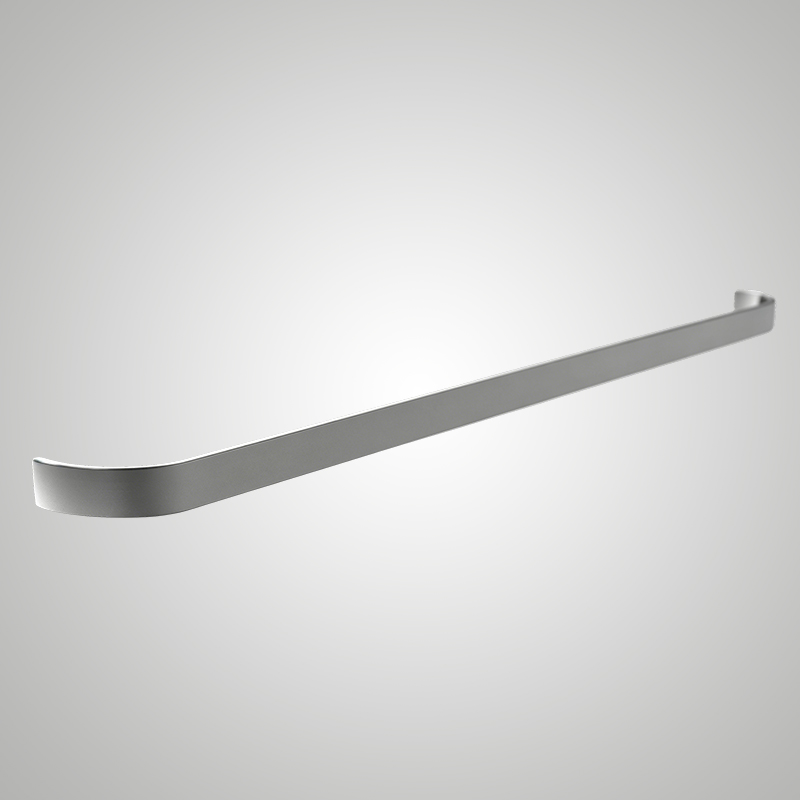
TO-F003
1. Product Overview
The TO-F003 is categorized as an elevator handrail and is intended for installation inside elevator cabins or related vertical transportation spaces. Its primary function is to provide passengers with a stable and comfortable gripping point. At the same time, it contributes to the visual design of the cabin wall and can complement stainless steel, glass, wood-effect, stone-effect, or other decorative interior materials.
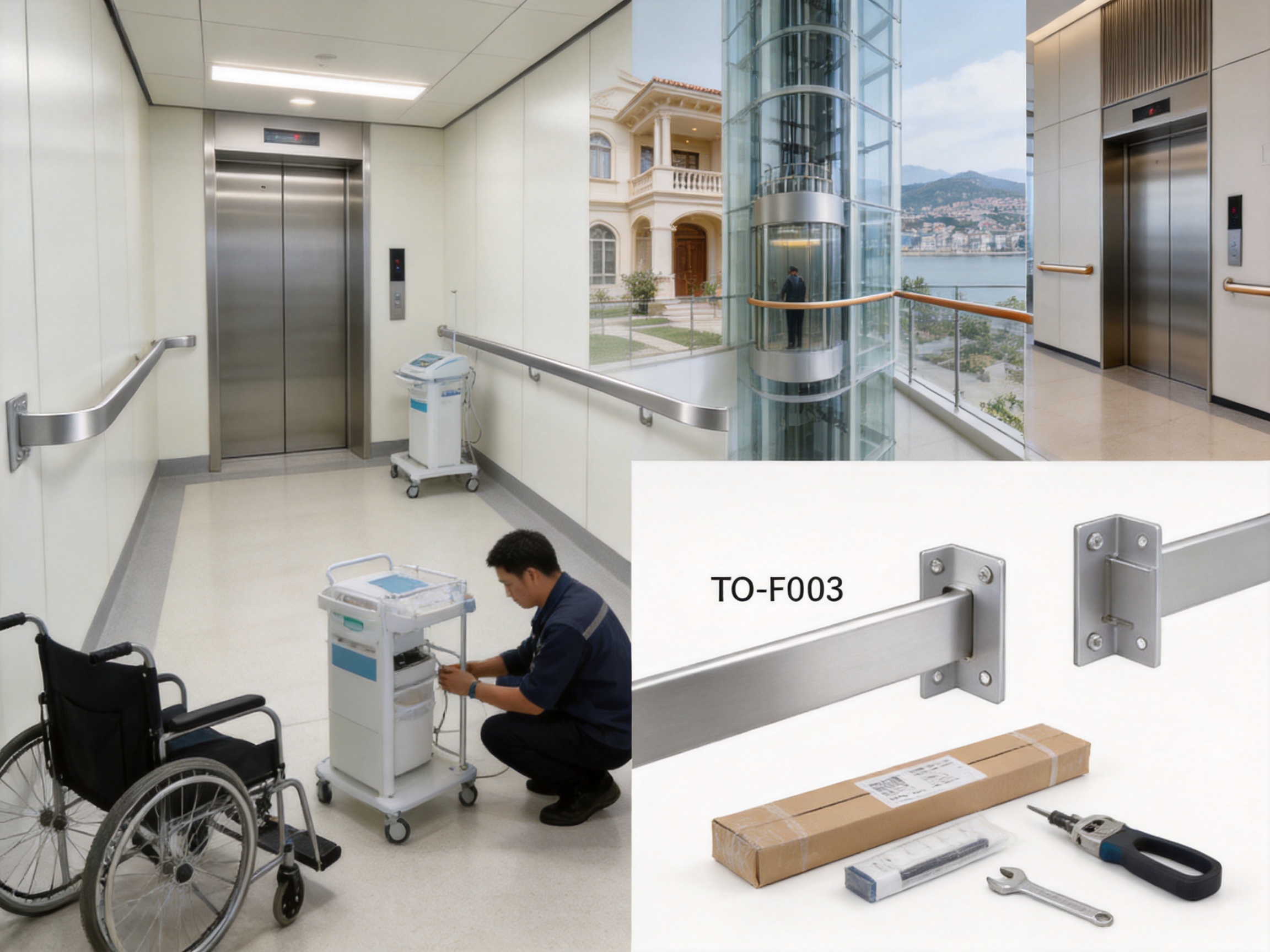
A well-engineered elevator handrail should satisfy several requirements simultaneously. It should be comfortable to hold, secure after installation, visually consistent, easy to maintain, and suitable for the operating environment. The TO-F003 is developed with these requirements in mind. Its design can be applied to passenger elevators, panoramic and observation elevators, hospital elevators, home villa elevators, and other customized cabin interiors, subject to project-specific confirmation of dimensions and finish.
Because elevator cabins are compact spaces, every visible component affects the overall impression. A handrail that is too visually heavy may make the cabin appear crowded, while one that is too delicate may fail to communicate strength and reliability. The TO-F003 is positioned as a balanced component that combines practical support with a clean, modern appearance.
The model can be considered for various building types, including residential developments, commercial buildings, hotels, hospitals, public institutions, transport facilities, and private villas. It may also be selected for elevator renovation projects where the cabin interior requires an updated appearance without replacing the complete elevator system.
Core Product Identity
| Item | Information |
|---|---|
| Product model | TO-F003 |
| Product category | Elevator handrail |
| Typical application | Elevator cabins and customized lift interiors |
| Potential elevator types | Passenger, panoramic, observation, hospital, villa, and other elevators |
| Primary function | Passenger support, comfort, and interior enhancement |
| Supplier capability | Integrated elevator design, research and development, manufacturing, installation, and service |
| Product identification | TO-F003 / tof003 |
Final dimensions, surface treatment, mounting method, color, material configuration, and packaging should be confirmed according to the project specification. This allows the product to be integrated correctly with the cabin wall, control panel, lighting arrangement, and other interior elements.
2. Why Elevator Handrails Matter
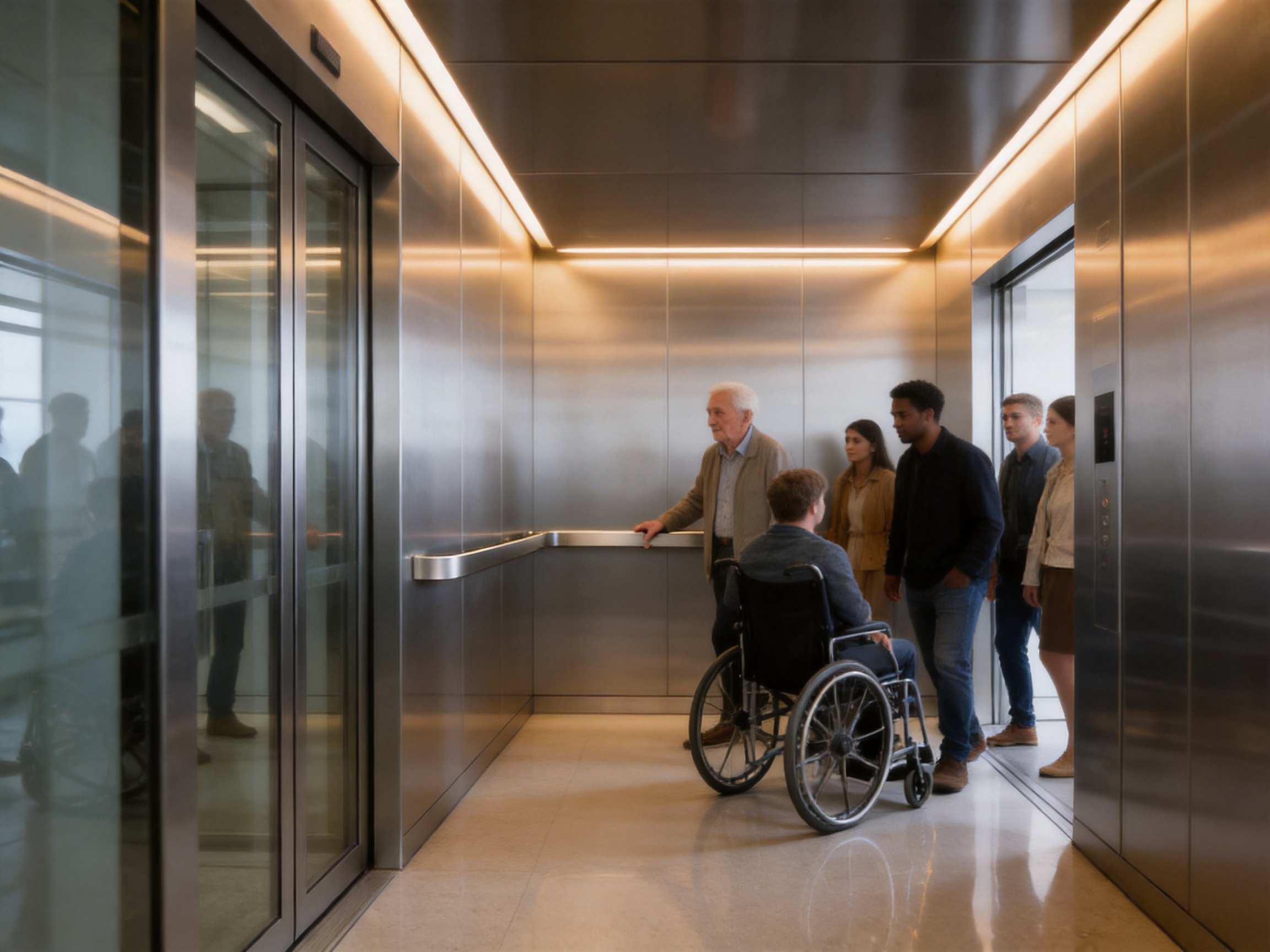
Passenger safety is the most obvious reason for installing an elevator handrail. During acceleration, deceleration, door opening, or minor movement caused by passenger traffic, some users may prefer to hold a fixed support. Older passengers, children, people with limited mobility, and passengers carrying bags can benefit from having a secure point of contact.
In hospital elevators, the role of the handrail is even more significant. Patients, medical staff, visitors, and wheelchair users may require additional support while entering or exiting the cabin. A correctly positioned handrail can help users maintain balance and can improve the sense of security during transportation between floors.
In residential and villa elevators, handrails provide comfort while also supporting a premium interior concept. Homeowners often pay close attention to cabin materials, lighting, mirrors, flooring, and wall panels. A handrail that matches the chosen decorative scheme helps create a coordinated and high-quality environment.
In commercial and public buildings, repeated passenger use creates higher demands on product durability and maintenance. Handrails are touched frequently, exposed to cleaning agents, and subject to accidental impacts from luggage or equipment. The selection of a reliable component can therefore reduce the risk of premature wear and help maintain a consistent appearance over the service life of the cabin.
Functional and Visual Contribution
The handrail serves three connected purposes. First, it provides physical support. Second, it helps define the cabin’s interior identity. Third, it communicates manufacturing quality to passengers. Users may not know the technical details of an elevator, but they immediately notice whether interior fittings feel stable, smooth, clean, and well finished.
The TO-F003 is therefore more than a simple bar or decorative strip. It is a passenger-contact component that must be considered in relation to ergonomics, material behavior, installation accuracy, cabin layout, and long-term maintenance. Its value is created by the combination of these factors rather than by appearance alone.
3. Design Advantages of the TO-F003
Passenger-Oriented Ergonomics
An effective handrail should be comfortable for a wide range of users. The gripping area should feel natural in the hand, without unnecessarily sharp edges or uncomfortable transitions. The mounting design should also provide a stable connection so that the handrail does not feel loose when passengers rely on it.
The TO-F003 is designed for the practical needs of elevator users. Its form is suitable for incorporation into modern cabin layouts, and its installation can be coordinated with the available wall area. Depending on the project, the handrail may be positioned along a side wall, rear wall, or another approved interior location.
Ergonomic design is especially important in cabins that serve hospitals, senior living facilities, residential buildings, and public spaces. A handrail should be easy to locate and use while avoiding unnecessary obstruction of passenger circulation. Appropriate placement helps maintain clear access for wheelchairs, stretchers, luggage, and groups of passengers.
Stable Installation
Handrail stability depends on more than the visible rail itself. The supports, fasteners, wall reinforcement, mounting tolerances, and installation procedure all affect performance. A high-quality product must be manufactured accurately so that its components fit together properly and can be secured to the cabin structure.
Tenau’s integrated elevator manufacturing background supports a system-based approach to component design. Because the company also develops complete elevator solutions, the handrail can be considered alongside cabin structures, wall panels, control stations, lighting, and other interior parts. This reduces the possibility of treating the handrail as an afterthought during project planning.
For installation teams, consistent component dimensions are valuable. They make positioning easier, reduce adjustment work, and support a cleaner final result. The exact fixing method must be selected according to the cabin structure and project requirements, but accurate manufacturing provides a strong foundation for reliable installation.
Modern Interior Compatibility
Elevator interiors vary widely. A hotel may require an elegant and understated style, a hospital may prioritize cleanliness and practical maintenance, a villa may use customized decorative materials, and a panoramic elevator may emphasize transparency and visual openness. The handrail must be able to work within these different design contexts.
The TO-F003 can be specified as part of a coordinated cabin interior. Its simple product identity allows architects and elevator designers to consider it alongside stainless steel finishes, decorative panels, glass, mirrors, and other materials. A carefully selected surface treatment can help the handrail either blend into the wall design or serve as a deliberate accent.
Visual compatibility is particularly important in observation elevators. In a panoramic cabin, passengers are more aware of the surrounding interior because the cabin is designed as part of the viewing experience. The handrail must provide support without unnecessarily interfering with the visual openness of the space.
4. Advantages Over Generic or Poorly Integrated Alternatives
Many elevator handrails may appear similar at first glance, but differences in design control, material consistency, mounting accuracy, and supplier support can become obvious after installation. A low-cost component may have an attractive initial price but create additional expenses through fitting problems, inconsistent finishes, replacement difficulties, or premature deterioration.
Better System Compatibility
One advantage of selecting a handrail from an established elevator manufacturer is the potential for better system compatibility. The product can be discussed in relation to the complete cabin design rather than ordered without considering surrounding components. This is useful when the project involves customized cabin dimensions, special wall panels, or particular passenger requirements.
A generic handrail supplier may provide only a single component and may not fully understand elevator cabin clearances, access requirements, interior tolerances, or installation sequences. A specialized elevator manufacturer is more familiar with these conditions and can communicate more effectively with elevator contractors and project engineers.
More Consistent Quality
Consistency is important when a project includes multiple elevators or repeated installations across different buildings. Handrails should maintain comparable dimensions, appearance, and installation behavior from one unit to another. Manufacturing under a structured quality system helps reduce variations between batches.
Tenau operates with ISO9001, ISO14001, and OHSMS18001-related management systems. These standards represent a structured approach to quality management, environmental management, and occupational health and safety. Certification alone does not replace product inspection, but it indicates that production and management activities are organized within recognized frameworks.
Stronger Project Support
When handrails are purchased as part of a broader elevator project, buyers often need assistance with drawings, specifications, packing, installation, replacement parts, and after-sales communication. An integrated manufacturer can provide a more coordinated channel for these requirements.
This is especially valuable for international projects. Importers and distributors may need consistent technical information, export documentation, packaging coordination, and communication across different time zones. A supplier experienced in exporting elevators and related components can help reduce uncertainty during procurement and delivery.
More Suitable for Customization
Elevator interiors are frequently customized. A standard handrail may need modifications in length, mounting position, finish, or coordination with wall structures. While every change must be technically reviewed, a manufacturer with design and research capabilities is generally better prepared to assess customization requirements than a trading company with no production base.
Customization can also involve matching the handrail with a particular cabin concept. For example, a project may require a restrained finish for a corporate office, a highly cleanable configuration for a medical facility, or a premium visual treatment for a hotel or villa. The ability to discuss these requirements directly with a factory can improve efficiency and reduce communication errors.
5. Advanced Manufacturing Capabilities
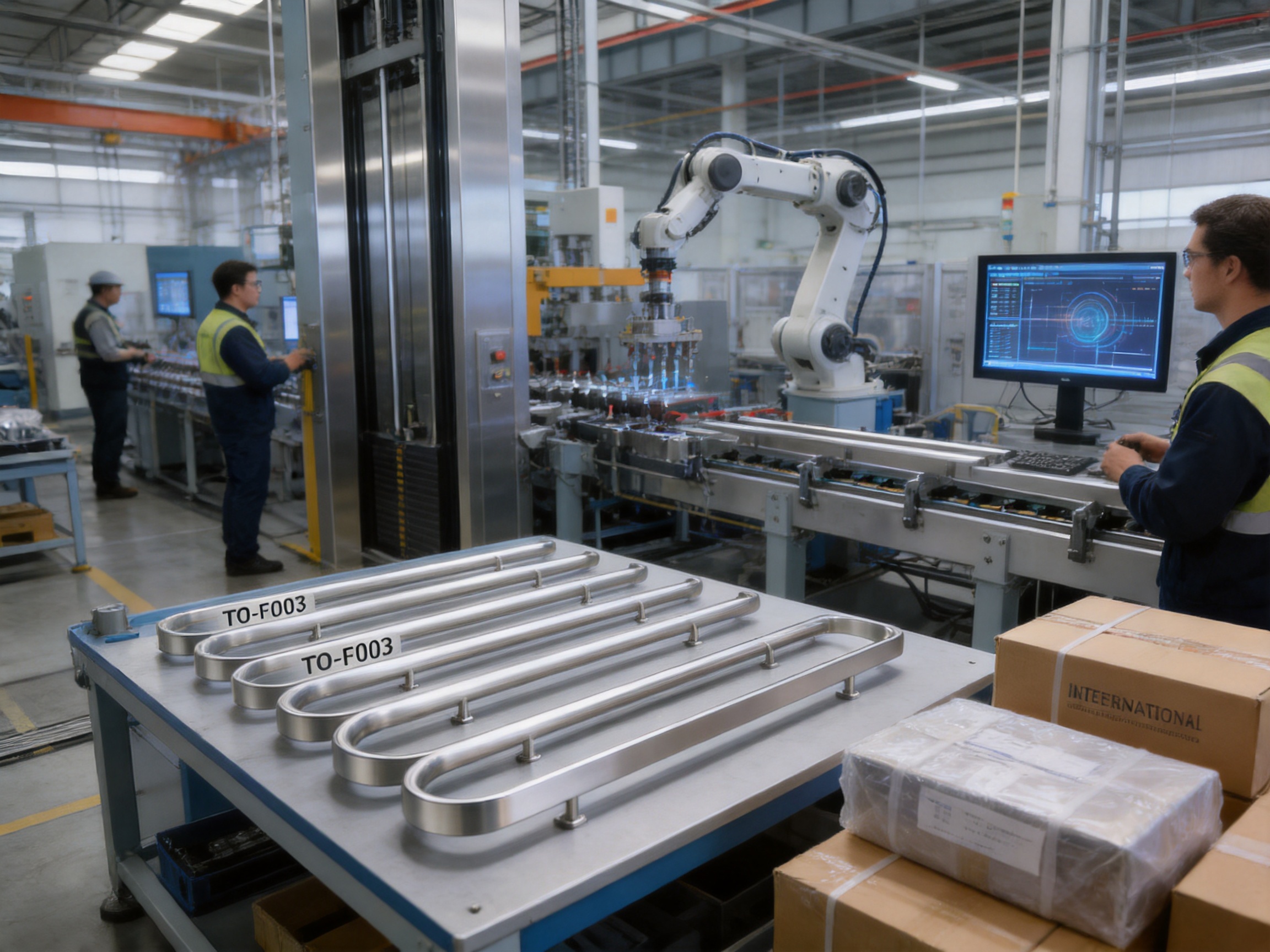
The quality of an elevator handrail depends heavily on the manufacturing process behind it. Product appearance is visible, but internal process control determines dimensional stability, surface consistency, assembly reliability, and repeatability. Tenau describes its production base as incorporating German Industry 4.0 intelligent manufacturing concepts, automated production lines, big data, Internet of Things technology, and a closed-loop quality control system.
Intelligent Manufacturing
Industry 4.0 manufacturing connects equipment, production information, inspection data, and management decisions. In practical terms, this approach can improve traceability, reduce manual errors, and provide more consistent control over repeated production tasks.
For a component such as the TO-F003, intelligent manufacturing may support the control of cutting, forming, finishing, assembly, inspection, and packing operations. When production information is recorded systematically, quality personnel can identify deviations more quickly and production teams can respond to problems before they affect a large batch.
Automated or semi-automated processes can also improve repeatability. Human skill remains important, particularly for inspection, finishing, and project-specific work, but automation helps maintain stable results for operations that require consistent positioning, measurement, or movement.
Data-Based Quality Management
A modern manufacturing facility does not rely only on final visual inspection. Quality should be built into the process through incoming material checks, process monitoring, dimensional verification, surface inspection, assembly checks, and final product review.
Data-based management makes it possible to compare production results over time. If a particular dimension, finish, or assembly feature begins to drift, the production team can investigate the source. This preventive approach is more effective than waiting for a customer to report a problem after delivery.
For international customers, process documentation also improves confidence. Buyers may request product specifications, inspection information, packing details, or manufacturing records. A structured factory environment is better positioned to prepare and maintain these materials.
Closed-Loop Quality Control
A closed-loop quality system connects problem identification with corrective action and verification. If a component does not meet a defined requirement, the issue is recorded, analyzed, corrected, and checked again. The goal is not simply to reject one defective item but to prevent the same cause from recurring.
This method is particularly useful for elevator components because a small dimensional or surface defect may affect installation or passenger perception. A closed-loop approach can improve product reliability, reduce rework, and protect delivery schedules.
Integrated Research and Development
Tenau’s business includes elevator design and research and development, in addition to manufacturing. This creates a technical environment in which components can be evaluated against actual elevator applications. Research and development capabilities are useful when a customer requires a customized cabin, a new decorative concept, or a component adapted to a special operating environment.
Product development also supports continual improvement. Feedback from installation teams, distributors, service personnel, and end users can be used to refine component structures, manufacturing methods, packaging, and maintenance considerations.
6. Material, Finish, and Maintenance Considerations
The appropriate material and finish for an elevator handrail depend on the building type, cleaning schedule, passenger traffic, environmental conditions, interior concept, and customer budget. Because the available information for the TO-F003 does not specify a single universal material or surface treatment, project requirements should be confirmed before ordering.
Material Selection
Materials used in elevator handrails should offer an appropriate balance of strength, appearance, corrosion resistance, cleanability, and manufacturing flexibility. The selected material should also be compatible with the cabin environment and the desired mounting method.
In high-traffic buildings, resistance to repeated contact and cleaning is essential. In hospitals, the surface must be suitable for frequent cleaning according to the facility’s maintenance procedures. In residential and villa projects, decorative appearance may be emphasized, but durability remains important because replacement work can be disruptive.
Surface Treatment
Surface treatment influences both appearance and service performance. A well-controlled finish can reduce the visibility of minor fingerprints, simplify routine cleaning, and help the handrail coordinate with other metal or decorative surfaces in the cabin.
Different finishes may produce different visual effects. Brushed surfaces can create a refined technical appearance, polished surfaces can increase reflectivity, and colored or coated treatments can support a particular architectural concept. The selected treatment should be reviewed for compatibility with cleaning products and expected passenger contact.
Cleaning and Inspection
Routine maintenance should include wiping the handrail with an appropriate cleaning product, checking for looseness, and examining the surface for scratches, corrosion, deformation, or other damage. Cleaning materials should be selected according to the handrail’s actual material and finish. Harsh chemicals, abrasive pads, or unsuitable tools may damage the surface.
Facility managers should include the handrail in the elevator interior inspection schedule. A loose or damaged handrail should be reported to qualified maintenance personnel. Repairs and adjustments should be performed according to the elevator manufacturer’s procedures and applicable local regulations.
7. Applications Across Different Elevator Types
Passenger Elevators
Passenger elevators are the most common application. In residential towers, offices, hotels, and commercial buildings, the handrail helps passengers feel secure and contributes to the cabin’s visual quality. The TO-F003 can be considered for standard or customized passenger elevator interiors where reliable support and coordinated design are required.
Panoramic and Observation Elevators
Panoramic and observation elevators place special emphasis on cabin appearance and passenger experience. Transparent or visually open walls can make the interior feel spacious, but passengers may still require a stable support point. A carefully integrated handrail provides comfort without overwhelming the architectural design.
For these elevators, finish selection and mounting position are especially important. The handrail should complement the surrounding glass, metal, and lighting while preserving the intended visual effect. The final configuration should be reviewed by the project design team.
Hospital Elevators
Hospital elevators must support demanding operational conditions. They may carry patients in wheelchairs or on beds, medical equipment, visitors, and staff. Interior components should be robust, practical, and easy to clean.
The TO-F003 can be considered for hospital cabin interiors when its dimensions, material, mounting arrangement, and surface treatment meet the facility’s technical and hygiene requirements. The handrail should not reduce the usable cabin width or interfere with bed movement, wheelchair access, medical equipment, or emergency procedures.
Home and Villa Elevators
Home elevators are often designed around the owner’s preferences. Interior materials may include wood-effect panels, decorative laminates, glass, mirrors, or custom metal finishes. A handrail can provide both practical support and a finishing detail that makes the cabin feel more complete.
In a villa, passenger traffic may be lower than in a commercial building, but design expectations can be higher. The TO-F003 offers a practical component for a refined residential elevator interior, subject to customization and finish selection.
Freight and Service-Oriented Elevators
Although handrails are most commonly associated with passenger cabins, certain service-oriented elevators may also require interior support or protective interior fittings. The suitability of a handrail in a freight or cargo environment depends on the expected load, impact risk, cleaning conditions, and cabin design.
Where heavy goods, carts, or industrial equipment are transported, the handrail should not be treated as a substitute for wall protection. The project team should evaluate whether additional guards, bump rails, or reinforced panels are required.
8. Application in Escalator and Moving Walk Projects
Tenau’s broader product range includes escalators and moving walks. These systems use moving handrails with different technical requirements from elevator cabin handrails. The TO-F003 is identified as an elevator handrail, so its application should be limited to approved elevator interior uses unless the manufacturer confirms another application.
This distinction is important for buyers. A stationary cabin handrail and an escalator moving handrail operate under different mechanical conditions, have different material requirements, and follow different installation procedures. Correct product classification helps ensure safety, compatibility, and compliance.
9. Manufacturing and Supply Chain Strengths
Tenau Elevator (China) Co., Ltd. is located in Nanxun, Zhejiang Province, within the Shanghai-Nanjing-Suzhou-Hangzhou economic circle. The location provides access to a mature industrial network, transportation infrastructure, technical labor, and supporting manufacturing resources.
The company describes itself as having a large-scale manufacturing base, a professional team, intellectual property resources, and export experience serving customers in multiple countries and regions. These capabilities are relevant to international buyers seeking stable supply, consistent documentation, and long-term cooperation.
Factory-Based Production
Factory-based production provides greater control over raw materials, process planning, inspection, assembly, and packaging. It also allows engineering and production teams to communicate directly when a customer requests a change or when an installation issue requires technical review.
For distributors and contractors, direct factory communication can reduce the number of intermediaries involved in technical decisions. This may help clarify specifications, confirm lead times, coordinate samples, and manage replacement requirements.
Export Readiness
Elevator projects frequently involve international transportation, different electrical and construction standards, local installation teams, and region-specific documentation. A supplier with international business experience is more familiar with the need for export packing, product identification, commercial documents, and communication with overseas partners.
Customers should still confirm the specific compliance requirements of the destination market. Local building codes, elevator regulations, fire requirements, accessibility provisions, and inspection procedures may differ. The supplier and the project’s local engineering team should work together to confirm suitability.
Complete Elevator Ecosystem
The company’s product categories include passenger elevators, panoramic and observation elevators, hospital elevators, home villa elevators, cargo elevators, car elevators, escalators, moving walks, elevator parts, cabin interiors, and high-speed elevators. This broad range allows customers to source multiple products from one elevator-focused manufacturer.
For large developments, a complete product ecosystem can simplify coordination. Interior components can be selected alongside the elevator type, cabin dimensions, traffic requirements, and architectural concept. It may also support more consistent visual language across different buildings or elevator groups.
10. Quality, Safety, and Environmental Responsibility
Elevator products are closely connected to public safety, so quality management must be treated as a fundamental responsibility. Tenau identifies safety and environmental protection as important elements of its business mission. The company also describes management systems associated with ISO9001, ISO14001, and OHSMS18001.
Quality Management
ISO9001-oriented quality management emphasizes documented processes, customer requirements, controlled production, corrective action, and continual improvement. For the TO-F003, this type of system can support consistent product identification, process control, inspection, and customer communication.
Environmental Management
ISO14001-oriented environmental management encourages organizations to identify and control environmental impacts associated with their activities. In manufacturing, this may involve resource use, waste management, energy consumption, emissions control, and responsible handling of production materials.
Environmental responsibility is increasingly important in building projects. Architects, developers, and facility owners may consider not only the performance of the finished elevator but also the manufacturing practices of the suppliers involved.
Occupational Health and Safety
OHSMS18001-related management practices focus on workplace health and safety. A safer production environment benefits employees and supports more stable operations. Well-organized factories are generally better positioned to maintain production continuity and respond to customer requirements.
11. Installation Planning
Correct installation is essential to the performance and appearance of any elevator handrail. Before installation, the project team should confirm the cabin wall construction, reinforcement locations, mounting dimensions, interior clearances, and relationship to other components.
The handrail should be positioned so that it is accessible to passengers without creating an obstruction. In hospitals and accessible buildings, the installation must be coordinated with wheelchair, stretcher, and equipment movement. The handrail must not interfere with doors, control panels, emergency communication devices, lighting, ventilation, or inspection access.
Installation personnel should use suitable tools and follow the approved technical instructions. Fasteners should be tightened appropriately, and the final assembly should be checked for movement, sharp edges, uneven gaps, or visible damage. Any adjustment should preserve the structural integrity of the cabin wall.
Pre-Installation Checklist
| Checkpoint | Purpose |
|---|---|
| Cabin wall structure | Confirm that the wall can support the selected mounting arrangement |
| Dimensions | Verify length, position, clearance, and alignment |
| Surface condition | Check for scratches, dents, contamination, or finish damage |
| Mounting hardware | Confirm that required fasteners and supports are available |
| Clearance | Ensure access, circulation, doors, control panels, and emergency equipment remain unobstructed |
| Final inspection | Check stability, appearance, smoothness, and installation quality |
For projects involving multiple elevators, a sample installation or mock-up can be useful. It allows the design team to review the visual relationship between the handrail and other interior elements before full production or installation begins.
12. Procurement Guidance for International Buyers
Buyers should provide clear information when requesting a quotation for the TO-F003. Important details may include the elevator type, cabin dimensions, required quantity, preferred material, surface finish, installation position, mounting method, destination country, packaging requirements, and expected delivery schedule.
If the handrail is part of a complete elevator project, it is helpful to provide the cabin drawings or interior layout. This allows the supplier to check clearances and identify potential conflicts before manufacturing. For replacement or modernization work, photographs and measurements of the existing cabin may also be useful.
Customers should ask for confirmation of the final product specification before placing a production order. This may include drawings, finish samples, technical data, installation instructions, inspection requirements, and packing details. Written confirmation helps avoid misunderstandings, particularly when several finish options or customized dimensions are involved.
Packaging is another important consideration. Elevator components can be exposed to vibration, moisture, impacts, and repeated handling during international transportation. The packaging should protect visible surfaces, prevent movement inside the package, and provide clear product identification.
Questions to Confirm Before Ordering
What is the required handrail length and cabin mounting position?
Which material and surface treatment are preferred?
Will the handrail be installed in a standard passenger cabin, hospital cabin, villa elevator, or panoramic elevator?
Does the project require customized brackets, special fixing points, or coordination with decorative wall panels?
Are there local accessibility, hygiene, fire, or building requirements that affect the product?
What documents, samples, inspection records, or installation instructions are required?
What are the quantity, packing, shipping, and delivery requirements?
13. Value for Developers and Contractors
For property developers, the handrail contributes to the quality of the finished building without requiring a major increase in system complexity. It is a visible and frequently used detail that can support a better passenger experience. Selecting a dependable component during the design stage may also reduce later modifications and replacement work.
For elevator contractors, a product supplied by an experienced elevator manufacturer can simplify coordination with the wider system. Technical communication, product identification, and installation planning may be more straightforward when the handrail is sourced through an established elevator supply chain.
For distributors, the TO-F003 can expand a product portfolio beyond complete elevators. Elevator parts and cabin interiors are often required for modernization, repair, replacement, and decorative upgrades. A clearly identified product model allows distributors to organize quotations, samples, technical communication, and repeat orders more efficiently.
For architects and interior designers, the handrail is an opportunity to combine function and visual refinement. It can be incorporated into a cabin concept from the beginning rather than added after the principal finishes have already been selected.
14. Modernization and Replacement Potential
Many existing elevators remain mechanically functional but require interior improvements. A dated or damaged handrail can make the entire cabin appear worn. Replacing the handrail, together with selected wall panels, lighting, mirrors, or control elements, may significantly improve the passenger environment.
Modernization projects require careful measurement because existing cabins may have non-standard dimensions or hidden reinforcement conditions. The replacement handrail must be compatible with the existing structure and must not interfere with door operation, control equipment, emergency systems, or accessibility requirements.
The TO-F003 can be evaluated for modernization applications where a practical and contemporary handrail is needed. Before ordering, the contractor should provide accurate measurements and photographs, confirm the existing mounting arrangement, and obtain approval for the proposed installation.
15. Why Manufacturer Experience Matters
Elevator manufacturing involves multiple disciplines, including mechanical engineering, electrical systems, structural design, interior finishing, safety management, logistics, installation, and service. A company that works across these areas can better understand the relationship between a cabin handrail and the complete elevator environment.
Tenau’s stated capabilities cover low-speed, medium-speed, high-speed, and ultra-high-speed elevators, as well as escalators, moving walks, freight systems, passenger systems, and related parts. This broad experience provides a strong background for developing and supplying elevator interior components.
Manufacturer experience is also important when unexpected project conditions arise. A contractor may discover that the cabin wall is different from the original drawing, that a decorative panel has changed, or that local installation practice requires a revised fixing method. A manufacturer with engineering resources is more likely to evaluate the issue systematically and propose a technically appropriate solution.
16. Product Selection Compared with Low-Cost Purchasing
Price is an important procurement factor, but it should be evaluated together with installation labor, replacement risk, quality consistency, delivery reliability, and service support. A handrail with a lower purchase price may not provide the lowest total cost if it requires extensive fitting, arrives with surface damage, or needs early replacement.
The TO-F003 offers value through its connection to a specialized elevator manufacturing system. Buyers can evaluate the product not only by its visible design but also by the supplier’s factory resources, quality management, manufacturing technology, product range, and project support.
Total cost of ownership may include the original product, shipping, installation, inspection, maintenance, cleaning, replacement parts, and downtime. A reliable handrail with stable quality can contribute to lower long-term project risk.
17. Recommended Use and Technical Verification
The TO-F003 is suitable for consideration in elevator interior projects where passenger support, visual coordination, and dependable manufacturing are required. However, elevator components should always be selected according to the complete project specification. The model name alone does not replace a technical review.
Before production, the customer and supplier should verify dimensions, materials, finish, mounting details, quantity, delivery conditions, and local compliance requirements. Any customization should be documented clearly. If the product is used in a hospital, public building, or other specialized environment, the relevant facility requirements should also be confirmed.
Professional installation and maintenance are essential. The product should be installed by qualified personnel familiar with elevator cabin work, and the completed installation should be inspected before the elevator enters service.
18. Frequently Asked Questions
Q1: What is the TO-F003?
The TO-F003 is an elevator handrail designed for use in elevator cabins and related interior applications. It provides passengers with a stable gripping point and contributes to the cabin’s overall appearance.
Q2: Which elevators can use this handrail?
The product may be considered for passenger elevators, panoramic and observation elevators, hospital elevators, home villa elevators, and other customized elevator cabins. Suitability depends on the final dimensions, mounting method, material, finish, and project requirements.
Q3: Can the product be customized?
Customization may be possible depending on the required length, finish, mounting arrangement, cabin structure, and order quantity. Customers should provide drawings or detailed measurements for technical review before production.
Q4: Is the TO-F003 suitable for hospital elevators?
It can be evaluated for hospital elevator interiors, provided that its material, finish, cleanability, dimensions, and installation arrangement meet the hospital’s technical and hygiene requirements. The handrail must also preserve sufficient space for wheelchairs, stretchers, and medical equipment.
Q5: Can it be used in a home or villa elevator?
Yes, it can be considered for home and villa elevator interiors. Its final appearance can be coordinated with the selected cabin panels, mirrors, lighting, flooring, and other decorative elements.
Q6: What materials and finishes are available?
The available material and finish should be confirmed for the specific order. Options may depend on the project design, technical requirements, cleaning conditions, and manufacturing feasibility.
Q7: How should the handrail be maintained?
It should be cleaned with a suitable non-abrasive product and inspected periodically for looseness, scratches, corrosion, deformation, or other damage. Cleaning procedures must match the actual material and surface treatment.
Q8: Does the product include installation hardware?
Hardware and mounting arrangements should be confirmed in the quotation and technical specification. The requirement may vary according to the cabin wall structure and project configuration.
Q9: Can the handrail be used for an escalator?
The TO-F003 is identified as an elevator handrail. Escalators use moving handrails with different technical characteristics. The product should not be used for an escalator unless the manufacturer provides specific confirmation.
Q10: What information should be provided for a quotation?
Buyers should provide the model, quantity, elevator type, cabin dimensions, required length, preferred material and finish, mounting position, destination, packaging requirements, and delivery schedule. Drawings or photographs are recommended for customized or replacement projects.
Q11: What manufacturing advantages support the product?
The supplier combines elevator research and development with factory manufacturing, automated production capabilities, Industry 4.0-oriented management, data and Internet of Things technologies, and closed-loop quality control. These resources support repeatability, traceability, and coordinated project service.
Q12: Why purchase from an elevator manufacturer instead of a general hardware supplier?
An elevator manufacturer understands cabin structures, passenger circulation, interior clearances, installation procedures, and coordination with other elevator components. This can improve technical compatibility and reduce communication problems during a project.
19. Conclusion
The TO-F003 elevator handrail demonstrates how a focused interior component can contribute to safety, comfort, durability, and design quality. Its role extends beyond providing a place to hold. It must integrate with the cabin structure, support passenger needs, withstand repeated contact and cleaning, and maintain a professional appearance throughout the elevator’s service life.
Its main advantages include passenger-oriented functionality, compatibility with modern elevator interiors, potential suitability for multiple elevator applications, and support from an integrated elevator manufacturing organization. The supplier’s capabilities in research and development, intelligent manufacturing, automated production, data management, quality control, and international elevator supply further strengthen the product’s value for professional buyers.
For a successful result, customers should confirm the exact material, dimensions, finish, mounting method, packaging, and compliance requirements before ordering. When properly specified and installed, the TO-F003 can become a dependable and visually coordinated part of passenger, panoramic, hospital, villa, and other elevator cabins.
References
1. Product information for TO-F003 Elevator Handrail, supplied in the project materials.
2. Company information regarding integrated elevator design, research and development, manufacturing, installation, and after-sales service.
3. International Organization for Standardization, ISO 9001, Quality Management Systems.
4. International Organization for Standardization, ISO 14001, Environmental Management Systems.
5. Occupational health and safety management system guidance associated with OHSMS18001.
6. General principles of elevator cabin accessibility, interior planning, maintenance, and passenger safety.
7. Industry 4.0 manufacturing principles, including automation, production data management, connected equipment, and quality traceability.
Product: TO-F003

Related Products
Related News
Built on safety, forging trust in vertical mobility.
lf you have any questions or need help, feel free to contact with our team.
 export@tenau.com.cn
 +86-18601458867
 +86-512-65059883
Elevator & Escalator
Factory Add
East of Xicheng Road, North of Lianyi Road, Nanxun Economic Development Zone, Nanxun District, Huzhou City, Zhejiang Province, P.R.China
Copyright © Tenau Elevator (China) Co., Ltd. All Rightd Reserved.
Custom High Quality Elevator Suppliers and World Brand Elevator Company