

 en
en Español
 русский
 中文简体
中文简体
Aluminum Alloy Elevator Hoistway Frame for Modern Vertical Transportation
Content
- 1 Product Overview: What Is an Aluminum Alloy Elevator Hoistway Frame?
- 2 Why Aluminum Alloy Is an Advantageous Material for Hoistway Frames
- 3 Competitive Advantages Over Conventional Hoistway Solutions
- 4 Key Product Benefits
- 5 Applications Across Elevator Categories
- 6 Engineering Considerations for Safety and Reliability
- 7 Advanced Manufacturing Strengths Behind the Product
- 8 Design and Customization Possibilities
- 9 Installation Efficiency and On-Site Advantages
- 10 Quality Control from Material to Finished Frame
- 11 Integration with Complete Elevator Solutions
- 12 Advantages for Architects, Developers, and Contractors
- 13 Performance in Retrofit and Modernization Projects
- 14 Durability and Maintenance Considerations
- 15 Environmental and Sustainability Value
- 16 Why Choose This Product from Tenau Elevator (China) Co., Ltd.
- 17 Q&A Section
- 17.1 What is the main purpose of an aluminum alloy elevator hoistway frame?
- 17.2 Why choose aluminum alloy instead of steel?
- 17.3 Is the product suitable for panoramic elevators?
- 17.4 Can it be used for home villa elevators?
- 17.5 How does the frame help retrofit projects?
- 17.6 What finishes are available?
- 17.7 Does the aluminum alloy frame require much maintenance?
- 17.8 Why is it important to buy from a complete elevator manufacturer?
- 17.9 Can the frame be customized for different buildings?
- 17.10 What company strengths support product quality?
- 18 Conclusion
- 19 References
- 20 Product: Aluminum alloy
In contemporary elevator engineering, the hoistway frame is far more than a supporting enclosure. It is a structural, architectural, and installation-critical system that influences safety, appearance, assembly speed, durability, maintenance convenience, and the long-term value of an elevator project. An aluminum alloy elevator hoistway frame offers a refined solution for buildings where conventional reinforced concrete or heavy steel shaft structures are impractical, costly, slow to construct, or visually incompatible with the architectural design.
The aluminum alloy hoistway frame supplied by Tenau Elevator (China) Co., Ltd. is designed for elevator projects that require strength, precision, clean appearance, corrosion resistance, and efficient installation. It is especially suitable for panoramic elevators, home villa elevators, commercial passenger elevators, observation elevators, and retrofit projects where a new elevator needs to be added to an existing building. The product combines lightweight aluminum alloy profiles with engineered structural design, advanced manufacturing, and strict quality control, creating a reliable hoistway frame system that meets modern expectations for safety, aesthetics, and performance.
As urban buildings become more diverse and renovation projects increase worldwide, the demand for modular and visually appealing elevator hoistway structures continues to grow. A well-designed aluminum alloy frame can reduce construction complexity, improve installation accuracy, and provide a premium appearance without compromising functional strength. Compared with traditional civil construction shafts, it offers faster project delivery, cleaner on-site work, and greater flexibility for customized applications.
Aluminum alloy
Product Overview: What Is an Aluminum Alloy Elevator Hoistway Frame?
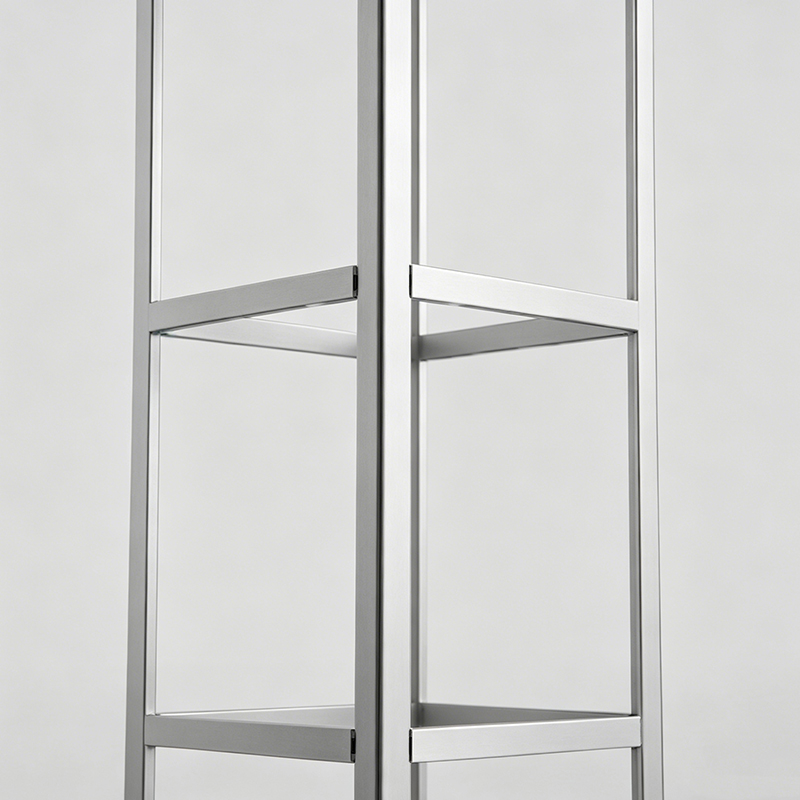
An aluminum alloy elevator hoistway frame is a structural frame system used to form or support the vertical shaft area in which an elevator travels. It may be applied as part of a panoramic elevator shaft, a villa elevator enclosure, an external elevator addition, or an indoor retrofit solution. The frame typically consists of aluminum alloy columns, beams, connecting components, fasteners, glass or panel fixing interfaces, and associated structural accessories. Its purpose is to provide a stable, accurate, and attractive hoistway structure for the elevator system.
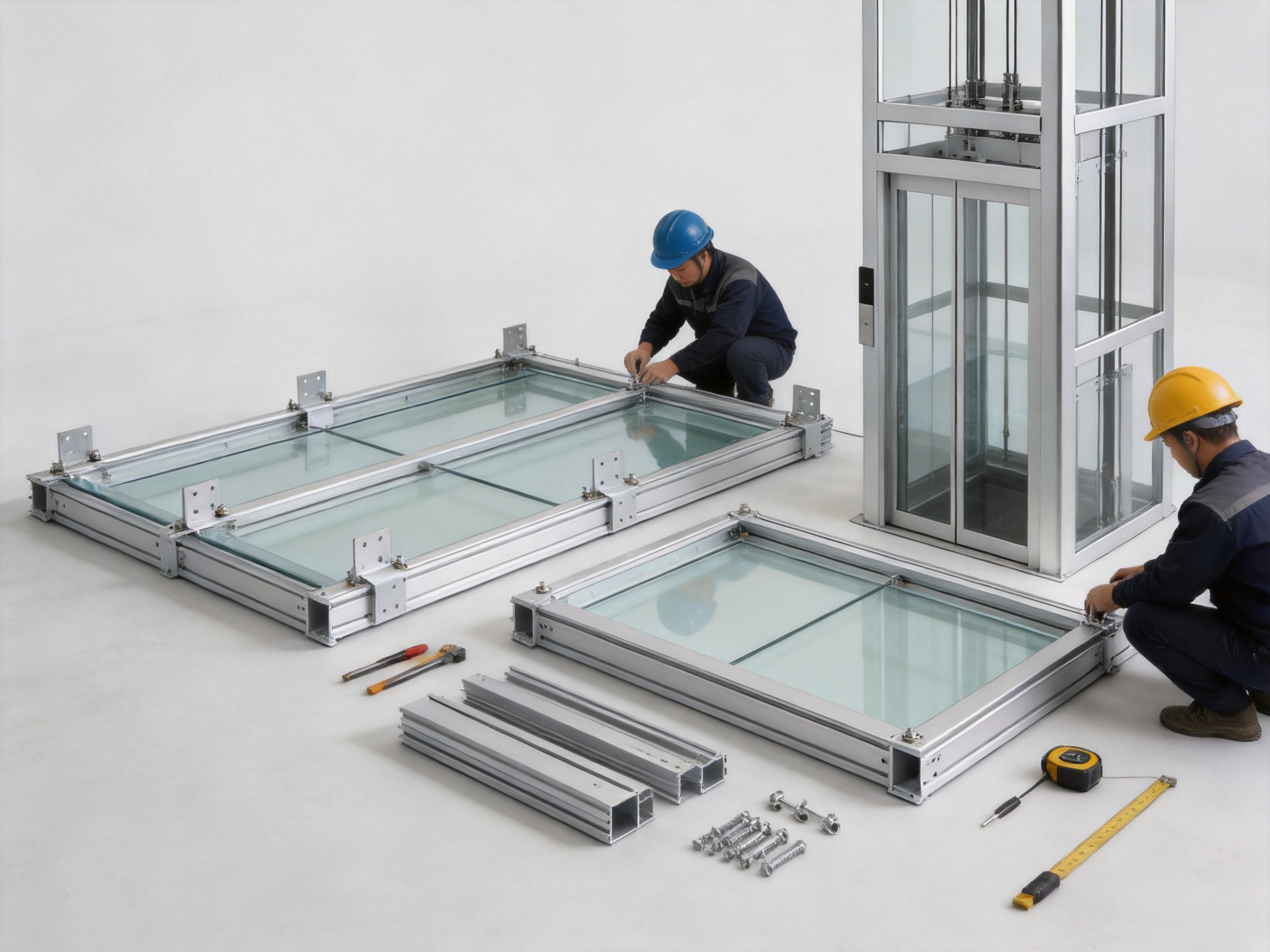
Unlike a traditional concrete elevator shaft, which requires extensive civil engineering, formwork, curing time, and heavy construction work, an aluminum alloy hoistway frame is generally prefabricated and assembled on site. This modular approach can significantly shorten installation time and reduce disturbance to building occupants. For existing buildings, hotels, shopping centers, villas, hospitals, office buildings, and public facilities, this advantage is particularly important because it allows elevator upgrades with less noise, less dust, and fewer structural modifications.
The material itself is central to the product’s performance. Aluminum alloy is known for its favorable strength-to-weight ratio, corrosion resistance, formability, and attractive surface finish. When used in elevator hoistway frames, it enables the creation of slim yet strong profiles. The frame can be designed to integrate glass panels, metal panels, doors, guide rail brackets, lighting elements, and decorative finishes, making it both a technical system and an architectural feature.
For panoramic and observation elevators, aluminum alloy hoistway frames offer a clean and modern appearance that complements transparent glass enclosures. For villa elevators, they provide a compact and elegant structure that suits private residences and small buildings. For commercial projects, they help achieve a balance between efficient installation and premium visual presentation. For retrofit applications, they reduce the need for large-scale civil works and allow more predictable project scheduling.
Why Aluminum Alloy Is an Advantageous Material for Hoistway Frames
Aluminum alloy is widely used in transportation, aviation, façade systems, industrial equipment, and architectural structures because it combines practical performance with design flexibility. In elevator hoistway frame applications, these properties become especially valuable. The frame must be strong enough to maintain alignment, durable enough to withstand environmental influences, and accurate enough to support the elevator system’s operational requirements.
The first major advantage is lightweight construction. Aluminum alloy is much lighter than carbon steel, which reduces the load imposed on the building structure. This is particularly useful in existing buildings where structural reinforcement may be limited or expensive. A lighter frame is also easier to transport, handle, and install, reducing labor intensity and lifting equipment requirements on site.
The second advantage is corrosion resistance. Aluminum naturally forms a protective oxide layer, and when combined with proper surface treatment, it can resist oxidation, moisture, and many common environmental conditions. This makes it suitable for indoor applications, atriums, semi-outdoor areas, coastal regions, and building façades where a conventional untreated steel structure may require more frequent maintenance.
The third advantage is dimensional precision. Aluminum profiles can be extruded into accurate shapes, allowing consistent cross-sections, clean edges, and well-designed connection interfaces. This precision supports modular assembly and helps maintain the verticality and alignment required for elevator hoistways. Accurate framing is essential because poor hoistway alignment can affect installation efficiency, ride quality, guide rail positioning, and long-term maintenance.
The fourth advantage is appearance. Aluminum alloy surfaces can be anodized, powder-coated, brushed, or otherwise finished to suit different design requirements. The final appearance can be modern, minimalist, luxurious, or industrial, depending on the project. For visible elevator hoistways, the frame becomes part of the building’s interior or exterior design, so surface quality and color consistency are important.
The fifth advantage is sustainability. Aluminum is recyclable, and its long service life can help reduce replacement frequency. When used in modular frame systems, it can support cleaner construction, reduced waste, and more controlled manufacturing. This aligns with modern building trends emphasizing environmental responsibility and efficient resource use.
Competitive Advantages Over Conventional Hoistway Solutions
Compared with traditional reinforced concrete elevator shafts, an aluminum alloy hoistway frame can provide a faster and more flexible solution. Concrete construction often requires demolition, reinforcement, formwork, pouring, curing, and finishing. These steps can prolong the project schedule and introduce uncertainty due to weather, site conditions, and labor availability. By contrast, a prefabricated aluminum alloy frame can be produced according to project dimensions and assembled with controlled procedures, making project planning more predictable.
Compared with heavy steel structures, aluminum alloy frames offer reduced weight, improved corrosion resistance, and a cleaner decorative finish. Steel can provide high strength, but it often requires anti-rust coating, welding, grinding, repainting, and more intensive maintenance in certain environments. Aluminum alloy reduces many of these concerns while still delivering sufficient structural performance when properly engineered.
Compared with low-cost generic frame systems, a professionally designed aluminum alloy hoistway frame delivers better integration with the elevator system. The frame must coordinate with landing doors, guide rails, machine room or machine-room-less arrangements, glass panels, electrical routing, and safety clearances. A product designed by an experienced elevator manufacturer benefits from deeper knowledge of the entire elevator ecosystem, not just the frame itself.
Another competitive advantage is customization. Building conditions vary widely. A villa elevator may require a compact shaft with refined finishes, while a commercial panoramic elevator may require tall transparent elevations and visible architectural impact. A hospital or public building may require stronger emphasis on safety, reliability, and maintenance accessibility. Aluminum alloy profiles and modular frame systems allow flexible adaptation to these requirements.
In retrofit projects, this flexibility is especially important. Existing buildings often have limited space, irregular floor heights, restricted access, and structural limitations. A lightweight aluminum alloy frame can often be installed in locations where a conventional concrete shaft would be difficult or disruptive. This makes it a practical solution for adding accessibility to older buildings, improving convenience in private homes, or upgrading commercial facilities.
Key Product Benefits
The aluminum alloy elevator hoistway frame provides a broad set of benefits that address the priorities of building owners, architects, contractors, elevator installers, and end users. These benefits include installation efficiency, structural reliability, aesthetic value, low maintenance, and design adaptability.
| Feature | Practical Benefit | Value for Projects |
|---|---|---|
| Lightweight aluminum alloy structure | Reduces load on the building and simplifies handling | Ideal for retrofit projects, villas, and external elevator additions |
| Modular frame design | Supports faster on-site assembly and predictable installation | Shortens project schedules and reduces construction disruption |
| Corrosion-resistant material | Improves durability in humid or semi-outdoor environments | Reduces maintenance and preserves appearance over time |
| Precision-manufactured profiles | Enhances alignment, fit, and structural consistency | Supports smoother elevator installation and long-term performance |
| Attractive surface finish options | Matches architectural and interior design requirements | Suitable for panoramic, observation, and premium residential elevators |
| Customizable dimensions and configurations | Adapts to different building layouts and elevator types | Provides flexible solutions for new construction and modernization |
From a construction management perspective, the ability to reduce wet work on site is one of the most meaningful advantages. Concrete shafts can create dust, noise, waste, and long curing times. A modular aluminum alloy frame can be assembled more cleanly, making it appropriate for occupied buildings where business operations or daily living must continue during installation.
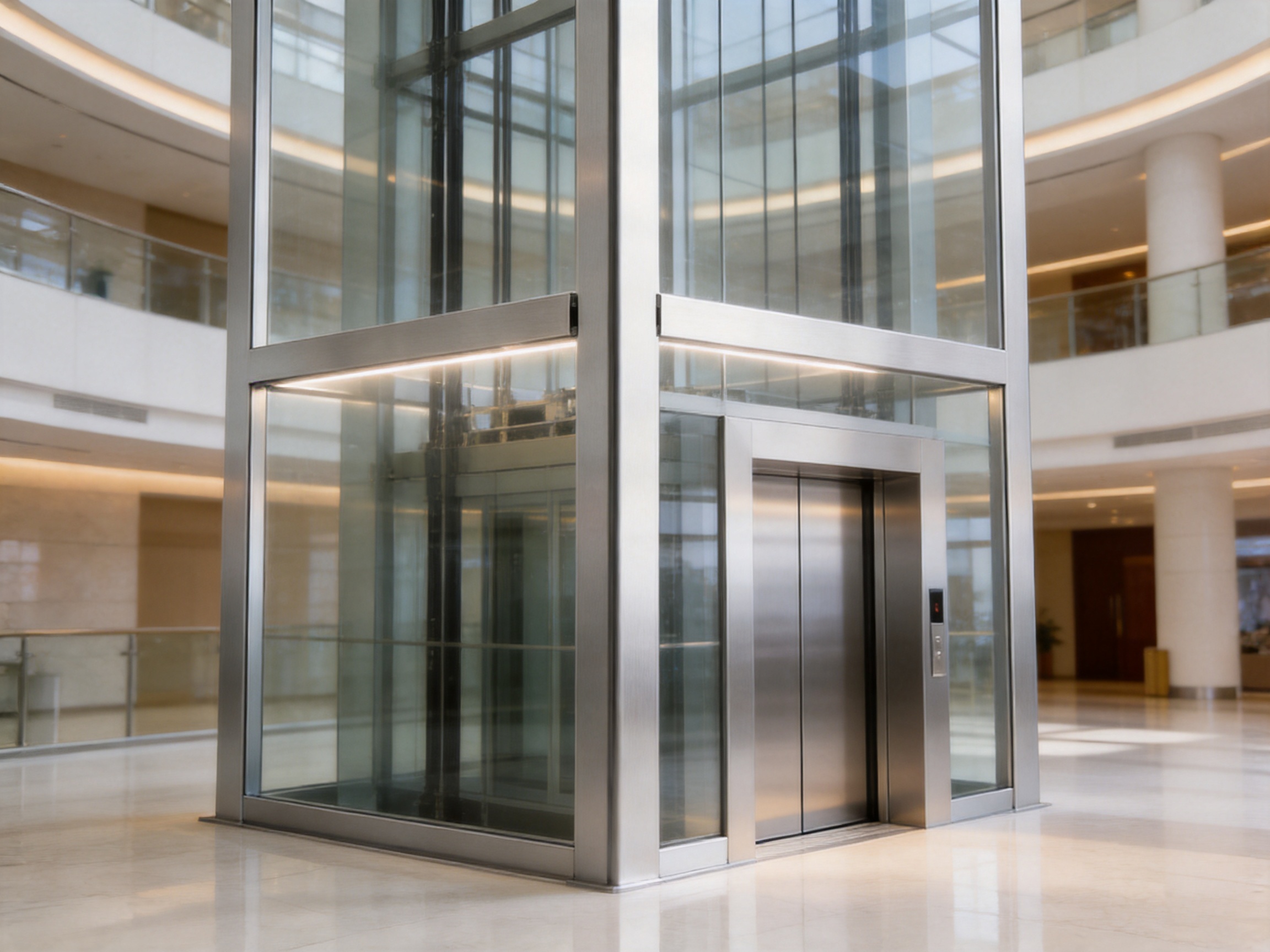
From an architectural perspective, the product supports transparency and modern design. When used with glass panels, the frame allows elevators to become visible design elements rather than hidden mechanical components. In hotels, shopping centers, galleries, and office atriums, panoramic elevators can enhance the sense of space and improve passenger experience. In villas, a compact aluminum alloy shaft can add convenience while maintaining an elegant home environment.
From a maintenance perspective, aluminum alloy frames are easier to keep clean and visually consistent than many traditional structures. Surface treatments can help protect the frame, and modular components can make inspection and replacement more convenient if needed. The result is a product that supports long-term value, not only initial installation savings.
Applications Across Elevator Categories
The aluminum alloy hoistway frame can be used in a variety of elevator applications, including passenger elevators, panoramic and observation elevators, hospital elevators, home villa elevators, cargo elevators, car elevators, and selected special-purpose elevator systems. While the product is most visually associated with panoramic and villa elevators, its benefits extend to many other vertical transportation settings.
Passenger Elevators
For passenger elevators in commercial or residential buildings, an aluminum alloy hoistway frame can be used where the shaft is visible or where fast installation is required. It supports clean architectural integration and can be customized to suit different interior styles. In mixed-use developments, the frame can help create a premium impression while supporting reliable elevator operation.
Panoramic and Observation Elevators
Panoramic elevators require a hoistway structure that looks as good as it performs. The frame is often visible from multiple angles, so proportions, surface finish, joint quality, and glass integration are critical. Aluminum alloy is well suited for this purpose because it allows slim profiles, smooth surfaces, and consistent finishing. It can create an elegant transparent shaft that enhances the building environment.
Hospital Elevators
Hospitals require safe, reliable, and hygienic vertical transportation. Although hospital elevators often use more enclosed shaft structures, aluminum alloy frames can support certain internal or auxiliary installations where cleanliness, durability, and reduced construction disturbance are valued. During hospital renovation, minimizing noise and dust can be particularly important, making modular frame solutions attractive.
Home Villa Elevators
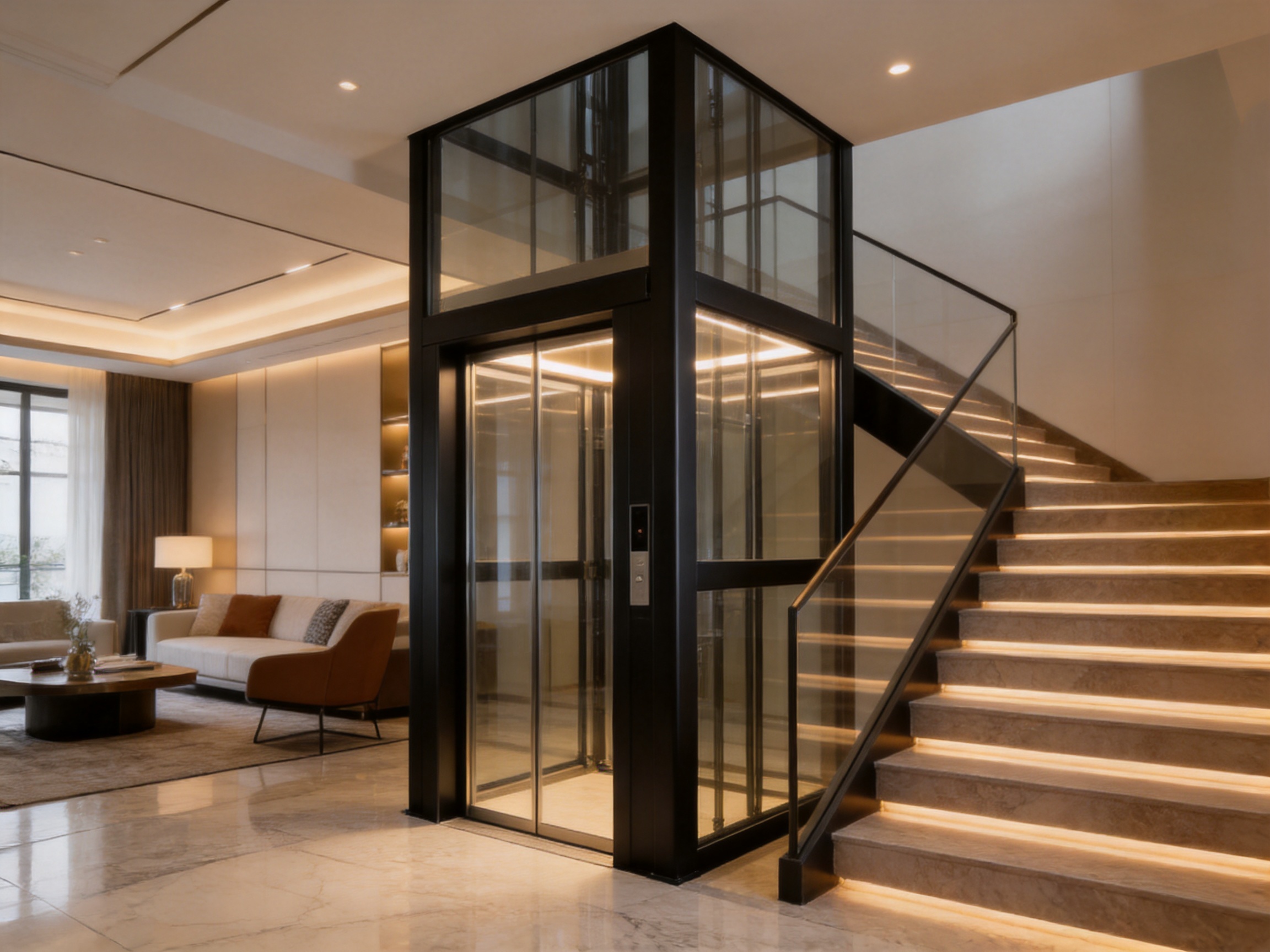
Home villa elevators are one of the most suitable applications for aluminum alloy hoistway frames. Private residences often lack a reserved elevator shaft, and owners may want a solution that is compact, attractive, and minimally disruptive to install. A lightweight frame reduces the need for major civil modifications, while the refined appearance matches premium home interiors. Glass panels can make the elevator feel open and reduce the visual impact in smaller spaces.
Cargo and Service Elevators
For cargo elevators, structural requirements may be more demanding due to heavier loads. Aluminum alloy frames may be used in suitable configurations where design calculations confirm strength and stability. The advantage lies in corrosion resistance, modular installation, and reduced structural burden. For light-duty service elevators or material lifts, aluminum alloy framing can provide efficient enclosure solutions.
Car Elevators
Car elevators require robust engineering and careful structural coordination. While the main load-bearing system must be designed according to the vehicle elevator’s capacity and movement requirements, aluminum alloy frame components can contribute to enclosure, architectural finish, or certain shaft structure solutions when properly specified.
Escalators and Moving Walk Environments
Although escalators and moving walks do not use elevator hoistways in the same way, the manufacturing expertise behind aluminum alloy structural components is relevant to modern vertical and horizontal transportation systems. In transport hubs, shopping centers, and public facilities, coordinated aluminum finishes can create consistent design language across elevators, escalators, and moving walks.
Engineering Considerations for Safety and Reliability
An elevator hoistway frame must be more than attractive. It must support the practical demands of elevator operation, safety clearance, structural stability, and long-term service. Good engineering begins with understanding project conditions: elevator type, rated load, travel height, floor openings, environmental exposure, installation location, and architectural requirements.
Structural analysis is essential. The frame must resist loads related to its own weight, glass or panel weight, wind load where applicable, installation forces, vibration, and interactions with connected building structures. For external elevator shafts, environmental loads can be especially important. The frame should be designed with appropriate anchoring, connection details, and reinforcement methods.
Dimensional accuracy is also vital. Elevator systems require precise guide rail positioning and consistent hoistway geometry. If the frame is not accurately manufactured or installed, the elevator installation may require additional adjustment, leading to delays and possible long-term performance issues. Precision profiles, controlled fabrication, and systematic assembly procedures help reduce these risks.
Connection design is another key factor. Bolted and mechanical connections must be secure, repeatable, and accessible for installation. The design should account for tolerances, thermal movement, vibration, and long-term stability. High-quality fasteners and properly engineered joints help preserve structural integrity over the life of the system.
Surface treatment contributes to both durability and appearance. Anodizing, powder coating, or other finishes should be selected according to the environment and design expectations. Surface finish quality matters because visible frames are part of the architectural presentation. Scratches, color variation, or poor coating adhesion can reduce perceived quality, so manufacturing and packaging must be carefully controlled.
Fire safety, local building codes, glass specifications, and elevator standards must also be considered. Depending on the project, the frame may need to coordinate with fire-rated doors, smoke control requirements, emergency access, and safety protection measures. A professional elevator manufacturer can assist in ensuring that the frame system is not treated as an isolated decorative element, but as part of a complete vertical transportation solution.
Advanced Manufacturing Strengths Behind the Product
Tenau Elevator (China) Co., Ltd. is a professional comprehensive elevator manufacturer integrating design, research and development, manufacturing, marketing, installation, and after-sales service. The company originates from Germany and is located in Nanxun, Zhejiang Province, within the core area of the Shanghai-Nanjing-Suzhou-Hangzhou economic circle. This location provides access to a strong industrial supply chain, skilled labor resources, logistics convenience, and advanced manufacturing infrastructure.
The company’s manufacturing capabilities cover low-speed, medium-speed, high-speed, and ultra-high-speed elevator systems, as well as passenger elevators, freight elevators, escalators, moving walks, and related solutions. This comprehensive background is important because an aluminum alloy hoistway frame is not merely a building accessory. It must coordinate with elevator mechanics, electrical systems, door systems, cabin design, and safety requirements. A manufacturer with complete elevator system knowledge can design the frame with better integration and fewer installation conflicts.
Advanced manufacturing processes help ensure product consistency. Aluminum alloy profiles must be produced and processed with attention to dimensional tolerance, hole location accuracy, surface protection, and assembly interface quality. Automated production lines, digital design tools, and standardized inspection procedures support repeatability. In elevator projects, repeatability is crucial because small dimensional errors can become significant during vertical assembly over multiple floors.
Tenau applies rigorous management systems and complies with ISO9001, ISO14001, and OHSMS18001 standards. These systems reflect attention to quality management, environmental responsibility, and occupational health and safety. For international customers, such management frameworks are important because they indicate that manufacturing is supported by documented procedures, process control, and continuous improvement principles.
The company also emphasizes German Industry 4.0 intelligent manufacturing, big data, Internet of Things technology, and a closed-loop quality control system. In practical terms, this means that production is not dependent solely on manual experience. Digital and automated methods can help monitor production status, improve traceability, reduce variation, and identify potential quality issues earlier. For hoistway frame products, this contributes to reliable profile processing, accurate component matching, and consistent finishing.
A strong research and development capability allows product improvement over time. Elevator markets differ by country, building type, climate, safety regulation, and user preference. R&D capability enables the company to adjust frame design, improve connection systems, optimize materials, and refine manufacturing processes according to project feedback. This is a significant advantage over suppliers that only provide standard metal structures without deep elevator expertise.
Design and Customization Possibilities
One of the strongest advantages of aluminum alloy hoistway frames is the ability to adapt the system to different architectural and technical requirements. The frame can be configured for indoor or outdoor installation, transparent or partially enclosed hoistways, modern or classical building styles, compact villas or larger public buildings. Customization may include profile size, surface color, glass integration, panel selection, anchoring design, and door interface details.
For panoramic elevators, designers may prefer narrow frame members to maximize transparency. For private homes, the priority may be warm color tones, compact structure, low noise, and visual harmony with staircases or living areas. For commercial buildings, the frame may need to withstand heavy public use while maintaining a premium appearance. For external elevator additions, weather resistance and anchoring to the existing façade become major design factors.
Surface finish options can help match the building environment. Powder coating can provide a wide variety of colors, from neutral black, white, and gray to custom architectural shades. Anodizing can create a metallic appearance with enhanced surface durability. Brushed or decorative finishes may be used for premium interior applications. The selected finish should consider expected wear, cleaning methods, sunlight exposure, and surrounding materials.
Glass integration is another important customization area. Transparent glass creates openness and visibility, while tinted, laminated, or patterned glass can provide privacy and design character. Safety glass must be selected according to applicable standards and project requirements. The frame must provide secure support and accommodate glass tolerances, sealing, and thermal movement.
Lighting and interior effects can also be integrated. In high-end commercial or residential projects, the hoistway frame may include LED lighting channels, decorative trims, or coordinated cabin interior finishes. This transforms the elevator shaft from a purely functional space into an architectural feature. Such integration is easier when the frame supplier understands both elevator structure and cabin interior design.
Installation Efficiency and On-Site Advantages
Installation efficiency is one of the most compelling reasons to choose an aluminum alloy elevator hoistway frame. Because components can be manufactured in advance, the on-site process becomes more like assembly than traditional construction. This reduces uncertainty, improves schedule control, and limits disruption.
In a typical retrofit project, creating a concrete shaft may require demolition, reinforcement, wet concrete work, curing periods, and surface finishing. These activities can be difficult in occupied buildings. They may generate dust and noise, require temporary protection, and interfere with normal use of the building. A prefabricated aluminum alloy frame can reduce many of these inconveniences.
The lighter weight of aluminum alloy components simplifies transportation within the site. In narrow staircases, existing buildings, or high-rise interiors, handling heavy steel members can be challenging. Aluminum profiles are easier to move and position, which may reduce labor demands and improve safety during installation. Smaller lifting equipment may be sufficient in many cases.
Modular connection systems also contribute to faster assembly. When components are accurately produced and clearly organized, installers can follow a structured sequence. Pre-drilled holes, labeled parts, standardized fasteners, and accurate drawings help reduce errors. This is particularly valuable for international projects where installation teams may need clear documentation and efficient technical support.
Reduced on-site welding is another advantage. Welding can create sparks, smoke, heat distortion, and coating damage. It may require special permits and fire protection measures, especially in occupied buildings. Mechanical assembly of aluminum alloy frame components can provide a cleaner and safer installation approach when designed correctly.
Project owners benefit from shorter downtime and improved predictability. In commercial facilities, every day of construction can affect business activity. In residential projects, construction disturbance affects comfort. In hospitals and public buildings, maintaining operations is essential. A faster, cleaner hoistway frame solution can therefore provide economic and practical value beyond the material cost itself.
Quality Control from Material to Finished Frame
Reliable hoistway frame performance depends on quality control at every stage. Material selection must ensure that the aluminum alloy meets required mechanical and chemical properties. Profile extrusion or procurement must be controlled to maintain dimensional consistency. Machining, cutting, drilling, surface treatment, packaging, and final inspection all influence the final product.
Incoming material inspection helps confirm that profiles and components meet specifications before production continues. Dimensional checks verify cross-section accuracy, wall thickness, straightness, and surface condition. For structural frame components, even small deviations can affect assembly quality, so early detection is important.
During fabrication, accurate cutting and drilling are essential. Connection holes must align properly, and cut lengths must match design requirements. Modern equipment and controlled procedures reduce the risk of cumulative errors. For multi-floor hoistway frames, cumulative tolerance management is especially important because each level depends on the accuracy of the previous level.
Surface treatment inspection ensures that the frame will maintain its appearance and corrosion resistance. Coating thickness, color consistency, adhesion, and surface smoothness should be checked according to relevant standards and project requirements. Visible scratches, stains, and dents must be minimized through careful handling and packaging.
Packaging is sometimes overlooked, but it is critical for international shipping and site delivery. Aluminum alloy surfaces can be damaged if components rub against each other or are exposed to improper conditions. Protective film, separation materials, secure bundling, and clear labeling help ensure that parts arrive in good condition and can be efficiently identified during installation.
A closed-loop quality control system strengthens the entire process. Feedback from installation sites, after-sales service, and customer experience can be used to improve future designs and production methods. This continuous improvement mindset supports long-term reliability and customer satisfaction.
Integration with Complete Elevator Solutions
A key advantage of sourcing an aluminum alloy hoistway frame from a comprehensive elevator manufacturer is integration. Elevators are complex systems involving traction machines, controllers, guide rails, cabins, doors, safety components, electrical wiring, landing fixtures, and structural interfaces. If the hoistway frame is designed separately without considering these systems, project coordination problems can occur.
Integrated design can help ensure that door openings align correctly, guide rail supports are properly located, maintenance access is considered, and cabin travel clearances are maintained. It can also support coordination between the visible frame and the elevator cabin interior. For panoramic elevators, the relationship between cabin glass, shaft glass, lighting, and frame finish strongly affects the final visual impression.
Tenau’s broad product portfolio includes passenger elevators, panoramic and observation elevators, hospital elevators, home villa elevators, cargo elevators, car elevators, escalators, moving walks, elevator parts, cabin interiors, and high-speed elevators. This range allows the company to understand different project requirements and provide matched solutions rather than isolated components.
For customers, this can simplify procurement. Instead of coordinating multiple suppliers for the elevator, shaft frame, cabin interior, and technical accessories, they can work with a manufacturer capable of delivering a more complete package. This reduces communication gaps and helps maintain accountability for performance and compatibility.
After-sales service is also important. A hoistway frame may require technical support during installation, adjustment, or later maintenance. A manufacturer with installation and service experience can provide practical guidance, spare parts support, and project-specific recommendations. This is especially valuable for overseas customers who need reliable communication and documentation.
Advantages for Architects, Developers, and Contractors
Architects benefit from the design flexibility of aluminum alloy hoistway frames. The product supports transparent, modern, and lightweight visual concepts that are difficult to achieve with traditional shafts. It can be used to create elegant vertical lines in atriums, bright panoramic lift enclosures, or compact residential elevator shafts. The ability to customize color, finish, and glass integration allows architects to align the elevator with the overall building language.
Developers benefit from improved project value and market appeal. Elevators are no longer viewed only as utility systems; they influence user experience and property perception. A well-designed panoramic or villa elevator with a refined aluminum alloy frame can become a selling point. Faster installation also helps developers reduce project timelines and manage costs more effectively.
Contractors benefit from easier logistics and cleaner site operations. Prefabricated frame components reduce the complexity of civil works and limit reliance on wet construction. Accurate parts, clear drawings, and modular assembly help reduce rework. In renovation projects, this can be the difference between a manageable installation and a disruptive construction process.
Building owners benefit from long-term appearance and reduced maintenance. A corrosion-resistant aluminum alloy frame with proper surface treatment can maintain its visual quality for years with routine cleaning. When used in visible locations, this helps preserve the building’s image and occupant satisfaction.
Elevator installers benefit from structural accuracy and system compatibility. A frame designed with elevator requirements in mind supports more efficient guide rail installation, door alignment, and cabin commissioning. This can improve final ride quality and reduce adjustment time.
Performance in Retrofit and Modernization Projects
Retrofit projects are among the most important applications for aluminum alloy elevator hoistway frames. Many older buildings were constructed without elevators or with outdated elevator systems. As populations age and accessibility expectations increase, adding elevators to existing buildings has become a major need in residential communities, public facilities, schools, hotels, and commercial spaces.
The challenge is that existing buildings often have limited space and structural constraints. Creating a concrete shaft may be too invasive or impossible without major reconstruction. A lightweight aluminum alloy frame can be installed externally on a façade, within an atrium, beside a staircase, or in another available space. This flexibility makes elevator modernization more achievable.
In residential retrofits, construction disturbance is a major concern. Residents may continue living in the building during installation, so reducing noise, dust, and obstruction is important. Modular aluminum frames can help shorten the most disruptive phases of work. Their clean appearance also improves acceptance among residents who may be concerned about the visual impact of a new elevator.
In commercial retrofits, speed matters because construction can affect customer traffic and business operations. A hotel, retail center, or office building may need to maintain daily service while improving accessibility. A prefabricated frame can reduce downtime and allow phased installation planning.
For public accessibility upgrades, aluminum alloy hoistway frames can help provide barrier-free movement in buildings where structural changes must be limited. The frame’s lightweight and customizable nature can support solutions that meet accessibility goals while respecting the original building structure.
Durability and Maintenance Considerations
Durability is a key requirement for any elevator-related structural product. The aluminum alloy hoistway frame is designed to provide reliable service under normal operating and environmental conditions. Its corrosion resistance reduces the risk of rust staining, coating failure, and structural degradation associated with poorly protected steel in humid environments.
Maintenance is generally straightforward. Routine cleaning can preserve the appearance of the frame, especially in visible panoramic or villa elevator applications. The specific cleaning method should be compatible with the selected surface finish. Harsh chemicals or abrasive tools should be avoided unless approved for the finish type.
Periodic inspection should include checking fasteners, connection points, glass or panel interfaces, seals, and surface condition. Any signs of loosening, impact damage, or unusual deformation should be addressed promptly. Because the frame is part of the elevator environment, inspections should be coordinated with regular elevator maintenance schedules.
For outdoor or semi-outdoor installations, environmental exposure should be considered during design and maintenance planning. Rain, sunlight, temperature changes, and airborne contaminants can affect seals and finishes over time. Proper drainage, sealing, and surface protection help extend service life.
Compared with traditional painted steel frames, aluminum alloy can reduce repainting needs and avoid many rust-related maintenance issues. Compared with concrete shafts, it avoids cracking, surface spalling, and extensive finishing repairs. These long-term benefits contribute to lower lifecycle effort and sustained aesthetic value.
Environmental and Sustainability Value
Modern construction increasingly emphasizes sustainability, and aluminum alloy hoistway frames can support environmentally responsible project goals. Aluminum is recyclable, and recycling aluminum requires significantly less energy than producing primary aluminum. At the end of a product’s service life, aluminum components can often be recovered and reused in material cycles.
The modular nature of the frame can reduce construction waste. Prefabricated components are produced according to measured requirements, reducing the amount of cutting, formwork, and discarded material on site. Cleaner installation also reduces dust and waste associated with demolition and wet construction.
Durability contributes to sustainability as well. A product that maintains performance and appearance over a long period reduces the need for replacement. Corrosion resistance, stable surface finishes, and maintainable connections all support longer service life.
The company’s compliance with ISO14001 reflects attention to environmental management. For international buyers and environmentally conscious developers, this is an important sign that production processes are managed with awareness of environmental responsibilities. Combined with intelligent manufacturing and quality control, it supports both product value and responsible production.
Why Choose This Product from Tenau Elevator (China) Co., Ltd.
Choosing an aluminum alloy elevator hoistway frame is not only a material decision. It is a decision about engineering reliability, manufacturing control, project coordination, and long-term service. Tenau Elevator (China) Co., Ltd. brings several important strengths to this product category.
First, the company has comprehensive elevator manufacturing expertise. Because it designs and manufactures complete elevator solutions, it understands how the hoistway frame interacts with the elevator system. This reduces the risk of mismatched components and supports smoother project execution.
Second, the company has advanced manufacturing capabilities supported by German Industry 4.0 concepts, automated production lines, big data, IoT technology, and closed-loop quality control. These strengths help create consistent products with traceable processes and reliable quality.
Third, the company follows internationally recognized management standards, including ISO9001, ISO14001, and OHSMS18001. These systems support quality, environmental management, and occupational health and safety, which are important for global customers.
Fourth, the company offers broad product categories, including passenger elevators, panoramic and observation elevators, hospital elevators, home villa elevators, cargo elevators, car elevators, escalators, moving walks, elevator parts, cabin interiors, and high-speed elevators. This broad capability enables integrated solutions and project-specific support.
Fifth, the company exports to many countries and regions worldwide, demonstrating experience with international market requirements. Overseas customers often need reliable documentation, consistent quality, and professional communication. An experienced exporter is better positioned to meet these needs.
Finally, the product itself provides a strong balance of lightweight construction, corrosion resistance, attractive appearance, installation efficiency, and customization. Compared with conventional shafts and generic frames, it offers a more modern and project-friendly solution for many elevator applications.
Q&A Section
What is the main purpose of an aluminum alloy elevator hoistway frame?
The main purpose is to provide a stable, accurate, and visually refined structure for the elevator hoistway. It supports the enclosure of the elevator travel path and can integrate glass, panels, doors, and other elevator-related interfaces. It is especially useful where a traditional concrete shaft is difficult, slow, or visually unsuitable.
Why choose aluminum alloy instead of steel?
Aluminum alloy is lighter than steel, naturally corrosion-resistant, and easier to finish with attractive surfaces. It reduces the load on the building, simplifies handling and installation, and offers excellent architectural appearance. Steel may still be used for certain heavy-duty structural requirements, but aluminum alloy provides a strong balance of performance and aesthetics for many hoistway frame applications.
Is the product suitable for panoramic elevators?
Yes. Panoramic and observation elevators are among the most suitable applications. The aluminum alloy frame can be designed with slim, clean profiles and integrated with glass panels to create an open and modern visual effect.
Can it be used for home villa elevators?
Yes. Home villa elevators often require compact, attractive, and easy-to-install hoistway solutions. Aluminum alloy frames are well suited because they reduce civil construction work and can match high-end residential interiors.
How does the frame help retrofit projects?
In retrofit projects, the frame reduces the need for heavy civil construction. It can often be prefabricated and assembled on site with less dust, less noise, and shorter installation time. This makes it practical for existing residential buildings, commercial facilities, hotels, and public buildings.
What finishes are available?
Common options may include powder coating, anodizing, brushed finishes, and customized colors depending on project requirements. The selected finish should match the architectural style and environmental conditions.
Does the aluminum alloy frame require much maintenance?
Maintenance is generally simple. Routine cleaning and periodic inspection of connections, panels, seals, and surface condition are recommended. Aluminum alloy’s corrosion resistance helps reduce maintenance compared with many painted steel structures.
Why is it important to buy from a complete elevator manufacturer?
A complete elevator manufacturer understands the relationship between the hoistway frame and the elevator system, including doors, guide rails, cabin movement, safety clearances, and installation requirements. This improves compatibility and reduces project coordination risks.
Can the frame be customized for different buildings?
Yes. The frame can be adapted for different dimensions, finishes, glass or panel systems, installation locations, and elevator types. Customization is one of the main advantages of aluminum alloy frame systems.
What company strengths support product quality?
Tenau Elevator (China) Co., Ltd. supports product quality through comprehensive elevator manufacturing experience, advanced intelligent manufacturing, automated production lines, rigorous management systems, closed-loop quality control, and international project experience.
Conclusion
The aluminum alloy elevator hoistway frame is a modern solution for projects that require structural reliability, refined appearance, installation efficiency, and long-term durability. It offers clear advantages over traditional concrete shafts and many heavy steel frame solutions, particularly in retrofit applications, panoramic elevators, villa elevators, and architecturally visible installations.
Its lightweight nature reduces building load and simplifies handling. Its corrosion resistance supports long service life. Its precision-manufactured profiles improve installation accuracy. Its surface finish options make it suitable for premium architectural environments. Its modular design reduces on-site disruption and improves schedule control. These advantages make it a highly practical and attractive choice for modern vertical transportation projects.
Backed by Tenau Elevator (China) Co., Ltd.’s comprehensive elevator expertise, advanced manufacturing processes, intelligent production systems, quality management standards, and international service experience, the aluminum alloy hoistway frame offers more than a structural enclosure. It provides a carefully engineered component of a complete elevator ecosystem, designed to support safety, beauty, efficiency, and reliable performance over time.
For developers, architects, contractors, and building owners seeking an elevator shaft solution that combines functionality with modern design, the aluminum alloy elevator hoistway frame represents a strong and forward-looking choice.
References
1. International Organization for Standardization. ISO 9001 Quality Management Systems: Requirements.
2. International Organization for Standardization. ISO 14001 Environmental Management Systems: Requirements with Guidance for Use.
3. International Organization for Standardization. ISO 45001 Occupational Health and Safety Management Systems: Requirements with Guidance for Use.
4. European Committee for Standardization. EN 81 Series: Safety Rules for the Construction and Installation of Lifts.
5. American Society of Mechanical Engineers. ASME A17.1/CSA B44 Safety Code for Elevators and Escalators.
6. Aluminum Association. Aluminum Design Manual.
7. International Council on Tall Buildings and Urban Habitat. Elevatoring and Vertical Transportation Guidelines for Modern Buildings.
8. Building Research Establishment. Guidance on Modern Methods of Construction and Modular Building Components.
Product: Aluminum alloy

Related Products

Related News
Built on safety, forging trust in vertical mobility.
lf you have any questions or need help, feel free to contact with our team.
 export@tenau.com.cn
 +86-18601458867
 +86-512-65059883
Elevator & Escalator
Factory Add
East of Xicheng Road, North of Lianyi Road, Nanxun Economic Development Zone, Nanxun District, Huzhou City, Zhejiang Province, P.R.China
Copyright © Tenau Elevator (China) Co., Ltd. All Rightd Reserved.
Custom High Quality Elevator Suppliers and World Brand Elevator Company