

 en
en Español
 русский
 中文简体
中文简体
Freight Elevator Solutions for Safe, Efficient Cargo Transportation
Content
- 1 Purpose-Built Freight Transportation for Demanding Facilities
- 2 Core Product Positioning
- 3 Key Advantages Over Conventional Freight Elevators
- 3.1 1. Wider and More Flexible Door Opening Options
- 3.2 2. Sturdy Car Structure for Heavy Loads
- 3.3 3. Advanced CPU Control and Contact-Free Control Performance
- 3.4 4. VVVF Drive for Smooth, Energy-Saving Operation
- 3.5 5. Precise Leveling Under Large Load
- 3.6 6. Strong Braking Performance
- 3.7 7. Low Vibration and Low Noise
- 4 Technical Feature Overview
- 5 Safety as a Complete System
- 6 Control and Information Functions for Modern Operation
- 7 Comfort Functions That Improve Daily Use
- 8 Why Machine Room Design Remains Valuable for Freight Elevators
- 9 Applications Across Industries
- 10 Manufacturing Strength Behind the Product
- 11 Industry 4.0 Production System and Intelligent Manufacturing
- 12 Strict Quality Control and the Zero-Defect Philosophy
- 13 Customization for Global Markets
- 14 Service Network and Life-Cycle Support
- 15 Comparing This Freight Elevator with Common Market Alternatives
- 16 Design Details That Reduce Operational Friction
- 17 Environmental and Energy Considerations
- 18 Installation and Project Planning Considerations
- 19 Practical Value for Owners and Operators
- 20 Q&A: Common Questions About the Freight Elevator
- 20.1 Q1: What type of building is this freight elevator best suited for?
- 20.2 Q2: Why choose a machine room freight elevator instead of a machine room less model?
- 20.3 Q3: How does the elevator improve cargo loading and unloading?
- 20.4 Q4: What makes the elevator safer for heavy cargo?
- 20.5 Q5: What is the benefit of VVVF drive technology?
- 20.6 Q6: Can the elevator support different door arrangements?
- 20.7 Q7: Why is precise leveling important for freight elevators?
- 20.8 Q8: How does the manufacturer support international customers?
- 20.9 Q9: What role does intelligent manufacturing play in product quality?
- 20.10 Q10: Is regular maintenance necessary?
- 21 Conclusion: A Stronger Freight Elevator for Modern Cargo Movement
- 22 References
- 23 Product: Freight Elevator
In modern industrial, commercial, logistics, and retail environments, the movement of heavy cargo is not a secondary concern; it is a core part of operational efficiency. A freight elevator must do more than travel between floors. It must carry large loads smoothly, protect goods and operators, support frequent use, and integrate with the building’s workflow. The machine room freight elevator described here is designed for exactly that purpose: dependable vertical cargo transportation in factories, warehouses, malls, distribution centers, department stores, and other facilities where durability, safety, and productivity matter every day.
This freight elevator belongs to the machine room elevator category and is specifically engineered for cargo transportation. Its structure, control system, door configuration, safety devices, car design, and manufacturing quality are all developed around the practical needs of heavy-duty use. Unlike ordinary passenger elevators adapted for goods movement, this product is purpose-built for wide cargo access, stable operation under load, precise floor leveling, robust safety protection, and long-term service life.
Tenau Elevator (China) Co., Ltd. provides this freight elevator as part of its specialized elevator and escalator manufacturing portfolio. The company’s production strengths, intelligent manufacturing base, international service concept, and experience in overseas markets support the product’s competitiveness. With advanced processing equipment, strict quality control, and a production philosophy focused on high standards, high precision, and zero defects, the company is positioned to deliver freight elevator solutions that meet the requirements of global customers.
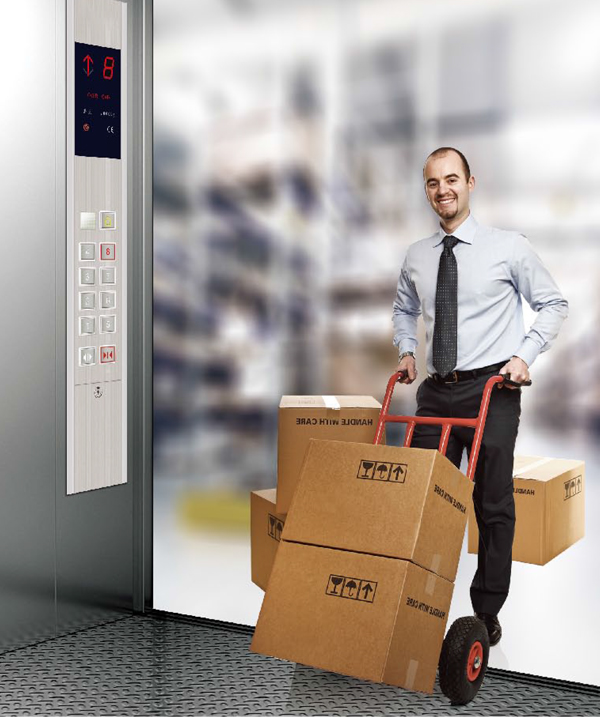
Purpose-Built Freight Transportation for Demanding Facilities
A freight elevator is not simply a larger version of a passenger elevator. It must handle heavy, bulky, and sometimes irregularly shaped goods while maintaining safety for operators and building users. In many facilities, cargo movement determines the speed of production, storage, stocking, dispatch, and maintenance. When an elevator cannot accommodate wide loads, fails to level accurately, or suffers frequent downtime, the entire workflow can be interrupted.
The machine room freight elevator is designed with a spacious and sturdy car, multiple wide door opening modes, and a structural approach that supports the movement of large cargo. It is especially suitable for factories, warehouses, shopping centers, supermarkets, department stores, logistics facilities, and property management areas where goods need to move between floors safely and efficiently.
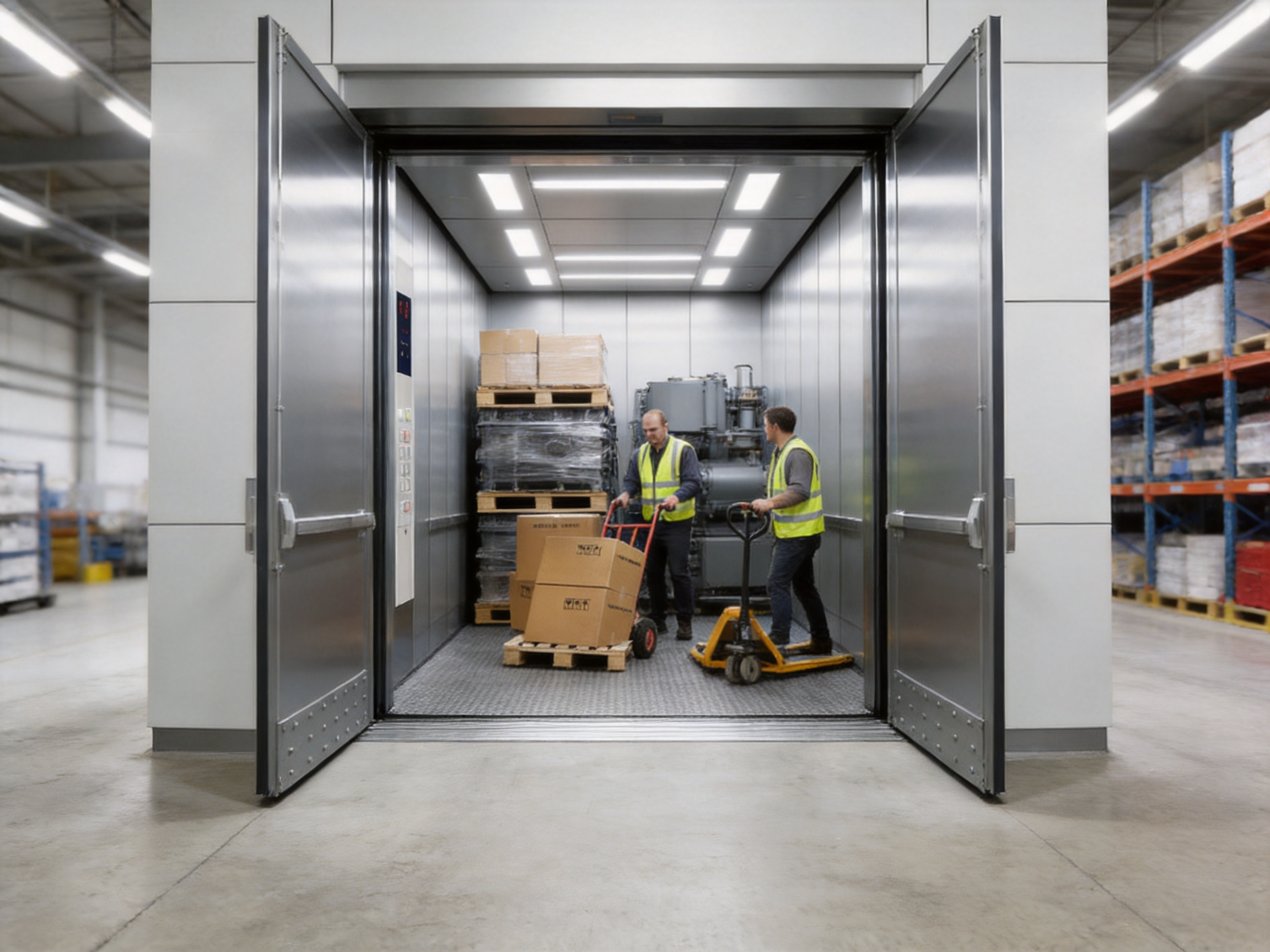
One of the defining characteristics of this elevator is considerate design. The car and door systems are arranged to make cargo loading and unloading easier. The door opening width can be matched closely to the car opening, allowing goods to move in and out with less obstruction. For facilities that move pallets, trolleys, machinery parts, packaged inventory, construction materials, retail stock, or maintenance equipment, this practical design helps reduce handling time and labor effort.
Another important advantage is that the elevator is developed for situations where passengers and cargo may be present in the car at the same time. Safety is therefore not limited to mechanical lifting strength. The elevator also requires reliable control logic, door protection, braking performance, overload control, leveling precision, and emergency communication. These systems are integrated to create a safer cargo transportation environment.
Core Product Positioning
The freight elevator is a machine room elevator solution, meaning the traction machine and major control components are arranged in a dedicated machine room. This configuration remains highly valued in many freight applications because it offers convenient maintenance access, strong performance capacity, and flexible engineering possibilities for heavy-duty installations.
For cargo transportation, a machine room configuration can be especially beneficial where higher load capacity, reliable service access, and long operational life are priorities. Maintenance technicians can access machinery and control systems in a designated space, helping reduce service complexity and supporting predictable inspection routines. For industrial and commercial customers, this can translate into better long-term manageability.
The product is positioned as a practical, durable, and intelligent freight elevator. It combines advanced CPU control, VVVF drive technology, strong braking capability, reinforced structure, and multiple safety features. Its wide door configurations make it adaptable to different building layouts, while its control and information functions help create a modern user experience.
Key Advantages Over Conventional Freight Elevators
The freight elevator’s competitive advantages can be understood through several practical factors: cargo access, load stability, safety, energy efficiency, service life, control intelligence, manufacturing precision, and customization flexibility. Each of these areas directly affects the value of the elevator over years of operation.
1. Wider and More Flexible Door Opening Options
Many cargo-handling problems begin at the doorway. If an elevator door opening is too narrow or poorly matched to the car size, workers may need to angle goods, remove packaging, use smaller trolleys, or make repeated trips. These inefficiencies increase labor cost and risk of cargo damage.
This freight elevator offers multiple door opening modes, including side opening, center opening, center-opening double-folded type, single-way door arrangement, and double-way or opposite-door arrangements. These options allow the elevator to be matched to different facility layouts, such as warehouses with straight-through loading, department stores with limited hallway space, factories requiring side access, or logistics spaces requiring direct entry and exit flow.
Compared with competitors that offer fewer door options or standard passenger-style openings, the flexible door design of this freight elevator improves usability in real working conditions. It gives architects, project contractors, and facility owners more freedom to design efficient movement routes for goods.
2. Sturdy Car Structure for Heavy Loads
The car is designed to be spacious yet strong. The bottom of the car is reinforced with high-intensity material, and the car frame is designed according to mechanical principles to support large load capacity. Thickened steel board helps improve load sustainability and durability under frequent cargo movement.
In freight elevator operation, the car floor is exposed to concentrated pressure from carts, forklifts, pallet jacks, crates, and machinery parts. A weak car structure may deform, become noisy, or reduce safety over time. This elevator addresses the issue with robust construction and improved rust resistance at the bottom of the car, helping extend service life.
Compared with ordinary elevators adapted for goods use, this freight elevator provides a more cargo-focused structure. It is not only about lifting weight; it is about withstanding repeated impact, abrasion, shifting loads, and intensive daily operation.
3. Advanced CPU Control and Contact-Free Control Performance
The elevator adopts advanced CPU control to improve operating performance. CPU-based elevator control allows the system to process signals accurately, coordinate movement, manage safety logic, support automatic operation, and improve the consistency of daily use. Contact-free control technology also helps enhance reliability by reducing mechanical contact wear in control processes.
In older elevator systems, relay-based control can require more maintenance and may be less flexible when integrating modern functions. CPU control improves diagnostic capability, response accuracy, and system intelligence. For freight elevator users, this can mean smoother operation, better troubleshooting, and higher availability.
4. VVVF Drive for Smooth, Energy-Saving Operation
The elevator uses VVVF drive technology, which adjusts voltage and frequency to control motor speed. This allows smoother starting, acceleration, deceleration, and stopping. For cargo transportation, smooth motion is especially important because sudden movement can shift loads, damage goods, or create discomfort for operators.
VVVF technology supports constant torque performance and helps the elevator maintain stable operation under different load conditions. It also contributes to energy-saving performance by controlling power use more intelligently than older drive methods. This balance of power, smoothness, and efficiency is a clear advantage in facilities where the elevator operates frequently throughout the day.
5. Precise Leveling Under Large Load
Accurate floor leveling is a critical requirement for freight elevators. If the car stops even slightly above or below the landing, moving carts and cargo can become difficult and unsafe. Operators may encounter jolts, tipping risks, wheel obstruction, or cargo instability.
This freight elevator incorporates specific leveling technology to ensure precise floor leveling even under large load. The goal is to make cargo handling feel as if goods are being moved across flat floors. This feature improves productivity and reduces safety risks during loading and unloading.
6. Strong Braking Performance
The brake system is designed with large rated braking torque, providing excellent braking capability. In freight applications, braking reliability is fundamental because the system must safely control heavy loads under varied operating conditions. A high-performance brake contributes to safe stopping, stable holding, and confidence during intensive use.
Competitor products may emphasize rated capacity but overlook braking stability and long-term performance under frequent starts and stops. This elevator’s braking design supports both safety and ride stability.
7. Low Vibration and Low Noise
The elevator uses a specifically purposed traction configuration with strong driving force, enabling stable operation with low vibration and low noise. In factories and warehouses, noise may seem less important than load capacity, but excessive vibration can affect mechanical components, cargo stability, and user confidence. In malls, department stores, and mixed-use buildings, quieter operation is even more valuable because it improves the overall building environment.
Technical Feature Overview
| Feature Area | Product Capability | Practical Customer Benefit |
|---|---|---|
| Control System | Advanced CPU control and intelligent operating logic | Reliable operation, improved diagnostics, and smoother control response |
| Drive Technology | VVVF drive for traction system and door operator | Smooth movement, energy saving, stable acceleration, and reduced mechanical stress |
| Car Structure | Spacious car with reinforced frame and high-intensity materials | Suitable for heavy and large cargo with improved durability |
| Door Design | Multiple wide door opening modes | Flexible loading routes and easier movement of bulky goods |
| Leveling | Precise leveling technology under large load | Safer and faster trolley, cart, and pallet movement |
| Safety Components | Safety gear, speed limiter, overload protection, door interlock, and emergency functions | Enhanced protection for goods, operators, and building users |
| Manufacturing | Automated production, intelligent processing, and strict inspection | Consistent quality, high precision, and dependable long-term performance |
| Service Support | Maintenance planning, remote monitoring concept, and responsive service team | Reduced downtime and better life-cycle management |
Safety as a Complete System
Safety in freight elevator design is not achieved through a single component. It requires a complete system that includes mechanical protection, electrical control, braking reliability, door security, overload management, emergency communication, fault diagnosis, and maintenance discipline. This freight elevator integrates multiple safety functions to create a comprehensive protection environment.
Safety components such as safety gear and speed limiters are manufactured in accordance with recognized international requirements. These components are critical for controlling elevator movement in abnormal conditions. The system also includes terminal forced slow-down protection, up and down over-run protection, final limit protection, down overspeed protection, up overspeed protection, safety stop, inspection operation, and inching operation.
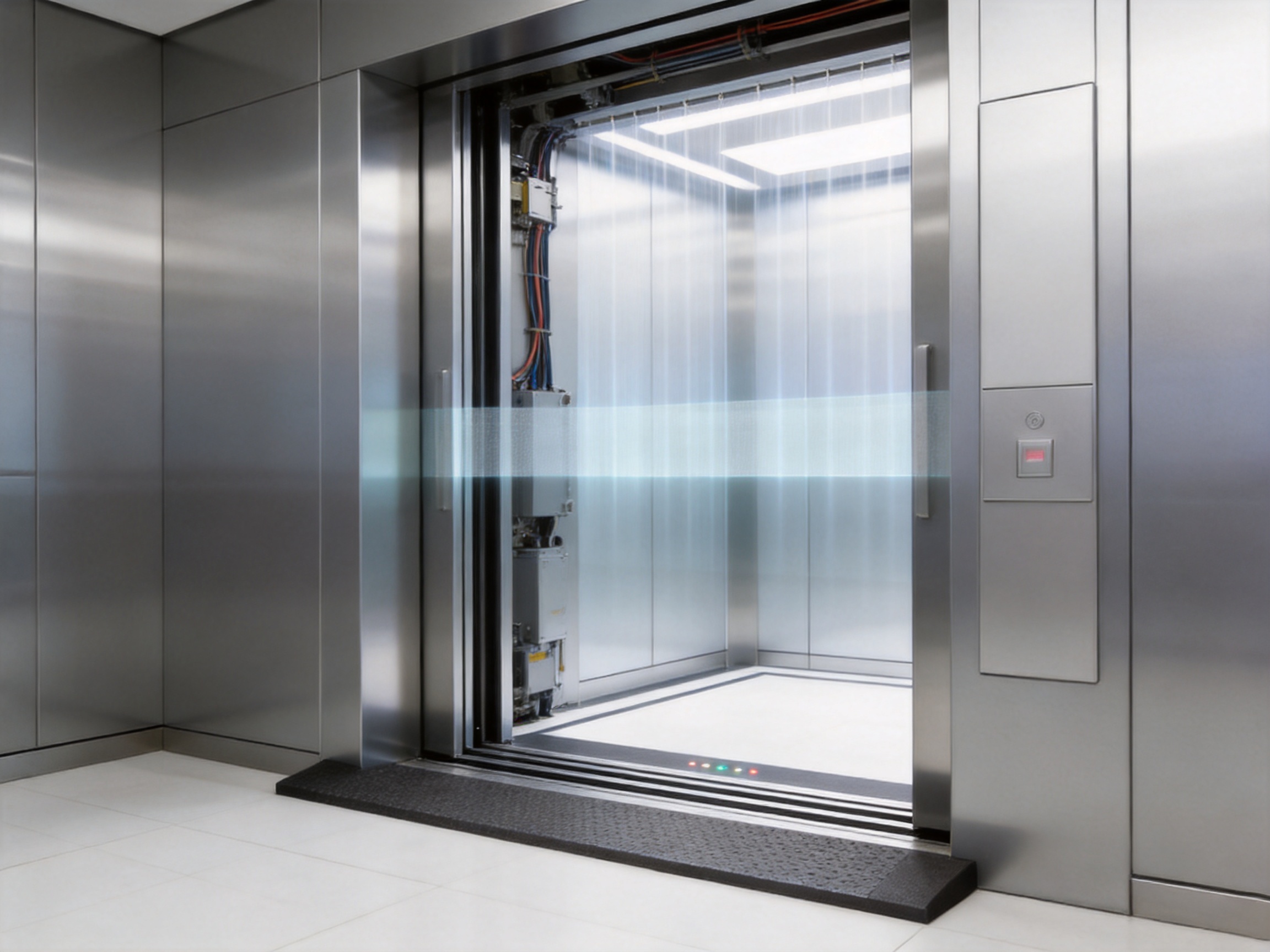
Door safety is especially important for freight elevators because cargo, carts, and operators frequently pass through the doorway. Door interlock protection helps ensure that elevator movement is controlled according to door status. Light curtain protection improves safety during entry and exit by detecting obstructions in the door area. Repeated door closing, reopen with hall call, door close delay, and door opening time adjustment help the door system respond to real operating conditions.
Overload protection is another essential function. Freight elevators are often exposed to unpredictable loading behavior, especially in busy industrial or retail environments. Overload warning and stopping functions help prevent unsafe operation beyond rated conditions. By preventing excessive load movement, the elevator protects its own mechanical systems while improving user safety.
Emergency functions include emergency car lighting, power failure emergency leveling options, fire emergency return, five-way communication, and car bell functions. These features support safer handling during unexpected events. Self-diagnosis of breakdowns also helps maintenance teams identify problems more efficiently.
Control and Information Functions for Modern Operation
Modern freight elevators are expected to provide more than basic up-and-down movement. They must communicate status, support dispatching logic, adapt to traffic patterns, and offer maintenance information. This freight elevator includes a wide range of control and information functions that make operation more intelligent.
Control functions may include well and floor distance self-tuning, power-on re-leveling, micro-touch buttons in the car, start protection control, arrival chime, VVVF drive control, VVVF door operator control, second car operation panel, automatic adjustment of door open holding time, car call cancellation, automatic running, attendant operation, duplex control, double door control, and IC card control options.
Information functions may include full collective control, full-load bypass, main floor shut-off, self-diagnosis, five-way communication, car bell, car floor and direction indicators, hall floor and direction indicators, voice announcement options, traffic dispatch options, traction machine monitoring options, and IC card management options. These features improve operational clarity and can be tailored to different project needs.
For example, in a warehouse, full-load bypass can prevent unnecessary stops when the car is already at capacity. In a shopping center, voice announcement and direction indicators can improve user awareness. In a controlled-access industrial facility, IC card control can help manage who uses the elevator and when. In a building with multiple freight routes, duplex control can improve transport efficiency.
Comfort Functions That Improve Daily Use
Although freight elevators are designed for goods, comfort and convenience still matter. Operators often ride with cargo, and smooth user experience helps reduce fatigue, confusion, and risk. The elevator includes comfort-related functions such as emergency car lighting, automatic shutdown of ventilation and lighting, repeated door closing, reopening with hall call, express door closing, car stop and door open, door opening extension options, and door close delay.
These details may seem small, but they make a substantial difference in daily operation. A door close delay can give workers enough time to move bulky cargo safely. Automatic light and ventilation shutdown can reduce energy waste. Car stop and door open functions simplify unloading. Express door closing can improve efficiency when rapid cycles are needed.
Why Machine Room Design Remains Valuable for Freight Elevators
Machine room less elevators are popular in many passenger applications because they save building space. However, for freight elevator applications, a machine room design continues to offer important advantages. Heavy-duty cargo systems benefit from accessible machinery, flexible maintenance arrangements, and robust installation layouts.
A dedicated machine room allows key components to be placed in a controlled and serviceable area. Maintenance teams can inspect and repair equipment more conveniently. For facilities that depend on elevator uptime, easier maintenance access can reduce service time and support long-term reliability.
Machine room freight elevators are also well suited to projects where performance, durability, and engineering flexibility are more important than saving every square meter of building space. Industrial buildings, warehouses, and multi-floor commercial facilities often prioritize reliable load handling and simple maintenance access. In those contexts, the machine room configuration provides clear value.
Applications Across Industries
The freight elevator is suitable for many types of buildings and operating environments. Its structure and functions can support customized solutions for different users.
Factories and Manufacturing Plants
In factories, materials, parts, tools, and finished goods must move between production floors efficiently. A freight elevator with strong load capacity, precise leveling, and wide doors can reduce bottlenecks in production flow. The reinforced car structure is especially suitable for machinery components and heavy containers.
Warehouses and Distribution Centers
Warehouses require frequent movement of cartons, pallets, storage equipment, and bulk goods. A cargo elevator with flexible door arrangements can support one-way or through-car traffic patterns. Accurate leveling improves pallet jack and trolley movement, while full-load bypass and automatic operation can improve efficiency during peak periods.
Shopping Centers and Department Stores
Retail environments need to move stock from storage areas to sales floors without interfering with customer traffic. A freight elevator can be installed in back-of-house routes and configured for goods movement. Low noise, smooth operation, and reliable door safety are valuable in these mixed-use environments.
Supermarkets and Commercial Service Areas
Supermarkets move large amounts of packaged goods, fresh products, cleaning supplies, and equipment. A dependable freight elevator supports daily replenishment and reduces the physical strain of moving heavy loads. Door close delay and wide openings can be especially helpful for staff moving carts.
Property Management and Maintenance Centers
Large residential or commercial complexes often need to move maintenance equipment, furniture, waste containers, and service materials. A freight elevator with controlled access and sturdy construction helps property teams work more efficiently while protecting public passenger elevators from damage.
Manufacturing Strength Behind the Product
A freight elevator’s performance depends not only on its design but also on the quality of manufacturing. Tenau Elevator (China) Co., Ltd. is located in Huzhou City, Zhejiang Province, in an industrial region with convenient access to Shanghai. The company was established with a focus on overseas markets and has developed professional elevator and escalator production capabilities.
The company’s manufacturing background includes professional elevator and escalator production lines and fully automatic panel production equipment. More than 300 employees supported its early development, and the company later benefited from production platform integration within a larger group structure. The production division includes specialization, with cargo elevators and home lifts forming an important part of Tenau’s manufacturing responsibilities.
This specialization is important. Freight elevators require different expertise from passenger elevators. Manufacturing teams must understand heavy-load structure, robust car design, door durability, industrial usability, and long-term service requirements. By focusing on cargo elevator production, the company can better address the specific expectations of freight elevator customers.
Industry 4.0 Production System and Intelligent Manufacturing
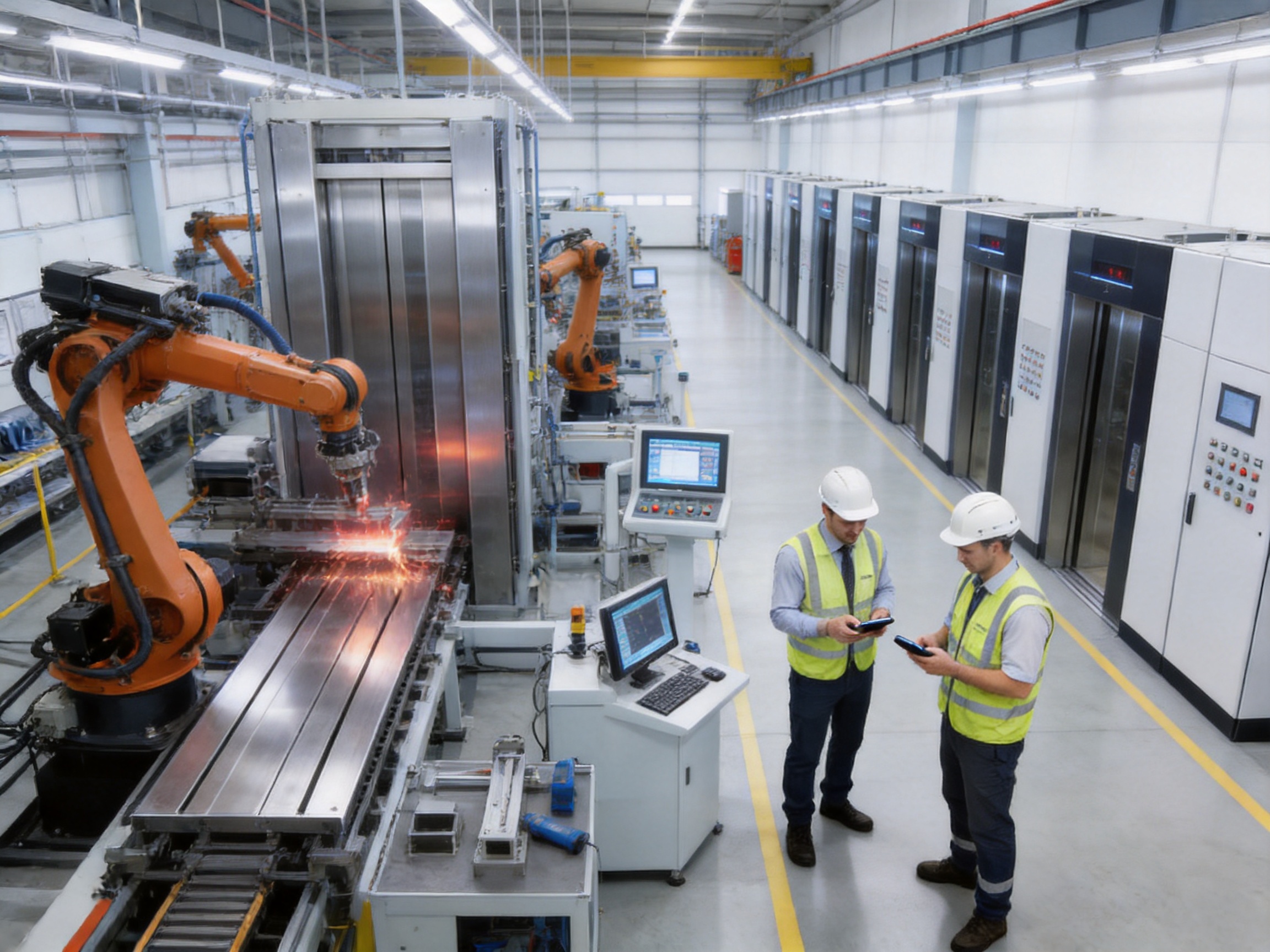
The company has invested in an intelligent production base that integrates design aesthetics, efficient operation, and green environmental concepts. Its Industry 4.0 production system is built around intelligent processing, intelligent production, intelligent detection, and intelligent monitoring of manufacturing procedures. Advanced automatic production equipment, big data concepts, and Internet of Things ideas are used to improve manufacturing consistency and process control.
For customers, intelligent manufacturing is not just a technical slogan. It has practical value. Automated processing can improve dimensional accuracy. Intelligent detection can identify problems earlier. Digital monitoring can help stabilize production quality. Standardized procedures can reduce variation between units. These factors are especially important for freight elevators, where structural strength and installation precision directly affect safety and service life.
Panel production quality influences the durability and appearance of elevator cars and doors. Mechanical processing precision affects how components fit and operate. Control cabinet quality affects electrical reliability. Door operator manufacturing affects daily usability. By using advanced manufacturing processes across these areas, the company strengthens the reliability of the final product.
Strict Quality Control and the Zero-Defect Philosophy
The company’s strategic quality objective is described as high standard, high precision, and zero defect. This philosophy is particularly relevant to freight elevator manufacturing because even small defects can become significant under heavy-load operation. A slightly misaligned door system can cause frequent faults. A weak weld or low-quality material selection can reduce service life. Poor control calibration can affect leveling accuracy.
Strict quality control must therefore cover the entire process: design review, material selection, cutting and forming, welding, mechanical processing, electrical assembly, component testing, system integration, inspection, packaging, and installation support. A rigorous detection system throughout production helps ensure that the finished freight elevator meets project requirements.
The company emphasizes an earnest industrial attitude and strict pursuit of quality control. This aligns with the needs of international customers who expect stable performance, clear documentation, and dependable after-sales support. For overseas projects, manufacturing consistency becomes even more important because transportation, installation, local regulations, and maintenance conditions may vary from country to country.
Customization for Global Markets
Freight elevator projects differ widely. A warehouse may need a large-capacity elevator with through-car access. A mall may need a quieter goods lift with back-of-house access control. A factory may need reinforced finishes and heavy-duty operation. A property management center may require moderate capacity but high daily reliability. Because markets, applications, and customers differ, customized solutions are essential.
The company’s business philosophy emphasizes providing customized solutions, whether for a single product or a complete equipment package. This is a major advantage over suppliers that offer only fixed models. Customization may involve load capacity, car dimensions, door opening type, control options, decorative or protective finishes, access management, communication functions, and maintenance planning.
The company also supports multiple languages, including English, Spanish, Russian, and Arabic. For international projects, communication reduces risk. Clear technical communication helps customers choose the right configuration, understand installation requirements, coordinate schedules, and solve issues quickly.
Service Network and Life-Cycle Support
A freight elevator is a long-term investment. Its value is measured not only at purchase but throughout years of operation. Maintenance, inspection, response speed, spare parts support, and technical guidance all affect ownership cost. The service concept described for this product is built around unified service standards, maintenance procedures, comprehensive inspection, customer data files, remote monitoring concepts, and full-time response.
Regular maintenance is essential for elevator safety and performance. Like other transportation equipment, a freight elevator must be inspected and maintained to ensure secure operation. The service approach includes establishing customer data files, formulating exclusive maintenance plans, and providing all-day customer support from the beginning to the end of the product life period.
An intelligent remote monitoring concept, described as an elevator operation monitoring system, helps keep safety information under control. While actual implementation may depend on project configuration, the idea is clear: modern elevator service should be proactive rather than only reactive. Monitoring operating status can help identify abnormal conditions earlier and support better maintenance decisions.
A 24-hour service team concept provides confidence for customers whose operations depend on elevator availability. In factories, warehouses, and commercial buildings, downtime can cause direct financial loss. Responsive service reduces operational disruption and supports safer long-term use.
Comparing This Freight Elevator with Common Market Alternatives
Many freight elevator buyers compare suppliers based on price, rated load, and delivery time. These are important, but they do not fully represent long-term value. A lower-cost elevator may become expensive if it has poor leveling, limited door options, weak structure, or frequent faults. A better comparison should include life-cycle performance.
Compared with standard goods lifts that use limited door configurations, this freight elevator offers greater adaptability through multiple door opening modes. Compared with basic control systems, its advanced CPU control and VVVF drive provide smoother, smarter operation. Compared with lightly reinforced elevators, its high-intensity car bottom, rust resistance, and thickened steel board support better heavy-duty durability. Compared with suppliers without advanced manufacturing, the company’s intelligent production base and strict inspection improve confidence in consistency.
The product also stands out through its balance of power and refinement. Some heavy-duty elevators are strong but rough in operation. Others are smooth but not sufficiently robust for cargo. This freight elevator is designed to combine large-load capability with precise leveling, low vibration, low noise, energy-saving operation, and modern safety functions.
Design Details That Reduce Operational Friction
Operational friction refers to small problems that slow work down: narrow doors, inaccurate stops, long waiting times, inconvenient button layouts, poor lighting, door timing that does not match cargo handling, or unreliable fault information. Over time, these small issues become costly.
The freight elevator addresses these problems through practical design. The door opening can match cargo requirements. Automatic adjustment of door open holding time helps adapt to actual loading behavior. A second car operation panel can improve usability in larger cars or through-car configurations. Car call cancellation prevents unnecessary trips. Attendant operation can support controlled goods movement. Direction and floor indicators improve clarity for users.
These functions may not always appear in basic product comparisons, but they strongly influence daily efficiency. A well-designed freight elevator should feel intuitive to use, easy to load, safe to operate, and predictable in performance.
Environmental and Energy Considerations
Energy efficiency is increasingly important in industrial and commercial facilities. Freight elevators can consume significant energy when used frequently, especially in warehouses and production plants. VVVF drive technology contributes to energy-saving operation by controlling motor output according to operating demand. Smooth acceleration and deceleration also reduce mechanical stress, which can support longer component life.
Automatic shutdown of ventilation and lighting further reduces unnecessary energy use when the car is idle. Low vibration and stable operation also help reduce wear, indirectly supporting sustainability by extending the useful life of components and reducing replacement frequency.
The company’s intelligent production base is also described as integrating efficient operation and green environment concepts. Modern manufacturing that improves material use, production accuracy, and defect reduction can contribute to more sustainable industrial practice.
Installation and Project Planning Considerations
Selecting a freight elevator requires careful project planning. Customers should consider rated load, car size, door opening dimensions, travel height, number of stops, building structure, machine room arrangement, traffic pattern, operating frequency, cargo type, floor conditions, power supply, safety requirements, and local regulatory standards.
For heavy cargo, car floor strength and leveling accuracy should be prioritized. For bulky goods, door width and car depth are critical. For straight-through logistics routes, opposite door opening may improve efficiency. For restricted corridors, side opening or double-folded doors may be more suitable. For facilities with controlled access, IC card control can be considered. For high-frequency use, durability and maintenance planning become especially important.
Working with an experienced manufacturer helps customers avoid mismatches between product configuration and real operating needs. Technical communication during the planning stage can reduce later changes, installation problems, and operational inefficiencies.
Practical Value for Owners and Operators
The value of this freight elevator can be summarized from the viewpoints of different stakeholders. Building owners benefit from durable equipment, safety compliance support, and long service life. Facility managers benefit from easier cargo flow, reliable maintenance planning, and reduced downtime. Operators benefit from wide doors, accurate leveling, smoother movement, and safer loading. Contractors benefit from configuration flexibility and manufacturer support. End users benefit from consistent transportation of goods across floors.
In a factory, this may mean fewer delays moving parts between production levels. In a warehouse, it may mean faster replenishment and dispatch. In a shopping center, it may mean cleaner separation between customer traffic and goods movement. In a property management facility, it may mean less damage to passenger elevators and more efficient service operations.
Q&A: Common Questions About the Freight Elevator
Q1: What type of building is this freight elevator best suited for?
It is suitable for factories, warehouses, malls, department stores, supermarkets, logistics facilities, and property management areas. It is designed for buildings that need reliable vertical transportation of heavy or bulky cargo.
Q2: Why choose a machine room freight elevator instead of a machine room less model?
A machine room design provides convenient access to major machinery and control components, which can be valuable for heavy-duty freight applications. It supports strong performance, flexible engineering, and easier maintenance access in many industrial and commercial projects.
Q3: How does the elevator improve cargo loading and unloading?
The elevator offers a spacious and sturdy car with multiple wide door opening modes. The door design can be selected according to the cargo route and building layout, helping goods move in and out more freely. Precise leveling also makes trolley and cart movement safer and smoother.
Q4: What makes the elevator safer for heavy cargo?
Safety is supported by reinforced structure, safety gear, speed limiter, overload protection, door interlock protection, light curtain protection, braking performance, emergency communication, emergency lighting, inspection operation, and fault diagnosis. These functions work together to protect users and cargo.
Q5: What is the benefit of VVVF drive technology?
VVVF drive technology controls motor speed by adjusting voltage and frequency. It helps the elevator start and stop smoothly, saves energy, reduces vibration, supports stable operation under different loads, and improves ride quality for operators traveling with goods.
Q6: Can the elevator support different door arrangements?
Yes. Available door concepts include side opening, center opening, center-opening double-folded type, one-way door opening, and opposite or double-way door arrangements. The final selection depends on project requirements and building layout.
Q7: Why is precise leveling important for freight elevators?
Precise leveling ensures the car floor aligns closely with the landing floor. This is essential when moving carts, pallet jacks, trolleys, or heavy goods. Good leveling reduces impact, improves safety, and makes loading and unloading more efficient.
Q8: How does the manufacturer support international customers?
The company focuses on overseas markets and can provide multilingual communication, customized solutions, professional technical responses, and service support concepts. Its manufacturing system and quality control are designed to meet varied global project needs.
Q9: What role does intelligent manufacturing play in product quality?
Intelligent manufacturing improves process consistency through automated equipment, intelligent processing, intelligent detection, and production monitoring. This helps improve dimensional accuracy, reduce defects, and support stable product quality.
Q10: Is regular maintenance necessary?
Yes. Regular maintenance is essential for safety, performance, and service life. A freight elevator carries heavy loads and operates under demanding conditions, so inspection, lubrication, adjustment, safety testing, and timely repairs are important throughout its life cycle.
Conclusion: A Stronger Freight Elevator for Modern Cargo Movement
The machine room freight elevator described in this article is designed around the real needs of cargo transportation. It combines a sturdy car, flexible wide door configurations, advanced CPU control, VVVF drive technology, precise leveling, powerful braking, low vibration, safety protection, and intelligent operation functions. These qualities make it a strong solution for factories, warehouses, shopping centers, department stores, logistics facilities, and property management applications.
Its advantages over conventional alternatives are clear. It is more cargo-focused than passenger elevators adapted for goods movement. It offers more practical door configurations than many standard freight lifts. It provides smoother and more energy-efficient operation through VVVF technology. It supports safer handling through comprehensive safety functions. It is backed by advanced manufacturing processes, intelligent production systems, strict quality control, and a service philosophy focused on long-term customer value.
For customers seeking a freight elevator that balances strength, safety, intelligence, and customization, this product provides a complete and practical solution. Its design reflects the demands of modern vertical cargo movement, while its manufacturing foundation supports the reliability expected in international markets.
References
1. Elevator Manufacturing and Installation Safety Standards, general technical requirements for traction elevators and freight elevators.
2. International elevator safety codes and guidance documents related to safety gear, speed limiters, door interlocks, and overload protection.
3. Technical literature on VVVF drive systems for traction elevators and energy-efficient vertical transportation.
4. Industrial elevator engineering references on freight elevator car design, load distribution, braking performance, and leveling accuracy.
5. Manufacturing quality management references related to intelligent production, automated processing, inspection systems, and zero-defect quality objectives.
6. Maintenance and life-cycle management guidelines for commercial and industrial elevator systems.
Product: Freight Elevator

Related Products

Related News
Built on safety, forging trust in vertical mobility.
lf you have any questions or need help, feel free to contact with our team.
 export@tenau.com.cn
 +86-18601458867
 +86-512-65059883
Elevator & Escalator
Factory Add
East of Xicheng Road, North of Lianyi Road, Nanxun Economic Development Zone, Nanxun District, Huzhou City, Zhejiang Province, P.R.China
Copyright © Tenau Elevator (China) Co., Ltd. All Rightd Reserved.
Custom High Quality Elevator Suppliers and World Brand Elevator Company