

 en
en Español
 русский
 中文简体
中文简体
Precision Handrails for Safer and More Elegant Elevator Cabins
Content
- 1 Product Overview: TO-VF02 Elevator Handrail
- 2 Why Elevator Handrails Matter
- 3 Core Advantages of the TO-VF02
- 4 Design Value in Different Elevator Categories
- 5 Comparison with Conventional Handrail Options
- 6 Advanced Manufacturing Strength Behind the Product
- 7 Quality Control from Design to Delivery
- 8 German-Influenced Engineering and Intelligent Production
- 9 Material, Finish, and Interior Coordination Considerations
- 10 Installation and Project Efficiency
- 11 Passenger Experience and Psychological Comfort
- 12 Long-Term Value for Building Owners
- 13 Support from a Comprehensive Elevator Manufacturer
- 14 Recommended Specification Scenarios
- 15 Safety and Environmental Responsibility
- 16 After-Sales Considerations and Global Market Fit
- 17 Practical Buying Considerations
- 18 Frequently Asked Questions
- 18.1 What is the TO-VF02?
- 18.2 Which elevator types can use this handrail?
- 18.3 Why is a handrail important in an elevator cabin?
- 18.4 How does the TO-VF02 compare with ordinary handrails?
- 18.5 Is the product suitable for hospital elevators?
- 18.6 Can the TO-VF02 be used in modernization projects?
- 18.7 What manufacturing strengths support the product?
- 18.8 Why should building owners consider total value instead of only price?
- 18.9 Does the handrail affect passenger perception?
- 18.10 How should buyers specify the TO-VF02?
- 19 Conclusion
- 20 References
- 21 Product: TO-VF02
In a modern elevator cabin, every visible component must do more than look attractive. It must support safety, comfort, durability, easy maintenance, and long-term value. The TO-VF02 elevator handrail is designed for this demanding environment, serving as a practical support element and a refined interior detail for passenger elevators, panoramic and observation elevators, hospital elevators, home villa elevators, cargo elevators, car elevators, high-speed elevators, and other vertical transportation spaces where user confidence matters.
A handrail may seem like a small part of an elevator system, but it has a direct influence on the passenger experience. People touch it when the cabin starts, stops, accelerates, decelerates, or becomes crowded. Elderly passengers, children, patients, hotel guests, residential users, and office workers all rely on a stable grip to feel secure. For this reason, a handrail must be strong, smooth, visually consistent, easy to clean, and compatible with the cabin’s interior design language. The TO-VF02 addresses these needs through a balanced combination of ergonomic form, manufacturing consistency, material-conscious engineering, and installation-friendly design.
Manufactured by Tenau Elevator (China) Co., Ltd., the TO-VF02 benefits from the company’s integrated elevator manufacturing capabilities. The company originates from Germany and operates as a comprehensive elevator manufacturer integrating design, research and development, manufacturing, marketing, installation, and after-sales service. Its production base is located in Nanxun, Zhejiang Province, within the core economic circle connecting Shanghai, Nanjing, Suzhou, and Hangzhou. This location supports efficient supply chains, advanced industrial cooperation, and export-oriented service for global markets.
The TO-VF02 is not simply a decorative accessory. It is part of a broader elevator ecosystem in which every component contributes to safety, comfort, and perceived quality. When installed in an elevator cabin, the handrail helps define the user’s first impression. Its shape, finish, mounting accuracy, and tactile feel communicate whether the elevator has been built with care. For property developers, hotel operators, hospital managers, public building owners, residential communities, and elevator contractors, this makes the TO-VF02 a practical choice for projects that require both dependable performance and polished cabin aesthetics.
Product Overview: TO-VF02 Elevator Handrail
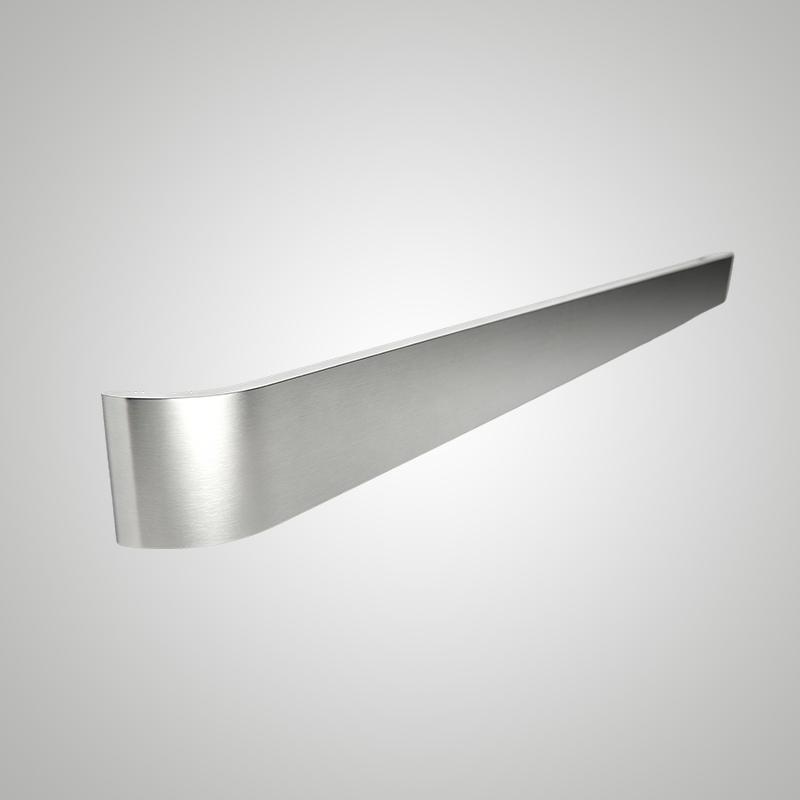
The TO-VF02 is an elevator cabin handrail designed to provide dependable passenger support while enhancing the interior appearance of the elevator. It is suitable for new elevator installations and for cabin modernization projects where existing interiors require improved safety, refreshed style, or upgraded passenger comfort. In practical use, the product functions as a grip point, a visual design line, and a protective element that can reduce contact with cabin wall panels in high-traffic environments.
Elevator interiors face repeated daily use. In residential towers, passengers may use the elevator hundreds or thousands of times per day. In hospitals, users may include patients, medical staff, visitors, and equipment operators. In hotels and commercial buildings, cabin interiors must remain attractive despite constant traffic. In shopping centers, public transport facilities, and office buildings, handrails must resist frequent handling while maintaining an easy-to-clean surface. The TO-VF02 is positioned to meet these conditions by emphasizing structural reliability, refined appearance, and manufacturing repeatability.
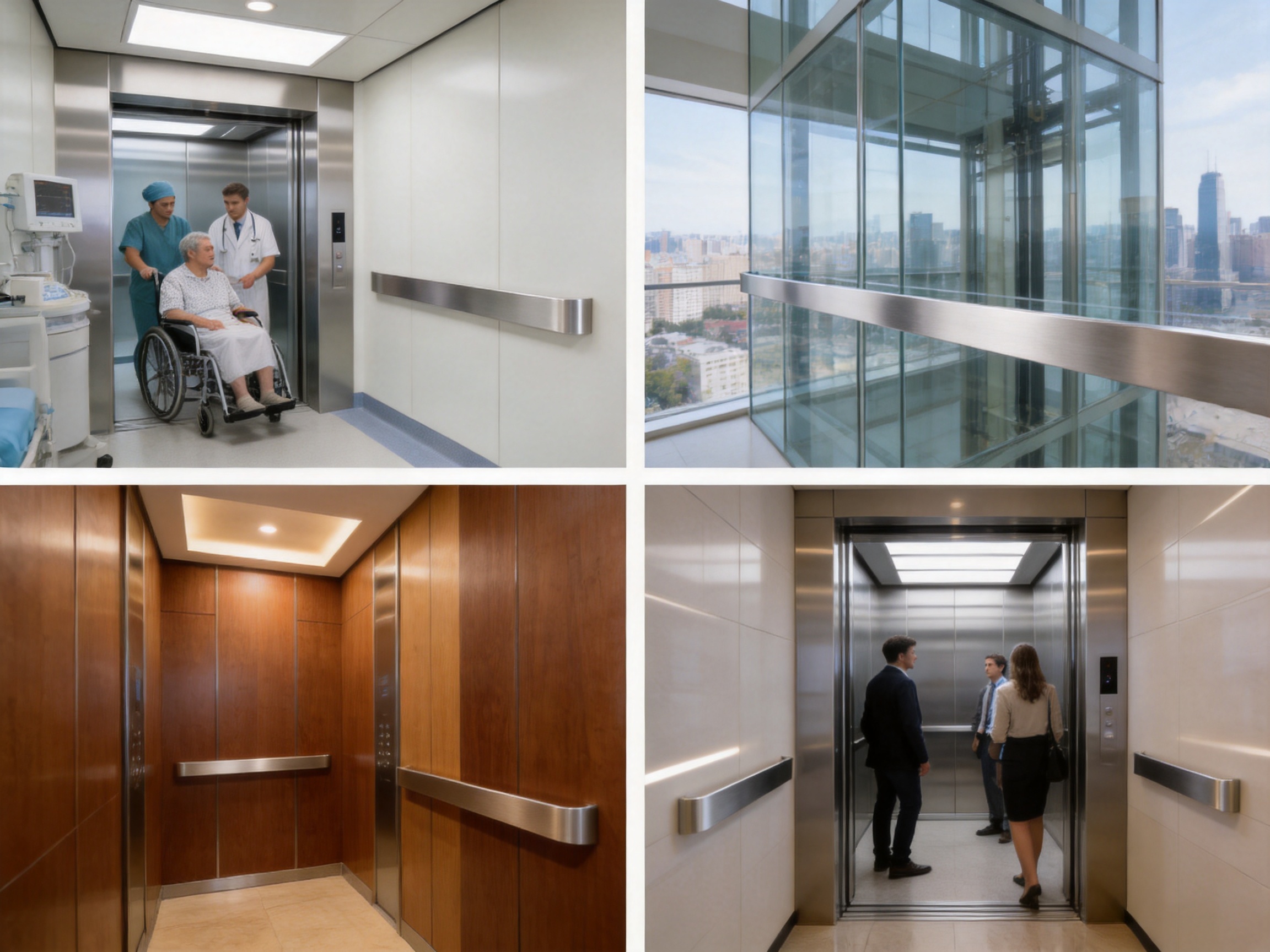
The model is categorized as an elevator handrail and is intended to integrate with a wide range of cabin interiors. It may be applied in stainless steel cabins, decorative panel cabins, glass observation elevator interiors, villa elevator cabins, hospital elevator cabins, and other custom elevator spaces. Its design can support both understated and premium interior styles, depending on the surrounding cabin materials, lighting, flooring, ceiling design, and wall finishes.
A successful handrail design must satisfy several priorities at the same time. It must be comfortable enough to hold during movement, strong enough to support passengers, compact enough not to obstruct the cabin, smooth enough to minimize snagging, and elegant enough to match modern interior expectations. The TO-VF02 is developed around these core requirements, making it more than an accessory and more accurately a user-interface component inside the elevator cabin.
Why Elevator Handrails Matter
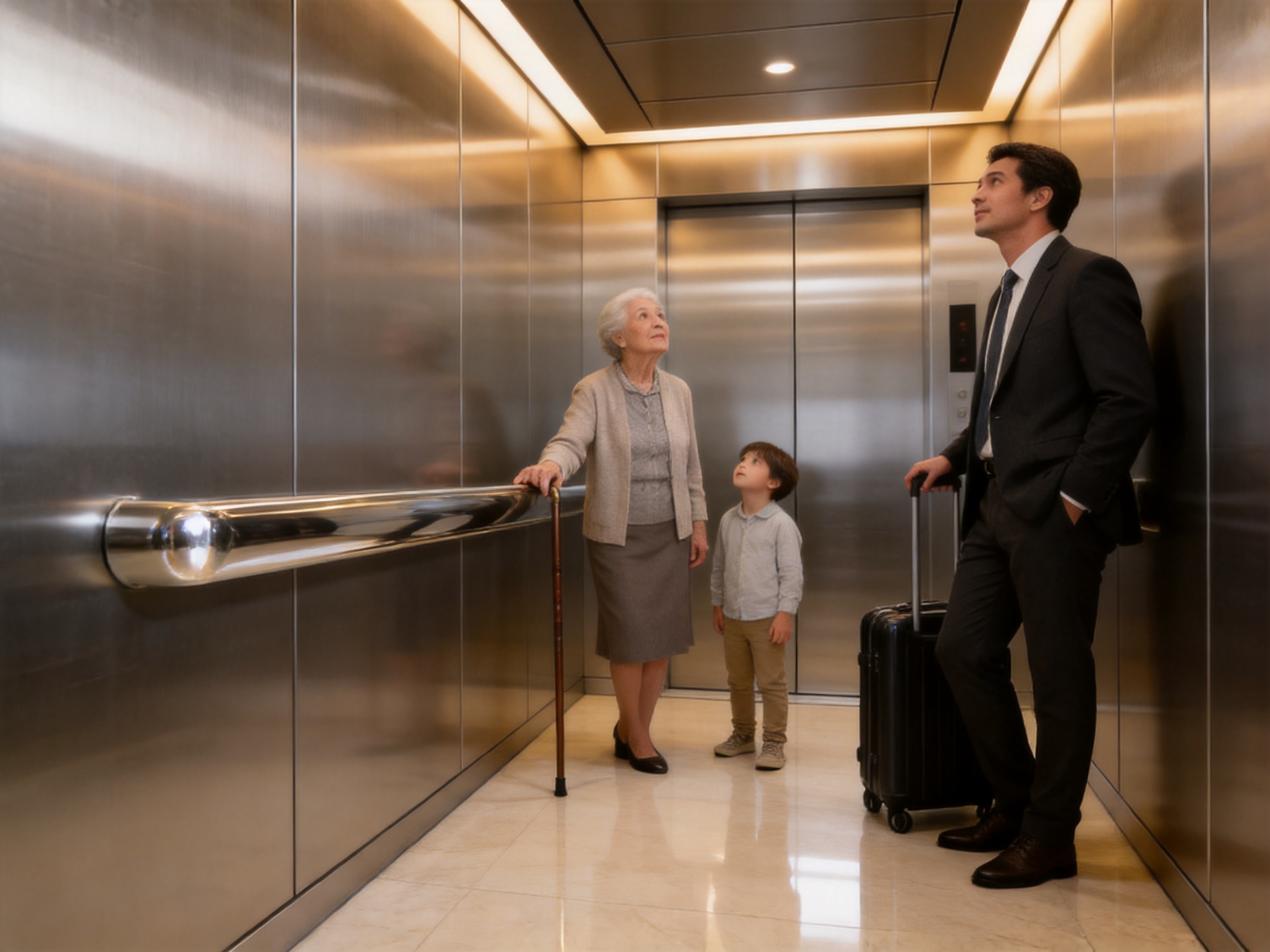
Elevator safety is often associated with controllers, traction machines, brakes, doors, guide rails, and electrical protection systems. These are essential, but passenger safety also depends on the cabin’s interior design. A handrail helps users maintain balance during travel. It is especially important during starting and stopping, where minor motion changes may affect elderly passengers, people with reduced mobility, pregnant passengers, children, and passengers carrying luggage or goods.
In a hospital elevator, a handrail can be essential for patients recovering from surgery or people who cannot stand steadily. In a home villa elevator, it adds reassurance for family members of different ages. In a high-speed elevator, it contributes to psychological comfort by giving passengers a stable physical reference point. In a panoramic elevator, it provides support without compromising the visual appeal of the cabin. In a cargo or service elevator, it can protect wall panels from direct impact while providing a convenient holding point for operators.
Handrails also contribute to accessibility. A well-designed cabin should welcome users with different physical abilities. Even when a project is not specifically designed as a barrier-free environment, the presence of a reliable handrail makes the elevator easier to use. Building owners and elevator consultants increasingly recognize that accessibility features can improve the overall value of a property because they serve a wider population and support long-term usability.
Another overlooked function of a handrail is preserving the cabin interior. Passengers often lean against walls, touch panels, or use corners for balance when a handrail is absent or uncomfortable. Over time, this can lead to fingerprints, scratches, stains, dents, and premature interior wear. A properly positioned handrail provides a designated contact point, helping keep wall panels cleaner and reducing maintenance pressure.
Core Advantages of the TO-VF02
Ergonomic Passenger Support
The TO-VF02 is designed to serve the natural movement and posture of passengers. A good handrail should not require awkward wrist angles or excessive grip force. It should feel intuitive when passengers reach for it. The TO-VF02 emphasizes a comfortable gripping experience, supporting users during elevator movement and providing a reassuring sense of stability.
Compared with ordinary low-cost handrails that focus only on basic appearance, the TO-VF02 is intended to balance touch, proportion, and structural confidence. This matters because passengers do not evaluate a handrail only by sight. They evaluate it through direct contact. A handrail that feels sharp, thin, poorly fixed, or loosely mounted can reduce trust in the entire elevator, even if the main system is technically reliable.
Clean and Modern Appearance
Elevator cabins are increasingly used as architectural statements. Luxury residential buildings, hotels, business centers, hospitals, and public facilities all expect cabin interiors to reflect their brand, function, and quality level. The TO-VF02 provides a clean visual line that can complement many interior concepts, from simple functional cabins to high-end decorative environments.
Many competing handrails are limited by outdated profiles, inconsistent surface finishes, or bulky mounting structures. The TO-VF02 is better suited for projects where the handrail must look integrated rather than added as an afterthought. Its visual role is subtle but important: it gives the cabin interior a finished, coordinated, and professionally engineered appearance.
Reliable Manufacturing Consistency
One of the most significant advantages of the TO-VF02 is its connection to an advanced elevator manufacturing organization. Tenau Elevator (China) Co., Ltd. applies rigorous management systems and a closed-loop quality control approach across its product development and production processes. This manufacturing culture supports repeatability, which is critical for projects requiring multiple elevators with consistent interior specifications.
For contractors and building owners, inconsistent components create delays, rework, and quality disputes. A handrail may appear simple, but dimensional errors, uneven surface treatment, poor bracket alignment, or weak fastening points can cause installation problems. The TO-VF02 is backed by a manufacturing environment designed to reduce these risks through controlled processes and systematic quality management.
Versatile Application Range
The TO-VF02 can be considered for a broad selection of elevator types and cabin environments. It is suitable for passenger elevators in residential and commercial buildings, panoramic and observation elevators where appearance is critical, hospital elevators where user support is essential, home villa elevators where comfort and refined design are valued, cargo elevators where durability matters, car elevators where functional protection is needed, and high-speed elevators where passenger reassurance is important.
This versatility offers procurement advantages. Project teams can specify a consistent handrail concept across different elevator types within a building or development. A large mixed-use project may include passenger elevators, service elevators, observation elevators, and special-purpose elevators. Selecting a compatible handrail model helps maintain design continuity and simplifies communication among designers, builders, elevator suppliers, and facility managers.
Maintenance-Friendly Design Thinking
Elevator interiors must be maintained frequently. Surfaces that are difficult to clean or easily damaged increase the long-term operating cost of a building. The TO-VF02 is positioned as a practical interior component that supports routine cleaning and inspection. A smooth, well-finished handrail can reduce dirt accumulation and make daily maintenance more efficient.
Compared with lower-quality alternatives that may discolor, loosen, scratch easily, or collect dirt around poorly shaped joints, the TO-VF02 reflects a more mature approach to elevator interior details. A handrail should remain presentable over years of use, not only during the first project acceptance inspection. This long-term perspective is important for property owners who want cabins to maintain a premium impression with reasonable maintenance effort.
Design Value in Different Elevator Categories
Passenger Elevators
In passenger elevators, the handrail affects both safety perception and cabin style. Users may not consciously notice every technical feature, but they immediately sense whether the interior is complete and comfortable. The TO-VF02 helps create a refined passenger environment by providing a stable grip point and a clean design accent. It is especially valuable in apartment buildings, office towers, hotels, schools, and shopping centers where daily passenger flow is high.
Panoramic and Observation Elevators
Panoramic elevators place strong emphasis on appearance. Their cabins often use glass, bright lighting, reflective surfaces, and architectural details. A poorly chosen handrail can disrupt the view or look visually heavy. The TO-VF02 can support the transparent and open feeling of observation elevators by offering a controlled, streamlined interior feature. It contributes to safety while preserving the premium experience of scenic movement.
Hospital Elevators
Hospital elevators require reliable, hygienic, and user-friendly interiors. Patients, visitors, nurses, doctors, wheelchair users, and people carrying medical items may all depend on handrails. The TO-VF02 supports a safer cabin environment by providing an accessible grip point. In healthcare spaces, the psychological effect is also important. A well-designed handrail tells users that the elevator has been planned with care, comfort, and patient support in mind.
Home Villa Elevators
Home villa elevators are increasingly selected for private residences, multi-level villas, and premium homes. In these environments, elevator interiors must blend with architectural decoration and personal taste. The TO-VF02 can contribute to a polished, comfortable, and family-friendly cabin. It is especially useful for elderly family members and guests who want added support while using the elevator.
Cargo and Service Elevators
Although cargo elevators are primarily functional, interior components still need thoughtful design. Operators may use handrails to steady themselves while transporting goods. Handrails can also help reduce direct contact with cabin walls. The TO-VF02 provides a more professional alternative to basic utility rails, helping service elevators maintain a cleaner and more organized interior.
Car Elevators
Car elevators require careful use of cabin space and durable interior features. A handrail in this setting can support operators and assist with safe movement inside the cabin when vehicles are being loaded or positioned. The TO-VF02 offers a functional and coordinated option for car elevator cabins that require more than a purely industrial finish.
High-Speed Elevators
High-speed elevators demand exceptional passenger confidence. Even when acceleration and deceleration are smoothly controlled, users may prefer a physical support point. A stable handrail improves the feeling of safety and balance. The TO-VF02 is well matched to high-speed elevator interiors where every detail should communicate quality, precision, and reliability.
Comparison with Conventional Handrail Options
Many elevator handrails in the market are purchased as low-priority accessories. This approach can lead to several problems: inconsistent surface quality, limited design compatibility, uncomfortable profiles, weak brackets, installation difficulty, and poor long-term appearance. The TO-VF02 is positioned differently. It is treated as an important cabin interior component connected to an experienced elevator manufacturer’s design and quality system.
The following table summarizes practical differences that may matter during specification, installation, and long-term use.
| Evaluation Factor | TO-VF02 Elevator Handrail | Common Low-Cost Handrails | Project Benefit |
|---|---|---|---|
| Design Integration | Designed to complement modern elevator cabin interiors across multiple elevator types. | Often selected as a generic accessory with limited style coordination. | Improves cabin appearance and supports a more professional interior concept. |
| User Comfort | Emphasizes practical grip comfort and passenger support during travel. | May have uncomfortable edges, awkward dimensions, or poor tactile quality. | Enhances safety perception and usability for diverse passengers. |
| Manufacturing Control | Supported by systematic production management and quality inspection. | Quality may vary between batches or suppliers. | Reduces installation risk and improves consistency across projects. |
| Application Range | Suitable for passenger, panoramic, hospital, villa, cargo, car, and high-speed elevator cabins. | Often optimized for a narrow application or basic cabin type. | Simplifies specification for mixed-use projects. |
| Maintenance Value | Designed with long-term cleanliness, durability, and service practicality in mind. | May show wear quickly or be difficult to clean around joints. | Supports lower maintenance pressure and better cabin presentation. |
| Supplier Capability | Backed by a comprehensive elevator manufacturer with design, R&D, manufacturing, installation, and after-sales capabilities. | May come from accessory-only suppliers with limited elevator system knowledge. | Improves technical communication and overall project confidence. |
This comparison shows why the TO-VF02 should be considered not only on the basis of purchase price but also on the basis of total project value. A slightly better interior component can help reduce rework, improve user satisfaction, and preserve the cabin’s appearance over a longer period.
Advanced Manufacturing Strength Behind the Product
The manufacturing background of the TO-VF02 is one of its important differentiators. Tenau Elevator (China) Co., Ltd. is a professional comprehensive elevator manufacturer with capabilities covering design, research and development, manufacturing, marketing, installation, and after-sales service. This integrated model allows the company to understand how individual parts perform inside complete elevator systems rather than treating components in isolation.
The company’s development approach is guided by safety and environmental protection. It aims to provide customers worldwide with a more intelligent elevator ecosystem. This mission is relevant to the TO-VF02 because a safer and more intelligent elevator environment depends not only on control systems but also on human-centered cabin details. A handrail supports direct human interaction, and its quality reflects the manufacturer’s attention to the complete passenger journey.
The company has advanced capabilities in low-speed, medium-speed, high-speed, and ultra-high-speed elevator technologies. Such broad engineering experience supports a deeper understanding of cabin dynamics, passenger expectations, and component performance. A handrail used in a high-speed building must still feel stable, while a handrail used in a hospital must support frequent and varied use. Manufacturing experience across elevator categories helps create products that are adaptable and dependable.
The company introduces international technologies and rigorous management systems. It complies with ISO9001, ISO14001, and OHSMS18001 standards, reflecting quality management, environmental management, and occupational health and safety management principles. These systems matter because they create a structured foundation for process control, documentation, inspection, and continuous improvement.
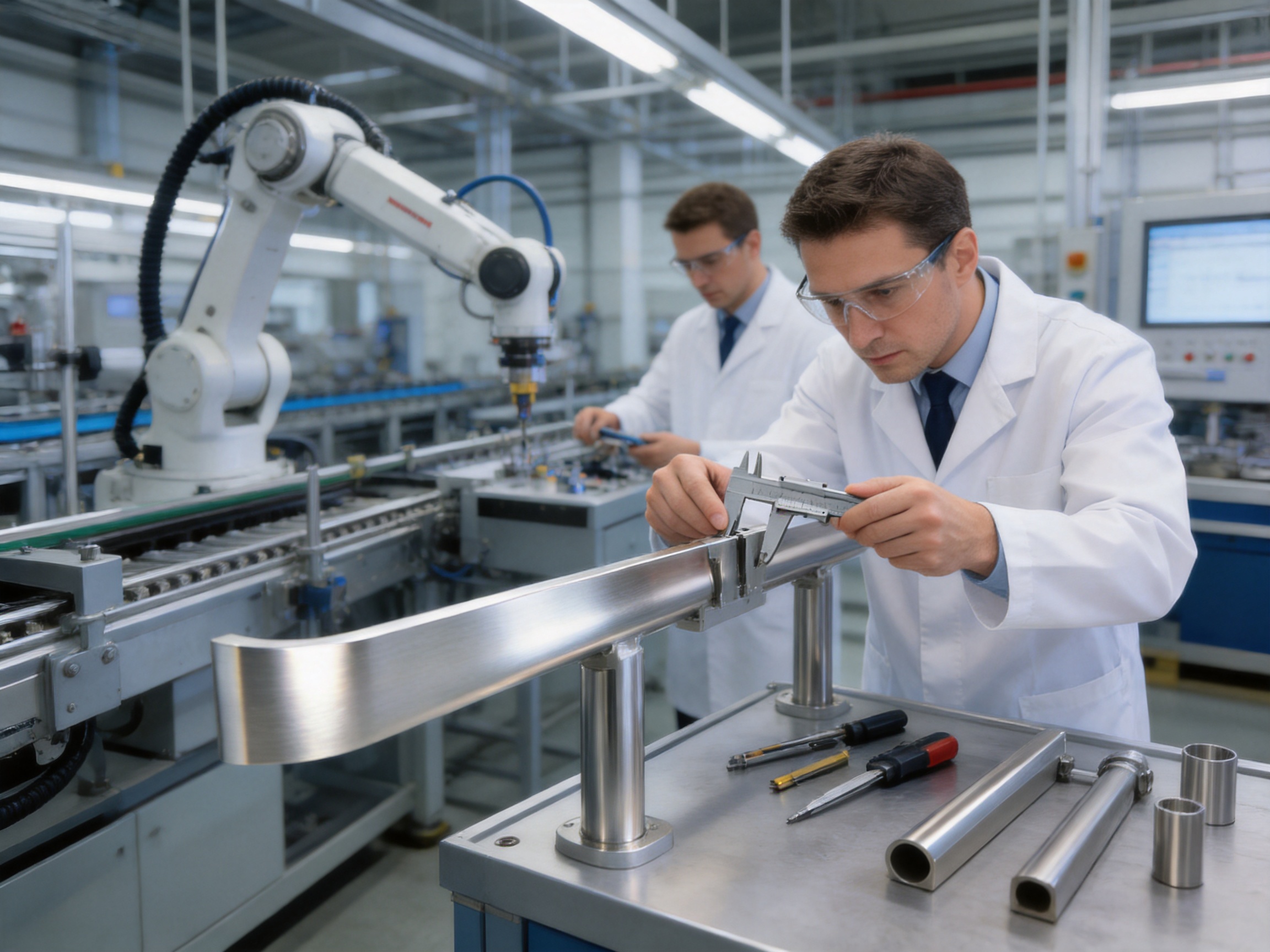
The production environment also incorporates German Industry 4.0 intelligent manufacturing concepts, automated production lines, big data, Internet of Things technology, and a full closed-loop quality control system. For a cabin component such as the TO-VF02, this means that manufacturing is supported by modern industrial discipline rather than informal manual production alone. Automated and data-supported processes can help reduce variability and improve traceability.
Quality Control from Design to Delivery
A reliable elevator handrail must pass through several quality-related stages before it reaches the installation site. The process begins with design intent. The product must be shaped for user comfort, matched with cabin structures, and prepared for repeatable manufacturing. Design decisions affect everything that follows: material selection, surface treatment, bracket configuration, assembly method, packaging, and installation convenience.
During manufacturing, dimensional control is important. Even small deviations can affect how well the handrail aligns with cabin wall panels. If mounting points are inconsistent, installers may need to adjust the product on site, causing delays or aesthetic problems. With controlled production processes, the TO-VF02 is positioned to support better alignment and more predictable installation.
Surface quality is another key inspection area. Passengers touch handrails directly, so surface defects are immediately noticeable. Scratches, uneven finishing, burrs, stains, or poor edge treatment can reduce the perceived value of the entire cabin. A quality-focused manufacturing system checks these details before delivery, helping prevent defects from reaching the project site.
Strength and stability are equally important. A handrail must remain firmly mounted under repeated use. It must not feel loose, unstable, or noisy. Mounting hardware and structural connections should support the intended application. A comprehensive elevator manufacturer understands that cabin accessories must perform under real operating conditions, not only pass a visual inspection.
Packaging and logistics also influence final quality. Elevator interior components may be transported across long distances, stored on construction sites, and handled by multiple teams before installation. Proper packaging helps protect surface finishes and prevent deformation. For export projects, this is especially important because replacement parts may require additional time and cost. A manufacturer with international market experience is better prepared to manage these delivery challenges.
German-Influenced Engineering and Intelligent Production
The company’s German origin and adoption of German Industry 4.0 intelligent manufacturing principles contribute to the product’s competitive positioning. In elevator manufacturing, engineering culture matters. It affects how tolerances are controlled, how processes are documented, how workers are trained, and how quality feedback is used. Intelligent manufacturing encourages data-based decision-making and continuous improvement rather than relying only on final inspection.
Automated production lines can support more consistent processing and assembly. Big data and Internet of Things technologies can improve production monitoring, equipment management, and quality traceability. Closed-loop quality control means that problems identified during inspection or customer feedback can be connected back to design, procurement, production, or process improvement. This is valuable for long-term product reliability.
For the TO-VF02, these strengths can translate into more stable quality from order to order. A building developer may purchase handrails for many cabins across several towers. A hotel project may require consistent cabin interiors across guest elevators, service elevators, and VIP elevators. A hospital project may demand dependable supply and documentation. Intelligent manufacturing supports this kind of consistency.
Competitors that rely on fragmented production or accessory-only supply may struggle to match the same level of process integration. They may provide acceptable samples but deliver inconsistent batches. They may lack sufficient technical understanding of elevator cabin installation. They may also have weaker after-sales response. The TO-VF02 benefits from a more complete manufacturing and service platform.
Material, Finish, and Interior Coordination Considerations
Although the specific project configuration may vary, elevator handrails commonly require careful consideration of material, finish, dimensions, mounting details, and compatibility with cabin wall panels. The TO-VF02 is intended to support professional cabin design decisions, allowing project teams to consider both performance and aesthetics. A handrail should coordinate with surrounding stainless steel panels, decorative boards, mirrors, glass panels, lighting systems, door finishes, and floor materials.
In premium projects, the handrail may need to harmonize with warm-toned interiors, minimalist stainless steel cabins, brushed textures, or reflective surfaces. In hospitals, the priority may be easy cleaning, bright visual clarity, and practical support. In villa elevators, the handrail may be part of a personalized interior style. In cargo elevators, durability and practicality may take priority. The TO-VF02 provides a design foundation that can be applied across these different priorities.
Finish quality is not only an aesthetic issue. A well-finished surface can improve cleanability, reduce passenger discomfort, and help prevent premature wear. Poor surface treatment may lead to rough touch, discoloration, visible fingerprints, or cleaning difficulties. The TO-VF02’s value comes from being developed within a manufacturing system that recognizes these details as essential to elevator quality.
Interior coordination also involves proportion. A handrail that is too large can make a cabin feel narrow. A handrail that is too small may feel weak or uncomfortable. A handrail that is placed too high or too low may not serve passengers effectively. While final positioning depends on project requirements and relevant codes, the TO-VF02 supports the goal of creating a balanced cabin environment where form and function work together.
Installation and Project Efficiency
Elevator projects are often time-sensitive. Installation teams must coordinate with building construction, electrical systems, decoration work, acceptance inspections, and customer handover schedules. Interior components that are difficult to install can create unnecessary delays. The TO-VF02 is positioned as a professional elevator handrail that supports practical installation planning.
Good installation begins with accurate manufacturing. If the product dimensions and mounting interfaces are consistent, installers can work more efficiently. If the surface arrives protected and the mounting accessories are suitable, the risk of site damage or rework is reduced. If the handrail is compatible with the cabin design, the finished interior appears cleaner and more refined.
For modernization projects, installation efficiency is especially important because elevators may need to be returned to service quickly. Building owners do not want extended downtime, and passengers may be inconvenienced by long renovation periods. A well-designed handrail can help shorten interior upgrade work by providing predictable installation behavior.
For export projects, project efficiency also depends on supplier communication. Tenau Elevator (China) Co., Ltd. serves customers in many countries and regions worldwide, and its export experience supports international project coordination. This can be important when specifications, packaging, documentation, and delivery timelines must be aligned across borders.
Passenger Experience and Psychological Comfort
Elevator users judge quality through a combination of visual, tactile, and emotional impressions. When passengers enter a cabin, they notice cleanliness, lighting, noise, smoothness, door movement, interior finishes, and the availability of support. A handrail contributes to psychological comfort because it gives users something stable to rely on. Even passengers who do not hold it may feel more secure knowing it is there.
The TO-VF02 supports this psychological comfort by offering a purposeful and refined interior feature. In high-end buildings, the presence of a well-integrated handrail suggests attention to detail. In hospitals, it suggests care for vulnerable users. In residential buildings, it suggests practical everyday safety. In observation elevators, it allows passengers to enjoy the view while still feeling supported.
Compared with competitors that treat the handrail as a generic tube or simple bracketed rail, the TO-VF02 is better aligned with the concept of human-centered elevator design. It supports not only the mechanical needs of standing passengers but also the emotional need to feel stable inside a moving enclosed space.
Long-Term Value for Building Owners
When evaluating elevator interior components, building owners should consider total cost of ownership rather than only initial purchase price. A lower-cost handrail may appear attractive at the procurement stage, but if it is uncomfortable, difficult to clean, visually inconsistent, or prone to loosening, it can create higher long-term costs. These costs may include maintenance labor, replacement parts, tenant complaints, reduced property image, and renovation work.
The TO-VF02 offers long-term value by emphasizing durability, appearance, manufacturing consistency, and user comfort. A handrail that remains stable and presentable over time helps the elevator cabin maintain a better overall condition. This is important because elevators are among the most frequently used shared spaces in a building. A worn or poorly maintained cabin can affect the reputation of the property.
For hotels, elevator interiors influence guest experience. For office towers, they affect tenant impressions. For hospitals, they contribute to patient and visitor confidence. For residential buildings, they influence daily comfort and perceived management quality. For public buildings, they support accessibility and safety. The TO-VF02 is valuable because it addresses these diverse expectations through a component that is visible, touched, and used every day.
Support from a Comprehensive Elevator Manufacturer
One of the strongest arguments for choosing the TO-VF02 is the manufacturer’s comprehensive capability. Tenau Elevator (China) Co., Ltd. is not limited to isolated accessory production. It provides passenger elevators, freight elevators, escalators, moving walks, and related elevator solutions. This broad product scope gives the company practical knowledge of how cabin components interact with complete elevator systems and project environments.
The company’s professional team, large-scale manufacturing base, intellectual property portfolio, and international export experience strengthen its ability to support customers before and after purchase. For customers, this means they are not dealing with an unknown accessory source but with an elevator manufacturer that understands safety, installation, after-sales service, and long-term operation.
The company’s location in Nanxun, Zhejiang Province, also provides industrial advantages. The region is connected to major economic and manufacturing centers, supporting supply chain coordination and efficient logistics. This is beneficial for customers who need stable delivery and reliable production capacity.
Because the company complies with recognized management standards and applies intelligent manufacturing principles, customers can expect a more systematic approach to quality assurance. This is particularly important for international buyers who require confidence in production control, documentation, and repeat supply.
Recommended Specification Scenarios
The TO-VF02 is suitable for projects that require a balance of safety, appearance, and manufacturing reliability. It is recommended for commercial buildings where elevator interiors must handle heavy traffic while maintaining a professional image. It is also appropriate for residential developments where daily users include children, elderly residents, and visitors. In such settings, the handrail adds practical support and improves the cabin’s completeness.
For hotels and serviced apartments, the TO-VF02 can contribute to a refined guest experience. Guests often evaluate a property through repeated small impressions, and elevator interiors are encountered several times per day. A comfortable and visually coordinated handrail helps reinforce the impression of quality.
For hospitals and healthcare facilities, the product is especially relevant because users often need physical support. The handrail can help patients, visitors, and medical staff maintain balance during elevator travel. It can also support a more caring and accessible cabin environment.
For home villa elevators, the TO-VF02 provides a useful blend of comfort and style. Private elevator users often value quiet luxury and practical convenience. A well-selected handrail can make the cabin feel safer for all family members while improving the interior’s finished appearance.
For modernization projects, the TO-VF02 can help update older cabin interiors. Replacing outdated or damaged handrails is a relatively focused improvement that can noticeably enhance both appearance and usability. When combined with wall panel, ceiling, lighting, or floor upgrades, it can be part of a complete cabin renewal strategy.
Safety and Environmental Responsibility
The company’s mission emphasizes safety and environmental protection. In the elevator industry, safety is the foundation of trust. While major safety systems receive the most attention, cabin details such as handrails contribute to safe daily use. The TO-VF02 supports safer passenger behavior by providing a designated support point and reducing reliance on doors, panels, or other unsuitable surfaces.
Environmental responsibility is also increasingly important in building and elevator procurement. Durable components can support sustainability because they reduce premature replacement and waste. Manufacturing systems guided by environmental management principles can also help improve resource control and process responsibility. The company’s compliance with ISO14001 reflects a structured approach to environmental management.
For customers seeking intelligent and environmentally conscious elevator solutions, selecting reliable interior components is part of the overall strategy. A handrail that lasts longer, performs better, and remains maintainable contributes to the broader goal of efficient building operation.
After-Sales Considerations and Global Market Fit
Elevator components must be supported throughout the project lifecycle. After-sales service can include technical communication, replacement coordination, installation guidance, maintenance advice, and project feedback. A manufacturer with integrated elevator experience is better equipped to understand site conditions and provide meaningful support.
Tenau Elevator (China) Co., Ltd. exports products to many countries and regions worldwide. This international experience is relevant for buyers who need products suitable for different markets, building types, and project expectations. Global projects often require adaptable design, consistent quality, reliable packaging, and clear communication. The TO-VF02 benefits from this broader export-oriented capability.
For contractors and distributors, supplier reliability can be as important as product appearance. A dependable supplier reduces project uncertainty. When specifications are clear and production is controlled, customers can plan installation and delivery with greater confidence. This is a significant advantage over competitors that may offer attractive pricing but lack stable support or proven manufacturing systems.
Practical Buying Considerations
When selecting the TO-VF02 for a project, buyers should consider elevator type, cabin size, wall material, user group, interior design style, cleaning requirements, and installation schedule. The handrail should be evaluated as part of the complete cabin environment rather than as an isolated object. Its position, length, mounting method, and finish should coordinate with cabin panels, control panels, mirrors, doors, and lighting.
For hospitals, the priority may be safety, hygiene, and ease of cleaning. For hotels, visual quality and guest comfort may be most important. For office buildings, durability and professional appearance may drive the decision. For home villas, personalization and comfort may be central. For cargo or car elevators, strength and practicality may dominate. The TO-VF02’s broad applicability makes it suitable for these different design priorities.
Buyers should also consider long-term maintenance. A handrail that is easy to wipe, inspect, and keep stable can reduce operating pressure. Facility managers should be able to clean it without complicated procedures and identify any installation issues during routine inspections. The TO-VF02 supports this practical ownership perspective.
Project teams should communicate requirements clearly with the manufacturer or supplier, including quantity, elevator type, cabin drawings, interior concept, delivery schedule, and any relevant local standards. Clear communication helps ensure that the handrail is specified and installed correctly.
Frequently Asked Questions
What is the TO-VF02?
The TO-VF02 is an elevator handrail designed for elevator cabin interiors. It provides passenger support, improves cabin safety perception, and contributes to a refined interior appearance.
Which elevator types can use this handrail?
It can be considered for passenger elevators, panoramic and observation elevators, hospital elevators, home villa elevators, cargo elevators, car elevators, and high-speed elevators. Its versatility makes it suitable for many building and cabin styles.
Why is a handrail important in an elevator cabin?
A handrail gives passengers a stable support point during elevator movement. It is especially helpful for elderly users, children, patients, people with reduced mobility, and passengers carrying luggage or goods. It also helps protect cabin wall panels from excessive direct contact.
How does the TO-VF02 compare with ordinary handrails?
The TO-VF02 is supported by a comprehensive elevator manufacturer with advanced manufacturing systems, quality management, and experience across multiple elevator categories. Compared with generic low-cost handrails, it offers stronger advantages in design integration, manufacturing consistency, user comfort, and long-term project value.
Is the product suitable for hospital elevators?
Yes. Hospital elevators benefit from reliable handrails because patients, visitors, and medical staff often need additional support. The TO-VF02 can help create a safer and more user-friendly cabin environment.
Can the TO-VF02 be used in modernization projects?
Yes. It is suitable for cabin upgrade and modernization projects where old or damaged handrails need replacement. A new handrail can improve both cabin appearance and passenger comfort.
What manufacturing strengths support the product?
The product is backed by Tenau Elevator (China) Co., Ltd., a comprehensive elevator manufacturer with design, R&D, manufacturing, installation, and after-sales capabilities. The company applies ISO9001, ISO14001, and OHSMS18001 management systems and uses intelligent manufacturing concepts, automated production lines, big data, Internet of Things technology, and closed-loop quality control.
Why should building owners consider total value instead of only price?
A low-price handrail may create higher costs if it wears quickly, installs poorly, looks inconsistent, or requires frequent maintenance. The TO-VF02 is designed to provide better long-term value through durability, comfort, appearance, and reliable manufacturing support.
Does the handrail affect passenger perception?
Yes. Passengers directly touch the handrail and associate its stability, smoothness, and appearance with the overall quality of the elevator. A well-designed handrail improves confidence and makes the cabin feel more complete.
How should buyers specify the TO-VF02?
Buyers should consider elevator type, cabin dimensions, wall panel materials, design style, user needs, maintenance requirements, and installation schedule. Providing clear project information helps ensure proper selection and integration.
Conclusion
The TO-VF02 elevator handrail is a practical and refined cabin interior component designed to improve passenger support, safety perception, and elevator aesthetics. It serves a wide range of elevator types, including passenger elevators, panoramic and observation elevators, hospital elevators, home villa elevators, cargo elevators, car elevators, and high-speed elevators. Its value lies not only in its visible appearance but also in the comfort, confidence, and long-term performance it brings to daily elevator use.
Compared with conventional low-cost handrails, the TO-VF02 offers stronger advantages in design integration, user comfort, manufacturing consistency, maintenance practicality, and supplier reliability. It is especially suitable for projects that require a professional elevator interior solution rather than a generic accessory. In modern buildings, where user experience and property image are increasingly important, such details can make a measurable difference.
The product’s competitive strength is reinforced by the advanced manufacturing foundation of Tenau Elevator (China) Co., Ltd. With comprehensive elevator industry capabilities, German-influenced intelligent manufacturing, automated production lines, big data, Internet of Things technology, and closed-loop quality control, the company provides a strong platform for dependable product quality. Its compliance with ISO9001, ISO14001, and OHSMS18001 standards further supports confidence in process management, environmental responsibility, and occupational safety.
For developers, contractors, distributors, architects, consultants, facility managers, and building owners, the TO-VF02 represents a thoughtful choice for elevator cabin safety and style. It is a component that passengers can see and touch every day, and it plays an important role in how they experience the elevator. By combining ergonomic value, refined design, and advanced manufacturing support, the TO-VF02 helps create elevator interiors that are safer, more elegant, and better prepared for long-term use.
References
International Organization for Standardization. ISO 9001 Quality Management Systems: Requirements.
International Organization for Standardization. ISO 14001 Environmental Management Systems: Requirements with Guidance for Use.
Occupational Health and Safety Management System Guidelines. OHSMS 18001 Standard Reference Materials.
European Committee for Standardization. Safety Rules for the Construction and Installation of Lifts: Passenger and Goods Passenger Lifts.
Elevator World. Technical Articles on Elevator Cabin Design, Modernization, and Passenger Safety.
Strakosch, George R., and Robert S. Caporale. The Vertical Transportation Handbook.
Barney, Gina. Elevator Traffic Handbook: Theory and Practice.
Industry 4.0 Manufacturing Studies on Automation, Data Integration, and Closed-Loop Quality Control in Industrial Production.
Product: TO-VF02
Related Products
Related News
Built on safety, forging trust in vertical mobility.
lf you have any questions or need help, feel free to contact with our team.
 export@tenau.com.cn
 +86-18601458867
 +86-512-65059883
Elevator & Escalator
Factory Add
East of Xicheng Road, North of Lianyi Road, Nanxun Economic Development Zone, Nanxun District, Huzhou City, Zhejiang Province, P.R.China
Copyright © Tenau Elevator (China) Co., Ltd. All Rightd Reserved.
Custom High Quality Elevator Suppliers and World Brand Elevator Company