

 en
en Español
 русский
 中文简体
中文简体
Elevator Handrail for Safer, More Elegant Cabin Interiors
Content
- 1 Why the Elevator Handrail Matters in Cabin Design
- 2 Product Overview: TO-VF01 Elevator Handrail
- 3 Key Advantages Over Ordinary Handrail Products
- 4 Design Value: Safety, Comfort, and Visual Harmony
- 5 Manufacturing Strength Behind the Product
- 6 Advanced Production Processes and Quality Control
- 7 Application Scenarios Across Elevator Categories
- 8 Comparison Table: TO-VF01 and Ordinary Elevator Handrails
- 9 How TO-VF01 Supports Modern Building Projects
- 10 Company Capabilities That Strengthen Product Confidence
- 11 Environmental and Safety-Oriented Manufacturing Philosophy
- 12 Long-Term Maintenance Benefits
- 13 Role in Elevator Modernization
- 14 Procurement Considerations for Buyers
- 15 Q&A: Common Questions About TO-VF01 Elevator Handrail
- 15.1 What is TO-VF01?
- 15.2 Which elevator types can use this handrail?
- 15.3 Why is an elevator handrail important?
- 15.4 How does TO-VF01 differ from ordinary handrails?
- 15.5 Is the handrail suitable for hospital elevators?
- 15.6 Can it be used in elevator modernization projects?
- 15.7 What manufacturing strengths support this product?
- 15.8 What quality management systems does the company follow?
- 15.9 Why should buyers consider supplier capability when choosing a handrail?
- 15.10 How can international buyers contact the company?
- 16 Conclusion
- 17 References
- 18 Product: TO-VF01
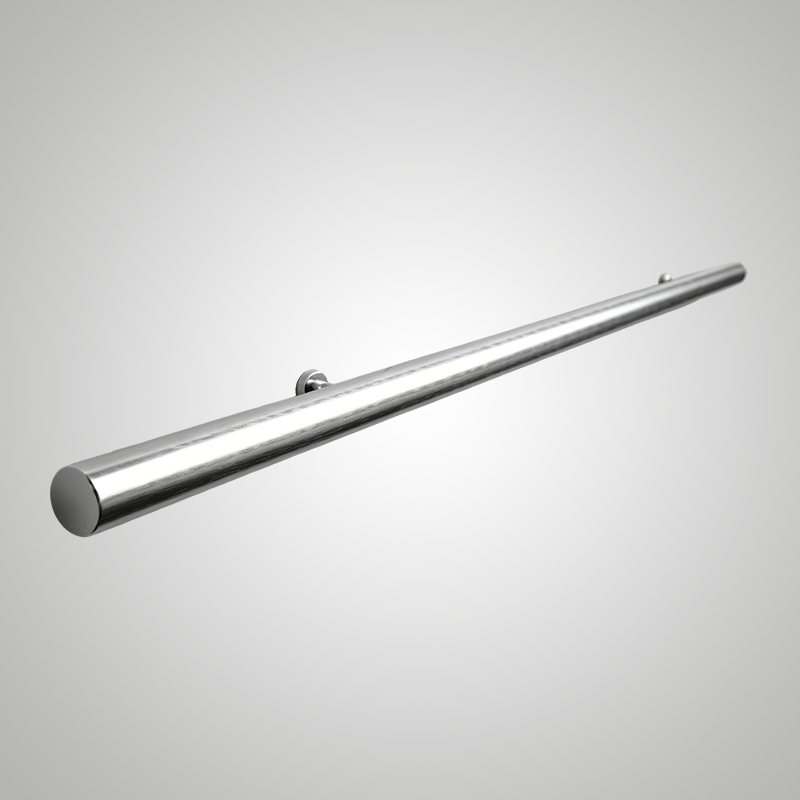
In modern elevator design, the handrail is more than a simple accessory. It is a point of contact, a safety feature, a design element, and a signal of overall cabin quality. The TO-VF01 elevator handrail is developed for projects that require reliable support, refined appearance, comfortable touch, and long service life within passenger elevators, panoramic and observation elevators, hospital elevators, home villa elevators, cargo elevators, car elevators, high-speed elevators, escalator-related environments, moving walk areas, and broader elevator cabin interior applications.
As an elevator handrail product, TO-VF01 is designed to help passengers maintain balance during travel, entering, and exiting. It also supports the visual rhythm of the elevator cabin, contributing to a clean, complete, and professional interior. For building owners, developers, contractors, architects, and elevator modernization teams, a well-made handrail can improve user experience while reducing concerns related to durability, maintenance, and long-term appearance.
TO-VF01 is offered by Tenau Elevator (China) Co., Ltd., a comprehensive elevator manufacturer with capabilities covering design, research and development, manufacturing, marketing, installation, and after-sales service. The company’s manufacturing philosophy emphasizes safety, environmental protection, intelligent production, and strict quality control. These strengths are especially important for elevator parts and cabin interiors, because every visible and touchable component must combine stable performance with architectural aesthetics.
This article explores the TO-VF01 elevator handrail from the perspective of product value, design advantages, manufacturing quality, project compatibility, and competitive differentiation. It also explains how advanced production systems, international management standards, and engineering experience contribute to a dependable elevator interior component suitable for many building types.
Why the Elevator Handrail Matters in Cabin Design
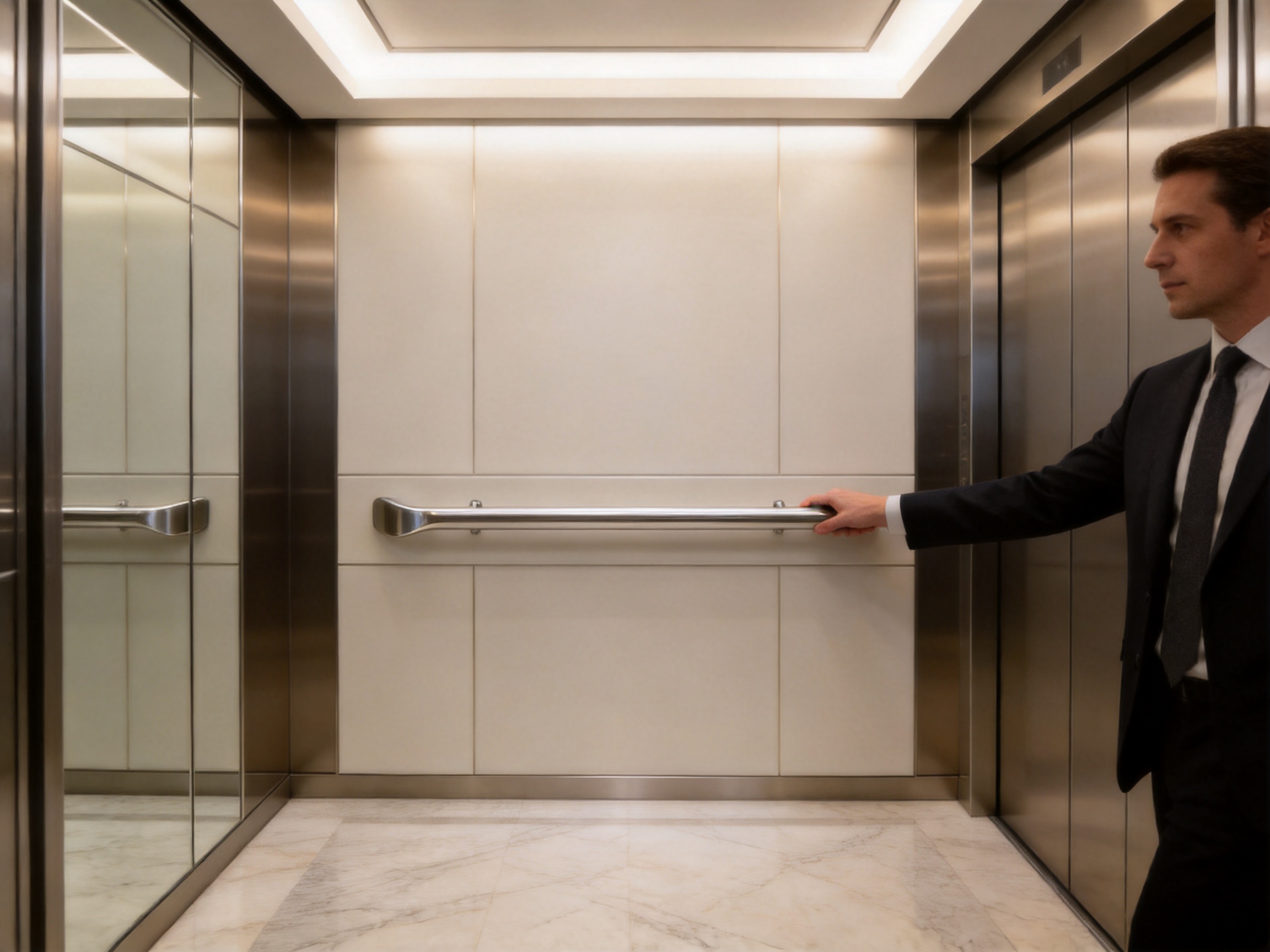
The elevator cabin is a compact public environment where users expect safety, comfort, cleanliness, and visual harmony. Among all interior components, the handrail is one of the few parts that passengers directly touch. Because of this, the handrail must satisfy several demands at the same time. It should be comfortable to grip, strong enough to withstand daily use, visually consistent with the cabin decoration, easy to clean, and durable in changing operating conditions.
In passenger elevators, handrails help riders feel secure, especially during acceleration, deceleration, and leveling. In hospital elevators, they are even more important because patients, elderly passengers, medical staff, and visitors may require additional balance support. In home villa elevators, the handrail often becomes part of the interior style and should match private residential decoration. In panoramic and observation elevators, the handrail must contribute to elegance without blocking the open visual experience. In cargo or car elevator applications, interior components must withstand more demanding use while remaining practical and dependable.
A high-quality handrail can also support accessibility goals. Many users may not rely on the handrail during every ride, but when support is needed, the component must be positioned, shaped, and finished in a way that encourages confident use. This makes the handrail an essential part of user-centered elevator design.
TO-VF01 is positioned as an elevator handrail solution for projects that value both form and function. It is not merely a decorative strip installed on the cabin wall. It is part of the passenger experience, part of the interior protection strategy, and part of the project’s quality impression.
Product Overview: TO-VF01 Elevator Handrail
TO-VF01 belongs to the Elevator Handrail category and is intended for integration into elevator cabin interiors. Its role is to provide stable hand support while complementing the overall appearance of the lift car. The product is suitable for new elevator installations as well as modernization projects where cabin interiors need to be refreshed or upgraded.
The design concept behind TO-VF01 focuses on practical elegance. A handrail must not appear bulky, fragile, or visually disconnected from the cabin. It should create a balanced line along the cabin wall, offering passengers an intuitive place to hold while reinforcing the sense of order in the interior. A refined handrail can make even a compact elevator cabin feel more complete and carefully engineered.
TO-VF01 can be considered by architects and project decision-makers who need an elevator interior component that aligns with professional lift standards. Its value lies in the combination of user comfort, durable construction, clean appearance, and compatibility with various elevator categories. Whether installed in a commercial office building, hotel, residential tower, medical facility, shopping center, villa, industrial facility, or public transportation-related environment, the handrail contributes to the perceived reliability of the elevator system.
Unlike low-cost generic handrails that may focus only on basic appearance, TO-VF01 is supported by the manufacturing and engineering background of a professional elevator company. This difference matters because elevator interiors are exposed to frequent use, cleaning chemicals, vibration, temperature variation, humidity, and possible impact. A handrail that looks acceptable during installation but deteriorates quickly can create maintenance costs and harm the image of the entire building. TO-VF01 is designed to address these concerns through quality-minded production and application understanding.
Key Advantages Over Ordinary Handrail Products
When comparing elevator handrails, many buyers first look at shape and price. However, a more accurate comparison should include material reliability, surface quality, ergonomic comfort, installation compatibility, manufacturing consistency, maintenance convenience, and supplier support. TO-VF01 offers advantages in these areas by combining product design with an advanced elevator manufacturing ecosystem.
One advantage is its suitability for diverse elevator types. Some handrails are designed only for basic passenger elevator cabins and may not match the expectations of hospital, villa, panoramic, high-speed, or heavy-use environments. TO-VF01 is part of a broader elevator parts and cabin interiors portfolio, allowing it to serve different project requirements with a professional elevator application perspective.
Another advantage is the focus on user comfort. A handrail that is too sharp, too thin, too slippery, or poorly positioned can reduce passenger confidence. TO-VF01 is intended to provide a reassuring contact point. Its design approach supports a clean grip experience and an integrated cabin appearance. For public buildings, where users vary widely in age and mobility, this comfort is a practical benefit rather than a minor detail.
Durability is also a key differentiator. Low-quality handrails may loosen, discolor, scratch easily, or develop uneven finishes after repeated cleaning and contact. TO-VF01 benefits from a manufacturing environment that emphasizes controlled production, quality inspection, and continuous improvement. This helps create a product that can maintain its appearance and performance over a longer lifecycle.
In addition, TO-VF01 stands out because it comes from a company with comprehensive elevator knowledge. Suppliers that manufacture only simple decorative parts may not fully understand elevator operating conditions. In contrast, Tenau Elevator (China) Co., Ltd. works across passenger elevators, freight elevators, escalators, moving walks, and related elevator solutions. This broader engineering experience helps ensure that interior parts such as handrails are considered in relation to cabin structure, passenger safety, installation requirements, and long-term maintenance.
Design Value: Safety, Comfort, and Visual Harmony
The ideal elevator handrail should be noticed for its quality but not distract from the overall cabin design. TO-VF01 follows this principle by serving both practical and aesthetic purposes. Its presence can make the cabin feel more secure, while its appearance can support a modern interior style.
Safety begins with stable support. During elevator movement, passengers may experience small changes in balance. This is especially true for elderly riders, children, people carrying luggage, and users with mobility challenges. A handrail provides a simple, immediate way to stabilize posture. Even in high-quality elevators with smooth operation, the psychological comfort of having a handrail can improve the user experience.
Comfort is closely connected to shape and finish. A well-designed handrail should feel natural to hold. It should not create discomfort during use or appear cold and uninviting in the cabin. The surface should be smooth, clean, and suitable for frequent touch. For hospital elevators and public facilities, easy cleaning is particularly important. A handrail that supports hygiene maintenance helps facility managers preserve a professional environment.
Visual harmony is equally important. Elevator cabins often use stainless steel, glass, decorative panels, mirrors, lighting systems, and flooring materials. The handrail must coordinate with these elements. If the handrail looks mismatched, the entire cabin may appear less refined. TO-VF01 is developed as an elevator interior component that can support a polished cabin image, helping designers create a complete and consistent environment.
For panoramic and observation elevators, the handrail can define the interior line without reducing the sense of openness. For home villa elevators, it can add a premium detail that aligns with residential comfort. For commercial passenger elevators, it can enhance durability and user confidence. For hospital elevators, it can support safety and ease of use. This flexibility gives TO-VF01 practical value across many building scenarios.
Manufacturing Strength Behind the Product
The performance of an elevator handrail depends not only on its visible design but also on the manufacturing system behind it. Tenau Elevator (China) Co., Ltd. originates from Germany and operates as a professional comprehensive elevator manufacturer integrating design, research and development, production, marketing, installation, and after-sales service. This integrated capability gives the company a strong foundation for producing elevator components that meet practical project needs.
The company is located in Nanxun, Zhejiang Province, at the core of the Shanghai-Nanjing-Suzhou-Hangzhou economic circle. This location supports access to industrial resources, logistics networks, technical talent, and regional manufacturing expertise. For international customers, a strong production base and organized export capability are important because elevator projects often require stable schedules, consistent quality, and responsive communication.
Tenau’s manufacturing philosophy is built around safety and environmental protection. In elevator production, safety is not limited to the main traction system or control technology. It also applies to every component passengers interact with, including cabin interiors and handrails. A product such as TO-VF01 benefits from a culture where quality, reliability, and user protection are central principles.
The company introduces international technologies and rigorous management systems. Compliance with ISO9001, ISO14001, and OHSMS18001 standards reflects attention to quality management, environmental management, and occupational health and safety management. These systems help maintain consistency across production processes and support a responsible manufacturing environment. For buyers, this means the supplier is not relying only on individual craftsmanship, but on structured process control.
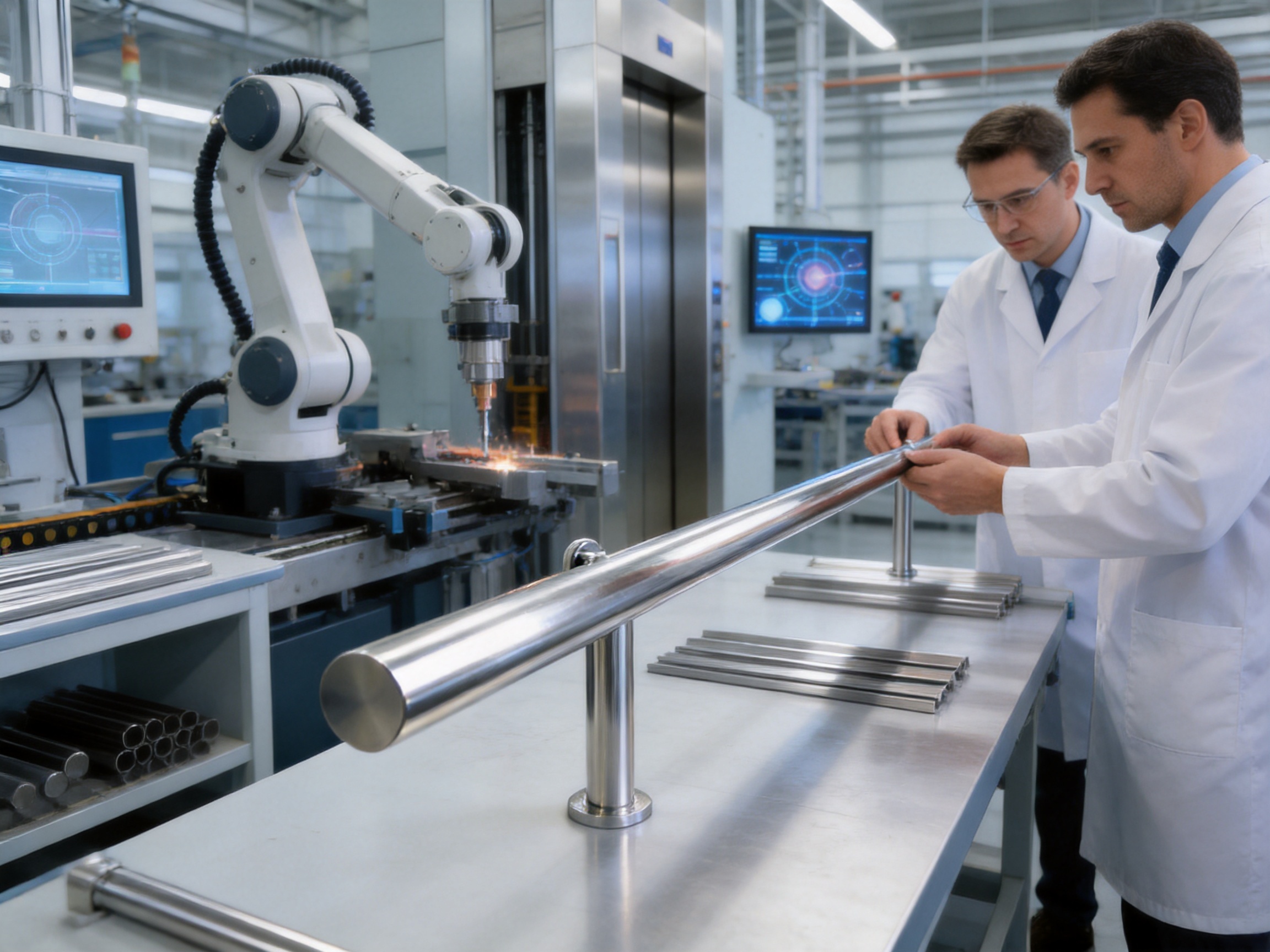
Tenau also applies German Industry 4.0 intelligent manufacturing concepts, automated production lines, big data, Internet of Things technology, and closed-loop quality control. These capabilities are especially valuable in modern elevator manufacturing, where repeatability, traceability, and process monitoring are essential. Even for a cabin interior part, precise production and inspection can influence appearance, fit, durability, and customer satisfaction.
Advanced Production Processes and Quality Control
Producing a reliable elevator handrail requires attention to multiple stages. These may include design confirmation, material selection, forming, surface treatment, dimensional control, assembly preparation, packaging, and final inspection. Each stage affects the finished product. TO-VF01 benefits from a manufacturing environment designed to manage these details efficiently.
Design and engineering review are the first steps. An elevator handrail must match cabin wall structure, installation points, user height expectations, and interior design requirements. A professional manufacturer evaluates these factors before production to reduce installation problems and ensure the product performs as intended. For customized elevator projects, engineering communication is particularly important.
Material control is another key stage. The handrail must remain stable under repeated passenger use and cleaning. Appropriate materials and finishing processes help resist wear and preserve appearance. In competitive comparison, inferior products may use inconsistent materials or weak surface treatment, leading to early deterioration. A controlled manufacturing system helps reduce these risks.
Forming and finishing processes influence both comfort and aesthetics. Small defects, uneven surfaces, sharp edges, or poor alignment can reduce product quality. Automated and standardized production methods support more consistent results. Skilled inspection teams then verify that finished components meet requirements before shipment.
Closed-loop quality control is especially important. Instead of inspecting only at the end, a closed-loop system monitors production feedback and uses data to improve processes. If a deviation occurs, the cause can be identified and corrected. This approach supports long-term stability and reduces the possibility of repeated defects. For customers ordering elevator handrails for multiple buildings or project phases, consistency from batch to batch is a major advantage.
Packaging and logistics are also part of product quality. Elevator interior components can be damaged during transportation if packaging is inadequate. A professional supplier understands that protection during shipment is essential. Proper packaging helps ensure the handrail reaches the project site in good condition, ready for installation.
Application Scenarios Across Elevator Categories
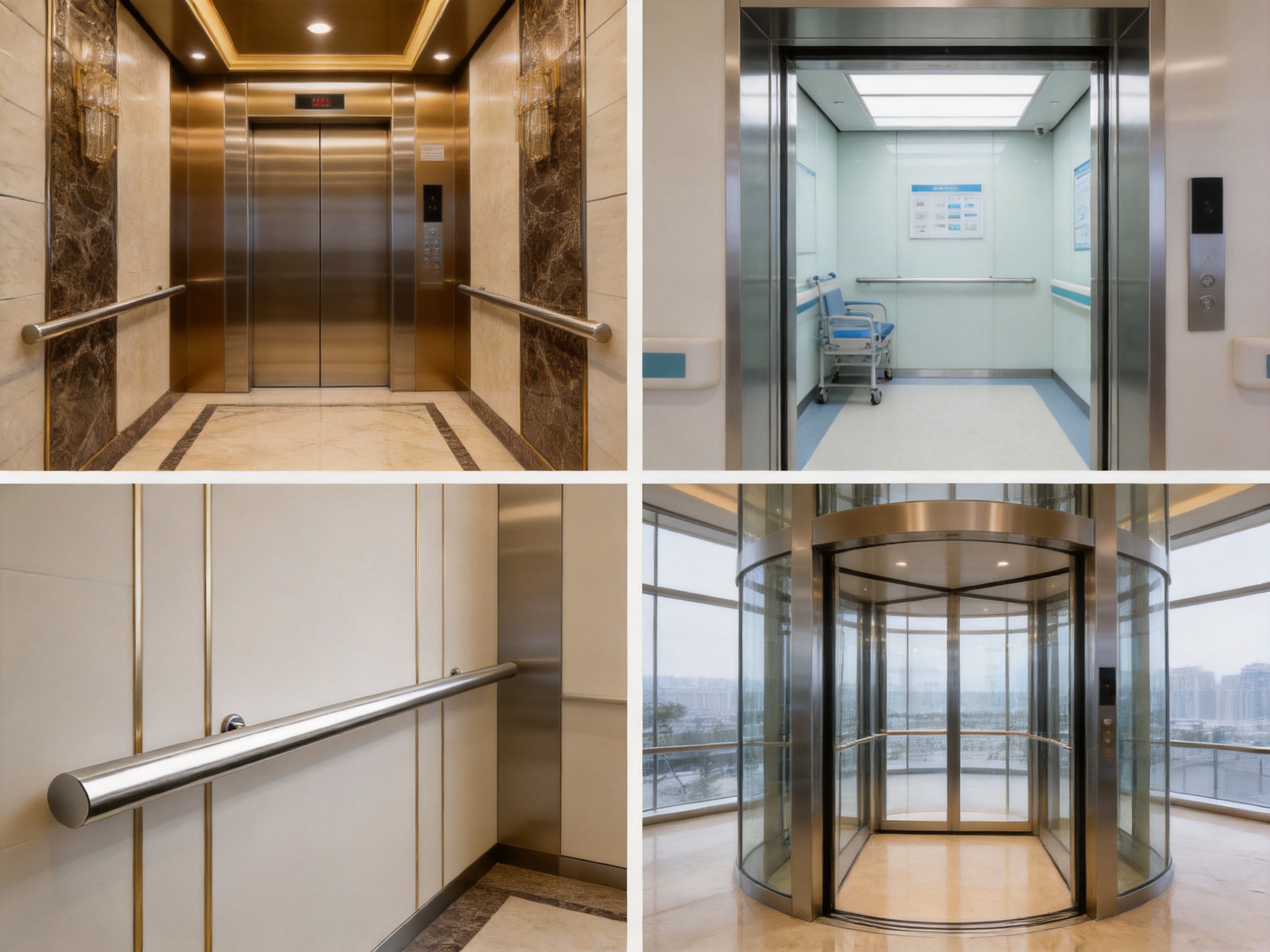
TO-VF01 can be applied across a broad range of elevator environments. Its value changes slightly depending on the building type, but the core benefits remain consistent: passenger support, interior refinement, and long-term reliability.
In passenger elevators, the handrail improves comfort for everyday users. Office workers, residents, visitors, and service personnel may use the same elevator many times each day. A durable handrail helps the cabin withstand frequent operation while maintaining a clean appearance.
In panoramic and observation elevators, the interior must feel elegant and visually open. The handrail should not disrupt transparency or scenic views. TO-VF01 can function as a subtle support element that complements the cabin rather than overwhelming it.
In hospital elevators, the need for support is more pronounced. Patients, older adults, medical staff, and people with limited mobility benefit from a stable handrail. Cleanability and durability are also crucial because hospital elevators require frequent sanitation and must maintain a professional image.
In home villa elevators, the handrail contributes to residential comfort and personal style. Villa owners often expect elevator interiors to match the quality of home decoration. A refined handrail helps create a premium, secure, and welcoming cabin environment.
In cargo elevators, durability and practicality are priorities. Although cargo elevators focus on goods transportation, personnel may still use the cabin during loading and unloading. A strong handrail can provide useful support and protect the interior design from feeling incomplete.
In car elevators, the handrail may support operators and users moving within a functional transport space. Components must be durable and resistant to practical wear. A reliable interior accessory helps maintain order in a demanding environment.
In high-speed elevators, every cabin component should reflect premium engineering. Smooth travel, quiet operation, stable interiors, and refined finishes all contribute to passenger confidence. A high-quality handrail supports this impression by aligning with the expectations of advanced elevator systems.
In escalator and moving walk related areas, handrail products and interior components are part of a broader passenger movement ecosystem. Although TO-VF01 is an elevator cabin handrail, the same commitment to safety, touch comfort, and durability applies across vertical and horizontal transportation spaces.
Comparison Table: TO-VF01 and Ordinary Elevator Handrails
| Comparison Aspect | TO-VF01 Elevator Handrail | Ordinary Low-Cost Handrail |
|---|---|---|
| Design Purpose | Developed as a professional elevator cabin interior component balancing safety, comfort, and appearance. | Often designed mainly as a basic decorative or support part with limited engineering consideration. |
| Application Range | Suitable for passenger, panoramic, hospital, villa, cargo, car, and high-speed elevator environments. | May be limited to simple passenger elevator cabins or low-demand applications. |
| Manufacturing Support | Backed by a comprehensive elevator manufacturer with design, R&D, production, and service capabilities. | May come from suppliers with limited elevator system knowledge. |
| Quality Control | Supported by structured management systems, automated production concepts, and closed-loop inspection. | Quality may depend heavily on manual checks or inconsistent batch control. |
| User Experience | Focuses on stable support, comfortable contact, and visual harmony within the cabin. | May provide basic support but lack ergonomic refinement or premium appearance. |
| Long-Term Value | Designed to help reduce maintenance concerns and preserve cabin quality over time. | May require earlier replacement due to wear, looseness, or finish deterioration. |
How TO-VF01 Supports Modern Building Projects
Modern building projects are evaluated not only by structural strength and architectural appearance, but also by everyday user experience. Elevators are among the most frequently used systems in many buildings. A visitor may not inspect the mechanical room or controller, but they will notice the cabin interior immediately. The handrail, as a visible and touchable component, contributes to that impression.
For developers, TO-VF01 can support a higher-quality elevator presentation. In residential buildings, well-designed cabin interiors can strengthen buyer confidence. In hotels, every interior detail contributes to guest perception. In commercial towers, durable elevator parts help maintain a professional environment despite heavy traffic. In hospitals, safety and hygiene-related design details are essential. In villas, aesthetics and comfort are closely connected to owner satisfaction.
For architects and interior designers, a good handrail provides a practical way to complete the cabin design. It can define horizontal lines, balance wall panel proportions, and coordinate with lighting and materials. The handrail should look intentional, not like an afterthought. TO-VF01 can serve as a carefully integrated element within the cabin composition.
For elevator contractors and modernization teams, installation compatibility and supplier reliability matter. A component that is difficult to install or inconsistent in dimension can create delays and site problems. A professional manufacturing background helps reduce these risks by supporting more predictable product quality and engineering communication.
For facility managers, maintenance is a key concern. A handrail must remain clean, stable, and visually acceptable after repeated use. Products that require frequent repair or replacement increase operating costs. TO-VF01’s value includes the potential to support long-term cabin performance and reduce avoidable maintenance pressure.
Company Capabilities That Strengthen Product Confidence
Tenau Elevator (China) Co., Ltd. has developed as a professional elevator manufacturer with a wide product and solution range. Its offerings include passenger elevators, freight elevators, escalators, moving walks, and related elevator solutions. The company also has advanced capabilities in the design, research and development, and manufacturing of low-speed, medium-speed, high-speed, and ultra-high-speed elevators.
This broad technical background is important for a handrail product because elevator components should not be considered in isolation. A cabin handrail exists within a system that includes the car structure, door operation, lighting, ventilation, control panel, wall panels, flooring, and passenger flow. A manufacturer with system-level elevator experience can better understand how each interior component contributes to overall safety and comfort.
The company’s adoption of intelligent manufacturing supports stable production. German Industry 4.0 concepts emphasize digitalization, automation, data integration, and intelligent process management. In elevator manufacturing, this approach can improve precision, reduce variation, and support quality traceability. For customers, it provides confidence that products are produced within a modern and organized industrial environment.
Automated production lines contribute to efficiency and consistency. While skilled workers remain important, automation helps control repetitive processes and reduce variation. Combined with quality inspection, automated manufacturing can create more predictable outcomes, especially for projects requiring multiple units or standardized finishes.
Big data and Internet of Things technology support monitoring and process improvement. Data can reveal trends, identify bottlenecks, and support preventive quality management. A full closed-loop quality control system means that feedback from inspection, production, and service can be used to refine processes. This improves not only major elevator equipment but also related components such as cabin interiors and handrails.
The company’s international outlook is another strength. With exports to many countries and regions worldwide, Tenau understands that different markets may have different project expectations, building types, and customer priorities. This experience helps support communication with global buyers looking for high quality elevator products and world-class elevator solutions.
Environmental and Safety-Oriented Manufacturing Philosophy
Elevator products are long-term infrastructure elements. They should be designed and manufactured with attention to safety, resource responsibility, and lifecycle value. Tenau’s mission emphasizes safety and environmental protection, which aligns with global expectations for sustainable and responsible building systems.
For a handrail product, environmental responsibility may be reflected in efficient production, controlled material use, reduced waste, durable design, and long service life. A product that lasts longer can reduce replacement frequency and material consumption. A clean and well-managed manufacturing process also supports responsible industrial development.
Safety-oriented thinking affects every detail. The handrail must be secure during use, comfortable to touch, and appropriate for public environments. Edges, surfaces, installation stability, and material reliability all influence safety. In competitive markets, some suppliers may compete mainly on price and overlook these details. TO-VF01 is strengthened by a company culture that treats safety as a central mission.
Quality management standards also support this philosophy. ISO9001 helps guide consistent quality processes. ISO14001 supports environmental management. OHSMS18001 reflects occupational health and safety management. Together, these systems indicate that the company works through structured procedures rather than informal production habits. For project buyers, this reduces uncertainty and supports supplier evaluation.
Long-Term Maintenance Benefits
Maintenance is one of the most important factors in elevator cabin interior selection. Even if a handrail appears attractive at installation, it must remain functional and presentable after years of use. TO-VF01 is valuable because it is designed with the realities of elevator operation in mind.
Frequent touch is unavoidable. In busy buildings, hundreds or thousands of passengers may use the elevator daily. The handrail may be held by users with clean hands, wet hands, gloves, bags, tools, or medical equipment nearby. It may be exposed to cleaning products, dust, humidity, and accidental impact. A weak handrail may quickly show scratches, stains, looseness, or surface problems.
A reliable handrail reduces service interruptions. If a handrail becomes loose or damaged, facility managers must arrange repair, which may require elevator downtime or temporary restrictions. In hospitals, hotels, and office buildings, such disruptions can be inconvenient. Selecting a better product from the beginning can reduce these risks.
Cleaning convenience is also important. Elevator interiors should be easy to maintain because they are shared spaces. Smooth surfaces and stable finishes help cleaning staff work efficiently. A product that traps dirt, corrodes easily, or reacts poorly to cleaning routines can create hygiene and appearance problems. TO-VF01 supports the goal of a cleaner, more professional elevator environment.
Long-term appearance affects building image. Users may not know the technical details of the elevator, but they can easily see worn interiors. A damaged or poorly finished handrail suggests neglect. A stable and refined handrail helps the elevator cabin continue to reflect the building’s quality standards.
Role in Elevator Modernization
Elevator modernization is a growing need in many buildings. As elevators age, owners often upgrade control systems, doors, machines, lighting, and cabin interiors. Replacing or upgrading the handrail can be a relatively small change with noticeable impact. TO-VF01 can be considered for modernization projects that aim to improve both safety and appearance.
In older elevators, handrails may be outdated, worn, loose, or inconsistent with new wall panels. A modern handrail can refresh the cabin and make the elevator feel more secure. When combined with updated lighting, panels, flooring, and control fixtures, a new handrail contributes to a complete renovation effect.
Modernization projects often require careful coordination because existing cabin dimensions and structures may vary. A professional elevator manufacturer can provide better support than a generic parts supplier. Understanding elevator cabin requirements helps ensure that the handrail is suitable for the intended installation environment.
For building owners, modernization is often about balancing cost and value. A high-quality handrail is a practical investment because it improves daily passenger experience and can help reduce future maintenance problems. It also supports compliance with modern expectations for accessible, comfortable, and attractive public spaces.
Procurement Considerations for Buyers
When selecting an elevator handrail, buyers should consider more than the product image. The right procurement decision should include product suitability, supplier capability, manufacturing standards, quality consistency, export experience, and after-sales support. TO-VF01 is supported by a company that can address these concerns through comprehensive elevator industry experience.
Buyers should first identify the elevator type and building environment. A hospital elevator may require different priorities than a villa elevator. A high-traffic commercial elevator may need stronger wear resistance than a private residential lift. A panoramic elevator may prioritize minimal visual obstruction and refined styling. TO-VF01’s broad application potential makes it suitable for many of these scenarios.
Next, buyers should consider the overall cabin design. The handrail should coordinate with wall panels, mirrors, control panels, lighting, doors, and flooring. A mismatched component can reduce the value of the entire interior design. Selecting a professional product helps create a more cohesive result.
Buyers should also evaluate supplier reliability. International elevator projects require clear communication, stable production, and timely delivery. Tenau provides contact channels including export email and phone support, and its manufacturing base in Zhejiang Province supports organized production and logistics. This is valuable for contractors and distributors managing multiple project requirements.
Finally, buyers should consider lifecycle cost. The cheapest handrail may not be the most economical if it requires early replacement or frequent repair. TO-VF01 offers value through quality-oriented production, durable design intent, and professional supplier support. For long-term building operation, these factors can be more important than initial price alone.
Q&A: Common Questions About TO-VF01 Elevator Handrail
What is TO-VF01?
TO-VF01 is an elevator handrail product designed for elevator cabin interiors. It provides passenger support, improves cabin safety, and contributes to a refined interior appearance.
Which elevator types can use this handrail?
It can be considered for passenger elevators, panoramic and observation elevators, hospital elevators, home villa elevators, cargo elevators, car elevators, high-speed elevators, and elevator cabin interior projects.
Why is an elevator handrail important?
An elevator handrail helps passengers maintain balance, especially during entering, exiting, acceleration, and deceleration. It also improves comfort for elderly users, patients, children, and passengers carrying luggage.
How does TO-VF01 differ from ordinary handrails?
TO-VF01 is supported by a professional elevator manufacturer with design, R&D, manufacturing, quality control, and service capabilities. Compared with ordinary low-cost handrails, it emphasizes durability, comfort, visual harmony, and long-term value.
Is the handrail suitable for hospital elevators?
Yes. Hospital elevators benefit from stable handrails because patients, elderly passengers, medical staff, and visitors may need additional support. Clean appearance and durability are also important in medical environments.
Can it be used in elevator modernization projects?
Yes. Replacing an old or worn handrail can improve the safety, appearance, and comfort of an existing elevator cabin. TO-VF01 can be considered as part of a broader interior modernization plan.
What manufacturing strengths support this product?
The product is supported by Tenau Elevator (China) Co., Ltd., which uses international technologies, intelligent manufacturing concepts, automated production lines, big data, Internet of Things technology, and closed-loop quality control systems.
What quality management systems does the company follow?
The company complies with ISO9001, ISO14001, and OHSMS18001 standards, supporting quality management, environmental management, and occupational health and safety management.
Why should buyers consider supplier capability when choosing a handrail?
Supplier capability affects product consistency, installation suitability, delivery reliability, and after-sales support. A professional elevator manufacturer can better understand the requirements of elevator cabin components than a basic decorative parts supplier.
How can international buyers contact the company?
International buyers can contact Tenau Elevator (China) Co., Ltd. by email at export@tenau.com.cn or by phone at +86-18601458867. The company is located in Nanxun Economic Development Zone, Huzhou City, Zhejiang Province, P.R. China.
Conclusion
TO-VF01 elevator handrail is a practical and elegant cabin interior component designed to improve passenger support, enhance visual quality, and contribute to long-term elevator reliability. In modern buildings, small interior details can strongly influence user perception. A handrail is one of the most visible and frequently touched elevator components, making its quality especially important.
The product’s advantages come not only from its design purpose but also from the manufacturing strength behind it. Tenau Elevator (China) Co., Ltd. integrates elevator design, R&D, manufacturing, marketing, installation, and after-sales service. Its use of intelligent manufacturing, automated production, international management systems, and closed-loop quality control provides a strong foundation for dependable elevator parts and cabin interiors.
Compared with ordinary low-cost handrails, TO-VF01 offers stronger value through broader application suitability, better product confidence, improved cabin harmony, and professional supplier support. It can serve passenger elevators, panoramic elevators, hospital elevators, villa elevators, cargo elevators, car elevators, high-speed elevators, and modernization projects. For architects, developers, contractors, facility managers, and international buyers, it represents a smart choice for projects where safety, appearance, and durability all matter.
In a competitive elevator market, the best solutions are those that combine engineering reliability with user-centered design. TO-VF01 demonstrates how a well-made handrail can support that goal, helping elevator cabins become safer, more comfortable, and more refined for everyday use.
References
International Organization for Standardization. ISO9001 Quality Management Systems: Requirements.
International Organization for Standardization. ISO14001 Environmental Management Systems: Requirements with Guidance for Use.
Occupational Health and Safety Management Systems. OHSMS18001 Standard Guidance and Implementation Principles.
Elevator World Editorial Resources. Principles of Elevator Interior Design and Passenger Safety.
Building Transportation Standards Review. Accessibility, Cabin Components, and Passenger Support in Vertical Transportation.
Industrial Manufacturing Research. Industry 4.0, Automation, Data Integration, and Closed-Loop Quality Control in Modern Production.
Product: TO-VF01

Related Products
Related News
Built on safety, forging trust in vertical mobility.
lf you have any questions or need help, feel free to contact with our team.
 export@tenau.com.cn
 +86-18601458867
 +86-512-65059883
Elevator & Escalator
Factory Add
East of Xicheng Road, North of Lianyi Road, Nanxun Economic Development Zone, Nanxun District, Huzhou City, Zhejiang Province, P.R.China
Copyright © Tenau Elevator (China) Co., Ltd. All Rightd Reserved.
Custom High Quality Elevator Suppliers and World Brand Elevator Company