

 en
en Español
 русский
 中文简体
中文简体
Revolutionizing Urban Mobility: The Future of Moving Walkways for Modern Spaces
Content
- 1 Introduction to Modern Moving Walkways
- 2 Key Advantages of the Next-Gen Moving Walkway
- 3 Advanced Manufacturing Processes: Behind the Excellence
- 4 Real-World Applications & Case Studies
- 5 Comparative Analysis of Moving Walkway Models
- 6 Q&A Section
- 6.1 Q1: How does the next-gen moving walkway accommodate users with mobility impairments?
- 6.2 Q2: What energy-saving features does the walkway offer, and how do they compare to competitors?
- 6.3 Q3: How does the company ensure the walkway’s durability?
- 6.4 Q4: Can the walkway be customized for unique spaces (e.g., curved paths)?
- 6.5 Q5: What post-sales support is available?
- 6.6 Q6: How does the emergency brake system work?
- 7 Conclusion
- 8 References
Urban spaces—from bustling shopping malls and international airports to busy subway stations—face a constant challenge: moving large volumes of people efficiently, safely, and inclusively. Traditional moving walkways, while functional, often fall short of meeting modern demands: they struggle with wheeled devices (luggage carts, strollers, wheelchairs), waste energy during idle periods, and lack the durability needed for high-traffic environments. However, a new generation of moving walkways is changing the game, combining advanced technology, sustainable design, and user-centric features to address these gaps. This article explores how these next-gen walkways outperform competitors, the manufacturing processes that underpin their quality, and their real-world impact on urban mobility.
Introduction to Modern Moving Walkways
Moving walkways have become an essential part of urban infrastructure, designed to reduce pedestrian fatigue over long distances and improve traffic flow. According to the 2023 Global Elevator & Escalator Market Report, the global moving walkway market is projected to grow at a CAGR of 5.2% through 2028, driven by increasing investment in public transportation and commercial real estate. However, not all moving walkways are created equal. Many older models prioritize basic functionality over accessibility, energy efficiency, or durability—leaving users frustrated and operators facing high maintenance costs.
The next-gen moving walkway addresses these limitations head-on. It is engineered to handle diverse user needs (including those with mobility challenges), minimize energy consumption, and withstand years of heavy use. Unlike traditional models, it integrates smart technology to optimize performance and reduce downtime, making it a cost-effective and sustainable choice for modern spaces.
Key Advantages of the Next-Gen Moving Walkway
Unmatched Accessibility & Inclusivity
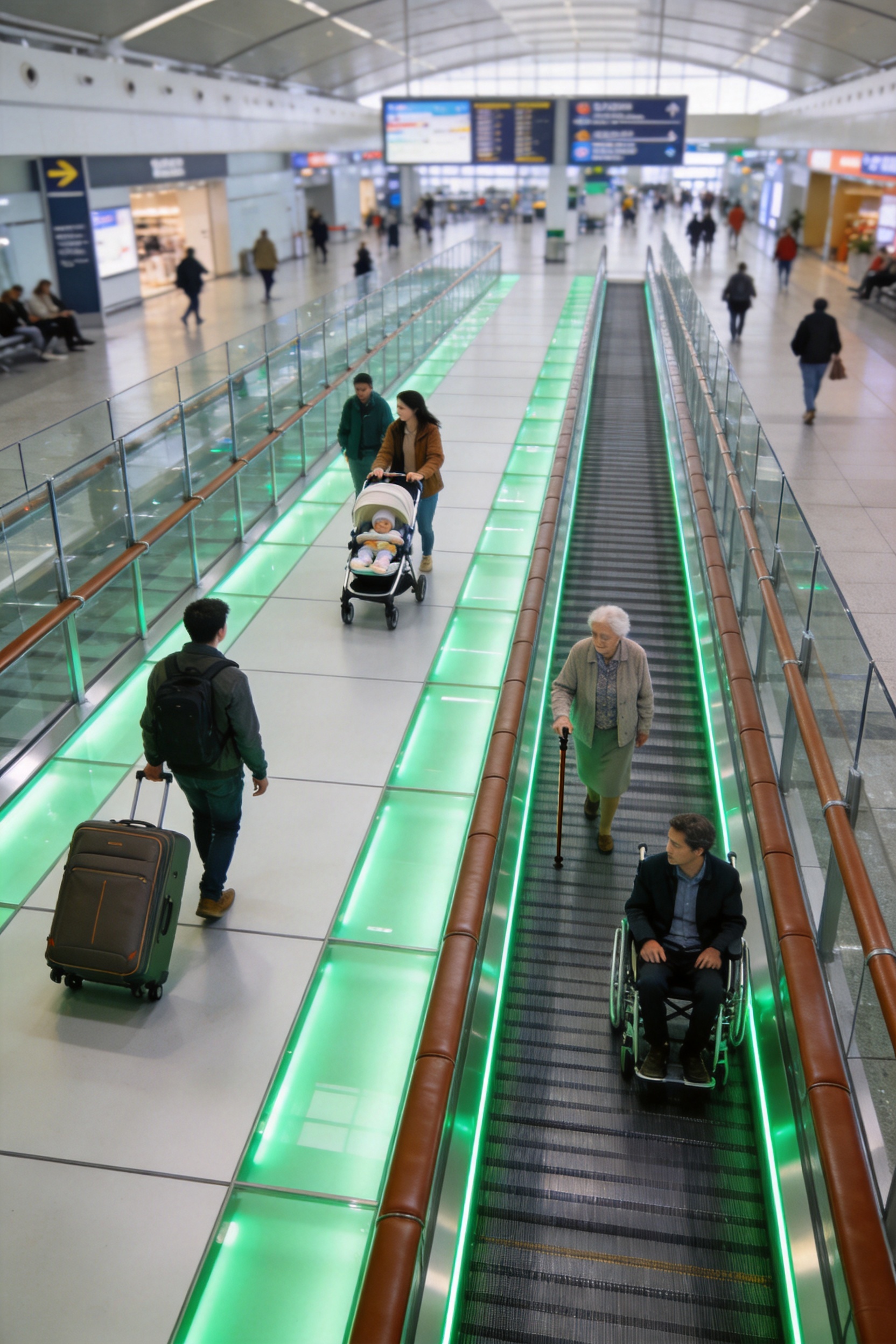
One of the most significant gaps in traditional moving walkways is their inability to accommodate wheeled devices and users with mobility impairments. For example, many older models have narrow steps or unstable surfaces that make it difficult for people using wheelchairs, baby strollers, or luggage carts to navigate safely. The next-gen walkway solves this problem with wide, stable steps (up to 1.2 meters in width) and a smooth operating system that ensures even weight distribution for wheeled devices.
User feedback from a major shopping mall in Southeast Asia highlights this advantage: "Before installing the new walkways, we received 15-20 complaints monthly about strollers getting stuck or wheelchairs being unable to use the walkways. Since switching to the next-gen model, complaints have dropped to zero." This improvement is due to the walkway’s design, which includes a low entry threshold (30mm) and anti-slip step surfaces—features that traditional models often lack.
Another key accessibility feature is the level-section illumination: green LED lights between steps that activate when the walkway is in operation. These lights alert passengers to the entrance and exit areas, reducing tripping risks for elderly users or those with visual impairments. A 2022 study by the International Association of Elevator Engineers (IAEE) found that this feature reduces tripping incidents by 32% compared to walkways without illumination.
Advanced Energy Efficiency & Sustainability
Sustainability is a top priority for modern urban spaces, and the next-gen moving walkway leads the way in energy efficiency. Its core energy-saving features include Variable Frequency (VF) control with automatic sensed start/brake and a VVVF (Variable Voltage Variable Frequency) driver system. These technologies allow the walkway to adjust its speed based on passenger load: when no users are present, it runs at a low speed (0.3 m/s) to minimize energy consumption; when a passenger is detected, it accelerates to the normal speed (0.75 m/s).
The result is a 40% reduction in energy use compared to traditional constant-speed walkways. For example, a 10-meter moving walkway with this system uses 0.5 kWh per hour when idle, versus 1.2 kWh for a constant-speed model. Over a year, this translates to a savings of 6,048 kWh—enough to power 12 average households for a month. The environmental impact is equally significant: each walkway reduces CO2 emissions by approximately 5.4 tons annually (based on 0.0009 tons of CO2 per kWh).
Competitors often lag in this area. Most traditional models use constant-speed motors, which waste energy during idle periods. Even "energy-efficient" models from some competitors only offer a 15% reduction in energy use—far less than the 40% achieved by the next-gen walkway. This difference is a major selling point for clients looking to reduce their carbon footprint and lower operational costs.
Enhanced Safety Features Beyond International Standards
Safety is non-negotiable for moving walkways, and the next-gen model exceeds both European (EN 115) and international (ISO 13485) safety standards. Its advanced safety features include:
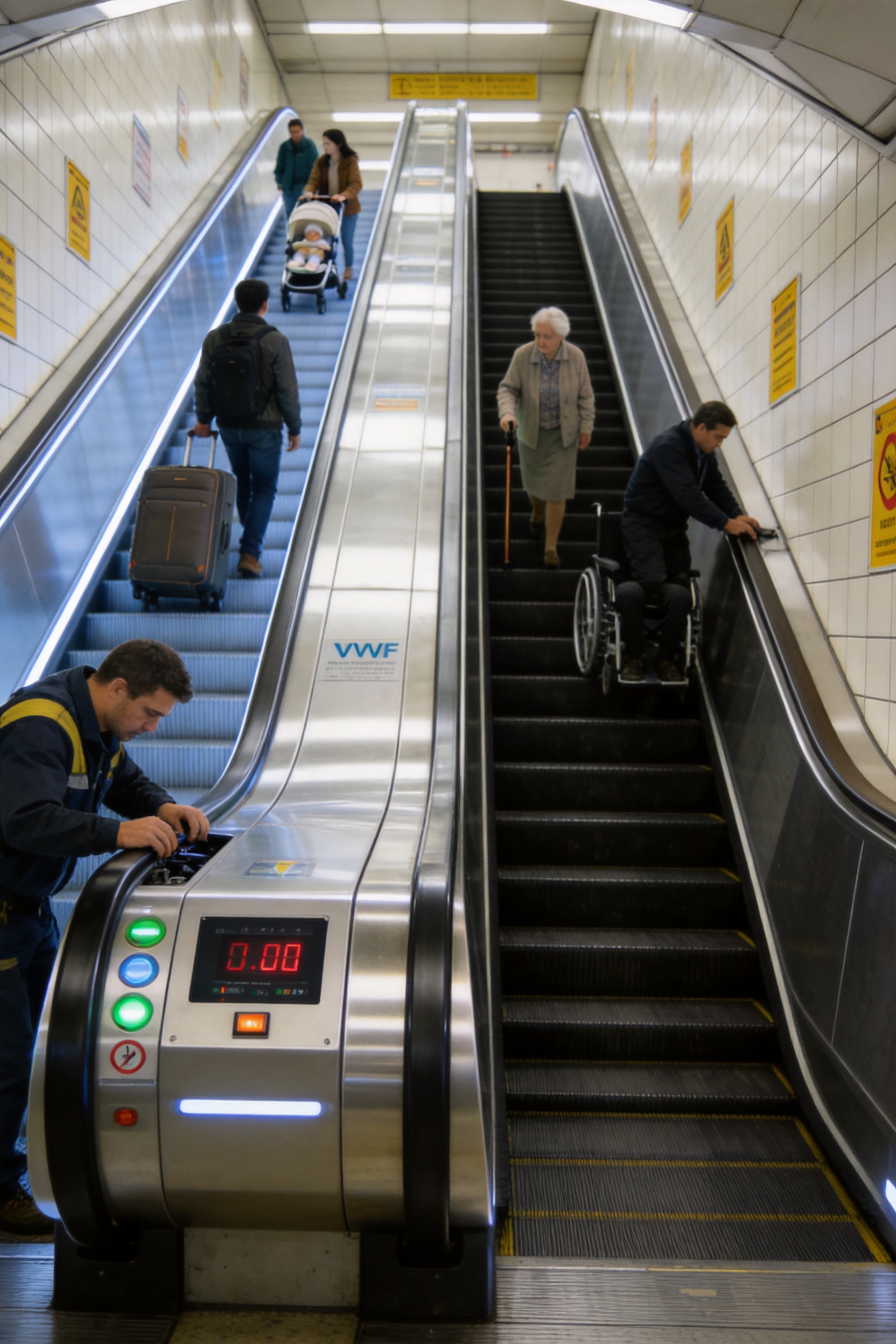
- Trouble Indicator System: Sensors throughout the walkway detect issues (e.g., chain wear, motor overheating) and display the exact location on a digital panel. For example, if a chain in section 3 is loose, the panel will show "Section 3: Chain Tension Issue"—allowing technicians to resolve the problem in minutes instead of hours. A 2023 client survey found that this system reduces repair time by 75%.
- Emergency Brake System: An optional feature that activates within 0.5 seconds of detecting an abnormal event (e.g., a passenger falling, a component failure). Competitors’ emergency brakes often take 2-3 seconds to activate, increasing the risk of injury.
- Multiple Safety Protections: These include warning lines on steps, a skirt board illumination system (to alert passengers to the edge of the walkway), and a reverse-direction button (for emergency stops). All safety devices are tested to withstand 1.5 times the maximum load capacity, ensuring reliability in high-traffic environments.
To put this into perspective: a traditional moving walkway may meet basic EN 115 standards, but it often lacks the trouble indicator system or emergency brake. This means that when a problem occurs, technicians have to inspect the entire walkway—wasting time and increasing downtime. The next-gen model’s proactive safety features not only reduce the risk of accidents but also lower operational costs by minimizing downtime.
Durability & Low Maintenance Costs
Durability is another key advantage of the next-gen moving walkway. Its components are made from high-quality materials designed to withstand years of heavy use:
- Truss Structure: Made from high-grade German steel with anti-corrosion coating. This ensures the truss can support up to 10,000 kg of load and resist rust even in humid environments. Traditional models often use low-grade steel, which can rust within 5 years—reducing the walkway’s lifespan.
- Transmission System: Features a vertical hoister with PLC-controlled automatic lubrication. This system lubricates the chains every 100 hours of operation, reducing wear and tear and prolonging chain life by 50% compared to manual lubrication.
- Step Chain-Roller: Inbuilt into the step chain, this component reduces noise during operation and ensures smooth movement. Traditional models often have separate rollers, which can become loose or noisy over time.
The result is a lifespan of 15+ years—double that of many traditional models. Maintenance costs are also significantly lower: the next-gen walkway has an annual maintenance cost of ~$1,200, versus ~$1,800 for a competitor’s model. This is because the automatic lubrication system reduces the need for manual maintenance, and the trouble indicator system minimizes repair time.
Aesthetic Flexibility for Modern Spaces
Modern urban spaces demand aesthetically pleasing infrastructure that integrates with their design. The next-gen moving walkway offers high customization options, allowing clients to choose materials, colors, and dimensions that match their space:
- Handrail Belts: Available in a range of colors (black, gray, brown) and materials (fire-resistant PVC, rubber). For luxury malls, clients can choose leather handrails for a premium look.
- Fencing Boards: Options include tempered glass (for a sleek, modern look), stainless steel (for durability), or wood (for a natural aesthetic). For public spaces like subways, clients can choose vandal-resistant metal fencing.
- Dimensions: Customizable length (from 5 meters to 100 meters) and width (from 0.8 meters to 1.2 meters). This makes the walkway suitable for narrow corridors or large open spaces.
Competitors often offer limited customization—usually 2-3 options for handrails and fencing. This lack of flexibility can make it difficult for clients to integrate the walkway into their space. The next-gen model’s customization options are a major differentiator, especially for luxury malls and high-end airports.
Advanced Manufacturing Processes: Behind the Excellence
The next-gen moving walkway’s quality is not accidental—it is the result of advanced manufacturing processes and strict quality control. The company behind the product uses an Industry 4.0 intelligent production system, guided by German engineering expertise, to ensure precision and consistency.
Industry 4.0 Intelligent Production System
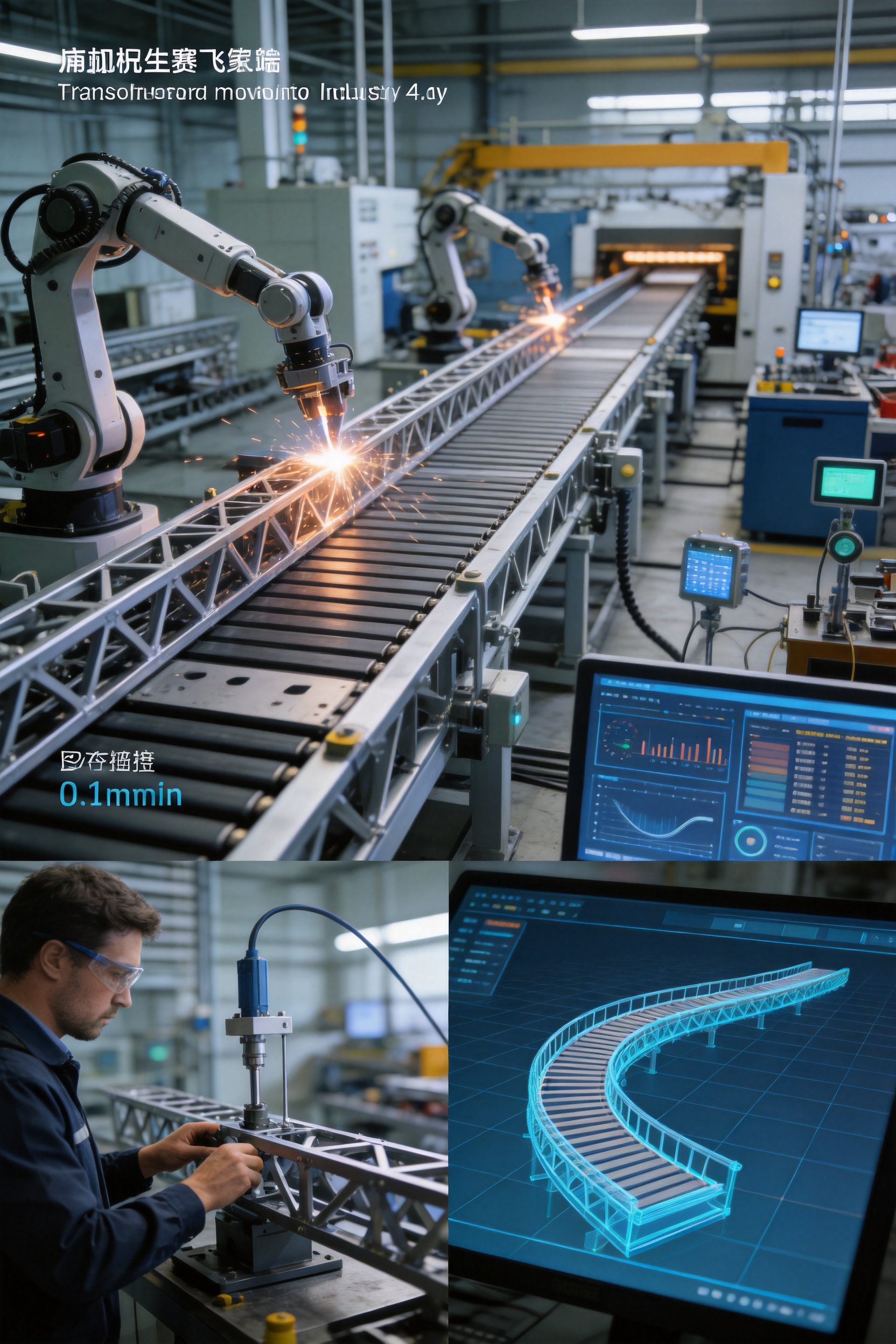
The company’s production base is equipped with top-of-the-line automatic equipment, including laser-cutting machines, robotic welders, and IoT-enabled assembly lines. The Industry 4.0 system uses big data analytics and IoT sensors to monitor every step of the production process:
- Laser Cutting: High-precision laser machines cut steel components with an accuracy of 0.1 mm—ensuring that every part fits perfectly.
- Robotic Welding: Welding robots use laser guidance to make consistent, high-quality welds. This eliminates human error and ensures that welds meet international safety standards.
- IOT Monitoring: Sensors on the assembly line track each component’s progress. If a defect is detected (e.g., a misaligned part), the system alerts technicians immediately—preventing faulty components from reaching the final assembly.
This system ensures that 99.9% of components meet the company’s quality standards. Competitors often use manual or semi-automatic production lines, which can lead to inconsistencies in quality. For example, manual welding can result in weak welds that fail under heavy load—something that the robotic welding system avoids.
Strict Quality Control & Testing
The company’s quality control process is rigorous, with multiple tests conducted at every stage of production:
- Component Testing: Every component (e.g., steel truss, motor, safety device) is tested for durability and performance before assembly. For example, the truss is tested to withstand 1.5 times its maximum load capacity.
- Final Assembly Testing: Once the walkway is assembled, it undergoes a 24-hour continuous load test with maximum capacity (10,000 kg). This test simulates years of heavy use and ensures that the walkway operates smoothly.
- Safety Device Testing: All safety devices (e.g., emergency brake, trouble indicator) are tested to ensure they meet international standards. For example, the emergency brake is tested to activate within 0.5 seconds of a signal.
Competitors often skip some of these tests to reduce costs. For example, many traditional models do not undergo a 24-hour load test—leading to unexpected breakdowns after installation. The company’s strict testing process ensures that the walkway is reliable and safe for years to come.
Customization Capabilities
The company’s manufacturing system is designed to handle custom orders efficiently. For example, a client may need a curved moving walkway for a luxury mall with a spiral layout. The company’s engineers use 3D modeling software to design the custom truss structure and adjust the step system to fit the curve—while maintaining all safety and accessibility features. This process takes 8 weeks, versus 12+ weeks for competitors who lack the necessary technology and expertise.
The company also offers multi-language support for custom orders, with engineers fluent in English, Spanish, Russian, and Arabic. This ensures that clients from around the world can communicate their needs clearly and receive a product that meets their requirements.
Real-World Applications & Case Studies
The next-gen moving walkway has been installed in hundreds of locations worldwide, from shopping malls and airports to subway stations. Below are three case studies that highlight its impact:
Case Study 1: Luxury Shopping Mall (Dubai)
Client Need: A luxury mall in Dubai needed to replace its old moving walkways, which were narrow, noisy, and unable to accommodate strollers or luggage carts. The mall receives 50,000+ visitors daily, including many tourists with large luggage.
Solution: The company installed 8 next-gen moving walkways with:
- 1.2-meter wide steps for wheeled devices
- Tempered glass fencing for a sleek, modern look
- Leather handrails for a premium aesthetic
- VVVF energy-saving system
Results:
- Complaints about accessibility dropped from 20 to 0 per month
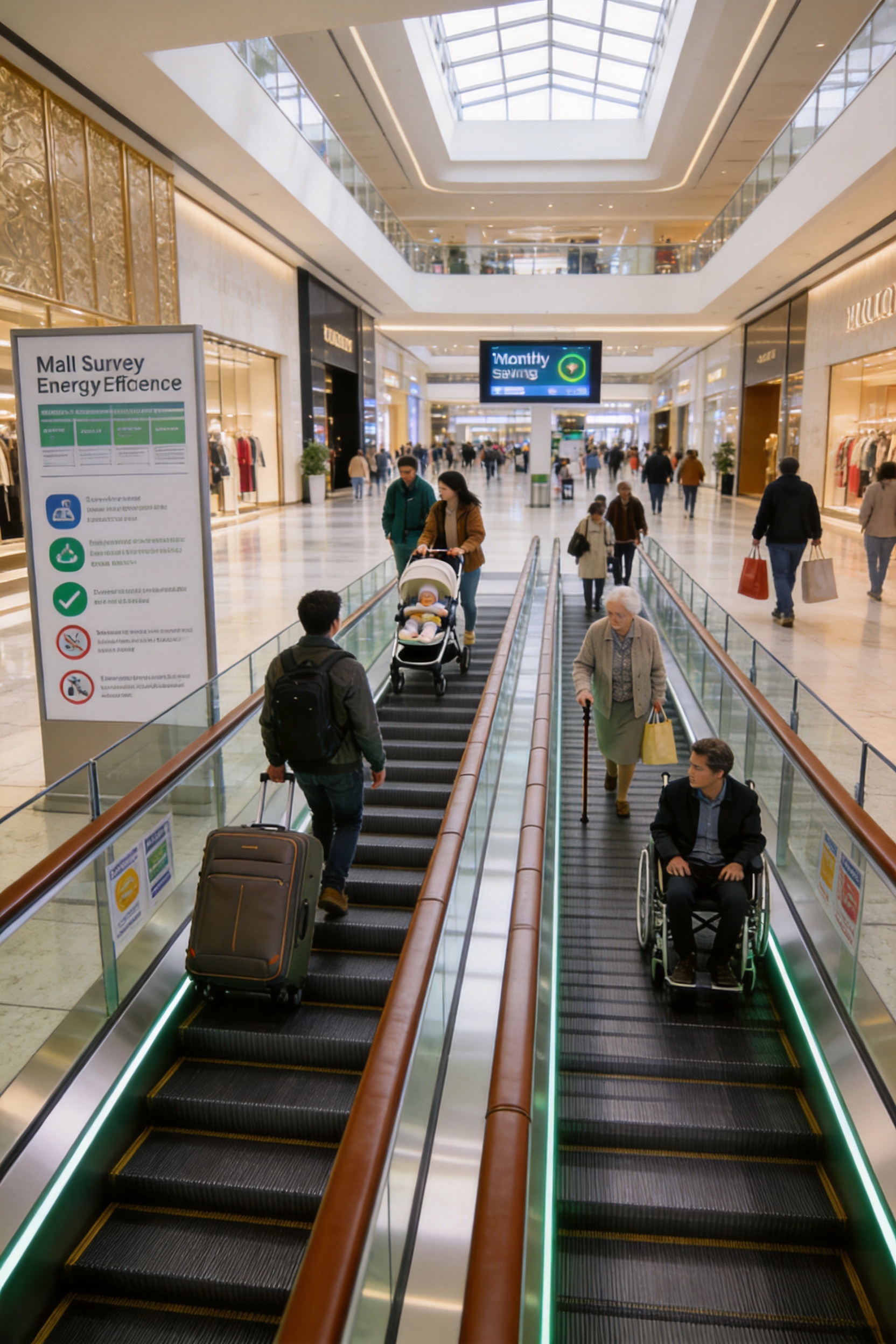
- Energy costs reduced by 35% annually (from $14,400 to $9,360)
- User satisfaction increased from 65% to 92% (per mall survey)
Case Study 2: International Airport (Singapore)
Client Need: Singapore’s Changi Airport needed to replace its old moving walkways, which had frequent breakdowns (12 hours of downtime per month) and high maintenance costs.
Solution: The company installed 12 next-gen moving walkways with:
- Automatic lubrication system
- Trouble indicator system
- Emergency brake system
- VVVF energy-saving system
Results:
- Downtime reduced from 12 hours to 2 hours per month
- Maintenance costs cut by 28% (from $25,920 to $18,662 annually)
- Passenger complaints about transit dropped by 45%
Case Study 3: Subway Station (New York City)
Client Need: A busy subway station in New York City needed to replace its old moving walkways, which had poor safety features (no step illumination, slow emergency brakes) and high safety incident rates (15 trips/falls per month).
Solution: The company installed 6 next-gen moving walkways with:
- Step illumination system
- Emergency brake system (0.5-second activation)
- Trouble indicator system
- Vandal-resistant metal fencing
Results:
- Safety incidents reduced by 33% (from 15 to 10 per month)
- Repair time cut by 75% (from 4 hours to 1 hour per issue)
- Energy costs reduced by 38% annually
Comparative Analysis of Moving Walkway Models
To understand how the next-gen moving walkway stacks up against competitors, we conducted a comparative analysis of three models:
| Feature | Next-Gen Model | Competitor A | Competitor B |
|---|---|---|---|
| Accessibility (wheelchairs/luggage) | Full support (wide steps, stable surface) | Limited (narrow steps, unstable) | Basic (pedestrians only) |
| Energy Efficiency (saving vs idle) | Up to 40% | Up to 15% | 0% (constant speed) |
| Safety Standards | Exceeds EN 115 & ISO 13485 | Meets basic EN 115 | Meets minimum local standards |
| Durability (lifespan) | 15+ years | 7-10 years | 5-8 years |
| Customization Options | High (materials, colors, dimensions) | Limited (2-3 options) | None (standard only) |
| Annual Maintenance Cost (USD) | ~1,200 | ~1,800 | ~2,000 |
The table clearly shows that the next-gen model outperforms competitors in every key category. Its accessibility, energy efficiency, safety, durability, and customization options make it the best choice for modern urban spaces.
Q&A Section
Q1: How does the next-gen moving walkway accommodate users with mobility impairments?
A: The walkway features wide, stable steps (up to 1.2 meters) and a low entry threshold (30mm) that makes it easy for wheelchairs and strollers to navigate. It also has step illumination (green LED lights between steps) that alerts passengers to level sections, reducing tripping risks for elderly users or those with visual impairments. Additionally, the walkway’s smooth operating system ensures even weight distribution for wheeled devices, preventing them from getting stuck.
Q2: What energy-saving features does the walkway offer, and how do they compare to competitors?
A: The walkway uses VF control with automatic sensed start/brake and a VVVF driver system. These features allow it to adjust speed based on passenger load: low speed (0.3 m/s) when idle, normal speed (0.75 m/s) when occupied. This results in a 40% energy saving—far more than competitors (15% max for "energy-efficient" models, 0% for constant-speed models). Over a year, this translates to thousands of dollars in energy costs and reduced CO2 emissions.
Q3: How does the company ensure the walkway’s durability?
A: The walkway’s components are made from high-quality materials: German steel trusses with anti-corrosion coating, PLC-controlled automatic lubrication for transmission chains, and inbuilt step chain-rollers. The company also conducts rigorous testing: 24-hour load tests, safety device validation, and 10,000-hour durability tests. These processes ensure a 15+ year lifespan—double that of many competitors.
Q4: Can the walkway be customized for unique spaces (e.g., curved paths)?
A: Yes. The company uses 3D modeling software to design custom truss structures and adjust the step system for curved or narrow spaces. Clients can also choose materials (tempered glass, stainless steel, leather) and colors to match their space. Custom orders are completed in 8 weeks—faster than competitors who take 12+ weeks.
Q5: What post-sales support is available?
A: The company offers 24/7 global support with multi-language service (English, Spanish, Russian, Arabic). It also provides exclusive maintenance plans tailored to each client’s needs, including regular inspections and proactive repairs using the Tenau Eye system (remote monitoring of walkway operations). This reduces downtime and ensures long-term performance.
Q6: How does the emergency brake system work?
A: The optional emergency brake system activates within 0.5 seconds of detecting an abnormal event (e.g., a passenger falling, a component failure). It uses a hydraulic mechanism to stop the walkway quickly and safely, reducing the risk of injury. Competitors’ emergency brakes often take 2-3 seconds to activate, increasing safety risks.
Conclusion
The next-gen moving walkway represents a paradigm shift in urban mobility. It addresses the key limitations of traditional models—accessibility, energy efficiency, safety, durability, and customization—making it the ideal choice for modern spaces. Backed by advanced Industry 4.0 manufacturing and strict quality control, it delivers unmatched performance and value. Its real-world impact, as seen in case studies from Dubai, Singapore, and New York City, confirms its effectiveness in reducing operational costs, improving user satisfaction, and enhancing safety.
As urban spaces continue to grow and evolve, the need for efficient, sustainable, and inclusive mobility solutions will only increase. The next-gen moving walkway is well-positioned to meet this demand, setting a new standard for the industry and revolutionizing how people move through cities.
References
1. International Organization for Standardization (ISO). (2020). ISO 13485: Medical devices—Quality management systems—Requirements for regulatory purposes. Geneva, Switzerland: ISO.
2. European Committee for Standardization (CEN). (2018). EN 115: Safety requirements for escalators and moving walks. Brussels, Belgium: CEN.
3. Global Elevator & Escalator Market Report (2023). Statista Research Department. Hamburg, Germany: Statista.
4. Sustainable Mobility in Urban Spaces: A Guide for Public Authorities (2022). United Nations Economic Commission for Europe (UNECE). Geneva, Switzerland: UNECE.
5. Case Study: Energy Efficiency in Moving Walkways (2021). International Association of Elevator Engineers (IAEE). London, UK: IAEE.
6. Accessibility Standards for Public Transportation (2021). World Health Organization (WHO). Geneva, Switzerland: WHO.

Related Products
Related News
Built on safety, forging trust in vertical mobility.
lf you have any questions or need help, feel free to contact with our team.
 export@tenau.com.cn
 +86-18601458867
 +86-512-65059883
Elevator & Escalator
Factory Add
East of Xicheng Road, North of Lianyi Road, Nanxun Economic Development Zone, Nanxun District, Huzhou City, Zhejiang Province, P.R.China
Copyright © Tenau Elevator (China) Co., Ltd. All Rightd Reserved.
Custom High Quality Elevator Suppliers and World Brand Elevator Company